Admin

Nigeria’s education system: An incubator of job seekers or providers?

By Salisu Uba Kofar-Wambai  

Functional education is the key to solving most of the joblessness and unemployment predicament Nigerians face today. Therefore, the philosophy of education matters a lot. Moreover, the kind of philosophy under which a particular curriculum operates determines the quality of graduates a particular system of education breeds.  

The idealism philosophy, which Nigeria’s education system subscribes to, contributes grossly to the condition of our graduates. They frequently end up chasing shadows, seeking jobs when in reality, there’s none. This is because the idealism philosophy emphasizes and dwells so much on book knowledge. The students are made to jampack and cram all the knowledge and ideas in their heads, but practising the knowledge is ultimately zero.

In other words, the idealism philosophy thrives in theoretical aspects. And this British model has since been abandoned by many countries of the world, as it has no successful ends and doesn’t suit 21st-century challenges.  

However, more innovative countries like China, Germany, and Japan that adopt a pragmatic philosophy of education in their curriculum are getting it right regarding employment issues. Most of their graduates are fully equipped with the specific skills required to handle jobs effectively and efficiently. Moreover, even before graduation, their students are already into temporary employment. 

The functional education practised in such countries has made their graduates vibrant job-providers instead of perpetual job-seekers we see here in Nigeria.  

It is a mammoth challenge for our education policy formulators to do the needful. They should help us migrate from idealism to pragmatism as a system. Students will then have practical skills or functional education that will enable them to establish their businesses based on their acquired skills, not just memorizing books and blowing grammar all over.

When a mechanical engineering professor could not repair a simple technical fault on his car until he refers it to a local technician, you know there’s a massive challenge with such a system of education.

I think these entrepreneurial studies and industrial training introduced by our institutions of learning are equally astute and sagacious towards achieving the desired goal. But they’re not close to where we’re aiming at. So, we must change the philosophy in its entirety first to have enough roadmap on the ground.   

The sooner we migrate, the better for us.

Salisu Kofar-Wambai wrote from Kano. He can be reached via salisunews@gmail.com.

Between 2014 and 2022 and the race for Nigeria’spresidency

By Ahmad Mubarak Tanimu

It’s 2022. The twilight of Buhari’s administration is here, and the political permutations that will produce his successor are about to come bare. “Change” was the mantra in 2014. The Giwa barrack attack in March by Boko Haram, the Kibaku school girls abduction in April, the capture of Gwoza in August, the occupation of Bama in September and the ransacking of Baga in December by the terrorist group together with the over ten thousand lives lost during the year made 2014 an unforgettable year.

Goodluck Jonathan carried so many political accruals that outweighed his political assets, giving him an unfavourable political balance sheet that led to his well-anticipated defeat at the polls in 2015, becoming the first-ever one-term president in Nigeria. It’s an unusual political crash that the former presidential spokesman, Segun Adeniyi, calls ‘Against The Run of Play’.

Jonathan’s political misfortune didn’t start in 2014. He promised Nigerians a breath of fresh air after winning the 2011 elections. His major decision after the victory was fuel subsidy removal. He sent the then CBN Governor, Sanusi Lamido Sanusi and the then Finance and Coordinating Minister of the Economy, Ngozi Okonjo-Iweala, to beg and convince Nigerians to accept subsidy removal.

The first nail on the political coffin of Jonathan was hit on January 1, 2012, with the announcement of fuel subsidy removal, which birthed a national outrage and mass protest known today in our history books as Occupy Nigeria. After that, Boko haram insurgency, the slump of oil prices in the global market, and the PDP crisis he poorly managed sent him to an early political abyss.

Whilst all these were happening, one man positioned himself suitably and leveraged on every misstep of the President, often described as clueless. The man is Muhammadu Buhari. When the commoner was not happy, as late political siege J.S Tarka would say, Buhari offered himself as the hope, the happiness and the long-awaited missing piece of the jigsaw. Buhari moulded all Nigeria’s problems into just one thing that he kept saying repeatedly; ‘corruption, corruption, corruption’. He then placed himself as the one and only man with an incorruptible toga in the political arena that could solve Nigerian security challenges and economic turmoil.

He became president in 2015, Nigeria’s economic crisis soared, and like the sunshine, insecurity moved from east to west in the North. But unlike 2014, in 2022, no one is leveraging Buhari’s ineptitude. Though to be fair to Buhari, with Nigeria’s over-reliance on oil for export revenue and foreign consumer goods, an economic crisis will always be inevitable in the situation of a fall in the global prices of oil.

The polity in Nigeria still looks primordial. No one is ready for issue-based conversation. Even the pundits often put in more sentiment than logic in their analysis. The reaction of Buhari’s detractors shortly after Tinubu’s declaration to run for the presidency in 2023 says it all. They want him to surrender a platform he built with his sweat over some decades of enduring and surviving political persecution under Abacha, Obasanjo and Jonathan.

One doesn’t need to be a seer or bookmaker to predict that Nigerians will face Tinubu and Atiku’s choices in 2023. This could be a run that will not dig and damage the image of Buhari. Atiku may keep things ethical as he did in 2019, whilst Tinubu will primarily defend the Buhari administration throughout the campaign and make promises of improvements.

In 2014, there was an exodus from the ruling party to the opposition. Governors Kwankwaso of Kano, Wammako of Sokoto, Amaechi of Rivers, Ahmed of Kwara and Nyako of Adamawa all defected to the APC and other party chieftains like Atiku, Saraki and Baraje. The defection made the ruling party’s defeat imminent even before the elections.

On the contrary, the ruling party is taking governors to its fold this time. Governors Umuahi of Ebonyi, Matawalle of Zamfara and Ayade of Crossriver defected to the ruling APC last year. While the long-awaited APC national convention can make or mar the party’s fortune in the next general elections, the current atmosphere spells gloom for the opposition again come 2023.

Going by the non-negotiability of Nigeria’s unity as enshrined in the constitution and the unwritten political arrangement of political parties in Nigeria, the next president should be ethnically and culturally Igbo. Still, the ethnic group can only claim that stake in the PDP, a party they supported wholeheartedly since 1999. They rejected the APC, and I don’t think the party will pamper the same region with a presidential ticket in 2023. I am harbouring a feeling that an Igbo presidency is all Nigeria needs to turn its fortune around as a country. It will bring integration and a sense of belonging for all, which may translate into socioeconomic success. But that’s a conversation for another day.

Ahmad Mubarak Tanimu wrote via ahmadmubarak.tanimu243@gmail.com.

AFCON: Super Eagles’ defeat and false assumptions about Buhari’s call

By Usama Abdullahi

If there’s anything I have learnt from Super Eagles’ sad loss in this year’s AFCON is the absurdity associated with it. Of course, it’s unfortunate Nigeria lost to Tunisia in the round of 16 yesterday. But, as a patriotic citizen, what do you do? Of course, you express your grief about that and hope for the better next time. Period!

Contrary to this, several unpatriotic citizens who are also lacking in maturity attribute the team’s misfortune to Nigeria’s President Muhammadu Buhari. I thought they were joking, but it turned out that they meant what they said. Before the commencement of the match, Buhari had a virtual call with the team in which he encouraged them. 

But as the match ended in favour of Tunisia, the media was full of aggressive and disparaging remarks about the call and the President. Some foolishly described the President’s call as a disastrous one, which, however, ‘led’ to the painful yet unexpected exit of the Nigerian Super Eagles from the AFCON.

However, this didn’t surprise me because, before the match kickoff, some simpletons had already predicted and discounted the team’s failure out of obviously immutable dislike for the President’s encouraging call. We are a society easily driven by silliness. 

If you buy into the nutty notion that the President’s call was the reason for the team’s woeful undoing, then you’re no different from the person living with psychosis. This mental illness makes you behave abnormally and believe things that aren’t true. 

Let’s stop this nonsense, accept the defeat smilingly, congratulate our lads for their previous victories, and encourage them to do better ahead of the Qatar World Cup playoff match.

Usama Abdullahi wrote from Abuja, Nigeria. He can be reached at usamagayyi@gmail.com.

Hanifa Abubakar: How democracy devalues human life

By Ibrahiym El-Caleel

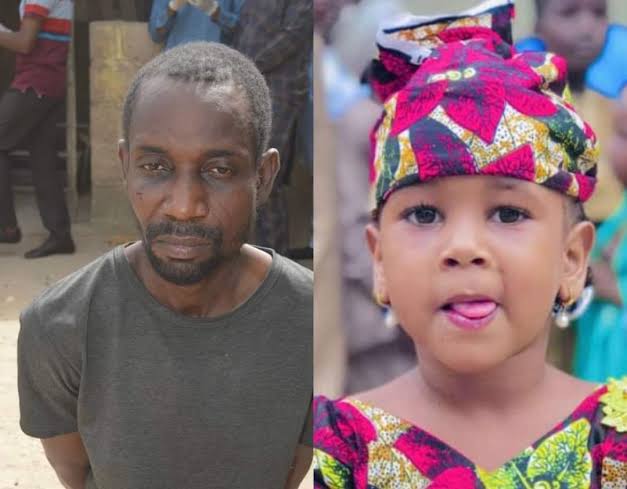
I am writing this emotional article with a heavy heart. Thousands of Nigerians are grieving a heart-wrenching pedicide that occurred in Kano State.

Hanifa Abubakar, 5, went missing on 3rd December 2021 while returning home from school. Her pictures flooded social media with a dear request that she be helped located. However, several weeks later, it turned out that she was actually kidnapped, and 6 million naira was demanded as ransom. Hanifa’s parents struggled to raise the ransom and deliver it to the kidnapper.

At the point of collecting the ransom on 20th January 2022, a 37-year old Abdulmalik Mohammed Tanko was arrested. Abdulmalik confessed that he was both Hanifa’s kidnapper and school proprietor. He further admitted that he had already killed Hanifa weeks ago with a rodent poison and buried her in a shallow grave in his school. He led security forces to the shallow grave, where the decomposed body of Hanifa was exhumed. She was beyond recognition as her body appeared to have been dismembered after the poisoning. She was afterwards given a befitting burial according to Islamic rites. Thousands of sympathizers are still mourning in extreme melancholy.

A few hours after Hanifa’s story was uncovered, a new case of pedicide was reported from Zaria. Shu’aibu Wa’alamu Ubandawaki, a Zaria-based businessman, reported that his 8-year old daughter, Asmau (alias Husna), has been killed by her abductors. He had also paid 3 million naira as ransom, but the kidnappers killed Husna anyway. Revelations later emerged that the kidnapper is their close neighbour.

Several months earlier, in May 2021, a 6-year old Mohammed Kabiru was kidnapped by his neighbour at Badarawa, in Kaduna State. This neighbour had received one million-naira ransom from Kabiru’s father but still proceeded to strangle the innocent boy. After detectives apprehended the kidnap gang, they admitted strangling the boy to death because one of the members of the criminal team feared that the boy recognized him.

Cases like this are too numerous to count. Even yesterday, the police in Kano interviewed a youth who said he had slaughtered a girl hawker after she recognized him.

Child abductors have lately developed the attitude of killing their innocent victims because they fear they might recognize them when freed. All that follows is a social media hashtag trend; a promise by the security forces to charge the suspects to court and then a brief silence before the next case arrives.

The homicide rate is skyrocketing in Northern Nigeria, and this is no thanks to our current system of governance. Since the transition of Nigeria to democracy in 1999, we see a judicial system that romances murderers with no fair regard to their victims. Despite democracy’s snail-speed judiciary to prosecute murderers, it frowns at executing them in the spirit of legal retribution.

This problem is not specific to Nigeria. It is a global curse. The governance system maintains a gentle approach to capital crimes by seeking to abolish the death penalty and public executions. Therefore, pressure groups like Amnesty International have sworn themselves as apologists of murderers. As a result, every nation is now reluctant in passing deserved death sentences, not to even talk of actually executing the death penalty. Only a handful of countries like China, Saudi, Iran and North Korea still practice public execution.

The UN-led democratic world of today considers public executions as a ‘cruel, inhuman and degrading nature of punishment’. This is why everyone shies away from public executions. For potential murderers, this is quite a protective cover to go-ahead to kill whoever they want to kill! They have nothing to fear. Take anyone’s life if you wish, and the UN and Amnesty International will protect yours! Mahatma Gandhi ingloriously articulated that, “An eye for an eye will make the whole world blind”. With this statement, Gandhi might have insensitively passed one of the greatest injustices upon the victims of human barbarism. An eye for an eye will rid the world of barbarians who have desires to pluck the eyes of their fellow humans. If we let barbarians keep their eyes, they will continue to pluck people’s eyes till the whole world becomes blind, and only barbarians will have eyes. At this time, they will have to start amputating people’s limbs since Mahatma Gandhi would decree, “a limb for a limb will make the whole world limbless”!

A life for a life is fair enough. This is what every fair legal system should maximally execute in the spirit of retribution. The only chance you have to keep your eye is when you don’t pluck anyone’s eyes. Similarly, the only chance you have to keep your life is when you don’t take anyone’s life.

Countries like the UAE, Bahrain and Bangladesh recently resumed public executions because they discovered that Gandhi’s, UN’s, and Amnesty International’s way is merely idealistic. After returning to power last year, the Taliban continued its public executions in Herat by hanging four bodies of kidnappers from cranes. They said it should serve as a lesson for other kidnappers. Nigeria is still massaging Evans, her revivalist billionaire kidnap kingpin. Yet we wonder why bandits in the forests are making a mockery of the Nigerian armed forces. Do we wonder why people like Abdulmalik are out there looking for the Hanifas they will kidnap for their financial welfare?

Nigeria’s constitution still maintains the death penalty for capital crimes like murder, mutiny, terrorism and treason. The courts are passing the judgements, but they are rarely executed. A Premium Times report in 2021 narrated that Nigeria’s correctional centres are housing 3,602 death-row inmates. Of course, these inmates will never be executed under this UN-subscribed Nigeria’s democracy. Some of them will naturally die in detention after living to a ripe octogenarian or nonagenarian age. Others will be pardoned by the state governors and the president at any time they so politically wish. The murderers will be re-integrated into society as if nothing had happened. Why shouldn’t they commit another murder? Why shouldn’t the next barbarian commit murder?

This ugly scenario is why some people take laws into their hands. They decide to avenge the murder of their loved ones so that they become the beneficiaries of this controversial protection of human life championed by the UN and Amnesty International. In some cases, security forces decide to be the courts themselves, thereby making extrajudicial killings of apprehended criminals. This is because they get tired of arresting the same criminals repeatedly for the same crimes.

Nigeria has decided not to make any changes to arrest this ugly situation. But, of course, there are good excuses like; even the United States has a snail-speed judiciary when it comes to executing death-row inmates. Out of its 2,474 death-row inmates, the US executed only 11 of them in 2021. All of them committed their capital crimes about thirty years ago. So, Nigeria would say, if this is in the US, what more of Nigeria?

Therefore, it is humane that we are boiling with rage over Hanifa and Husna’s deaths. Every sane individual would do the same. We are craving that the law legally executes their murderers. But we have to understand that the problem is systemic. We have to come together as both leaders and ordinary citizens to amend our ways. Our laws need to practically show to everyone that for every eye taken illegally, an eye will follow it legally. Murder begets state execution. This is the only practical way through which Nigeria can recover the depreciated value of human life in the eyes of barbarians.

Unless the death penalty and public executions resume for culpable homicides, potential murderers will continue to have a field day.

Ibrahiym A. El-Caleel wrote from Zaria, Kaduna State. He can be reached via caleel2009@gmail.com.

Who will save the Nigerian donkeys?

By Aliyu Nuhu

It is indeed a horrible time for the Nigerian donkeys. Each day about 5000 donkeys leave the Maigatari market in Jigawa State to the East, where they are consumed as meat by many households.

That is just one statistics from Jigawa State alone. Some 15000 donkeys also passed from North East and the Niger Republic to the South East, mostly Agbor, Anambra, Onitsha, Enugu and Abakalaki, to meet a similar fate.

Now it seems the donkeys are in for bigger trouble as the Chinese have also developed an appetite, particularly for their meat and skin. As a result, demand for donkeys has tripled over a short period. Meanwhile, the donkey is not bred in Nigeria on an industrial scale, and it is an animal that does not multiply with its very slow birth rate.

It is terrible enough to consume the gentle beast locally but worse to see it exported to China. Then who will save the donkey?

States in the North should legislate against the trading of donkeys for export to other parts of the federation. Already the price of a donkey that used to be between 8000-10000 naira has hit 35000 naira, making it well above the means of the local farmers who use it as rural means of transport.

The Federal Government must urgently place a ban on the exportation of donkeys and their by-products to the outside world, for now, China.

Aliyu Nuhu is a popular social commentator. He lives in Abuja, Nigeria.

On thanking others for their kindness

By Namadi Junior

For countless times, I used to write on this issue and later erased it from my notepad for reasons best known to me. But I will emphasize it today.

People need to understand that the phrase ‘Thank You’ must be pronounced to those who help you in any way and no matter little. Allah is my witness that I hate people to thank me for my kind gesture towards them. So I don’t get carried away by complimentary remarks.

Meanwhile, I say ‘Thank You’ to even those I pay for rendering services to me, not to talk of those who assist me. Again, it’s a virtue of humans; they want to be acknowledged for the good things they do. And I don’t see anything wrong with it.

Let me share my encounter with one young man (student) whom our driver picked on the road after we left the park. I was the one who insisted we start travelling because it’s late even though the car isn’t full. I was supposed to pay for the one seat vacant if we reached our destination without getting a passenger on our way.

Amidst reaching Zungeru, where the guy we picked on the way alighted, the driver asked him to bring his money even before fully entering the town. He gave him ₦400. The driver furiously rejected the amount by asking him to collect his money back. Instead of begging the driver to collect such an amount, he babbled that that is how they usually pay, which was a lie. So, the driver then agreed to go to the town’s park and ask how much they carry people from where we picked him up to there. If they say it is ₦400, he will collect it.

I was quiet, notwithstanding the rest of the passengers were asking the guy to beg the driver, for it appeared that’s all he had. He was too arrogant to beg him until we reached the park and asked, and they said it was ₦600. The driver then turned and looked at the guy sympathetically and said to him, you’re a student, free if I carry you, I didn’t lose. I also have children, but stop being haughty and well-mannered. He then collected the ₦400. Even with that, wallahi the boy didn’t say “Thank You”.

My question here is, why and how can people help someone with such a habit? I would’ve paid for his fare, but he proved that he was not from school through his behaviour. So let’s all learn to thank people!

Thank you.

Namadi Junior sent this article via namadijunior@gmail.com.

Now the real business begins at the AFCON

By Aliyu Yakubu Yusuf

The group stages have come and gone at the ongoing AFCON in Cameroon, with Algeria and Ghana being the biggest casualties. For the 2-time winners Algeria, it was nothing short of a travesty that they failed to qualify from their pool. After all, they were on a 33 game unbeaten streak before the tournament. They were also odds-on favourite to go all the way. And to be fair, they crafted more than enough chances to win their opening two games against Sierra Leone and Equatorial Guinea before they met their waterloo against Ivory Coast. But unfortunately, their tournament can best be summarized as a combination of poor finishing, complacency and rotten luck.

As for the 4-time champions Ghana, the least said, the better. They played some of the most dreadful football in the tournament. Add this to their ill-discipline, and you have the Ghanaians knocked out in the first hurdle. That they couldn’t defeat the debutant Comoros is a damning indictment of the once-proud footballing nation.

Now that the group stages are over, the margin for errors is entirely gone. Our own Super Eagles have been the team of the tournament so far, but that counts for nothing if we fail to get the job done in the subsequent tournament rounds. Our reward for winning three out of three games is a tantalizing tie against former champions Tunisia, who have largely underwhelmed in the tournament. On the evidence of what has been seen so far, bookmakers would have Nigeria as the firm favourite to advance to the quarter-finals; and rightly so. However, I earnestly pray that our fantastic showing does not get our players and coaching staff complacent. The winner takes all nature of knockout rounds makes it an unforgiving business. It only takes an avoidable error by a player or a coach for a team to book the next flight home. Besides, the Tunisians are no pushovers. On the contrary, they have the experience and the pedigree to cause an upset.

Often, a team performs wonderfully at the group stages only to be undone by their heralded opponents. I always remember the 2002/2003 UEFA Champions League quarter-finals in which Juventus sent Barcelona parking. At the time, Barcelona got 16 points from the second group and had won a total of 11 out of 12 group stage games (there were two group stages then, in case you were wondering), and Juventus managed to crawl their way out of the second group with 7 points. When they were paired against Barcelona, many football fans and pundits regarded it as a foregone conclusion. Against all odds, Juventus not only defeated the seemingly unbeatable Barca, but they went all the way to the final, where AC Milan narrowly defeated them via penalty shootouts. The biggest lesson I have learned from that encounter is that as long as a team is still standing, it stands a chance to win a tournament. I hope our players think the same way.

The round of 16 fixtures has drawn up the path to the trophy, with Nigeria, Senegal, Mali and Tunisia as the biggest teams on the same half of the draw and Egypt, Morocco, Cameroon and Ivory Coast on the other half. If (not when) we overcome Tunisia, we are scheduled to play the winner of Burkina Faso and Gabon. And if we win that tie, we would be facing one of Senegal, Cape Verde, Mali and Equatorial Guinea before the final showdown at Yaoundé. So here’s wishing the Super Eagles all the good luck in the world.

Aliyu is a lecturer at the Department of English and Literary Studies, Bayero University, Kano. He can be reached via aliyuyy@gmail.com.

Police arrest man for kidnapping, murdering 71-year-old man

By Uzair Adam Imam


Police in Imo State have arrested a 35-year-old man identified as Onyekachi and his wife, Oluchi, for allegedly kidnapping, murdering and burning the corpse of a 71-year-old man, Chief Precious Okorie.


Onyekachi was reported to have killed the man for allegedly sleeping with his wife, Oluchi.


The Imo State Commissioner of Police, Mr Hussain Rabiu, made the disclosure while parading the suspect, adding that the deceased was kidnapped on November 12, 2021.


According to the police commissioner, he ordered the commander of the Anti-Kidnapping Squad, Oladimeji Oyeyiyewa, and his operatives to swing into action after a report from the family about the case.


However, he added that this has led to the gang leader’s arrest, Agubata Maxwell Chimezie, known as “The Boss”, on December 10th, 2021, while Oluchi was arrested on December 20, and her husband was picked up on January 10th, 2022 in Owerri.

Beware of Facebook, other hackers

By Abdulrahman Muhammad, PhD

A friend recently left Facebook after his friends were duped through his hacked Facebook account. The hacker took over the victim’s Facebook account and sent messages to the latter’s friends asking them to deposit money into an account and get double the amount deposited in two weeks!

Because of sheer trust and gullibility, they first transferred monies into the bank account given to them by the hackers before even contacting my friend via phone. A total of about 450000 naira was lost this way, one of the victims being a student.

Lessons:

1. A simple phone call to confirm the true source and authenticity of the message would have saved the victims the trauma of losing huge sums of money.

2. The susceptible can be found even among the educated. While working in New Bussa, a colleague excitedly showed me a text message from an ordinary number informing him that he had won a lottery in which he was a random passive participant. I warned him that it was fraudulent, but another colleague convinced him it was genuine. The most painful thing was that the fraudsters asked him to go to an ATM and called them from there so that they could instruct him on how to redeem his prize. He inserted his card into the machine and followed their instructions sheepishly, which led to the emptying of his bank account.

3. Even a smart person can be a victim if they are too trusting, careless and greedy. Nobody can double your money in two weeks. Haba! Be street-wise.

4. Some bankers seem to be collaborating with fraudsters. For example, when victims go to the bank and complain, the bankers say the bank account the victim transferred the money does not exist!

5. Some of us have not been duped only because we are too poor to be conned. Or, to put it more respectfully, we are not rich enough to be defrauded. Where is the money?

6. A simple test can expose hackers. Recently, a Facebook friend sent me a fraudulent solicitation message. I promptly suspected his account was hacked. Unfortunately, I didn’t have his mobile number, so I sent him a message via Facebook Messenger asking simple questions in Kanuri language. The hacker responded in English with wildly off-the-mark answers. I called his bluff, and he disappeared.

7. Any friend who wants to deposit money in my account is welcome, but they should get the correct account details directly from me through my mobile number. My bank account name is slightly different from my Facebook account name.

8. One can also use the Messenger voice call option to confirm the person’s identity soliciting for money.

God save us from fraudsters.

Dr Abdulrahman Muhammad wrote from Maiduguri, Borno State. He can be reached via abbakaka@yahoo.com.

Lagos declares end of COVID-19 fourth wave

By Muhammad Sabiu


Akin Abayomi, the Lagos State Commissioner for Health, claims that a steady decline in COVID-19 case positive has signalled the end of the state’s fourth wave.


On Saturday, Mr Abayomi made the announcement via his verified Twitter account @ProfAkinolaAbayomi, while presenting the state’s COVID-19 report for January 20.


According to the News Agency of Nigeria (NAN), the state notified the start of the fourth wave on December 7 as the virus’s daily infection rate increased.


According to Mr Abayomi, COVID-19 infection positivity rates have decreased from 29.3 percent on December 21 to 1.9 percent on January 20.


According to him, bed capacity utilization is currently at 2%, with a death rate of 0.71 percent.


On the reporting date, 46 additional infections were confirmed, bringing the total number of COVID-19 illnesses in the state to 98,284.


Since the start of the epidemic in the state, 1,023, 203 sample tests have been performed, he said.


To further minimize the transmission of the virus, Mr Abayomi recommended residents be vaccinated and continue to follow non-pharmaceutical approaches.