Admin

It’s exactly 16 years since I joined the deaf community

By Ibrahim Abdullahi

Tuesday, December 3rd, 2024, commemorates the 32nd International Day of Persons with Disabilities celebration worldwide.

On this very special day, several celebrations of the International Day for Persons with Disabilities will take place in different parts of the world, making it a worldwide event. 

However, for others, it is a historic occasion. This may be the first time they celebrate the day; this could be because they have recently joined the community of people with disabilities due to illness, accident, or other reasons.

 Many thanks to former Nigerian President Muhammad Buhari and the individuals involved in the tireless and backbreaking efforts to pass and implement the Disability Bill into Law 2018, which has never been in Nigeria’s history since its independence.

I want to remind us that DISABILITY is not a curse or disease. It is a condition that can be rehabilitated depending on the type of disability one is struggling with. There is always ability in disability. We should not be discouraged!

Thanks to those who, in some way, took time to celebrate with us and the good people of Nigeria and Africa in general for witnessing this special day with us. 

The world stands still for us to salute our courage and fortitude to triumph over challenges we overcame and the ones coming our way. The world celebrates our abilities despite our disabilities.

We live in a world where change has become a constant basis of our individual and collective societies. In this advanced technological modern period, technological wonders appear at regular intervals, and our lives as members of particular societies regarding persons with disabilities are clearly different from those of those without disabilities. This requires inclusion to reshape our community. 

Ending discrimination, injustice, and humiliation against people with disabilities is essential. We should embrace diversity in all its forms. Tolerance and accepting our differences are important; we must be recognized as humans. Let us unite to improve our society, Nigeria. Some scholars say that everyone is disabled in one way or another, and I agree. 

Happy International Day of Persons with Disability, everyone. 

Ibrahim Abdullahi can be contacted via ibrahimbsw23@gmail.com.

Tinubu departs France for South Africa for bi-national commission

By Uzair Adam

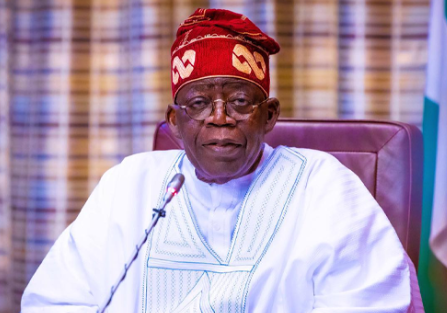
President Bola Tinubu will depart France on Monday for Cape Town, South Africa, to co-chair the 11th session of the Nigeria-South Africa Bi-National Commission (BNC) with President Cyril Ramaphosa.

The commission, set to convene on December 3, will be preceded by a ministerial meeting on December 2 at the South African Parliament Building in Cape Town.

According to a statement by Bayo Onanuga, Special Adviser to the President on Information and Strategy, Tinubu and Ramaphosa will discuss bilateral, regional, and international matters of mutual interest.

Building on their June 20 discussions in Johannesburg, the two leaders will assess progress since the 10th BNC session held in Abuja from November 29 to December 1, 2021.

“The 11th session of the BNC will feature discussions across eight working groups, focusing on political consultations, consular and migration, banking and finance, defence and security, manufacturing, social sector, mines and energy, and trade and investments,” the statement added.

During the high-level meeting, both nations will sign several Memoranda of Understanding (MoUs) and agreements aimed at enhancing cooperation.

Established in 1999, the BNC serves as a platform to strengthen diplomatic, economic, and security ties between Nigeria and South Africa. The inaugural Heads of State meeting took place in October 2019 in Pretoria.

This year’s session marks the 25th anniversary of the Commission, underscoring the longstanding partnership between the two nations.

President Tinubu will be accompanied by state governors, ministers, and senior government officials.

Nigerian football stadium safety: Urgent attention needed

By Jamilu Uba Adamu

As the beautiful game continues to captivate audiences worldwide, the importance of safety and security in football stadiums cannot be overstated. In modern football administration, substantial investments are made to train security personnel on crowd control measures, ensuring spectators and players are safeguarded on match days.

However, the reality in Nigeria is alarming. A stadium with a capacity of 18,000 was recently grossly overcrowded with nearly 30,000 football fans. The stark reality is that overcrowding due to ticket overselling poses a significant threat to the structural integrity of our dilapidated stadium stands. The consequences of a disaster are too catastrophic to contemplate.

The Nigeria Professional Football League (NPFL) must proactively address this ticking time bomb. The NPFL must encourage teams to educate fans, club officials, and security personnel on crowd control and ticket sales management. This includes training stewards and security officers on safety measures, such as emergency evacuation procedures, first aid, and access control measures. 

In addition, clubs should take responsibility for ensuring their stadiums meet the minimum safety standards. We all want to ensure a safe and enjoyable experience for everyone! 

The benefits of prioritizing safety and security in our football stadium extend beyond preventing disasters. A safe and secure environment enhances the fan experience, fostering a more enjoyable and family-friendly atmosphere.

In conclusion, the NPFL and clubs must address our football stadium’s safety and security issues with the urgency they deserve. By investing in education and training all relevant stadium personnel, we can prevent tragedies and ensure that football matches remain thrilling in a safe and secure atmosphere. As the saying goes, “A stitch in time saves nine.” Let us act now to safeguard lives.

On this note, it is worth commending the efforts of Dr. Christian Emeruwa, Head of Safety and Security at the Confederation of African Football (CAF). He has been instrumental in training safety and security officers, police, and other relevant stakeholders through the CAF Safe Stadium Initiative. 

Dr. Emeruwa’s tireless efforts have benefited several African countries, including Comoros, Djibouti, Kenya, and Uganda. We hope that the Nigerian NPFL will soon benefit from this initiative and prioritize the safety and security of our football fans.

Jamilu Uba Adamu wrote from Kano via jameelubaadamu@yahoo.com.

NAHCON allocates over 1,500 Hajj slots to Jigawa state 

By Uzair Adam 

The National Hajj Commission of Nigeria (NAHCON) has allocated 1,518 slots to Jigawa State for the 2025 Hajj.  

Alhaji Ahmad Labbo, Director-General of the Jigawa State Pilgrims Welfare Board, disclosed this to the News Agency of Nigeria (NAN) on Saturday in Dutse.  

Labbo stated that 70 percent of the allocated slots have been distributed to the 27 local government areas in the state for sale to interested pilgrims. 

The remaining 30 percent is held in reserve until the initial allocation to each local government is fully utilized.  

He further revealed that intending pilgrims are required to pay a deposit of N8.4 million while awaiting NAHCON’s official announcement of the Hajj fare.  

Labbo urged prospective pilgrims to make early payments to enable the board to complete preparations for the pilgrimage.  

The Hajj, one of Islam’s five pillars, is an annual pilgrimage to Mecca undertaken by Muslims worldwide.

Reps delay debate on tax reform bills amid heated controversy

By Uzair Adam

The House of Representatives has indefinitely postponed its planned special session on tax reform bills, originally scheduled for Tuesday, December 3, 2024.

This development was disclosed by the House Clerk, Dr. Yahaya Danzaria, in an internal memo circulated to lawmakers on Saturday.

The Deputy Speaker, Benjamin Kalu, had earlier announced that the session would focus on deliberating the four tax bills currently before the National Assembly.

These include the Nigeria Tax Bill 2024, the Tax Administration Bill, the Nigeria Revenue Service Establishment Bill, and the Joint Revenue Board Establishment Bill.

However, the House leadership decided to delay the session to allow for more comprehensive consultations with relevant stakeholders, including state governors and regional representatives, who have voiced strong opposition to the proposed legislation.

The memo reads, “I am directed by the House Leadership to inform all Honourable Members that the Special Session, initially scheduled for Tuesday, 3rd December 2024, to discuss all the Tax Reform Bills, has been postponed to a later date.

“This rescheduling is due to the need for further and broader consultations with all relevant stakeholders.

“A new date and venue for the session will be communicated in due course. We regret any inconvenience this may cause and appreciate your understanding.”

The Daily Reality learned that the bills have faced significant pushback, particularly from the 36 state governors and northern stakeholders, who are demanding a review of the proposed laws, citing concerns over their impact on state revenues and regional interests.

Nigeria and the U.S.: Economic allies or political pawns?

By Haroon Aremu

After fierce contention between Vice President Kamala Harris and Donald Trump for the next occupant of the White House, with the latter emerging victorious, President Bola Ahmed Tinubu’s congratulatory message to the President-elect reignited intense discussion about the relationship between both nations. 

The president’s eagerness to strengthen ties between Nigeria and the United States raises questions. Has the partnership between both countries truly benefited Nigeria? Or was Mr. President’s call merely another political courtesy? These questions prompt us to examine the nature of Nigeria’s relationship with the U.S., its economic implications, and the broader political dynamics at play.

Nigeria and the U.S. have maintained a long-standing economic relationship. Nigeria is one of America’s top trading partners in Africa. In 2019, bilateral trade between the two nations exceeded $10 billion, and the U.S. remains Nigeria’s largest foreign investor, particularly in the oil and gas sector. 

However, Nigeria’s economy continues to struggle, primarily due to its overreliance on oil. With global shifts toward renewable energy, including in the U.S., Nigeria must diversify its economy to remain competitive and avoid being left behind.

Critics argue that while the U.S.-Nigeria partnership has brought some benefits, these advantages are not felt equally across the population. The wealth generated from trade and investment remains largely concentrated in the oil sector, leaving many Nigerians excluded from broader economic gains. The promise of diversification remains largely unfulfilled, and the average citizen continues to bear the brunt of the country’s dependence on oil.

The political dynamics of the U.S. and Nigeria share striking similarities, particularly in their recent elections. Both the 2020 U.S. election between Donald Trump and Joe Biden and Nigeria’s 2023 election, where Bola Tinubu contested mainly against Peter Obi and Atiku Abubakar, were “reportedly” marred by allegations of fraud, electoral manipulation, and identity politics. Just as many Americans questioned the integrity of their electoral process, Nigerians also faced concerns over corruption and electoral malpractice.

However, Nigeria can learn from the U.S. by adopting reforms that promote a certain level of transparency, credibility, and inclusiveness in its electoral system, as witnessed in 2024. While the U.S. system has its challenges, its efforts to ensure a fair and free election through checks and balances offer valuable lessons for Nigeria, which must work to eliminate corruption and build public trust in the electoral process. 

These reforms will help create an electoral system that reflects the people’s will and ensures fair participation. 

Transparency, accountability, and the active participation of civil society will be vital to improving Nigeria’s elections and ensuring the people’s will is genuinely reflected in government.

Nigeria’s economy faces pressing challenges, including over 30% inflation and a soaring unemployment rate. The country’s dependence on oil exports makes it vulnerable to global market fluctuations. 

The need for diversification has never been more urgent. Nigeria must expand into agriculture, technology, and manufacturing sectors to create a more sustainable and resilient economy.

While U.S.-Nigeria partnerships in agriculture, technology, and infrastructure development have created some jobs, the benefits are often limited. Without proper policies and management, the economic gains from these partnerships fail to reach those who need them most. Corruption hinders inclusive growth, with the wealth generated by foreign investments rarely benefiting the broader population.

The U.S. has provided substantial aid to Nigeria over the years, including over $125 million in COVID-19 assistance and various health initiatives, such as PEPFAR, which has improved healthcare access. 

Educational programs have also significantly impacted Nigerian schools, providing millions of books and teaching resources. However, critics argue that much of this aid addresses immediate needs without addressing the deeper, systemic issues that hinder long—term development, such as corruption, poor governance, and institutional inefficiency.

Though aid has brought short-term relief, Nigeria must push for real, lasting change. Relying on external assistance alone is not enough without addressing the root causes of poverty, unemployment, and economic instability. 

Development cannot be achieved through aid alone—it requires internal reforms and institutional strengthening.

To President Bola Ahmed Tinubu, Nigeria is at a critical juncture. It faces significant economic challenges, including the risk of recession, but the partnership with the United States offers an opportunity to stimulate growth, attract investment, and create jobs. 

While the World Bank acknowledges Nigeria’s efforts through macro-fiscal reforms like unifying exchange rates and phasing out gasoline subsidies, these changes must be carefully managed to minimize short-term negative impacts on vulnerable groups. 

Scaling up social protection programs, investing in critical sectors such as education, healthcare, and infrastructure, and promoting economic diversification into areas like agriculture, technology, and manufacturing are essential to reducing reliance on oil and ensuring long-term stability. 

The World Bank’s $2.25 billion funding through the RESET program can enhance revenue mobilization, improve governance, and foster private sector growth.

Nigeria must strengthen its dialogue with the U.S., showcase investment opportunities, and deepen cooperation on security. Moving forward, Nigeria must prioritize real, actionable partnerships that deliver sustainable benefits to its people, avoid actions akin to political fraternization, and focus on inclusive development. 

The world is watching, and now is the time for decisive action to secure Nigeria’s future.

Haroon Aremu Abiodun, author of Youth Service for National Stability: A Corpers’ Chronicle, advocates for national development, has received an award from PRNigeria Center, and is an investigative research journalist. He can be reached at exponentumera@gmail.com.

Some lawmakers yet to grasp President Tinubu’s tax reforms – Sen. Barau

By Uzair Adam

Following Wednesday’s Senate session, experts were invited to explain President Bola Tinubu’s proposed tax reforms. Deputy Senate President Barau Jibrin addressed concerns raised by lawmakers and the public about the initiative.

In an interview with the BBC, Barau explained that the President’s new tax policies aim to strengthen Nigeria’s economy but noted their complexity necessitated expert input.  

“This is why we invited those who developed the policies on behalf of Mr. President,” Barau said, emphasizing the importance of lawmakers fully understanding the reforms.

The Senate Finance Committee, chaired by Senator Sani Musa, recommended bringing in experts to clarify the proposals, as many legislators and citizens were unclear on their details.  

“Some of these experts had previously been invited by state governors and the House of Representatives for similar explanations. We saw it as a necessary step,” he added.  

Barau highlighted the significance of televising the session, saying, “Transparency was key, which is why we ensured the session was broadcast live.” 

However, he acknowledged that some senators claimed they were unaware of the meeting despite official notifications.  

He also clarified that the second reading of the tax reforms does not signify their final approval.  

“This is just the beginning of the process. The Finance Committee will now review the policies in detail, consult with tax experts, and present a comprehensive report. 

“We urge stakeholders, including youth and women, to continue documenting their concerns,” Barau said.  

He emphasized the importance of thorough review and consultation to avoid unintended consequences, adding, “No leader intends to harm their people, but we must fully understand the policies’ implications.”

Addressing recent political tensions, Barau referred to an incident in Kano where rice was seized, leading to hasty accusations.  

“Such actions undermine due process. Jumping to conclusions without proper investigation does not help our country,” he warned.  

Barau also called for unity and respectful discourse in the Senate, urging collaboration across party lines.  

“Resorting to insults and accusations contradicts our cultural and religious values. Even God does not condone such behavior,” he said.

As the Senate continues its review, Barau urged patience and constructive engagement from all stakeholders to ensure the reforms serve the best interests of Nigerians.

Nationwide Operations: Military neutralizes 135 terrorists, arrests 185 suspects

By Uzair Adam

Nigerian military troops have intensified their nationwide operations, eliminating 135 terrorists, apprehending 185 suspects, and rescuing 129 kidnapped victims within the past week.

The Director of Defence Media Operations, Maj.-Gen. Edward Buba, provided the update during a briefing at the Defence Headquarters in Abuja on Saturday.

He disclosed that in the North Central region, some terrorists have begun surrendering due to sustained military offensives and collaborative non-kinetic engagements with community stakeholders.

Among those who surrendered are notable figures such as Yellow Jambros, Alhaji Mallam, Ardo Idi (Alhaji Lawal), Lawal Kwalba, Salkado, Yellow Ibrahim, Gana’e, and Babangida.

Buba emphasized that the military would maintain its operational momentum to dismantle terrorist networks and encourage further surrenders.

During the operations, troops recovered 113 weapons and 2,415 rounds of ammunition, including 72 AK-47 rifles, 11 fabricated guns, 15 Dane guns, eight pump-action shotguns, and four hand grenades. They also seized 46 motorcycles, 15 vehicles, 28 mobile phones, and various communication devices.

In the Niger Delta, troops destroyed 93 crude oil cooking ovens, 12 dugout pits, 37 boats, and 82 illegal refining sites.

They also recovered 909,800 litres of stolen crude oil, 71,060 litres of illegally refined diesel, and 13,580 litres of petrol.

Maj.-Gen. Buba reiterated the military’s commitment to addressing Nigeria’s security challenges, stating, “We remain in a winning position in this war and will continue to innovate in our approach.”

Malt and milk combo misconception: No scientific evidence

By Abdulaziz Bagwai

Between 2012 and 2018, I was a student in the Exchange Student Program at Sani Dingyadi Unity Boys College in Sokoto State. Whenever school resumed, our most cherished moments as junior students were the day school closed, and we left Sokoto for our various states. Our parents would send us food and local transport funds from our state’s education ministry to our hometowns.

As students from Kano, our first junction was always in Gusau, Zamfara State, to eat and pray. That Gusau junction, Lala, was our dream hub. It’s a place that every one of us would anticipate being. The first time I was at Lala, I couldn’t decide what to eat. The myriad delicacies, including those I’d never tasted, were there, and I had the pocket money to afford them—but I ended up eating half-spoilt rice and beans with stew.

A new experience but different reality

In December 2012, after our first term, while traveling back home, my friends, whom we were seated together in the car, learned from the older students among us that drinking the combo of malt and milk increases blood volume. Seeing them all with tins of malt and peak milk was awkward, and because I was too uninformed as a junior secondary school student to think whether it was true or not, I admittedly found myself craving for the combo. Since then, it has become the norm for my friends and colleagues to buy the combo whenever we pass Lala to or from school, but I have never bought it once.

This article triggered an encounter with a client who brought his sick daughter to a chemist I work for earlier this month. My co-worker examined the patient and decided to send them for two blood tests: malaria’s rapid diagnostic test (RDT) and a pack-cell volume (PCV) because she was both feverish and hungry. Both results confirmed my co-worker’s professional inquiry: RDT reactive, PCV slightly low. When he enquired about my suggestion on the patient’s treatment plan, I told him to necessarily include medicines that would boost the patient’s low, slight blood count.

Upon hearing my suggestion, the man disagreed that no medicine should further be given to his daughter except for malaria. His reason was that this same daughter was anemic sometime in the past, and he denied buying any medicine she was prescribed in the hospital; he purchased for her a few tins of malt and milk, and in a few days, she recuperated. 

While it’s my duty as a community health extension worker to educate community members about helpful and harmful health practices, misinformation, misconceptions, and baseless hearsay, I’ve done my part for my client, who seemed unconvinced.

What a nutritionist had to say about the combo

A July 19, 2021, Punch Newspaper article by Angela Onwuzoo titled “Drinking milk, malt combo won’t boost blood volume” featured Beatrice Ogunba, a professor of public health nutrition at Obafemi Awolowo University, Ile-Ife, Osun State. I quote the professor saying, “Consuming milk and malt could deliver nutrients to the body because they are fortified with iron, calcium, and vitamins. 

Some malts are also fortified with vitamins, so consuming all these will deliver nutrients to the body, but mixing milk and malt with the notion that it will increase blood volume is unrealistic. There is no scientific evidence for that. I have heard about the mixture, and women primarily consume it. But in terms of delivering iron, I am sure of that because milk has iron.”

However, she urged Nigerians to diversify their foods to get all the nutrients they need to be healthy. She also noted that people vulnerable to anemia should consume iron-rich foods like vegetables and liver.

Hypovolemic or anaemic?

Hypovolemia is a state of abnormally low extracellular fluid (ECF) in the body. It may be caused by a loss of salt and water or a decrease in blood volume. Hypovolemia is the loss of extracellular fluid (ECF) and should not be confused with dehydration. Anemia is a blood disorder in which the blood cannot carry oxygen. It can be caused by a lower-than-normal number of red blood cells, a reduction in the amount of hemoglobin available for oxygen transport, or abnormalities in hemoglobin that impair its function.

While both conditions have different causative factors, in layman’s terms, insufficient blood is present in the body when investigated through a laboratory test. The extremes of both conditions—anemia and hypovolemia, which result from a decrease in blood volume—would require transfusion. 

Furthermore, when both conditions are mild or are in their primary stages, and a doctor decides to prescribe medications, patients or their relatives should understand the reality and abide by the doctor’s rules. So, drinking the combo of malt and milk does not increase blood volume.

Abdulaziz Isah Bagwai is a community health practitioner, journalist, and storyteller. His work has appeared in The Solutions Paper, Brittle Paper, The Daily Reality, Neptune Prime, Opinion Nigeria, and more. He writes from Kano State and can be contacted at aibagwai001@gmail.com.

Tax reform bill: What the North needs to do

By Bilyamin Abdulmumin, PhD

Passing bills in Nigeria (and apparently everywhere else) has a tradition of generating controversies. For instance, the Petroleum Industry Act (PIA) endured decades of rejection before finally passing into law. When the Electoral Act 2022 was signed into law, the opposition went agog, crying to high heaven. Similarly, when the Social Media Bill was passed, it was seen as proof of a government obsession with suppressing dissent.

The reform that is now raising the dust is the Tax Reform Bills. Days after sending the bills to the national assembly, the nineteen governors of the northern states convened in Kaduna to oppose them, describing them as anti-North. The Federal Executive Council (FAC) also backed the northern governors. However, like the vigour with which subsidy removal was pursued, the president insisted on proceeding with the reform.

Northern governors fear amending VAT to a derivation-based model will diminish their states’ revenue contributions. Governor Yahya, the NGF chairperson, notes that companies remit VAT based on their headquarters, not where goods and services are consumed. Consequently, while MTN services consumed in Kano generate VAT for Lagos, Kano’s allocation decreases despite the consumption.

This reform is a dream come true for the state where the plants and industries are sited; unfortunately, for the state’s bottom rock in terms of industries, it is a crying face to them.

 While seeking redress to the proposed bill, it is also better to take charge; no more time is needed for the North to dust off all the moribund infrastructure, pass and implement industrial policies, continue with the uncompleted, and maintain the few industries in the region than now. 

There are plenty of them in Kano; notwithstanding Karota revenue, Abba Kabir Yusuf needs to rise to industrious revenues. Dangote’s Tomato processing industry is said not to be meeting expectations and optimism.

In Zamfara, a once peaceful and serene area, Dauda Lawal needs to recall all the companies aground and those existing only in paper, e.g., fertiliser plants by his predecessor Mutawalle. Apart from raising revenue, industrialisation benefits in Zamfara are numerous, combating even the insecurities that bedevil the state (through job opportunities in the long run).

In Kaduna, Uba Sani needs to continue with the Malam El-rufai’s exploit, maintaining and upgrading Olam Nigeria and a host of economic initiatives.

In Kebbi state, the comrade Dr. Nasir Idris Kauran Gwandu needs to extend his widely recommended administration to continue the ongoing legacies of  Senator Abubakar Atiku Bagudu, like the bioethanol mega plant, maintaining and promoting already established ones ( e.g., GB Food tomato processing plant and WACOT). 

Ironically, the southern states (especially the west), where the proposed bill is set to favour, are upping the ante. Lagos, for instance, is making unprecedented investments in energy generation.

The interest in remodelling the proposed Tax Reform Bills is not enough; it is a wake-up call for the North to raise the bar regarding regional industrialisation.

Bilyamin Abdulmumin, PhD, wrote via bilal4riid13@gmail.com.