Admin

Airstrike targeting Lakurawa mistakenly bombs Sokoto communities

By Uzair Adam

A fighter jet targeting terrorists in Lakurawa on Wednesday morning mistakenly bombed two peaceful communities in Silame Local Government Area of Sokoto State, which left many feared dead and several others injured.

The affected villages, Gidan Sama and Rumtuwa, were hit around 7 am, according to local accounts.

The chairman of Silame LGA, Alhaji Abubakar Muhammad Daftarana, described the incident as devastating, and stated that the victims were innocent residents.

“The villagers were sitting peacefully when the bombs started dropping on the communities. They were innocent and peace-loving people who had no criminal record.

“It is early for me to confirm the number of people either killed or injured because we are still assessing the development,” Daftarana said.

More updates to follow.

Kano gov rejoices with Christians, calls for peaceful coexsistence

By Anwar Usman

The Kano State Governor, Abba Kabir Yusuf, has felicitated with the Christian faithfuls in the state as they mark the 2024 Christmas celebration.

In a message released on Wednesday, Yusuf expressed joy and gratitude alongside the Christian community for the divine mercies that have allowed them to witness another festive period.

Speaking through his spokesperson, Sanusi Dawakin-Tofa, the governor called on Christians to embrace mutual respect and peaceful coexistence as they celebrate.

“As you relish the season, I urge you to embrace the spirit of mutual respect and peaceful coexistence,” Yusuf said.

The governor emphasized the importance of unity, love, and brotherhood, reiterating that Nigeria’s progress hinges on fostering harmony across diverse communities.

“There is a need to strengthen the spirit of brotherhood, foster unity, and encourage love in spite of diversities, as that’s the only driving force to progress in the country,” he said.

He urged all residents to reflect on the virtues of humanity, love, honesty, kindness, and forgiveness championed by Jesus Christ and to make use of the lessons of the season.

While reaffirming his administration’s commitment to fulfilling campaign promises, Yusuf highlighted ongoing efforts to improve social services and infrastructure across the state.

“My administration remains committed to the fulfilment of all campaign promises, focusing on the provision of social and infrastructure development to improve the living conditions of our people,” Yusuf stated.

He reiterated his dedication to revitalising Kano’s education sector, noting significant strides in reversing infrastructure decay and strengthening workforce capacity under the declared state of emergency on education.

The statement further revealed that “the governor also donated the sum of N20 million to selected Christian groups for the celebration of the 2024 Christmas in Kano”.

Police thwart kidnap attempt, rescue 10 in Katsina

By Anwar Usman

The Katsina State Police Command has announced the successful disruption of a kidnapping attempt and rescue of 10 victims.

The command’s Public Relations Officer, ASP Abubakar Sadiq, disclosed this in a statement signed and made available to journalists on Wednesday.

According to the statement: “On 24 December 2024, at about 20:30 hrs, some suspected armed bandits, wielding dangerous weapons and shooting sporadically, attacked a commercial vehicle at Kwanar Makera along the Katsina–Magama Jibia road in Jibia Local Government Area, Katsina State, in an attempt to kidnap ten (10) occupants of the vehicle.

“Upon receiving the distress call, the Divisional Police Officer (DPO) of Jibia swiftly led a team of operatives to the scene. The team engaged the bandits in a gun duel, successfully thwarted the kidnapping attempt, and rescued all ten ten victims.

“Four among the rescued victims sustained gunshot injuries as a result of the attack and were rushed to the hospital for urgent medical attention. Sadly, two of the victims succumbed to their injuries while receiving treatment.

“Efforts are still ongoing to apprehend the fleeing suspects as the investigation continues.

“The Commissioner of Police, Katsina State Command, CP Aliyu Abubakar Musa, psc(+), applaud the officers for their exceptional display of gallantry and dedication to duty. Furthermore, the Commissioner urged the members of the public to provide useful information on suspected criminal activities to the nearest police station for prompt and decisive action.”

NAHCON appoints new acting secretary

By Uzair Adam

The Executive Chairman of the National Hajj Commission of Nigeria (NAHCON), Prof. Saleh Usman, has announced the appointment of Alhaji Alidu Shutti as the acting Secretary of the commission, effective immediately.

This follows the voluntary retirement of the former Secretary, Dr. Abdullahi Kontagora, on December 6.

In a statement released on Wednesday by Mrs. Fatima Sanda-Usara, Assistant Director of the Information and Publications Division, it was revealed that Shutti, who had served as the Director of Inspectorate and Compliance at NAHCON since 2023, would hold the acting position until a substantive secretary is appointed.

Shutti’s career with NAHCON spans from 2007 to the present, during which he has held several key positions, including Head of the Tour Operators Division, Assistant Director of the Licensing Division, and Deputy Coordinator of the Makkah Office in 2022 and 2023.

With a Masters in Public Administration, a Bachelor’s degree in Islamic Studies, and a Diploma in Journalism, Shutti has also enhanced his expertise in Hajj operations by attending numerous seminars in countries such as the United Kingdom, the United Arab Emirates, and Saudi Arabia.

Known for his in-depth understanding of Hajj and Umrah operations, Shutti’s experience is expected to facilitate a smooth and successful 2025 Hajj operation.

Governor Mallam Umar Namadi loses mother

By Muhammad Sulaiman

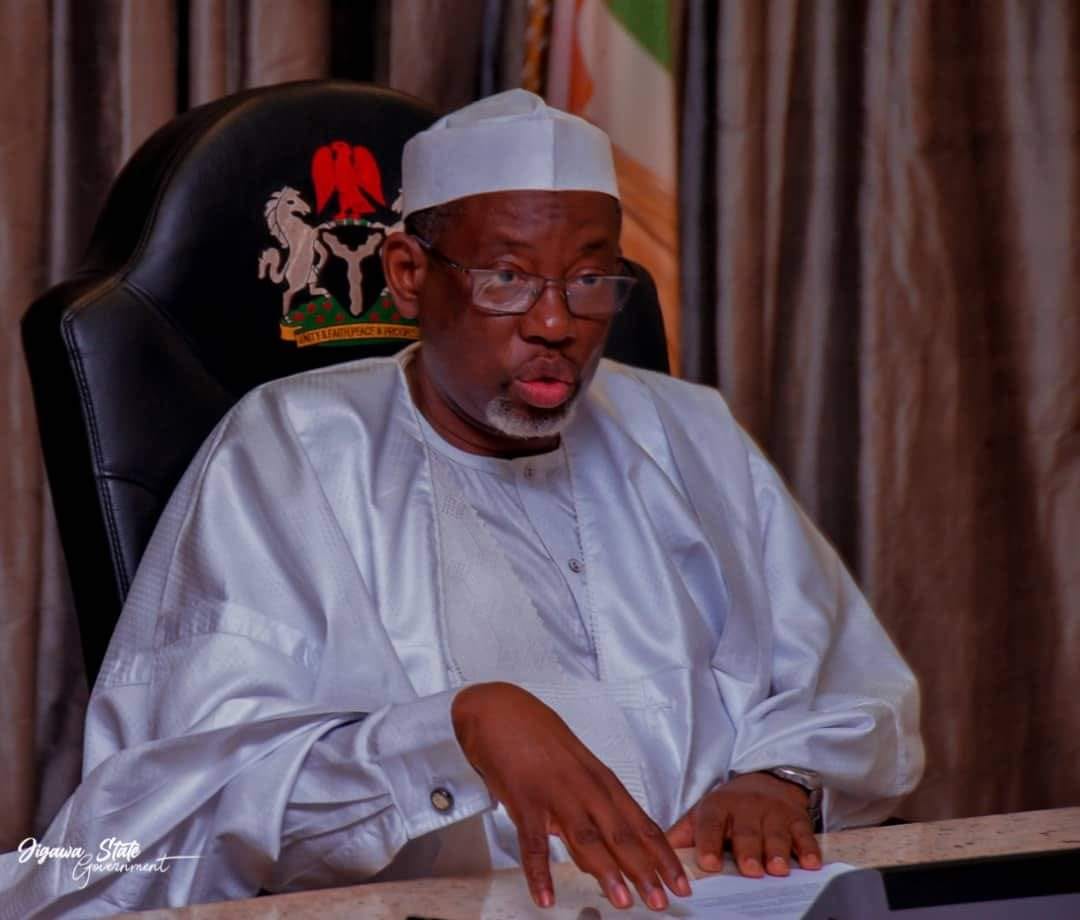
The Governor of Jigawa State, Mallam Umar Namadi, mourns the loss of his mother, Hajiya Maryam Namadi Umar, who died in the early hours of Wednesday, December 25 2024.

The late Hajiya Maryam was a respected matriarch known for her compassion and dedication to her family and community. Her passing has left a significant void in the lives of her loved ones and the people of Jigawa State.

Under Islamic traditions, the burial rites are scheduled to take place later today at 4:30 PM in her hometown of Kafin Hausa. The family has called on well-wishers to join them in offering prayers for her eternal peace.

In a statement from his Chief Press Secretary, Hamisu Mohammed Gumel, the Governor prayed for Allah’s mercy to grant his mother eternal rest in Jannah and comfort the bereaved family.

The people of Jigawa State stand united with the Governor in mourning, reflecting on the cherished memories and legacy of Hajiya Maryam Namadi Umar.

May her soul rest in peace.

Police arrest over 30,000 suspects, rescue 1,581 kidnap victims in 2024

By Uzair Adam

The Inspector-General of Police (IGP), Mr. Kayode Egbetokun, revealed that the Nigeria Police Force (NPF) achieved significant success in 2024, with 30,313 suspects arrested for various criminal activities and 1,581 kidnap victims rescued.

This was disclosed during a strategic meeting with senior officers at the Force Headquarters in Abuja.In addition to these accomplishments, the NPF recovered 1,984 firearms and 23,250 rounds of ammunition throughout the year.

The IGP praised the police for their dedication, particularly in reducing crime and engaging with the community to foster trust and collaboration.

He noted the importance of continued innovation in technology and operational strategies in 2025 to build on these successes.

Looking ahead, the IGP stressed that the Nigeria Police Force would continue to prioritize safety and security during the festive season, ensuring a peaceful environment for citizens across the country.

Phone theft in Kano: A growing threat we can’t ignore

By Faizah Suleiman

In Kano State, phone theft has become more than a petty crime. It’s a nightmare for residents who can barely go about their day without clutching their phones nervously. From bustling markets to quiet streets, no place seems safe anymore. The once vibrant and lively atmosphere of Kano is now shadowed by fear as criminals prey on unsuspecting victims.

But why has phone theft spiralled out of control, and what can we do about it? For many residents, phone theft stories are no longer distant tales but personal experiences. Abdullahi Musa, a trader at Kurmi Market, recalls how his phone was snatched in broad daylight.

“I was talking to a customer when two men on a motorcycle came out of nowhere. Before I could react, my phone was gone, and they disappeared into the crowd,” he said.

Sadly, Abdullahi’s story isn’t unique. It’s part of an alarming trend that affects students, workers, and businesspeople alike. These criminals are smart, fast, and ruthless, and they’ve turned Kano into a hunting ground. You might wonder why this is happening so often in Kano. Well, the reasons aren’t far-fetched.

First, economic hardship has pushed many young people into crime. With unemployment rates soaring, some see phone theft as a way to survive. A recent survey showed that 78% of Kano residents feel unsafe using their phones in public. This fear isn’t paranoia. It’s a reality.

Then, there’s the issue of the thriving black market. Places like Sabon Gari are notorious for dealing in stolen phones. These criminals know they can easily sell a stolen phone, often within hours.

Losing a phone isn’t just about losing a device; it’s about losing a lifeline. For many in Kano, their phones hold contacts, bank details, business deals, and even educational materials. A lost phone means a significant setback.

“I saved for months to buy that phone,” lamented Fatima Ahmed, a university student. “When it was stolen, I didn’t just lose my device; I lost my school notes, assignments, and peace of mind.”

It’s a vicious cycle. The more phones are stolen, the more fear spreads, and the more cautious people become, yet the thieves always seem one step ahead.

To their credit, the authorities haven’t been sitting idle. The Kano State Police Command has ramped up hotspot operations, recovering hundreds of stolen phones in 2024 alone. There’s also been a push for awareness campaigns, encouraging residents to secure their phones and activate tracking features like IMEI.

But there’s a problem. Many victims feel the response isn’t fast enough, and even when thieves are caught, they often face light punishments. This lack of consequences only emboldens the criminals.

So, how do we stop this? It will take the collaboration of everyone: government, police, communities, and individuals.

  • We need more community policing. Vigilante groups working with the police can monitor neighbourhoods and markets.
  • Harsher penalties must be imposed on those caught stealing phones. If the punishment is severe enough, it could deter others.
  • The government should clamp down on illegal sales of secondhand phones. If stolen phones can’t be sold, the incentive to steal them disappears.
  • As residents, we also have a role to play. We can make a difference by avoiding phone use in crowded areas, enabling phone tracking, and reporting suspicious activity.

Phone theft in Kano is more than just an inconvenience. It’s a threat to our security and peace of mind. It’s time we took a stand. The next time you see someone holding their phone tightly, remember: it’s not just a gadget they’re protecting; it’s a part of their life. Let’s work together to make Kano safe again.

Faizah Sulaiman wrote from Kano via suleimanfaizah01@gmail.com.

My experience of being robbed in Bauchi City: A ride, a robbery and a resolution

By Mujahid Ibrahim

This life has a strange way of teaching lessons we never expect. To be precise, for at least two years, now, I had grown accustomed to the comfort of moving around the city in my little car. This has already become my everyday norm. But as petrol prices began to rise in the country, as many other fellow lower class citizens, I found myself reevaluating my choices. Moving by car was sometimes cheaper than hiring an okada or a Keke Napep but unnecessary trips were adding up. This pushed us to begin to consider using a bicycle; cost-effective, healthy, and, I thought, practical.

On this particular evening of 22/12/2024, a friend Saifullah had invited me to a dinner in his house, The venue was just about 3 kilometers away, and I decided to leave the car behind and ride my bicycle instead. “Why not?” I thought. “It’s a short distance, and I’ll save money on fuel.” Little did I know, that simple decision would lead to a night I would never forget.

The dinner was delightful—filled with warm conversations with associates, and moments of reflection.

I left there around 8:00pm, I decided to stop by a mini-market at Wunti to pick up a few essentials before heading home.

My mind, however, was already preoccupied with excitement. Earlier that day, an interview with Prof. IBK by Bello Sagir Imam had been released, and I couldn’t wait to listen to it.

Pedaling through the busy streets around 8:30 p.m., I felt the urge to play the interview right away so that by the time I reached home, I reasoned, I would have finished listening and could dive straight into reading a book gifted to me by a dear friend, Tea Isah. It was an insightful work by Ibn Rushd on the relationship between science, religion, and philosophy.

As I passed beneath the Wunti Flyover, currently under construction, I stopped under the bridge to take out my phone and earphones. The area wasn’t quiet; the bustle of vehicles and pedestrians surrounded me. I felt a sense of safety in the activity, but it was short-lived. Suddenly, the sound of a motorcycle pierced through the hum of the evening.

A brand-new white Moto B sped from behind me, its riders veering dangerously close. Before I could react, the motorcycle screeched to a halt, and two men dismounted swiftly.

“Give us your phone!” one of them barked, his voice sharp and filled with menace.

Startled, I looked up, my heart racing. One of them took a step closer, revealing a knife glinting in the dim light. “If you resist, we’ll stab you,” he threatened. The weight of his words left no room for defiance. ‘Ba zan zura ido yaro karami, ya burma min wuka ba.’ I handed over my phone without resisting at the moment.

But they weren’t done. “The bag,” the other demanded, motioning to the small bag I was holding from my shopping trip. I hesitated for a second too long, and the knife came closer. Without another word, I surrendered the bag, my mind racing with a mix of surprise and disbelief.

In moments, they mounted the motorcycle and sped off through the bustling street, heading toward Gwallaga Juma’at Mosque and approaching the Nasarawa Roundabout.

A kind-hearted bike rider nearby noticed what had happened and offered to help. He tried to chase them, but they escaped into the chaos of the night. I stood there, behind the flyover, feeling a mix of helplessness and gratitude to Allah. Though shaken, I was unharmed. My phone, my bag, and my essentials were gone, but my spirit remained intact. I kept pronouncing “Yaa Allah” and repeatedly saying it several times.

What else should I do? I pedaled home in silence, the incident replayed in my mind. I felt anger, sadness, and frustration, but also a growing sense of determination and thankful to Allah for saving me. This wasn’t just about “me”. How many others had faced similar dangers on these streets? I don’t know. How many more would, if nothing changed?

To the Bauchi State Government, under Gov. Bala Muhammad, the “Modern Bauchi City” deserves better. Rising petrol prices all over the country is already pushing many of us to make such tough decisions as trekking long distances, or riding bicycles as in my own case. However, those choices shouldn’t expose us to danger. Even before the completion of the project, we need safer streets, better lighting in vulnerable areas, and a stronger presence of law enforcement. These flyovers are meant to a symbol of progress, not a haven for crime.

To those in authority, especially the security forces, I urge: please pay attention to these areas especially during night hours. To my fellow citizens, I plead: be vigilant, monitor strength movements around you, stop using phones while on streets, unless it becomes necessary and look out for one another. And to those who find themselves in moments of loss or fear, remember; resilience is our greatest strength. Trust Almighty Allah only after doing your best.

That night under the bridge, Uhmm! I lost possessions, but I gained a purpose. Alhamdulillah that it was not easy for them in my case.

Mujahid Ibrahim wrote in from Bauchi and can be reached via littlemujahid4gmail.com.

Nneka Chidoka Outreach Program launches nationwide campaign for increased cancer care funding

By Sabiu Abdullahi

The Nneka Chidoka Outreach Program (NCOP) has embarked on a nationwide campaign to advocate for increased funding for cancer care in Nigeria’s 2025 budget.

With a staggering 124,000 new cancer cases reported annually, the current lack of adequate funding has resulted in many Nigerians being denied access to life-saving treatment.

Despite efforts by the Federal Ministry of Health, including the Cancer Health Fund (CHF) and the National Cancer Access Partnership (NCAP), limited funding and infrastructure gaps have restricted the benefits to only a fraction of cancer patients.

To address this, NCOP is collaborating with the Ministry and the National Institute for Cancer Research and Treatment (NICRAT) to urge lawmakers to allocate more funds for cancer care during the 2025 budget deliberations.

The campaign’s key objectives include securing ₦25 billion to transition the Cancer Health Fund into the Catastrophic Health Insurance Fund for sustainable cancer care, closing the ₦97 billion funding gap for completing six Cancer Centers of Excellence under the National Oncology Initiative, and expanding funding for NCAP to ensure more Nigerians have access to affordable cancer medications.

Osita Chidoka, Founder of NCOP, noted the importance of collective action, saying “Cancer is a battle we must fight together. We are urging all Nigerians to take a stand by signing this petition.

“With your support, we can push for meaningful investments in cancer care and give hope to thousands of families.”

To support the campaign, individuals can sign the petition and share the message on social media using the hashtag #FundCancerCare2025.By working together, NCOP aims to ensure that no Nigerian is left behind in the fight against cancer.

The organization is committed to transforming Nigeria’s healthcare landscape and improving access to cancer care through early diagnosis, advocacy, and funding support.

With the help of Nigerians, NCOP hopes to make a significant impact and bring about positive change in the lives of those affected by cancer.

Save your wedding: Early genotype testing matters

By Usman Muhammad Salihu

Genotype incompatibility continues to disrupt lives and relationships across northern Nigeria, where premarital medical testing is not yet mandatory. The emotional and financial toll it takes on couples, families, and communities cannot be overstated. 

I recently encountered two striking reminders of its devastating impact. First, I came across a trending wedding invitation card on Facebook. What stood out wasn’t the design or details but the heartbreaking update: the wedding had been cancelled due to genotype incompatibility. 

Shortly after, while scrolling through WhatsApp statuses, I saw my sister and classmate, Ummu Kulsum, express her frustration in just a few words: “Ya Allah, why does all this genotype matter?” Her lament instantly reminded me of my brother’s ordeal, where his marriage was called off barely two days before the wedding for the same reason.

These instances are not isolated. They represent a growing crisis fueled by a lack of awareness and delayed action. Many couples only undergo genotype testing at the final stages of their wedding preparations, often when financial and emotional investments are at their peak. 

Discovering genetic incompatibility at such a late stage forces painful decisions: risk the health of future children or cancel the union altogether. In northern Nigeria, where premarital testing is not yet compulsory, such stories are alarmingly common. 

While no religion or culture explicitly prioritises marriage over health, societal practices and insufficient awareness often lead to preventable heartbreaks. Religious and cultural leaders uniquely advocate for early genotype testing as an essential part of marriage preparations.

Sickle cell disease (SCD), prevalent in Nigeria, is one of the most severe outcomes of incompatible genotypes. Couples with AS-AS or AS-SS combinations risk passing this life-altering condition to their children. Living with SCD involves chronic pain, frequent hospital visits, and significant financial strain—all of which could be avoided through proper testing and awareness.

The time has come for a societal shift. Policymakers must work towards making premarital genotype testing compulsory in all northern states. Religious and traditional leaders should advocate for such measures and integrate genotype counselling into premarital counselling sessions.

Healthcare providers and educational institutions must also increase efforts to educate the public on genetic compatibility. Awareness campaigns can normalise discussions about genotype testing, emphasising its role in building healthy families and preventing avoidable heartbreaks.

For families like mine, the trauma of cancelled weddings due to genotype incompatibility is a painful memory. The financial losses and emotional distress are entirely avoidable with early testing and informed decisions. My brother’s experience and countless others highlight the urgent need for collective action.

Love is an essential foundation for marriage, but so is the responsibility to ensure a healthy future for one’s family. By prioritising early genotype testing and raising awareness, we can prevent the heartbreak of cancelled weddings and the lifelong struggles associated with genetic disorders.

The solution is in our hands. We must act now—for love, health, and future generations.

Usman Muhammad Salihu is a PRNigeria Fellow and wrote in from Jos, Nigeria. He can be reached at muhammadu5363@gmail.com.