Admin

Atiku accuses Tinubu of abandoning 1,600 Nigerian scholars abroad

By Uzair Adam

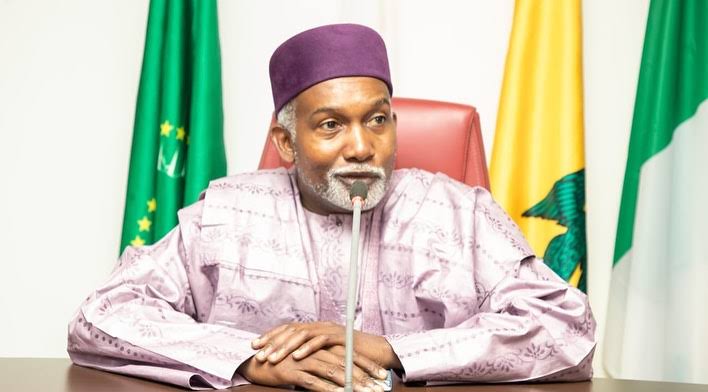
Former Vice President Atiku Abubakar has accused President Bola Tinubu’s administration of breaching the Bilateral Education Agreement (BEA) scholarship scheme, alleging that the decision has left about 1,600 Nigerian students studying overseas stranded and without support.

In a statement issued yesterday, Atiku said the BEA scheme was discontinued under the Tinubu administration without prior notice to parents or beneficiaries and without regard for students who were already in the middle of their academic programmes abroad.

He explained that the BEA, introduced in 1993 and revived in 1999, was created to enable Nigerians pursue undergraduate and postgraduate studies through bilateral agreements with partner countries, describing the programme as a vital diplomatic and educational bridge that had now been abandoned.

Atiku said what was initially presented as a temporary five-year suspension of the scholarship eventually turned into total neglect, leaving students without stipends and basic support.

According to him, unpaid allowances have accumulated to thousands of dollars per student.

“Their pleas are simple and desperate: pay the stipends owed, now more than $6,000 per student. Instead, they were told that public funds were scarce and that money meant to keep these students alive abroad should be redirected elsewhere.”

He noted that the situation worsened between September and December 2023 when stipends were not paid, while allowances were reportedly slashed by 56 per cent in 2024, dropping from $500 to $220 per month, before payments were eventually stopped altogether.

He added that no stipends were paid throughout 2025.

According to Atiku, the consequences have been severe, with students facing hunger, rent arrears and growing emotional distress in foreign countries.

He cited the death of a Nigerian student in Morocco in November last year, which he said turned years of quiet suffering into public grief.

The former vice president also referenced protests by affected students and parents in Abuja, where they reportedly visited the Ministries of Education and Finance to demand explanations, but said their concerns were largely ignored.

He criticised comments attributed to the Minister of Education suggesting that students who were “fed up” could be funded to return home, describing the remark as dismissive and insensitive to years of academic sacrifice.

“To anxious parents, it sounded like expulsion by neglect,” Atiku said, adding that Nigerian scholars scattered across foreign universities were waiting not only for their stipends, but also for reassurance that their country had not abandoned them.

Troops, terrorists exchange gunfire In Obajana, Kogi

By Sabiu Abdullahi

Nigerian troops and suspected terrorists were involved in a gun duel in Obajana town, Kogi State, where the Dangote Cement plant, reputed as Africa’s largest cement factory with a capacity of 16.25 million metric tonnes per annum, is located.

The incident was said to have occurred on Saturday night.Security analyst Zagazola Makama disclosed the development on Sunday through his X handle.

He stated that the exchange of fire followed an attempt by suspected terrorists to gain access into the community.

“There was an exchange of gunfire between Nigerian troops and suspected terrorists in Obajana town, Kogi State, on Saturday night, as security forces sustained ongoing clearance operations in the area.

“Troops are engaging the terrorists who were reportedly attempting to infiltrate the community,” he wrote on X.

As at the time of filing this report, the Defence Headquarters had yet to issue an official statement on the incident.

It will be recalled that scores of terrorists were recently neutralised during a joint operation carried out by the Nigeria Police and the military in Kogi forests.

Journalism is beyond sitting behind a microphone…

By Nasir Yusuf Jibril Kufa

It is a common misconception, especially among those with low literacy levels, that the difference between professional practitioners and assistants or technicians is not understood. Professional fields require specialised training and proper qualifications before a person can be recognised as a professional. Examples of such fields include Medicine, Law, Engineering, Journalism, etc.

However, many people often confuse professionals with assistants. For instance, in Law, some people believe that studying Law automatically makes someone a lawyer, without knowing that Law School is also required. In Medicine, many people believe that all healthcare workers are doctors, even though nurses, laboratory technicians, and pharmacists are distinct from physicians. 

The same misunderstanding also exists in Engineering, where people sometimes call anyone who repairs electrical appliances or vehicles an engineer. 

Sadly, this misunderstanding also affects Journalism, which is the main focus of my piece. 

Many people believe that journalism simply means sitting behind a microphone, reading the news, or talking on the radio. This misconception has made some assume that anyone who can speak confidently or operate studio equipment is automatically a journalist. In reality, journalism goes far beyond studio presentation. It is a professional field that requires training, ethical responsibility, critical thinking, and commitment.

 A professional, well-trained journalist is someone who has acquired formal education or structured training in journalism or mass communication. Such a journalist understands news values, reporting techniques, media ethics, and the laws guiding the profession. Their work begins long before they appear behind a microphone or camera. They research issues, verify facts, interview credible sources, cross-check information, and ensure balance and fairness in their reports. Because Journalism is about truth, accuracy, and accountability, not just voice delivery or public appearance.

Professional journalists are guided by ethical principles such as objectivity, accuracy, fairness, and responsibility. They know the consequences of misinformation, malinformation, and disinformation and are trained to avoid sensationalism, hate speech, and unverified reports. 

Their role is to inform, educate, and, at times, challenge society responsibly, and to hold power to account. This means protecting sources, respecting privacy, and understanding the social impact of every story they publish or broadcast.

What truly surprised and saddened me is that even someone I consider intelligent has this incorrect understanding. A friend of mine recently started anchoring a program on an online TV channel, and he now believes he is a professional journalist. Unfortunately, he failed to distinguish between a program presenter, a producer, and a journalist, which deeply concerned me. If educated individuals still fail to understand what journalism truly means, what should we expect from the general public? This shows how widespread this misunderstanding has become.

I wrote this piece not to criticise anyone, but to raise awareness and promote knowledge. Journalism is not just about speaking on camera or presenting a program;  it is a profession built on training, ethics, and responsibility. Understanding this will help society respect the profession and those who practice it properly.

Not everyone working in a radio station is a journalist. Radio stations employ technicians, presenters, producers, marketers, and program assistants. A presenter may have an attractive voice and strong communication skills, but may not be trained in news reporting, investigative journalism, or media ethics. Sitting behind a microphone or hosting a program does not automatically make one a journalist. 

Journalism is defined by the process of gathering, analysing, and presenting verified information in the public interest, not by physical presence in a studio. It is important to understand that journalism involves fieldwork, research, critical questioning, and responsibility to society. So,  journalism is far beyond sitting behind a microphone. It is a serious profession that demands training, discipline, ethical conduct, and a strong sense of responsibility.

I hope this message helps readers understand what a real journalist is and why journalistic professionalism should be respected.

Nasir Yusuf Jibril Kufa wrote via nasirjibril2018@gmail.com.

UK in talks with European allies on possible troop deployment to Greenland over Trump’s annexation push

The United Kingdom has begun consultations with key European partners on the potential deployment of a multinational military force to Greenland, in a move aimed at discouraging United States President Donald Trump from pursuing his long-standing ambition to bring the Arctic territory under American control.

According to a report by The Standard, senior defence officials are said to be sketching out early plans for a possible NATO-led mission that could involve the deployment of troops, naval vessels and aircraft to protect Greenland, a self-governing territory within the Kingdom of Denmark.

The proposal is reported to place emphasis on boosting security in the Arctic region in response to perceived threats from Russia and China, while also easing tensions that have followed Trump’s repeated statements about the island.

British officials are said to have recently engaged their counterparts in France and Germany as discussions over the mission begin to take shape.

Although the talks remain at an early stage, they are designed to offer Trump what European governments see as a political exit by showing that allied nations are prepared to shoulder a larger share of the security responsibility in the High North.

European leaders believe that a visible increase in allied military presence could allow Trump to present the development as a success for Washington, on the basis that US partners are strengthening their commitments, without the need for a disruptive attempt to annex Greenland.

Trump has on several occasions declined to rule out the use of force to secure the vast Arctic territory, arguing that the United States must prevent Russia or China from gaining influence in the region.

“We’re not going to have Russia or China as a neighbour,” he has said, while also pointing to Greenland’s abundance of strategic resources such as rare earth minerals, copper and nickel.

Sources within the UK government say Prime Minister Sir Keir Starmer views the evolving security situation in the Arctic with serious concern and agrees that coordinated allied action is required.

One official said Britain shares Trump’s assessment that Russian activities in the region must be checked, while confirming that discussions within NATO on strengthening Arctic defences are continuing.

“The UK is working closely with allies to strengthen deterrence and defence in the Arctic,” the source said, adding that any future operation would align with national interests and collective security commitments.

Trump has previously suggested the use of financial incentives to persuade Greenland’s roughly 30,000 residents to align with the United States, while warning that Washington would act “whether they like it or not.”

His comments have unsettled NATO members and raised fears of a major internal rift within the alliance.In response, European governments are exploring options to prevent a crisis by proposing the stationing of allied forces on the island.

The idea was reportedly discussed at a recent NATO meeting in Brussels, where military planners were directed to review ways to improve security across the Arctic. Proposed measures could include a full deployment of forces, expanded military exercises, stronger intelligence cooperation and adjusted defence spending.

SERAP drags INEC to court over alleged diversion of N55.9bn election funds

By Uzair Adam

The Socio-Economic Rights and Accountability Project (SERAP) has instituted a lawsuit against the Independent National Electoral Commission (INEC) over its alleged failure to account for N55.9 billion earmarked for election materials used in the 2019 general elections.

The suit follows damning revelations contained in the latest annual report of the Auditor-General of the Federation, published on September 9, 2025, which raised concerns that the funds may have been missing or diverted.

In the case marked FHC/ABJ/CS/38/2026 and filed last Friday at the Federal High Court in Abuja, SERAP is asking the court to issue an order of mandamus compelling INEC to provide a full account of how the N55.9 billion was spent.

The money was reportedly meant for the procurement of smart card readers, ballot papers, result sheets and other sensitive election materials.

SERAP is also urging the court to direct INEC to disclose the identities of all contractors paid from the funds, including details of their directors and shareholders.

According to the organisation, transparency and accountability are essential if INEC is to regain public trust and effectively discharge its constitutional duty of conducting free and fair elections.

SERAP argued that unresolved allegations of corruption would undermine the commission’s ability to administer future elections impartially.

The group further stated that failure to address the issues, prosecute those allegedly involved and recover the funds would amount to a breach of Nigerians’ right to participate in credible elections, adding that the allegations point to abuse of public office and a disregard for the rule of law.

The suit, filed on SERAP’s behalf by its lawyers Kolawole Oluwadare, Kehinde Oyewumi and Andrew Nwankwo, described the findings of the Auditor-General as a serious violation of public trust, the 1999 Constitution and international anti-corruption standards.

SERAP cited portions of the Auditor-General’s report which alleged that INEC irregularly paid over N5.3 billion to a contractor for the supply of smart card readers without approvals from the Bureau of Public Procurement (BPP) or the Federal Executive Council, and without evidence that the items were supplied.

Although INEC reportedly claimed the procurement was exempted on national security grounds, the Auditor-General dismissed the explanation as inconsistent with the Procurement Act.

The report also raised concerns over payments of more than N4.5 billion to six contractors for ballot papers and result sheets without documentation, as well as other alleged infractions involving stamp duties, unretired cash advances, questionable contract awards and inflated vehicle purchases.

In several instances, the Auditor-General reportedly expressed concern that public funds “may have been diverted” and recommended their recovery and remittance to the treasury.

No hearing date has been fixed for the suit.

Nobel Institute says Peace Prize cannot be transferred to Trump after María Corina Machado’s suggestion

By Hadiza Abdulkadir

Venezuela’s opposition leader Maria Corina Machado has said she would consider giving her Nobel Peace Prize to former U.S. President Donald Trump, drawing swift clarification from the Nobel Institute that such a move would not be possible.

Machado made the remark during a public discussion about international support for Venezuela’s democratic struggle, suggesting Trump’s foreign policy pressure on Caracas deserved recognition. Her comments sparked widespread reaction on social media and prompted questions about whether a Nobel Prize can be transferred.

In response, the Nobel Institute said the rules governing the Nobel Peace Prize are clear and final: once awarded, the prize cannot be given, reassigned, or donated to another individual. “The decision is final,” the institute said, underscoring that the prize is granted solely to the named laureate, to her in this case.

Machado, a former National Assembly member, was barred by authorities aligned with Nicolas Maduro from running in Venezuela’s 2024 general election.

She backed a stand‑in candidate widely considered to have won the vote, although Maduro claimed victory. Ballot audits by independent observers revealed irregularities in the official results.

ICE killing in Minneapolis triggers protests across US

By Sabiu Abdullahi

Protests have erupted in several parts of the United States following the fatal shooting of a Minneapolis woman, Renee Nicole Good, by an officer of the U.S. Immigration and Customs Enforcement (ICE).

The demonstrations, which began earlier this week, were sparked by public anger over the incident. Activists and civil society groups say the killing reflects what they describe as the growing use of militarised tactics in immigration enforcement under the administration of President Donald Trump.

Indivisible, a civic movement organisation, announced that hundreds of protests were scheduled to take place on Saturday in states including Texas, Kansas, New Mexico, Ohio and Florida.

“ICE’s violence is not a statistic, it has names, families, and futures attached to it, and we refuse to look away or stay silent,” Leah Greenberg, the group’s co-executive director, said in a statement.

In North Carolina, 51-year-old Steven Eubanks attended a rally in Durham. He said he felt compelled to join the protest after learning about the killing of Good.

“We can’t allow it,” Eubanks told The Associated Press news agency. “We have to stand up.”

Federal authorities have defended the officer involved in the shooting. Senior officials in the Trump administration said Good had “weaponised” her vehicle and posed a threat to the life of the ICE agent who shot her.

However, video recordings from the scene showed Good trying to drive away before the fatal shots were fired by ICE agent Jonathan Ross.

The incident has renewed public focus on federal immigration operations across the country. It came as the Department of Homeland Security continues what it described as its largest immigration enforcement drive in the Twin Cities of Minneapolis and Saint Paul. Good, who was 37 years old, was a mother of three.

Many of Saturday’s demonstrations were organised under the banner “ICE Out for Good”. Indivisible said the protests were meant to “mourn the lives taken and shattered by ICE and to demand justice and accountability”.

In Minneapolis, migrant rights groups called for a major rally at Powderhorn Park. Organisers said the gathering would demand an “end to deadly terror on our streets”.

Abdul Samad Rabiu pledges massive cash for Super Eagles after Algeria victory

By Muhammad Sulaiman

Nigerian businessman and philanthropist Abdul Samad Rabiu has announced substantial financial incentives for the Super Eagles following their impressive victory over Algeria, a win that has lifted national morale and secured Nigeria a place in the semi-finals.

In a congratulatory message released on Friday, Rabiu praised the team for making the nation proud and pledged USD $500,000 to the players should they win the semi-final, with an additional USD $50,000 for every goal scored in that match.

He further stated that if the Super Eagles go on to win the final, he would reward the team with USD $1,000,000, alongside a bonus of USD $100,000 per goal scored in the final.

Rabiu described the players as symbols of national pride and unity, expressing confidence in their ability to carry Nigeria forward in the tournament.

He ended his message with a call for continued excellence, reaffirming his pride in the team and the country.

The announcement has been widely welcomed by fans, adding extra motivation as the Super Eagles prepare for the decisive stages of the competition.

Trump reasserts claim over Greenland, citing strategic rivalry

By Abdullahi Mukhtar Algasgaini

U.S. President Donald Trump declared Friday that the United States intends to acquire Greenland “whether they like it or not,” suggesting Denmark could cede the territory “the easy way or the hard way.”

He argued ownership is essential for defense and claimed if the U.S. does not take control, China or Russia will.

The remarks follow a statement earlier this week from White House Press Secretary Karoline Leavitt, who indicated military action remained an option regarding Greenland.

Both Greenland and Denmark have consistently rejected the idea, affirming the autonomous territory is not for sale and belongs to its people.

Greenland, a self-governing Danish territory since 1979, holds strategic importance in the Arctic.

Trump previously attempted to purchase the island during his presidency in 2019, an offer swiftly dismissed by Danish authorities.

Iranian Army vows to protect national interests as protests intensify following US threats

By Sabiu Abdullahi

The Iranian military has pledged to defend the country’s strategic assets and public property as authorities intensify efforts to contain widespread antigovernment protests triggered by rising living costs.

In a statement released on Saturday by semi-official media outlets, the armed forces accused Israel and what they described as “hostile terrorist groups” of attempting to “undermine the country’s public security.”

The declaration came after United States President Donald Trump issued fresh warnings to Iran’s leadership over the growing demonstrations, which have resulted in dozens of deaths.

“The Army, under the command of the Supreme Commander-in-Chief, together with other armed forces, in addition to monitoring enemy movements in the region, will resolutely protect and safeguard national interests, the country’s strategic infrastructure, and public property,” the military said.

Iran’s Islamic Revolutionary Guard Corps (IRGC) delivered a similar message on Saturday. State television reported that the elite force described the protection of the 1979 revolution’s legacy and national security as a “red line.”

Earlier in the day, United States Secretary of State Marco Rubio reaffirmed Washington’s backing for Iranian protesters following an internet shutdown introduced by Iranian authorities.

“The United States supports the brave people of Iran,” Rubio wrote on X.

His message followed new remarks from Trump, who warned Iran’s leadership, saying, “You better not start shooting because we’ll start shooting too.” Trump stated that Iran’s leaders appeared to be “in big trouble” and repeated his warning that military action could follow if protesters were killed.

He added, “It looks to me that the people are taking over certain cities that nobody thought were really possible just a few weeks ago.”

Demonstrations have spread across the country since January 3, driven by frustration over economic hardship and increasing calls for the removal of the clerical establishment that has governed Iran since the 1979 Islamic Revolution.

Reports from Reuters indicated that unrest continued overnight on Saturday. State media blamed “rioters” for setting a municipal building ablaze in Karaj, west of Tehran. Press TV aired funeral footage of security personnel it said died during clashes in Shiraz, Qom and Hamedan.