Admin

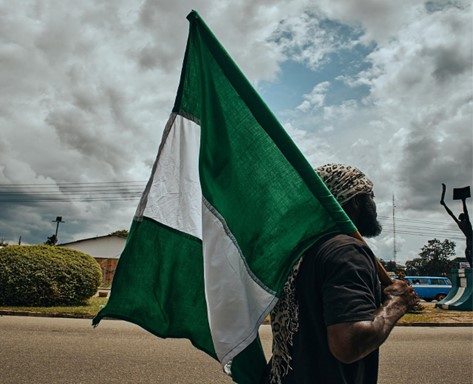
If Mohammed Bouzizi were a Nigerian

By Emeka Blaise Okpera

What is today known as the “Arab Spring” started with the singular action of one man, Mohammed Bouzizi, the young Tunisian fruit seller who set himself ablaze as a result of constant harassment from the authorities. If anyone had told Mohammed Bouazizi that morning, before leaving his house for his daily activities, that his impulsive action would ignite a revolution that would sweep away long-term regimes not just in Tunisia, but also in Libya, Egypt, Algeria, and some other countries in the Middle East, perhaps he would have dismissed it with a smirk or snigger. 

Fortunately and unfortunately, it happened, and no one saw it coming. Such is the nature of revolutions all over the world;they are not planned, but when they happen, no force can stop them until they achieve their desired results. Revolutions are offshoots of long-suppressed or bottled-up anger accumulated over time. It gets to a point where people can no longer take it.

For context, it is instructive to point out that Bouzizi’s self-immolation could not have ignited a revolution. His actions sparked widespread public anger because a vast majority of Tunisians were sick and tired of the regime of the then-ruling family, Ben Ali, who had been in power for over two decades. 

When the people rose in unison, not even Tunisia’s entire military apparatus could stop them. This reminds me of an Igbo adage that says, ” When one man cooks for the public, the public will consume it, but when the public cooks for one man, he cannot consume it.” Would Mohammed Bouzizi’s singular action have ignited the same form of public outrage it did in Tunisia if it had happened in Nigeria?

The answer is no! Many factors can be attributed to this. Firstly, Nigerians are largely divided along ethno-religious lines. This is one of the greatest advantages that political office holders enjoy in Nigeria, and they have learnt to put it to good effect. There is often a sense of communal ownership that compels particular sections of the country to protect their own. 

To the average Nigerian, political leadership is seen from the perspective of turn-by-turn. More often than not, a typical Nigerian has the notion that occupants of political office are in a position to serve the turn of their people. Therefore, they often form a mob to defend him to the last! To such people, it doesn’t matter if a political office holder is living up to the demands of his office. There is a school of thought that believes Nigerians love their oppressors as long as he is one of them! 

What this means is that Nigerians would first have considered the religious or ethnic background of a Mohammed Bouazizi to determine their reaction. Politicians would have reacted swiftly by giving it an ethnic or religious coloration. Tunisians were able to unite against the despotic regime of Zine El Abidine Ben Ali because every Tunisian sees himself as a Tunisian. 

None cared about the ethnicity or religion of Mohammed Bouazizi. In contrast, Nigerians prioritise their ethnic nationality above all else.  Instead of public outrage, Nigerians would have analyzed the situation that led to his actions while exonerating the government. In fact, any protest would have faced a counter-protest against it. This illustrates how unusually complex Nigerians are. A nation where the  people are divided against themselves cannot stand up to any form of oppression. 

Secondly, Nigerians are malleable. The average Nigerian can easily adapt to any situation, no matter how difficult. To say that Nigerians are resilient to the point of docility would be putting it mildly.  When pushed to the wall, a Nigerian doesn’t fight back but easily finds a way to break the wall to negotiate an exit. 

In the past and even recently, we have seen cases of Nigerians jumping into the Lagos lagoon due to economic hardships,yet this has never sparked any public outrage. Not many have fully recovered from the tragic incident of the shootings at the tollgate during the #EndSARS protest. We have experienced many Mohammed Bouazizis whose deaths have merely become fodder for content creators. 

Naturally, Nigerians often don’t take matters of value seriously. It’s typical for the average Nigerian to dwell on issues that have no meaningful impact on their lives while neglecting real-life challenges. Essentially, in Nigeria, it would be unthinkable for an individual’s act of self-immolation to provoke national outrage because such an act would be seen as extraordinary rather than mundane. The outcome of the #EndSARS protest still comes to mind.

Another factor that can be alluded to is ignorance. Nigerians are mostly unaware of their rights as citizens. There is a willful ignorance among Nigerians that enables those in government to get away with anything. This ignorance is present not only among those without formal education but also among highly educated individuals! This lack of awareness is another political capital that political office holders exploit to the disadvantage of citizens. In Nigeria, there is a prevailing belief that the people cannot fight the government and win. This belief is purely borne out of ignorance because the reverse is true – no government can fight the people and win! 

Those who don’t learn from history always repeat it. While it is true that a revolution cannot happen in Nigeria due to some of the factors mentioned above, it is important to note that political office holders should learn from history. Nicolae Ceausescu was the strongman of Romania. He had a monstrous reign from 1967 to 1989, and he thought he had it all covered until there was a spark and the people spoke. His story is a clear testament to the fact that the power in the people is far greater than the people in power. 

What is most important is that Nigeria doesn’t reach the point where violent change becomes justifiable. After all, Tunisians were docile and malleable for 23 years before a Mohammed Bouazizi happened. Political office holders must tread with caution and realize that power is transient. 

Political leadership should be for the common good, not for personal gain. No individual should be carried away by the complacency of office. The people should remain the central focus of governance. As such, leaders must act responsibly at all times. It serves everyone’s interest for both the government and the governed to be on the same path. This is because the task of building a nation is a collective responsibility. 

Blaise Emeka Okpara, a Student of International Institute of Journalism writes from Abuja and can be contacted on: emyokparaoo1@gmail.com.

Robert Francis Prevost becomes first American Pope

By Muhammad Abubakar

In a historic development, the Catholic Church has elected Robert Francis Prevost as the new pope, marking the first time an American has ascended to the papacy. The decision was announced from the balcony of St. Peter’s Basilica following the traditional white smoke signal from the Sistine Chapel on Thursday.

Pope Robert I, as he will now be known, hails from Chicago, Illinois, and previously served as the Prefect of the Dicastery for Bishops. Known for his pastoral sensitivity and administrative skill, the 69-year-old cleric has long been regarded as a bridge between tradition and reform within the Church.

Thousands of pilgrims gathered in St. Peter’s Square to witness the historic moment, many expressing surprise and hope over the unprecedented choice.

The new pontiff addressed the faithful in multiple languages, asking for prayers and unity in a world “deeply in need of peace, compassion, and truth.”

Analysts see his election as a signal of the Church’s growing global inclusivity and a recognition of the American Church’s rising influence.

More details about his vision and forthcoming priorities are expected in the coming days as he officially begins his pontificate.

Buhari loyalists reaffirm support for Tinubu, pledge to remain in APC

By Uzair Adam 

Amid speculations of discontent within the ruling All Progressives Congress (APC), key loyalists of former President Muhammadu Buhari have reaffirmed their support for President Bola Tinubu and pledged to remain in the party.

The group, operating under the Forum of the defunct Congress for Progressive Change (CPC), made the declaration in Abuja on Thursday, countering reports that some Buhari allies were planning to exit the APC.

Those present at the meeting included Katsina State Governor Dikko Radda, Niger State Governor Umar Bago’s representative, former Nasarawa State Governor Senator Tanko Al-Makura, former Katsina State Governor Aminu Bello Masari, and Chairman of the National Drug Law Enforcement Agency (NDLEA), Gen. Buba Marwa (retd).

Other notable figures in attendance were former Voice of Nigeria Director General Osita Okechukwu, former presidential aide Okoi Obono Obla, former APC National Secretary Waziri Bulama, ex-lawmaker Farouk Adamu, a representative of Speaker Tajudeen Abbas, and Foreign Affairs Minister Maitama Tuggar.

The forum emphasised that although individuals are free to pursue personal political interests, they should not do so under the guise of representing former CPC members.

Responding to whether the bloc would support Tinubu beyond the current administration, Hon. Farouk Adamu expressed confidence, saying, “We are with Tinubu just like our leader (Buhari), and it is our hope that Tinubu continues to remain our leader.”

Nigeria clears IMF debt, exits debtor list

By Muhammad Abubakar

Nigeria has officially cleared its outstanding debt to the International Monetary Fund (IMF), marking a significant milestone in the country’s economic recovery efforts. This development follows a series of substantial repayments totalling $1.22 billion between the fourth quarter of 2023 and the second quarter of 2024, reducing Nigeria’s IMF debt from $3.26 billion in June 2023 to $1.16 billion by June 2024.

The IMF has acknowledged Nigeria’s commitment to meeting its financial obligations, noting that the country has no overdue payments as of April 30, 2024. This achievement reflects the government’s dedication to fiscal responsibility and economic reform.

In a statement, IMF First Deputy Managing Director Gita Gopinath commended Nigeria’s efforts, stating that the country’s debt level is “moderate and not high risk,” provided that sound economic policies are maintained. She emphasised the importance of continued domestic revenue mobilisation and targeted social interventions to sustain this progress.

Nigeria’s Finance Minister, Wale Edun, highlighted the government’s initiatives to enhance social investment programmes and strengthen domestic resource mobilisation through tax reforms and digitalisation. He also noted increased crude oil production, significantly boosting national revenue.

This financial turnaround positions Nigeria to engage more robustly with international financial institutions and investors, potentially attracting increased foreign investment and fostering economic growth.

The successful clearance of IMF debt underscores Nigeria’s commitment to economic stability and sets a positive precedent for other nations facing similar challenges.

Kano bans live political programmes

By Hadiza Abdulkadir

The Kano State Government has imposed an immediate ban on all live political programmes aired by media organisations in the state.

As Kano Times online news media reported, the decision was announced during a quarterly stakeholders’ meeting organised by the Ministry of Information and Internal Affairs. The meeting, chaired by the Commissioner for Information, Comrade Ibrahim Abdullahi Waiya, brought together government officials and media executives.

In a statement signed by Sani Abba Yola, Director of Special Duties at the ministry, the ban aims to prevent the spread of inflammatory content that could jeopardise the state’s cultural and religious harmony.

“We are not trying to stifle political dissent,” Comrade Waiya told the gathering. “Our objective is to protect the sanctity of our cultural and religious values.”

Further measures were introduced during the meeting. All individuals invited for interviews on media platforms must now sign an undertaking committing to avoid abusive, defamatory, or culturally insensitive remarks.

Presenters have also been directed to avoid provocative questions or gestures that might provoke defamatory or damaging statements against individuals or the state.

Waiya acknowledged a recent decline in the use of inflammatory language on air, crediting the ongoing collaboration between the ministry and media houses for the improvement.

He also disclosed that the government has rolled out sensitisation campaigns targeting political presenters, media commentators, and members of the Council of Friday Imams to promote responsible public discourse.

“We want to ensure that all public communication is done with integrity—free of defamation and in a way that protects the reputation of Kano State,” Waiya said.

NAHCON closes registration for 2025 hajj as airlift of pilgrims begins May 9

By Abdullahi Mukhtar Algasgaini

The National Hajj Commission of Nigeria (NAHCON) has announced the closure of registration for the 2025 Hajj pilgrimage, with no further applications being accepted after May 2, 2025.

The decision was made to allow the commission to focus on the smooth airlift and welfare of pilgrims.

NAHCON Chairman, Professor Abdullahi Saleh Usman, secured an extension for registration beyond the initial March 25 deadline, but the process has now officially ended.

Any payments made after May 2 will be refunded.

The first batch of pilgrims is set to depart Nigeria on May 9, with the inaugural flight taking off from Owerri, Imo State.

Air Peace will transport 315 pilgrims from Imo, Abia, and Bayelsa states. Imo State Governor, Senator Hope Uzodimma, will host the event, with Vice President Senator Kashim Shettima attending as Special Guest of Honor.

NAHCON’s advance team arrived in Owerri on May 7 to oversee final preparations. A total of 40,671 pilgrims registered under the government quota for this year’s Hajj.

On the first day of airlift, four flights will depart simultaneously: Max Air from Bauchi, two FlyNas flights from Kebbi and Osun (via Lagos), and another from Niger State.

These flights will carry 2,528 pilgrims to Madina.

Further updates will be provided as the pilgrimage progresses.

Borno governor bans sales of alcohol, accuses security personnel of fueling crime

By Abdullahi Mukhtar Algasgaini

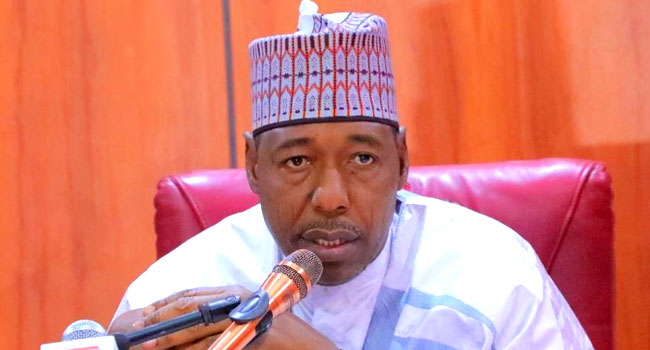
Borno State Governor, Professor Babagana Zulum, has imposed a ban on the sale of alcoholic beverages and blamed security personnel, including military and police officers, for enabling criminal activities in the state.

Speaking on Tuesday during the inauguration of a reconstituted committee to tackle illegal hotels, brothels, and criminal hideouts, Zulum accused dismissed and serving security officers of promoting crimes such as radicalism, prostitution, and drug abuse.

“Most of these criminal acts are committed by dismissed and even active security personnel, alongside civilians. There should be no sacred cows if we want to end terrorism and other vices,” Zulum stated.

The governor’s ban follows rising cases of cult clashes, theft, and violent crimes linked to alcohol consumption.

The new committee includes military, police, and civilian task force members to enforce the crackdown.

The move raises questions about its impact on state revenue, particularly amid ongoing debates over tax reforms championed by Zulum and other northern leader.

About the Katsina lavish wedding

By Prof. Abdussamad Umar Jibia

Some years ago, a group of students from Kaduna state came to my office, lamenting how Muslim elders imposed a Christian candidate on them and rigged him into power. They even told how an Emir and some elders called Islamic scholars and warned them against remonstration in their preachings. “How can we bear this disgrace?” my students were frustrated.

I said, “You can solve the problem and make governance difficult for the imposed Governor”. The young people paid attention, expecting an “academic” solution to their problem. “The Governor cannot rule Kaduna state alone. Since the majority are against him, why not look for and beat up anyone who accepts his political appointment?” I offered.

My students looked at one another and said, “Sir, there will be chaos and mass arrest”. Poor them, they want to bring change, are not happy with what is happening, and are afraid of arrest. “The alternative is to support the unpopular Governor and struggle for your share of the haram”, I finalised the discussion.

In the case of my Kaduna state students, the problem was election rigging, even though there was relative peace in their state, at least up to that time. In the case of Katsina people, it has been killing, kidnapping, rape, stealing, etc. How have the people reacted to the politicians they elected to solve the problem of insecurity? 

Several people have asked why they no longer see my comments on insecurity, and I always reply that I am busy with other things. I am busy, but not too busy to write a few paragraphs to express my opinion. However, it reached a point where I began to ask, as far as insecurity is concerned, who is the culprit? Whom should I write to blame? The Government? The military? The masses?

Going by the advice I gave Kaduna youth, one would expect that no elected politician would have the guts to go to any community ravaged by insecurity in Katsina or nearby states. Unfortunately, that is not the case. I saw people who lost some of their closest relatives to banditry staunchly supporting a politician, whose actions mean that their losses do not matter. Bandits displaced a community, but I saw their youth on social media actively supporting politicians who were giving public money to bandits in the name of the peace agreement.

If you are actively fighting for those victims through writing or interviews, and you offend any politician, you should be ready to get a good beating from some of the banditry victims if that is what would please the politician.

So, whom should I blame? Do the people take no blame? What of the military? Should I write to blame the masses as weak as they are? Should I write to condemn the military as strongly as they are? Should I not be afraid of arrest like my Kaduna students? If I offend the military, and you must surely offend them if you will tell the truth about insecurity, who would bail me out when I am arrested and tagged a troublemaker or any name they decide to give me?

The cheapest people to blame are the politicians. Everybody is against them. Public money is in their hands, and they are spending it on weddings and musicians, just like we witnessed in Katsina. But are all the people criticising them sincere? Would they not do the same if they were in their position? Some of these things were the reason Nigerians voted PDP out ten years ago, and the “saints” they elected are doing the same.

If you are expecting me to continue directing my blame to politicians, you will be disappointed. While they have their fair share of the blame for insecurity, we also have our share as victims. 

The masses should take my advice to the Kaduna youth if they can. They can only beat the politicians or join them. For the politicians, I have no words. Only the masses can deal with them if they take the first side of my advice. For me, I shall keep mum about the military because I am a coward.

For other Nigerians, continue to enjoy yourselves before insecurity reaches your side. I pray it will not.

Prof Abdussamad Umar Jibia wrote via aujibia@gmail.com.

Military uncovers network smuggling fuel to Boko Haram in Borno

By Abdullahi Mukhtar Algasgaini

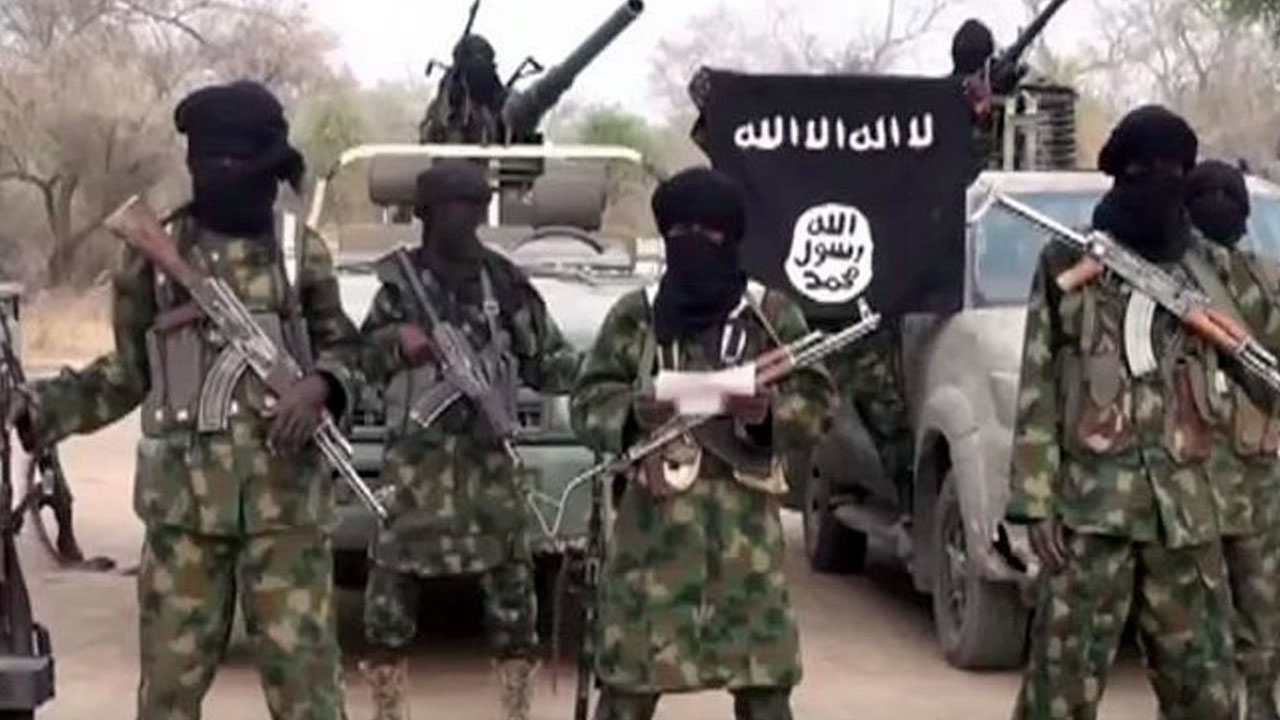
Troops of Operation Hadin Kai have uncovered a fuel-smuggling operation allegedly supplying Boko Haram insurgents in Borno State and neighboring Cameroon.

During a raid on Hadiza and Sadiq Filling Station in Maiduguri, soldiers caught workers loading 500 jerrycans of fuel, suspected to be destined for terrorist hideouts.

Intelligence reports indicate that smugglers often use modified vehicles to transport petrol to insurgent camps near Pulka and Cameroon’s border areas.

Several suspects were arrested and reportedly confessed to delivering fuel to terrorism-linked locations, though they denied knowing the recipients.

Military sources condemned the act, labeling the perpetrators “economic saboteurs” aiding terrorism.

Authorities have vowed to intensify surveillance and prosecute all collaborators, warning that such sabotage of national security will not be tolerated.

Army captain, soldier slain in fresh BH attack in Borno

By Uzair Adam

An army captain and a soldier have been killed following a fresh attack by Boko Haram insurgents in Izge community, Gwoza Local Government Area of Borno State.

The terrorists reportedly stormed the community around 1 a.m. on Wednesday and engaged troops in a gun battle.

Confirming the incident, the Emir of Gwoza, HRH Alhaji Mohammed Shehu Timta, said the attackers met strong resistance from the military and local security groups.

“It’s true that my people in Izge community came under Boko Haram attack around 1 a.m. Unfortunately, a captain and a soldier paid the supreme price,” he said.

He, however, noted that the joint efforts of the military, Civilian JTF, local hunters, vigilantes, and community members led to the killing of three insurgents.

He added that the attackers abandoned more than 10 motorcycles and weapons before fleeing into the bush, where security operatives are currently pursuing them.

While praying for the souls of the fallen soldiers, the monarch applauded their bravery and sacrifice in defending the area.

“May Allah (SWT) grant the departed souls Jannatul Firdaus. Our gallant men are still in the bush, sacrificing their lives to maintain peace,” he said.

He also appreciated the Borno State governor, Prof Babagana Umara Zulum, for the consistent logistics support and urged the federal government to equip security operatives with advanced technological tools to fight terrorism.

The North East region has witnessed a spike in insurgent attacks. On Saturday, at least four soldiers were killed in an attack on the 27 Task Force Brigade in Buni Yadi, Gujba LGA of Yobe State, where equipment was also destroyed.

That attack occurred less than a day after the North East Governors Forum met in Damaturu, adopting a multidimensional approach to address insecurity in the region.

Buni Yadi is about 65 kilometers from Damaturu and is the hometown of the state governor, Mai Mala Buni.

The latest assault comes two weeks after President Bola Tinubu charged service chiefs to end the persistent killings.