Admin

Police crack down on officers over extortion incident along Benin bypass

By Muhammad Abubakar

The Nigeria Police Force has taken swift action against six officers caught in a viral video engaging in extortion along the Benin bypass.

The officers, including a Chief Superintendent of Police who supervised the team, were brought before the Inspector-General of Police, Kayode Adeolu Egbetokun, at the Force Headquarters. The IGP described their conduct as “shameful, distasteful, and utterly unacceptable ” and ordered immediate disciplinary action.

According to a police statement, the officers have been queried, and orderly room trials for the Inspectors involved are underway.

The Force said this move underscores its commitment to professionalism, integrity, and accountability. The public was assured that such misconduct would not be tolerated and that appropriate sanctions would follow.

April Fools? Not for Nigerians—A stark glimpse into security and anti-graft realities

By Haroon Aremu Abiodun

April is traditionally a month of pranks and laughter. But in Nigeria, the joke was on no one except, perhaps, on a nation whose security architecture is under siege from terrorists, bandits, and kidnappers.

Far from fearing our security operatives, criminal elements across the country displayed shocking audacity, reminding us that the battle for Nigeria’s soul remains bloody and unresolved.

In a horrific display of lawlessness, notorious bandit leader Bello Turji celebrated Eid in Sokoto by executing kidnapped victims, recording and broadcasting the gruesome act without fear of consequences. Across parts of Katsina, Kaduna, and Zamfara, bandits not only continued their reign of terror but have begun levying taxes and operating parallel governments in areas still supposedly under state control.

Compounding public anxiety, National Security Adviser Nuhu Ribadu made headlines when he advised families of kidnapped victims to “stop paying ransom.” While theoretically sound, the reality is far more brutal. Without swift and credible government intervention, desperate families have no option but to finance their tragedies. Until state forces can decisively rescue captives, this vicious cycle will continue.

In just one month, attacks escalated across Plateau, Kwara, and Benue States, leaving communities in mourning. Boko Haram and ISWAP insurgents resurfaced with deadly ambushes, signalling their continued relevance in Nigeria’s security equation.

April’s bloodshed has revealed operational lapses and a deep strategic and moral crisis. The Office of the National Security Adviser (ONSA) must urgently intensify efforts, especially by working discreetly with rescued victims to extract intelligence, boost surveillance systems, and dismantle criminal networks worldwide.

While commendable successes by security operatives, such as rescuing hostages and recovering illegal arms, were recorded, they were dwarfed by the scale of atrocities witnessed within just 30 days.

The Department of State Services (DSS), often criticised and even facing calls for disbandment, must seize this moment to redeem itself. Encouragingly, recent commendations from the Plateau State Government and Governor Uba Sani of Kaduna for the DSS’s contributions to curbing insecurity suggest a glimmer of institutional reliability. Their successful arrests of gunrunners and dismantling of kidnapping syndicates are steps in the right direction.

Notably, the DSS also intercepted a British Army Major in Delta State attempting to smuggle 50 AK-47 rifles and ammunition—a major bust, and a signal that the service can perform under pressure. Their ability to withstand calls for the suspect’s release further strengthens public confidence.

Going forward, DSS and ONSA must strengthen collaboration through real-time joint operations, intelligence sharing, and visible outcomes. The Nigerian Intelligence Agency (NIA) also must integrate its overseas capabilities with ONSA’s domestic strategies. Today’s criminals are sophisticated—our response must be smarter.

Beyond the battlefield, Nigeria’s fight against corruption also demands attention. The Economic and Financial Crimes Commission (EFCC) must intensify efforts with ongoing arrests of internet fraudsters and by pursuing justice in high-profile cases involving figures like Betta Edu and Sadiya Umar Farouq.

Regarding Aisha Achimugu’s case, the EFCC must adhere to due process and uphold its promise to act with diligence and integrity. Recent arrests, including that of Bauchi State Accountant General Sirajo Muhammad Jaja, show the commission is active, but visibility and transparency are critical.

Despite receiving accolades, such as the Government Spokesperson Award and the Courage in Justice and Transparency Award from the Nigerian Human Rights Community, EFCC must do more to recover funds stolen through schemes like CBEX. Collaborating with Interpol to dismantle international fraud networks and prevent future scams using forged EFCC certificates will reinforce the commission’s credibility locally and abroad.

Transparency is the only antidote to growing public cynicism about the Commission’s integrity.

The Independent Corrupt Practices and Other Related Offences Commission (ICPC), though laudably organising programs like its stakeholders’ meeting on accountability in local government, must now transition from talk to action. Corruption within Ministries, Departments, and Agencies (MDAs) remains rampant. A recent ICPC report showed that over 60% of corruption cases involved diverting healthcare funds—a scandal demanding decisive intervention.

April has ended, but the wounds it inflicted are still fresh. If we’ve learned anything, it is that the fear of the Nigerian state must be restored—not with hollow rhetoric, but through coordinated, courageous, and relentless action.

The enemies of Nigeria no longer fear our uniforms, our institutions, or the name “government.”

The time to act was yesterday. Today is already a dangerous gamble. Tomorrow may be too late.

Haroon Aremu Abiodun is a PRNigeria Fellow and author. He can be reached via exponentumera@gmail.com.

World Bank urges FG to increase taxes on alcohol, tobacco, sugary drinks as loan condition

By Abdullahi Mukhtar Algasgaini

The World Bank has advised the Federal Government of Nigeria to impose higher excise duties on harmful goods, including alcohol, tobacco, and sugar-sweetened beverages, as a key condition before approving a $750 million loan.

The recommendation is part of broader measures aimed at boosting non-oil revenue and reducing Nigeria’s reliance on petroleum earnings.

The World Bank believes that increasing taxes on these products will help improve public health by discouraging excessive consumption while generating additional government income for development projects.

According to the World Bank, the proposed tax hike will:

1 Enhance public health by reducing the consumption of harmful products.

2 Increase government revenue for critical infrastructure and social programs.

3 Support economic diversification by strengthening non-oil sectors.

This suggestion comes at a time when Nigeria’s economy faces significant pressure, including rising debt, inflation, and declining oil revenues.

The move aligns with global efforts to curb health risks associated with tobacco, alcohol, and sugary drinks while ensuring sustainable economic growth.

The Federal Government is expected to issue an executive order to implement the new tax policy as part of the loan agreement.

If approved, the measure could mark a major shift in Nigeria’s fiscal strategy, balancing public health concerns with economic recovery efforts.

Mob kills DPO in Rano over death of suspect in custody

By Uzair Adam

A Divisional Police Officer (DPO) Baba Ali and one other individual have lost their lives following a violent disturbance in Rano Local Government Area of Kano State.

The development was disclosed in a statement issued by the Kano State Police Command on Monday and signed by its spokesperson, SP Abdullahi Haruna Kiyawa.

According to the statement, the unrest began on the evening of Sunday, May 25, after a motorcycle mechanic, Abdullahi Musa, was arrested over allegations of reckless and dangerous riding.

He was suspected to be under the influence of substances and was detained at the Rano Police Division.

Police said the suspect later showed signs of weakness and was taken to the Rano General Hospital, where he died the following morning, May 26, while receiving treatment.In reaction to his death, the Command stated that a group of miscreants attacked the Rano Police Division, looting and setting parts of the building and two vehicles on fire.

Ten additional vehicles were also destroyed during the chaos.

Ali, who was critically injured in the attack, was rushed to Aminu Kano Teaching Hospital but died while receiving treatment.

Police confirmed the arrest of 27 suspects linked to the violence, adding that normalcy has been restored in the area.

The Commissioner of Police, CP Ibrahim Bakori, PhD, visited the scene and also paid a condolence visit to the Emir of Rano, His Highness, Ambassador Dr. Mohammed Isah Umar (Autan Bawo 19).

He ordered a thorough and transparent investigation to uncover the causes of the incident and ensure justice is done.

While condoling with the family of the late DPO, the Command urged residents to remain calm and not resort to self-help, assuring the public of its commitment to peace and order throughout the state.

Protest turns violent in Kano over young man’s death in police custody

By Uzair Adam Tension engulfed Rano Local Government Area of Kano State on Monday following the death of a young man, Abdullahi Musa, who reportedly died in police custody during interrogation.

It was gathered that Abdullahi was arrested on Sunday for an alleged traffic offence. His sudden death sparked outrage in the community, prompting a protest, mainly by youth.

What started as a peaceful demonstration soon turned violent when protesters stormed the Rano Divisional Police Headquarters and set it on fire.Amid the unrest, a police officer was reportedly injured after being attacked.

The officer, whose identity remains undisclosed, is currently receiving treatment at an undisclosed hospital.

Eyewitnesses said the situation escalated when police allegedly opened fire to disperse the crowd, injuring two young men in the process.

“We were protesting peacefully and demanded answers about Abdullahi Musa. But things got out of hand when the police began shooting,” a resident said.

Kano State Police Public Relations Officer, SP Abdullahi Haruna Kiyawa, confirmed the incident and assured that a full investigation would be carried out.

“A thorough investigation will be conducted to uncover the truth, by the Grace of God,” he said.

Gov. Uba Sani commissions Kagarko Township Road after 20 years of neglect

By Sumayyah A. Ishaq

Kaduna State Governor Senator Uba Sani on Monday commissioned the Kagarko Township Road Project in Kagarko Local Government Area of Kaduna, marking his two-year anniversary in office.

Speaking during the commissioning ceremony, which was attended by top government functionaries, members of the State Executive Council and the Kaduna State House of Assembly, and traditional, religious, and political leaders, among others, Governor Uba Sani Sanwo-Olu expressed confidence that the delivery of the projects will further enhance economic achievements in the Kagarko area of the State.

He further said, “The commissioning of this road project is another fulfilment of our administration’s commitment to fostering sustainable development through the continuous provision of efficient infrastructure”

In his welcome address, the Executive Chairman of Kagarko Local Government Council, Honourable Muhuyideen A. Umar, said the construction and commissioning of the road stands as another milestone in Governor Uba Sani’s administration’s commitment to infrastructure development that enhances the socio-economic well-being of Kagarko residents.

It would be recalled that prior to the intervention of the Gov Uba Sani administration, the dilapidated Kagarko township road had remained in a state of disrepair for over two decades while motorists and residents navigated in high-risk conditions.

Man sentenced to death for setting mosque ablaze in Kano

By Maryam Ahmad

An Upper Shariah Court in Kano has sentenced one Shafiu Abubakar to death by hanging for setting fire to a mosque in Gadan village, Gezawa Local Government Area, leading to the death of several worshippers.

The tragic incident occurred earlier this year when Abubakar reportedly locked the mosque doors and poured petrol before setting the building ablaze during early morning prayers. The attack claimed the lives of multiple worshippers and left others with severe injuries.

Presiding over the case, the judge described Abubakar’s actions as deliberate and heinous, noting that the punishment was in line with Shariah provisions for such offences.

The sentencing has drawn mixed reactions. Some residents welcome the verdict as justice served, while others continue to mourn the devastating loss.

Authorities have urged communities to remain calm and uphold peace and coexistence.

A fuss by the masses and the propagandists’ defensive brouhaha

By Abdullahi Yusuf

Nigerians’ incessant stir on social media about Nigeria’s economy and the current president’s leadership style has become common business across all the platforms available to citizens. On the other hand, there is a group of netizens employed by the government to serve as a shield from the masses’ uproar about the government’s incapacity. They vehemently respond to critics directly aimed at their paymasters.

Such people exist at all levels of government, and they are taken care of by the appointed social media aides of any administration.

My state, the liberal state or centre of learning, is currently in a situation that has turned into a noisy and confusing commotion, drawing significant attention from people everywhere. According to the masses, the state is striding in the opposite direction, unlike before, when it became a beacon of development that other states looked up to. The only development people are observing is exaggerated projects on social media.

The PR Boys, as they are called on X (formerly Twitter), or Data Boys, as they are called on Facebook, are recruited to counter any narrative against the administration. They properly utilise the “Agenda Setting Theory” concept by repeatedly posting about a single project over time to create an imaginary delusion that the administration is doing better. As directed by their paymasters, they are doing quite an impressive job.

The sad reality is that people doing such jobs are mostly educated young people who are unemployed or underemployed. If you are to have an honest conversation with them, they will lament that they are doing it for what they are being paid or because of the hollow promises made by their masters. When informed people try to talk sense into them, which they usually consider an attack directed at their masters, the masters give them morale by reminding them that they also began like them and now are in higher positions in the government. They keep enslaving their minds with promises, whereas only a few of them can be uplifted.

There was a concern regarding the state of the general hospital in Rigasa regarding human resources. The hospital, which caters for the health needs of over a million residents living in the community, is not equipped with the facilities, equipment, and staff needed by any standard health facility. Instead of these gullible propagandists considering it a call to action, as it affects them directly or indirectly, they began to call the agitators unpleasant names, all in the name of impressing their paymasters. The concern was directed to the state health ministry and addressed to the Commissioner. 

The ministry’s response on their page reiterated the governor’s effort to renovate the state’s existing health facilities. The said project was part of the Immunisation Plus and Malaria Progress by Accelerating Coverage and Transforming Services (IMPACT), which the World Bank is funding (I stand to be corrected). The project was started in 2020 and is set to end in 2030. We don’t need to mention the administration that began hosting the project in the state.

Ideally, during campaigns, everybody has their preferred candidate against their opponents. Waging support for your candidate and calling on others to support them is a right that no one should be denied. But for developmental purposes, after elections, it should be the elected leaders against the masses, not in a violent or degrading manner, but in keeping the leaders on their toes and reminding them of their primary responsibilities. These propagandists are making it look like anyone criticising the government is an enemy of the ruling class.

When concerned citizens bring up facts about the government’s inaction and lack of tangible evidence to counter them, they immediately stoop to emotional blackmail. Using words like “hypocrisy” or telling the world they are proud of being political puppets just annoys or silences those calling their paymasters to order. Many of them cannot stand an evidence-based argument due to insufficient facts. They receive orders from their superiors in their various groups to counter anything they consider mischievous about their masters online. They will flood your timeline or comment section with the duplicate content they copied from their groups as directed by their leaders.

I tweeted on X, “There is one state in Nigeria where you can only find out what the governor is doing on social media. But in reality, nothing has been on the ground since the last administration. Guess the state!” The tweet was viewed by over 12 thousand people within 10 hours and engaged by hundreds. To my greatest surprise, people kept mentioning my state in the comments and quotes. This is evidence that all the Data Boys and PR guys are doing is nothing short of mere propaganda.

Ultimately, I want to call on these propagandists to know that those they criticise for calling out the government are closer to them than those in the government. And the damage you’re covering for the ruling class will affect not only those criticising the government, but you may be the first to receive the consequences. Those sending you to criticise the former administration—most of them were part of it. They wined and dined with the then-ruling class, cleaned their mouths, and now eat with the current administration while spitting on the faces of their former masters.

May we be guided.

Abdullahi Yusuf writes from Rigasa, Kaduna. He can be reached via abdoolphd@gmail.com.

Reps withdraw compulsory voting bill amid public outcry

By Anwar Usman

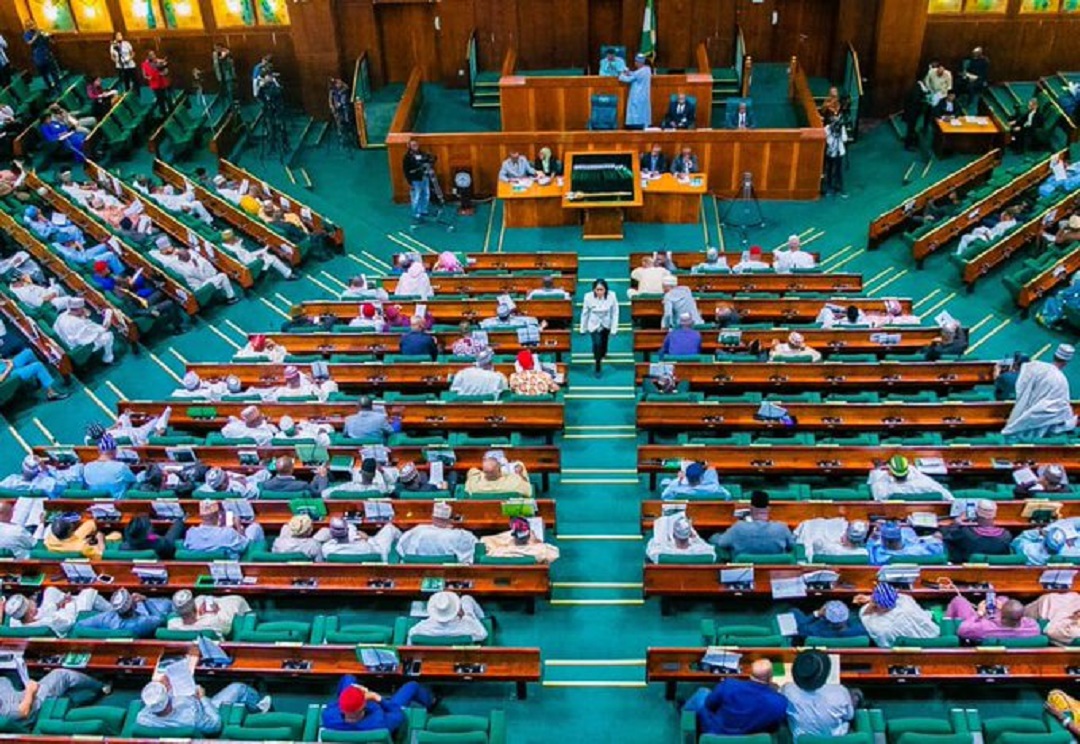
The Speaker of the House of Representatives, Tajuddeen Abbas has withdrawn a bill aimed aimed at making voting compulsory for all eligible Nigerians.

The bill, which he co-sponsored with Daniel Asama Ago, was meant to change the Electoral Act 2022 to encourage more people to vote and strengthen democracy.

In a statement on Monday, signed by the media aide to the speaker, Musa Krishi, said the decision to pull the bill came after speaking with many people and groups across the country.

“From the start, the goal was to get more people involved in elections and strengthen democracy by boosting voter turnout,” the statement said.

The bill had passed second reading in the House on Thursday but it sparked debate.

Some people supported it, saying it would lead to better voter turnout while others said it would take away personal freedom and would be hard to enforce in a country as diverse as Nigeria.

The speaker, pointed out that countries like Australia, Belgium, and Brazil have high voter turnout thanks to compulsory voting, but stressed that Nigeria must find its own way that suits its people.

Abbas further stated that “Lawmaking is about serving the people, and any new law must respect personal freedom”.

Instead of forcing people to vote, he said the government would look for another alternative that’ll encourage voting, especially among young people and those voting for the first time.

“This withdrawal gives us time to talk more about how to build a culture of voluntary voting that supports our democracy and respects citizens’ rights,” he added.

Many Nigerians had criticized the bill, urging leaders to focus on solving problems like election violence, lack of trust in the system, and poor planning on election days, issues that stop people from voting.

FCTA seals PDP national headquarters

By Anwar Usman

Officials from the Federal Capital Territory Administration, under the leadership of Minister Federal Capital Territory, Nyesom Wike, have sealed the National Headquarters of the Peoples Democratic Party (PDP)A group of FCTA staff, locked the entrance gate of Wadata Plaza, the PDP’s national secretariat at exactly 2:06 pm, alocated in Wuse Zone 5, Abuja.

This action follows the recent announcement by the FCTA on Sunday, stating its intention to reclaim properties affected by the revocation of 4,794 land titles due to non-payment of ground rent spanning 10 to 43 years.

Details later…