Month: November 2024

Lakurawa as a diversionary tactic

By Prof. Abdussamad Umar Jibia

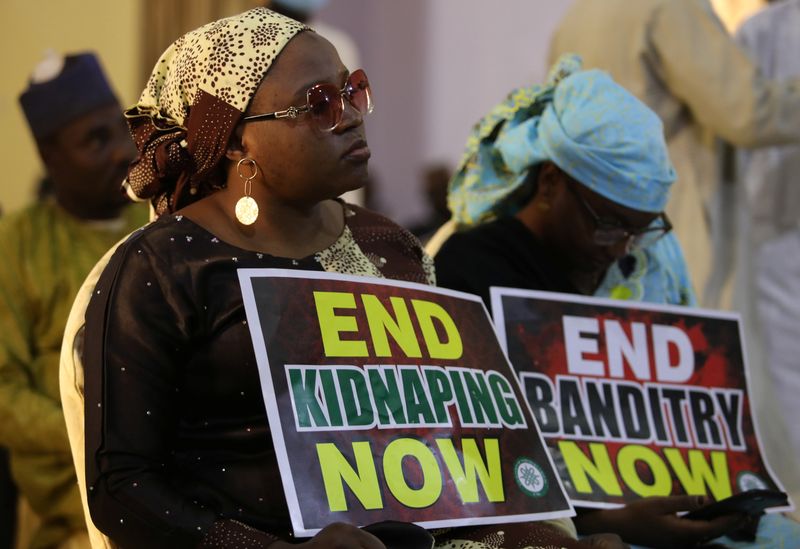
For nearly a decade, the North West geopolitical zone of Nigeria has been suffering from the menace of banditry. The bandits who live in the vast forest spanning several states in the Northwest and North-central zones started as cattle rustlers before metamorphosing into fully pledged armed robbers. They attack communities, schools, travellers, etc. Wherever they go, it is a story of killing, kidnapping, rape, arson and other unprintable atrocities. 

Bandits lack the civility of the erstwhile armed robbers. In those days, armed robbers only sought money and valuables like jewellery. Once they had them, they were satisfied and would leave without dropping blood. That is not the case with bandits. When they visit a community or block travellers on highways, they usually start by killing some before kidnapping others. 

Payment of ransom is not a guarantee of getting the kidnapped victim freed. They may collect ransom from relatives and still kill the victim. There are many examples. 

Bandits’ locations and leaders are well known to the Government and members of the communities in which they operate. Many of them serve as the de facto government in their domain of operation. This is not a story I am telling from one of those video clips circulating on social media. Some of my blood relatives have been going to work on the farm of the bandits’ kingpin, who is in charge of their area. 

To agree to live under the protection of an “officer”, the de facto rural government of Jibia and Batsari, a village has to send its elders with some money to go and beg for him to accept them. You may wish to go back to my writeup on “Submission to bandits authority”.

However, an “officer” is not the only bandit leader known to the government and the people. There are more deadly and more popular “officers”. One of them is Ado Aleru, who killed dozens of villagers in Katsina State and told the BBC Hausa service that he doesn’t kidnap; he only kills. Asked to give the number of people he killed, he said it is too large to remember.

Another officer is Bello Turji, who, among other crimes, once burned a passenger bus with 30 people in it days after opening fire on a village market that claimed 60 lives in Zamfara state. He is popular because he speaks frequently to the public. That, however, doesn’t make him the deadliest.

Dogo Gide is another “officer” who was notorious for, among other things, the abduction of 90 students and teachers of FGC Yauri, 11 of whom he married off in the process. 

Among the many popular “officers” is Dankarami, who publicly confessed to killing many combined troops of Nigeria and Niger Republic in addition to kidnapping and killing many innocent citizens in Katsina and Zamfara state. 

The above crime leaders and several others in their category are still alive and active.

The Buhari administration made the first blunder in dealing with the menace of banditry. The federal government under Buhari asked governors of the affected states to strike a peace deal with the bandits. Peace agreements were sealed between some state governments and bandits in 2016 and 2019; in both cases, the latter reneged. 

Unlike what some of their sympathisers would want us to believe, the bandits are not freedom fighters but pure criminals and stark illiterates. The only thing that would make them drop their weapons is a continuous flow of cash from the Government, the kind of cash they make from their criminality. That is unrealistic for a Government struggling to pay its civil servants a paltry minimum wage. Hence, the peace deals were failed under Buhari.

Bandits’ sympathisers who gave Buhari the wrong advice have found their way into the Tinubu Government. The first indication of that is what a young Islamic scholar revealed early this year. The scholar alleged that, under the financial influence of unnamed federal defence officials, some Islamic scholars are campaigning for not just amnesty for bandits but their appointments into public offices by the government. He alleged that he was among those invited to participate in the campaign but refused.

As far as we know, the federal government did not deny Sheikh Koza’s claims. If he had lied, he would have been arrested and asked to name the defence officials. Neither of those things happened.

Then came the kidnap and murder of the Emir of Gobir. With the public outcry that followed, the Federal Government had to show its will to fight banditry. Thus, the Minister of State of Defence and service chiefs were asked to move to Sokoto and end banditry. However, despite the budget, since the movement of the minister and service chiefs to Sokoto, the only bandit of note who was killed/arrested by the Government is Halilu Sububu. Banditry business has continued as usual, even with the presence of our nation’s security heavyweights.

For example, as reported by national dailies, the Funtua-Gusau highway was blocked by bandits on several occasions during this period with no consequences. For frontline local Governments in Katsina state, the attacks became worse. The only place considered safe in my local Government area was Jibia town, the local government headquarters. However, since the so-called “Operation Fansan Yamma” started, Jibia town has lost its safety as bandits attacked, killed and kidnapped with impunity.

As Nigerians were waiting anxiously for the expected miracle due to the presence of security chiefs, the Lakurawa issue came up. According to sources, Lakurawa is a group with similar ideologies to Boko Haram. They have a total number of just 250 in Nigeria and no cases of frequent attacks on communities. Lakurawa militants are said to have been in Nigeria for some years at the instance of some Kebbi communities who sought their protection against bandits. 

The question here is, why is the issue of Lakurawa now being brought up when we have a more serious problem to solve? Lakurawa are obviously not as dangerous as the bandits, and their presence in Nigeria has been linked to the failure of the government to protect citizens from bandits.

From day one, the approach of this and immediate past governments has made Nigerians believe they are not ready to end banditry. If they are now talking about some Lakurawa instead of our real problem, why should we not think they are using it to divert our attention?

My advice to President Tinubu is to remember that he was elected by Nigerians. Ribadu, Badaru, Matwalle or Christoper Musa did not contest and win an election. The president is responsible for appointing his aides, continuously monitoring them, and ensuring they are doing the right thing.

That the officials mentioned above are Northerners is immaterial.

Professor Abdussamad Umar Jibia wrote via aujibia@gmail.com.
Addressing Nigeria’s insecurity crisis 

By Fatima Dauda Salihu

Nigeria is a beautiful country with diverse cultures and vibrant people. Unfortunately, insecurity has become a significant problem in recent years, causing many to live in fear and struggle to access essential services. 

Despite being culturally rich and endowed with abundant mineral resources, Nigeria struggles with insecurity primarily due to negligence by the government and its citizens. Nigeria faces insecurity challenges across all six geopolitical zones. This insecurity takes various forms, including insurgency, terrorism, communal clashes, banditry, kidnapping, and piracy, and is fuelled by deep-rooted socio-economic, ethnic, and religious tensions.

The consequences of insecurity in Nigeria are dire, leading to displacement of communities, loss of livelihoods, economic stagnation, human rights abuses, and psychological trauma.

Effective governance is critical in addressing insecurity. The government must provide leadership, resources, and policy direction to tackle insecurity. Citizens also have a vital role to play by engaging in community policing, reporting suspicious activities, and promoting tolerance. 

The private sector can also contribute by investing in security initiatives and socio-economic development projects. Civil society organisations can advocate for policy changes and community empowerment. We can restore peace, stability, and prosperity to Nigeria by working together.

Strengthening institutions and promoting good governance, investing in education, enhancing security infrastructure and capacity building, promoting community engagement and conflict resolution, and addressing socio-economic inequalities can help mitigate if not. 

In conclusion, addressing the challenge of insecurity in Nigeria requires a holistic and multifaceted approach that encompasses effective governance, community engagement, strategic coordination among security agencies, and long-term investments in education and socio-economic development.

Ultimately, Nigeria’s future depends on our collective ability to address insecurity and promote peace, stability, and development. We owe it to ourselves, our children, and future generations to take action and create a better Nigeria.

Fatima Dauda Salihu wrote from Bayero University, Kano

OPEC, Russia reiterate importance of oil market stability for economic growth

By Sabiu Abdullahi

The Organisation of the Petroleum Exporting Countries (OPEC) and the Russian Federation have underscored the crucial role of oil and energy market stability in driving economic growth.

This emphasis was made during the Ninth High-level Meeting of the OPEC-Russia Energy Dialogue, held in Moscow, Russia, on November 22, 2024. 

Co-chaired by HE Alexander Novak, Deputy Prime Minister of the Russian Federation, and HE Haitham Al Ghais, Secretary General of OPEC, the meeting highlighted the significance of cooperation between OPEC and the Russian Federation. 

“Russia will continue to be a key player in the oil market, maintaining its status as a reliable supplier,” said Alexander Novak.

“The OPEC+ member countries are in constant contact, monitor the market situation and are ready to flexibly and promptly respond to any changes in market conditions.” 

Haitham Al Ghais praised the partnership between the Russian Federation and OPEC, commending the Russian Federation’s leadership role in the ‘Declaration of Cooperation’ framework.

The Secretary General also noted the importance of the OPEC-Russia Energy Dialogue as a platform for discussion and knowledge sharing. 

The meeting discussed developments in global oil and energy markets, climate change negotiations at COP29, and issues related to energy security, underinvestment, and market stability.

The next high-level meeting of the OPEC-Russia Energy Dialogue is scheduled to take place in Vienna, Austria, in 2025.

Multiple blows to a reactive North: Emilokan na your mate? 

By Shettima Dan’Azumi, ESQ

Northern Nigerian states are gradually losing a significant portion of their Federal Accounts and Allocation Committee (FAAC) allocation shares, which is undoubtedly their biggest revenue source. From the Local Government Funds and Fiscal Reform Bills to dividends from NLNG shares of NNPC and, today, the National Lottery, all these are part of the pool that makes up the monthly national cake distribution known as FAAC.

These developments are not surprising to any student of development. We all saw it coming. Early this year, the Supreme Court, in a suit filed by the Federal Government, scrapped the States and Local Government joint account, which had previously entrusted local government funds to their respective states.

In another case, the Supreme Court also agreed with the AGF’s argument. It held that the NNPC’s stake (shareholding) in the NLNG, unlike the NNPC itself, actually belongs to the Federal Government, not the entire Federation. Those billions of dollars accrued to NNPC from NLNG annually are no longer to be shared with the States as part of FAAC. 

Similarly, VAT, a chunk of the non-oil revenue currently shared based on equity, derivation, and population formula amongst FG, States, and Local Government, will, if Emilokan’s Executive Bill succeeds at the National Assembly, now be shared based on derivation or consumption or both. Either way, I don’t see how the North can benefit. I will get to the reason shortly. 

Then came today, another blow in a Suit initiated by the Lagos State Government. The Learned Justices of the Supreme Court, while granting all the reliefs sought by the AG of Lagos State, held that revenues accrued to the Federation through the National Lottery Commission from the regulation and royalties of lottery and other online games are in reality within the Residual Legislative List, exclusive to States to regulate and generate revenues from. 

I believe there may be more of these seemingly harsh interpretations of the law in the near future because that is what the Constitution actually contemplated. 

If you put these chains of events together, you would only come to one conclusion: that full federalism is taking a crude shape in the country against the wish of everyone. We would have prepared for this time if northerners had been thoughtful and proactive. We would have confronted the issue of restructuring with strategy rather than our usual rejectionist attitude to achieve it on our terms and put a timeline for gradual implementation to minimise its impact. With our sell-out NASS members, who either do not appreciate where all this is headed or have been bought to look away, it’s only a matter of time. May Allah rest the soul of Senator Suke Yaro Gandi and the rest of his contemporary visionaries and patriots. 

What should we expect now? Our FAAC-reliant states will receive a shorter allocation. If VAT is to be shared based on derivation, then most of the Corporate Headquarters of businesses where the remittance of VAT takes place are far away from the north. What if it’s to be shared based on consumption? The follow-up question is: how do you determine the end users when you don’t have the data to prove where it is consumed? Even if this data exists, most of our businesses in the north, including Kano State, are not formal businesses, so their distributors are in Lagos and other Southern States. Our traders are running away from the institutionalisation of corporate governance frameworks in their businesses, which will give them the capacity to deal with manufacturers and wholesalers directly and document their dealerships properly. We are simply traders. 

The lottery is worse because most states think the whole business is haram. But, wait, is it not the double standard that you are operating a secular state, collecting VAT revenue generated from breweries and royalties from casinos, including the lottery, for all these years while still believing it’s haram? At least, it would soon be over, and we shall stick with halal revenues.

To cut a long story short, the North must wake up on governance and development issues. The culture of electing clueless governors and the dominance of corrupt and soulless political class must end. We must pay more attention to our manpower and skills development policies and reform our education systems because that’s what all these boil down to. EDUCATION! Our youth must stop social media praise-singing and political sycophancy and embrace education and skill acquisition. Our businesses must adopt corporate governance and innovation and be more industrious and forward-thinking. 

Because Emilokan is not your mate.

Nigerian customs seize illicit drugs worth N117.6 million in Ogun State

By Sabiu Abdullahi 

The Ogun Area 1 Command of the Nigerian Customs Service has made a significant seizure of illicit drugs, including cannabis sativa and Tramaking tablets valued at N117,587,405. 

Comptroller James Ojo, Controller of the Ogun Area 1 Command, revealed the seizure during a media briefing on Friday while handing over the contraband to the National Drug Law Enforcement Agency (NDLEA). 

Ojo expressed concern about the alarming rise in drug smuggling, describing it as “worrisome and a significant threat to national security.”

He noted that the seizures, made across various strategic locations in Ogun State, highlight the severity of drug trafficking within Nigeria’s borders. 

The seized items include 403 sacks and 6,504 parcels of cannabis sativa, weighing 7,217.7 kg, and 362 packs of Tramaking tablets (225mg each).

These were intercepted at hotspots such as the Agbawo/Iganokoto area in Yewa North and Imeko Afon Local Government Areas. 

Ojo commended his officers for their vigilance and bravery and issued a stern warning to those involved in drug trafficking and smuggling, urging them to desist or face the full force of the law. 

The Commander of the NDLEA Idiroko Special Command, Olusegun Adeyeye, praised the Customs Command for its relentless efforts in the fight against drug trafficking.

“This seizure is a testament to the synergy between the NDLEA and Customs in combating the menace of drug abuse and smuggling,” Adeyeye stated.

Tinubu mourns Ahmadu Kurfi’s death

By Anas Abbas

President Bola Tinubu expressed his condolences to the government and people of Katsina State following the death of Alhaji Ahmadu Kurfi, the Maradin Katsina and district head of Kurfi. 

Alhaji Kurfi, a distinguished elder statesman, was renowned for his significant contributions to public service throughout his career. Notably, he served as the executive secretary of the Federal Electoral Commission (FEDECO), playing a crucial role in overseeing Nigeria’s transition to democratic rule in 1979.

President Tinubu praised Kurfi’s exemplary dedication to the nation and humanity, urging current public servants to reflect on the legacy he has left behind.

The President also offered prayers for the eternal peace of the late elder statesman and extended his deepest sympathies to Kurfi’s family during this difficult time.

The passing of Alhaji Kurfi marks a significant loss for Katsina State and the nation as a whole.

What sets Kwankwaso apart in Nigeria’s political landscape

By Aiman Fodio

I respect Senator Rabiu Musa Kwankwaso as a leader and admire his dedication to charitable causes, especially education. He is, by no means, a saint; he is human, like all of us, subject to the frailties that come with the human condition. Yet, when we consider moral reasoning, pragmatism in leadership, ethical choices, and the complex compromises of politics, I believe he emerges as a stand-out figure in Nigeria’s presidential landscape today.

We all concur that the nation cannot grow without a productive, well-educated populace. Therefore, we must commend his efforts in providing scholarships and educational support to countless underprivileged youths. 

In Nigeria, where quality education is often reserved for the privileged few, he at least tried to bridge that gap. These are nothing short of transformative. He’s not just speaking abracadabra on X (Twitter) about change; he actively works to make it accessible, particularly for those who need it most. Don’t just come and tell me that he did all that with the government money or looted; I challenge you to bring someone with a comparable track record which surpasses his commitment to uplifting the marginalised.

As we know, Nigeria is a developing nation grappling with the intricacies of governance that differ from those in developed and developing countries. This climate needs politicians who starkly contrast with the transactional politics that often dominate our region. 

Kwankwaso is unique in that his power hinges on support from ordinary Nigerians, while many of his contemporaries are tethered to elite alliances. This dynamic has made him the Jagora—leader and guide—to many, though some may derisively label him the ‘Local Champion’.

Most (about 95%) oppose him with divisive ideologies that tarnish his reputation and undermine his connection with his supporters. Many view his popularity with scepticism, trying to erode his strong rapport with his base. Yet, Kwankwaso resonates with the public, not because of propaganda, but because of his track record and genuine empathy. For this reason, he remains one of the few politicians whose influence is authentically rooted in the people’s will, making him a formidable figure on the national stage.

One aspect of Kwankwaso’s political style that I find particularly troubling is the pervasive influence of godfatherism. It’s disheartening to observe his tendency to exert undue influence over his protégés, such as Governor Abba. This dynamic creates a political climate where loyalty to a godfather supersedes the imperative of serving the collective interests of the populace. 

Godfatherism has no place in a progressive political landscape; it stifles authentic leadership and compromises the integrity of those who are meant to govern. Kwankwaso should let Governor Abba Kabir Yusuf focus on the ideals that empower him, granting him the latitude to evolve and serve his constituents with the autonomy they deserve. That would earn Kwankwaso more respect.

Despite this concern, I firmly believe that Kwankwaso remains one of the most qualified and deserving candidates to lead Nigeria. The need to choose the “lesser of two evils” becomes glaringly apparent in a milieu often characterised by many less competent alternatives.

While no leader is without their shortcomings, his extensive experience and interest in uplifting the marginalised position him as a formidable candidate. We must weigh our options carefully, recognising that his potential to enact positive change far outweighs the flaws that may come with his political relationships. Ultimately, our choice should reflect the need for a leader who prioritises the people over personal ambition, and I still see that potential in him.

Aiman Fodio wrote via aimanfodio@gmail.com.

Rivers State LG Election: Appeal Court cancels Federal High Court’s verdict

By Abdullahi Mukhtar Algasgaini

The Court of Appeal in Abuja has nullified the judgment of the Federal High Court concerning the Rivers State local government elections.

The Appeal Court ruled that the Federal High Court lacked the jurisdiction to entertain the suit filed by the All Progressives Congress (APC), which was the first respondent in the case.

Consequently, all orders and decisions made by the Federal High Court regarding the matter have been set aside.

This decision reaffirms the validity of the Rivers State local government election and overturns the earlier ruling that sought to challenge it.

Military junta in Mali appoints general to replace removed civilian PM

By Anwar Usman

The military junta in mali has appointed a military officer Major General Abdoulaye Maiga on Thursday as the new prime minister, a day after sacking civilian premier Choguel Kokalla Maiga following his criticism of the military leadership.

Abdoulaye Maiga previously served as spokesperson yo the government.

The West African nation, plagued by jihadist and separatist violence, has been under military rule since successive coups in 2020 and 2021.

“Major General Abdoulaye Maiga is appointed prime minister,” read a decree issued by junta leader General Assimi Goïta and announced by the presidency’s secretary-general on the state television station ORTM.

Although Abdoulaye Maiga was not part of the initial group of colonels who overthrew the civilian president in August 2020, he quickly related himself with them and has since been promoted to general.

His appointment to replace the civilian prime minister appears to strengthen the military’s grip on power.On Saturday, Choguel Kokalla Maiga publicly criticised the lack of transparency regarding the transition to civilian rule.

In June 2022, the junta pledged to hold elections and transfer power to a civilian government by the end of March 2024.

However, elections have since been postponed indefinitely.

I can’t be sacked through press release, removed UNIZIK VC replies FG

By Anwar Usman

Prof. Bernard Odoh, the sacked Vice-Chancellor of the Nnamdi Azikiwe University, Awka, Anambra State, on Thursday, expressed concern over the method through which he was removed as the university’s VC, stating that it didn’t follow the due process.

Odoh’s concerns follow his sack and that of the university’s governing council over his purported “illegal” appointment.

In a statement issued on Wednesday by the Special Adviser on Information and Strategy to President Bola Tinubu, Bayo Onanuga, he stated that the Federal Government needed to wade in to address brewing tensions.

“The removal of the governing council and officials followed reports that the council illegally appointed an unqualified vice-chancellor without following due process.

“After the controversial appointment, the Federal Government stepped in to address tensions between the university’s Senate and the Governing Council of the 33-year-old institution.

“The government lamented over the council’s apparent disregard for the university’s governing laws in its selection process,” read the statement.

However, the removed VC, in an interview on Arise TV, maintained that he won’t accept his removal through a press release but rather after the recommendations of an investigating council.

He further stated that, “I’m not disobeying the President, but it is the governing council that will recommend my removal after investigating me,” adding that “Mr President could have been wrongly advised.”

“You can’t sack somebody you didn’t employ. The Visitor (Tinubu) appointed the council and the council followed due process to engage and give me a letter. He can’t remove me through a press release.

“There was no panel of inquiry. I was not appointed through a press release but rather by a constituted authority which followed a straightforward procedure,” he added.

The Academic Staff Union of Universities (ASUU) had accused the Governing Council of the institution of failing to follow due process in Odoh’s appointment and had demanded that the ministry dissolve the council over acts of illegality.