Month: October 2024

Court orders EFCC, DSS to arrest sellers of late judge’s properties

By Uzair Adam

A High Court sitting in Bwari, Abuja, has directed the Economic and Financial Crimes Commission (EFCC) and the Department of State Services (DSS) to apprehend anyone attempting to sell the properties of the late Justice Moses Bello, a former President of the Customary Court of Appeal in Abuja.

Delivering the ruling, Justice M.A. Madugu issued an injunction barring the sale of the late judge’s property located at Panama Street, Maitama District, Abuja.

The court instructed that the order be visibly posted on the property and published in national newspapers.

The court’s decision followed an ex-parte application filed by the late judge’s daughter, Ann Eniyamire, through her counsel, Yahuza Maharaz.

The suit lists Christ the King Catholic Church in Okene, Kogi State, and its parish priest, Reverend Father Ezekiel Awolumate, as defendants.

Justice Madugu ordered the defendants to refrain from selling, leasing, or mortgaging the disputed property until the case is resolved.

The court also empowered law enforcement agencies, including the EFCC and DSS, to arrest and prosecute anyone who violates the court’s orders.

Additionally, the court authorized Eniyamire to mark the property with red paint, indicating “NOT FOR SALE / Lis Pendens,” pending the outcome of the suit.

The judge warned that any attempt to remove the court’s orders from the property would result in contempt of court.

Eniyamire filed the lawsuit, alleging she was unfairly deprived of her rightful inheritance from her father’s estate. She claims her father’s will stipulated an 11.11 percent share of his assets for each of his eight children and his wife.

However, she accused the first defendant, Reverend Awolumate, of altering the share to 4.16 percent, contrary to the will.

In her suit, she is seeking a court declaration confirming her entitlement to 11.11 percent of her father’s estate and demanding the defendants present all relevant documents pertaining to the estate’s management and distribution.

Eniyamire is also requesting N500 million in general damages.

Who enables hungry leaders to steal from the marginalised poor?

By Haroon Aremu

The world is reeling from a relentless storm of inflation that knows no borders. Post-pandemic recoveries have become nightmares for many, with economies struggling to keep pace with skyrocketing demands. Disrupted supply chains—fueled by the devastation of COVID-19 and further shattered by the Russia-Ukraine war—have left nations gasping for stability. Commodity prices for essentials like oil, gas, and food have surged, igniting a crisis felt most acutely by those already on the edge of survival.

Global inflation hit 8.8% in 2022, shrinking consumer spending and pushing 150 million people into extreme poverty. Economic slowdown and uncertainty have gripped every continent, turning hopeful recoveries into distant dreams. In one sentence, we can say, “The Global Economic Chaos: A World on Fire”. But if the global economy is trembling, Africa—already vulnerable—is teetering on the brink of collapse.

With inflation soaring to 12.3%, Africa is caught in a spiral of despair. Food inflation hit 15.6% in 2022, driven by droughts, conflict, and the uncontrollable price surge. Energy costs have become unmanageable, soaring by 20.5%, and with local currencies crumbling against the U.S. dollar, daily survival has become a question mark for millions.

The hope of a unified, self-reliant Africa through initiatives like the African Continental Free Trade Area (AfCFTA) seems increasingly remote as corrupt leadership and poor economic management derail potential progress. Sigh, Africa’s Plight: A Heavy Toll on the Weakest

Now to Nigeria’s Economic Downfall: A Land Bleeding Under the Weight of Inflation. Nigeria! Africa’s largest economy is sinking under the weight of its own ills. With inflation at a devastating 31.7% as of February 2024, Nigerians face a nightmare scenario where everyday life becomes a battle for survival. 

Food prices have skyrocketed due to domestic challenges like drought, conflict, and the fallout from removing fuel subsidies. Transportation costs have become unbearable, and with the Naira weakening against foreign currencies, the cost of imported goods has skyrocketed.

Yet, these economic problems are not only the result of natural or external factors. Nigeria’s reliance on oil exports has left its economy vulnerable to the volatility of global oil prices. Corruption and inefficient supply chains worsen the impact, while a broken infrastructure leaves the country incapable of delivering basic services.

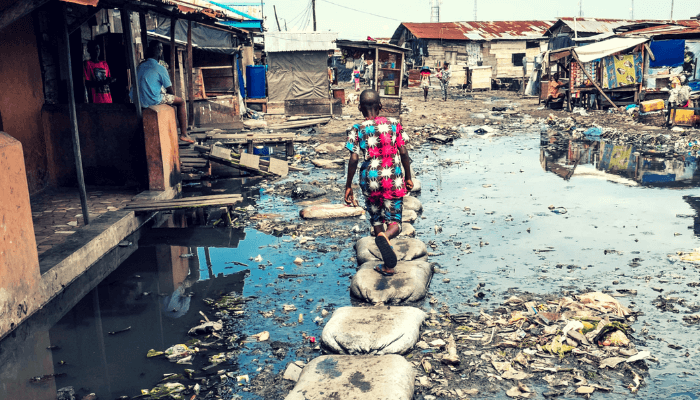
As Nigeria’s economy crumbles, its leaders—those entrusted with the nation’s welfare—have instead chosen to enrich themselves. Public funds meant for development are looted, while ordinary citizens—whether struggling innocents or corrupt poor—are left in despair. Yahaya Bello and Rochas Okorocha have been accused of dipping their hands into funds meant to lift Nigeria out of the abyss. The worst part? The justice system, weak and compromised, seems incapable of holding them accountable.

Yahaya Bello, for instance, has mastered the art of playing “hide and seek” with the law, knowing that in a system as broken as Nigeria’s, his chances of facing real consequences are slim to none. Meanwhile, regular citizens, including “yahoo boys” and even innocent individuals, are being hunted and prosecuted with swift brutality. This stark contrast between how the law treats the powerful and the powerless is a cancer eating away at the soul of the nation. Who protects the people if the leaders steal from the innocent and the corrupt?

Should all this be blamed solely on President Bola Ahmed Tinubu? Or is there a broader problem that goes deeper into the fabric of Nigeria’s leadership and society?

The mismanagement of Nigeria’s resources is not only the fault of a select few in power. It is the collective failure of all those in leadership positions who have turned governance into a self-serving endeavour. Governors, senators, and other public officials have consistently failed to deliver on their promises, leaving citizens to bear the brunt of their incompetence.

But are the citizens themselves free of blame? The culture of apathy that pervades Nigerian society has allowed this systemic rot to fester. When people fail to hold their leaders accountable by demanding better governance or active civic participation, they become complicit in destroying their nation.

If Nigeria continues on this path of corruption, injustice, and economic decay, the consequences will be catastrophic. The poverty rate is already climbing at an alarming pace, with an estimated 87 million Nigerians living below the poverty line. This number will only increase as inflation pushes basic commodities out of reach for the average citizen.

Social unrest is bubbling beneath the surface, waiting for a spark. Frustration and desperation are building, and if left unchecked, they could lead to widespread violence and instability. As Nigeria’s institutions crumble, its brightest minds will continue to flee the country in search of greener pastures, further accelerating the brain drain that has left Nigeria without the intellectual capital it needs for progress.

Decisive action is required to prevent Nigeria from falling into the abyss. For the government, transparency and accountability must become non-negotiable. Strengthening institutions, particularly the justice system, is critical if corruption is to be rooted out. Public funds must be directed toward tangible development, focusing on infrastructure, education, and healthcare.

For citizens, the time for apathy is over. A collective awakening is needed, where people demand better governance at all local and federal levels. Nigerians must realise that their silence is contributing to the nation’s downfall. Only through collective effort—by both government and citizens—can the cycle of corruption and economic ruin be broken.

Haroon Aremu Abiodun is a mass communication graduate and an NYSC member of the PRNigeria Center in Abuja. He can be contacted via exponentumera@gmail.com.

Governor Inuwa attends National Cybercrime Summit, stresses synergy for cybersecurity

By Abdullahi Mukhtar Algasgaini

Gombe State Governor Muhammadu Inuwa Yahaya, CON, participated in the National Cybercrime Summit held at the Presidential Villa in Abuja earlier today. 

The Economic and Financial Crimes Commission (EFCC), in collaboration with the Rule of Law and Anti-Corruption Programme (RoLAC) and the European Union, organized the summit, which focused on enhancing digital skills as a strategy to combat cybercrime.

The event’s theme was “Alternative to Cybercrime: Optimizing Cyber Skills for National Development,” a demonstration of commitment to building digital resilience and ensuring a secure online environment for sustainable national development.

 The First Lady of Nigeria, Senator Oluremi Tinubu, officially inaugurated the summit and launched a new Rapid Response Centre to address cybercrime emergencies.

Speaking to journalists after the event, Governor Inuwa Yahaya emphasized the importance of collaboration in combating the growing threat of cybercrime. 

The Governor commended the EFCC for organizing the National Cybercrime Summit, recognizing the event as a timely initiative to address the growing challenge of cybercrime. 

He emphasized the importance of multi-level cooperation, including leveraging technology and youth involvement, to promote positive alternatives to cyber activities.

“We appreciate the EFCC for bringing this important issue to the forefront. My government is ready to partner in this endeavour because we recognize that combating cybercrime requires partnership.

“We need to work together with the federal government, EFCC, and other relevant bodies to address this global challenge. Our youths must also be involved, as they are both the drivers of technology and the leaders of tomorrow.”

The summit brought together prominent figures, including the Chairman of the Nigeria Governors’ Forum, Governor Abdulrahman Abdulrazaq of Kwara State, Governors of Katsina and Zamfara, members of the National Assembly, the Sultan of Sokoto, His Eminence Saad Abubakar III, and other traditional rulers and diplomats.

Court sacks Malumfashi as KANSIEC chairman, five others over partisanship

By Uzair Adam 

A Federal High Court in Kano has disqualified Prof. Sani Lawan Malumfashi as Chairman of the Kano State Independent Electoral Commission (KANSIEC) due to his affiliation with a political party. 

Justice Simon Amobeda delivered the ruling following a suit filed by Aminu Aliyu Tiga and the All Progressives Congress (APC).

The court also disqualified five other members of KANSIEC—Anas Muhammad Mustapha, Mukhtar Garba Dandago, Isyaku Ibrahim Kunya, Kabir Jibril Zakirai, and Amina Inuwa Fagge—on similar grounds. 

According to the court, they are active members of the New Nigeria People’s Party (NNPP), making them unqualified for their roles under the Nigerian Constitution and the Kano State Independent Electoral Commission Law.

Justice Amobeda further ordered that KANSIEC must cease all activities related to the upcoming 2024 Local Government Election in Kano State until a properly constituted commission is appointed in accordance with the law. 

This includes halting the issuance of election guidelines, candidate screenings, and the sale of nomination forms, all of which were declared null and void.

Additionally, the court directed the Independent National Electoral Commission (INEC) to withhold all electoral materials, including the voter register, from KANSIEC until the commission is legally restructured.

The ruling emphasizes that any actions taken by KANSIEC in preparation for the 2024 Local Government Election are invalid unless qualified individuals are appointed to the commission.

S’court reserves judgment on EFCC legality case

By Uzair Adam 

The Supreme Court of Nigeria has reserved judgment on a lawsuit challenging the legality of the Economic and Financial Crimes Commission (EFCC). 

The case, initially brought by Kogi State, questions the validity of the EFCC’s operations.

The Daily Reality learned that three states—Anambra, Adamawa, and Ebonyi—withdrew from the lawsuit during Tuesday’s hearing. 

The states’ attorneys general notified the court of their decision to withdraw, citing notices filed on October 14 and 20.

Osun State applied to consolidate its own grievance against the EFCC with Kogi State’s suit.

The EFCC was established in 2002 by President Olusegun Obasanjo’s administration. 

However, the plaintiff states argue that the National Assembly did not follow the necessary constitutional provisions, specifically Section 12 of the 1999 Constitution.

The states contend that the EFCC’s operations are illegal, as the majority of state houses of assembly did not approve them. 

They argue that any agency formed under the Act should be considered illegal.

The Attorney-General of the Federation and Minister of Justice, Prince Lateef Fagbemi, countered that the EFCC was validly established. 

He urged the court to dismiss the case, emphasizing the far-reaching implications of ruling favouring the plaintiffs.

After hearing arguments from both sides, the Supreme Court panel, led by Justice Uwani Abba-Aji, reserved judgment until a later date.

Nigeria targets boost in oil production by 1 million barrels per day in next two years

By Uzair Adam 

The Federal Government has launched an ambitious initiative to increase Nigeria’s crude oil production by one million barrels daily within the next 12 to 24 months. 

This plan is part of broader efforts to address challenges such as oil theft, pipeline vandalism, outdated infrastructure, and attracting new investments.

The Nigerian Upstream Petroleum Regulatory Commission (NUPRC) noted a 1.68% decline in production from 1.571 million barrels per day in August to 1.544 million barrels per day in September. 

Despite this, the government’s new initiative, “Project 1MMBPD,” is expected to restore production levels through strategic interventions.

President Bola Ahmed Tinubu, represented by Senator George Akume, the Secretary to the Government of the Federation, emphasized that increasing production is crucial for boosting national revenue and economic growth. 

“Projecting one million barrels per day is a step towards a more sustainable future for Nigeria’s oil and gas sector,” the President said at the event marking NUPRC’s third anniversary.

Minister of State for Petroleum Resources, Senator Heineken Lokpobiri, urged the sector to aim for even higher targets. 

He noted that Nigeria once produced over two million barrels per day and should be looking to reach 2.5 million in the short term and four million barrels per day in the long term.

The government also approved four major divestment deals, including ExxonMobil’s sale of its assets to Seplat Energy, while blocking a $2.4 billion Shell divestment deal with Renaissance. 

Mallam Mele Kyari, the group CEO of NNPC Limited, and Tony Elumelu, the chairman of UBA Group, stressed the urgent need to modernize the country’s over 50-year-old oil infrastructure as key to achieving the new production goals. 

Both highlighted the impact of pipeline vandalism and regulatory uncertainty as major hurdles that need to be addressed to safeguard Nigeria’s oil sector and economy.

Nigeria at 64: A country of possibilities still struggling

By Usman Muhammad Salihu and Muhammad Umar Shehu

As Nigeria celebrated its 64th independence anniversary a few weeks ago, it is essential to reflect on the nation’s potential and the persistent challenges that continue to hinder its progress. Despite being blessed with vast natural resources and a vibrant population of over 200 million people, Nigeria’s struggles have deepened rather than improved over the past year. From widespread poverty to increasing insecurity, the country’s path to growth remains uncertain unless urgent and substantial action is taken.

Poverty in Nigeria continues to be one of the most pressing challenges. A significant portion of the population, over 40%, still lives below the poverty line. As the cost of living soars and job opportunities remain scarce, millions of Nigerians find themselves trapped in cycles of deprivation. While government programs aimed at alleviating poverty have been implemented, the results have mainly been insufficient due to inefficiency, poor implementation, and corruption. 

The lack of job creation remains a critical concern. Despite having a young and dynamic population, many Nigerians face an uncertain future as there are not enough opportunities for them to contribute to the nation’s economic growth. The high unemployment rate, particularly among the youth, exacerbates feelings of hopelessness, contributing to social unrest.

Corruption continues to plague every sector of Nigerian society, from the public to the private sector. It has been described as a systemic problem deeply embedded in the fabric of governance, politics, and even business practices. Public funds for infrastructure development, healthcare, education, and poverty alleviation are often diverted for personal gain, leaving the masses to suffer.

Though active in many areas, the fight against corruption has proven ineffective in bringing about substantial reform. The long-standing lack of political will and the entrenchment of corrupt practices ensure that those in power remain immune from real accountability. Until corruption is thoroughly tackled, Nigeria’s progress will continue to be hampered.

One of the most alarming issues Nigeria faces today is the increasing insecurity. What began as localised conflicts in specific regions has evolved into nationwide terror. Terrorist groups, bandits, and separatist movements are now operating with impunity across the country. The rise in violent crimes, abductions, and ethnic clashes has not only resulted in loss of lives but has also displaced millions, further straining the nation’s resources.

Investors remain wary of Nigeria’s unstable environment, while everyday Nigerians are forced to live in fear. Insecurity has undoubtedly slowed economic activity, as businesses are reluctant to set up or expand in areas prone to violence. The government’s inability to secure the nation and protect its citizens is a glaring failure that demands urgent attention.

The educational sector, too, is still struggling. Though the government has made some efforts to reform education, such initiatives have not yielded the desired results. The country’s education system remains underfunded and ill-equipped to handle the growing demands of a population that values knowledge and skills as the gateway to prosperity.

A critical shortage of teachers, infrastructure, and learning materials leaves millions of children and young adults without access to quality education. Many Nigerian students are forced to attend overcrowded classrooms, while those in rural areas often lack basic educational resources. The result is a generation of young people who are ill-prepared to face the challenges of the modern world.

Unemployment remains at an all-time high. The nation’s reliance on oil as its primary source of revenue has left it vulnerable to global price fluctuations, causing economic instability. Additionally, the lack of diversification into other sectors, such as agriculture, manufacturing, and technology, limits job creation.

Without a comprehensive economic overhaul focusing on sustainable development and the growth of non-oil sectors, Nigeria’s economy will continue to stagnate. The country must invest in infrastructure, create an environment that nurtures entrepreneurship, and promote policies that stimulate job creation.

The question is not whether Nigeria has the potential to be great but whether its leaders can rise to the occasion and make the necessary changes to unlock that potential. There is no shortage of resources in the country—natural, human, or financial. What is lacking is effective governance, transparency, and leadership that prioritises the needs of the people over personal gain.

The Nigerian government must take decisive action to address poverty, reduce corruption, enhance security, and overhaul the education system. Citizens, civil society organisations, and the private sector must also play their part by demanding accountability, fostering innovation, and supporting initiatives that contribute to national development.

At 64, Nigeria remains a land of possibilities. However, unless these challenges are addressed, the country will continue to suffer, and the future will remain uncertain. It is time for bold steps and concrete reforms to secure the next generation’s prosperous and peaceful future.

Usman Muhammad Salihu was among the pioneer cohorts of the PRNigeria Young Communication Fellowship, along with Muhammad Umar Shehu. They can be reached at muhammadu5363@gmail.com.

Governor Fintiri’s successor

By Zayyad I. Muhammad

Governor Ahmadu Umaru Fintiri recently stated that his successor must be a grassroots politician. So, to all grassroots politicians, are you prepared?

Whether or not you agree with Governor Ahmadu Umaru Fintiri, it’s impossible to ignore that he delivered an impressive performance in just five years. His leadership style, marked by decisiveness and a strategic approach, has left a lasting impact on Adamawa State. 

Three key factors contributed to his success: first, he profoundly understands local politics at the grassroots level. This knowledge allowed him to manage diverse interests, bringing various stakeholders together while effectively navigating the political landscape. He knows how to utilise power not just to control but to drive progress and development as well as the political power itself.

Second, Fintiri is known for making bold decisions without hesitation, which sets him apart from many political leaders who are often bogged down by fear or indecision. Whether in policy formulation or tackling complex issues, he has consistently courageously taken risks where necessary. However, boldness doesn’t equate to rashness. Fintiri rarely rushes critical decisions, opting instead for careful deliberation. He balances this decisiveness with a thoughtful approach, ensuring resources are allocated judiciously across various sectors, leading to sustainable development and equitable growth.

Finally, while he can be measured and calculated in his decision-making, Fintiri is also forthright. He doesn’t shy away from expressing his views openly, making him a leader who is both pragmatic and honest. This combination of boldness, caution, and openness has earned him recognition on a national level, bringing Adamawa into greater prominence. Recently, Fintiri expressed his political views in Rivers State but remained balanced as a leader. That is how a true leader speaks.

For Fintiri’s successor, the road ahead will be marked by both challenge and opportunity—a situation that could be described as sweet-bitter. The primary challenge will be following in the footsteps of a highly successful leader. Succeeding a high performer often comes with the burden of high expectations. The new leader will be required to exceed Governor Fintiri’s accomplishments, as merely matching them or falling short would likely be a failure. This catch-22 is often the hardest part of leadership transitions—especially when the predecessor has set a high bar.

On the flip side, there is a significant advantage. Fintiri has laid a strong foundation, which includes efficient tools, systems, and a skilled human resource base. Gov. Fintiri’s successor will have the opportunity to build on these assets, improving where needed while inheriting a well-established structure. With the right approach, he or she can take Adamawa to even greater heights.

Fintiri’s understanding of politics in Adamawa has been straightforward—he sees it as the art of balancing interests driven by fairness and people’s rights. His ability to manage conflicting interests while making decisive moves has been crucial to his success. Bold yet measured, he has used resources to create visible impacts, from infrastructural developments to social programs, all of which have put Adamawa in the national spotlight. His performance will give his successor powerful momentum on which to capitalise. However, whoever succeeds Governor Fintiri must recognise the weight of expectation that comes with succeeding a well-regarded and high-performing predecessor. It will require vision and strategy to maintain the trajectory and deliver even greater results.

Zayyad I. Muhammad writes from Abuja via zaymohd@yahoo.com.

Dangote refinery seeks to revoke NNPCL import licenses, demands N100bn damages

By Uzair Adam

Dangote Refinery has approached the court seeking the annulment of import licenses held by the Nigerian National Petroleum Company Limited (NNPCL), Matrix, and four other firms.

The Daily Reality learned that Dangote Refinery is also claiming N100 billion in damages from the Nigerian Midstream and Downstream Petroleum Regulatory Authority (NMDPRA) for allegedly continuing to issue import licenses to NNPCL and the other companies.

Details later…

EFCC dismisses lawsuit challenging Its legality, labels critics as aggrieved

By Uzair Adam

The Economic and Financial Crimes Commission (EFCC) has responded to legal challenges questioning its constitutionality, asserting that the individuals behind these lawsuits are reacting to the pressure of its anti-corruption drive.

Sixteen state attorneys-general have approached the Supreme Court, disputing the legality of the EFCC’s establishment.

They argue that the National Assembly failed to follow Section 12 of the 1999 Constitution, which outlines the procedure for incorporating international treaties into domestic law.

During an appearance on Channels Television’s Morning Show on Monday, Wilson Uwujaren, the EFCC’s Director of Public Affairs, emphasized the commission’s legitimacy.

He noted that the EFCC was created following due legislative process and expressed concern over the timing of the legal challenge amidst Nigeria’s ongoing corruption issues.

“I find it troubling that with the magnitude of corruption in this country, some individuals are choosing to challenge the legality of the EFCC. “What’s unfolding is simply an effort by those feeling the impact of our work to derail it. They perceive the EFCC as a threat,” Uwujaren said.

He further urged Nigerians to see through the actions of those opposing the commission, stressing that the EFCC has been vital in recovering stolen funds and prosecuting high-profile corruption cases.

“Nigeria cannot function without the EFCC, given the level of corruption we face. This is a distraction that we must resist,” he added.

The Supreme Court is set to hear the case on Tuesday, October 22.

While human rights lawyer Femi Falana and several civil society organizations have criticized the lawsuit, former Nigerian Bar Association President Olisa Agbakoba has backed the challenge, questioning the constitutional basis of the EFCC’s establishment.