Month: October 2024

64 years after Nigeria’s independence

By Rabi Ummi Umar

A few weeks ago, Nigeria marked its 64th independence anniversary, commemorating more than six decades since gaining freedom from British colonial rule on October 1, 1960. However, this year’s celebrations were unusually subdued, devoid of the usual fanfare, pomp, thrills and frills. 

The once-familiar scenes of face painting, jubilant crowds, and flags waving in patriotic pride were replaced by an eerie silence that echoed across the nation. Despite this significant milestone, many Nigerians found little reason to celebrate. The mood was sombre, reflecting a collective sentiment that these are not times for revelry.

Instead, citizens believe it is a time for reflection and a renewed commitment to steering the country back toward prosperity, as envisioned by the men and women who fought for the independence we now enjoy. In the eyes of most Nigerians, the celebration only serves as a distraction from the harsh realities of daily life.

The more one reflects on the state of the nation, the more troubling it becomes. What exactly are we celebrating? Is there anything genuinely worth commemorating at this point? After the fireworks, what awaits us—more suffering? The unspoken truth is that the situation has grown so dire that it is almost impossible to ignore the country’s challenges, no matter how much we might want to.

One of the major concerns plaguing citizens is the aftermath of the subsidy removal, which continues to wreak havoc on lives and livelihoods. While the minimum wage has been signed into law, its implementation remains uncertain, casting doubt on the government’s ability to deliver on promises and its tendency to prioritise talk over tangible action. 

These discrepancies raise questions about the effectiveness of policies aimed at alleviating the struggles of Nigerians. Our leaders have made numerous promises, but despite their assurances, little has been done to address the suffering of the people. Take the much-touted Compressed Natural Gas (CNG) buses, for example. Despite promises, these buses have failed to materialise in significant numbers. Even the few introduced fall short of addressing Nigeria’s transportation challenges. 

How much progress can we realistically expect from such initiatives? Unemployment remains a persistent issue, exacerbating the nation’s woes. Although the National Bureau of Statistics (NBS) reported an unemployment rate of 5.3%, many believe the actual figure is much higher, especially given Nigeria’s struggle with accurate population data.

Insecurity is another critical concern. Terrorism, banditry, and kidnapping for ransom plague every region, with countless lives lost, even after ransoms have been paid. Nigerians are grappling with hunger as the crisis reaches alarming proportions. Starvation, suffering, and even death from hunger have become stark realities.

According to the Food and Agriculture Organization (FAO), 80 to 82 million Nigerians are at risk of severe hunger if the current trajectory continues. Given our vast agricultural potential, how did we reach this point? Politics in Nigeria remains largely a curse, with politicians exploiting religion, region, and ethnicity to garner support. 

Instead of uniting to solve the nation’s problems, they engage in ridicule, even on pressing national issues, as seen in the aftermath of the President’s October 1 address. Poverty also remains a major concern. The NBS reports that 63% of the population—approximately 133 million people, or six out of every ten Nigerians—are trapped in multidimensional poverty. 

It is little wonder that Nigerians are not in a celebratory mood. So much has gone wrong recently that even wishing someone a “Happy Independence” feels offensive. What, after all, have we indeed achieved in these 64 years? Nigeria has the potential for greatness, and the government can and should do better. President Tinubu, please, we are begging—Nigeria deserves better.

Rabi Ummi Umar is an intern at PRNigeria and a student at Al-Hikmah University, Ilorin. She can be reached via rabiumar058@gmail.com.

Abubakar Kabir Bichi offers scholarship to 21 constituents to study in Malaysia

 By Sabiu Abdullahi

Hon. Abubakar Kabir Bichi, a member representing Bichi Federal Constituency from Kano State and chairman of the House Committee on Appropriation, has sponsored 21 indigenes of Bichi Local Government on foreign scholarships to study in Malaysia. 

The beneficiaries will pursue an 18-month program in Engineering, Computing Science, Technology, and other courses at Universiti Teknologi Malaysia (UTM), one of Malaysia’s highest-ranking universities. 

The scholarship recipients were presented with their admission letters and other necessary documents in Bichi on Wednesday.

Additionally, Hon. Bichi sponsored 59 science and technical students from SS1 to SS3 and provided them with educational kits.

He also recruited 150 temporary classroom teachers and 50 Islamiyya teachers to teach at various schools across the local government. 

Hon. Bichi stated the importance of empowering people based on their abilities, stating, “This is what leaders should do. People should be empowered based on their abilities. We don’t want to politicize education. We always require fair play.”

He reiterated the positive impact of education on reducing crime in Bichi Local Government, noting that the area has seen a significant decrease in crime due to increased access to education. 

The lawmaker also mentioned his commitment to supporting education in the region, stating, “We have been offering 100% scholarships to indigenes of Bichi to study at various Nigerian universities, including BUK, ABU, ABTU, among other universities. We paid the school fees of hundreds of students at various educational levels. We built over 500 classrooms across Bichi Local Government.”

As Nigerians struggle, lawmakers push for new aircraft for VP Shettima

By Uzair Adam

While Nigerians grapple with economic hardship, Borno State House of Assembly Speaker, Rt. Hon. Abdulkarim Lawan, is urging the Federal Government to replace Vice President Kashim Shettima’s official aircraft, citing safety concerns.

Lawan’s call follows recent technical issues with the Vice President’s plane, including a damaged windscreen during a stopover in New York en route to the Commonwealth Summit.

Despite widespread financial strain affecting millions of Nigerians, Lawan highlighted the risks of Shettima’s continued reliance on the malfunction-prone aircraft, insisting that securing a replacement should be a priority.

His appeal, however, arrives at a time when citizens are facing inflation, fuel costs, and job cuts, sparking questions on the government’s spending priorities amidst nationwide hardship.

Ministry intervenes in N3bn misappropriation allegations against PASAN leadership

By Uzair Adam

The Federal Ministry of Labour and Employment has summoned leaders of the National Assembly chapter of the Parliamentary Staff Association of Nigeria (PASAN) along with aggrieved members following allegations of a N3 billion fund misappropriation.

In a letter signed by Amos Falonipe, Director/Registrar, Department of Trade Union Services and Industrial Relations, the ministry invited PASAN’s leadership and concerned members to address the grievances in a meeting scheduled for tomorrow.

The allegations surfaced earlier this month when PASAN member Yusuf Abiola accused the union’s leadership of misappropriating union funds and demanded audited financial statements from 2019 to date.

Abiola threatened to petition relevant authorities for accountability.

However, PASAN’s National Assembly chapter chairman, Sunday Sabiyyi, and Secretary, David Ann Ebizimoh, dismissed the allegations as defamatory, urging the public to disregard what they described as baseless accusations meant to divert the union from its objectives.

The labour ministry’s letter of invitation, dated October 25, 2024, was directed to the General Secretary of PASAN, signaling its commitment to address the dispute.

Global economy faces slow growth, high debt as families struggle with inflation — IMF

By Uzair Adam

Families worldwide are grappling with the effects of high prices, according to the Managing Director of the International Monetary Fund (IMF), Ms. Kristalina Georgieva.

Speaking at the IMF/World Bank Annual Meetings in Washington, D.C., Georgieva highlighted the ongoing challenges facing the global economy, which she described as being on a trajectory of slow growth and rising debt.

“The global economy has held up well, and inflation is gradually decreasing thanks to central banks’ coordinated efforts and easing supply chains,” Georgieva said during the Global Policy Agenda 2024 briefing.

“However, people’s optimism about their economic prospects remains low. Families are still hurting from high prices, and global growth remains sluggish.

“We project a 3.2 percent growth rate this year, slowing to an annual 3.1 percent over the next five years,” she added.

According to Georgieva, while trade has traditionally driven economic growth, it is no longer the powerful engine it once was.

The IMF report warned that the world economy risks being trapped in a cycle of lower growth, high debt, reduced government revenues, and constrained resources to support families and climate change initiatives.

The Global Policy Agenda 2024 report further indicated that the global economy is resilient, with a potential for a soft landing as inflation moderates.

However, significant uncertainty looms, with risks skewed to the downside. Public debt levels are at historic highs, projected to approach 100 percent of GDP by 2030, and geoeconomic fragmentation threatens to reverse decades of progress from cross-border economic integration.

The report also points to transformative shifts—such as the green transition, demographic changes, and digitalization, including AI—that present both challenges and opportunities for global economies.

As a response, Georgieva emphasized the importance of a policy shift aimed at escaping the cycle of low growth and high debt.

She called for monetary policies that ensure inflation stabilizes at target levels and fiscal policies that pivot toward consolidation to build resilience and maintain debt sustainability.

University unions embark on indefinite strike over withheld salaries

By Uzair Adam

The Joint Action Committee (JAC) representing the Non-Academic Staff Union of Educational and Associated Institutions (NASU) and the Senior Staff Association of Nigerian Universities (SSANU) has directed members to initiate an indefinite strike starting Monday, following the non-payment of four months’ withheld salaries.

The strike, initially scheduled for October 23, was postponed to Sunday night, October 27, 2024, to align with the NASU branches’ Trade Group Council meeting.

A circular signed by NASU General Secretary Prince Peters Adeyemi and SSANU President Comrade Mohammed Ibrahim detailed this timing adjustment for unified coordination among union members.

Despite President Bola Tinubu’s approval of 50% payment for the withheld salaries, JAC expressed frustration with the alleged inaction from the Minister of Finance, questioning the government’s commitment to resolving the issue.

The union stated that multiple requests for resolution have gone unanswered, prompting their decision to proceed with the strike.

JAC reiterated its appreciation for the members’ loyalty and assured them of continued efforts to achieve a satisfactory outcome.

KANSIEC issues certificate of return to the newly elected LG chairmen

By Anwar Usman

The Kano Independent Electoral Commission has issued certificates of return to the newly elected 44 Local Government Chairmen across the state.

The certificates were issued by the commission’s Chairman, Prof. Sani Malumfashi, on Sunday.

Malumfashi explains that the commission is the body responsible for issuing certificates and urged the newly elected LG chairmen and councillors to discharge their duties effectively.

Report has it stated that the state governor, Abba Yusuf, would soon swear in the chairmen at Government House in Kano.

The electoral commission had declared the New Nigeria People’s Party the winner of all 44 chairmanship positions and the 484 councillorship positions in Saturday’s LG election in the state.

“Six political parties participated in the election: AA, AAC, Accord, ADC, APM, and NNPP.

“The NNPP won all 44 local government chairmanships and 484 councillorship positions contested,” Malumfashi explained.

Court stops JAMB from restricting underage students

By Sabiu Abdullahi 

The Delta State High Court in Warri has issued an order restraining the Joint Admission and Matriculation Board (JAMB) from implementing its policy requiring a minimum age of 16 for university admissions. 

Justice Anthony Akpovi granted the relief, pending the hearing and determination of the motion on notice filed against JAMB. 

JAMB’s directive, announced on October 16, stated that only candidates aged 16 by August 2025 would be admitted to tertiary institutions.

However, this policy was challenged by John Aikpokpo-Martins, a former Nigerian Bar Association chairman. 

Aikpokpo-Martins sued JAMB and Edwin Clark University on behalf of candidates born between September 1 and December 31, 2009, who passed the 2024 JAMB exams.

The court granted an interim injunction, preserving the admission rights of these candidates. 

Justice Akpovi ruled, “Reliefs 1 and 2 are hereby granted. The status quo to be maintained is the admission list prior to this circular pending the hearing of the originating motion.” 

This development halts JAMB’s implementation of the minimum age requirement until further court proceedings.

NSCDC spokesperson survives armed robbery attack in Minna

By Sabiu Abdullahi

Muti, spokesperson for the Nigeria Security and Civil Defence Corps (NSCDC), narrowly escaped death after being stabbed twice in the stomach by armed robbers in Minna, Niger State.

The incident occurred on Friday evening around 8 p.m. near the Federal Housing Estate Gbeganu in Chanchaga Local Government Area. 

Muti recounted the ordeal when stated that about nine men attacked him while he rode in a tricycle.

The robbers emerged from a nearby bush after the tricycle operator stopped to pick up two passengers.

They stabbed him with a knife and stole his phone and other valuables. 

Fortunately, the robbers fled after noticing Muti’s uniform trousers, mistaking him for a soldier.

He received treatment and was discharged from the hospital on Friday. 

This incident shiwy the growing concern about crime and insecurity in Nigeria.

Arms proliferation and the Nigerian security forces

By Zayyad I. Muhammad

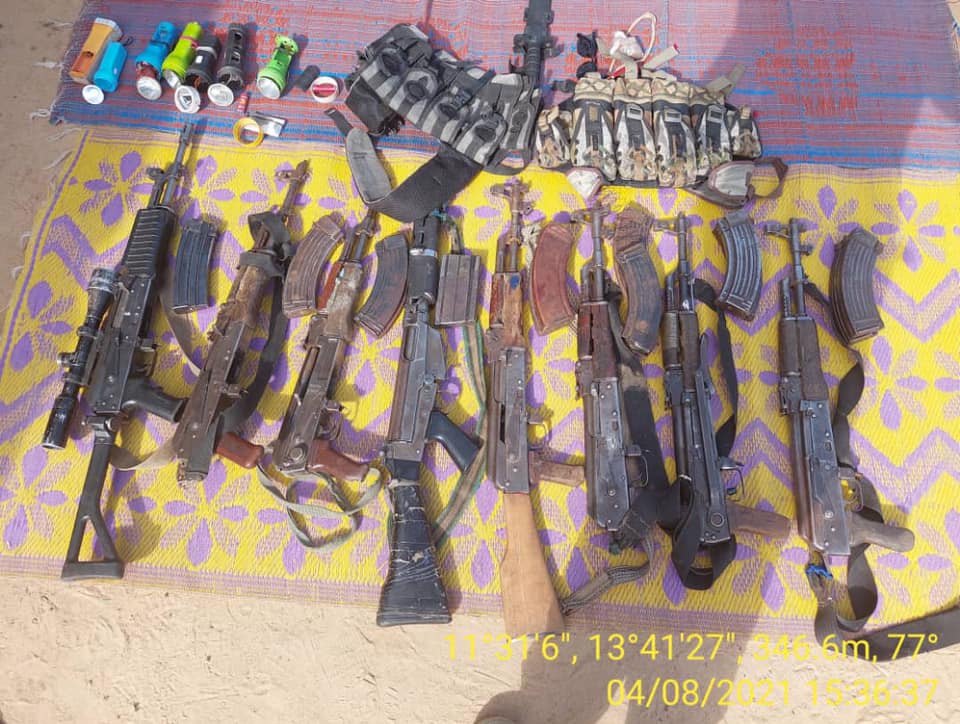
Mallam Nuhu Ribadu, the Nigerian National Security Adviser, stated during an arms destruction exercise organised by the National Centre for the Control of Small Arms and Light Weapons (NCCSALW) that many of the illicit weapons currently used by terrorists and bandits originally belonged to the Federal Government of Nigeria. 

Ribadu’s revelation may not surprise those familiar with the complexities of Nigeria’s security challenges, but it is both new and alarming to the average Nigerian.  

For many, the realisation that those entrusted with their protection are selling weapons to terrorists, insurgents, and bandits is deeply unsettling. This issue demands a coordinated and strategic response. However, Mallam Nuhu assured us that steps and measures have been taken to resolve this. 

But the big questions remain: Are these measures yielding sustainable results? What motivates or drives a security agent to sell weapons to terrorists and bandits, fully aware that they may become the first target of those very weapons? 

Nuhu Ribadu stated, “The worst human being is a policeman or soldier who takes weapons from his unit and sells them or hides them for criminals to use against his colleagues.” This is true; however, additional measures are needed beyond what the NSA has mentioned to address this issue. These should include improved welfare and salaries for security personnel, enhanced training, and stronger supervision. It’s important to consider that the actions of some security officers may not be solely motivated by money but by radicalisation or frustrations. 

Nigeria must prioritise the use of technology in its fight against insurgency, terrorism, and banditry, as the world has moved beyond relying solely on boots on the ground. It is crucial to employ technology to address these challenges, including implementing chips or inbuilt devices to track and attach every weapon assigned to the officer responsible for it. 

Despite the few rogue elements within the security forces who recklessly jeopardise their lives and those of their colleagues and families by exchanging their weapons for peanuts, we must commend the majority of Nigeria’s dedicated soldiers, police officers, and other personnel who are actively working to recover illicit arms and eliminate corrupt practices within the security forces. 

On the other hand, sabotage by rogue elements within security forces is not unique to Nigeria; many countries have faced situations where insurgency, terrorism, or banditry were exacerbated by these elements selling arms to militant groups.

In Yemen, amid its civil war, there have been instances of arms diversion by corrupt individuals within the security apparatus. Weapons intended for the national army have ended up in the hands of Houthi rebels and various militant groups. 

Similarly, during the conflict with ISIS in Iraq, reports emerged of Iraqi security forces losing control of arms depots or selling weapons to militant groups. Somalia has seen similar issues in its battle against al-Shabaab, where government and security officials were accused of selling or diverting weapons to the very militants they were fighting. 

Another notable example is Libya. Following the fall of Muammar Gaddafi in 2011, the country descended into chaos, with various factions and militias vying for control. Weapons from government stockpiles, as well as arms supplied by international actors, were sold or transferred to militias and insurgent groups, further escalating the violence. In the Democratic Republic of Congo (DRC), armed groups have long been involved in the conflict, with reports indicating that elements within the military and police forces have sold weapons to these groups.

For any country grappling with the involvement of its security forces in the sale of weapons to insurgents, terrorists, and bandits, factors such as selfishness, corruption, and complicity within these forces play a significant role. Additionally, weak institutions and inadequate oversight have further exacerbated the problem. 

 Zayyad I. Muhammad writes from Abuja via zaymohd@yahoo.com.