Month: October 2024

Nigeria Customs Service strengthens air surveillance with Cessna grand caravan acquisition

 By Sabiu Abdullahi 

The Nigeria Customs Service (NCS) has made a significant stride in enhancing its air surveillance capabilities with the acquisition of a Cessna Grand Caravan EX-208B aircraft.

This move is part of Comptroller-General of Customs (CGC) Bashir Adewale Adeniyi’s efforts to revitalize the NCS airwing operations. 

The Cessna Grand Caravan, registered as 5N-BAA, is a rugged and versatile aircraft, ideal for border security operations in Nigeria, thanks to its ability to operate on remote airstrips.

It is also fitted with the modern Garmin G1000 Avionics cockpit system, enabling operations under day, night, and low-visibility conditions. Powered by the reliable PT6 Pratt and Whitney engine, the aircraft has a six-hour aerial endurance and can carry 10 officers. 

CGC Adeniyi hailed the acquisition as a “game-changer” for the NCS Airwing, enhancing air surveillance and border patrol capabilities. “This aircraft will be a game-changer for the Nigeria Customs Services’ Airwing. Its ability to carry 10 officers, coupled with its six-hour aerial endurance, will significantly enhance our capacity for air surveillance and border patrol,” he stated.

The aircraft will play a crucial role in detecting smuggling routes, deploying armed personnel, and providing swift support for ground operations. 

According to CGC Adeniyi, the acquisition aligns with President Bola Tinubu’s “Renewed Hope” agenda. “With this aircraft, we will strengthen our air border patrol capabilities, which will not only help us intercept illegal activities but also provide quick extraction support when necessary,” he explained. 

Capt. Kuhi Mbaya, Aircraft Operations Coordinator and Managing Director of Nigeria Customs Technical and Hangar Services Ltd, praised the acquisition as a milestone for the NCS aviation unit.

“With this aircraft, the Nigeria Customs Service is poised to revitalize its air border patrol activities, securing our borders more effectively and improving revenue generation for both the Service and the nation,” he stated.

The acquisition of the Cessna Grand Caravan is expected to provide significant tactical advantages to the Nigeria Customs Service, tightening border security and sending a clear signal to economic saboteurs that the Service is better equipped than ever to combat smuggling activities.

Rivers political crisis: CP orders unsealing of LG secretariats, withdrawal of deployed personnel

By Abdullahi Mukhtar Algasgaini 

Following the recent political developments in Rivers State, the newly deployed Commissioner of Police, CP Bala Mustapha, conveyed the directives of the Inspector General of Police, IGP Kayode Egbetokun, for the immediate withdrawal of all police personnel previously deployed to seal and safeguard the local government secretariats in the state.  

This decision is in line with the commitment of the Nigeria Police Force to ensure neutrality and the smooth functioning of democratic institutions. 

Consequently, the IGP has ordered the unsealing of the local government secretariats, which were earlier secured by police personnel.

The police will only be redeployed to these locations in the event of any crisis or breakdown of law and order, in which case emergency measures will be swiftly implemented to restore normalcy. 

The Rivers State Police Command assured the public of its readiness to maintain peace and order across the state and will continue to act professionally in discharging its duties.

The police urge all residents and stakeholders to remain calm and law-abiding as the situation continues to evolve.

Managing Nigeria’s petrol prices: The way forward

By Usman Muhammad Salihu,

In Nigeria, fluctuating petrol prices have long been a source of frustration for citizens. It’s not just about the financial strain—it impacts daily life, from commuting to work to powering homes. The government faces immense challenges, balancing affordable fuel prices with foreign exchange rate volatility and maintaining a sustainable oil and gas sector. Add the country’s reliance on imported fuel, infrastructure problems, and unpredictable global oil prices, and you have a perfect storm.

The government’s communication around petrol price changes often lacks clarity and consistency, confusing and mistrusting the public. People ask, “What’s going on?” and “Why should we care?”

The Transparency Issue

A significant problem is the lack of transparency in how fuel prices are determined. The government’s lack of clear communication feeds uncertainty and speculation. This situation can be improved by regularly sharing detailed and transparent information regarding the factors influencing petrol prices. 

Nigerians need access to crucial data such as fuel import reports, pricing mechanisms, and subsidy allocations. Making this information publicly available would help build trust and reduce the growing mistrust surrounding petrol price changes.

Collaborative Stakeholder Engagement

The government must also open lines of communication with industry leaders, labour unions, and civil society organisations. These groups have a direct stake in how petrol pricing impacts the broader economy and everyday life.

Engaging these stakeholders in meaningful dialogue can help align expectations, address concerns, and prevent misunderstandings. This collaboration can reduce the public unrest often triggered by abrupt price hikes. Building consensus among all stakeholders can also create a more stable economic environment regarding petrol prices.

Establishing a Predictable Pricing Framework

One of the most critical steps the government can take is establishing a clear, stable, and predictable framework for setting petrol prices. Currently, changes in fuel prices often come as sudden shocks, leaving citizens and businesses unprepared. A transparent pricing model communicated in advance would help mitigate this uncertainty and reduce panic.

When people know what to expect and when they can make better financial plans and avoid the anxiety associated with sudden price hikes. This predictability would benefit individuals and businesses, as they could better manage their operational costs tied to fuel expenses.

Educating the Public on Petrol Pricing

Many Nigerians are unaware of the factors that influence petrol prices, such as fluctuations in the global oil market and government interventions to manage these costs. This knowledge gap contributes to the public’s frustration and misunderstanding.

Launching public education campaigns to explain the variables behind petrol pricing can help citizens make more informed decisions. Using various media platforms to deliver this information in simple, accessible language will foster better understanding and reduce confusion. It’s not just about explaining why prices fluctuate—it’s about empowering Nigerians with knowledge.

Reducing Reliance on Imported Fuel

Nigeria’s reliance on imported fuel is critical to its petrol price volatility. Exploring alternative energy sources and boosting local refining capacity are essential to reducing this dependence. Investment in local refineries, for instance, would not only lessen the country’s reliance on imports but also create jobs and foster economic growth.

Additionally, encouraging fuel efficiency initiatives can help Nigerians reduce fuel consumption. Simple practices like carpooling or using public transportation more frequently could significantly reduce fuel demand, ease supply pressure, and ultimately stabilise prices.

Investing in Alternative Energy Solutions

Another long-term solution is to explore and invest in alternative energy sources. By diversifying the country’s energy portfolio, Nigeria can reduce its dependence on petrol and mitigate the impact of global oil price fluctuations.

Renewable energy sources such as solar, wind, and hydropower could provide sustainable alternatives to petrol. While transitioning to these energy sources will take time and investment, the long-term benefits include energy security, reduced pollution, and job creation in the renewable energy sector.

Building Trust through Human-Centered Communication

Managing petrol pump prices is no easy task, but the government can ease the burden through a more human-centred approach to communication. By addressing citizens’ concerns in a relatable and transparent way, the government can foster trust and reduce the uncertainty often accompanying price changes.

This communication must be consistent and delivered across multiple channels to reach all Nigerians, from urban centres to rural areas. Regular updates, accessible language, and relatable messaging will go a long way in alleviating public frustration.

The Path Forward: A Collaborative Effort

Managing petrol prices in Nigeria is a complex but surmountable challenge. The process can become more manageable with clear, transparent communication and collaboration between the government, industry leaders, and the public. The government can create a more stable economic environment by taking a holistic approach, including educating the public, establishing a predictable pricing framework, and investing in alternative energy solutions.

The complexities of petrol pump price management require collective action. As Nigerians, we must engage with the process, hold the government accountable, and support initiatives that promote transparency and sustainability. Only by working together can we navigate the complexities of petrol pricing and ensure a better future for all.

Conclusion

Petrol pricing is a critical issue in Nigeria, impacting not just individual livelihoods but the broader economy. The government’s current approach, characterised by a lack of transparency and sudden price shifts, contributes to public mistrust and instability. However, by adopting a more transparent, predictable, and inclusive strategy, the government can build trust and create a more stable environment for all Nigerians. Investing in alternative energy sources and educating the public about the factors influencing petrol prices are essential steps in this process.

Managing petrol prices may be a tough job, but it can be made easier with the right approach. Through collaboration, transparency, and innovation, Nigeria can tackle this issue head-on, fostering economic growth and improving the quality of life for its citizens.

Usman Muhammad Salihu is a PRNigeria Young Communication Fellowship 2024 fellow and wrote via muhammadu5363@gmail.com.

Nigerian doctor makes history, establishes nursing services company in Germany

By Sabiu Abdullahi

Dr. Kabiru Ibrahim from Sokoto State, Nigeria, has founded a nursing services company in Hamm, a city in North Rhine-Westphalia, Germany, Dr. Muhsin Ibrahim, a German resident, announced in a Facebook post on Sunday. 

According to Dr. Muhsin, the company, staffed by healthcare professionals from Nigeria, Kenya, Turkey, and Germany, offers critical care services.

Dr. Ibrahim’s achievement demonstrates the potential of African professionals making a meaningful impact globally. 

After studying medicine and surgery in Bulgaria and specialising in anaesthesia, Dr. Ibrahim moved to Germany in 2009.

His success has sparked praise from friends and colleagues, including Dr. Muhsin Ibrahim, a lecturer at the University of Cologne. 

“This is a massive achievement, and we are very proud of Dr. Kabiru,” Mr. Muhsin said.

Dr. Kabiru’s venture serves as a shining example of Nigerian excellence in the diaspora, which fosters economic growth and cultural exchange between Nigeria and Germany.

Solar fault sparks fire at Kano’s Kantin Kwari Market—Authority

By Uzair Adam

Concerns have risen following a fire outbreak at Kano’s famous Kantin Kwari Market, with the market union pledging to implement measures to prevent future fire incidents.

It wasreported that the fire broke out around 8:00 p.m., shortly after the Isha evening prayers, where two shops were completely destroyed, with goods worth millions of naira reduced to ashes.

The fire, according to the Kano State Fire Service, believed to have been caused by a solar electricity fault, began at Gidan Inuwa Maimai on Bayajidda Street and spread, affecting 13 shops out of around 100 in the building.

Shamsuddini Gambo, a trader, explained that the fire was quickly brought under control due to the swift response of the market’s fire service.

Bashir Alhassan, one of the affected shop owners, confirmed that while only two shops were completely destroyed, “around 13 shops, including mine, were partially damaged by the water used to extinguish the fire.

“Apart from Alhaji Zayyanu and Alhaji Tahir’s shops, no others were severely damaged.”

Hoodlums attempt looting

As the fire raged, hoodlums reportedly gathered, armed with weapons, attempting to steal goods from the affected shops.

Alhassan noted that police swiftly intervened, dispersing the would-be thieves.

“While we were trying to save our goods from the fire, these criminals appeared, attempting to steal from us. Thankfully, the police overpowered them and foiled their plan,” Alhassan added.

Market union to address fire outbreaks

Anas Muhammad Zango, the Public Relations Officer of the Kantin Kwari Market Union, speaking on behalf of the union’s chairman, Alhaji Sa’adu Mu’azu Dogon Nama, expressed sympathy for the victims.

He assured that the union is implementing steps to prevent similar incidents in the future.“One of the key measures is the immediate removal of gas cylinders used by food vendors within the market. Additionally, shop owners using generators must relocate them outside the market,” Zango explained.

He also expressed gratitude that the damage was not worse and urged traders to cooperate with the police and fire services to maintain a safer market environment.

Solar power blamed for fireAccording to Saminu Yusif, the Kano State Fire Service’s Public Relations Officer, the fire was traced back to a fault in the solar electricity system.

“At the time of the fire, there was no public electricity supply in the area, so it was easy to trace the cause to the solar system,” he stated.

Yusif added that while 13 shops were affected, 11 of the shop owners managed to save their goods, with only two shops being completely destroyed.

Dear Nigerians: Do not let this great nation die!

Dear Nigerians,  

1. May God have mercy on you! Your country’s name evokes the abundance of the River Niger, symbolising the endless resources and talents you possess. This nation is blessed with natural wealth and human potential that garners admiration and envy worldwide. 

2. Yet, tears fall when we consider the mismanagement, waste, and looting of this vibrant nation. It’s disheartening to see Nigerian youths unaware of the treasures surrounding them. Who will inherit this great wealth? Where are the competent young leaders to take over when the current generation finally acknowledges its fatigue?

3.  An effective national curriculum should focus on the aspirations and values of the youth. Nigerian youths should be more than seekers of white-collar jobs; they should harness the nation’s real wealth. Ignorance of one’s resources is a grave form of slavery. The curriculum must evolve to cultivate dignity and progress, preparing future nation-builders.

4. Imagine if Nigerians refrained from destructive desires, top to bottom. These desires only ruin their possessors and the entire nation, destabilising not just Nigeria but the region. What would be lost if corruption ceased? Crimes harm the country and ultimately lead to personal ruin.

5. Despite challenges, Nigeria still holds immense potential if its people unite in nation-building. Respect and kindness across ethnic lines won’t harm anyone. Being good neighbours to one another will ensure that no one suffers amid abundance.

6. It’s not easy to forget historical hurts, but healing is necessary to dream big. I dream of a Nigeria that sheds its negative image and becomes a beacon of resilience, talent, and beauty. We can achieve this dream with patience, optimism, and the will to be good.

7. Let the brave ones from every region come forward. Whether in rags or adorned in gold, it’s the mind that matters. Your willingness to embrace reform reflects the people’s hope. Learn about your nation, not just from social media but from its history and potential.

8. There is hope for Nigeria. Nations with more severe problems have risen. Remember, you hold the most powerful office: the Office of the Citizen. Decorate it with action, not despair. If Nigeria isn’t working, it’s because we aren’t working.

9. Weak minds say, “There is no hope.” Strong minds respond, “We have work to do.” Nigeria is the office of every Nigerian. If progress is absent, it’s because we aren’t active. Be inspired and make progress in Nigeria, which is your first concern.

10. Nigeria has served as a beacon of hope for other nations and has the potential to do so again. I have witnessed the kindness, wisdom, and vision of many Nigerians. Goodness is locked within the nation—are you the one to awaken it?

11. If you are, be patient. Don’t let anger or frustration lead to violence. Dedicate yourself to the dream of reform, and one day, you will wipe away the tears of your people.

12. Praise God for making you a Nigerian. Reform begins with you. Even if you only change one person, the impact will be immeasurable. Don’t give up if you find people obsessed with crime and corruption.

13. Your good deeds, endurance, and sacrifices inspire those around you. Continue to educate, alleviate pain, and instil hope. The people are not as bad as they seem; many are ignorant or traumatised.

14. Mass education, not violence or migration, is the answer. Enlightenment will help people learn from the tragedies of war-torn regions.

15.No matter how far you run, home will always call you back. The time to act is now!

Amara Sesay wrote via amarasesay.amir@gmail.com.

Soaring prices push traders, consumers to brink in Singer market

By Anas Abbas

Nigerians are grappling with the harsh realities of rising food prices and crippling inflation, largely attributed to the removal of fuel subsidy by President Bola Ahmed Tinubu.

This policy shift, which many see as the primary driver of the current economic hardships, has compounded the challenges Nigerians faced during the previous administration.

Now, more than ever, the cost of living has become unbearable for many.

The Daily Reality has gathered that the business community is also struggling to stay afloat.

Entrepreneurs are battling to maintain profit margins as operational costs continue to soar.

This has sparked widespread calls for government intervention, as many consumers believe the rise in food prices is excessive and, in some cases, artificially inflated by market forces.

Painful outcries

The surge in food prices has left many ordinary Nigerians, not only in Kano, in dire straits.

In a series of interviews conducted by The Daily Reality in Kano, citizens revealed how the price hikes have made basic necessities unaffordable, forcing some families to cut back on meals.

“I can no longer provide three meals a day for my family. Sometimes, we go to bed hungry,” said Mrs. Aisha Yahaya, a mother of five.

“Before, a bag of rice was N50,000, now it’s N90,000. How can I afford that on my meager pension?,” lamented a retired civil servant.

A visit to Singer Market painted a bleak picture. Once bustling with activity, the market now has a somber atmosphere, with many stalls closed and traders struggling to make sales.

Customers, too, appeared despondent, unable to afford the inflated prices.”The price hike has ruined our lives. We can’t sell, we can’t buy. We’re just surviving,” said one trader, who preferred to remain anonymous.

Price hike beyond our control

Alhaji Samaila, Managing Director of Hamir Investment, explained that the rising prices are not the fault of traders, but a result of the market’s dynamics.

“When goods become scarce in the market, those who have stock take advantage and raise prices beyond reasonable levels,” he said.

Samaila also pointed out that companies often increase prices without notifying their customers, exacerbating the situation.

“This has led to commodities increasing by as much as 20% to 50%,” he added.

Unregulated market leads to price exploitation

The Daily Reality found that the lack of government intervention and regulation has allowed traders in Singer Market to set prices arbitrarily.

This “open market” situation has created a breeding ground for price exploitation, where traders take advantage of scarcity to inflate prices.

The absence of a regulatory framework has left consumers vulnerable, with market prices often dictated by who can pay the most, rather than by genuine market forces like supply and demand.

Traders forced out by price instability

The instability in prices has not only affected consumers but also forced some traders out of business.

With the rising cost of goods and dwindling capital, many traders are finding it increasingly difficult to continue operations.

Alhaji Samaila lamented the impact of the economic downturn on sales and investments.

He shared that a regular customer who previously purchased goods worth N2.5 million now struggles to make ends meet.

“The uncertainty in pricing has led to suspicions of price gouging, and the overall trust in the market system is eroding,” he said.

A call for intervention

Barr. Junaidu Muhammad Zakari, Managing Director of Singer Market, has called for urgent government intervention to curb the escalating prices.

He attributed the hike primarily to the removal of fuel subsidies, but also highlighted other contributing factors such as poor agricultural output and over-reliance on foreign goods.

Zakari urged the government to take proactive measures, including improving the agricultural sector, promoting local competition, and licensing more companies to produce goods domestically.

This, he said, would reduce the pressure on imports and stabilize prices.

A way forward

Zakari noted that the removal of fuel subsidies has had a devastating impact not just on Singer Market but across Nigeria.

To address this, he called for the establishment of a price regulatory body that can monitor and control prices, ensuring they remain fair and reasonable for both businesses and consumers.

“The current situation is unsustainable. Without proper regulation, the price hike will continue to cripple businesses and impoverish consumers. The government must act now to create a fair and equitable market environment,” Zakari warned.

Anti-corruption commission steps in

Muhi Rimin Gado, Managing Director of the Public Complaint and Anti-Corruption Commission, also weighed in on the issue, expressing the need for immediate action to address the artificial inflation plaguing the market.

“We cannot fold our arms and watch this situation spiral out of control. Steps must be taken to curb the excessive price hikes and provide relief to the people,” Gado declared.

His remarks have sparked hope among the public that the government will take decisive action to mitigate the artificial inflation that has caused so much hardship.

Why all patriotic Nigerians must support the Youth Movement

By Ismail Hashim Abubakar, PhD

I have had sleepless nights these days reflecting and worrying over the ordeal my fellow Nigerians are passing through that ranges from inflation, hunger, and fuel price hikes to insecurity, not to talk of the usual and condonable suffering of lack of social amenities as essential as electricity, water supply, education and healthcare provision, employment, roads and so on.

Poor Nigerians are now literally dying of starvation, and the government seems to be myopically unprepared to decisively fight famishment by countering the inflation of food items, much less than investigating and gathering the statistics of those who lost their lives due to lack of food. 

The hardship results from years of bad leadership and corruption that bedevil Nigeria. My worries worsen when I look at the right, left, and centre of Nigerian politics. I cannot envisage any tangible attempts to reduce or checkmate these unbearable life burdens and simplify things for my fellow compatriots.  It is so disheartening to see that matters which did not constitute part of our problems a few years ago are now huge issues that citizens have to grapple with for them to make ends meet, with millions of Nigerians now wishing to miraculously return to where they were less than two decades ago.

Nigerians are desperately looking for ways to articulate and reassert their essential human need for survival to hearing the deaf ears of their leaders, who are always mischievously claiming to be good listeners but who are viewed by their subjects as oppressors and draconian rulers. This explains why all the efforts of the government, which manifested in clerical interventions, propaganda and security threats, all to thwart the mass hunger protest organised and held by Nigerians in August, ended in fiasco, albeit, of course, it was later extinguished undemocratically with excessive use of force to disenfranchise Nigerians. 

The government would have mildly aborted the August hunger protest if it sincerely attacked hunger by arresting the increasing rise of prices of commodities and by restoring the fuel subsidy, which President Bola Ahmed Tinubu announced on the day he was sworn in even before stepping into his office. Nigerians are still shocked by how the government found solace in procuring a multimillion-dollar jet and yacht for the President as his subjects still languish in economic misery.

Nigerians are puzzled by the unresponsiveness of their leaders to public concerns. Organisations like the NLC and ASUU have lost their influence, and religious scholars and public speeches no longer hold the same sway over public opinion and elections. Nowadays, prominent clerics defend politicians, posing as their spokespersons. This shift marks a radical change in the relationship between the political class and religious elites. It’s important to remember that Nigerian politicians often have a give-and-take mentality when dealing with religious leaders. Some scholars compromise their truth by accepting gifts from politicians. While some scholars have joined the government and performed well, many have completely changed after doing so.

All these have combined to intensify the pessimism of the Nigerian masses, who are tired and so desperate, looking for solutions to their country, which is on the brink of precipice. The emergence of a movement mobilised by Nigerian youth, meant for all patriotic citizens in an actual sense, is a significant sign that things have reached the peak of their flashpoints.

From the speeches of the founders of the youth movement, one can infer that it is a mass struggle born out of tiredness with the current leadership system and which aims at displacing the despotism of the ruling and political class by way of justifiably hijacking the loyalty of citizens to partisan politics and redirecting them towards supporting selfless, sincere, committed, development-oriented, transparent, accountable and law-abiding governance which the nascent movement aspires to help produce. 

The movement seeks to prosecute a mild political revolution that will end regimes of impunity, lawlessness, corruption, bribery, lack of integrity, massive looting, thievery, embezzlement, sabotage, cruelty and all forms of vices that characterise the attitudes of the minority of people who run the affairs of Nigeria. The ambitious movement hopes to halt the situation in which a few people, just by being at the helm of affairs, monopolise the country’s wealth to service their selfish ends, greedily devouring public resources, treating the national assets as their estate, too hell-bent to exploit and feast on the local treasures while simultaneously refusing to improve public infrastructure and avoiding local healthcare, leaving the education system in dilapidated conditions. They race for medical care in foreign hospitals and send their children to study abroad. 

It is alleged that Nigerian leaders have already mortgaged millions of barrels of crude oil that the country is expected to produce within the next 30 years to foreign business institutions. Even if this allegation has not yet been proven, the kind of treatment the newly established Dangote Refinery receives from the Nigerian National Petroleum Company Limited (NNPCL) speaks volumes to the weight of such an allegation.

The youth movement is a herculean task that some may dismiss as practically impossible and utopian. For someone familiar with Nigeria and how it operates, the tip of the iceberg of which is only known by ordinary citizens, one may not accuse pessimistic sentiments towards reform of nurturing despair in this direction. At the same time, however, for someone who hears about or reads how some countries passed through similar tribulations and after some extraordinary efforts of some patriotic men they scaled through and overcame challenges, one cannot help but accept that the salvation struggle can as well succeed. There has to be a serious, sustainable and resilient plan, genuine will and invincible determination for all those who believe in the struggle to make strong dedications and major sacrifices.

Ismail is a Research Fellow at Advancing Education and Research Center (Rabat) and is reachable via ismailiiit18@gmail.com.

Dr. Victoria Bodunde Denga: The teacher I will never forget

By Aliyu Yakubu Yusuf

I first met Dr. Denga during my NCE level 100 at the Federal College of Education, Kano in 2002. She was assigned to teach us EDU113 officially titled Principles and Methods of Teaching but famously called “Curriculum” by all students, perhaps because that was the first item in course content. As is usually the norm in most tertiary institutions, the course was assigned two hours on the official timetable. However, Dr. Denga had had her unique timing for the course.

During our first contact, she informed us that her lectures would be held daily (Monday to Friday) from 7 am to 8 am. That was how we spent our entire first year because Dr. Denga also taught us two more courses in the second semester. She would go on to teach us two more courses in levels 200 and 300.

At first, I found it extremely uncomfortable having to wake up and leave home as early as 6:30 a.m. However, I would soon get used to the routine. I would wake up, pray my Subh, and take my bath. The famous sound of the BBC Hausa morning program (London take kira, BBC ke magana) coming from my father’s radio was my daily signal that it was time to leave for school.

Mrs. Denga had a particular principle for conducting the CA that made her students never dare to miss her classes. Out of the 40 marks allotted for CA, she would earmark 15 marks for class attendance and 25 marks for classroom tests.

She used to take three different attendances randomly, each worth 5 marks. Whenever she wanted to take attendance, she would come to the class and shut the door immediately.

She would distribute papers for students to write their names and registration numbers. She would then collect all the papers and open the door. She would then distribute separate papers for the latecomers, who were only eligible for 3 out of 5 marks. That would last until 7:30 when she would collect those papers and put another one for those who came after 7:30. Those students would only get 1/5 marks before she took away the paper at 7:45, so that anyone who came afterward would only listen to the lecture.

I will never forget a funny encounter with Dr. Denga. It had become a habit for nearly all of us to gather in the lecture theatre, chatting, until we saw her approaching car, and then we would climb the staircase into the theater. Little did we know that she did not like that.

One fateful day, Dr. Denga decided to teach us a valuable lesson. Instead of following the normal route from her apartment in the staff quarters to the theater, she changed her route and parked her car at a distance where we wouldn’t notice her. She surreptitiously began to climb the staircase from the other side of the theater while we were all busy chatting. She was halfway through when some of our classmates noticed her. Come and see people running, pushing, and shoving one another on the staircase. Dr. Denga, too, would funnily engage in the act until she entered the theater, closed the door behind her, and said, “Attendance.” That was how I got 3 instead of 5 marks that day. And guess what? I ended up with 68 in the course, which was 2 marks short of an A.

Dr. Denga taught us the value of reading and diligence in academia. Most of us considered her too autocratic back then. However, before we finished our National Certificate in Education (NCE), we came to know her better. She was a woman of principles. Once you understood what she stood for and adhered to it strictly, you would find her fun to be with. We would often go to her office and spend hours chatting and discussing life and studies.

There was a time she told us that she first came to the North from her native Edo State when she was posted to do NYSC in Sokoto. After the orientation camp, she was posted to Kwatarkwashi, where she taught at a secondary school. What she found remarkable about the average northerner was that they may appear uneducated in terms of schooling and certification, but they are far more enlightened about world politics and international news than most so-called educated southerners. The average northerner is always glued to their radio, listening to local and international news.

Dr. Denga left FCE Kano merely a year after our graduation. That was the last I heard of her. In case you wonder, those were years when only a few students, mostly ladies, had phones. In the class of about 150 students, there were not up to 10 who had cellphones. Whether dead or alive, I wish Dr. Denga eternal peace and happiness.

Aliyu Yakubu Yusuf teaches English at the Department of English and Literary Studies at Bayero University, Kano. He can be reached at aliyuyy@gmail.com.

World Teacher’s Day: Teachers at heart of our education reform—Gombe governor

By Abdullahi Mukhtar Algasgaini

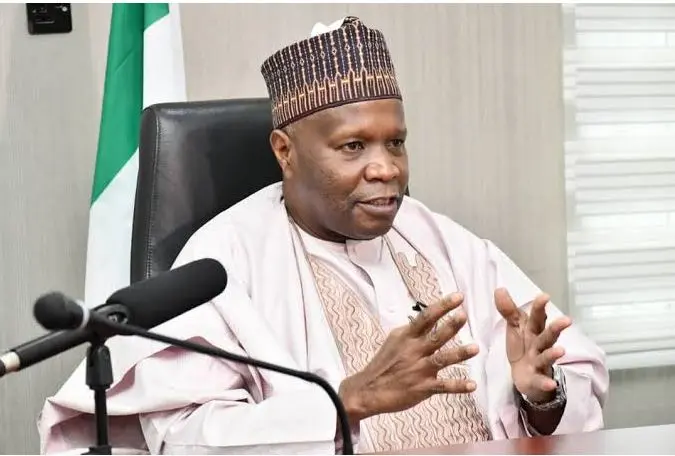
Governor Muhammadu Inuwa Yahaya, CON, has praised teachers in Gombe State and across Nigeria for their dedication, resilience, and hard work, acknowledging their efforts in molding the next generation.

In his goodwill message to mark the World Teachers’ Day, today, Governor Inuwa Yahaya noted that teachers are not just educators, but key stakeholders in the development of society.

This year’s theme, “Valuing Teacher Voices: Towards a New Social Contract for Education,” underscores the vital role teachers play in shaping the future of education and the necessity of incorporating their voices into policy decisions.

“In a world that is constantly evolving, the input of teachers in shaping educational policies is important. The theme of this year’s celebration is a call for all of us to recognize the importance of teachers and to ensure that their voices are heard in decision-making processes,” he said.

Reflecting on the efforts of his administration to improve the welfare of teachers, Governor Inuwa Yahaya highlighted several initiatives that have been implemented under his leadership.

These include the recruitment of new teachers to address manpower shortages, regular payment of salaries and entitlements, teacher training and capacity-building programmes, as well as improvements in school infrastructure to create better working conditions for educators.

“Our administration is committed to ensuring that teachers in Gombe State are well-supported and motivated. We understand that quality education cannot be achieved without investing in the well-being and professional development of our teachers. This is why we have consistently prioritized their welfare, from timely salary payments to providing opportunities for training and career advancement,” the Governor stated.