Month: October 2024

Open letter to Gombe State Governor

Dear Sir,

I hope this message finds you well. I write to bring to your attention the constant road traffic accidents at the Malam-Inna junction along Gombe State University’s second gate. 

Sir, in less than two days, I’ve witnessed about two fatal road traffic accidents at that junction. Although no life was lost, the degree of injuries was sustained by the casualties. Some were taken to hospital in a stupor. 

Within my few weeks of staying in Gombe, I observed that Malam-Inna junction isn’t the only place witnessing incessant road traffic accidents but an extensively considerable number of roads in Gombe. This is because of motorists’ high rate of reckless driving in the city of Gombe. 

Motorists are driving at high speed, jeopardising people’s lives and properties daily. However, most road users in Gombe drive aggressively and don’t care about committing traffic offences. These problems are escalating daily, and if care isn’t taken, they will become a calamity to the good people of Gombe state. 

Sir, as a father and commander in charge of the affairs of Gombe State, I believe you have a responsibility to protect your people. Protection of people isn’t limited to exterminating criminality in society but also to eradicating every act that will likely affect the well-being of the people. Road safety legitimately falls into this category.

To sum up, your Excellency needs to create a legislative framework that will govern the behaviour of road users in Gombe State. This should be done by establishing a new agency that will be saddled with the responsibility of enforcing traffic laws among road users in Gombe State. 

The new agency should develop practical traffic laws that align with the Federal Road Safety Corps (FRSCN) to curtail reckless driving and traffic offences and enhance both motorists’ and pedestrians’ safety in Gombe State.

The creation of this agency will help promote a culture of respect and responsibility between road users. The agency should be charged with punishing traffic law offenders using fines, license seizure, and prosecution. This will improve adherence to traffic laws and, subsequently, the state’s IGR.

When established, the new agency will create jobs among the Gombe youths and play a vital role in managing the flow of vehicles and busy roads in Gombe State.

Traffic rules are necessities that governments must enforce to ensure a secure and orderly atmosphere for their people. 

Road safety is paramount. As a concerned leader who genuinely cares for his people, I am optimistic that you’ll urgently investigate this matter and take the necessary action. 

Thank you, and God bless.

Sunusi Abubakar Birnin Kudu wrote from Arawa B. Gombe State via muhammadsunusi29@gmail.com.

Shettima launches nutritional programme to tackle malnutrition

By Uzair Adam

Vice President Kashim Shettima has officially launched the federal government’s new nutrition initiative, aimed at addressing malnutrition and food insecurity across Nigeria.

The programme, named the “Nutrition 774 Initiative,” is set to improve nutritional outcomes in all 774 local government areas of the country.

Shettima emphasized the government’s commitment to ensuring that every household in Nigeria has access to nutritious food, beyond just availability in stores and warehouses.

He noted that the initiative aims to eradicate malnutrition through a community-based approach that empowers local actors, such as health workers and community leaders, to take charge of nutritional improvements in their areas.

At a roundtable meeting with development partners, Shettima called for their collaboration to make the programme a success. He explained that addressing malnutrition requires collective efforts from all stakeholders, including the government and development organizations.

The initiative also focuses on training local health professionals to better equip them in handling malnutrition at the grassroots level. Despite recent floods and global inflation affecting food security, Shettima highlighted the need for innovative solutions that directly tackle these challenges.

Coordinating Minister of Health & Social Welfare, Prof. Muhammad Pate, described the initiative as crucial in addressing malnutrition, particularly among vulnerable populations.

He stressed the importance of a multi-sectoral approach, integrating efforts from agriculture, health, water, sanitation, and social protection sectors to ensure the success of the programme.

Customs boss bids farewell to outgoing corps members in Abuja

By Sabiu Abdullahi 

The Comptroller-General of Customs (CGC), Adewale Adeniyi, has yesterday officially bade farewell to the 2023 Batch C National Youth Service Corps (NYSC) members who completed their one-year national service at the Nigeria Customs Service (NCS) headquarters in Abuja. 

CGC Adeniyi, in a ceremony marked by a memorable passing-out parade, accompanied by senior officers, inspected the outgoing corps members as they displayed their final drill.

Adeniyi urged the corps members to uphold values like discipline, teamwork, and commitment.  

He said, “These are values you must carry with you into your professional lives.” 

He also praised the dedication and contributions of the corps members during their service year.

Hormonal symphony and complexity: The male version

By Aisha Musa Auyo 

Hormones influence a considerable percentage of our behaviours and physical appearance. If we say our hormones are what make us, we won’t be exaggerating. Yet we hardly discuss it; thus, only a few know about it or believe in it.

Hormones regulate critical bodily functions such as metabolism, blood pressure, growth, reproduction, and mood. Even small changes in hormone levels can significantly impact our health, affecting everything from sleep and energy to appearance and cognitive function.

I’ve summarised the explanation in the most straightforward language possible so that I wouldn’t suffocate you with medical jargon. As promised, this outing is about male hormones…Finally.

Puberty in boys, typically starting between ages 9 and 14, is driven by hormonal changes, mainly testosterone. This triggers physical changes like increased sweating, acne, voice deepening, growth spurts, and the onset of sexual attraction. Emotionally, boys may experience mood swings, irritability, and seek independence.

Because they sweat a lot due to changes in their hormones and physical activities, they are bound to smell. This is one of the best times to ensure that they master personal hygiene, as they’re too old to be bathed by their mothers. Do this, and his wife will thank you later.

Teenage boys should learn about Islamic teachings on wet dreams and ritual baths. They should also learn about weekly shaving, the use of deodorants and perfumes, proper bathing, and washing underwear and sportswear as regularly as possible. 

At this crucial stage, parental support is vital. Don’t ignore and assume that boys don’t need attention and sympathy. They need it as much as their female counterparts. Parents should be patient, encourage open communication, set healthy boundaries, and model empathy. Ensure a healthy lifestyle with proper nutrition, regular exercise, and adequate sleep (at least 8 hours).

This is the phase when boys are likely to succumb to peer pressure and are likely to experiment on good, bad, and ugly, as they are fearless and careless. Parents should pay attention and make efforts to curb the impact of peer pressure, sexual attraction, and risky behaviours by monitoring their (a) friends, (b) how they use social media, (c) discussing the consequences of actions and inactions, and, (d) most importantly, prayers and setting a positive example. 

Parents should also promote emotional intelligence by having heart-to-heart talks with their male children, validating their feelings, and encouraging open expression. This gesture will go a long way in teaching them about expressing their feelings, listening to others, and communication in general.

Puberty is a crucial stage in a boy’s life, shaping both his body and mind. With patience, understanding, and the proper guidance, parents can help their sons navigate this period confidently, setting the foundation for healthy adulthood.

Men’s hormone levels stabilise in early adulthood, peaking in testosterone around age 20 and growth hormone around 25. After age 30, testosterone decreases by 1% annually, and growth hormone declines by 2-5% every five years. Cortisol, the “stress hormone,” and melatonin, which regulates sleep, become important for well-being.

During fatherhood, testosterone may drop, potentially reducing aggression and libido. In midlife, decreases in aldosterone and growth hormones can affect blood pressure and muscle mass. In late life, low testosterone impacts sperm quality and fertility. Ageing men should also monitor glucocorticoid and insulin levels, as imbalances can affect metabolism, memory, and diabetes risk.

Let me share some fundamental secrets with you. While women’s hormonal rollercoasters are quite pronounced, men’s hormone levels are mostly stable. However, the productivity, compassion, and cooperation of a boy-cum-man are boosted when they feel accepted, respected, appreciated, admired, and validated. 

Lack or shortage of the abovementioned elements will make a man’s emotions unpredictable. It will trigger reactions similar to women experiencing hormonal changes and mood swings.

We need to know how to treat the male gender with these measures from childhood. It’s the only way to get them to do what is desired of them. Naturally, that’s how our Creator made them. 

Being treated with respect and admiration will make a man (and a boy) drop his ego and defences without even knowing it. (Just like how love and caring open a woman’s heart and make her drop defences). Au, na tuna, this outing is for za other gender ko? LOL!

Anyway, as wives and mothers, knowing this will go a long way in helping us in our relationships with husbands, male children, and the other gender in general.

Aisha Musa Auyo is a Doctorate researcher in Educational Psychology. A wife, a mother, a homemaker, caterer, parenting, and relationship coach. She can be reached via aishamuauyo@live.co.uk.

NCC retracts statement on Starlink’s subscription price increase

By Uzair Adam

The Nigerian Communications Commission (NCC) has issued a public clarification regarding its earlier statement on Starlink’s subscription price hike, stating that it was released in error.

Initially, the NCC expressed surprise at Starlink’s announcement of new subscription rates in Nigeria, asserting that the company had not obtained regulatory approval for the price increase.

The Commission acknowledged that while Starlink had submitted a request for a price review, a decision had not yet been made.

The original statement also alluded to potential regulatory infractions under the Nigerian Communications Act (NCA) 2003.

However, the NCC now clarifies that the previous statement was premature and has urged all media outlets to retract any related publications.

Reuben Muoka, the Director of Public Affairs at the NCC, stated, “We request that all media platforms kindly withdraw the previously issued statement on Starlink’s price hike, as it was issued in error.”

He further asked those who published the statement to remove it from their platforms.

The NCC remains dedicated to ensuring regulatory stability and creating a favorable environment for investment in the telecommunications sector, especially as stakeholders continue to call for a review of tariffs to encourage further investment.

The Commission appreciates the cooperation of the media and apologizes for any confusion or inconvenience caused by the earlier release.

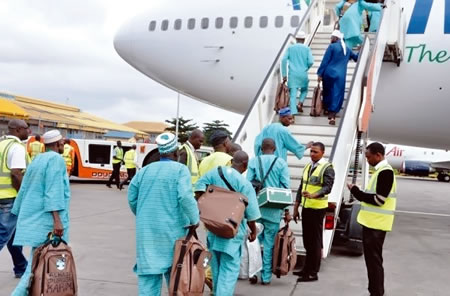
Hajj fare rises to ₦10 million as NAHCON withdraws subsidy

By Uzair Adam

The National Hajj Commission of Nigeria (NAHCON) has announced that the federal government will no longer provide subsidies for Hajj pilgrims starting in 2025.

In previous years, pilgrims benefited from a concessionary exchange rate offered by the Central Bank of Nigeria (CBN), allowing them to purchase dollars at a lower rate.

With the naira currently at N1,650 to the dollar, pilgrims are expected to pay nearly N10 million for the Hajj fare, given that the minimum cost is around $6,000.

Although the official fare for the 2025 pilgrimage is yet to be confirmed, some State Pilgrims Welfare Boards have already started asking for an initial deposit of N8.5 million from intending pilgrims.

NAHCON also announced a refund of 64,682 Nigerian pilgrims (equivalent to 150 Saudi Riyals) who participated in the 2023 Hajj.

This was disclosed during a virtual meeting between NAHCON officials and Private Tour Operators (PTOs) on October 7, 2024.

The meeting also highlighted a reduction in the number of approved PTOs for the 2025 Hajj, with Saudi Arabia cutting the figure from 20 to 10, and each operator required to register at least 2,000 pilgrims for visa approval.

NAHCON also addressed a refund of over SR62,000 (N26.9 million) owed to PTOs for substandard feeding arrangements during the 2022 pilgrimage, while clarifying that it received N2.75 billion from 110 PTOs for the 2024 Hajj and still holds a balance of N750 million from undecided operators.

Operators who initially paid a cash deposit of N40 million as a cautionary measure for the 2025 Hajj now have the option to submit a bank guarantee instead.

UNICEF raises alarm on violence against children in Nigeria

By Uzair Adam

The United Nations Children’s Fund (UNICEF) has expressed concern over the persistent level of violence against children in Nigeria, citing new studies that indicate the situation remains alarming.

UNICEF’s Child Protection Manager in Nigeria, Mona Aika, made this known during the opening of a two-day forum on ending violence against children, held in Abuja on Monday.

She revealed that about 6 out of 10 children in Nigeria experience physical, sexual, or emotional violence before the age of 18, while only 5 percent of reported cases receive the necessary support and services.

Aika emphasized that Nigeria is making efforts to address the issue through the INSPIRE framework, which includes enforcing laws, eliminating harmful social norms like gender discrimination, female genital mutilation, and child marriage, and creating safer environments for children.

The Solicitor-General of the Federation, Beatrice Jeddy-Agba, echoed these sentiments, stressing that a comprehensive approach involving all stakeholders is necessary to combat violence against children.

She reiterated the Ministry of Justice’s commitment to prosecuting cases of violence, including crimes against girls who were affected by Boko Haram.

Leticia Ayoola-Daniels, Director of the Administration of Criminal Justice and Reform Department, described the forum as a preparatory step ahead of the global summit in Bogota, Colombia.

She highlighted the determination to shift from merely discussing the issue to taking concrete actions to protect children.

The stakeholders’ forum marks another step in Nigeria’s ongoing efforts to confront and reduce violence against its children.

Kano State Government: Please revitalise the abandoned technical schools in 44 LGAs

By Bilal Muhammad Bello (BMB)

It is widely recognised across Kano State that the 44 LGA Day Technical Schools have been abandoned and remain under incomplete construction. These schools were established in 2012 during the second tenure of former Governor Senator Rabi’u Musa Kwankwaso. 

The initial progress on these schools was swift under Kwankwaso’s administration. However, the subsequent government, led by former Governor Dr. Abdullahi Umar Ganduje, halted the continuation of the project.

The abandonment of these schools has not only led to their physical decay but also created opportunities for theft and vandalism, with some individuals stealing materials from the school premises. The neglected sites have also become hubs for illicit activities, posing a threat to the safety and well-being of the surrounding communities.

It is crucial to bring this matter to the attention of His Excellency, Engineer Abba Kabir Yusuf, the current Governor of Kano State. Your commitment to advancing education in both urban and rural areas, particularly through the construction of classroom blocks, the reduction of registration fees for higher education institutions, and the provision of postgraduate scholarships, is commendable and has garnered praise from Kano residents and visitors alike.

During your 2019 and 2023 gubernatorial campaigns, you pledged to resume work on the 44 LGA Day Technical Schools. I respectfully appeal to your administration to take swift action to complete these schools. By doing so, you will transform these temporary sites into permanent institutions, ensuring they fulfil their original purpose and preventing further loss of valuable materials.

Bilal Muhammad Bello (BMB) wrote from Mass Communication, Bayero University Kano.

Hardship: Nigerian university students bear the burden

By Zainab Haruna Shittu

The economic downturn in Nigeria has reached alarming proportions, leaving no one unscathed. The youth, particularly university students, face unprecedented hardships. Financial constraints, food insecurity, and limited access to resources have become the norm for many Nigerian university students.

Research has shown that economic hardship profoundly impacts students’ academic performance and mental health. A National Bureau of Statistics (NBS) study reveals that poverty and hunger are major factors contributing to students’ poor academic performance. Similarly, a report by the United Nations Children’s Fund (UNICEF) highlights the devastating effects of food insecurity on students’ mental health.

For many students, the struggle is personal. “Academic pressure mounts, but hunger weighs heavier. I’m constantly worried about where my next meal will come from,” confesses a 21-year-old student who wished to remain anonymous.

Another student echoes this sentiment. “I struggle to focus in class because I’m constantly worried about where my next meal will come from. My parents’ hard work doesn’t pay enough to sustain us, leaving me hungry and stressed. The toll on my mental health is overwhelming,” shares a 20-year-old university student.

To mitigate the effects of economic hardship on university students, policymakers and stakeholders must prioritise education and food security. This requires collaborative efforts, including government support for education and food programs, increased scholarships and financial aid, improved access to mental health resources, and community-based initiatives for food security.

Nigeria’s economic woes have far-reaching consequences, affecting various sectors, including education. University students deserve support and resources to thrive. It is imperative that we prioritise their well-being and future.

Zainab Haruna Shittu wrote from Bayero University, Kano, via harunazainabshittu7567@gmail.com

“We are unlawfully detained by the IG under the directives of Matawalle” – a father’s cry

By Mukhtar Ibrahim

Alhaji Umaru Hadejia, a septuagenarian, cries out and looks for justice, after he had been unlawfully detained together with his 5 children by the state security forces.

According to Umaru, his arrest was allegedly orchestrated by the current state minister of defense, Matawalle, who ordered for their arrest without them commiting any offence.

In a letter obtained by TDR, Umaru Hadeja lamented and explained that; he, together with his five sons, were detained unlawfully by the IG of police.

“I, along with my five children (Bashir, Bello, Mahmud, Abubakar and Ahmad) have been
unlawfully detained without any warrant of arrest and without any charge levied against us at the Intelligence Response Team (IRT) unit in Abuja by the Inspector General of Police under the directive of the Minister of State (Defence) Bello Matawalle since yesterday 30th September, 2024 at around 6pm.”, He said.

He further said “The previously spurious allegations against Bashir by the Inspector General of Police and
the Minister of State (Defence) Bello Matawalle, which were widely circulated in the social media were found to be false because the Police investigations themselves did not find any cause to charge Bashir to court. Up to now, the Police could not charge Bashir on any of those allegations.”

“Despite this, the Police could not release Bashir, which then forced us to go to court to secure his release and enforcement of his fundamental human rights. Upon which the court granted bail and ordered for his release on the 5th of September 2024. Still, the Police refused to release Bashir until the 25th September 2024.”

“However, I and my above-named children are still being illegally detained by the Inspector General of Police under the directive of the Minister of Defence (State) Bello Matawalle without warrant of arrest and any charge against us.
I fear for our lives and safety.”

Initially, it was a son of Alhaji Umaru, named Bashir, who was arrested by officers from the Police Force Intelligence Department-Intelligence Response Team (FID-IRT) and Force Intelligence Department-Special Tactical Squad (FID-STS), but later, the father and other family members were also arrested when they attempted to seek for his release.

Federal prosecutors are accusing Bashir (the son) of “treason, subversion against the state” and playing a role in the sponsorship of the nationwide hunger protests in the first week of August.