Month: October 2024

NDLEA seizes N22.7 billion worth of opioids, arrests Thailand returnee with N3.1 billion heroin

By Uzair Adam 

The National Drug Law Enforcement Agency (NDLEA) has made significant strides in its ongoing war against drug trafficking, intercepting a total of N22.7 billion worth of opioids at three major seaports. 

In a separate incident, operatives at the Murtala Muhammed International Airport, Lagos, arrested Oguejiofor Nnaemeka Simonpeter, a Thailand returnee, for attempting to smuggle heroin valued at over N3.1 billion.

Oguejiofor, a 29-year-old graduate of Mechanical Engineering from Chukwuemeka Odumegwu Ojukwu University in Anambra State, was apprehended on October 7, 2024, while trying to exit the airport with the illicit drug hidden in six backpacks packed inside two large suitcases. 

The heroin, weighing 13.30 kilograms, was carefully sewn into the backpacks. 

According to a statement by Femi Babafemi, NDLEA’s Director of Media & Advocacy, Oguejiofor had travelled from Thailand to Lagos via Qatar Airways, stopping over in Doha. 

Upon arriving in Lagos, he requested his luggage, which was initially routed to Accra, Ghana, to be rerouted back to Nigeria in an attempt to avoid security checks. 

NDLEA officers intercepted the luggage, leading to the discovery of the heroin.

Oguejiofor claimed that he was paid $7,000 to deliver the drugs, with two parcels intended for Lagos and the remaining four for Accra.

In related operations, NDLEA officers at the Lekki Deep Seaport, Apapa Seaport in Lagos, and the Port Harcourt Port Complex seized a large quantity of opioids, including 32.6 million tramadol pills and over 1.4 million bottles of codeine-based syrup. 

These drugs were estimated to be worth N22.7 billion in total.

Meanwhile, operatives in Anambra State also arrested a suspect with 50,000 tramadol tablets, and in Edo State, NDLEA officers recovered 1,050 kilograms of cannabis during a raid at a transit point.

Jigawa: Gov Namadi suspends adviser over premature minimum wage announcement

By Uzair Adam 

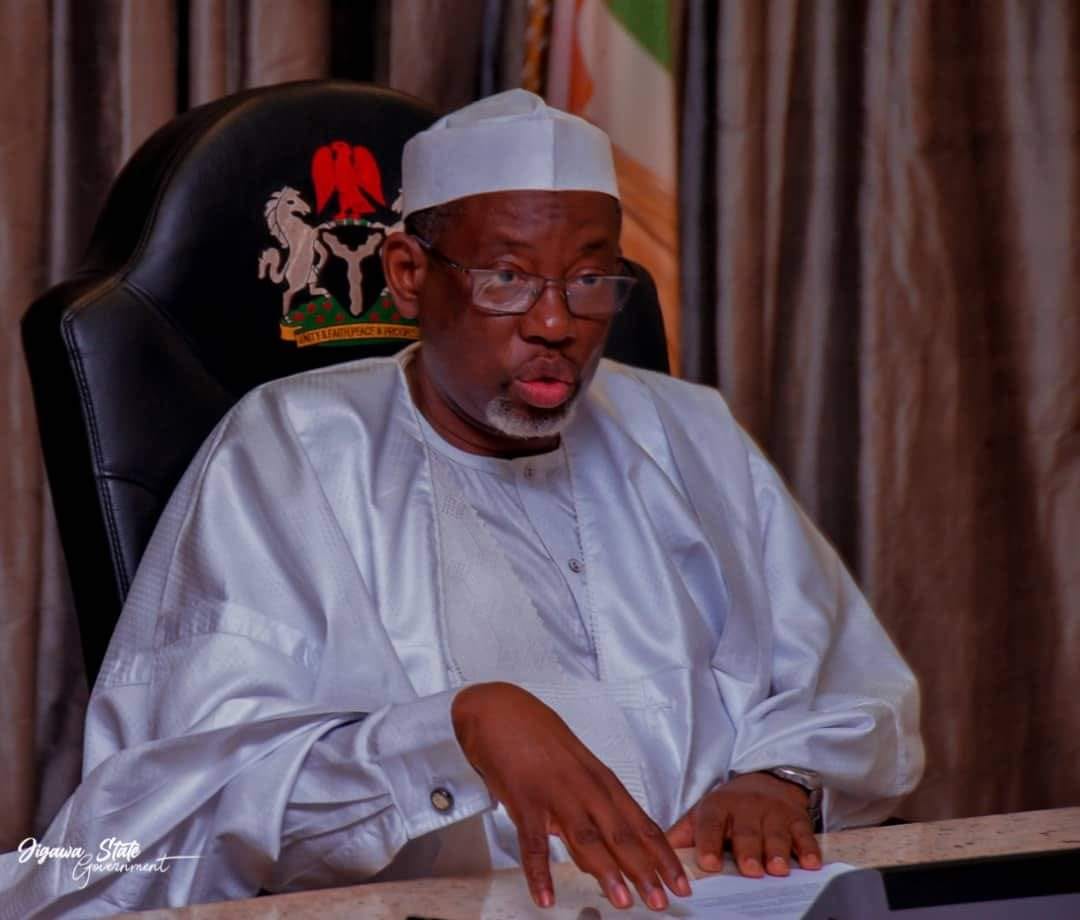
Governor Umar Namadi of Jigawa State has suspended his Special Adviser on Salary and Pensions, Alhaji Bashir Ado, following a premature announcement regarding a proposed N70,000 minimum wage.

The suspension was confirmed in a statement issued by Bala Ibrahim, the Secretary to the State Government, in Dutse on Saturday. 

The statement revealed that a circulating media report claiming the governor had approved the new minimum wage was both inaccurate and premature.

“This is an embarrassing situation, as the committee tasked with advising on the appropriate wage, led by the Head of the State Civil Service, has yet to finalize its report,” Ibrahim explained.

Due to the incident, the governor has approved Ado’s immediate suspension pending the outcome of an investigation. 

A committee, chaired by the State Attorney-General and Commissioner of Justice, Bello Abdulkadir, has been set up to probe the source and intent behind the statement.

The committee, which includes Commissioner for Information, Youth, Sports and Culture Sagir Musa, Commissioner for Health Dr Abdullahi Muhammad, and Muhammad Hahaha, Permanent Secretary of Establishment and Service Matters, is expected to submit its report within two weeks.

26-year-old Jigawa man arrested for allegedly setting grandma on fire

By Abdullahi Mukhtar Algasgaini 

The Jigawa State Police Command has confirmed the arrest of a 26-year-old man, Nura Mas’ud, who allegedly set his grandmother ablaze. 

The command’s Public Relations Officer, DSP Lawan Adam, confirmed the suspect’s arrest in a statement on Saturday. 

He said, “On October 8, 2024, at about 1600hrs, the command was notified of a sad and regrettable incident that occurred in Mu’azu village, Dan Gwanki ward, Sule Tankarkar LG. 

“That one Nura Mas’ud, 26 of Mu’azu village, Sule tlTankarkar LGA, went to his family house with a petrol canister and poured it on his grandmother, Zuwaira Muhammad, 60 of the same address, and set her ablaze. 

“The elderly woman eventually passed away while being admitted to a hospital as a result of the conflagration.” 

He explained that the medical doctor on call certified her death, and the corpse was released to relatives for burial according to Islamic rites. 

He pointed out that a team of police detectives from the Sule Tankarkar Division quickly arrested and detained the suspect. 

“He was later taken to the State Criminal Investigation Department for a discreet investigation. 

“During the interrogation, the suspect admitted to committing the alleged offence against him,” the statement added. 

Adam noted that a preliminary investigation revealed that the suspect suffers from mental illness and has been receiving treatment at Kazaure Psychiatric Hospital. 

“The suspects further stated that the late grandmother upset him by expressing concern about his physical appearance and health, which he did not want. He warned her on several occasions but she refused. Thus, he purchased gasoline, poured and ignited her,” he added. 

He said the state commissioner of police, A.T. Abdullahi, had directed the SCID to thoroughly investigate the case and prosecute the perpetrator to serve as a deterrent to others.

Kano anti-corruption agency probes alleged N1.5 billion scholarship fraud

By Uzair Adam

The Kano State Anti-Corruption and Public Complaints Commission has initiated an investigation into allegations of a N1.5 billion scholarship scam involving the Ministry of Higher Education.

The commission is currently interrogating two senior officials in connection with claims regarding 1,001 students purportedly studying in India and Uganda.

The Daily Reality gathered that the state government had sponsored these students for postgraduate degrees in India and Uganda as part of a foreign scholarship initiative launched by Governor Abba Yusuf.

Recently, Governor Yusuf hosted a farewell dinner for the first batch of 550 scholarship beneficiaries, and expressed his gratitude to former Governor Rabi’u Kwankwaso for establishing the program.

However, it has come to light that only 418 students were actually sent abroad for their studies.

That raised concerns about the fate of the remaining students.

Kabiru A. Kabiru, the commission’s Public Relations Officer, confirmed the ongoing investigation. He stated that the two officials were questioned regarding the alleged fraud.

He noted that preliminary findings have revealed suspicious activities linked to the Ministry of Higher Education’s handling of the postgraduate scholarship program.

“We have opened an investigation to uncover the truth. Those found culpable, regardless of their position, will face prosecution,” Kabiru asserted.

Tinubu’s dramatic U-turn: Once blasted fuel subsidy removal, now defends it as necessary

By Uzair Adam

During his inauguration at Eagle Square, Abuja, President Bola Ahmed Tinubu declared the end of the fuel subsidy, leading to a sharp increase in petrol prices from N198 to N540 per litre.

The president argued that the subsidy had become a hindrance to national progress, fueling corruption, and stated that funds previously allocated to it would be redirected to other sectors of the economy.

Tinubu explained the rationale behind the removal during a meeting with traditional rulers, as reported by The Daily Reality.

He stated, “We cannot continue to support smugglers and neighboring countries at our own expense.”

He described the subsidy as an economic burden that could bring Nigeria to its knees if not addressed.

However, this stance marks a significant departure from Tinubu’s previous criticism of the subsidy removal by former President Goodluck Jonathan in 2012.

As the national leader of the opposition Action Congress of Nigeria (ACN) at the time, Tinubu had condemned the move, labeling it the “Jonathan tax” and accusing Jonathan of breaching his social contract with the Nigerian people.

In a strongly-worded piece, as gathered by Daily Trust on Sunday, Tinubu argued that the subsidy removal would plunge Nigerians into deeper hardship and criticized the economic policies driving the decision.

He had stated, “The people will become enslaved to greater misery. This crisis will bear Jonathan’s name and will be his legacy.”

Tinubu’s past opposition to the removal of fuel subsidies now stands in stark contrast to his own administration’s decision to abolish it.

A call for change: The untold story of Nigeria’s boat accidents

By Ibrahim Aliyu Gurin 

Boat accidents in Nigeria are tragically frequent, especially in regions with limited transportation options. In states like Niger, Kebbi, and Adamawa, where rural communities depend on boats for daily travel, the risks are high. Overloading, poor safety measures, and weak enforcement of regulations are the leading causes, leaving many families devastated.

On one fateful day, farmers, eager to beat an approaching storm, crowded into a boat to head home. Among them were women and children, holding on to hope as the sky darkened. But their fears came true. Halfway through the journey, strong winds capsized the overloaded boat, and chaos broke out. Screams echoed as men, women, and children fought to stay afloat. Twenty people went missing, lost to the river’s depths.

In a desperate attempt, a mother tried to save her infant by holding the child above water. She drowned, but a diver managed to rescue the baby—a small miracle amidst the tragedy. Others were less fortunate. Adamu Mai-nama lost his wife, two children, sister, and in-laws. “They’re all gone,” he mourned, his voice heavy with grief.

This heartbreaking scene repeats itself across Nigeria every year. Boats, essential for transport in areas with limited roads, become death traps due to overloading, faulty maintenance, and weak safety enforcement. According to data provided by the International Centre for Investigative Reporting (ICIR), between January 2018 and October 2023, Nigeria recorded 1,204 deaths from boat accidents, averaging about 17 fatalities per month. These incidents occurred in 25 states, with Niger State having the highest number of deaths at 275.

Overloading remains a critical issue as boat operators prioritise profit over safety. Many vessels are dangerously overcrowded, and passengers, lacking alternatives, are forced to risk their lives. In countries like Bangladesh, strict enforcement of passenger limits has reduced boat accidents. Nigeria could benefit from similar regulations, cracking down on operators who ignore safety rules.

Compounding the problem is the poor condition of many boats. They are often old, poorly maintained, and lack essential safety equipment like life jackets. Passengers board these vessels with little choice but to rely on luck. Rising water levels and stronger storms, driven by climate change, further heighten the danger. 

According to the Marine Crafts Builders Association of Nigeria, over the past decade, Nigeria has seen approximately 3,130 boat accidents, leading to over 3,133 deaths. Regular inspections and better boat maintenance are urgently needed.

The dangers of drowning also extend beyond boat accidents. The World Health Organization reported that drowning deaths in Nigeria reached 6,584 in 2020, accounting for 0.44% of total deaths, with a drowning mortality rate of 2.17 per 100,000 people. This staggering number highlights the broader issue of water safety and the need for comprehensive measures to protect lives.

When accidents happen, the country’s rescue efforts are often too slow to be effective—poor funding and inadequate equipment delay response times, costing lives. Investing in better rescue units, equipment, and training responders is essential. However, prevention through stronger safety measures is the most effective solution.

Public awareness campaigns are also crucial. Many passengers don’t realise the dangers of overcrowded boats or the importance of life jackets. Localised safety education, led by community leaders, can make a significant difference.

Countries like Indonesia and Bangladesh have shown that strict regulations and public education can reduce boat mishaps. Nigeria can make its waterways safer by modernising boats, enforcing safety standards, and raising awareness. Unfortunately, the lack of enforcement in remote areas undermines these efforts. While states like Lagos have made progress, others, such as Niger, Kebbi, and Adamawa, need to implement stronger oversight and inspections.

The tragedies we see on Nigeria’s waterways are preventable. They result from neglect of safety regulations, boat maintenance, and human life care. We must act now to prevent more families from suffering: enforce safety rules, improve boat conditions, strengthen rescue operations, and educate the public.

The mishaps on Nigeria’s waterways don’t have to keep happening—they can be stopped. Every life lost shows the price we pay for ignoring safety. We know what needs to be done, but we keep doing nothing. How many more children need to lose their parents? How many more families must suffer before we take action?

The next boat accident could happen anytime. Will we wait for more lives to be lost, or will we make the changes needed to save them? The choice is ours, and lives depend on it.

Ibrahim Aliyu Gurin writes from Bayero University, Kano, via ibrahimaliyu5023@gmail.com.

Zaria LGA Election: Engr. Jamil Ahmad Muhammad’s plans for his people

By Ishaq M. Sani

 To surmount all challenges, the good people of Zaria deserve the best leadership at the local government executive council. Therefore, it’s imperative to bring in competent, young, and vibrant representation to the good people of Zaria local government. 

The good people of Zaria equally need a leader who can foster a harmonious synergy between the local, state, and federal governments, paving the way for remarkable achievements, transformative development, and a brighter future—a leader with a proven track record of driving impactful changes and advancing grassroots priorities. With Engr Jamil piloting the affairs of the cosmopolitan Zaria, an era for Pressing forward in the direction of progressive outcomes and solid attainments for the good people of Zaria is possible. 

However, Jaga’s socio-political background and mentorship from both the executive governor, Mal Uba Sani, and the speaker of the House of Representatives, Hon. Abbas, as Deputy chief of staff, have instilled in him the values of honesty, inclusivity, and open-mindedness to diverse views, contributing to effective governance. 

Ahead of the October Kaduna LGA elections 2024, a vote for Engr Jamil is a victory for addressing critical issues relating to Human Capital Development, Infrastructure Development, Security, Agriculture, Environmental management, Climate change, greenfield initiatives, Trade and Investment, and Robust Citizen engagements.

His focus on human capital development emphasised this: Engr Jamil is set to ensure education/scholarship, health, and social investment. He has tagged “Education: Knowledge and Skills Acquisition for the Future.” He is also Ensuring that scholarship opportunities are expanded to less privileged students to support lifelong learning. 

Elucidating impacting measures, combined with a continuous programme to improve teachers’ quality and teaching standards to ensure that basic education investments produce the desired learning outcomes in line with the sustainedmanifesto of his excellency Mal Uba Sani. Moving further, Zaria needs a well-equipped leader to support entrepreneurship in ICT, which is necessary for stimulating innovation and economic growth. 

Focus on Health ensures access to quality care in the health sector to consolidate the remarkable achievements recorded by Sen Mal Uba Sani, the state government leader, and Speaker Abbas’s critical interventions. Zaria looks forward to robust social investment through social welfare and liberating empowerment through dedicated funds for women and youth. 

The Zaria infrastructural development is also expected to focus on investment in sustainable environmental infrastructure such as water supply, sewage and solid waste management, and adequate infrastructure such as culverts, drainage and connecting roads/bridges for job creation, taking centre stage. 

The mission is to collaborate with the neighbouring LGAs and state and federal governments to continually improve the quality of connecting roads and ensure the expansion of the local electricity infrastructure, especially across Dembo, Wucicciri, and Dutsen Abba, among others. 

Furthermore, it promotes environmental conservation and sustainability, protecting Zaria’s natural resources and ensuring the sustenance of the conditions for economic dynamism through investments, vibrant commercial activities, skills development, and job opportunities.

However, like many other local governments, Zaria has been one of the hotbeds of security threats in Zone 1 of Kaduna state in the last eight years, with attacks happening on a regular basis. I commend the Governor and the honourable speaker for their robust efforts in maintaining the peace and stability of the state within their first year in office. 

Moreover, Engr. Jamil is expected to ensure a secure, peaceful, and united Zaria LGA. Effective collaboration between the state and federal government will ensure the deployment of security personnel and equipment for adequate security in the local government. Deep intelligence gathering through collaboration with traditional, religious, and community leaders will support security agencies. 

In light of the preceding, the competitive advantage of Zaria’s growth potential in the agricultural sector is viable through effective utilisation of agro-ecological zones, rising youthful population, irrigated farming opportunities while transitioning from subsistence to commercial agriculture and leveraging linkages with local manufacturing in the promotion of agri-business.   

Finally, Zaria envisions a leader who is committed to providing all-inclusive and diverse representation, Feedback mechanisms, and accountability processes, ensuring effective engagement with all communities for equity, responsiveness, collaboration, and accountability; this is possible when Engr Jamil is given the mandate. 

 Join Engr Jamil Ahmad Muhammad on this great journey…

Ishaq MSani writes from the office of the APC chairmanship Candidate, Zaria local government. Strategic communication directorate

Addressing mental health issues in Nigeria

By Aminat Adebesin Adebisi 

Nigeria, known for its vibrant culture and resilient people, is grappling with a pressing concern: mental health issues. Conditions such as depression, anxiety, and substance abuse affect millions, particularly the youth. Despite alarming statistics, the topic remains shrouded in stigma and silence.

Personal Experience

I have witnessed firsthand the devastating impact of mental health stigma. A close friend struggled with depression for months, hiding her pain behind a mask of smiles. For her, seeking help felt like a sign of weakness, and she wasn’t ready to open up. As I watched the twinkle in her eye fade, I wondered how I could have helped her escape the darkness.

Alarming Statistics

According to a 2019 report by the World Health Organization (WHO), depression is the leading cause of disability in Nigeria, with 1 in 5 Nigerians suffering from mental health disorders. The National Mental Health Survey (2018) reveals that 22% of Nigerians experience depression, while 30% struggle with anxiety.

Barriers to Seeking Help

Limited awareness, stigma, and entrenched cultural beliefs hinder individuals from seeking help. In Nigeria, voicing mental health concerns can lead to gossip, judgment, or even rejection. This silence forces many to suffer in isolation.

Breaking the Silence

To combat the rising rates of depression, we must take the following steps:

  • Establish Support Groups: Create social support networks with trusted, informed individuals to encourage open conversations.
  • Raise Awareness: Leverage organisations like the Nigerian Mental Health Association, the Federal Ministry of Health, and media outlets to promote understanding of mental health issues.
  • Integrate Education: Incorporate mental health education into school curricula to empower students and reduce stigma from a young age.
  • Engage Community Leaders: Collaborate with community leaders and influencers to promote discussions around mental health.
  • Improve Accessibility: Develop affordable and accessible mental health services to ensure that help is within reach for everyone.

Together, we can create a Nigeria where mental health discussions are embraced with empathy rather than met with stigma. By breaking the silence, we can offer support and hope to those affected, fostering a healthier, more understanding society.

Aminat Adebesin wrote via adebesinaminat2018@gmail.com.

Ex-governor’s son dies in Kaduna road accident

By Abdullahi Mukhtar Algasgaini 

Faisal Ahmed Mohammed Makarfi, son of former Governor of Kaduna State, Ahmed Mohammed Makarfi, is dead. 

The accident happened along the Kaduna-Zaria highway on Saturday evening. 

According to reports, the accident occurred along the Kaduna-Zaria highway this evening. 

He was taken to an undisclosed hospital, where he was declared dead. 

His father was at the hospital, and his corpse has been conveyed home for burial arrangements. 

Makarfi, a former Chairman of the Peoples Democratic Party (PDP), could not be reached for comments as of the time of filing this report. 

A civil engineer by training, Faisal attended Kaduna International School and then proceeded to Adesoye College, Offa, Kwara State, for his secondary education.

He attended the University of Greenwich, London, for undergraduate and master’s degrees and enrolled for a PhD at the same institution.

PDP crisis deepens as NWC splits

By Sabiu Abdullahi 

The crisis rocking the Peoples Democratic Party (PDP) has taken a dramatic turn, with the party’s National Working Committee (NWC) factionalised over issues in Rivers State and the conflict between Minister of Federal Capital Territory, Nyesom Wike, and Bauchi State Governor, Bala Mohammed. 

Acting National Chairman, Umar Damagum, has faced mounting criticism and calls for resignation since taking over after Senator Iyorchia Ayu’s court-ordered removal.

The crisis escalated when Damagum and other NWC members, supporting Wike, approved controversial PDP Congresses in Rivers State and postponed the National Executive Committee meeting. 

The lingering conflict between Wike and Rivers State Governor, Siminalayi Fubara, intensified on August 24, with PDP governors publicly backing Fubara and urging a review of the state congresses.

Wike responded by threatening to disrupt activities in the governors’ states, but the PDP Governors’ Forum labeled his threats “irresponsible”. 

In a surprising move, the NWC suspended National Publicity Secretary, Debo Ologunagba, and National Legal Adviser, Kamaldeen Ajibade (SAN), citing opposition to Damagum’s efforts to hand over control to Wike.

However, Ologunagba’s faction of the NWC swiftly suspended Damagum and National Secretary, Sen. Samuel Anyanwu, for alleged disloyalty, appointing National Treasurer Yayari Ahmed Mohammed as acting National Chairman. 

The situation remains fluid, with the PDP’s future hanging in the balance.