Month: October 2023

Elder statesman Adamu Fika passes on at 90

By Ahmad Deedat Zakari 

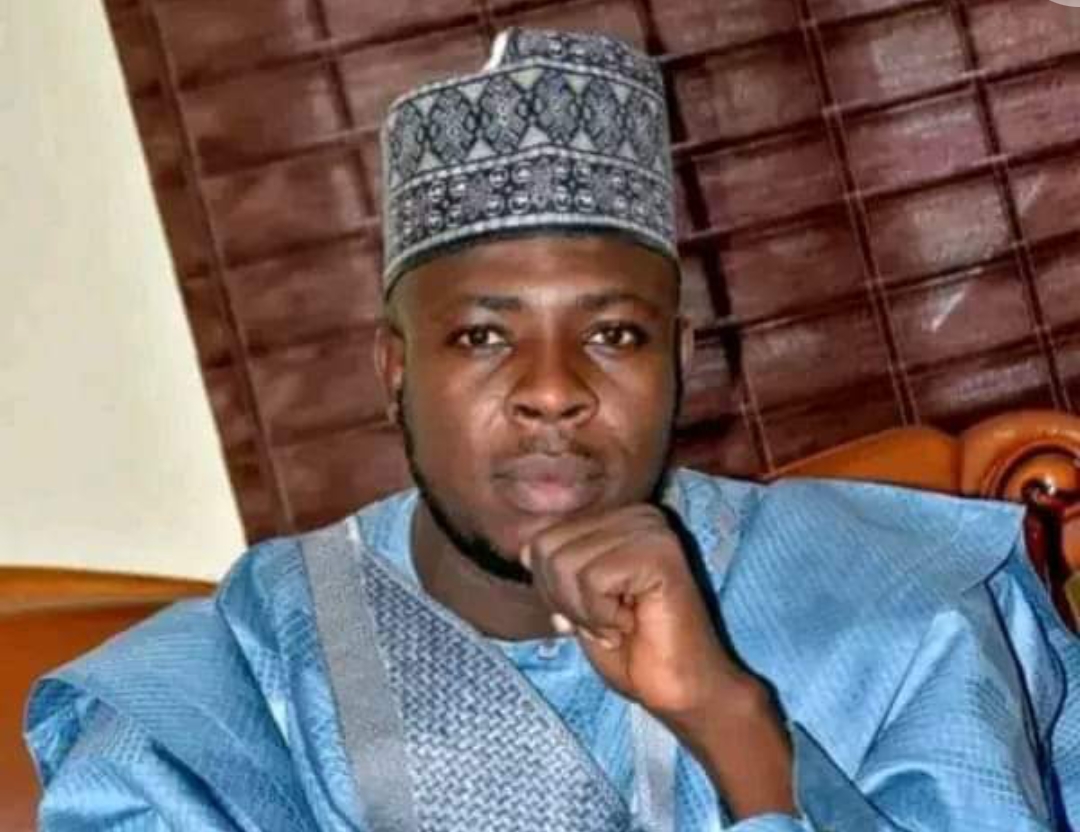
Elder statesman and Nigeria’s former Secretary to the Government of the Federation, Dr. Adamu Fika, has passed away at the age of 90. 

Sources within the family confirmed the demise of the nonagenarian to newsmen on Tuesday. 

The deceased died in London, where he has been treating undisclosed health issues. 

His funeral prayers have been scheduled to take place at the Sultan Bello Mosque in Kaduna on Wednesday by 4:00 p.m. 

He was born in Fika, Yobe State, in 1933. He was educated at Kaduna Government College, the Nigerian College of Arts, Science, and Technology, and Ahmadu Bello University, Zaria. 

He lived a life dedicated to the service of God and his country, which is evident in the position he held in his lifetime. 

The deceased was at the time pro-chancellor and chairman of the governing council at Ahmadu Bello University, Zaria.

The deceased was also the Chairman of the Board of Trustees of the Arewa Consultative Forum (ACF).

He was a permanent secretary at various federal ministries, among other things.

Bandits’ attack on Kaduna mosque leaves imam, worshipper dead

By Sabiu Abdullahi 

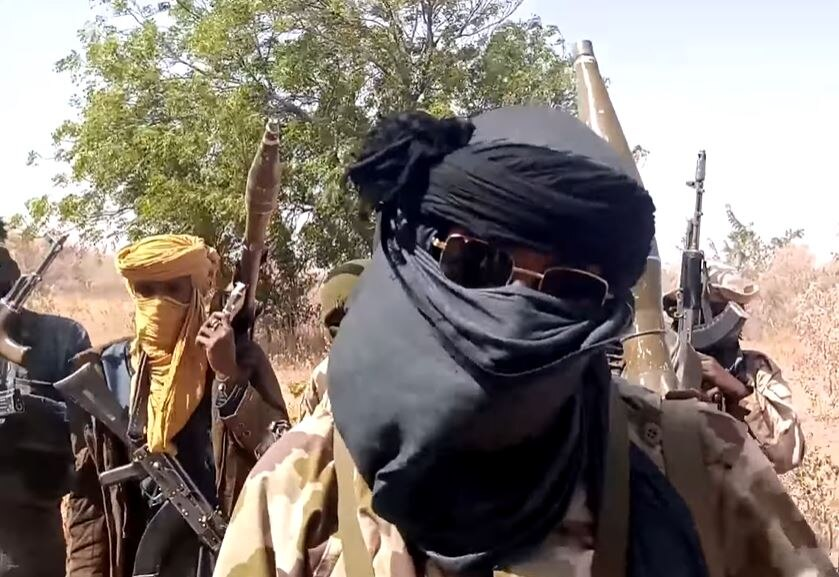
Amed bandits stormed a mosque during early morning prayers on Tuesday, taking the lives of the mosque’s imam and a worshipper identified as Kabir. 

The attack took place at Sabon Layi, Kakangi ward, in the Birnin-Gwari Local Government Area of Kaduna State. 

Two other worshippers, Bilya Mairabo and Ashiru Mairabo, sustained serious injuries and are currently receiving medical treatment at the Jibrin Maigwari General Hospital, Birnin-Gwari. 

The tragedy was said to have unfolded at approximately 5 a.m. Zubair AbduRrauf, the Danmasanin of Birnin-Gwari, expressed the community’s anguish, highlighting the escalating violence perpetrated by bandits in the region. 

AbduRrauf emphasized that the Birnin-Gwari communities faced daily threats, especially farmers, and the situation had become dire along the Birnin-Gwari-Kaduna highway, making it perilous for travelers and commuters. 

“We are in a precarious situation in Birnin-Gwari,” AbduRrauf stated. “The bandits’ attack is on a daily basis. Security personnel are really trying their best to see that the attacks are being curtailed, but we need a change of strategy from them.” 

Despite the gravity of the situation, there has been no official confirmation or statement from the state government or the state police command at the time of this report. 

The residents, gripped by fear and mourning, are calling for urgent and effective security measures to curb the rising menace of banditry that has plagued their community. 

When reached for comment, the state Police Public Relations Officer, ASP Mansir Hassan, promised to provide further information, indicating the gravity and urgency of the situation that has befallen the Birnin-Gwari community.

Zulum reopens Monday Market

By Rukayya Abubakar Othman

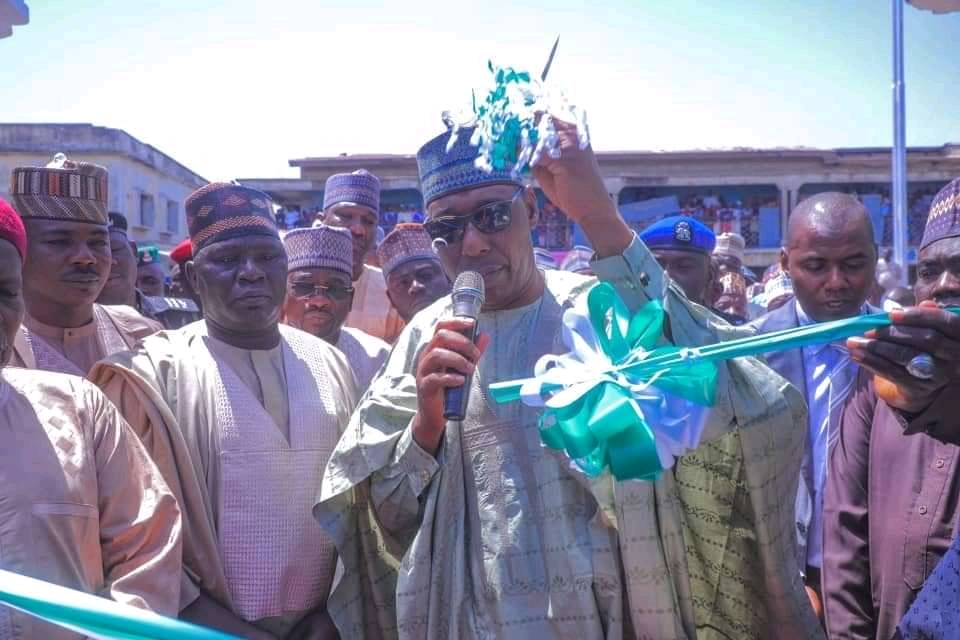
Governor Babagana Umara Zulum yesterday commissioned the famous Maiduguri Monday market and relieved two years’ rent for about 8,000 traders:

Borno state governor commissioned Maiduguri Monday Market on Monday, which was rebuilt after a fire inferno that gutted the market in February this year. 

Governor Babagana Umara Zulum announced that over 8000 traders who hitherto rented shops and paid rent would no longer pay for the next two years because of the losses incurred by them as a result of the mishap.

This, of course, is the untiring commitment of the state governor to the cause of serving humanity.

Upon the February incident, the governor hurriedly set up a committee to reconstruct the market, which has been completely rehabilitated and remodelled, with over 8,000 traders to benefit from the reconstruction. 

The market is well structured, which involves a comprehensive design and more vacancies for other traders to thrive in their business activities.

 The governor in February donated about N2b to the committee constituted to immediately swing into action and release N1b to the disaster victims. 

During the commission, Governor Babagana Umara Zulum announced about 2,825 traders who could not allocate their previous shop after the fire disaster. 

“As a result of remodelling, over 2,000 traders who either operated at a temporary site or built shops illegally on waterways could not own shops in the market. Moreover, the government will support over 185 of them with N1m “. Zulum said. 

He also promised that the people doing business there would get shops at a newly constructed Monday Market in Maiduguri. 

Reverend commits suicide amidst adultery scandal

By Sabiu Abdullahi 

Reverend Oscar Mukahanana, a prominent figure in the United Methodist Church, took his own life following an adultery scandal that rocked the church community in Harare East District, Zimbabwe.

The Reverend’s affair with a female youth was exposed when an audio recording of their secret conversation leaked on the church’s WhatsApp group.

The humiliation became unbearable for Mukahanana after members shared the recording widely and even created memes, leading him to tragically end his life.

The United Methodist Church expressed deep sorrow, urging members to support the grieving family through prayers during this difficult time.

Centenary Celebration: MURIC salutes Ansarudeen

By Abdurrahman Muhammad

The Ansarudeen Society of Nigeria began its three-month-long centenary programme on Friday, 20th October, 2023. Meanwhile, an Islamic human rights organisation, the Muslim Rights Concern (MURIC), has sent a message of solidarity to the society. MURIC described the Ansarudeen as the leading Islamic organisation in Nigeria in the area of education.

MURIC’s solidarity message was contained in a statement given to newsmen on Monday, 23rd October 2023, by the Executive Director of the organisation, Professor Ishaq Akintola.

The statement reads:

“A foremost Islamic organisation, the Ansar-ud-Deen Society of Nigeria (AUD), began its three-month-long centenary programme on Friday, 20th October, 2023.  The celebrations will come to an end in December 2023.

“MURIC expresses its unflinching solidarity with the AUD on this momentous occasion. We felicitate with the National President of this great organisation, Alhaji Aare Dr. Abdul Rafiu Ademola Sanni whose visionary guidance and exemplary leadership have propelled AUD to greater heights.

“AUD is a golden lamp that has illuminated all that is around it. Millions of Nigerians have benefitted from its programmes, particularly education. AUD primary and secondary schools are spread throughout the nooks and crannies of Nigeria, while the organisation has capped its educational edifice with colleges and a tertiary institution, Summit University, Offa, Kwara State. This is apart from its empowerment programmes for women and youths.

“We extend our acknowledgement to the spiritual leader of the AUD, Shaykh Abdul Rahman Ahmad. As the Chief Missioner of the society, Shaykh Abdul Rahman Ahmad has been a good ambassador.

“MURIC appeals to the federal and state Governments in the country as well as Muslim philanthropists to vigorously fund projects of the AUD. We charge the organization to remain focused and to pay greater attention to its youth wing in order to preserve its enduring culture of spiritual and social growth.”

Who will rescue the Naira?

By Aliyu Nuhu

No easy way for a country with bizarre economic behaviour. The economic laws are there for easy implementation in a normal society. But Nigeria is not normal. Everyone, from the leases to the ordinary citizens, is looking for ways to damage the country for personal gain. NIGERIA operates its economy with laws made from hell.

We all know our huge appetite for the dollar is driven by our need for foreign goods which we are unable to produce. If we don’t need foreign goods, there will be no demand for dollars since we only need the currency for imports. But who is not guilty among us here?

Naira supply affects inflation since too much money is chasing a few goods but is not the direct cause of the fall of the Naira in the forex market. Laws of demand and supply drive the forex market. More Dollars available will lower its value and vice versa with Naira. But these laws don’t work in Nigeria because of distortion in all economic policies created by the government, mostly by greedy Nigerians and the officials themselves.

The forex window allows funding of critical sectors with dollars by the Central Bank of Nigeria (CBN). But the distortion here is that those given dollars to import goods will take the money to the money market for round-tripping. The CBN officials will also take the dollar and exchange it for quick gain. Each governor that gets FACC allocation in Naira will take it to market chasing the dollar.

With such behaviour, the Naira can never get a breather. It is this distortion that makes it difficult to explain the reasons why Naira is not only weak but unstable. Currency instability is the worst thing that can happen to a country. At any point in time, investors can never know their profits and losses. It is the reason why companies like Emirates, ShopRite and Game are closing shop.

After looking at some of our promising macro trends, Nigeria is still unable to keep Naira strong because of the depletion of the country’s foreign exchange reserves. The major function of foreign reserves is to keep the Naira strong. But regime after regime keeps spending the reserve account to a point that no one can precisely say the balance of NIGERIA’s foreign reserve.

World Bank said irrespective of all other macroeconomic shortcomings, the Naira can still be exchanged for a dollar one-on-one if we can have $900bn in our foreign reserve. But what do we have today? Less than $30bn!

Kuwait is a consumer country like Nigeria, but because it has a foreign reserve of $137bn and a gold reserve of 78.97 tonnes, it has the strongest currency in the world. But Nigeria has 21.37 tonnes of gold in its reserve and a $34bn reserve for an economy with a GDP of $489bn. Kuwait is able to save with a GDP of $106bn! There is evidence that shows that GDP growth and employment growth increase in response to positive shocks to foreign currency reserves (forex reserves) accumulation, whereas unemployment declines.

Read the reports on the new government report on CBN, and you will understand that the Naira is only competitive by sheer luck, if not a miracle. Everyone, including people in charge of Naira’s health, is out to destroy the Naira.

Calls over shoddy Hausa translations in Northern Nigeria

By Uzair Adam Imam

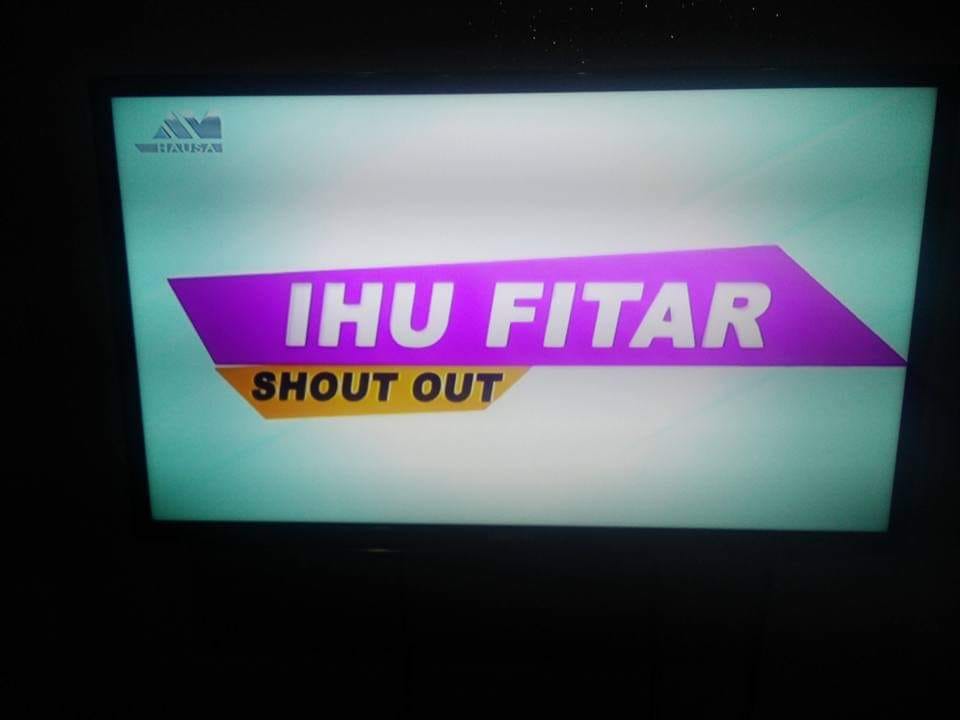
Translators, language experts, and advertising practitioners in Northern Nigeria are irritated by shoddy Hausa on billboards, TV and radio stations, with some calling for an end to the practice.

The role of translation is to communicate ideas and messages across the audience. However, as those concerned individuals opined, shoddy translation is doing the opposite.

Beyond the expert communities, poor translation, especially from English to Hausa, is generating outrages in many quarters, especially as native speakers of the Hausa language demand better translation of their language.

A report by The Daily Reality disclosed how the Three Crowns Milk, Taira, and Stanbic IBT, among others, came under attack over poorly translated advertisements from English to Hausa placed on their billboards.

Experts have associated the flagrant flaws of advertising agencies and personnel with unprofessionalism. They said that the practice has grown into a disease which has since been ravaging the translation business in Nigeria.

Authority to blame

There are outrages by the relevant authorities that feel very disappointed by the terrible things in the name translation that continue to unfold these days.

A lecturer at the Department of Nigerian Languages, Bayero University, Kano, Dr. Muhammad Sulaiman, described the situation as unfortunate.

He said the way some people bastardise the translation business, especially English-Hausa translation, despite making a fortune in the business is pathetic.

Dr. Muhammad said, “Some of these people mostly do not bother about such violations but rather the money they are tapping out from the business.

“Even though translation is a profitable business, its knowledge should be considered above the profit. If you don’t have the knowledge, learn it or allow people with the skill to do the business.”

Also, a Kano-based translator, Bello Sagir Imam, decried the menace of quack and unprofessional translation ravaging the translation business today in Nigeria as unfortunate.

Imam, the CEO of English Domain, a translation company, blamed the relevant stakeholders for merely lamenting the menace without taking bold action to address it.

He added that the lack of English-Hausa translation companies in the country exacerbates the menace.

He argued that the loopholes gave space to the quack companies and will continue to bring more and worse translators until the proper measures are taken.

Imam stated, “Failure of the Northern Nigerian relevant stakeholders is an easy and thriving business environment for the quack but well packaged and connected companies mainly based in Lagos and few others in Abuja, but amazingly not in Kano.

“For instance, in the North, with the entire daily complaining razzmatazz, there is no single English-Hausa-English translation company or one where such service is among their services.

“These loopholes birthed the quack companies and will continue to birth more and worse translators until the right measures are executed.”

We need support

Imam further lamented how the lack of support from relevant stakeholders discourages aspiring English-Hausa translators.

He said, “Most stakeholders do not help the aspiring English-Hausa translators despite being Hausa native speakers and linguists, Hausa or English graduates, simply because they don’t have a prior relationship with the helpers.

“For instance, if you are not their student, those in academia will not help you. The journalists will not help you if they don’t know you.

“I feel challenged as a relevant stakeholder to walk the talk, to mitigate the problems and inspire others to wake up from their deep sleep.”

What is the root cause of quack translation?

A communication scholar from the Mass Communication Department, Professor Mainasara Yakubu Kurfi, traced the root of quack translation, shedding light on the impact of a shoddy translation on advertising.

Professor Kurfi said, “If you look at what is happening in advertising industries, you can simply conclude that there is no professionalism – lack of professionalism in the sense that most of the advertising agencies and agents did not undergo practical formal education that will avail them the opportunity to understand what advertising is and what advertising is not, as well as understanding the techniques of advertising in appealing to the public without going into their religion, culture and even norms and practices.

“That is why you see several problems, particularly with billboards and adverts. I remember I did my master’s dissertation on billboards.

“Most of these translators, either from English to Hausa or Hausa to English, are not native speakers. They are generally from Lagos, probably Yoruba by tribe, and they do not really understand the nature of the language of reception – from English to Hausa or from Hausa to English.

“Some of the techniques that you consider in terms of translation they understand, they don’t have knowledge of that.

“Also, you find out that most of these translators are based in Lagos. They are not from Northern Nigeria. Therefore, they don’t understand the language itself.

“And we do not have many advertising agencies here in Kano that will now take cognisance of those traditions and norms. Therefore, it is not surprising to see this kind of problem.

Native speakers must key in the advertisement

Professor Kurfi said that to tame the menace of native speakers, in this sense, typical Hausa/Fulani must key into the advertisement business.

He said, “The only way forward is to allow our people to enter the advertising industry. I don’t know why our people, particularly typical Hausa Fulani, are running away from advertising. Let our people be into advertising.

“Let them understand the techniques and practice of advertising, the procedures, the rules and regulations governing advertising, in the print media, in the broadcast media, even on the online media platforms, as well as billboards and adverts.

“When they understand that, you discover these problems will undoubtedly be minimal. They will be contracted to translate from English to Hausa or From Hausa to English.

“Another way out is to let our people, particularly the graduates of mass communication, establish independent advertising agencies responsible for all this kind of advert placement in the media organisations. 

“But when our people are running away, the advertising agencies or the producers or manufacturers have no option but to contract the service of the people from the southern part of Nigeria – and this is why you see all these kinds of problems happening.”

It’s posing a serious challenge to us – APCON 

The President of the Advertising Practitioners of Northern Nigeria, Sammani Ishaq, lamented the rising number of cases of poor translation.

He said that Advertising Practitioners have been working to end the problem over the years.

Sammani Ishaq said shoddy Hausa translations usually affect the persuasive aspect known for advertising and that consumers patronise the product out of desperation, not because they are being persuaded.

He said, “This is a serious issue we have been trying to address over the years. In doing so, we held many meetings and organised different programs. We even formed a forum we named Advertising Practitioners of Northern Nigeria.

“The issue is beyond imagination because most advertisers are from the southern part of the country and are either Igbo or Yoruba. It was not for ten years that northerners started advertising businesses. And, up till now, the advertising agencies are not numbered to ten.

“And what they mostly do is to hire their friends from southern Kaduna, who do not fully understand the language, let alone translate it correctly, or people who have served or had been in the north for a while.

“For this reason, the translators are not even Hausa and don’t fully understand the language. So, they usually hire people from southern Kaduna or those who have served in the north for translation.

“And, sometimes, even in the north, people mostly hire Kannywood or Nollywood actors and actresses for advertising. These people are unprofessional and lack the basis of advertisement. Hence, people purchase products not because they are persuaded to but only because the product has become necessary for them to buy.

We will deal with unregistered advertising agencies

Sammani also threatened that any unregistered advertising agency caught would be dragged before the court to face the music.

He stated, “And for this reason, APCON provided a law signed by the former president of Nigeria, Muhammadu Buhari, before he left office on May 16, 2023. The law stated that any unregistered advertising practitioner caught practising advertising must be dealt with.”
Borno: Police investigate commissioner’s mysterious death 

By Abdullahi Khairalla

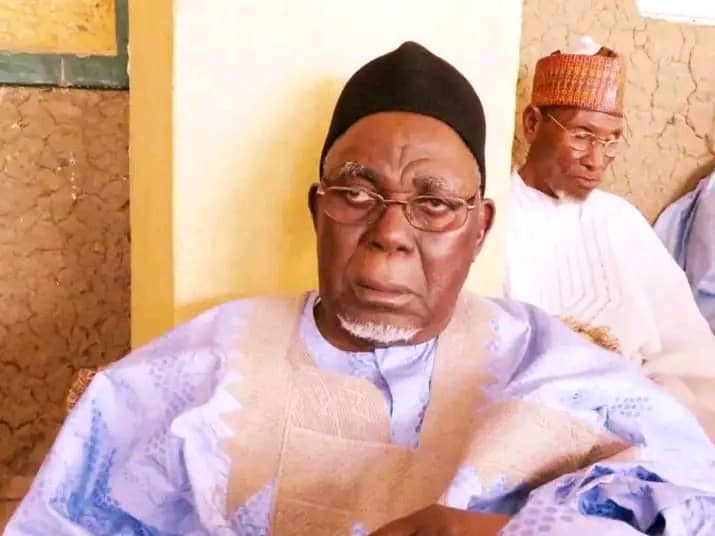
The Borno State police command has commenced an urgent investigation into the death of the state’s commissioner for Reconstruction, Rehabilitation and Resettlement (RRR), Engr Ibrahim Idriss Garba, Governor Babagana Umara Zulum’s spokesman, Malam Isa Gusau, has confirmed.  

The state commissioner of police was at the house where Engr Ibrahim died in Maiduguri on Saturday.

Governor Babagana Umara Zulum received the news with intense shock and profound grief. The Governor mourns alongside the late commissioner’s family, other loved ones, friends, associates, and state executive council members. 

Late Engr Ibrahim Idriss Garba was the Governor’s Special Adviser on Special Projects before he was elevated and appointed commissioner of RRR at the commencement of Zulum’s ongoing second term. 

It is rumoured in some quarters that the deceased was poisoned, which led to his untimely death.

From doubt to determination: My journey to HND in Mass Communication

By Usman Muhammad Salihu

In the world of education, some paths are straightforward, while others are winding, challenging, and filled with unexpected detours. My journey towards obtaining an HND in Mass Communication at Abubakar Tatari Ali Polytechnic (ATAP) in Bauchi State, Nigeria, certainly falls into the latter category. It’s a tale of determination, sacrifice, and the unwavering support of family, mentors, and friends.

The story began in early 2020 when a conversation with my model, Abu-Ubaidah Ibrahim Kuna, led to my contemplating furthering my education. During my diploma days, I had already embarked on a professional course, Mass Communication, but some circumstances are forcing me to delve into sociology. Abu-Ubaidah’s advice struck a chord in my heart, prompting me to reconsider my choices.

Yet, life had its complexities. I was now a family man, responsible for providing for my loved ones. Pursuing my passion for Mass Communication while residing in Gombe seemed daunting. The course was unavailable nearby, and sponsorship was scarce. This predicament led me to opt for sociology. As they say, “In the absence of desirability, you make the availability your desirability.”

As fate would have it, the Direct Entry application period had elapsed, and waiting for another year was not a viable option for me. I thought of returning to Abubakar Tatari Ali Polytechnic in Bauchi, but the distance from Gombe presented its challenges. Who would sponsor my education and care for my family during this journey?

With courage and determination, I applied for HND in Mass Communication at ATAP and, to my delight, secured admission. In November 2021, I embarked on a motorcycle journey from Gombe to Bauchi State, joining my fellow students as lectures had already commenced.

As if the journey had become more challenging, I found myself in Stream B, paying registration fees every semester without a sponsor. However, divine intervention came through my elder brother, Jubril Salihu (Baban Hajiya), who provided much-needed support.

Balancing lectures and providing for my family back in Gombe was no easy feat. I travelled back almost every week, seizing every opportunity for sustenance that came my way. Skipping breakfast and even lunch became the norm, but our determination to succeed remained unshaken.

The challenges were numerous, from putting food on the table to completing assignments with limited resources. Still, we pressed on, making our presence known inside and outside the classroom as we joined the school unionism.

Our lecturers, especially Mal. Abdul Ahmad Burra singlehandedly led us to the membership of the pen profession, Mal. Nazir Abba Pali and Mal Abdul Rasheed Bala Tulu were pivotal in our journey. They nurtured us into aspiring journalists, and our articles began appearing in renowned Nigerian dailies and online media outlets. Friends like Muzaffar, Adams, Raheenert, Bello class rep, Jalam, Alpha, Aliyu, Yahya, Ibrahim, Wale, Usaina, Saeedah, Celestina, A’isha, Rinret, Anas, Baba Fema, Baba Damina and many others became our pillars of strength.

I would be remiss not to express my gratitude to my family, especially my parents, brothers and sisters, the heads of department at ATAP, my mentors, and Dr. Saidu Wanzami, who supported us during our educational journey.

In the face of adversity, we persisted. With the unwavering support of our loved ones and mentors, we overcame the obstacles on our path. Our journey to an HND in Mass Communication is a testament to the power of perseverance, determination, and the support of a strong community. As we graduate, we look back with gratitude and forward with hope, ready to embrace the challenges that lie ahead, knowing that with faith and resilience, nothing is impossible.

Usman Muhammad Salihu writes from Jos, Plateau State, Nigeria, and can be reached via muhammadu5363@gmail.com.

Israeli apartheid regime and Adeboye’s laughable prayers

By Professor Abdussamad Umar Jibia

In 1992, about 20 years after Nigeria severed ties with Israel, General Ibrahim Babangida’s administration restored diplomatic relations with the Jewish occupier state. This followed incessant calls for doing so by Nigerian Christians. 

Islamic scholars berated the Christian clerics who called for restoring ties with Israel for their blatant ignorance of the Jewish state and what it stood for. Contrary to what is believed by the Nigerian Christian clergy, Israel is not a Christian state, and Jews do not believe in Jesus Christ either as a Messiah like the Christians believe or even as a Messenger of God like I, a Muslim, believe. As far as the Jew is concerned, Jesus is an illegitimate child of Mary who is a product of fornication committed by his mother.

And what is special about Israel? Unlike Ghanaian, Nigerian, Pakistani and other nationals who feel at home whenever they are in their countries, the Israeli carries the guilt and discomfort of an occupier even while “at home” in the land now called Israel. Many countries do not recognise the existence of Israel as a state. 

What followed Babangida’s diplomatic decision is a shame. A Christian Pilgrims Commission at the centre and a Christian Pilgrims Board in each state. That’s not all. While my own grandfather travelled to Saudi Arabia to perform the hajj on foot without any Government facilitation, and I saved my own money to go on hajj by air because we believe in hajj as part of our religion, an average Nigerian Christian is waiting for Government to pay for him to visit Israel to do what they call a “religious” duty. The journey, year in and year out, by Nigerian Christians to visit Israel for ‘pilgrimage’ has thus been a huge burden on the Nigerian Government. I believe there should be an act of the National Assembly to criminalise the sponsorship of pilgrims by Governments at all levels to whichever holy land the former want to go for their worship. 

The latest struggle by Hamas to free Palestine from Zionist occupation is now in its second week. Governments and individuals worldwide have been voicing their opinions, with many taking sides and others calling for cessation of hostilities. One would commend the Christians Association of Nigeria (CAN) for being cautious this time. The Nigerian Christians’ umbrella body spoke against bloodletting and preached the sanctity of human life. I am personally impressed. The leadership of CAN under Daniel Okoh should go a step further to end hostilities against non-Christians in Christian-majority communities of the North. This would contribute towards the desired peace and development that has eluded Nigerians.

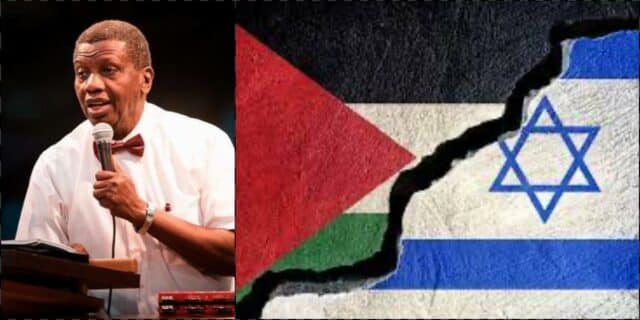
If CAN exercised caution under Most Rev. Daniel Okoh, the same cannot be said about the overseer of the Redeemed Christian Church of God (RCCG), Pastor Enoch Adeboye. When I saw him calling Jews his “brethren”, I wondered whether I would laugh or cry. No matter how one tries to give Pastor Adebayo the benefit of the doubt for being a Nigerian respected by many, one will have to admit that the Pastor has, in this case, behaved like one of those roadside church-goers who have not been to school. Otherwise, how on earth would a Christian refer to Israeli criminals as his brethren and even ask thousands of unsuspecting RCCG members to pray for them?

Perhaps Pastor Adebayo is unaware of the Jewish state’s atrocities against innocent Palestinian Christians. Only recently, the head of the Roman Catholic Church in Jerusalem, Pierbattsta Pizzaballa, was reportedly complaining of increasing attacks by Jewish extremists “emboldened by [the] Israeli Government”. 

The attacks on the Christian community in Israel, whose record is handy for anyone looking for it, include attacks on Christian sites, which people like Adeboye say they go to Israel to visit and Christian worshippers whom the attackers refer to as idol worshippers who should be, “killed according to Torah”.

According to a recent NBC News report about Jerusalem, “Churches have been graffitied and clergy who live and work here report being frequently spit on, harassed and even physically attacked by extremist Jews”. The report concluded that “Christian leaders say most incidents are never thoroughly investigated,” confirming that it has the backing of the Zionist state.

Hear Pastor Adeboye, “It is my prayer for all our brethren in Israel that the Almighty will grant you absolute peace from now on in Jesus’s name”. Haba Pastor! What does Jesus have to do with Zionists? And what do Zionists have to do with Jesus? The only non-Christian group who accepts Jesus, the son of Mary and believes in the virgin birth, are Muslims. 

And he said, “The almighty God, the only one of Israel…”. My dear pastor, which God are you referring to here? Is it Jesus Christ whom they refer to as an idol or the only God who created Jesus without a father, just like he created Adam without two parents?

Adebayo and other African Christians should get their priorities right. Palestinian Christians have done so long ago. They have always identified with Palestinian Muslims in their struggle for freedom. 

Professor Abdussamad Umar Jibia wrote from Kano via aujibia@gmail.com.