Month: July 2022

2023 polls will be best ever in Nigeria – INEC chairman 

By Uzair Adam Imam 

Prof. Mahmood Yakubu, the Chairman of the Independent Electoral Commission (INEC), has vowed that the come 2023 general election will be the best ever in Nigeria’s history.

Yakubu said this Tuesday, July 19th 2022, in Abuja, when he received delegations of the International Republican Institute (IRI) and that of the National Democratic Institute (NDI).

He also assured that INEC would improve on its successes in subsequent elections to come.

The Daily Reality gathered that the meeting was the first that INEC was hosting after Saturday’s governorship election in Osun State.

Yakubu was quoted as saying, “We assure you that we will continue to work not only hard but even harder to deliver the 2023 general elections.

“As for the preparation for the 2023 general elections, I want to assure you that we promised Nigerians that Ekiti was going to be good, and Ekiti was a good election.

“We promised that Osun was going to be better; Osun was a better election. We are promising that the 2023 general elections will be our best election ever, and we are committed to delivering the best election ever,’’ Yakubu said.

Speaking earlier, Secretary of State for Ohio, United States and leader of the delegations, Mr Frank LaRose, had commended INEC over on its successes.

He, however, commended INEC for its various efforts to improve the conduct of elections in Nigeria.

He states, “we took the opportunity to visit Osun because that was only the second time election has been conducted under the new Electoral Law. 

“We met with the Resident Electoral Commissioner (REC) in Osun, and we observed many different polling locations on Election Day,” he stated. 

NANS backs NLC protest over ASUU strike

By Muhammad Aminu

The National Association of Nigerian Students (NANS), South-West Zone, has said it would join the Nigeria Labour Congress (NLC) in protest to pressurise the federal government to end the Academic Staff Union of Universities (ASUU) strike.

In a statement issued by NANS Coordinator and Public Relations Officer Adegboye Olatunji and Awoyinfa Opeoluwa, which was made available to newsmen on Tuesday.

The NLC had earlier vowed to embark on a nationwide protest on July 26 and 27 in solidarity with the trade unions in the Nigerian public universities and others.

The NLC President, Ayuba Wabba, who made the disclosure in a circular jointly signed by Mr Emmanuel Ugboaja, General Secretary of the Congress, on Sunday, said the protest was in line with the decisions of the National Executive Council (NEC) meeting of the NLC on June 30.

ASUU and other trade unions in the education sector have been on strike for over five months over the alleged failure of the Federal Government to keep to the agreement entered with the unions.

The demands of the striking workers include issues bordering on funding of universities, salaries, and earned allowances of lecturers.

However, the NANS leadership in the South-West zone called on students across the country to join the NLC in the nationwide protest in solidarity with ASUU.

NANS added that it would “not keep silent and watch our future being ruined by the prolonged ASUU strike.”

It stated: “It is timely and urgent to issue this statement today with a view to putting an end to the lingering strike action by ASUU. We want a total reformation of the educational sector.

“The Leadership of NANS, Zone D, has taken it upon herself to categorically stand against the dilapidated state of the educational sector in Nigeria.

“We are at a time when Nigerian students have lost hope and do not know what’s next on the radar. ASUU strike has been on for over five months without any hope of resumption.

“We have also waited for so long to see if the Federal Government will dance to the music of Nigerian students who have been clamouring for an end to the ASUU strike, but the reverse is the case.

“We’ve had several press conferences, granted several interviews, held several meetings to plead with both ASUU and the Federal Government, and held several peaceful protests across the Federation.

“According to the commandment of solidarity, we’re on the last ‘Cs of Aluta,’ which is confrontation. This is the time to call on all Nigerian students across all zones to join the NLC in solidarity to end the ASUU strike on Tuesday, July 26, 2022, and Wednesday, July 27, 2022. Nigerian students are tired of the long overdue strike action.

“Consequently, all NANS cadres and stakeholders, zonal leadership, Campus Committee Chairmen, Student Union Government presidents, Nigerian students, and the general public are hereby put on high notice to mobilise, organise and get prepared to be part of the movement,” NANS said

ASUU strike: Buhari intervenes, gives minister two weeks ultimatum 

By Ahmad Deedat Zakari

President Muhammadu Buhari has reportedly intervened in the ongoing impasse between the  Academic Staff Union of Universities, ASUU, and the Federal Government. 

Presidential Spokesperson Femi Adesina posted on Facebook on Tuesday, July 19, 2022, that the president was in consultation with ministers and government officials over the lingering ASUU strike.

“President Buhari in consultation with Ministers and other Government Officials over [the] lingering ASUU Strike in [the] State House on 19th July 2022”, Mr Adesina posted. 

In attendance in the meeting with the president were the Minister of Education, Adamu Adamu; the Minister of Finance, Budget and National Planning, Zainab Ahmed; the Minister of Labour and Employment, Chris Ngige, Minister of Communications and Digital Economy, Isa Pantami; the Head of Service of the Federation, Folashade Yemi-Esan; the Chairman of National Salaries Income and Wages Commission, Ekpo Nta, and the Director-General Budget Office, Ben Akabueze.

Sources in the presidency confirmed that the president had directed the Minister of Education to resolve the industrial crisis within two weeks.

It can be recalled that ASUU embarked on strike on February 14, 2022, which has crippled the academic and commercial activities in all the Nigerian universities.

From false dignification to blasphemy: My take on Abduljabbar Nasiru Kabara (II)

By Alkasim Harisu Alkasim

I think Abduljabbar hires out for the Western world. AlhamdulilLahi! Our learned scholars bird-dogged his heinous acts and pulled him down. In his illusions, he aspired to transform Islam and thought he could play sports with the scholars of Kano. He did this to buy himself a public advantage and attention. In his book, Minhajus Sunnah, the erudite scholar Ibn Taimiyyatal Harrani quoted Nana A’isha thus: the Prophet says that he who seeks public attention by sinning against Allah, Allah will draw the attention of people to him and make them love him. But in the end, Allah will turn people against him … (My paraphrase).

Truth be told, Abduljabbar is not well-read. As of late, he was asked by a government lawyer about his studentship. He affirmed that since his father’s death in 1996, which is 26 years now, he has stopped learning before a teacher. He has only been revising for all that long. For your information, when his father died, Abduljabbar was in his mid-twenties. I can bet my last dollar that, at that very moment, he could not have completed the study of the six books of hadith. I also doubt if he has ever read a single many-volumes book from start to finish. A person who knows Abduljabbar very well and shares blood with the family of Sheikh Nasiru Kabiru once told me that the former had not completed the jurisprudence book titled Almukaddimatul Iziyya when he fled the majlis his father taught people. 

How Abduljabbar translates and misinterprets prophetic traditions that do not sit well with his faulty faculty shocks many people. This leads him to ascribe to the Prophet what even the likes of Abu Lahab, Abu Jahl, Walid bn Mugira had never done to the Prophet. His mistranslating of prophetic traditions illustrates how he lacks the nitty-gritty of translation. The fact that he has never taken his time to be adequately mentored destroys him. I have never seen as big a laughingstock as Abduljabbar. He thinks he is glorifying the Prophet despite all these horrible things. How can one magnify the Prophet by describing him with names even Satan will feel angry when one addresses him with?

I suspect this man is selling the secrets of his religion. I was wondering if a sensible person would ever do this. I can remember a tradition he once cited that reduced the Prophet’s charm. The first time I glanced at it, I got physically numb. As I checked the reliability of the reporters in Alhafizuz Zahabi’s book Mizanul I’itidal fi Naqdir Rijal, the hadith turned out to be counterfeit thanks to the weakness of the reporters. Sure enough, such traditions he falsified are mind-boggling and should not be attributed to the person of the best of Allah’s creatures. Therefore, I advocate his refusal of such traditions.

What is funny with Abduljabbar here is his ignorance of the fact that there are books whose singular themes are the history of reporters of hadith. There are also those books that did not necessitate only authentic or sound traditions. Thus, one can find all sorts of traditions ranging from the authentic, sound, and weak to even false ones. While giving the history of a reporter, the scholars mentioned some of the traditions they reported through him, directly or indirectly. If the reporter were weak, they would exemplify (a) weak (a)hadith he had reported. Such books comprise Tariku Baghdad by AlKadibul Baghdadi; Tariku Dimashqa by Ibn Asakir, to mention a few.

What motivated the above scholars and their likes to write down these ahadith was their thirst to show their absolute lack of authenticity. They brought forth the ahadith under the history of a particular reporter, as said earlier. For instance, any reporter of hadith, whether strong or weak, provided he had ever been to either Baghdad or Dimashqa, they wrote about him. 

Additionally, there are hadith texts whose authors preoccupied themselves with reporting ahadith a la classifying their teachers in alphabetical order. Such authors did not care to report even false ahadith they heard from their teachers. For instance, AlMuujamul Kabir, Ausad and Sagir by AdDabarani. Therefore, one can say it is a sin to report or mention a false hadith. Thus, it is noteworthy that such hadith scholars reported counterfeit traditions to show the world their falseness for people to avoid them.

There are books singled out to mention only false traditions, such as Abdullahi Bn Adiy’s book Alkamil fi Du’afa’ir Rijal, etc. Strangely, Abduljabbar cited ahadith from this book, not knowing that it was purposely written to give accounts of weak hadith reporters. This faux pas has illustratively emphasised the ignorance of Albduljabbari. Therefore, this and other shockers are enough to discredit his scholarship.

The Scholars’ Verdict on Blasphemy

Doubtless, the abominable utterances Abduljabbar has made against the Prophet demonstrate him as blasphemous. Like it or not, he is a blasphemer who has tried to tarnish the image of the Prophet, his companions and their righteous followers. His badmouthing of the religion of Islam cannot be reduced to writing. The extent to which his muddy utterances have reached in reducing people to tears is enough to tell you about the gravity of the situation. A young girl listened to one of such unprintable assertions of this fake scholar and immediately broke into tears.

Indeed, any Muslim that blasphemes against Allah or His Prophet deserves death. After citing many other scholars, Iyad bn Iyad bn Musa and Ibn Taimiyyah ruled that any Muslim that blasphemes against the Prophet will be condemned to death even if he repents. His repentance neither spares him nor assures him Allah’s forgiveness. Contrarily, if a nonbeliever blasphemes against Allah or His Prophet, he can be spared if he converts to Islam. Otherwise, he will go to the gallows. 

Last, the right action should be taken against any blasphemer regardless of their rank in society. This is to make people revere the Prophet all the more and watch their tongue. May Allah guide us, amin.

Alkasim Harisu Alkasim wrote from Kano via alkasabba10@gmail.com.
Police re-arrest Kuje prison escapee in Kaduna 

By Aminu Muhammad

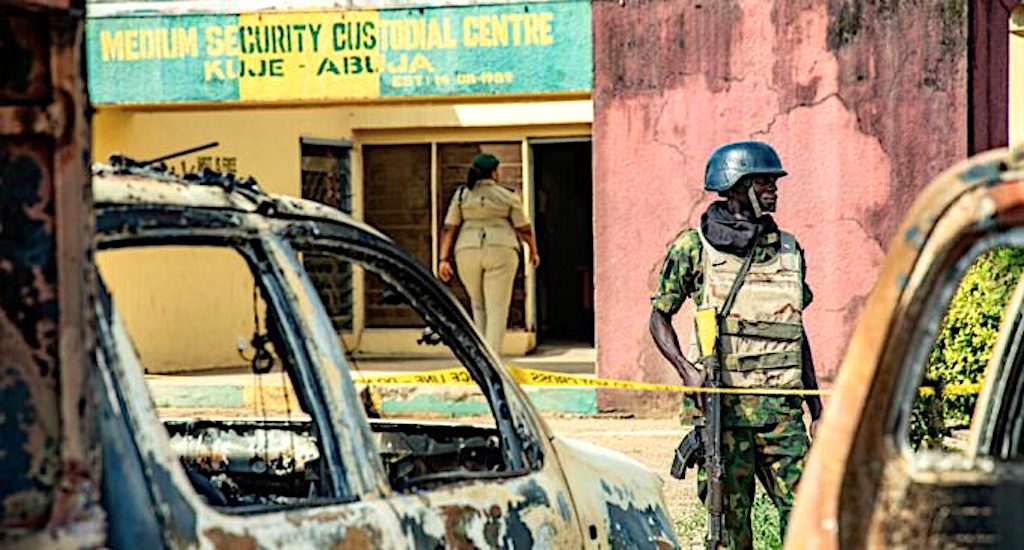
The Nigerian Police Force’s Kaduna State command has announced the re-arrest of Ali Shuaibu, 60, a suspected prison escapee from Kuje.

According to a statement made by Mohammed Jalige, the command’s public relations officer, Shuaibu, who was on his way to Kano State, was detained.

The Kano State native admitted that he was one of around 800 prisoners that fled the Kuje Correctional Center in Abuja when terrorists raided the prison, according to a police official.

The police statement reads, “Sequel to the Commissioner of Police Kaduna Command’s directive to all tactical commanders and Divisional Police Officers (DPOs) to mount purposeful surveillance across all inlets to Kaduna State in response to the recent infamous Kuje Jail break as instructed by the Inspector General of Police, the operatives without prejudice to existing crime prevention measures, responded effectively which has started yielding a positive result with the arrest of a suspected escapee on the 17th July 2022 at about 1930hrs.

“The suspect, one Ali Shuaibu 60yrs of age and an indigene of Kano State, was apprehended by the police operatives at a location in Kaduna, while on transit to Kano based on active intelligence.

“The suspect on preliminary investigation revealed that he is part of the inmates who escaped during the recent attack on the Kuje medium security correctional centre.

“The Commissioner of Police, Kaduna Command, Yekini A. Ayoku, directed that necessary protocols be carried out before handing the suspect over to the Nigerian Correctional Service for proper placement.

“He further tasked officers not to relent in their effort to effectively tackle all forms of crimes and criminality in all critical areas of the state.”

We’ll give priority to education — Kwankwaso

By Muhammad Aminu

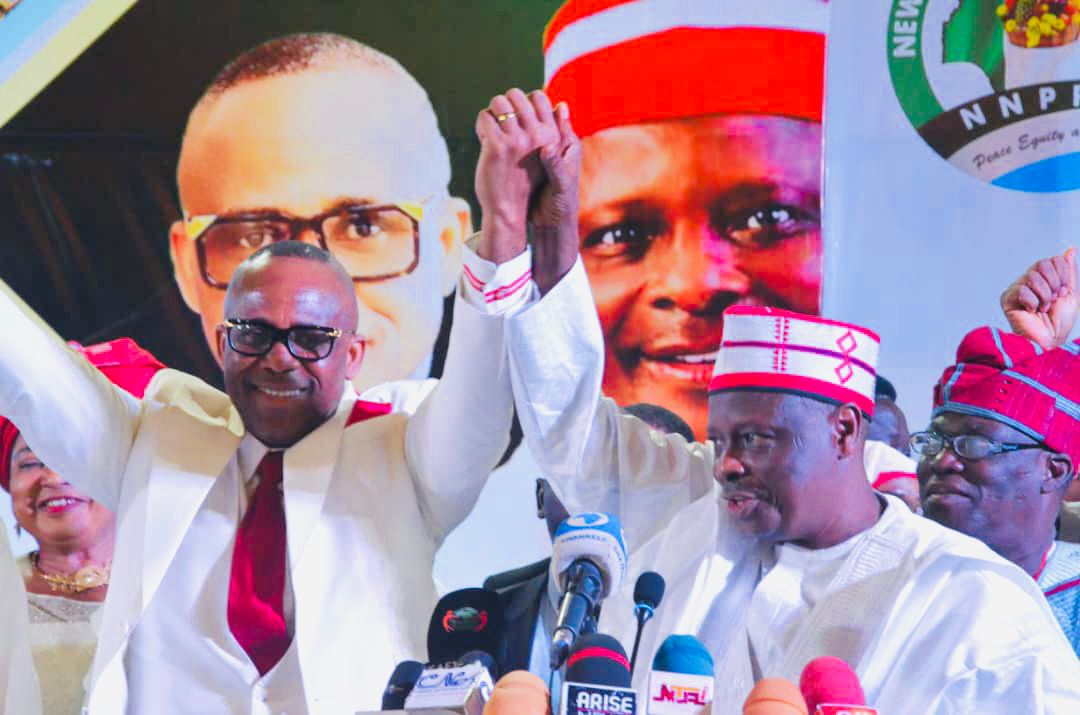
The Presidential Candidate of the New Nigerians People’s Party (NNPP), Dr. Rabiu Musa Kwankwaso, has said that he would give priority to education if Nigerians give him the chance in the forth coming general election.

Speaking at the official presentation of his running mate, Bishop Isaac Idahosa, Kwankwaso also decried collapse of tertiary education under the current administration of President Muhammadu Buhari.

According to the former Kano State Governor, Nigeria is bleeding from severe wounds inflicted on it by the incompetence and insincerity of the APC-led government.

“The sad reality is that our country is bleeding from several and severe wounds inflicted on her either as a result of incompetence or insincerity of the operators of government or the total lack of the understanding of how to govern a multi-cultural, multi-religious and multiethnic country like our own.

“Their insincerity and intolerance has inflicted injurious wounds to the social fabric of Nigeria. Their nepotism and parochial approach to governance has inflicted severe wounds to the country. Their ineptitude and lack of empathy has dealt a damaging blow on the body psyche of all Nigerians.

“Their condescending arrogance and sense of entitlement has further widened the fault lines in our country and their nonchalant attitude towards the core functions of governance is causing dangerous escalation of insecurity,” he said.

The former minister of defence further lamented the rising inflation and unemployment in the country, saying the current economic statistics in Nigeria were unacceptable.

Bishop Idahosa, in his acceptance speech, said Nigeria is on a critical juncture where a fresh start is imminent.

“Nigeria deserves a fresh start and fresh ideas. Nigeria deserves a fresh deal that will steer the country away from division and hate. A fresh deal that will steer the country away from incompetence and cluelessness; a fresh deal that will steer the country away from insecurity and economic woes,” he said.

He therefore, urged Nigerians to register and obtain voters card to be able to bring about the desired change in the country.

Earlier, the National Chairman of the party, Prof. Ahmed Rufai Alkali, said that NNPP is the fastest growing party in Nigeria, adding that Kwankwaso’s sterling leadership is responsible for the growth.

“The NNPP entered the political space at the most critical time and is going to take the opportunity to give Nigerians hope because Kwankwaso is the man Nigerians are waiting for,” he said.

He further stressed that NNPP has a dream and a formidable team that Nigerians are waiting for because they posses the qualities to steer the affairs of Nigeria.

“With this winning team Nigerians should be hopeful that Nigeria shall rise again. The party is committed to building bridges across all socio-political divides,” he added.

Rivers Poly lecturer turns to bus conductor

By Muhammad Aminu

A lecturer with Captain Elechi Amadi Polytechnic, Port Harcourt, Rivers State, Zoe Solomon Tamunotonye, has become a commercial bus conductor to feed his family.

Tamunotonye’s video surfaced on social media platforms earlier today, where he was busy in his newfound endeavour. He’s seen beckoning passengers to enter a commercial bus along Ikwerre Road in Port Harcourt.

He was suspended by the Management of the Polytechnic after a committee of inquiry indicted him for randy behaviour with a female student of the institution.

The academic was also accused of influencing the female student’s detention at the Sani Abacha Road Police Station in Port Harcourt.

The Polytechnic Management stopped his salary in January 2022, which reportedly made his life unbearable.

He was said to have turned around to accuse the female student of diverting the sum of N250,000 he gave her for her personnel business and holding on to his office key and other property.

It can be recalled that before Tamunotonye’s incident, the University of Abuja and Obafemi Awolowo University expelled academic staff that had sexually abused female students of their respective institutions.

ASUU Strike: Endless negotiations and FG’s disregard for the future of Nigerian students

By Babatunde Qodri

Since Nigeria’s independence in 1960, we have never witnessed such a long and suffocating strike as it is at the moment when public tertiary institutions would be closed down, and there would be no serious move by those concerned to avert it. In two years, our universities have suffered unprecedented deterioration due to incessant industrial action by the Academic Staff Union of Universities (ASUU).

Consequently, students are often condemned to stay at home. But this is what we get any time we elect a leader that cares less about the education sector. Ministers of Education and Labour Adamu Adamu and Chris Ngige, respectively, largely contribute to this agelong industrial action. Yet, despite a series of meetings, nothing tangible has happened to facilitate the return of students to class. This is unarguably appalling. 

Professor Emmanuel Osodeke, ASUU Chairman, recently revealed the lack of readiness by the Federal Government to yield to the demands of striking lecturers when he appeared on Channels TV. Osodeke slammed the Minister of Labour for misleading the public on the development while accusing the Federal Government of insincerity in its dealing with the Union. One then wonders whether this administration actually places a premium on the future of Nigerian students. The government’s body language is symptomatic of what these abandoned students have to contend with for years.

This is not to throw a jab at the Minister of Education or the Labour Minister. Unarguably, however, I am disturbed by the carefree approach of the Federal Government to the situation that affects millions of young Nigerians. It is sad to stress that this unfortunate development has resulted in many problems.

For instance, several Nigerians affected by the industrial action have been forced into activities that negatively affect society and their future. Because they say idle hands are susceptible to devilish errands, most students are now into internet fraud and other related engagements to the country’s detriment. This is in addition to the fact that some of these students, having stayed at home for a long, have lost interest in education, thereby engaging in unprofitable endeavours.

It is necessary also to admit that the protracted strike translates to a waste of time, with students spending more time than necessary. And this puts them at a disadvantage. While their counterparts in private and state universities have seamlessly unhindered years to run and complete their programs, students in public universities are trapped. Those supposed to be used as innovation agents are abandoned to situations that delimit them. This is thoroughly depressing.

Moreover, the strike has a way it contributes to the debilitating nature of the Nigerian education system. Today, Nigerian lecturers seek opportunities outside the country to make their skills and knowledge relevant. There are cases of Nigerians in the medical fields going to countries abroad in search of better conditions. This is not good for the country as it ultimately leads to a shortage of competent lecturers in our various public tertiary institutions. Even if the industrial action is called off, the fact that it has forced talented Nigerians to opt to lose confidence in the system remains a threat.

My final take: If the Federal Government cannot meet up with the demands of the Union, at least it must identify with its clamour since it is in the best interest of public tertiary institutions. Both parties must forge a new mode of communication that recognizes the yearnings of Nigerians. Done based on sincerity, the government might agree to attend to the union’s demands in batches. Between all of these is the need for committed Ministers of Labour and Education who can drive the Government to do the needful. This is necessary to put the country on the path of steady development.

Babatunde Qodri wrote via babatundelaitan@gmail.com.

Antimicrobial resistance, the quiet pandemic

By Aminu Shehu Karaye

You wake up at midnight with a running stomach, all sweating and with a terrible headache. You surrendered that it was typhoid and, of course, opened the first aid shelf and brought out some drugs to take. It was amoxicillin for typhoid and tetracycline for the running stomach. But you remembered that every Nigerian has got some malaria, so you brought out the artemether and took it also. However, are you aware of antimicrobic resistance?

Even among the literate, only a few understand the effects and dangers posed by antibiotic resistance. Especially in Nigeria, where awareness is low, the magnitude of antibiotic resistance is expected to increase considerably over the coming years due to excessive use of antibiotics and other practices that are said to trigger antimicrobial resistance.

Antimicrobial resistance (AMR) is a general term used to describe the ability of microorganisms, including those that cause diseases (pathogens), to resist the effects of drugs that were once used to kill them or slow their activities. AMR is a worldwide concern and should be taken with all seriousness. The UN ad hoc interagency coordinating group on antimicrobial resistance warns that if action is not taken, drug-resistant diseases could cause 10 million deaths annually by 2050 and damage the economy, similar to the 2008-2009 global financial crisis.

Also, by 2030, AMR could force up to 24 million people into extreme poverty. The World Health Organization identified misuse and overuse of antimicrobials; lack of access to clean water, sanitation and hygiene (WASH) for both humans and animals; low-grade infection and disease prevention and control in healthcare facilities and farms; lack of access to quality, affordable medicines, vaccines, and diagnosis; lack of awareness and knowledge and lack of enforcement of legislation as the major drivers of AMR (WHO, 2021).

In Nigeria, people get antibiotics over the counter without a prescription from the appropriate specialist. An individual would take an antibiotic when he has a running stomach or even a mild headache. The misuse of antibiotics is one of the biggest causes of antibiotic resistance.

Antibiotic-resistant bacteria can also be transferred from animals to humans and vice-versa. Poultry is one of the leading industries that harbours these resistant bacteria. Due to our everyday association with poultry animals, we will likely get these bacteria into our bodies. Many other ways exist in which AMR can be established. However, it is our responsibility to curb this menace as we are the ones in danger!

Curbing the menace of AMR is everyone’s business. No matter how careful you are with antibiotics, you might buy and consume a chicken grown with antibiotics as a growth promoter, which will surely trigger resistance. Therefore, from farmers to healthcare workers to everyone else, we must all play our parts to control antimicrobial resistance.

In Nigeria, there is a need for appropriate bodies and the government to educate the masses and warn them about the dangers of antibiotic misuse. The government should also ban selling antibiotics over the counter, without doctors’ prescription, and see that previous restrictions on antibiotics are implemented.

No action today, no cure tomorrow!

Aminu Shehu Karaye wrote this article via aminushehukaraye@gmail.com.

From false dignification to blasphemy: My take on Abduljabbar Nasiru Kabara (I)

By Alkasim Harisu Alkasim

It took me a while to make up my to write on the embattled Abduljabbar Nasiru Kabara owing to the gruesome nature of what he has done. The misfortune still disturbs me. This controversial pseudointellectual prides himself on acquiring and accumulating an unmatched Islamic scholarship. He also boasts remarkable erudition and impressive oratory. But those who know him inside and out cannot be easily misled into believing this. In short, he fakes in-depth Islamic knowledge. Funnily enough, thanks to his persistent demand for a debate, the little braggart was granted his request. Abduljabbar has been blowing his own trumpet for as long as one can recall. He also despises the scholarship of the Kano ulema. He did not quit his prideful ways even when under house arrest.

In his wildest dreams, his scholarship surpasses that of everyone in the whole of Africa. He once boasted about knowing the Arabic language like the back of his hand and that nobody knows the language as he does in the African continent. He also claims super excelling in learnedness, hotshot scholar Nasiruddeenil Albani in the science of hadith – a field in which he had made a name for himself.

Abduljabbar also thinks he outclasses the Sheikhs Usaimin and his tutor, Bn Baz, in jurisprudence. Overall, he bests all the scholars that ever lived. As a wishful thinker, he wishes to renounce the traditions of the last Prophet. He means to cleanse prophetic traditions of impurities. But I don’t know the clearing up he is giving them. Because for a long, scholars have already worked on them. They have classified the authentic and the sound traditions and discriminated between the acceptable and the unacceptable traditions.

Abduljabbar is a charlatan aspiring to falsify ahadith. He considers any hadith his feeble mind fails to understand as a whopping lie against the Prophet. Shockingly, he judges Islamic rulings in line with his understanding – whichever he fails to comprehend, he, without much ado, invalidates. As a wish fulfiller, he describes Al-Bukhari as a concocter of traditions and a liar. He equates himself with Al-Bukhari and sometimes asserts that he is not even the match of this otherworldly scholar whose book has been prized as the second most authentic compendium after the Holy Qur’an (See Assuyudi’s Alfiyyatul Hadith and, AnNawawi’s Tadribur Rawi). This ill-intentioned fraud fakes profound knowledge. He is also a scatterbrain. Because he quickly forgets what he says, what transpires in court sessions, illustrates this. When given a chance to rack his brain, he can never remember what he had said in the past. I can remember listening to him contradicting himself and denying utterances he once made.

Abduljabbar’s denouncing some traditions in Sahih Al-Bukhari as false is hair-raising. He bragged about burning the midnight oil, reading and writing. This had become commonplace until the erudite hadith scientist Dr Sani Rijiyar Lemu revealed to the teeming public the sources from which he obtained his information. The hadith guru unveiled that Abduljabbar often copied the exact words of the scholars he plagiarised.

I could not help wondering how Abduljabbar keeps exaggerating his spending all night researching. The crooked pseudo-scholar did nothing but “copy and paste” in academic jargon. The deceitful Abduljabbar professionalises in plagiarism. Often, he ignorantly or knowingly plagiarises the works of occidentalism-inclined scholars and other orientalists. His concocted ideas and those of the Shiites are through and through worlds apart. A Shiite came out to deny ties with him not long ago. This had occurred a short while before that hot debate featured.

I was delighted at the news of the Mukabala. But my happiness prematurely died when the crude debater failed to prove himself and carry his points. The Mukabala demonstrated his utter incompetence all the more. On that day, he enormously flopped. He kept repeating himself and flip-flopping. He is used to switching to irrelevant topics whenever he runs out of ideas or feels slightly caught out. His Mukabala with the well-read and retentive Sheikh, Alkasim Umar Jibril Hotoro, exemplifies this. Fortunately, the one organised by the Kano State Government caused his empty boasts to run down. Surprisingly, he sweated all over in an air-conditioned room. “Mara gaskiya ko a A.C gumi yake” (loosely translates as the liar will sweat even in an air-conditioned room). This proverb is a remake of the familiar one, which reads, “Mara gaskiya ko a ruwa gumi yake” (the liar sweats even in water).

To defend his failure to speak for his views, Abduljabbar shamelessly said that the timeframe he was given to reply to questions was not enough. He said he could not clarify questions he took years discussing. He has forgotten, like the forgetful he has always been, that he often said he could answer any question when he awakens from a deep sleep. More so, as stated earlier, Abduljabbar bragged that even Albani, Bin Baaz and Ibn Taymiyyah could never catch him. Why the boast!

Look at the budding scholars that defeated him on that day. As a result, some of his fanatics parted company with him by calling it quits with his teachings. Finally, a person came out to declare his verdict in an audio clip. He bitterly regretted his keeping this Tartuffian scholar company. He announced that he had been with the fake scholar since his teaching one of his error-ridden books titled Asa Musa held at Gadon Kaya. When I read this book around 2015, as a budding student of hadith, I found unpardonable mistakes unexpected for a young student of hadith, let alone a guru. Even a toddler student of hadith could not make such enormously uncountable errors. Abduljabbar is not conversant with hadith jargon.

Alkasim Harisu Alkasim wrote from Kano via alkasabba10@gmail.com.