Month: July 2022

ASUU Strike: Between extravagant hopes and exaggerated disappointment

By Nura Jibo

Let me start by saying that I am not holding any brief for the Academic Staff Union of Nigerian Universities(ASUU) because I was its victim of strike for three (3) years. I am not holding any brief for Nigeria’s Federal Ministry of Education and government either, as I very seriously hate their mishandling of Nigeria’s education sector. 

Today, I write as a concerned individual who believes in teaching and providing free education to Nigerian and global citizens. 

Hence, I write this as a classroom teacher that taught in a Nigerian State’s Polytechnic for three (3) years as a volunteer lecturer. I did not collect a single Kobo or Naira from that college throughout my volunteerism teaching at the College of Business Management. I only wanted to pay back what I had taken from the excellent teachers that made me who I am today. 

Therefore, it is very pleasing whenever I reflect and have a flashback over certain moments that contributed to my making, particular via the teaching and mentorship of my amazing teachers. 

Indeed, I sometimes feel very disgruntled whenever I see a certain Minister of Education who once upon a time advocated through his long essays in Daily Trust stable a 30% allocation of Nigeria’s budgetary provision to the education sector. However, that Nigerian Minister now develops a thick skin on resolving this simple yet terrible antecedent by hiding under his Ministerial gown to suffer and implicate an already ailing system! 

The issue is simple: It is either the likes of our laconic and apt Prof. Farooq Kperogi amplified that Minister’s writing prowess beyond or above what he is, or he’s exaggerated as someone with firsthand knowledge of Nigeria’s education system. I am unsure whether writing long pieces of literature in the name of Friday columns and reeling towards power qualifies one as an expert to lead a very large and delicate African educational system. 

Therefore, I believe mastery of achievement so-called via writing newspaper columns or “Definitions in Humour” does not preclude one from being considered a novice and a toddler in leading an education system that is deliberately beleaguered in the name of politics. The way the Minister portrays himself as a man of God by writing all sorts of educational polemics in Nigeria, one would not have expected less from Nigeria’s presidency that offered and entrusted such a complex Ministry in the hands of a chronic accountant who never had a clue or better put never practised and excelled in his profession – Accountancy! But that’s Nigeria, where many people get away with its sensitive positions provided they can write pep and glib talks and share with the dull and ignorant. 

To quickly put the record straight, Nigerian leaders should refrain from allowing people to assume public office because of their writing prowess or mastery of oratory language. The duo are clearly very different and distinctive in acquiring or having a practical knowledge of teaching and education. 

I shall come back to this point later if time permits!

Indeed, three things made me raise my concern about ASUU Strike and the exaggerated disappointment from the Federal Government. First, the ASUU’s demands on an improved education system in the country. Second, the students’ extravagant hopes of acquiring a Nigerian education that is today by far less and very low in quality. The third is the bastardizing of the education sector by political leaders in Nigeria. 

Indeed, there are three global measurable indicators in gauging an education, whether it is qualitative or not. One is the availability of state-of-the-art teaching facilities. Two, stability in academic programmes. Three, quality of teaching staff. 

In Nigeria, none of the three(3) is available at the moment because the teachers and all university lecturers are already frustrated by the Nigerian political leaders, that are mostly half-baked or uneducated. 

The level of frustration is deliberate, though! And the way things are going, it is better and advisable for all Nigerian students to come out and demonstrate en masse by matching to Aso Rock villa to express their displeasure on the denial of their rights to education by Mr President and his education cabinet. As they do that, they should make the Nigerian government aware that the monthly salary of a Nigerian professor is not more than a primary school teacher’s salary in the UAE and other serious countries that left Nigeria far behind.

A professor in Nigeria today earns an average salary of N400,000 to N500, 000 per month. His yearly earnings are approximately N5-6 million. This is equivalent to what is being paid to an Engineer engaged as project manager (PM) every month in the UAE. 

This is not to talk of a primary school teacher in Nigeria who lives a typical hand-to-mouth life by surviving on a N23,000-N37,000 monthly salary with many family demands at their disposal. And considering the chaotic nature of a Nigerian state with no end in sight! 

Truth is: the Nigerian State can more than afford to pay its teachers and university lecturers global standard salary(s) the way COUNTRIES and regions in the UAE, such as Dubai, Bahrain, Oman, etc., are paying their teachers competent and befitting salaries because Nigeria is ten (10) times richer than Dubai, Oman, Qatar, Bahrain etc. 

How can one expect any good to come out of Nigeria’s education system that is not ready to discharge this global standard? 

The irony is that: the Nigerian education system is one that shamelessly cannot afford to recruit, engage and pay teachers global standard salary(s). It prefers to absorb graduates under Npower and pay them a stipend of N23,000 per month. At the same time, the political leaders steal the public funds and waste away the Nigerian nation by burying it in global shame. Therefore, the corrupt tendencies of Nigerian political leaders and their timid behaviour(s) of stealing public funds in the name of democracy will continue to put the country’s education system in untold hardship by killing it ultimately. And as the country continues along this path, it should be ready for more Boko Haram and kidnappers ad infinitum. 

Nura Jibo, MRICS, PQS, MNIQS, RQS, was a volunteer visiting teacher at a Polytechnic in Nigeria for three years. He can be reached via nurajibo@yahoo.com.
Academic Travails: 17 hours for 20 minutes!

By Prof. Abdalla Uba Adamu

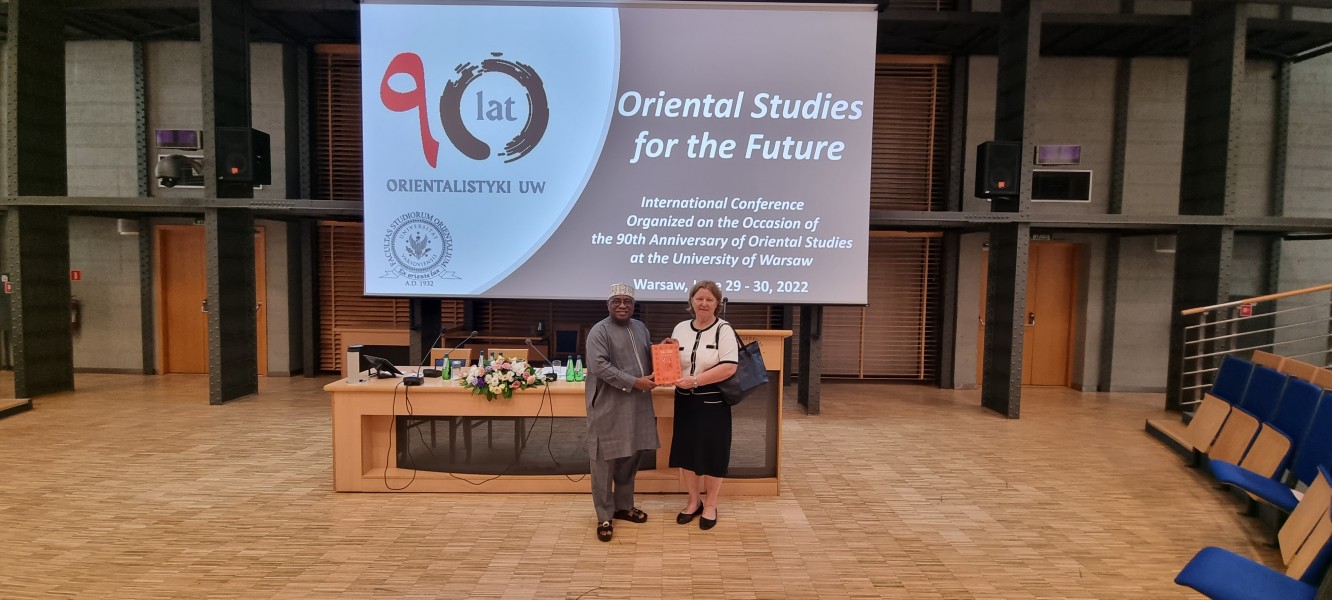
The academic world will never cease to amaze me. Let us look at just one example. Take an invitation to present a paper at an international event, as I was in June 2022. This particular event was the 90th commemoration of the establishment of Oriental Studies at the University of Warsaw, Poland. About 30 of us were invited, mainly from Europe and Asia, to share experiences on our various studies on orientalism from 29th to 30th June 2022. 

The trip was daunting for me, to begin with. It started with an hour flight on Qatar Airways to Abuja from Kano (my base). I spent another hour or so on the ground at Abuja before taking off for the six-hour flight to Doha, Qatar. I spent over four hours meandering around the terminal at Doha, waiting for the connecting flight to Warsaw. Eventually boarded the five-hour flight from Doha to Warsaw. All told, about 17 hours journey time. Arrived at the hotel jetlagged, weary and disoriented.

Off the following day to the University of Warsaw for the two-day conference scheduled at 9.00 p.m. each day. And it was right on the dot, with welcoming remarks by Prof. Piotr Taracha, the Dean of the Faculty of Oriental Studies UW, followed by an address to the conference by Prof. Alojzy Z. Nowak, the Rector of UW. These were followed by two keynote addresses, then appreciation of retiring members of the university community who had been there for over 50 years, including my host, Prof. dr. hab. Nina Pawlak (that’s how distinguished academic titles are labelled in most Eastern European universities). Let’s see what the letters mean; prof stands for professor, while dr is the doctor. To be a hab, however, requires extra efforts.  

To be awarded the academic degree of doktor habilitowany (habilitation), the candidate must have remarkable scientific or artistic achievements; submit a habilitation book which contributes to the development of a given scientific discipline; receive a favourable assessment of their output, pass a habilitation examination and deliver a favourably assessed habilitation lecture. It is after all this that they become professors.  

Nina Pawlak received her PhD in 1983 (Constructions expressing spatial relations in the Hausa language), habilitation in 1995 (Syntactic Markers in Chadic) and professorship in 2007. Thus entitled to prof. dr. hab. status. The habilitation is a post-doctoral experience that is highly formalized, represented by a separate thesis or a compendium of outstanding work in the area that can be evaluated as making an original contribution to knowledge. It takes between four to ten years to complete. Its public presentation is something like an inaugural lecture before a professorship. In most cases, the habilitation is the qualification needed for someone to supervise doctoral students. So far, in Africa, only Al-Azhar University in Cairo seems to offer this route to university scholarship.  

It is the habilitation qualification that will determine one’s path to professorship, but the publications required for skipping it to become a professor directly have to be more outstanding than the habilitation publication. This process shows rigorous respect for original contribution to knowledge in European scholarship. One can still be referred to as prof. dr. in recognition of their scholarship, without the hab. For instance, I was recognized as so by the European Union award of a grant to teach at the University of Warsaw in 2012. The prof. dr. title, used in mainland Europe and some Asian universities, acknowledges scholarship, even without the region-specific hab.  

Now back to the Conference. No ‘Chairman of the Occasion’, or Lead Paper presenter, nor ‘Royal Father of the Day’, etc. Just presentations. Now that brings me to my wonderment about the academic process. After over 17 hours of flight time (and same hours returning back), like everyone else, I was given 20 minutes (which included being harassed five minutes to the end by the moderator) to present my paper titled The Trans-Oriental Express: Receptivity and Cinematic Contraflows in African Popular Culture, and 10 minutes allowed for discussions – and that’s it! 

Thus, you spend weeks on fieldwork and data synthesis, spend hours being ferried from one location to another, and stay for days cooped up in a dingy hotel room (wistfully thinking about your own spacious personal living space!) eat some unusual and often very expensive food. All for 20 minutes of fame! This has been a recurring pattern in all the conferences I had attended.  

So, what is it about, at least international scholarship, that people would rather read what you wrote than listen to you? In Nigeria, paper presenters tend to ramble way beyond their allocated time. Often, the moderator of your session is worried about stopping you because you are a ‘big’ man, even if you are talking out of point. I remember one case in which the ‘Guest Speaker’ was reminded that his time was up as per the ‘program of event’ (sic). He adamantly refused to heed the time and insisted that since he was the main ‘event’, he would only stop when he finished reading the booklet of his lecture, which was 32 pages! Thank God for Smartphones – people just ignored him and shifted their attention to their WhatsApp messenger and came back to earth only after someone started clapping to signal their relief at the conclusion of the presentation! 

Perhaps it is time for us as Nigerian academics to move from this dense didactic approach to presenting papers – where you are often expected to give ‘theoretical framework’, ‘research questions’, ‘methodology’ (to appear ‘Scientific’ even if there is no Science in your conclusions) before you get to the actual data itself. And most annoying, you are also expected to give totally useless ‘recommendations.’ I had arguments with moderators and participants in Nigeria on the last point where I am asked about my ‘recommendations’ after my presentations. I often reply that I don’t have any recommendations – I present my data and my interpretation. How it goes is up to you. For instance, what can I recommend to a person who based their own narrative creativity on intertextual appropriation, thus creating a meta-narrative? That it has happened is fascinating enough. That I brought it to your attention is sufficient enough in knowledge discourses. In wider international scholarship, participants are more interested in exploring other aspects of your data.  

I think our approach to conference presentations in Nigeria has vestiges of the didactic educational experiences we were grilled through. Under such an academic ecosystem, all research is geared toward policy and governance. It is time for a paradigm shift – cut down the number of minutes on presentation, and focus on the epistemological virtues of the presentation! Oh, and cut-off the prof’s microphone when he seems about to torture his audience beyond his allocated 15 to 20 minutes!

Prof. Abdalla Uba Adamu is the former Vice-Chancellor of the National Open University of Nigeria (NOUN). He can be reached via auadamu@yahoo.com.

Police rescue many kids from church dungeon in Ondo

By Ahmad Deedat Zakari

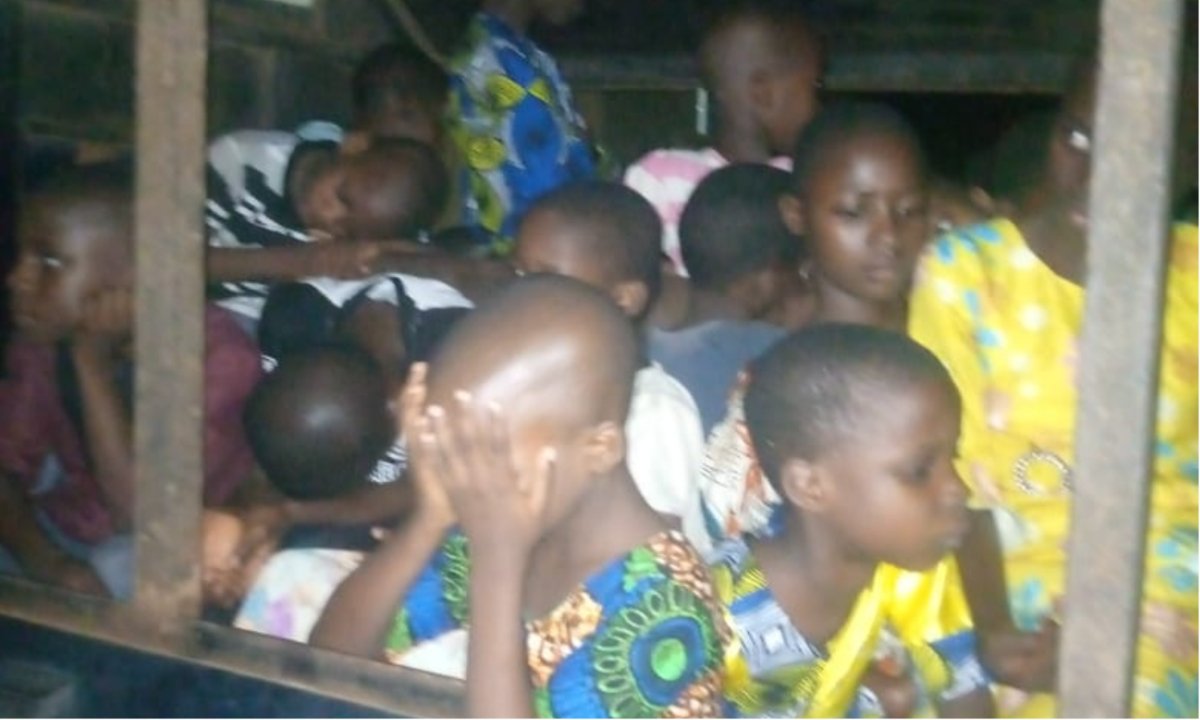
The Nigerian Police Force, NPF, have rescued scores of children from an underground church apartment in the Valentino Area of Ondo town. 

According to a Twitter user with the username DejiAdesogan, among other multiple sources, a pastor and some church members have been arrested in connection with the incident. 

“DISTURBING NEWS: Scores of kidnapped children were allegedly found and rescued from an underground apartment of a church in the Valentino Area of Ondo town, Ondo State, on Friday evening. A pastor and church members already arrested in connection with the case.” DejiAdesogan tweeted 

The Twitter user also accompanied his claim of the rescue with a video and picture of the scenario.

He also berated religious leaders who perpetuate criminal activities in the name of religion.

“The allegedly kidnapped scores of children rescued from an underground of a church in Ondo town is a clear proof that some Clerics hide under the religion to perpetrate evil. Inhumane, Wickedness & Condemnable,” He tweeted. 

At the time of writing this report, the NPF have yet to comment on the development.

Continuity or not, no two governors are the same

By Ibrahim Siraj Adhama, PhD

In Nigeria, as in most democracies, incumbent elected office holders are given the right of first refusal by their political parties. That is to say, they are considered the first option to fly the party’s ticket again while seeking re-election, all things being equal. As an extension of that privilege in Nigeria, incumbents serving their terms in office are accorded the opportunity to handpick who they want to succeed them. The anointed candidates – as fondly called – would therefore be bequeathed the incumbency factor and everything that comes with it.

The incumbency factor entails a lot of things; it is a blessing and, at the same time, a curse. It is a blessing because the incumbent has a record in office to show. He has achievements and a scorecard of performance to campaign with. It also confers the incumbent many other advantages, especially in terms of holding over the apparatus of power and control. It gives unrestricted access to state resources and assets. It is often said that in developing democracies, the incumbent always has the highest chance of winning an election than his opponent.

Incumbency could also be a burden where the scorecard is not so impressive, or the performance is below par. Whatever the case may be, the fact is no government is perfect! No matter how good the government’s plans and programmes are and well-executed they could be, its opponents will never be done. Again, no matter how good the government’s performance is, opposition parties will still pick holes here and there to criticize it. Characteristically, they will try to belittle the success stories and amplify the weaknesses and the shortcomings, thereby promising to do things in much better ways.

Suppose there’s anything to learn from the first round of the US presidential election debate of 2012 between then-incumbent President Obama and former governor Mitt Romney, the Republican candidate. In that case, it is the difficulty inextricably associated with defending incumbency. Many people agree that former President Obama’s biggest asset was his eloquence and his way with words. Yet, the world watched as he struggled to ward off attacks against his administration by a determined and hard-hitting Romney in a debate unanimously adjudged to have gone his (Romney’s) way. It’s simply not easy!

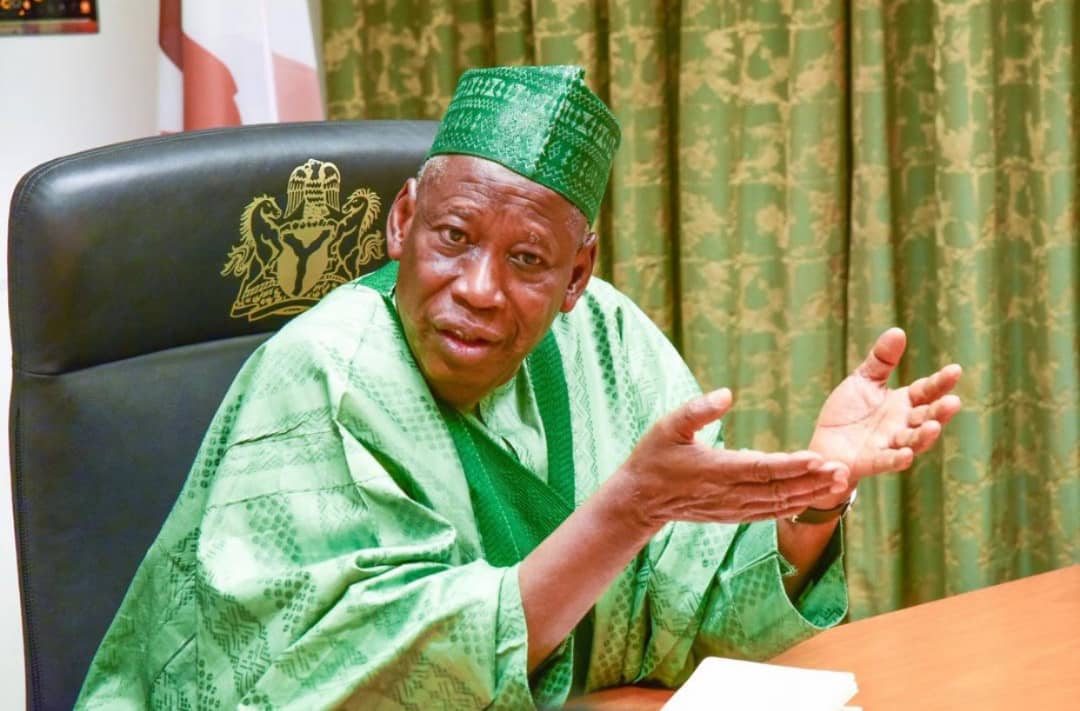
And things get a bit more complicated when the government’s approval rating is low owing to self-inflicted and needless controversies. Such is the predicament of Dr Nasiru Yusuf Gawuna, Kano State deputy governor and the APC flagbearer in the 2023 governorship election, who aims to carry Governor Abdullahi Umar Ganduje’s baggage. Gawuna’s situation, many people would say, has been made worse by his public avowal not to betray the governor. This is, without doubt, a considerable burden on his shoulder, considering Ganduje’s numerous controversies. And this is leading to what many analysts see as considerable scepticism among some voters.

But if the truth must be told, no two governors can be precisely the same despite the pretence and ostentation of continuity. Neither will Gawuna be exactly like Ganduje, nor will Abba Kabir Yusuf be the same as Engr Rabiu Musa Kwankwaso. Whether we like it or not, all leaders are different, for better or worse. Individuals’ leadership style is influenced by their experiences, worldview, knowledge, vision, temperament, God’s consciousness, wisdom, discipline, character, etc. We’re naturally different vis-á-vis those qualities and variables mean that our approach to leadership should also be different. Thus, nothing could be more preposterous than assuming that one governor would do as his predecessor did. For me, it would be unwise – if not foolhardy – to insist Gawuna is going to be Ganduje’s puppet.

History of anointment has presented us with at least three patterns of relationship vis-à-vis predecessors and successors. First, there is the category of conformists represented by successors who are able to remain loyal to their predecessors through thick and thin. Secondly, there are the “surpassers” who are believed to have done better and outperformed their predecessors. Lastly, there is the category of derailers made up of successors who, for whatever reason, ditch their predecessors to chart a new direction. Governors under this category are often accused of betrayal if not dubbed ingrate. Successors’ overzealousness, power drunkenness, and predecessors’ desire influence their successors and get them to do their bidding in complete negation of the maxim no two captains on the same ship have always been responsible for the strained relationship. Add to that meddlesomeness of political charlatans who would want to create discord, knowing that without one, they will miss their relevance in the scheme of things.

Nasiru Gawuna is stepping into Ganduje’s shoes with a promise to continue from where he (Ganduje) left. Nonetheless, those people insinuating Gawuna will be Ganduje-reincarnate should be forgiven for their lack of understanding of the man. They were either too young or far away to know the strides he made when he held sway at Nassarawa Local Government. Those familiar with his record know full well that Kano will be in for a more fantastic future, judging by his numerous achievements.

Education, healthcare, business and commerce, security, infrastructure etc., will receive tremendous attention. Workers will be in for a greater deal as Gawuna’s people-friendly government will ensure prompt payment of salaries and other entitlements. Gawuna has long been known for his empathy and compassion. Therefore, his government will be expected to be responsive to the plight of pensioners, who are dying in silence. He will be trusted to go out of his way to offset the backlog of gratuities accrued over the years.

On the whole, Gawuna is imbued with unflinching willingness for the rapid social and economic transformation of Kano. This you come to understand each time you discuss it with him. He has the ideas and the initiatives that can change things for the better in our State. He has the leadership qualities, capacity, and determination to deliver. Ganduje himself would be proud to have a successor who will not only build on the successes achieved but also try to correct the mistakes made, sweep the mess created and improve on what is already there. And this is what Gawuna will be doing as governor.

Gawuna has the rare privilege of working closely with all the three governors Kano has had since the Fourth Republic in 1999. He worked with former governors Ibrahim Shekarau and Rabi’u Kwankwaso as Local Government Chairman and Commissioner, respectively. He is now working with Governor Ganduje as Commissioner and Deputy Governor. Therefore, it is perfect to assume that he has learnt some important leadership lessons from each. That he will be coming immediately after Governor Ganduje does not mean he is going to be having any fixation about it.

Thus, instead of continuing “from where Ganduje left”, Gawuna is expected to build on the legacies of all past Kano governors. He will hope to consolidate their individual and collective achievements as he leads Kano toward the path of more development and prosperity.

May Allah choose the best for us!!!

Dr Siraj writes from the Department of Mass Communication, Bayero University, Kano and is also a reporter for The Daily Reality.

Covid: Africa receives over 90 million doses, inadequate information, no transparency

By Aisar Fagge

African countries have received over 90 million donations of doses of Covid-19 vaccines to ensure Africans are adequately vaccinated, but inadequate information and lack of transparency and accountability caused a serious problem.

The Vaccine and Essential Drugs Associate of Africa Health Budget Network (AHBN), Khadija Hamid Bobboyi, disclosed this in a webinar organised by AHBN on Thursday, June 30, 2022, to acquaint Media and Civil Society Organisations (CSOs) with necessary information on procurement, delivery and distribution of the vaccine in Africa.

Mrs Bobboyi noted that developed countries, multilateral organisations and corporations have supported Africa at different phases in terms of the supply of the vaccine that ravaged the world.

She revealed that COVAX and African Vaccines Acquisition Trust, alongside other partners, have made vaccines available to African countries.

She stated: “Africa is getting free donations of vaccines and support from the international community; availability of multiple sources of COVID-19 vaccine and at a subsidised rate.

“African Union and Partners have established AVAT to augment donations from the international donor community.”

“African Civil Society Organizations and the populace hardly know or understand the procurement and delivery mechanisms. There is a paucity of information, weak transparent processes which make it difficult to hold governments and their donors to account.”

The AHBN officer, however, decried that there is an uneven distribution of the vaccines among African countries while many donors donate near-expired vaccines with short notice that African countries may not be prepared for its safe keeping.

“Multiple mechanisms may pose a problem because some countries may receive more and others less without proper analysis of which country is in more need of the vaccines. The majority of the donations to date have been ad hoc, provided with little notice and short shelf lives and become expired,” she added.

She described the webinar as “an attempt to begin to change the narrative and empower African Civil Society Organizations, media and the populace with information and promote greater and meaningful participation in the affairs of Africa and COVID-19.”

She finally called on the donors and partners to key in countries’ priorities in their donations, saying, “donations from COVAX and AVAT to African countries must be made in a way that allows countries to effectively mobilise domestic resources in support of rollout vaccination and enables long-term planning to increase coverage rates.”

The convener of the webinar, Dr Aminu Magashi, who is the founder of several NGOs such as AHBN, CHR, and YOSPIS, assured that this kind of webinar would continuously be organised regularly to sensitise media practitioners and Civil Society Organizations on their roles in holding governments accountable on the procurement, delivery and distribution of Covid-19 vaccines.

The participants of the webinar who came from different countries were drawn from media organisations, CSOs and the general public, who were educated on the processes of vaccine acquisition and distribution.

Kidnapping in Alkaleri: An existential threat to our collective security

By Zahraddeen Mallam Saleh.

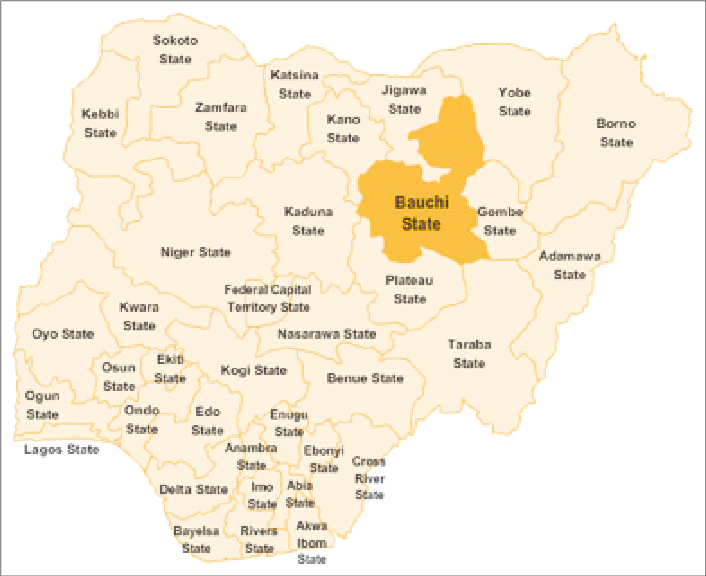
The rise of kidnappings in Alakleri is one of the most pressing security issues in Bauchi State, yet underreported. Many villages in Gwana, Duguri, and Pali Districts suffer from the devastating criminal activity of kidnappers and cattle rustlers. As a result, kidnappings for ransom have become more common and a security concern in recent years in those communities.

A few days ago, kidnappers attacked Garin Bono in Maimadi ward and Sabon Gari in Pali ward, along Alkaleri/Futuk road, killing four people and injuring others. Scores of kidnapping incidences have recently occurred in Gwana District, from abducting prominent personalities to the commoners who found it difficult to feed their families. Nowadays, kidnappers target all people, irrespective of whether they are rich or poor, because wealthy individuals from rural areas migrated to urban cities to live in peace and harmony with their families.

Four children were kidnapped at the outskirt of Yalo. Yalo is less than 100 kilometres away from Alkaleri, the council headquarter. In Kargo, Malam Hamza was abducted at his residence in neighbouring Mansur. In addition, three farmers were kidnapped while working on their farms. As I write this piece, information reaching us revealed that four people were abducted today, 23rd June 2022, at Bakin Layi, a suburb of Yalo town.

All these victims cannot pay the ransom or their proxy relatives. Evidence shows that most of today’s victims are poor villagers, a departure from the earlier kidnapping of wealthy individuals. This category of victims loses their lives in the process due to their inability to pay the ransom because of relative poverty.

It was estimated that from January 2022 to date, in Gwana District alone, more than one hundred (100) cases of kidnappings were reported to the office of the District head of Gwana, located in Futuk. This depicts the ugly nature of the situation where most armless commoners are indiscriminately taken for ransom. People live in distrust and fear due to this ugly picture of our security situation. Members of different bandit groups have been seen carrying heavy arms around Jada forest in Maimadi ward, a forest that comprises part of Yankari forest, harassing locals and farmers. A development that compelled many farmers to abandon their farms for fear of being kidnapped. For instance, Aliyu Inuwa (Messi), a resident of Futuk, left his maize farm despite spending a considerable amount of money. 

In her effort to curb the menace, the Bauchi state government procured and distributed motorcycles across the affected areas in the state. In addition, Hilux Patron vans were also distributed across all local governments. In Gwana District, in particular, the local security architecture has Patrol Hilux and several motorcycles provided by this administration in order to facilitate security surveillance and end criminal activities in the entire community. Hence, this intervention from the state government is highly commendable and appreciated. However, the situation demands a more formidable security architecture in curtailing this disease.

Equally, the military detachment in Futuk, Digare, and Mansur and the recent deployment of an anti-kidnapping squad in Yalo and Kargo aimed to reduce criminal activities in our areas. But the existing security architectures showcased their professionalism in collecting N20, N30, N50 and N100 from the motorists and motorcycle riders daily than dealing with monsters called bandits/kidnappers. We are not denying or undermining their role in protecting lives and property. I’m just reporting what I saw with my naked eyes on my recent trip from Futuk to Mansur to collect primary data for my postgraduate study.

Bauchi state government should put more effort into securing its people before it metamorphoses into what is happening in Zamfara, Katsina and Sokoto. In addition, the government should encourage and promote education.

Zahraddeen Mallam Saleh wrote from Futuk, Gwana District, Alakleri LG. He can be reached via zahradeenmsaleh@gmail.com.

Court sentences man to death for killing wife in Jigawa

By Muhammad Sabiu

A 28-year-old Shu’aibu Adamu, who was found guilty of killing his wife, has been sentenced to death by hanging by the Jigawa State High Court in Dutse.

According to Section 221(b) of the Penal Code, the crime of culpable homicide is punishable, said the presiding judge, Hon. Justice Ahmed Muhammad Abubakar.

Justice Ahmed stated in his ruling that the prosecution’s case was proven beyond a reasonable doubt by the testimony of four witnesses.

The court determined the accused to have committed the crime, which carries the death penalty.

Justice Ahmad sentenced him to death by hanging.

The prosecution’s attorney had informed the court that the event occurred on June 24, 2018, in Warwade Town, Dutse Local Government Area of Jigawa State, when the convict and his wife, Sahura Umar, 20, of the same locality, quarrelled.

Corps member empowers widows with sewing machines, donates books to school in Yobe

By Tijani Hassan

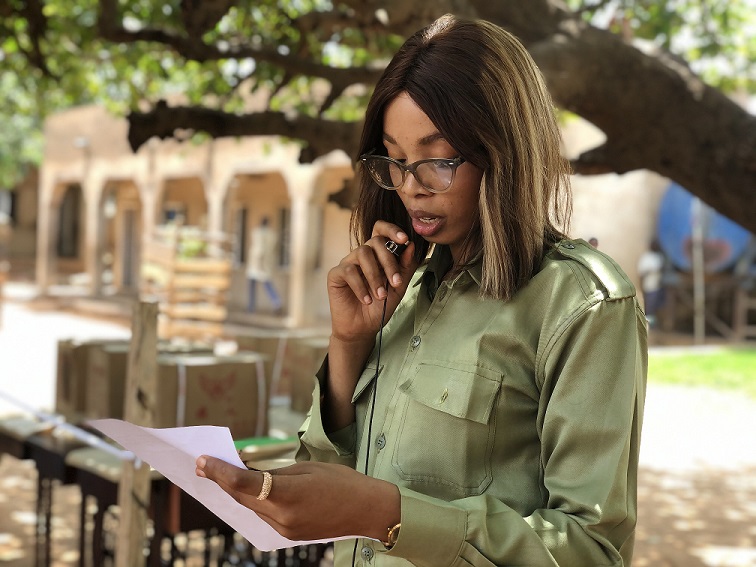
A corps member serving at Al-Furqan Learners’ Academy, Potiskum, Yobe State, has trained and empowered twenty widows on fashion design and tailoring skills in an effort to eliminate poverty and unemployment amongst women in the society.

The corps member, Chidimma Atuchukwu Obiageliaku, who hails from Anambra State, said the gesture was born out of her passion and desire to assist the vulnerable and less privileged in society.

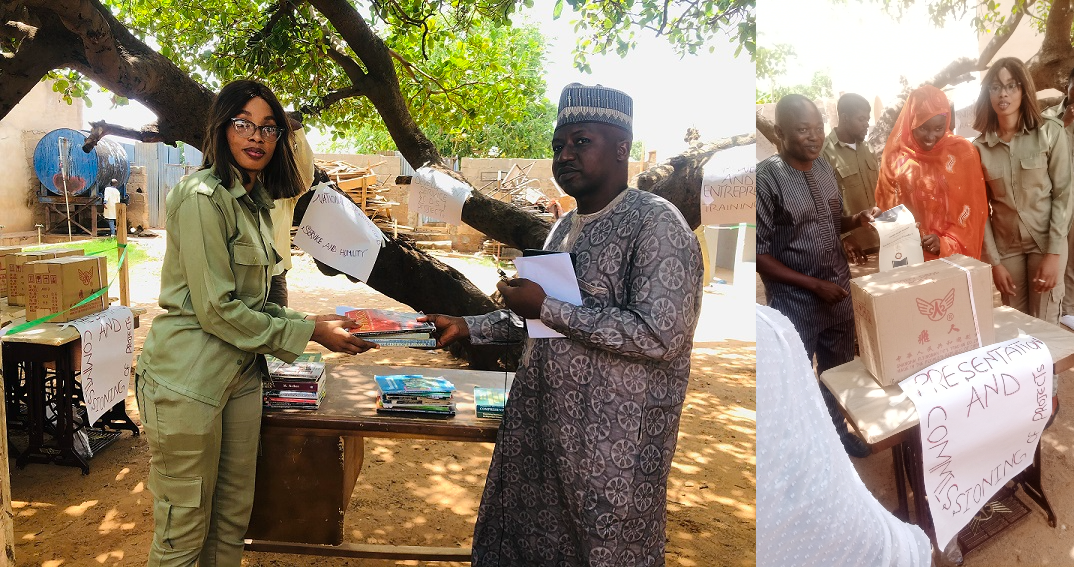
The Commissioning and Presentation Ceremony held on Thursday, 30 June 2022, at the school premises,  witnessed the presentation of certificates, wrappers, sewing materials and seven new sewing machines to the trainee widows. This came after 6 six weeks of intensive dress-making training and other entrepreneurial skills.

Other projects initiated by the Corps member included renovating and stocking a 40-seater school library to boost students’ learning capacity. She said, “whenever you read a book, it equips you with the knowledge and power to become whoever you aspire to be”, hence, donating the library to the school to equip the students to become great in the future.

In his welcome address, the School Director, Alhaji Ibrahim Mohammed, represented by Alhaji Suleiman Dauda, commended all the Corps members serving under his watch and specifically the project initiator Chidimma. He added that she was the first of her kind to execute a project of this considerable repute.

The state Coordinator of NYSC Yobe State, Hajiya Hafsat Yerima, represented by the Head of Community Development Service, CDS, Mr Abimbola Akin, expressed her satisfaction with the project carried out by the Corps member and hinted that the state would never forget her in a hurry while urging other Corp members to emulate her good gesture.

In his contribution, the Provost, Federal College of Education (Technical), Potiskum, represented by the Head of Digital and Visual Library of the College, Mallam Abubakar Hassan, explained that education is the bedrock of every meaningful society which deserves the contribution of all stakeholders.

Hassan, on behalf of FCE (T), Potiskum donated a reasonable number of textbooks to the school as part of their contribution to the project.

The benefiting widows, who were highly pleased, thanked the Corps member for the humanitarian support. The leader of the widows, Mrs Ladi, said the training is a lifetime investment that has transformed their lives beyond imagination. She prayed to Almighty God to grant their benefactor success in her future endeavours.

Other attendees included the Commissioner, Basic and Secondary Education, Yobe State, Dr Muhammad Sani Idris, representative of the Emir of Fika, His Royal Highness (Dr.) Muhammadu Idrissa Ibn Abbali, Humanitarian organisations, parents and students.

In his closing remarks, the School Director thanked the initiator of the projects and the sponsors and offered her automatic and pensionable employment with accommodation and other benefits after her National Service.

The Community Development Service is one of the key components of the NYSC, designed to have a beneficial influence on the lives of the host community.

Court restrains Gov. Ganduje’s N10b loan for CCTV

By Muhammad Aminu

A Federal High Court sitting in Kano has, in the interim, restrained Kano State Governor Abdullahi Ganduje, from borrowing 10 billion naira.

The Kano First Forum (KFF) instituted a legal action against Gov. Ganduje’s proposed 10 billion naira loan for Kano Security Infrastructure development, specifically CCTV installation.

The Daily Reality earlier reported that the Kano State House of Assembly had approved a loan request of 10 billion naira forwarded by Gov Ganduje’s administration.

The opposition New Nigeria People’s Party (NNPP) condemned the approval, cautioning financial institutions against giving out the loan to Ganduje’s administration.

“That the first respondent/defendant is hereby restrained in the interim from borrowing the sum of 10, 000 000 000 (10 billion naira) from 5th defendant”, said the court order issued by Justice A. M. Liman sighted by The Daily Reality.

The suit has the Kano State Governor joint in the case alongside the Kano State House Assembly, Commissioner of Justice, Ministry of Finance, Access Bank, Debt Management Service and Fiscal Responsibility Commission.

Dr Yusuf Isyaka-Rabiu, director-general of KFF, through their counsel led by Barr Badamasi Suleiman-Gandu, prayed to the court for the restrain, which was granted in the interim pending substantive hearing of the case at a later date.

WANTED: The reformation of the Almajiri system in Nigeria

By Kabir Fagge Ali

Almajiri is a system of Islamic education practised primarily in Northern Nigeria. The term is also used to denote a person who is taught or undergoing learning within this system called “Almajiranci.”

Almajiri is derived from the Arabic “Al-Muhajjirun”, an “Emigrant” who migrates from his home to a particular Islamic school in the quest for knowledge.

Over the years, it has been a normal feature, a cultural norm to have seen children roaming the streets in certain parts of (mainly northern) Nigeria, all in the name of seeking Islamic Education through the system of Almajiri.

Before the arrival of British colonial masters, a system of education called ‘Tsangaya’ has since prevailed in the Kanem-Borno Empire. It was established as an organised and comprehensive education system for learning Islamic principles, values, jurisprudence and theology.

Established after madrasahs in other parts of the Muslim world, Tsangaya was primarily funded by the state. Islam traditionally encourages charity, so the community readily supported these Almajiri. In return, he (Almajiri) gives back to society through manual labour.

The system also produced the judges, clerks, and teachers who provided the colonial administration with the needed staff. The Almajiri schools provided the first set of colonial staff in Northern Nigeria.

The Colonial masters abolished state funding of Tsangaya, arguing that they were religious schools. “Karatun Boko”, western education was introduced and funded instead. With this loss of support, the system collapsed.

A 2014 UNICEF report put the number of Almajiri in Nigeria at 9.5 million, or 72 per cent of the country’s 13.2 million out-of-school children. Unfortunately, this is a disaster unfolding before our eyes, as some estimates claim that the number of out-of-school children in the country has risen past the 15 million mark, most of whom originated from the North.

Regrettably, the Almajiri culture has since outlived its purpose and has become a breeding ground for child begging and, in extreme cases, potential materials for recruitment into terrorist groups. Moreover, the pupils who were meant to be trained to become Islamic scholars have now had to struggle to cater for themselves, begging rather than learning under the watch and supervision of some semi-literate Quranic teachers or Mallams who themselves lacked the requisite financial and moral support. Hence, the system runs more as a means of survival rather than a way of life.

This is because the Qur’anic schools became hapless, unable to render any help. After all, the head of the school is not also financially stable. This ultimately leads him to enforce a rule that ensures the students get him food or money. The most annoying part is making it mandatory, as punishment is enforced on anyone who fails to turn in what is expected from him.

Deprived of a normal and decent upbringing, Almajiri children, usually little boys between the ages of 4 and 15, may have been direct products of polygamous marriage or broken homes or simply due to economic challenges that hit the family. They lack adequate family cover as children are sent out to the streets under the guise of Almajiri as soon as the family’s resources are overstretched.

The Almajiri grows up in the streets without their parents’ love, care, and guidance; his struggle for survival exposes him to abuse (homosexuality and paedophilia), used as a slave, brainwashed, and recruited for anti-social activities, and used for destructive and violent activities. This is the picture of the pitiful plight of an Almajiri child in Nigeria.

Additionally, Almajiri culture epitomises child abuse, social exclusion, and chronic poverty in all ramifications. Because the system is believed to be rooted in Islamic religion and Fulani cultural practices, many attempts to reverse the trend or end such abuse of humanity have always hit a brick wall.

The fact that Islamic teaching strongly forbids begging, except in exceptional circumstances, which include a man’s loss of properties or wealth in a disaster or when a man has loaned much of his money for the common good, such as bringing peace between two warring parties already proves that Almajiri system as it is being practised today is unIslamic. A child neglected by his parents is vulnerable to diseases and social crimes. To survive, he often has to beg from ‘dusk to dawn’, after which he returns to the Tsangaya (Almajiri school).

For the past years, the Almajiri system has created a cover for criminally minded individuals to abuse Nigerian children through trafficking and expose them to anti-social behaviours such as forced labour and sex slaves.

Even former President Goodluck Jonathan designed a program under which a few Almajiri Model Boarding schools were established, which was aimed at integrating conventional western education into Islamic education, only turned out to be merely ‘removing a spoonful of water from a filled tank’, it wasn’t enough to adequately address the problem. As a result, less than five per cent of the children were captured by the Federal Government’s program meant to remove the Almajiri off the streets.

Therefore, as urgent, the government should take reasonable measures to address the Almajiri system in Nigeria to take them off the streets, even if it means banning the culture.

Unless it is banned or adequately reformed to meet the modern challenges and realities, the problems of underdevelopment, educational backwardness, and mass poverty in (northern) Nigeria will worsen. People will continue to bear children they do not have the resources to cater for, knowing that they could easily push such children out into the Almajiri system.

To conclude that the Almajiri system has deviated from its original purpose and is currently giving Nigeria a bad image in the international community is to admit the obvious.

This problem is a ticking time bomb waiting to explode at any time. And when it does, it will consume us all. But, it is still not late. So, something can be done to stem the tides.

Fagge is a student of Mass Communication at Skyline University Nigeria. He sent this via faggekabir29@gmail.com.