Month: May 2022

Jungle justice is ugly, but blasphemy is not exactly pretty

By Ishaq Habeeb

I know emotions are tense at the moment, and people are understandably choosing their words carefully not to appear fanatical or “un-woke”, but as we condemn the lynch mob that murdered Deborah in cold blood, let us also condemn her recklessness to save the next Deborah from other such murderous lynch mobs abound.

Deborah was only right to caution people to stop posting irrelevant, least of all, religious messages to a school platform, comprising people of varying faiths, formed solely for sharing academic updates, but dead wrong and at once suicidal, to speak blasphemously about a man whom she – should – know (since she spoke the Hausa language, a tribe, about 80/90% of whose natives are Muslims) majority of the group members, hold in the highest esteem.

Sadly, in Nigeria, you only need to become an Admin of a WhatsApp Group – with a clear cut mission – to know how practically impossible is it to govern Nigerians and have them obey simple rules.

I understand that it is hard to blame the dead in moments like these, but there are young people here who are reading our takes on topical issues, and our takes to shape their ideas and actions.

So, condemning only the lynch mob while ignoring the victim’s manifest, brash and unbridled lack of respect for other people’s revered personalities is, to say the least, lynching the stark truth to appease our emotions, and that is both shortsighted and dangerous.

We must do well to avoid living in half-truth denial and speak the whole truth from both sides so that young observers will not go around believing it is okay to do what Deborah did and that the only person to blame squarely is the lawless lynch mob.

Obviously, we can’t reason lynch mobs out of jungle justice(s). Still, we can reason with our living sister Deborahs to study their environments and always be mindful of their utterances, and this isn’t limited to people’s belief systems. It cuts across all strata of people’s lives endeavours. A stitch in time, as they say, saves nine.

Conclusively, as the regional coordinator of a Pan African movement, I’ve had to, on several occasions, scold/remove members for posting Friday/Sunday messages to the movement’s WhatsApp platform, even though it has a self-defined purpose and a strict rule against posting ANY irrelevant and PARTICULARLY religious messages.

As an admin, I’ve been called many atheistic names privately by those shambolic recalcitrants for simply doing my job, as clearly spelt. I fear if they could have their way, perhaps, I may as well face Deborah’s fate.

Ishaq can be reached via: simplyishaqhabeeb@gmail.com.

Slavery and Islam: Some notes

By Prof. Abdussamad Umar Jibia

The trending topic that every Nigerian is talking about is the execution of a young woman who insulted the personality of the Prophet of Islam (May peace be upon him). There is not too much I have to say on it. It is clear that Nigerian Muslims have spoken. We have a redline; no one would insult the Holy Prophet of Islam and get away with it. If democracy is all about what pleases the majority and protects the right of all, then there should be a law criminalizing any attack on the personality of our Holy Prophet with the appropriate punishment; unless some people feel it is part of their right to insult him. If, on the other hand, democracy is about being anti-Islam and crossing its redlines, then our problem has just begun.

The discussion on the Sokoto incident as I followed it on social media has revealed the level of hypocrisy in many of those who claim to be Muslims. Many commentators were not worried about the magnitude of the evil the woman committed but the way she was executed. Others would say, “She should be taken to a court of law”, etc., as if they are not the same people who would condemn any law that applies execution as the punishment for blasphemy.

Specifically, in a Whatsapp group I belong a particular person was so deep into his attack of the “perpetrators of the murder” that he went out of his way to be making other unsavory comments about Islam. The particular point I took him on was his association of slavery to Islam. To him it was the British who liberated slaves relying on a colonial document written by Lugard.

But he is not alone. A Northern writer with large followership among Northern elites once accused the Arabs of killing slaves because we don’t have African Arabs like we have African Americans. That, to the best of his imagination was because Arabs killed their slaves.

The danger is not about these people but the unsuspecting followers they can influence. Unfortunately, most social media followers are fascinated by beautiful grammar even if it is bereft of facts. In particular, I have always wanted to respond to the claim on the killing of African slaves by the Arabs. With my discussion with another Northerner I decided to write a few lines on this.

It is well known that it is not Islam that came with slavery. Islam came and met the practice of enslaving fellow humans well established not only in Arabia but in all other societies. The methods of acquiring slaves and the way they were treated were devoid of sanity in most societies. These methods were practiced before Islam came and continued to be practiced after the coming of Islam in societies where the impact of Islam was yet to be felt. Sadly, even in some Muslim societies where ignorance or selfish desires prevailed some of these methods were practiced.

One way slaves were acquired was through war. In war, the victor could treat the vanquished enemy the way he liked. They could simply kill them, torture them to death, put them under their control as soldiers or otherwise make them slaves.

Another way slaves were made was through guardianship. A father or grandfather had absolute authority over his offspring. He could sell or gift them away as slaves; could lend him or her to someone else, or exchange him or her with another’s son or daughter. A community chief could sell out one or more of his subjects as slaves.

Invasion was another method. In many cases, strong communities invaded weaker ones, enslaved all men, women and children and sold them. This is chiefly how many Africans found their way to other continents as slaves.

Other methods include pawning, tribute, etc. depending on the geographical location and time in history.

Islam restricted the means of enslavement to only one method. Jihad. The Qur’anic meaning of the word is maximum struggle in spreading and defending the message of Islam. As long as falsehood is confronting the truth and evil is opposing good and mischief and its doers are standing in the way of reform, Islam does not allow Muslims to seclude themselves with rituals and look the other way. Just like a Muslim is enjoined to give Zakah that symbolizes kindness, he is enjoined to perform another form of worship that symbolizes opposing evil. That is Jihad. Of course this write-up is not about Jihad.

When Jihad becomes an armed struggle and prisoners are taken, a favour is done to them. Instead of being killed they are taken to Muslim community as slaves to serve as house helps, on the farm and help in other activities not beyond their ability.

Of course, it is not a rule in Islam that war captives must be enslaved. Captives can be released freely by the leader or after payment of ransom (Q47:4). Both of these happened during the lifetime of the Prophet (Salllahu alaihi wa sallam). Peculiarities of situation would always guide the leader. Islam also prohibits torturing the enemy or mutilating their body as practiced in other climes.

The rules of treating slaves are summarized in the following Hadith, quoted in parts, “They are your brothers and servants. Allah Has put them under you. Whosoever has his brother under him, he should feed him from what he eats and clothe him from the type of cloth he uses. Do not assign them to do any work that is too much for them. When you assign them, help them.” (Bukhari and Muslim reported it).

In addition to this golden rule of treating slaves, Islam introduced incentives for freeing slaves. For example, freeing a Muslim slave would emancipate the freer from hell fire on the Day of Judgment, according the Holy Prophet (May peace be upon him) himself. Kaffara (expiation) for incorrect breaking of fast, abrogation of oath, killing by mistake, zihar, etc. can be done by freeing of slaves, sometimes as the first option.

The claim that Arabs killed their slaves stems from ignorance of the above and the fact that intermarriage took place between Arabs and freed slaves. Even in modern day America or Europe, how many whites marry blacks? The former still look at the latter as slaves. The fact is that even among themselves, enslaved people in America were not legally allowed to marry until recently. One woman was allocated to several slaves to share, so she gave birth to another slave whose father did not matter. This beastly practice was unheard of in what our ‘liberals’ condemn as “puritan” Islamic societies.

The Shiite-brainwashed “intellectuals” probably forgot that in Islam a master can have intercourse with his female slave subject to laid down conditions and when she gives birth to any child she qualifies for her freedom and her child has full rights of a child. Some of the famous early generations of Muslim rulers were children of such slaves. A handy example is Abdurrahman bn Muawiya of Spain. The only maid slave the Holy Prophet had, Maria, was an African and she gave birth to his son Ibrahim. This is unheard of in western societies.

I challenge any believer in western civilization to cite an example where a white master married a slave.

Thus, slaves were integrated into the Arab/Muslim society. Not only were they integrated but many of them learned Islam and excelled in Islamic scholarship. The list is long but a few would suffice. Nafiu m. Abdullahi bn Umar, Ata’ bn Abi Rabah, Tawoos bn Kaisan, Yazid bn Abi Habeeb, Makhul, Maimoon, Addhahhak, Ibrahim Annakha’iy are some of the famous scholars of early Muslim generation who were originally slaves.

Coming down to recent history of West Africa, what confused many who get their knowledge of Islam from secondary sources is the conduct of some West African kings. For example, Kano and Zaria were Muslim states and war between them was far from being Jihad. People enslaved as a result of that war were enslaved unjustly and Allah will judge between them and those responsible for their enslavement.

Another wrong pre-colonial enslavement method was raiding of minor tribes by major tribes for the purpose of generating slaves. Such slaves were kept in the palaces of traditional rulers or sold out to foreigners. This is clearly outside what Islam permits, regardless of whether or not such major tribes are predominantly Muslim.

Sheikh Abubakar Gummi had very tough times trying to educate some traditional rulers who still kept such slaves in their palaces that such practice was unIslamic.

Most western-educated people in Muslim societies are misled by Shiite propaganda. It is well known that Shiites have deep animosity towards Arabs and Islam.

Prof Abdussamad Umar Jibia

On blasphemy and mob justice

By Zakariyya Shu’aib Adam

Blasphemy, especially against the Prophet, is the sacreligous utterances about anything related to his personality. Scholars have written books exclusively on the subject. Some of the books include Ar-risalah by Muhammad Ibn Suhnun; As-saarimul Maslool by Shaykhul Islam Ibn Taymiyyah; As-saiful Maslool by Taqiyyuddeen As-subkiy; As-saiful Mash’hoor by Muhammad Ibn Al-qasim; Tanzeehul Anbiyaa by Jalaaluddeen As-suyutiy; Rashqus Sihaam by Ibn Tuloon and Tanbihul Hukkaam by Ibn Abideen.

Other scholars have, although not exclusively, mentioned the ruling of blasphemy in their books. Among them are Ibn Hazm in his famous Al-muhallaa and Al-qadhi Iyaad in his magnum opus As-shifaa. With this, we can conclude that the ruling for blasphemy is not new to the Islamic scholastic circle. In this article, by Allah’s will, I intend to critically dissect the concept of blasphemy and the Islamic ruling on mob justice.

Blasphemy, as Ibn Taymiyyah defined it, is to use words that show a lack of respect and are perceived by all people, regardless of their beliefs, to be profane, exactly like cursing, condemnation, etc. Islamic scholars, as discussed in the aforementioned books, unanimously agreed that blasphemy leads to apostasy, and that anyone that is found guilty of it should be executed. The basis for their consensus is evidences from the Qur’an and Hadith.

Allah says: “Indeed, those who abuse Allah and His Messenger – Allah has cursed them in this world and the Hereafter and prepared for them a humiliating punishment. And those who harm believing men and believing women for [something] other than what they have earned have certainly born upon themselves a slander and manifest sin.” (Qur’an 33:57-58).
In these verses, as stated by the scholars, Allah (SWT) differentiates affronting Allah or His Messenger from maligning believing men and women; the former deserves curse and humiliating torment in the worldly life and in the Hereafter, while the latter is a calumny and manifest sin. The curse in the world means execution. There are other Qur’anic verses that support the execution of a blasphemer. These are Qur’an 5:33, Qur’an 9:61 and Qur’an 33:60-61.

Secondly, there are instances in the lifetime of the Messanger (SAW) that he ordered the execution of blasphemers against him. Bukhari and Muslim narrated in their authentic books from Jabir Ibn Abdillah that Allah’s Messenger (SAW) said, “Who is willing to kill Ka’ab Ibn Al-Ashraf who has hurt Allah and His Apostle?” Thereupon Muhammad Ibn Maslama got up saying, “O Allah’s Messenger (SAW)! Would you like that I kill him?” The Prophet (SAW) said, “Yes,” Muhammad Ibn Maslama said, “Then allow me to say a (false) thing (i.e. to deceive Ka’ab). “The Prophet (SAW) said, “You may say it.” Then Muhammad Ibn Maslama went to Ka’ab and said, “That man (i.e. Muhammad demands Sadaqa (i.e. Zakat) from us, and he has troubled us, and I have come to borrow something from you.” On that, Ka’ab said, “By Allah, you will get tired of him!…”

This hadith clearly shows that the Messenger (SAW) ordered for the execution of Ka’ab for his blasphemy against Allah and His Apostle. Ka’ab used his considerable poetic talent to compose and recite derogatory verses against the Prophet (SAW), his companions and the honour of Muslim women. When he heard about the outcome of the battle of Badr, he wrote poems satirizing the Prophet (SAW), eulogizing the Quraysh and enticing them for a war against the Muslims. That was the reason the Prophet (SAW) ordered for his execution.

Abu Dawud (4361), Nasa’i in Al-mujtaba (4070), Tabarani (11/351) and Hakim (4/394) narrated from Ibn Abbaas that: “A blind man had a female slave who had born him a child who reviled the Prophet (SAW) and disparaged him, and he told her not to do that but she did not stop, and he rebuked her but she paid no heed. One night she started to disparage and revile the Prophet (SAW), so he took a dagger and put it in her stomach and pressed on it and killed her. The next morning, mention of that was made to the Prophet (SAW) and he assembled the people and said: “I adjure by Allah the man who did this to stand up.”

The blind man stood up and came through the people, trembling, and he came and sat before the Prophet (SAW). He said: O Messenger of Allah, I am the one who did it. She used to revile you and disparage you, and I told her not to do it but she did not stop, and I rebuked her but she paid no heed. I have two sons from her who are like two pearls, and she was good to me. Last night she started to revile you and disparage you, and I took a dagger and placed it on her stomach and I pressed on it until I killed her. The Prophet (SAW) said: “Bear witness that no retaliation is due for her blood.”

Furthermore, it is based on the above evidences that the Islamic scholars made an Ijmaa’ (consensus) that a blasphemer is to be killed, regardless of his belief (I.e whether a Muslim, a Dhimmi (non-Muslim living in an Islamic state with legal protection) or any other non-Muslim). The Islamic nation cannot unanimously agree on an error, as is narrated in numerous Hadiths. Tirmidhi (2167) narrated from Ibn Umar that the Prophet (SAW) said, “Allah will not cause my ummah to agree on falsehood; the hand of Allah is with the Jamaa‘ah (the main body of the Muslims)”.

In As-shifaa’, Al-qadhi Iyaad listed the names of some of the scholars that made the above mentioned consensus. They include great companions like Abubakar As-siddiq and other pious predecessors such as Imam Abu Hanifah, Imam Malik, Imam As-shafi’i, Imam Ahmad, Layth Ibn Sa’ad, Ishaq Ibn Rahuyah, Sufyan At-thauriy, Al-auzaa’iy, Imam Abu Yusuf and Muhammad As-shaibaniy among others. At the end, he said, “We do not know of anyone among the scholars and pious predecessors that disagree with the execution as a punishment for blasphemy.”

In As-sarimul Maslool, Ibn Taymiyyah quoted Ahmad Ibn Hanbal saying, “Whoever affronts the Prophet (SAW) or defames him (whether a Muslim or a non-Muslim) should be executed.” Ishaq Ibn Rahuyah maintained, “Muslims agree unanimously that whoever blasphemes against Allah or His Messenger (SAW) is deemed a disbeliever due to this blasphemy, even if he recognizes what has been revealed by Allah.”

Imam Muhammad Ibn Suhnun said, “There is a unanimous agreement among the Muslims on the apostasy of a blasphemer against the Prophet (SAW) and the one that defames him. His punishment is execution and whoever doubts his apostasy is also an apostate.” Imam Al-khattabiy said: “I do not know of anyone among the Muslims that is doubtful of an execution as a punishment for a blasphemer.”
Ibn Qudamah wrote, “Whoever blasphemes against Allah shall be a disbeliever, whether he is kidding or serious.”

Ibn Taymiyah said, “Blasphemy against Allah or His Messenger (SAW) is an act that nullifies faith, both outwardly and inwardly, whether the blasphemer knows that this is haram (forbidden), deems it halal (permissible), or is not aware of the ruling at all.” As-san’aani in Subulus-salaam, while commenting on the Hadith of the blind man, said: “This report indicates that the one who reviles the Prophet (SAW) is to be executed and no blood money is to be paid for him; if he is a Muslim his reviling of him (SAW) is apostasy for which he deserves to be executed.”

The only part in which the scholars differ is whether or not the blasphemer would be asked to repent. Some of them uphold that if a Muslim commits blasphemy, he becomes an  apostate and would therefore be killed without asking him to repent. While others uphold a contrary opinion. They said he would be asked to repent. If he fails to repent, then he would be killed. Regarding a non-Muslim who commits blasphemy, some of the scholars said that he would be punished by death. However, if he converts and becomes a devout Muslim, the punishment is nullified as it happened with Ka’ab Ibn Zuhayr.

However, as eager as we are to see the ruling of Allah being applied on the blasphemer, it is instructive to reemphasize that Islam does not allow its adherents to take law into their hands. To be specific, the execution of a blasphemer is an exclusive responsibility of constituted authorities. This is the ruling established in Islamic law and recorded by scholars in their books.

Al-imam Al-qurtubiy, a highly-acclaimed Malikiyyah jurist, who authored one of the most widely known exegesis of the Noble Qur’an, said in the interpretation of verse 178 of Suratul Baqarah: “There is no dispute among the scholars that qisaas (retaliatory punishments) such as execution cannot be carried out except by those in authority who are obliged to carry out the qisaas and carry out hadd punishments etc, because Allah has addressed the command regarding qisaas to all the Muslims, and it is not possible for all the Muslims to get together to carry out the qisaas, which is why they appoint a leader who may represent them in carrying out the qisaas and hadd punishments.”

Ibnu Rushd, another respected Malikiyyah jurist, said in his book Bidayatul Mujtahid: “With regard to the one who should carry out this punishment – i.e, the hadd punishment for drinking alcohol – they agreed that the ruler should carry it out, and that applies to all the hadd punishments.” This ruling is also affirmed by scholars of Hanbaliyyah school. Ibnu Muflih, a Hanbaliyyah jurist, in his book Al-Furoo, said: “It is haraam for anyone to carry out a hadd punishment except the ruler or his deputy.”

In his widely celebrated magnum opus Al-mugniy, Ibnu Qudamah said: “It is not permissible for anyone to carry out execution except in the presence of a leader.” He also said, “This ruling is supported by jurists that are affiliated to Shafi’i school of thought.” Imamul Haramain Al-juwainiy, who is a Shafi’iyyah jurist, said in his book Al-giyaathiy: “Regarding hadd punishments, how they are established and when to execute them are recorded in the books of Islamic jurisprudence. And all are exclusive responsibilities of the leader. It is not permissible for anyone, including the families of the victims, to carry out such executions without the consent of the leader.”

The aforementioned submissions by scholars of different schools of thought are the ruling on mob justice. It’s not allowed in Islam. Although in Nigeria, most mob justices related to blasphemy are as a result of negligence from the constituted authorities. They never execute blasphemers that have been tried before a court of law and found guilty. That is why some analysts refer to this type of mob justice as frontier justice, where extrajudicial punishment that is motivated by the nonexistence of law and order or dissatisfaction with justice is carried out. To prevent its future occurrence, the authorities concerned must always do the needful and execute court order.

Lastly, in every religion and culture, there are redlines that aren’t supposed to be crossed. In Islam, one of the redlines that cannot and should never be approached, let alone be crossed, is the dignity of our Noble Prophet. That is why whenever an uncultured bigot blasphemed against the Prophet, the entire Muslim Ummah react. Muslims love and regard the Prophet more than anything. They can sacrifice their lives in his defense. You can’t insult our Prophet and expect us to be tolerant. We cannot tolerate an abuse to the personality of our Noble Prophet.

*Conclusively, I pledge to sacrifice my parents, my life and whatever I posses in defense of the Noble Prophet (SAW).*

Leave our Prophet alone!

By Dr Bala Muhammad

His name is Muhammad. And all of us, now One and a Half Billion Souls and counting, love him beyond compare. In fact, we so love him that others just can’t understand or comprehend. They don’t get it, and they can’t get it, for they know not this kind of love. We love him more than we love our parents; indeed we love him more than we love ourselves! The moment we hear his name invoked, we immediately add: “May the peace and blessings of Allah be upon him.” O we so love him, Muhammad!

He left us more than 14 centuries ago, yet it is as if he daily lives amongst us. There is no day that passes without his name being called, and praised, by each one of us. To us, he is inviolable, unjokable. He is leave-alonable. We don’t joke about him. To us, Muhammad the Prophet is a serious matter. In anything concerning him, we are, we swear by Allah, fanatical, fundamental, impatient. We love him; you don’t, and you can’t understand. So we say to them, just leave him alone.

We are so many, and O how we so love him! A billion-plus loves! Yet some people who don’t understand us, or our Prophet, think they can just play with his name, and his person, and his dignity, and hide under ‘freedom of expression’ or similar Western jargon. We say to unto them: just leave him alone! May our fathers and our mothers be a ransom for you, O Muhammad! O Rasulullah!

They have done it again! Filmmakers and cartoonists and writers who think they can make fun of our Prophet and go scot-free should know this fact: you may abuse a Muslim’s father, you may abuse a Muslim’s mother, you may abuse everyone abusable, but never poke fun or abuse our noble Prophet Muhammad. On that, we are fanatical, we are fundamental; end of discussion. May the peace and blessings of Allah be upon you O Rasulullah!

But we should all remember that the forefathers of these insensitive filmmakers and cartoonists and writers were not like them. They acknowledged and praised our Prophet as the greatest person to have ever lived. His name Muhammad, indeed, means praiseworthy. SallalLahuala Muhammad.
Michael H. Hart in his book on ratings of people who contributed towards the benefit and upliftment of Mankind chose Muhammad at the top of his list of the Greatest Hundred. He writes: “My choice of Muhammad to lead the list of the world’s most influential persons may surprise some readers and may be questioned by others, but he was the only man in history who was supremely successful on both the religious and secular levels.” (The 100: A Ranking of the Most Influential Persons in History: New York, 1978).

George Bernard Shaw, the great philosopher, said about the Prophet: “He must be called the Saviour of Humanity. I believe that if a man like him were to assume the dictatorship of the modern world, he would succeed in solving its problems in a way that would bring it much needed peace and happiness.” (The Genuine Islam, Singapore, Vol. 1, No. 8, 1936).

Historian John William Draper in his well-known work, ‘A History of the Intellectual Development of Europe’, observes: “Four years after the death of Emperor Justinian, was born at Makkah, in Arabia, the man who, of all men, has exercised the greatest influence upon the human race.”

Dr Annie Besant in her book, ‘The Life and Teachings of Muhammad’ (Madras, 1932) says: “It is impossible for anyone who studies the life and character of the great Prophet of Arabia, who knows how he taught and how he lived, to feel anything but reverence for that mighty Prophet, one of the great messengers of the Supreme. And although in what I put to you I shall say many things which may be familiar to many, yet I myself feel whenever I re-read them, a new wave of admiration, a new sense of reverence for that mighty Arabian teacher.”

David George Hogarth (1862-1927) English archaeologist, author, and keeper of the Ashmolean Museum in Oxford says of Prophet Muhammad:

“Serious or trivial, his daily behaviour has instituted a canon which millions observe this day with conscious mimicry. No one regarded by any section of the human race as a Perfect Man has been imitated so minutely. The conduct of the Founder of Christianity has not so governed the ordinary life of His followers. Moreover, no Founder of a religion has been left on so solitary an eminence as the Muslim Apostle.” (Arabia, Oxford, 1922).

Edward Gibbon (1737-1794), considered the greatest British historian of his time, says of our Prophet: “The greatest success of Muhammad’s life was affected by sheer moral force without the stroke of a sword.” (History of the Saracen Empire, London, 1870). Gibbon adds elsewhere: “His (i.e. Muhammad’s) memory was capacious and retentive, his wit easy and social, his imagination sublime, his judgment clear, rapid and decisive. He possessed the courage of both thought and action.” (History of the Decline and Fall of the Roman Empire, London, 1838, vol.5, p. 335).

Professor Keith L. Moore, one of the world’s most prominent scientists in the fields of anatomy and embryology, and author of the book ‘The Developing Human,’ which has been translated into eight languages, was in Saudi Arabia in 1981 during the Seventh Medical Conference in Dammam. Professor Moore said: “It has been a great pleasure for me to help clarify statements in the Qur’an about human development. It is clear to me that these statements must have come to Muhammad from God because almost all of this knowledge was not discovered until many centuries later. This proves to me that Muhammad must have been a messenger of God.” SallalLahuala Muhammad.

Thomas Carlyle, in ‘Heroes and Hero Worship and the Heroic in History,’ (1840) says: “The lies (i.e. Western slander) which well-meaning zeal has heaped round this man (Muhammad) are disgraceful to ourselves only.”

Mahatma Gandhi, speaking on the character of Muhammad said: “I wanted to know the best of one who holds today’s undisputed sway over the hearts of millions of mankind…I became more than convinced that it was not the sword that won a place for Islam in those days in the scheme of life. It was the rigid simplicity, the utter self-effacement of the Prophet, the scrupulous regard for his pledges, his intense devotion to his friends and followers, his intrepidity, his fearlessness, his absolute trust in God and in his own mission. These, and not the sword, carried everything before them and surmounted every obstacle. When I closed the 2nd volume of the Prophet’s biography, I was sorry there was not more for me to read of the great life.” (Young India).

Alphonse de Lamartine (1790-1869), the French poet and statesman, says of our Master: “Philosopher, orator, apostle, legislator, warrior, conqueror of ideas, restorer of rational dogmas, of a cult without images; the founder of twenty terrestrial empires and of one spiritual empire; that is Muhammad. As regards all standards by which human greatness may be measured, we may well ask, is there any man greater than he?” (Translated from Histoire de la Turquie, Paris, 1854, vol. II).

They will continue to provoke us by mocking our Rasul. But we should be ahead of them by being circumspect in our protestations. We must remember that Allah says “Wa la taziruwaziratuwizraukhra”. The consequence of this blasphemy is a burden on those filmmakers, cartoonists and writers. And they will bear it, in sha Allah.

Please tell all of them: just leave our Prophet alone!

This article was written by BALA MUHAMMAD and first published by Weekly Trust (Nigeria) on Saturday, 22 September 2012. It’s reproduced here with the author’s permission.

Bandits gun down three police officers in Niger

By Uzair Adam Imam 

Unknown shooters, also suspected to be kidnappers, have gunned down three police officers and a commercial motorcyclist Thursday in Suleja, Niger State.

The incident was said to have occurred around 11 pm on Thursday, May 12, 2022.

Daily Trust reported that the policemen were reportedly responding to a distress call when they were ambushed near a place called Old Barracks.

According to a source, “they were ambushed by the gunmen, who seemed to be expecting their arrival.” 

The Suleja Council Chairman, Abdullahi Shuaibu Maje, has confirmed the incident.

He added that “about three persons, including a vigilante member, survived the attack.”

The Daily Reality learned that the victims were currently being treated at a hospital in the area.

DSP Wasiu Abiodun, the Police spokesperson in the state, could not be reached for comment.

MURIC condemns blasphemy killing in Sokoto, other killings in Nigeria

  • News Desk

The Muslim Rights Concern (MURIC) has condemned the killing in Sokoto of a student, Deborah Samuel, over an allegation of blasphemy.

In a statement released by its director, Professor Ishaq Akintola, on Friday, 13th May 2022, MURIC described the killing as outrageous, illegal and unlawful.

The full statement reads :

“A female student of the Shehu Shagari College of Education, Sokoto, Deborah Samuel, was on Thursday killed for allegedly blaspheming against the Prophet Muhammad (Peace and blessings of Allah be upon him). The blaspheme statement was reportedly posted on a WhatsApp group. She was asked to withdraw the statement but she allegedly refused to do so. The school’s security unit and police were overwhelmed by the crowd when they tried to rescue her.

“MURIC strongly condemns this killing and all others that have been happening in Nigeria in recent times. Those aggrieved by the student’s post should have reported her to the security agencies or to the Shariah police, the Hizbah. Mob killing is archaic and bohemian. It belongs to the Stone Age. Nobody has the right to take the law into his hands.

“The Glorious Qur’an compares the killing of a single person to the killing of the whole of humanity just as it compares the saving of life to the rescue of all homo sapiens (Qur’an 5:32) In like manner, Prophet Muhammad (SAW) himself condemned all acts of violence and advocated peaceful conduct at all times.

“But this incident should not be condemned in isolation. The recent trend whereby Nigerians now freely shed their brother’s blood should be condemned by all patriots. In this regard, we also strongly denounce the killing of several Northern Muslims in the South East in the past few months.

“We frown at the recent burning last week of a truck fully loaded with cows in the South East as well as the killing of many Muslims of South-East origin by their Igbo brothers in the same South East. We note with keen interest that Muslims in the North did not retaliate when these killings were taking place.

“MURIC calls on the Sokoto Police Command to do everything within its power to get to the bottom of yesterday’s killing of the female student over alleged blasphemy. We appeal to members of the public to remain calm and law-abiding. Nigerians should allow the police to carry out their investigations on the case. The Sokoto Police Command has started well as it already has two suspects in detention for the killing.

“Meanwhile we remind Nigerians to always exercise restraint on matters of religion. Free speech is no longer free if it amounts to religious provocation. Even the European Court has ruled that the utterance of derisive statements against the prophet of any religion is a crime.

“We affirm clearly, categorically and unequivocally that there is a symbiotic relationship between provocation, violence and extremism. While MURIC will not condone extremism and violence, the anatomy of terrorism is becoming clearer day by day. We must all ponder over the causal-effect theory. Violence and terrorism are mere symptoms. The real disease is a provocation. Violence and terrorism are mere smoke. Provocation is the fire and we all know that there is no smoke without fire.

“We, therefore, appeal to Nigerians to desist from insulting, deriding or abusing the prophets of other religions. Muslims should continue to respect Jesus (peace be upon him) whom the Christians hold very dear. In the same vein, Christians should avoid casting aspersion on the person of Prophet Muhammad (SAW). We have experienced enough religious crises in the land.

UAE President, Sheikh Khalifa Bin Zayed is dead

By Ahmad Deedat Zakari

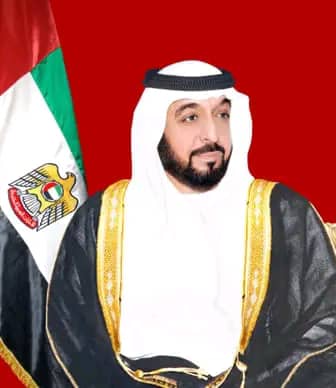
The Ruler and President of the United Arab Emirates, Sheikh Khalifa Bin Zayed, is dead.

The Ministry of Presidential Affairs announced the sad news on Thursday, May 13.

The Ministry of Presidential Affairs condoles the people of the UAE, the Arab and the Islamic nation and the world over the demise of His Highness Sheikh Khalifa Bin Zayed Al Nahyan, the president of the UAE, ” the statement reads.

The late president was born in 1948. He was the second president of the UAE and the 16th Ruler of the Emirate of Abu Dhabi. He succeeded his father, the late Sheikh Zayed bin Sultan, who was UAE’s first president upon his death in 2004.

Gombe inventor develops ride-hailing app

By Muhammad Auwal Ibrahim

The business of the e-hailing company is no longer news in some Nigerian cities like Abuja, Lagos, Kano and Jos. Now, Abubakar Musa, Gombe indigenous inventor, has invented Gomba Ride, a ride-hailing app in Gombe.

The inventor stated this during an interview with our reporter today, May 12, 2022.

According to him, creating Gomba Ride is “to make life safe, secured and convenient for Nigerians. The purpose of life is to live for others. Anytime, everywhere, you and your family can book a ride at the comfort of your bed with just a click of a finger.”

Responding to how long it took him to develop this e-hailing app, Musa said “it was exactly 14 months” despite being a political scientist.

He added that his passion for science and technology made him build this app that will work in all the states of the federation and the Federal Capital Territory, Abuja.

“Since my childhood, I have had a passion for technological invention. Since then, I am always thinking of a possible way to take advantage of science and technology to ease people’s lives.

“As a political scientist by training, after my graduation, I devoted my time and energy to researching, reading inventory books and learning  ICT skills to come out with something new that can make life simple.”

He further explained that there are security measures to help curb the menace of kidnapping, raping and theft while on a ride.

“I programmed the app so that It will store the car plate number, image and phone number of the driver for easier tracking. The customer can share his location with trusted contacts to address kidnappings and other related crimes. The app stores the travel history of the customer containing the information of the car and driver, which can be accessed anytime. The app has a quick response section, where a customer can make a complaint via call, WhatsApp, email, Twitter and Facebook.”

Keke Gomba, Bike Gomba, Gomba L and Gomba X are the various vehicles one can choose for a ride.

Musa further solicited “observations, criticisms and recommendations” and prayed that “may the Almighty Allah bless our knowledge to continue to make life easier for people.”

The app will be available for download from Google and Apple stores on May 30, 2022.

Court orders Polaris Bank to pay customer N500,000

By Engr. Ibrahim Nasidi Saal

An Akwa Ibom State High Court has ordered Polaris Bank to pay a customer N500,000 as damages for the bank’s failure to reverse a failed Point of Sales (POS) transaction within 72 hours as provided by law.

The plaintiff, Idongesit Nwoko, is a civil servant in Akwa Ibom and a Polaris Bank customer. She made a withdrawal of N61,000 via POS on December 24, 2020, but was debited without payment.

Mrs Nwoko said she made several efforts, including several visits to the bank, but the debit was not reversed until after 28 days. Dissatisfied with the way she was treated by the bank, the woman, through her lawyer, Utibe Nwoko, sued Polaris Bank.

Mrs Nwoko asked the court to compel the bank to refund her N61,000. She also asked the court to compel the bank to pay her N100 million as damages and N1 million as cost of her legal action.

Justice Bennett Ilaumo, in her ruling, ordered the bank to pay N500,000 as damages to Mrs Nwoko for failing to reverse the transaction within the 72 hours as provided by the law.

The Defence lawyer Anthony Ebuk, told The daily reality source on Wednesday, that his client would appeal the ruling.

Mr Ebuk, who said the court cannot amend the pleadings of a party in a suit, argued that the plaintiff, in her prayers, asked the court to order the return of her money, pay her damages for her money that ‘was lost’ and pay her the cost of legal action.

He said the plaintiff did not ask for payment of damages for the delayed reversal which the court awarded to her.

He further said that his client returned the said money to the customer’s account within the 16 days allowed by the law for such transactions.

Mr Ebuk said the plaintiff later withdrew the money before approaching the court.

According to Mr Ebuk, the judgment was not based on the pleadings of the party, but on “a total misdirection of fact.”

“The judgment was not the true position of the law. It wasn’t the terms of agreement. There was no hearing in that matter. Everything was totally against the rule of practice and the law.

“The plaintiff tried to withdraw money with a Polaris Bank Automated Teller Machine (ATM) card, but she did not go to Polaris Bank. She went to another bank’s POS. Going to another bank’s POS, that bank debited her account from Polaris Bank but did not pay her.

“The law is if you come to Polaris Bank with its bank card it should be reversed immediately or within 24 hours, but when it has to do with a third party bank, you have to file an application before the money is reversed to the owner.

“The law allows for 16 days for the money to be reversed from the day the application was filed.

“The woman was debited on December 24, 2021 but she did not notify the bank until after the Christmas holidays about January 4, 2022. From the day she notified the bank we covered the period and returned her money within the 16 days in line with the law,” Mr Ebuk said.

The spokesperson for Polaris Bank, Rasheed Bolarinwa, described the N500,000 damage as disproportionate compared to the N60,000 that was ‘trapped.’

He said the bank was reviewing the judgment and would take ‘the necessary legal steps’ thereafter.

2023: Bulus raises hope for APC in Southern Kaduna 

By Sumayyah Auwal Usman

As the 2023 elections draw near, the two big parties, the ruling All Progressives Congress (APC) and the Peoples’ Democratic Party (PDP), parade several contenders for the Kaduna South Senatorial seat. 

Being one of the strongest senatorial zones for the PDP since 1999, the aspiration of APC bigwigs from the zone is challenging PDP’s dominance. As a result, political pundits opined that next year’s senatorial election in the zone will be a fierce contest between PDP and APC.

For the APC, political observers believe that the expression of interest of Honourable Bulus Banquo Audu is receiving a massive boost in the zone. He’s believed to be one of the most experienced and most politically savvy APC politicians in Southern Kaduna that could defeat other contestants and amass votes for APC in the forthcoming election.

As a grassroot politician, Bulus played a critical role when APC won the seat of member House of Representatives in Kachia/Kagarko Constituency in 2019. Recently, his political influence paved the way for a more remarkable outcome for APC in the last local government elections. He wields enormous influence among the Christian communities in the zone.

Investigations revealed that the recent mass defection of members of the PDP to APC in the zone is not unconnected with Hon. Bulus’ senatorial ambition. One major determinant of which party wins an elective position at the end of the day is the choice of the party candidate. With the changing political atmosphere in Southern Kaduna, any party that makes the mistake of presenting a weak candidate or person with questionable character will undoubtedly lose the election.