Month: March 2022

Baba Jalingo: A loving memory of an inspirational personality 

By Aisha Ahamd Jalingo

I barely have many memories of him beyond his signature, white clothes and red cap because I was a child when he passed away, but my husband insisted that I write a tribute for him today, being 11 years since his demise. All I know is Baba was an inspirational personality which means different things to different people. A father with a great sense of humour, a mentor that gave his all irrespective of differences in ideology or creed, and a unionist who fought to protect all till his last breath.

Everyone who knows him at Bayero University will always say how he jokes around with everyone. Whether you were his students, who I heard would rush to M block for his lectures because of how educative and entertaining his classes were, or his colleagues who always ran to him to seek support, morally or otherwise. He treated everyone equally with respect.

During his lecture, he would have the theatre filled with some students not because they registered for the course but only to listen to him speak.  Baba Jalingo was very religious. It is his norm to go to the BUK Central mosque for Magrib prayer and wait till after Ishaa before returning home. A pillar in the mosque is called ‘fillar Jalingo,’ meaning Jalino’s pillar. He would sit there from Magrib till Ishaa. I once saw someone write on Twitter that no one even dares sit in that spot, as when he arrives, he jokingly asks the person to get up. 

His kindness knows no bounds. One memory of his that keeps coming to mind is that whenever we travel home to Jalingo, we normally stop at Gombe to stretch our legs, pray, and eat at a particular filling station. Baba would sit with the people there and chat. He would buy what they are selling, most of which we don’t need. I heard an incident when Baba and our Mom were returning to Kano. Unfortunately, they had a flat tire in a village, Durbunde, just after Gwaram. He met a man who helped them fix the tire. Since then, he always stops at the village to see him, till date that man still visits our family. He named his son after Baba Jalingo when he passed away, named his daughter after mother and recently named another daughter after me.

The same thing happens around Dakatsalle just before Kano. When returning from Kaduna or Abuja, Baba would stop and sit with all those selling chickens, vegetables, fish and whatnot. He usually tells them, “kaima kawo abin da kake sayarwa” (“you too bring what you sell”). He will come home with so many things. 

When it comes to supporting family, I have never seen anyone who supports his family like Baba Jalingo. I know he helped my mother up to the rank of Professor, which she earned shortly after his death.  I heard he often travelled with her to Usman Danfodiyo University, Sokoto, when pursuing her PhD. He was her biggest cheerleader through it all.

I can remember the last incident when she was the HOD of the Economics Department, Bayero University, Kano. A conference was organised in the department, and he was then the vice-chancellor of Taraba state University. I remember him coming to Kano to attend the conference, and he was among the first to arrive, sitting in front with his signature white clothes and red cap.

He often travelled back from Taraba State for the termly visits to our school. Baba never got tired. I remember his last visit passionately during our Qur’anic graduation ceremony. In the picture, I can never forget smiling when he was called to give a speech all over the place. I could not remember what the speech was all about. All I know was he talked for a while, returned to his seat at the front row, walked back on the stage, and took a group picture with all of us when we were called for our recitation.

It was after his death we realised how much he had been sponsoring and taking care of other families without the knowledge of anyone. That is the kind of man Baba was. He made all of my siblings, and I feel special, that every one of us considers ourselves to be his favourite, though I firmly believe it is me because he calls me “kingin Baba.”

Late Prof. Ahmadu Usman Jalingo, fondly called “Baba Jalingo” by everyone close to him, was a UK-trained political scientist, a veteran, a renowned scholar, a great man who played it all around. A veteran unionist and academic per excellence who raised through the rank and became one of the earliest political science professors in Northern Nigeria. Baba was the secretary to the State Government old Gongola and Vice-Chancellor of Taraba State University, a position he held until his death.

Baba was very close to Malam Aminu Kano. He was, precisely, Malam’s personal secretary. I can remember loads of Malam Aminu Kano’s personal diaries we found in his estate when he passed, which my Mom officially wrote and handed them over to the centre for Democratic Research, Mambayya house. In the tribute written by one of his students, Onoja, I read that Baba Jalingo confided in him that the one thing Malam Aminu Kano had in excess was socks. He says he never wore the same socks twice.

He was among the 49 men committee under the able leadership of Chief Rotimi Williams, Alhaji Idris Gidado, secretary, established in September 1975. This committee was the brains behind the creations of ‘CLUB NINETEEN MOVEMENT’ and the ‘NATIONAL MOVEMENT’. Malam Aminu Kano and many northern representatives created the ‘’National movement in Lagos. They later changed its face to become a political party named the National Party of Nigeria (NPN). The National Movement launched recently was originated from the work of this committee. 

Baba Jalingo was a man of the people, loved and respected by all. He passed away peacefully in his sleep on March 1, 2011. March 1, 2022, marked 11 years since his death, but his memories are still very much fresh in our hearts. We will forever live in his image and will in sha Allah continue with his legacy. 

Rest on Baba, till we meet in Jannah….where we will be reunited forever in sha Allah

Aisha Ahamd Jalingo (Mrs) sent this article via jalingoaysha@gmail.com.
Adamu Adamu, public service, critics and the rest of us

By Abubakar Suleiman

“Why waste your money to study your family tree? Just go into politics, and your opponents will do it for you free.” – Mark Twain

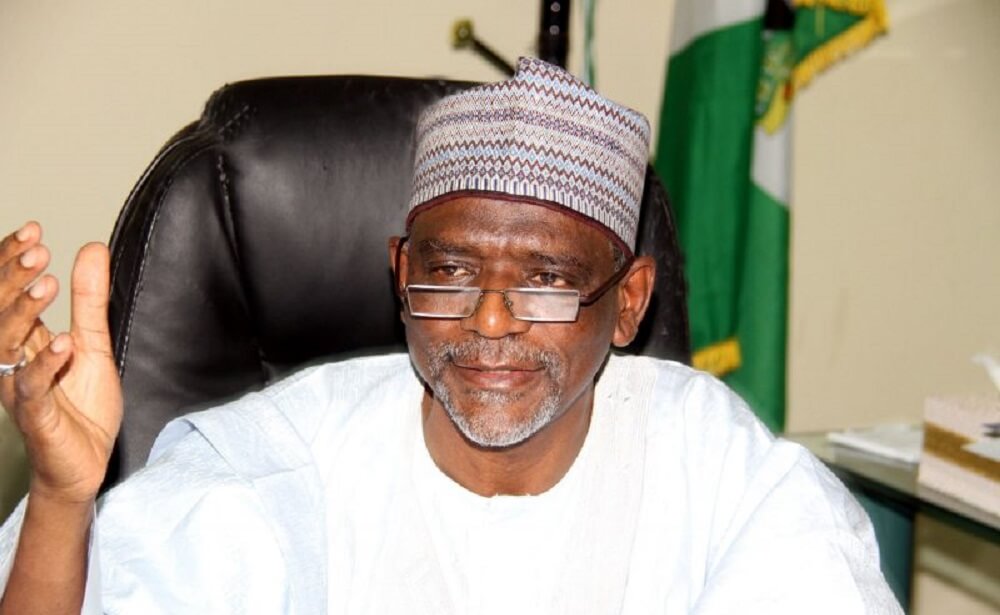
The Minister of Education, Adamu Adamu, has become the subject of public scrutiny lately, after members of the Academic Staff Union of Universities (ASUU) deserted university classrooms for a one-month warning strike to drive home their demands.

To compound Mallam Adamu Adamu’s ordeal, the National Association of Nigerian Students (NANS) President, Asefon Sunday Dayo, threw decency, good English grammar and coherence to the dogs and confronted him for the way forward on these incessant strikes. The Minister, within his rights, could not stomach zingers from the NANS President; hence, he peacefully walked out.

What the Nigerian academics and critics need to crucify Adamu any day is to comb his past articles on the sorry state of education in the country and the possible solutions he highlighted in addressing the anomaly, notwithstanding the practicability or sustainability of the solutions. Blessed with astonishing writing prowess, Adamu doesn’t pull punches whenever he decides to take the government of the day to the cleaners on education.

Mallam Adamu is not alone in the blowback of past written or spoken words. Isa Ali Pantami, Reno Omokri and Reuben Abati are good examples of how venturing into public service can force critics to chew some of their words or elegant analyses raw. They get to see, first hand, the depth of the rot in the system they seek to reform. Moreover, thanks to their fantastic writings, their readers or fans expect them to do wonders, including unrealistic expectations actions.

History is replete with critics who ended up being the worst versions of the people or policies they obsessively criticised. So also, the grave is filled up with critics whose know-it-all dispositions and elegant solutions never get tested.

Criticism is sweet and romantic. However, it is undeniably required to hold elected or appointed leaders accountable as humanly possible. It helps improve a system and checks leaders’ excesses, thereby insulating them from being despots or demagogues.

However, criticism should be accompanied by good knowledge or grasp of the subject matter, moderation, realistic approaches, and viable solutions. The quick urge or attitude of some critics pontificating on, or criticising, everything under the sun without critical thinking is among the reasons many critics presumed as messiahs ended up as disasters.

Nothing humbles most critics like public service. So, they either choose sheer populism or face the realities or challenges that come with purposeful leadership amidst competing demands, meagre resources, criticism and tough decisions, which are often unpopular. With the latter, they get more kicks than halfpence.

As it is true with an onlooker who sees most of the game, their opinions are birthed from the outside on the premise of poor exposure and little information, which invariably make them see complex and daunting challenges as straightforward.

Interestingly, opinions could change due to contexts or circumstances. People learn from exposure, old age or new knowledge. We may find ourselves opposing some views we hold so dear today in the future when we are eventually called to serve the people. Therefore, if you are called to serve the people, don’t hesitate to oblige. However, be ready to get your fair share of kicks and past opinions unearthed.

Abubakar Suleiman writes from Kaduna and can be reached via abusuleiman06@yahoo.com.

Can we tell the truth to ourselves?

By Isma’il Alkasim

Education is the passport to the future, for tomorrow belongs to those who prepare for it today— Malcolm X

Unequivocally, the educational sector requires critical and colossal funding from various stakeholders, whether civil society or a particular individual, not only the government. The intervention programs, which are basically designed to address the critical challenges bedevilling the sector, contribute a greater percentage to the educational sector’s wellbeing. 

The United Nations Educational, Scientific and Cultural Organization has recommended that 20—25% of the country’s budget be allocated to the educational sector to ensure the sector’s effectiveness. 

Notwithstanding, Benjamin Franklin, asserted that an investment in education pays the best interest. This has been a rejoinder to the elites who had no clue what would guide them through, thereby emanating a cohesive plan towards the educational reform.

A concert series of strikes, declared by the Academic Staff Union of the Universities (ASUU), leave a deep scar in the memory of the students whose interest and ambitions were solely dependent upon their studies. And this is a serious threat to the nation where insecurity and poverty threaten the lives of its citizens. The ASUU and the government should understand the gravity of the tension this strike may accelerate.

Furthermore, the last industrial action in 2020 through 2021, which ASUU has spent almost a year striking, led to a gigantic imbroglio to university education. Meanwhile, nearly every university could not fulfil its academic calendar in a duly prescribed time. This strike, all despite a whole year spent due to the outbreak of the Covid—19 pandemic, but both parties, the government and ASUU, had failed to get rid of the strike before the lift of lockdown. This indicates how lackadaisical the government is to prevent the ASUU from continuing an indefinite, elongated, and pervasive strike.

Are we really serious?

Probably, not; we are not serious at all. If the government and ASUU can’t sit and share the same cup of tea to find the lasting solution to this horrendously, repulsive and awful strike, as citizens of conscience can’t hold both parties accountable? Why can’t to come out en mass and protest against the lackadaisical of both parties? It worked in an EndSARS protest, so we need to borrow and use the same language as a last resort.

The worst part of this ASUU—FG drama is that those at the centre of the controversy do not value the Nigerias’ education system. Perhaps, their sons and daughters aren’t the victims of the elongated strikes since they spent or are spending their educational journey abroad; the great countries that have done everything possible to redefine and standardise their educational sectors.

The United Kingdom, for example, had spent at least 900 solid years revitalising and meliorating their educational sector before it came to fruition and privatised the industry. This indicated that the suggestions and recommendations made to the government of Lugards’ amalgamation in 1914 to take a bold step towards commercialising the sector would not yield any positive result. Instead, it’s a giant stride to uplift, breed and enhance corruption in the educational sector. More so, privatising the sector is unbecoming. The reason is that the educational sector is a system that is a babysitter that has weaned and breastfed every individual in the Nigerias’ domain.

How should it be?

On a lighter note, we should embrace ourselves collectively. As a whole entity, we shouldn’t lie to ourselves; there’s a limit to what government can achieve within its capacity about the economic status. This deserves no clarification to any discerning individual, but that shouldn’t be an excuse to circumvent and leave our educational sector (not only universities) in the stage of mediocre. We must value the system to make progress.

The education we are supposed to give our utmost priority is the basic education as the foundation ground and necessary stage for all citizens. But, until we resolve the odds vexing the UBE, the thirst to get rid of our universities’ problems can’t be quenched. So, at this juncture, the clamour to refine and redefine the universities system in Nigeria by ASUU is graceless and unbecoming.

May Nigeria prosper.

Isma’il Alkasim writes from Garki, Jigawa State. He can be reached via kogasgarki@gmail.com.

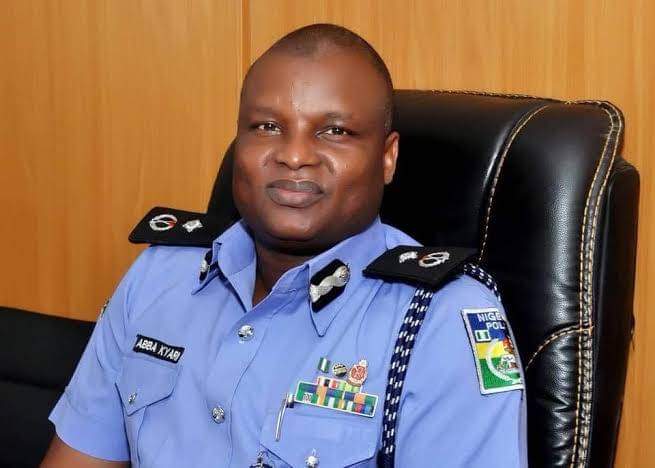
FG moves to extradite Abba Kyari to US

By Sumayyah Auwal Ishaq

The process for the extradition of the suspended Commander of the Police Intelligence Response Team, Deputy Commissioner of Police (DCP) Abba Kyari, to the United States got underway on Thursday, March 22, 2022.

The Federal Government of Nigeria, through the office of the Attorney-General of the Federation and Minister of Justice, Abubakar Malami (SAN), has filed an application before the Chief Judge of the Federal High Court in Abuja for Kyari’s extradition. The AGF said the application followed a request by the Diplomatic Representative of the U.S. Embassy in Abuja.

Recall that a jury filed an indictment against Kyari with the approval of the U.S. District Court and demanded Kyari stand trial for conspiracy to commit wire fraud, money laundering and identity theft perpetrated by Abass Ramon, aka Hushpuppi and four others.

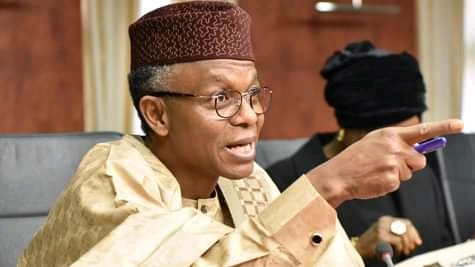
ASUU seeks withdrawal of El-Rufa’i ABU degree

By Ahmad Deedat Zakari

The Academic Staff Union of Universities (ASUU) Ahmadu Bello University branch has advised the institution to withdraw the degree it awarded Kaduna State Governor, Malam Nasir Ahmad El-Rufai.

This was contained in a statement jointly signed by the Chairman and Secretary of ABU-ASUU, Haruna M. Jibril and Hussain A. Abdullahi, released to the public on Wednesday, March 2, 2022.

The statement is an aftermath of a congress meeting held by the union at the Abdullahi Smith Lecture Theatre in ABU.

The union said it discussed the attempt of Elrufai to illegally and forcefully take over lands belonging to ABU despite a court order restraining him from doing so.

According to the Union, El-Rufai’s actions are in contravention of the requirement of character by the institution before awarding a degree. Therefore it becomes necessary to ask for his degree certificate to be withdrawn.

The statement partly reads: “The ASUU- ABU branch at its congress meeting of March 2, 2022, deliberated on the matter of the attempt by Nasiru El-Rufai, the Executive Governor of Kaduna State, to illegally and forcefully in utter disregard of an order by a competent court of law, take over lands belonging to the Ahmadu Bello University, an institution of the Federal Republic of Nigeria and a historic and premier University.”

According to the Union, as contained in the statement, the Congress, therefore, resolved to seek the withdrawal of the El-Rufai degree certificate.

The untold story of Kano’s special education school (I)

By Aminu Adamu Naganye

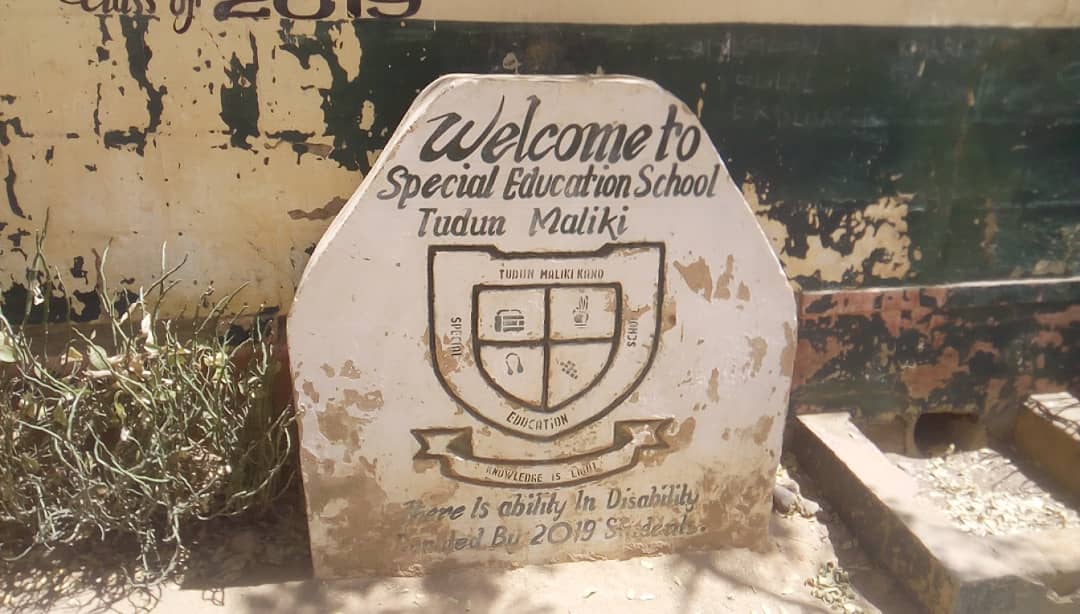
Established as the centre for juvenile delinquents in 1958 and later converted to Special Education School in 1977, it is Kano’s premier and most important school for Persons with Special Needs from Kano and beyond. In part one of this special report, the Daily Reality reporter, Aminu Adamu Naganye presents the general condition of school from classes, furniture to hostels. And how the shortage of learning materials hampers the learning process of the students.

PICTURE 1

Approaching of classrooms in the junior secondary school section of Kano Special Education School, Tudun Maliki, The Daily Reality observed how a teacher was trying hard to obviously settle a fight between two hearing-impaired students. “Judging and settling fights are a daily routine here,” said a smiling teacher who likened their work to that of judges.

Special Education School, Tudun Maliki, Kumbotso Local Government Area of Kano state is a combined boarding school with multiple sections or parts serving the educational needs of persons with special needs (disability) from different parts of Nigeria.

Established prior to Nigeria’s independence in 1958 as a centre for keeping juvenile delinquents, it was later transformed into a school for hearing and visually impaired pupils in 1977. At the inception, the special school “started with four (4) visually impaired students and seven (7) teachers.”

“There are currently about 1500 pupils and students comprising both male and female from different parts of Nigeria,” said our tour guide who teaches at the secondary section of the school. “It has a primary section, junior secondary and senior secondary sections” he added.

“Special Education School Tudun Maliki is a sort of a unity school because its students aren’t only from Kano state. It is a kind of unity school because we have students from all the neighbouring states such as Jigawa, Kaduna, Katsina, and Bauchi. We have students also from Yobe, Taraba, Abuja and even Lagos we have students from there… there are students from different places in this school” narrated a teacher while briefing an NGO team that distributed items to the students.

Although the school director and teachers do not entertain journalists in the school for apparent fear of possible backlash from the authorities who often deny or trivialise the problem, the school accepts NGOs who support the school with learning and teaching materials in addition to supporting the pupils with detergent and laundry stuff. TDR relied on an NGO’s visit to file this report.

It can be recalled that recently the school became a public sensation, especially on social media when some visitors posted dilapidated conditions of the students’ toilets which prompted the Kumbotso Local Government Chairman to come to their rescue by renovating one toilet and constructing another in the school; another philanthropist also built a toilet for the students as shown by a teacher. 

Although there are other special education schools at the primary level for the persons with special needs in Kano, this particular school is actually unique as it allows them to culminate into senior secondary school. “There are primary school sections of this type established by some metropolitan LGAs in Kano. So after their primary education there, they come here to continue to secondary school” said a teacher.

Dilapidated classrooms and hostels, in need of renovation

Considering the fact that there are few special education schools of this type that impart knowledge to persons with special needs in the state, it is expected that this very school should have standard classrooms and hostels for this unique breed of students. However, classrooms at the school were anything but befitting for learning and teaching. “It is not conducive for learning and teaching the state of the classrooms, especially the primary section,” said a teacher, “there are no seats in the classes, and the students sit on a bare floor. The windows and even the doors to the classes are all broken” narrated the teacher as he ushered our reporter into primary six class.

PICTURE 2

The sign language/gesture with which they greeted our reporter tells the fertile minds, hearts and brains eager to learn and expand frontiers of knowledge not just in the hearing impaired community but also in the larger society. With their complete white uniforms, the hearing-impaired pupils look dirty and untidy for obviously having constant contact with bare floor due to the absence of desks and chairs in the class. What is startling is the apparent joyous and smiling faces of these innocent souls full of hopes and dreams as they welcome us into their supposedly learning vicinity. In most of the primary school classes, there was no single chair or desk for the students’ learning convenience. In a class where few desks were available, they were broken and not convenient for sitting, writing and learning. “That is how all of us manage the situation. The teachers and pupils are doing their best in this environment,” said one teacher.

Passing through the students’ hostel blocks, the story is the same. The sorry condition of the dormitory is visible from any angle. Most of the windows are broken and the doors are not any better. “It is terrible when it is very cold because the windows as you can see are broken,” said the teacher in whose company our reporter moved around the school. Similarly, it is terrifying the condition of both the hostels and the beds for the students; the beds are grossly inadequate, leaving many students to sleep on the floor with mattresses alone due to a shortage of bunk. The teacher guide said they pity the students, especially in cold weather but there is nothing they could do personally to help the situation.

Despite our reporter’s inability to get into the hostels but peeping through the broken windows reveals their dilapidated conditions ranging from shattered windows, scratched and cracked walls to badly spoiled ceilings.

A teacher whose identity could not be revealed appealed thus “Government owns the school and it’s doing its best. But I still call on the government to do more. I also call on NGOs and affluent people to come and help, to support government efforts. There are a lot of things to do here. A lot of problems to solve especially in classrooms because you can’t learn in an unconducive learning environment. As you have seen in the primary section of the school, they sit and learn on a bare floor. There are no seats. The windows are broken”  

“We need additional hostels. There is a shortage of even beds. Some students are sleeping on the bare floor of course with either a mattress or mat. We have a lot of students but the accommodation isn’t enough. We need both bunks and a hostel block. Especially during cold weather. If you check the hostel, they need to be renovated. But as the saying goes a ‘single tree cannot make a forest.’ “We hope people and organisations should come and support the government,” he added.

Dearth of teaching and learning materials

The peculiarity of the kind of students of the Special Education School requires unique learning instruments to impart knowledge to them successfully. Although it was relatively easier to teach hearing-impaired students using sign language, a blackboard and chalk-like conventional students, it is more challenging to teach visually impaired students how to write and subsequently read their writings. A teacher corroborated this when he said, “Honestly, we don’t have the material for teaching and learning on the ground…if you take the hearing impaired students there is a little problem because they use learning materials like everyone such as chalk, blackboard, textbook etc. Even though we don’t have textbooks but their parents buy for them.” 

But for the visually impaired students, he explained that “That is where we have a very big problem. Previously, NGOs used to bring learning materials. Now they don’t bring such things. And their (visually impaired) learning materials are expensive, especially if you want to enrol them in primary school you have to buy what is called “slate and stylus” which currently cost around N10, 000. And this slate and stylus is a must if you want your child to study because it is the first learning instrument. So some parents because they cannot afford to buy such material, prefer to keep their children at home and refuse to enrol them in school.”  The teacher however acknowledges that the government supplies exercise books for the students.

TDI came to the rescue, donates hundreds of textbooks

As part of its effort to support and empower adolescents, a Kano-based NGO called Teens Development Initiative (TDI) made a commitment to addressing some of the challenges in the school, especially on learning materials.

Fadhila Nuraddeen Muhammad, Founder and Executive Director, of TDI, told the Daily Reality that they are currently working with the school authority to establish a library for the school. She said they discovered that science-based subjects were not taught in the school because of the absence of instructional materials but the students were eager to learn, hence their commitment to support with the necessary materials, especially textbooks.

She said TDI donated about one thousand books to the school that will be put to the library to make it functional.

“We have already delivered the books to the school. We are planning to raise some funds for the shelves in the library,” she noted.

Our students don’t starve, they have nutritious meals

Despite the challenges confronting the school, the students are not left to starve as one of the visually impaired students revealed. The student, Abdullahi Adamu, confirmed that: “They give us food in the morning, in the afternoon and at night.” In the same vein, a teacher in the school told our reporter that “They get good food here. Some of them cannot get what they get here in their parents’ houses. They are served three meals, three good meals a day. The government provide their breakfast, lunch and dinner. Some of us as their teachers cannot afford what they are being served in our houses.” Another teacher explained further: “In their breakfast, for instance, they are served bread, tea and egg. In the afternoon, they are given food with chicken. It is not everyone that can afford that nowadays. Every Wednesday, they eat a fish meal. In the past, after every two weeks, cows used to be slaughtered. They hardly eat food without meat.”

To be continued in part (II)

Nigeria sets to evacuate citizens from Ukraine

By Ahmad Deedat Zakari.

President Muhammadu Buhari has approved $8.5m dollars for the evacuation of Nigerians stranded in Ukraine.

This was disclosed by the Minister of State for Foreign affairs, Zubairu Dada on Wednesday, March 2 shortly after the weekly Federal Executive Council (FEC) meeting presided over by the Vice President, Professor Yemi Osibanjo at the Council Chambers of the Presidential Villa, Abuja.

Addressing State House correspondents after the meeting, he said the president approved $8.5 million for the evacuation exercise.

” The Ministry of Humanitarian Affairs wrote a memo to the president seeking funding to enable us conduct this exercise. The memo was to the tune of $8.5 million which Mr President has graciously approved. That Provision entails an arrangement to evacuate no less than 5,000 Nigerians” he said.

According to him, the pickup flights would be headed to four countries, which are : Poland, Hungary, Slovakia and Romania.

Dangote, Dantata, others named members of Zakkat Commission in Kano

By Muhammad Sabiu

Governor Abdullahi Ganduje of Kano State has named Aliko Dangote, his uncle Aminu Dantata, and Abdulsamad Rabi’u to the state Zakkat and Hubsi Commission on Wednesday.

Zakkat means a Muslim’s obligation to donate a particular percentage of their wealth to charitable causes each year.

According to the News Agency of Nigeria (NAN), the Commissioner for Information, Malam Muhammad Garba, made a declaration on the subject.
Dr AbdulMutallab Ahmed, commissioner I, and Dr Lawi Sheikh Atiq, commissioner II, are the Commission’s other members.

Following the approval of the Kano State Executive Council, the Board of Kano Zakkat and Hubsi Commission was reorganized, with Dr Ibrahim Mu’azzam Maibushira as Executive Chairman.

Representatives from the state’s five Emirate Councils, the Ministry of Information, the Ministry of Religious Affairs, as well as the Kurmi, Rimi, Kwari, and Singer markets, are among the other members.

The council also approved the formation of the Committee for Screening of International Islamic Organizations.

Job for sale: Jobseekers recount travails in Nigeria

By Uzair Adam Imam

Jobseekers in Nigeria have narrated harrowing tales of how job offer sale decimates their chances of securing jobs in a country where the national economy has remained increasingly stagnant.

According to a recent report by Bloomberg, unemployment in Nigeria has surged to the second-highest on the global list, jumping to 33.3%.

Graduates, who took to social media to condemn the menace, decried how bribery, corruption and politics militate against the growth of institutions in the country.

They argued that buying and selling of job offers are affecting almost all the institutions in the country, as it will be at the expanse of merit and skills

Fraud in employment is believed to be the reason the standard of education in the country continues to witness a fatal decline, and unemployment rises at child’s Christmas wishes.

Graduates narrate harrowing experiences

Every year Nigerian institutions produce thousands of graduates who come out to compete for the few available job opportunities.

A graduate, Usman Bello Balarabe, said that he was once asked to pay N1.2 million for a lecturing job offer.

Immediately he returned to Nigeria from India after bagging his Master’s degree. He was greeted with an outrageous N1.2 million job offer to teach at a Federal University in northern Nigeria.

Balarabe, who was initially over-excited, said his hope was dashed upon learning that it was a give-and-take offer, as he had to break the bank if he indeed wanted to land the job. 


He said, “I was all smiling when I was told, until when I heard him saying that I have to pay N1.2 million to get that offer. The amount shocked me to the marrow”.

Auwal Mukhtar Usman, a university lecturer, said recently someone shopped her job offer for N3.5 million.

He said, “A lady recently confided in me that she bought her offer for about N3.5 million to teach in one federal government agency. It’s equally disheartening how these politicians connive with the university administrators by allocating slots for them. In the end, it is the University that suffers.”

A.S Mohammed also shared his experience, saying that a lecturing offer was advertised to him for N1.5 million in June last year.

He added, “I was asked to bring a potential buyer for a lecturing job offer at the Federal University, Dutsen-Ma, for N1.5 million; no discount whatsoever.

“And it didn’t matter what course the buyer studied or what class of degree he graduated with. That incident stroke me dumb with surprises and left me paralyzed. It took me almost a month to recover from that shock.”

Pay, get promoted

From job offer sale things are worsening to ‘promotion’ for sale, as workers at various institutions in the country pay to get promoted. 

Sa’idu Mustapha Buhari argued that it is not only job offer that is sold, but also promotions are purchased.

He said, “It is not only job offers that are sold.  Promotion, advancement, transfer, release for training, among others, have their prices in some sectors.

“Though fixing Nigeria must be a collective effort, people as individuals must change.

“The bitter part of the story is that: everyone works for himself, not for the people. The sense of nationalism is totally absent among us. That’s why I support the mantra: CHANGE BEGINS WITH ME…If any Nigerian applies this, Nigeria will be fixed,” he added.

Also commenting, a media consultant, Yahya Abdurrahman, stated that the fraud is not only rocking not only the education sector.

He said, “The deeper you dig, the more worrisome information you would come across. Unfortunately, the rot is also prevalent in the Nigerian Police, Customs Service and other Security affiliated Agencies.”

Nigeria’s abuse of creativity and intellectuality

By Sabo Ibrahim Hassan

The seemingly endless abuse of creativity and intellectuality in Nigeria is exponentially becoming pervasive. Perhaps this is one of the primary reasons we are yet to be promoted from the developing class to developed countries. Aside from other countless resources Nigeria is blessed with, humans’ can never be overemphasized. I am not more concerned about the figure; I am rather concerned about the productive aspect of the figure, capable of portraying our competing capacity as a nation.

An endowed nation like Nigeria should not have been where it is if things were managed appropriately. We are so blessed that an average Nigerian can do the unbelievable in terms of intellectual display. Still, because of our disregard for this special gift and lack of governmental support, we ended up losing our best brains to other countries.

Creativity means the use of imagination or original ideas to create something. On the other hand, intellectuality refers to the state or quality of being intellectual, whereas, according to Wikipedia, an intellectual is a person who engages in critical thinking, research, and reflection about the reality of society, and who proposes solutions for the normative problems of society. Only a head with no brain will argue how endowed my country is in this regard. In fact, it is not hyperbolic that an average Nigerian comparatively performs excellently.

Apart from the regrettable failure of the country to identify and tap from the potentials of its citizens, the way our leaders abandon several talented Nigerians is quite irksome. Take, for instance, the report of a boy by Channels TV, who built Nigeria’s first locally-made drone. Another young Nigerian made an electric transformer, another young man from Delta invented a mini flying aircraft without a school degree. Another report is of another young Nigerian by CCT, who built an electric-powered car.

Additionally, a 16-year-old Nigerian who converted his bicycle to a motorcycle as reported by the BBC, will not be left untold. These and many other examples will prove how blessed this nation is with brains. But, does the government empower and support these talents? I will leave this as an open question. Where are these innovative young guys? Don’t be surprised to hear that they are in their various communities wrapped by idleness since the government has no spirit of willingness, let alone be ready to support and promote them.

Another perspective on how the country abuses creativity and intellectuality is how countless dreams have been shattered by our unfavorable, challenging, and careless education system. Many graduates are not the very products of what they aspired to be. On the contrary, the system forced most Nigerians to study what they had never dreamt of or desired. This, in turn, has drastically affected our productivity, where many passionless and zestless graduates are continually added to the already super-saturated labour market.

For instance, ask many graduates about their initial dreams and listen to the wonders that will flow out of their hearts. The issue of requirements regarding a course of choice is an imperative factor contributing to this effect. But, notwithstanding, since our country is not the only nation with a requirements policy. Think about the creativity and enthusiasm of a person whose dream has been shattered.

Elsewhere around the world, custodians are working relentlessly to identify where the talent of its individuals lies, provide them with everything necessary and force their spirit to go along the most appropriate direction. The story is sadly different in my country. If we had utilized our manpower judiciously by doing all necessary to keep them, Nigeria would not have been the giant of Africa nominally, nor would it have been a superpower without power.

More lamentably is how Nigerian medical doctors keep increasing the workforce of countries such as the UK, USA, Canada and many more. Moreover, they are found to be among the best brains over there. The ‘Women and Men report 2021’ by the National Bureau of Statistics revealed that 39,912 doctors were available in Nigeria as of 2017. The number of doctors increased to 44,021 in 2018. But this number reduced drastically to 24,640 in 2019. Again, the president of the Nigerian medical association, Dr Francis Faduyile, also noted that the high rate of insecurity, unemployment, low remuneration, bad roads, and poor healthcare system are some of the reasons doctors are leaving the country in search of greener pastures. He noted that 75,000 Nigerian doctors were registered with the Nigerian Medical Association (NMA), but over 33,000 have left the country.  

It is needless to dwell on the causes of the emigration of these intellectuals. I will instead concentrate on the effects of this negligence and unwillingness by the government to support these brains through providing a healthy environment empowered with cutting-edge technology have on our development as a nation. For instance, a research report by the World Bank revealed that in the Human Capital Index, Nigeria ranks 150 out of 157 countries in the year 2020. Moreover, income inequality and disparity in economic opportunities remain high and have consequently affected the government’s efforts on poverty reduction.

Where on earth will a country that is blessed like mine will remain where my country is? Therefore, we need to stop this dragging attitude. It’s even mandatory if the country is seriously serious about its development. Until our government and other authorities do their work well, we will keep going irreversibly directionless.

Sabo Ibrahim Hassan sent this article via Ibrahimsabohaassan60@gmail.com.