Waqf

Why Not Just Make a Waqf Now?

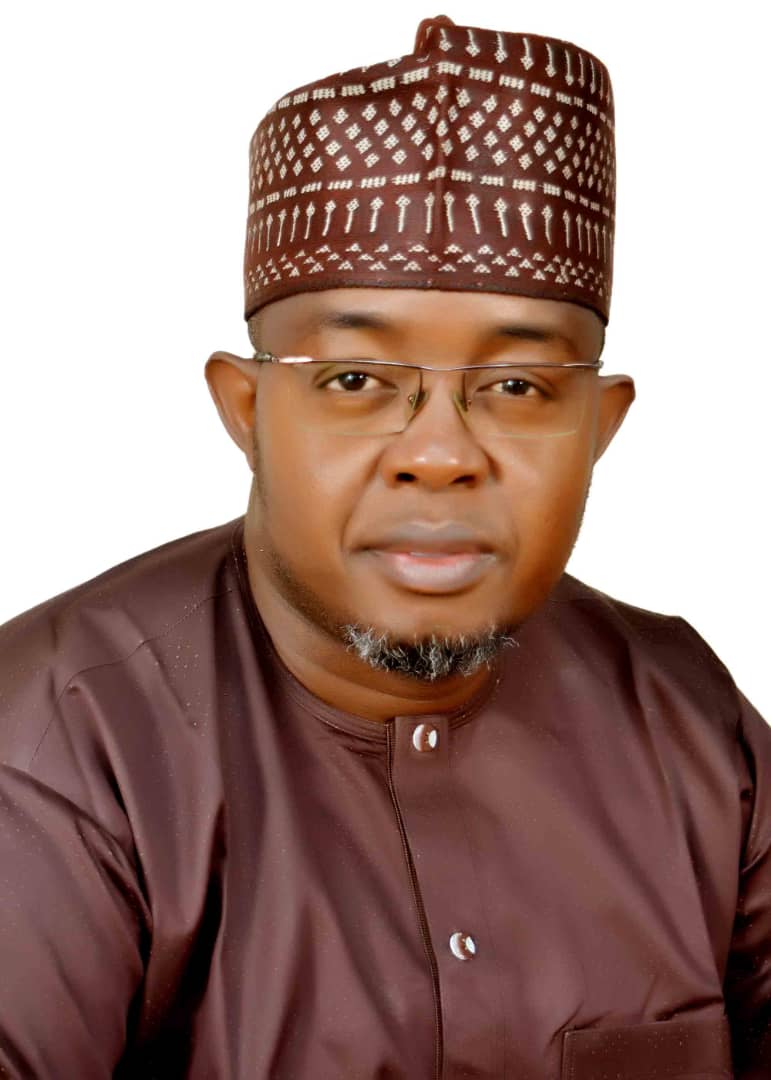
By Abdullahi Abubakar Lamido

I begin, after praising Allah and sending blessings to the beloved Prophet peace be upon him, with three stories from Nigeria. They are all real. The first is of a rich man who died and was survived by a wife and her two children. His estate included mansions in choice areas, high worth investments, company shares, farmlands, etc. This “beloved” wife was advised to make a waqf (perpetual charity) of just a mosque as a source of everlasting reward for the late husband from the hard-earned wealth he spent his life gathering. She was reminded that less than one per cent of his wealth could do it.  The wife answered in one word: “Impossible”! Rather, she offered to cook rice and beans every Friday and give to the begging Almajiris around as sadaqah. To be fair to her, she did so for some months until she met a new darling husband with whom she now enjoys her inherited, halal fortune! End of story!

The second story is that of a religious and highly influential personality who died and left behind several sons and daughters, all of whom had already grown wealthy and influential. The deceased’s bosom friend, who was the custodian of many of his possessions, approached the heirs. He pinpointed a plot of land in a choice area in one of the largest Nigerian cities and offered that if they would designate it as a perpetual charity, he would build an ultramodern Islamic centre there as a waqf for their late father. This, he said, was to create a ceaseless flow of rewards to their late father. Alas! To his face, they simply said no! And the rest is history.

The third is the story of a woman philanthropist who was the wife of an influential person. She was known for her dedication to building mosques, schools, among other charitable interventions. After her demise, the husband learned of several uncompleted mosques and schools that were part of her charitable initiatives. He called her children to a conference and suggested that from her inheritable wealth, they should dedicate what would be enough to complete such ongoing projects. And what a small portion of her wealth was that! They unanimously rejected his offer, departing in a “just give us our money” mood. It was the father who used his resources to finance the completion of the projects. I gather that he was lucky to have learned some lessons here and begin to emulate his late philanthropist wife. He actually increased his budget for Islamic philanthropy as he was already known for charity also. May Allah accept it for him, and for her.

I am sure by now you, my dear reader, have started to recollect several similar stories you have heard on several occasions or which might have even happened close to you. I also have many to share. But these ones suffice as examples. At least for now. What lesson, then, have you learned from this?

Now, remember the Prophetic hadith in which he explains that the moment a person dies, his reward fetching deeds terminate except three; waqf or perpetual charity being the first of them. The other two reward sources are the prayer of a pious child and beneficial knowledge. Interestingly, in the hadith is an equitable distribution of reward sources of some sort. The wealthy folks no doubt have access to the “lion share” in terms of perpetual charity. Beneficial knowledge is the share of the scholars essentially. For the non-rich, non-scholar believer, giving a good upbringing to his/her children guarantees them prayers from pious children and a continuous flow of reward.

Many owners of surplus resources miss the opportunity of making a waqf due to procrastination and other flimsy considerations. By doing so, they deny themselves the most important investment of their lifetime. How can Allah give you the opportunity of making an investment that may pass a millennium fetching you rewards only for you to refuse to do so? Daniel Crecelius explains to us that several waqfs, created for the provision of various social, religious, educational, economic and welfare services free of charge to the public, have survived for five centuries, and some for over a millennium. Now! Imagine yourself, in your grave, receiving “alerts” of rewards daily while charting with the Angels! Can you imagine the amount of reward you would earn by continuously creating benefits, solving problems, drawing happiness to thousands or millions of needy and poor lives for decades, centuries or even a millennium after your departure from this deceptive world? Consider the following stories.

You already know the third caliph of the Prophet, Uthman bin Affan (may Allah be pleased with him). After the migration to Medina, access to water became a great challenge for the believer. They had to buy from a Jew who owned a well called Ruma. The Jew was so wicked, charging exorbitant prices, and making life difficult for the believers. The solution was for the Muslim community to own it. The Prophet peace be upon him announced a guaranteed direct entry certificate to Jannah for whoever purchased it. Uthman did. He surrendered it as a waqf. People now could get water at zero cost. This charity became blessed and continued to expand. During the Umayyad period, it began to grow date palm trees in its surroundings. Many grew. The Ottoman Empire paid particular attention to developing the trees generating income from them. The returns would then be shared into two; a portion distributed as charity and the other saved. Later, the Saudi Arabian authorities opened a bank account in the name of Uthman Bin Affan. They save half of the returns and distribute half in charity. As the savings grew, a hotel was built in Medina, still in the name of Caliph Uthman. Half of the returns is reinvested while the other half, amounting to about 500 million Riyals annually (equivalent to about USD14 million) is distributed in charity. 1400 years of ceaseless reward, thanks to waqf!

Then the story of the great philanthropist, lady Zubaiyda, daughter of Ja’far al-Mansūr, granddaughter of the second Abbasid Caliph Abū Ja’far al-Mansūr; wife of the 5th Abbasid Caliph Hārūn al-Rashīd and mother to the 6th Abbasid Caliph, al-Amīn. Although she died in 216 AH (832 CE) in Baghdad, her source of reward is still yet to! In 186 AH (802 CE), she visited the Holy land as a pilgrim. She then noticed the serious difficulty people experienced in Mecca vis-à-vis accessing water. There were no reliable wells and springs from where to fetch portable water. The people rather relied on rainfall or poor wells that were irregular in providing water. She then ordered her treasurer to look for “world-class” engineers and professionals from different cities to embark on the work of constructing a befitting well. Having observed how difficult the project would be due to the nature of the soil which was rocky and hard, she declared her readiness to pay a dinar for every single digging, until they reached water level. Soon, highly professional engineers and experts flooded Mecca and started work, surveying between hard rocks until they were able to sink the well. In the end, they parted with the dinars and she parted with the never-ceasing reward! She dedicated the well as a waqf for the residents and visitors of Mecca. Water became abundantly available. Water scarcity became history.

But not only this. Zubayda also did a waqf for the waqf; waqf of rentable houses and landed properties for the maintenance of the water wells.  The ‘Ayn Zubaydah has been described as the largest waqf known in history in terms of the cost of its capital, the magnificence of its design, as well as its contributions to welfare in a sustainable manner. Importantly, the Well of Zubaydah, as it came to be known, has remained functional and productive to date. About 1200 years? It is being utilized by the people of the city as well as visiting pilgrims to the Holy land.

Dear reader! Make a waqf. Look around you. Investigate; what is the greatest problem of the poor around you? Food? Water? Lack of a clinic? Lack of a school for their children? Lack of capital for the poor widows who need money-generating ventures? Make a waqf to provide a sustainable solution for them. Build a plaza, a shopping complex, a rentable house, a garden or buy shares and dedicate as waqf for funding such charitable courses. Do not wait for your wife to make sadaqah of rice and beans for you on Fridays! If you want to enjoy your wealth perpetually, why not just make a waqf NOW?


Abdullahi Abubakar Lamido is the Chairman, Zakah & Waqf Foundation, Gombe, Nigeria. He can be contacted via lamidomabudi@gmail.com.
 

Making Waqf a serious business in Nigeria

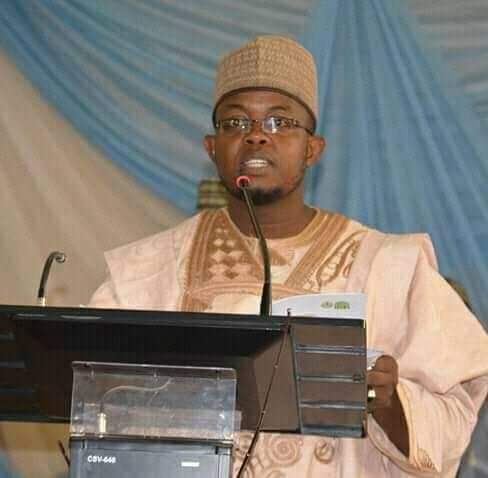
By Abdullahi Abubakar Lamido


Waqf, translated as Islamic endowment, simply means a perpetual charity. As a strategic Islamic socio-economic institution, it entails dedicating a benefit-creating or revenue-generating asset for the sustainable provision of free public services to the society – especially for the less privileged. It can be created by an individual, a group of individuals, a corporate body or even a governmental institution. Waqfable asset is that which is legally owned by the endower and is cable of perpetually creating benefit or generating revenues which would be channelled to defined religious or charitable purposes.

From the dawn of Islam passing through the periods of the companions, Umayyads, Abbasids, Ayyubis and the Ottomans, waqf was maximally utilized as a unique instrument for addressing virtually all aspects of societal religious, economic, educational, healthcare and environmental development needs. In fact, what “substantial historical evidence” suggests, as established by Islamic economic historians like Murat Cizakca and before him, Marshall G.S. Hodgson, is that, “waqf, not zakah was the most important institution for redistribution of wealth” in Muslim history.

Historically, waqf has sufficiently financed virtually all aspects of public welfare and developmental needs, especially education and healthcare. To wit, in the area of education, it was used for building schools, libraries, laboratories, student hostels and lodgings for teachers, scholars and researchers. It also funded scholarships, payment of teachers’ salaries and the provision of food, clothing, learning and instruction materials as well as creating conducive teaching-learning atmospheres. Great Muslim Universities were built as waqfs and have continued to be substantially financed from waqf proceeds. It grew so ubiquitous that “A person can be born in a house belonging to a waqf, sleep in a cradle provided by that waqf, be educated in the school of the waqf and read the books provided by it, become a teacher in the waqf school, earn a waqf-financed salary and at his death be placed in a waqf-provided coffin for burial in a waqf cemetery”.

Relating to health, waqf has been used to build hospitals, clinics and medical laboratories which provide a wide range of free medical services, including surgery. It is documented that it was due to the advancement in service provision through waqf that the need was not even felt for governmental ministries or departments for education and health, as these were fully financed by waqfs.

Education and health were not the only areas of waqf interventions. Waqfs sustainably financed all forms of social, economic and community development services including transportation, environmental protection and beautification among others. At some historical epochs, various Muslim nations relied on waqf sources for a substantial portion of their national income.  Waqfs were used to finance the building and maintenance of mosques, traveller’s lodgings, orphanages, bridges, water-wells, public conveniences, soup kitchens, roads, street lights and gardens.  In fact, in many Muslim communities, waqfs were created for the sustainable provision of all conceivable public welfare services. Until the colonization of Muslim societies, waqf remained a significant contributor to socio-economic development in many Muslim countries. It was colonialism that changed the subject of the formula.

Having realized how waqf provided social, cultural and economic independence to especially Muslim scholars and intellectuals, who incidentally were usually the most resilient class against selfish imperial policies; the colonial “monsters”, implemented well-orchestrated policies that saw to the hibernation of the waqf sector. They syphoned many waqf assets, weakened many, deliberately rendered many irrelevant, and calculatingly destroyed the functioning and autonomy of waqfs by subjecting them to government control. They created governmental ministries that coordinate waqfs, with all the negative consequences of that.

Worth stressing is the fact that western imperialists destroyed the waqf system in Muslim lands only after they had already copied the concept from the Muslim Middle East through the crusaders, and then developed it as an instrument for financing developmental services. In her celebrated 1988 study titled “The Influence of the Islamic Law of Waqf on the Development of the Trust in England: The Case of Merton College”, Monica Gaudiosi established that it was actually the waqf institution that gave birth to the concept of Trusts and Foundations in the West.  Modified and enhanced waqf was used to establish great western institutions such as the Merton College which still shares clear similarities with the waqf institution. And except for a few changes in the English law of Trust, most features of waqf have remained unchanged in the western practice of Trusts till date.

Interestingly, for more than two decades now there has been a growing global waqf reawakening. From the Middle East to Africa, and from the West to the East, waqf consciousness has continued to balloon. Despite the big blow that colonialism did to the waqf sector, making it reduced to merely an atomized institution concerned with financing some aspects of the spiritualties, the global Muslim communities have now rejuvenated their commitment to reposition waqf as a dynamic Islamic, third sector socio-economic institution. Waqf is seen and promoted as an engine of poverty reduction, wealth creation and distribution, employment generation and socio-economic development. In 2016, the World Bank noted that if properly harnessed “even if partly”, waqf, alongside zakah, can eradicate poverty in Africa, the Middle East and Southeast Asia. For a long time, combine global assets are estimated to be close to USD 1 trillion and growing.

Conversely, the story of waqf in Nigeria is largely different from other Muslim communities like Turkey, Morocco, Egypt, Saudi Arabia, and even others like Malaysia, Indonesia and Singapore. Yes, waqf knowledge and practice have existed in Nigeria for well over a millennium. But for several reasons, including historical, it was not comprehensively institutionalized in Nigeria’s pre-colonial history as a holistic, comprehensive socio-economic institution that provides a wide range of public welfare and developmental services. Its knowledge and practice have largely been reduced to the religious waqf, mostly mosques, cemeteries and religious schools. Even these waqfs, hardly had other revenue-generating waqfs for their sustainable funding as obtained in other climes.

But why should waqf be of great significance to Nigerian Muslims? It is of course factual that poverty is largely a Muslim phenomenon in Nigeria. All official statistics show that the states with the highest poverty rate are the Muslim dominated states. The majority of the Muslim population live in sorry conditions of socio-economic deprivations; poverty, hunger, squalor, illiteracy and poor healthcare. Muslims account for the highest number of out of formal schools and vulnerable children. These – combined with other factors – have resulted in rising insecurity and underdevelopment. For long, the solution to this has been largely viewed by many as the sole responsibility of the government. Only a few have realized that while governments have a great responsibility, Muslims can only alleviate their sufferings if they explore, among other things, Islamic socio-economic institutions in addition to agitating for good governance.

One important instrument that can significantly reduce the poverty and socio-economic backwardness of the Nigerian Muslims is no doubt the waqf institution. The flexibility and dynamism of the waqf institution provide for the mobilization of diverse resources in the forms of cash, landed properties, real estate, and other resources, which would be developed and invested, such that their revenues and fruits would be channelled to developmental services.

Nigerian Muslims already have the potentials for this. The long history of Islamic belief and practice, the enthusiasm of the population towards anything connected to Islam, the high spirit of giving that exist within the rich, middle class and even the masses, the availability of Islamic intuitions such as mosques, Islamic schools and media channels, the prevalence of governmental and non-governmental zakah and waqf institutions, among others, all provide a handy infrastructure that can be explored and utilized in the campaign for a new holistic waqf regime in Nigeria.

Particularly, the growing atmosphere of waqf consciousness among the elites and Islamic scholars, as exemplified in the increased awareness creation and establishment of Islamic charitable foundations in especially the last five to seven years, all point to existing opportunities for making waqf a veritable instrument for socio-economic empowerment. All this can also be added to the vast arable land an array of professionals and intellectuals that the Muslim community is blessed with.  It is our opinion that with these and several other potentials, if philanthropic waqf were to be well studied, promoted, institutionalized and maximally harnessed and utilized, poverty would be largely reduced and socio-economic empowerment would be greatly triggered in Nigeria.

In this regard, there is the need to utilize several platforms for waqf discourse such that its potentials would be unearthed, its dimensions analyzed, its impediments examined; goals defined, priorities set and methods of actualizing the dream well spelt out. These platforms should bring together the Islamic scholars, business persons, professionals, community leaders and all important stakeholders to common thinking tables. In the light of this, the AZAWON Newsletter presents itself as a primary platform for debating, dialoguing and analyzing waqf matters (alongside other Islamic social finance instruments).

Scholars, intellectuals, professionals and other concerned citizens are therefore invited to continue contributing articles, reports (written, pictorial or otherwise), opinions, comments and all valuable information that can enrich and smoothen the journey to making waqf a serious business in Nigeria.

Malam Abdullahi Lamido is the Chairman, Zakah and Waqf Foundation, Gombe, Nigeria. He can be reached via lamidomabudi@gmail.com.