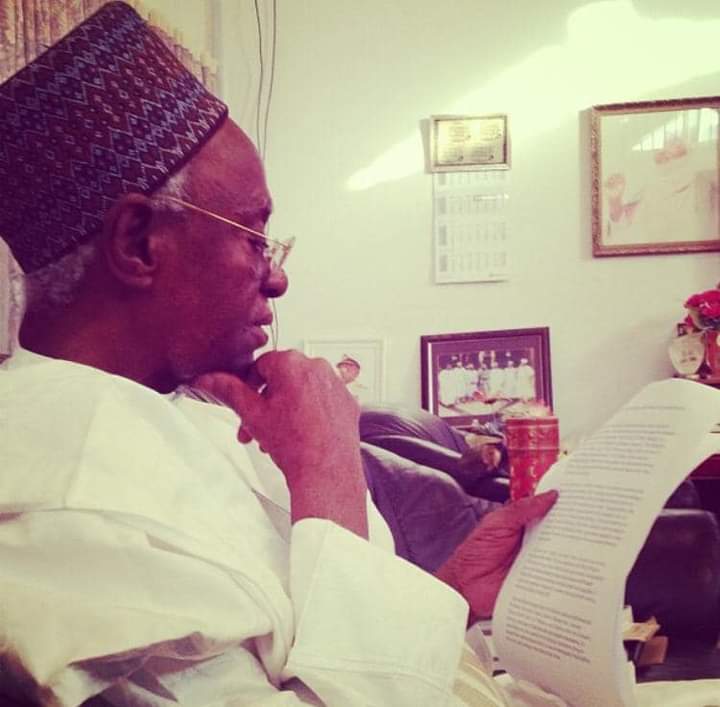
Sokoto

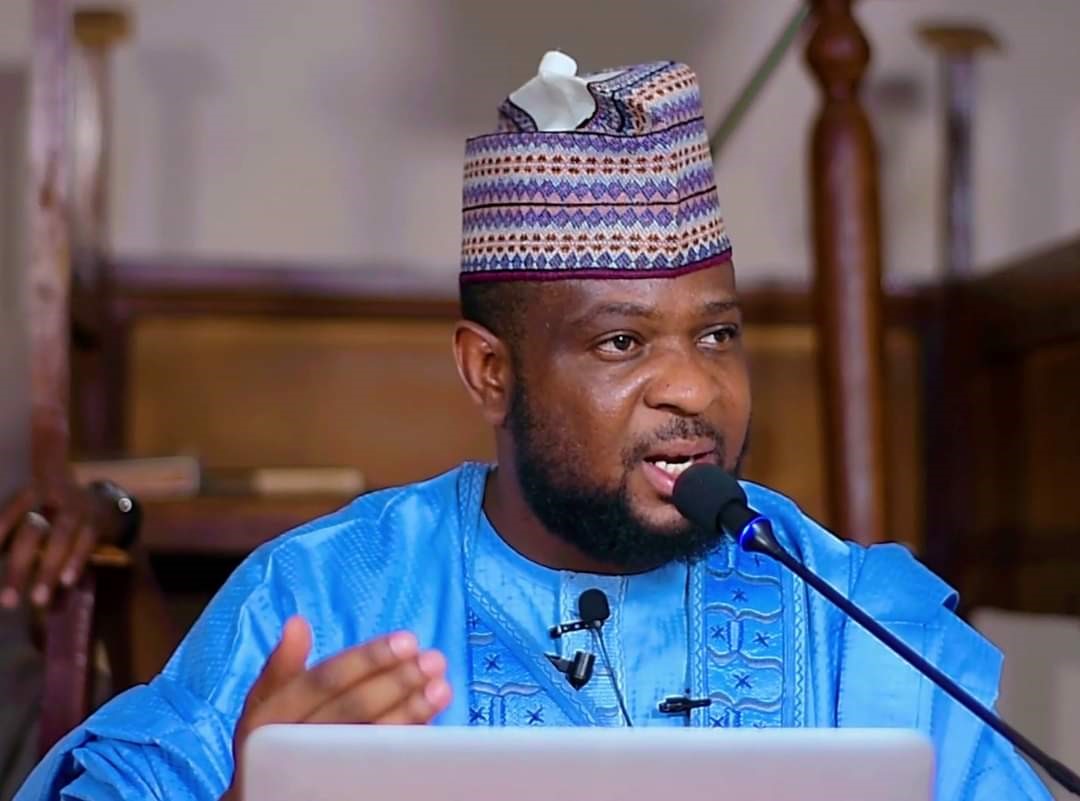
Malam Jabir Maihula: A hero archetype

By Abdulrahman Sani (philosopeace)

The German psychologist Carl Jung proposed archetypes as universal themes within the collective mental frameworks of humans. They represent the primary human drives, impulses, hopes, and desires that shape behaviours, perceptions, and actions. While he identified approximately seven archetypes, my interest lies in the Hero archetype, which symbolizes the relentless pursuit of excellence, growth, and overcoming challenges. I believe Malam is a living example of the Hero archetype.

Malam had a modest upbringing in Sokoto before gaining admission to major in Hadith Sciences at the Islamic University of Madina. After graduation, he furthered his studies with a postgraduate Civil and Criminal Justice diploma at the same university. Upon his return, he began teaching in Islamic schools. His breakthrough came through deputizing for his mentor, Professor Mansur, in his Sahih al Bukhari class.

Malam  as an Academic 

Malam’s primary training was conducted in Arabic. Still, due to his daring pursuit of excellence, he chose the unconventional route of pursuing a Master’s in Law at the University of East London instead of following the familiar path taken by others within his academic circle, which typically involves going to Sudan or Egypt for a Master’s in Islamic Sciences. Malam had to work on his English fluency to pave the way for a more multifaceted academic journey. His PhD journey was equally challenging, pushing the limits of his capabilities. Malam’s PhD was supervised by one of the foremost Taymiyyan scholars in Western academia, Professor Jon Hoover.

I recall calling Malam upon hearing that he had started his PhD and recommending that he look into Professor Hoover. Malam was pleasantly surprised that I knew about Hoover and informed me that Hoover was actually his supervisor. I became acquainted with Hoover through his book, Ibn Taymiyya’s Theodicy of Perpetual Optimism. In less than three years, Malam completed his PhD. He later published a portion of his research as a book titled Ibn Taymiyyah in the Literature of Contemporary Jihadists, an excellent book with a title I have reservations about, but that’s a topic for another article.

Malam’s work ethic as the Head of the Department of Islamic Studies at Sokoto State University was commendable. Despite his popularity and significant social influence, he never allowed these factors to impact his primary duties to his academic constituents negatively.

Malam as a Scholar 

Malam has mastered the social landscape in his relentless pursuit of excellence. The most important lesson from his scholarly life is to stay away from controversies and unproductive verbal spats while remaining true to one’s principles and beliefs. Although Malam is non-confrontational, it doesn’t prevent him from engaging in polarized intellectual discourse. He once wrote a booklet engaging with and critiquing a pamphlet written by one of the Sokoto scholars on a polarizing theological issue. Still, in his characteristic fashion, that discourse didn’t translate into conflict.

Apart from his scholarly rigour and eloquence, an even more impressive trait is his accessibility to all and sundry. He is not merely an ivory tower scholar buried in the dust of books, shielded from his immediate realities. Malam is a Hero archetype who is not afraid to take the road less travelled. He constantly evolves his da’wah to fit the spirit of the times while staying true to tradition.

Malam as a Public Servant 

Malam has just started his journey as a public servant and is making a significant impact with his meticulous approach to public service. I know for a fact that he had no financial incentive to take that job. It was purely out of giving back to his society. He occupies a sensitive position as the commissioner for religious affairs because of the sectarian divides but has been able to navigate those tricky waters and gain confidence across the religious divide.

A good documentary on his official Facebook page delves into his incredible accomplishments within just a hundred days in office. Still, beyond that, I am particularly interested in how he has made Almajiri Education a priority, laying a groundbreaking blueprint and even seeking international partnerships. It is an impossible challenge to overcome for so many reasons, but if there is anyone for it, it is Malam.

I have a lot more to say, but the Arabs have a saying that “the best of speech is that which is concise.” You might have noticed that I have purposefully refused to use the honorifics “Dr” or “Honorable” to describe Malam. It’s because Malam is more important than anything else. Finally, and even more importantly than positive appraisals, is prayer: May Allah guide him throughout this challenging journey of incidental public service.

Abdulrahman Sani (philosopeace) wrote via philosopeace@yahoo.com.

Sokoto cleric challenges official Eid date, observes prayer

By Uzair Adam Imam

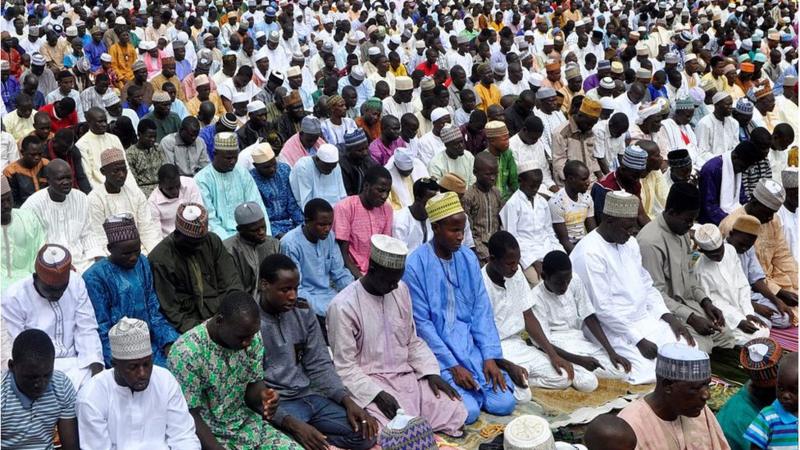
Sheikh Musa Lukwa, a prominent cleric based in Sokoto, made headlines on Tuesday as he led his followers in observing the Eid prayer.

This move came in defiance of the Nigerian Supreme Council for Islamic Affairs (NSCIA), led by Sultan of Sokoto, Alhaji Muhammad Sa’ad Abubakar III, which had declared Wednesday as the official Eid day, marking the end of the 2024 Ramadan fast.

Contrary to the NSCIA’s announcement, Sheikh Lukwa insisted that the crescent moon signaling the beginning of Shawwal, and hence Eid, was sighted in neighbouring Niger Republic on Monday.

He justified his decision to hold the Eid prayer on Tuesday by citing reports and a verified video clip from Niger Republic’s council of Ulamah authenticating the moon sighting.

According to Lukwa, adhering to the teachings of the Holy Prophet necessitated following the declaration made in Niger Republic.

Despite the NSCIA’s assertion and the earlier stance of Saudi Arabia authorities, Lukwa remained steadfast in his belief, leading prayers at his Juma’at mosque around 8:30 am.

This event underscores the ongoing debate and differing perspectives within the Muslim community regarding moon sightings and the determination of Islamic holidays.

He was qouted to have said, “If we can accept that of Saudi Arabia, why can’t we agree with that of Niger Republic which is nearer to us.

“I am not saying all Nigerian Muslims must observe their Eid prayer on Tuesday but we have no moral justification not to observe our prayer on Tuesday because the new moon was sighted by our neighbors.

“And remember there is no fasting on Sallah day, it is prohibited,” the imam stated.

Lukwa has been defying Sultan directives, accusing the monarch of forcing Muslims to accept the moon sighting of Saudi Arabia which he believes is against the tradition of the Holy Prophet Muhammad (PBUH).

The cleric however, challenged any scholar with a contrary view to a public debate.

15 students abducted in Sokoto despite Tinubu’s vow to crush insecurity in north

By Uzair Adam Imam

Bandits have reportedly abducted 15 tsangaya students in a fresh attack Saturday at Gada local government area of Sokoto state.

The Daily Reality learned that several other students are currently missing.

The students were said to have been abducted from their school around 1:am on Saturday.

The attack was coming after President Bola Tinubu on Thursday vowed to crush insecurity in the northern part of the country.

The President was said to have directed the security agents to fish out the perpetrators of these abductions.

The proprietor of the school, Liman Abubakar, told journalists that 15 students were unaccounted for so far after the early morning attack.

Abubakar narrated how the bandits invaded the town around 1 am, shot one person and abducted a woman.

“As they were leaving the town, they sighted our students rushing into their rooms and they kidnapped many of them.

“We have so far counted 15 who are missing and we are still searching for more,” he said

He added that this was not the first time the village was attacked by bandits.

Speaking with the journalists, the member, representing Gada-East Constituency at the state House of Assembly, Kabiru Dauda while has confirming the attack.

He stated that he received a call from the village around 2 am that it was invaded by bandits.

“I reached out to the local government authorities and security agencies and I am sure they are doing something about it,” he said.

However, the Sokoto State Police Command has denied awareness of the attack.

30 women graduate from entrepreneurship training in Jigawa

By Uzair Adam Imam

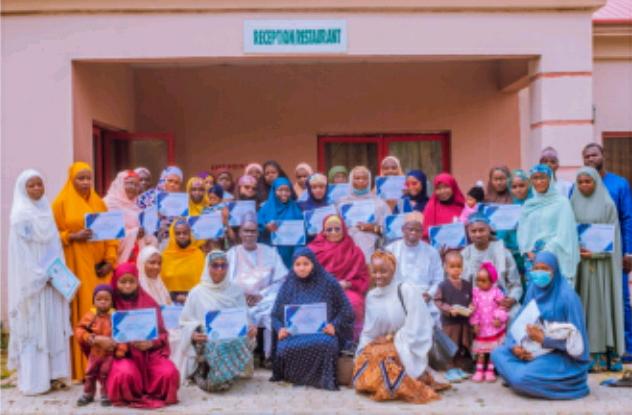
The program, which was designed to foster economic empowerment and gender equality, was launched on Wednesday in Jigawa State by Blue Sapphire Hub in collaboration with the US Embassy in Abuja as part of its transformative Women on Wednesday (WOW) initiative.

The initiative had made significant strides in Kano and Sokoto states.

It aims to equip women entrepreneurs with essential entrepreneurial and digital skills and also alleviate poverty.

The inaugural cohort in Jigawa State comprised 30 women-led small businesses with limited entrepreneurial and digital skills.

Through a series of workshops, mentoring sessions, and networking opportunities, participants were immersed in a supportive environment designed to enhance their business acumen and market reach.

However, key institutions such as the Small and Medium Enterprises Development Agency of Nigeria (SMEDAN), Corporate Affairs Commission (CAC), Federal Inland Revenue Service (FIRS), National Agency for Food and Drug Administration and Control (NAFDAC), and Jaiz Bank collaborated closely with Blue Sapphire Hub to ensure the success of the program.

The participants report increased sales, improved financial management practices, and expanded market opportunities.

The graduation ceremony for the first cohort of WOW 2024 was held on January 25, 2024, with notable dignitaries in attendance, including the Honorable Commissioner of Women’s Affairs, Hajiya Hadiza Abdulwahab, and the Principal Private Secretary to the Jigawa State Governor, Alhaji Adamu Muhammad Garun Gabas.

A highlight of the ceremony was the generous pledge of N1.5 million made by Hajiya Hadiza Abdulwahab on behalf of her ministry and the Jigawa State Government to support the businesses of the WOW participants.

The Jigawa State Government has demonstrated unwavering support for the initiative, actively engaging in its implementation and expansion.

The WOW program is not merely a one-time initiative but rather a year-long commitment comprising four cohorts.

This sustained approach promises continued empowerment and growth for women entrepreneurs throughout Jigawa State.

NUJ Sokoto State Council plans maiden Shehu Shagari Memorial Lecture, late Usman Faruk to receive posthumous award

By Ukashatu Ibrahim Wakili

In honor of the late President Shehu Usman Aliyu Shagari, GCFR, Turakin Sokoto’s legacy, the Nigerian Council of Journalists, Sokoto State Council, is organizing the maiden edition of the Shehu Shagari Memorial Lecture.

This came to the fore at an Extraordinary Congress of the Council held yesterday at the State Press Center. Speaking, the Chairman of the Union, Comrade Tsalhatu Abdullahi Safiyar Magori, of the NUJ, believed that this event would help preserve the legacy of the late President Shehu Shagari and inspire future generations to learn from his works.

“The Council already started making an effort to involve all relevant stakeholders, including the state government, the Sultanate Council, and some elders with proposals, which they hope will receive a positive response,” he said.

The event was proposed to be held on the 25th of February, which is the birth anniversary of the late Turakin Sokoto.

It will feature fundraising for the promotion of his legacies and ideals, such as education (especially sciences), historical literary works, and political documentation of his works.

Also, the NUJ Sokoto Council moved to confer a posthumous award on the late Usman Faruk, the first military governor of the then North-Western State, who donated his building to the council in 1992. The building is now being used as the NUJ’s state secretariat.

Similarly, various committees have been inaugurated at the congress to assist in achieving the collective goals. The committees include a steering committee, contact committee, finance committee, accommodations and reception committee, lecture committee, and speechwriting committee.

Additionally, the committees were given seven days to submit their reports.

Sokoto governor sends 15 students to China for engineering studies

The Sokoto State Government has sponsored 15 indigenous students to study engineering courses in China. 

The chairman of the Sokoto State Scholarship Board, Abdulkadir Dan’iya, confirmed the news, stating that the students, chosen for their academic excellence, will depart in early November. 

The government has allocated funds for their tuition and living expenses, emphasising the importance of investing in the youth’s education.

This initiative reflects the state’s commitment to providing quality education and global opportunities for its students.

Bandits attack corps members, kill 11, abduct others for ransom

By Uzair Adam Imam

There was growing tension among the National Youth Service Corps (NYSC) members when bandits attacked them on their way to the orientation camp in Zamfara State, killing eleven persons among them.

The bandits also kidnapped no fewer than eight corps members to an unknown destination and reportedly demanded a ransom of over 4 million naira.

Our reporters learned that the corps members were travelling in Akwa Ibom Transport Company (AKTC) bus from Uyo, Akwa Ibom State, to Sokoto State, for the one-year mandatory national service, when their vehicle was intercepted by the bandits.

It was also gathered that their driver, who was among the persons abducted, almost lost his life during the atrocious killing by the bandits.

However, three of the corps members were reported to have escaped during the terrorist attack.

Emmanuel Esudue, a graduate in Agricultural and Environmental Engineering from Akwa Ibom State University and Victoria Udoka, a graduate in Mass Communication from the University of Uyo were among the young graduates that were kidnapped by the terrorists.

A source, who noted to be privy to the situation, revealed that the terrorists had contacted the family of one of the victims and demanded a ransom of N4 million.

He said, “Sad to hear that young graduates going for their National Service year in Sokoto have been kidnapped by bandits.

“Both the Federal Government and various State governments should do everything possible to rescue the eight NYSC members.

“Nothing must happen to them oh!!!Some of them included Emmanuel Esudue, a graduate of [sic] Agricultural and Environmental Engineering, Akwa Ibom State University and Victoria Udoka, a graduate of [sic] Mass Communication from University of Uyo.

“At the moment, one of the families, it was learnt have been contacted to pay N4m. Please, this is [a] Federal government matter not the family and should be taking [sic] seriously to save these children from been [sic] tormented further by the wicked kidnappers.

“This is another challenge to the federal government to review deployment of NYSC [members] to nearby states where they schooled due to insecurity rather than posting them across the country.

“May the Almighty God rescue them and let those wicked kidnappers be arrested and brought to book. Their crimes must not go unpunished.”

Professor J.B Adeyanju: An Iroko has fallen

By Zakariyya Shu’aib Adam

It was the first Monday of the first semester in 500 level in the Faculty of Veterinary Medicine, Usmanu Danfodiyo University, Sokoto [U.D.U.S]. As usual, all students who successfully passed 400 level were happy because they have now acquired “stay apparatus.” By stay apparatus, I am referring to the mechanism that enables horses to rest for a long time and have a nap while standing. In this context, it means 500 and 600 level students will no longer be withdrawn from the faculty regardless of the number of courses they failed. In other classes, once a student fails seven courses in a session, he will be asked to withdraw to another faculty.

The first lecture we had in 500 level was on Anaesthesiology. We were expecting a familiar lecturer from the Department of Surgery and Radiology when an agile old man dressed in a knee-length kaftan with a lab coat entered the class. He was averagely tall but wasn’t familiar to anyone of us. Morning lectures usually begin at 8:00 am but this old man was in the class before the time. When latecomers came, he allowed them entry to the class but spent some minutes grumbling as usual of an old person. He disallowed us to jot, yet emphasised on listening to what he was saying. We noticed his name on the chest pocket of his lab coat. Wow! He was the famous professor John Bayo Adeyanju, the great veterinary surgeon talked about by our lecturers.

When he was done with the lecture, the Head of Department of Surgery and Radiology, professor A.S Yakubu came to the class and gave us a brief highlight of Adeyanju’s academic life. He told us that Adeyanju was his supervisor at P.G level and that he taught virtually all professors and doctors in the faculty including the highly cerebral professors A.I Daneji, U.M Chafe and L.B Tekdek. He was one of the early graduates of D.V.M from Ahmadu Bello University, Zaria. He acquired his MSc and PhD in the United States and was a fellow, College of Veterinary Surgeons of Nigeria. Adeyanju was one of the founding fathers of the Faculty of Veterinary Medicine in U.D.U.S. He was one time the Head, Department of Surgery and Radiology and the Director, Veterinary Teaching Hospital. He was a professor for more than three decades.

He taught in many Veterinary Colleges and Universities in Nigeria. He had practiced surgery in Nigeria, Zimbabwe and the United States. He outclassed many professors in both academics and practice. He was arguably the best veterinary surgeon in Nigeria. We were told that whenever he was to perform a surgical procedure, he would not administer any postoperative antibiotic as it is routinely done because he was sure of the sterility of the surgical site and the surgical environment. However, he advised us to give aggressive postoperative antibiotic because in Nigeria, due to the sorry state of our universities and health care systems, it is difficult to evade postsurgical wound infection without antibiotics.

Before his return to U.D.U.S on contract, we heard many tales about him. It was said that he was forcefully retired from the academia by the late Gen. Sani Abatcha as a result of a dissension they had. Although Adeyanju was old (almost 80 years old at the time of his death), he was always punctual to the class. He never missed class. Whenever he noticed that there was no lecturer in the class, he will enter and teach. In his class, every student must dress formally. Lab coats must be fully buttoned and must carry nametags. Clinical students (500 and 600 level) must carry along their thermometers and stethoscopes at all time for emergency purposes.

Professor J.B Adeyanju was a man of wisdom. His method of teaching was unique. He gave little notes and spent much time explaining. He made sure we understand a topic before he moved to another. As an elderly person with an ocean of experience, his teaching hours were full of admonishment. He spoke in parable with an authoritative voice and will often repeat his sentences. That was why many of us memorized most of his favourite quotations. At the beginning, many of us were not at home with the way he did things because we felt that his complaints were much, although it was typical of old people. As time goes on, he became the students’ favourite lecturer.

The great Adeyanju was a conscientious old timer. He always wanted to see things right. One evening after clinical posting, I pulled off my shoes and wore slippers. I equally unbuttoned my lab coat and loosened my necktie. Unfortunately, I met Adeyanju on my way to the hostel. I greeted him but he kept mute as if he did not heard me. When a classmate who was in a formal wears greeted him, he answered, smiled at him and said: “Good boy, you look smart.” A classmate told me that he met Adeyanju with an unbuttoned lab coat. Adeyanju called him and said: “My friend, button up your lab coat. You do not have a broad chest.”

Although Adeyanju may be seen as a strict person, he was equally simple with a good sense of humour. He was used to saying that surgeons speak with their hands. During a surgery practical, he caught a student talking. He came to the student and said: “You talk more than an average woman.” We bursted out laughing. After some time, he came back and saw the student quiet. He sighed and said: “I have sedated him.” He once saw me yawning in the class and thought I was sleeping. He asked me to come out to the stage and spell my name while doing waist twisting. As I began, Adeyanju giggled and the class laughed hysterically.

When we were in Small Animal Clinic, a cat was presented with a complaint of laceration on its right hind limb after it got attacked by hoodlums. I took the history of the case from the client. When Adeyanju came, he summoned us to his office. He asked me to brief him on the history of the case. When I began, I noticed that he was staring at me. I got confused and forgot the correct word to qualify the wound. I said “the hind limb was chopped off by hoodlums”. He furiously shouted at me saying: “Can’t you speek English? Oya! Say it in your native language.”

Adeyanju was a caring teacher. When our teacher M.S Abubakar became professor, he was extremely happy because Abubakar was his former student. He hugged him and asked students to snap them together. He was very close to professors A.S Yakubu and Salisu Buhari. When they completed their fellowship, they were unable to attend the ceremony in Abuja. Adeyanju graced the occasion and brought their certificates to Sokoto. He handed over the certificates to them on a ceremonious day.

Few weeks later, he fell sick and was hospitalised at Usmanu Danfodiyo University Teaching Hospital [U.D.U.T.H]. It was said that he drove himself to the hospital. Professor A.S Yakubu took us to the hospital to see how he was doing. We were frightened when we discovered that the agile and energetic old man could not talk but waved his hands. We prayed for his quick recovery and left the hospital pitifully.

Baba Adeyanju (as we fondly call him) passed away in the evening of Thursday 23rd December 2021. His body was laid to rest but the knowledge he imparted will remain with us and shall be passed to the next generation.

Adieu to the best veterinary surgeon in Nigeria.

Zakariyya Shu’aib Adam is a final year veterinary medical student and writes from City Campus, Usmanu Danfodiyo University, Sokoto. He can be reached through zakariyyashuaib2020@gmail.com

President Buhari, others shun Sokoto tragedy, attend Akande’s book launch

By Sumayya Auwal Ishaq

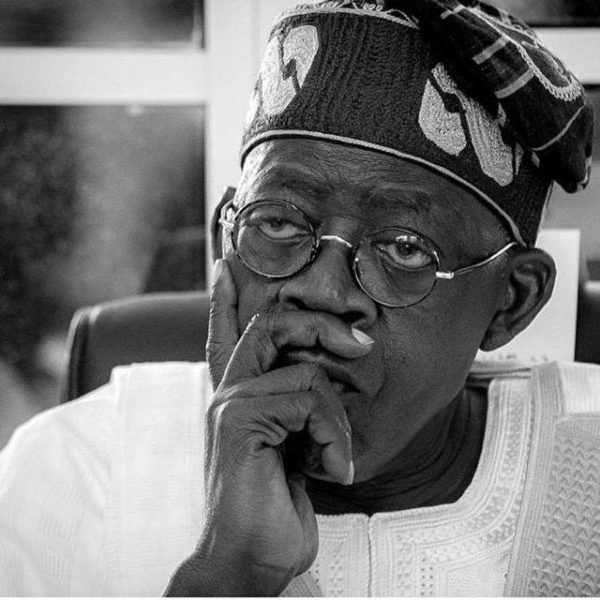
Amid the national grief over the death of 42 passengers burnt by bandits in Sokoto, President Muhammadu Buhari, Senate President, Ahmed Lawan; National Leader of All Progressive Congress (APC), Ahmed Bola Tinubu; Governors of Yobe and Kebbi States, members of the National Assembly attended the public presentation of a memoir of Chief Bisi Akande, titled “My Participations”.
 
President Buhari’s attendance is drawing condemnation from Nigerians who questioned his absence in Sokoto to commiserate with the families of the deceased and his perceived lack of empathy.

Sultan of Sokoto urges resident doctors to end strike

By Muhammad Sabiu

The Sultan of Sokoto, Alhaji Sa’ad Abubakar III, has appealed to the National Association of Resident Doctors (NARD) members to call off their ongoing strike, advising them to embrace dialogue.


Recall that the doctors have been on strike for months in an effort to air their grievances over poor funding.


Speaking on Friday in Sokoto at the 20th Conference of the National Pediatric Surgeons of Nigeria (APSON) opening ceremony, the Sultan made the plea, urging the“doctors also to respect the court order to resume work in the interest of the nation.”


The industrial action should be the “last option in resolving industrial conflict, especially for medical workers whose responsibility has to do with saving lives of citizens,” Alhaji Abubakar said.