Christmas and Easter Holidays: Why our school system should be reviewed
Prof. Abdussamad Umar Jibia
Throughout the week, discussions have arisen following the Christian Association of Nigeria’s (CAN) rejection of the closure of schools in some predominantly Muslim states in the North. In that context, I came across another article published by the Daily Trust on the same topic, written by a Muslim, or at least someone with a Muslim name; I cannot ascertain his faith.
This morning, I took some time away from assessing my students to read the articles. It is unfair to respond to a statement that one has not read.
I read the press release by CAN a few times over, hoping I might find some wisdom. Unfortunately, I couldn’t. CAN is its usual self, apprehensive of anything Islamic out of fear of losing relevance.
Christianity in Nigeria, as I often say, is merely surviving due to the presence of Islam. For instance, if Muslims were to cease going on hajj, all the Christian pilgrims’ boards, including the central one in Abuja, would naturally wither away. It is only when Muslims discuss Shariah that Christians recall the existence of Ecclesiastical law, which many of them know little about. The examples are numerous.
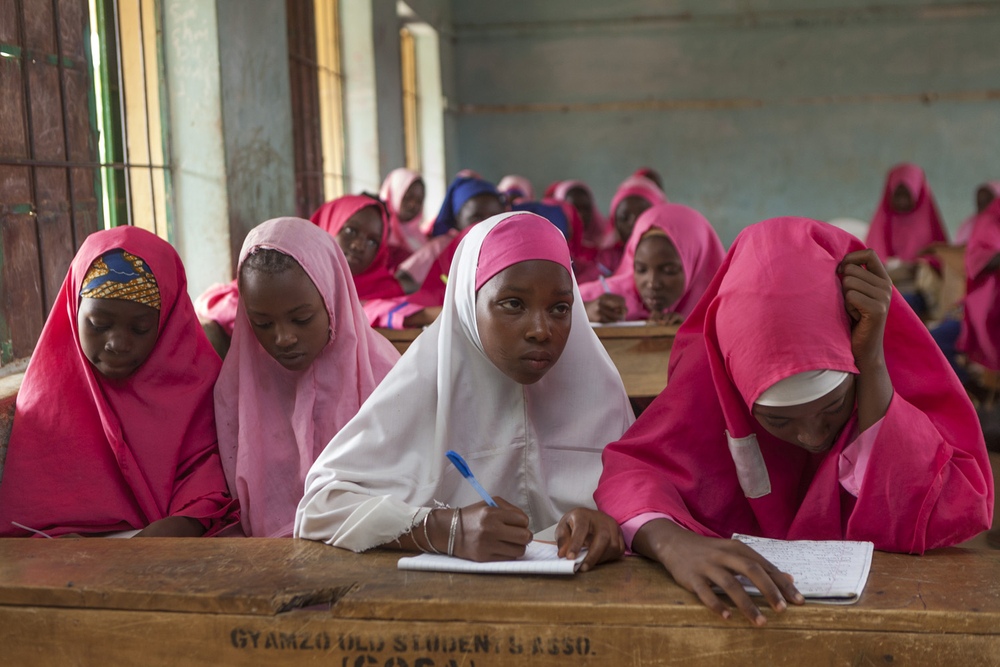
This time around, CAN understands that closing schools “for an extended period disrupts academic schedules and threatens the educational advancement of millions of students”. What CAN has forgotten is that Nigerian schools have always been closed for the same “extended period” of at least one month since our colonial days for Christian festivals. In fact, the Nigerian school calendar is designed to close all schools for at least two weeks each for Easter and Christmas celebrations.
The Christian holidays have been officially recognised and embedded in our school calendar in a so-called secular country. If CAN were concerned about religious balance, as they falsely claim, they would have advocated for the cancellation of the Christmas and Easter holidays and proposed something neutral.
Archbishop Daniel Okoh, the signatory to the press release, wanted Nigerians to believe that the closure of schools during Ramadan would compromise the education of Christian children and devalue Christian communities in the North. This is an admission by the CAN President that the education of Nigerian Muslim children has always been compromised and that Nigerian Muslims have no value in Nigeria since their children are forced to remain out of schools for Christian festivals.
I am waiting for the CAN President and his team to go to court as they have threatened. What I would like to assure them is that Nigerian Muslims are now wiser. CAN hasn’t yet seen anything. All traces of Christianity as imposed on other Nigerians must be removed from our national life. It is just a matter of time.
The opening argument of the Daily Trust writer is that there is no single injunction in Islam mandating the closure of schools during Ramadan. I wish he would tell us where Islam mandates the closure of schools for Christmas and Easter. Islam is a complete way of life. Isn’t that what he is trying to argue? Does Islam not prevent us from blindly copying Jews and Christians?
From the beginning, Muslims have paid for the unity of the North and, indeed, Nigeria with their religion and, in some instances, their blood. This must stop at some point. If we are to remain united, then the rights of Muslims must be acknowledged and granted.
The people who colonised us were Christians. This explains why Christianity is ingrained in almost every aspect of our national life. Now that Muslims are expressing dissent, some people are calling for unity. A shared Northern identity? Yes. One Nigeria? Yes. One religion? No, we are Muslims and will not continue to accept the imposition of another religion upon us.
Finally, let me call on our Governors and, indeed, the Federal Government to embark on a comprehensive reform of our school system to align it with our values and beliefs. All neocolonial items should be removed.
Prof. Abdussamad Umar Jibia can be contacted via aujibia@gmail.com.