Northern Nigeria

NAF airstrikes eliminate bandit leaders in Zamfara

By Uzair Adam 

The Nigerian Air Force (NAF) has announced the successful elimination of several bandits during airstrikes in Babban Kauye village, Tsafe Local Government Area of Zamfara State, on November 15.  

In a statement issued on Sunday, the Director of Public Relations and Information, Air Commodore Olusola Akinboyewa, disclosed that the operation, under the framework of Operation Fansan Yamma, targeted a large assembly of bandits in the area. 

The airstrikes, part of Operation Farautar Mujiya, were aimed at degrading the operational capabilities of notorious bandit factions in Northwestern Nigeria.  

Akinboyewa noted that intelligence reports had revealed the bandits were planning coordinated attacks on military personnel and civilians in the Tsafe axis. 

Acting on this information, NAF executed a series of airstrikes, resulting in significant casualties among the bandits, including key loyalists of infamous leaders Dan-Isuhu and Dogo Sule.  

“Reports from the ground confirmed the successful elimination of numerous high-ranking members of these groups, delivering a severe blow to their operations,” he said.  

Tsafe Local Government Area has long been a hotspot for bandit activities, with Babban Kauye serving as a strategic safe haven for their operations. 

The recent airstrikes are part of ongoing efforts to dismantle bandit networks and restore peace to the region.  

Air Commodore Akinboyewa reaffirmed NAF’s commitment to collaborating with other security agencies to eliminate threats posed by bandits, terrorists, and other criminal elements across the country.  

The air component of Operation Fansan Yamma continues to intensify efforts to secure the Northwest and ensure the safety of its residents.

The rise of sharenting: Navigating parenting in the digital age 

By Amrah Musa Kamaruddeen

In today’s digital era, a new phenomenon known as “sharenting” has emerged, where parents extensively share photos, videos, and updates about their children on social media platforms. This blend of sharing and parenting has sparked a lively debate, raising questions about privacy, consent, and the long-term impact on children.

For many parents, social media offers a convenient platform to document and celebrate their children’s milestones and daily adventures. It provides a way to connect with family and friends, especially those far away. Sharing these moments can foster community and support, allowing parents to exchange advice and experiences.

However, the practice of sharenting has prompted significant privacy concerns. Once images and information are posted online, they can be difficult to control. Photos can be shared, downloaded, and even misused by strangers. 

The permanence of the internet raises questions about how these digital footprints might affect children as they grow older, especially when they begin to establish their online identities.

Another critical issue is consent. Young children cannot give informed consent to having their lives shared online. As they grow, they may feel uncomfortable with the digital trail left behind by their parents’ posts. This raises ethical questions about children’s rights to privacy and autonomy over their personal information.

The psychological effects of sharenting are still being explored. Some experts suggest that children might feel pressure to perform for the camera or struggle with the idea that their lives are being broadcast without input. On the other hand, positive reinforcement from family and friends can boost a child’s self-esteem, suggesting a nuanced impact.

For parents who wish to navigate sharenting responsibly, several guidelines can be considered:

1. Privacy Settings: Use strict privacy settings on social media accounts to limit who can see your posts.

2. Consent: As children grow older, involve them in discussions about what gets shared and respect their wishes if they prefer not to be featured online.

3. Limit Details: Do not share sensitive information such as full names, birth dates, or locations that could compromise your child’s safety.

4. Think Long-Term: Consider the potential long-term effects of each post and whether it might embarrass or harm your child in the future.

5. Digital Literacy: Educate children about the implications of digital sharing and the importance of privacy from an early age.

As technology continues to evolve, so too will the dynamics of parenting in the digital age. Sharenting, while offering opportunities for connection and celebration, demands careful consideration of privacy, consent, and the well-being of children. By adopting mindful practices, parents can safeguard their children’s present and future in the digital realm.

Amrah Musa Kamaruddeen wrote from the Mass Communication Department, Bayero University, Kano.

The ripple effects of small acts of kindness

By Usman Muhammad Salihu

In our busy lives, we often overlook a fundamental truth: sharing even the little we have can bring blessings, not only to others but also to ourselves. It does not require grand gestures; sometimes, small acts of generosity can profoundly impact lives and brighten the world.

Sharing fosters connections between people, whether with friends, family members, or strangers, reminding us of our shared humanity. Offering our time, food, or clothing creates a deep sense of joy and fulfilment, and the knowledge that you have made someone else’s day a little better is a reward in itself.

What may seem insignificant to you could mean the world to someone in need. An extra meal or a warm blanket could make the difference between hardship and comfort for someone less fortunate. Sharing eases others’ burdens, inspiring them and others to pay kindness forward, creating a cycle of compassion that can transform communities. It also fosters gratitude, helping us recognise and appreciate our blessings, however small.

Across cultures and beliefs, there’s a common understanding that generosity brings blessings. The universe rewards those who give, often in ways that go beyond material returns. By sharing, we also reduce waste and better use our planet’s resources, contributing to a more mindful and sustainable world.

Even the simplest act of kindness has a ripple effect, touching more lives than we can imagine. It’s not the size of the gift but the spirit in which it’s given. A warm smile, a meal, or a helping hand—each act of sharing has the power to uplift and transform. Never underestimate the profound impact of generosity. In giving, we receive life’s truest blessings.

Usman Muhammad Salihu was part of the pioneer cohort of the PRNigeria Young Communication Fellowship and wrote from Jos via muhammadu5363@gmail.com.

Award-winning essayist Maimuna Abubakar graduated with a first-class from ABU Zaria

By Idris Hassan

A student of Ahmadu Bello University (ABU) Zaria, Maimuna Abubakar, who beat other contestants across the world last time to emerge 3rd in an International Essay Competition organised in the United States of America, has graduated with a first-class degree in Sociology (the third person in the department’s history to graduate with a first-class), after Muminah Musa Agaka, who first broke the 38-year record. 

Maimuna Abubakar is someone I have been mentoring since my time at ABU, Zaria. She’s from Niger State and has always been eager to listen and learn. She lost her mother a few years ago, which was a difficult period for her. 

I recall the last time she asked me if there was anything she could work on, as she often does. I mentioned an essay competition in the US that I wanted her to apply for. She responded, “Sir, that’s for people like you. I don’t think I am a good fit since I know so little.” I laughed and encouraged her to submit her entry. We discussed her ideas critically, and she wrote something she sent me for proofreading. After reviewing it, she submitted her essay and won third place.

Maimuna is a writer, poet, and much more. She graduated as the best student at her level in the Department. Maimuna is also a trained teacher with over five years of experience. During school breaks, she makes dresses, loves writing, and especially enjoys reading. 

She was Amira of the Muslim Students Society of Nigeria (MSSN) ABU, Chairperson of the NSASA Academic Committee, and Secretary of the NSASA Editorial Committee in Zaria. Maimuna aspires to be a Public Health Professional or a Social Psychologist. Given her dedication and achievements, I believe the Niger State government needs to acknowledge and reward her efforts.

Applied Worldwide is a project founded by Stephanie Wilson and Luke Hanna in the United States. It believes in a dynamic sociology in which sociological knowledge is produced and applied to enact positive changes in communities worldwide. 

Applied Worldwide organises an international essay writing competition to inspire students in the field and help foster change through a sociological lens that Applied Worldwide aims to bring. You can also try your luck.

An open letter to the executive governor of Jigawa State

By Dr Najeeb Maigatari

Your Excellency, I hope this letter finds you in good health. As I do not have the means through which my message could reach you, I am compelled to write this open letter to draw your attention to a menace threatening our healthcare system. That is the well-known Japa syndrome that has recently plagued our dear State.

I want to extend my heartfelt condolences to you and the good people of Jigawa State over the tragedy that befell the people of Majia a few weeks ago. This unforeseen event led to the loss of lives of over a hundred people and left several others with varying degrees of injuries. My heart goes out to the bereaving families of all those affected, and I pray that Allah repose the souls of the deceased and heal the injured. Amen.  

Returning to the purpose of writing this letter, Your Excellency, I would like to provide some details about how our dear state used to be. It was undoubtedly one of the states with the best healthcare systems and the highest number of practising medical doctors in Northern Nigeria. At one point, it was akin to a medical hub attracting patients and medical professionals from neighbouring states due to its subsidised healthcare, efficient service delivery, and overall welfare of health workers and patients. 

Since its creation in the early 1990s, the State has made giant strides in providing its citizens with effective and reliable healthcare services. To mention a few, various successive administrations have invested heavily in training Medical doctors and other health professionals, within and outside the country, in varying capacities to ensure effective healthcare delivery to the good people of the state. 

Similarly, Jigawa State has awarded scholarships with bond agreements to local and foreign medical students since time immemorial. It has produced medical graduates from various reputable institutions within and outside the country. In addition, it was one of the pioneer states among its peers to implement the sponsorship of medical doctors through postgraduate medical training programs to further their studies, a policy several other states would later adopt. 

Your Excellency, I can say with immense pride that our healthcare system performance score was impressive overall. It used to be one of the best in the country. The services rendered were affordable and accessible to the masses, and the welfare of patients and healthcare professionals was optimum. For instance, at some point, healthcare workers in Jigawa State were earning more than their federal counterparts. 

Unfortunately, things have now taken a turn for the worse. Our healthcare system is not only ‘underperforming’ below standard by all measures but also one of the worst in the country. We are now a shadow of our past. Jigawa State has a patient-doctor ratio of 1:35,000, far exceeding the WHO recommendation of 1:600, making it one of the states with the worst healthcare systems in Nigeria. This is indeed a troubling situation. 

Over the past few years, Jigawa State has witnessed an unprecedented mass exodus of medical doctors to other neighbouring states owing to poor welfare, overburdening workload, and inadequate health facilities in hospitals, among other factors. Regrettably, this internal Japa syndrome ravaging the state continues to overstretch our already fragile healthcare system. 

To put things into perspective, according to data obtained from the Nigerian Medical Association (NMA) Jigawa State branch from 2013 to 2024, of the 264 doctors who reported back to the state for bonding agreements, only 40 stayed after completing their terms. This is to say that more than 220 medical doctors have left to continue their careers elsewhere because Jigawa is fast becoming a nightmare and a difficult place for medical doctors.

It is worth noting that the state produced over 500 medical doctors (both foreign and locally trained) during the same period. Still, only 214 are on the state payroll, of which only 77 are currently manning the state’s primary and secondary institutions. They are about to round up their bond agreements by the end of the year; 89 are in training as either house officers or doing national service. The state has less than ten consultants and only 12 doctors in residency training. Altogether, fewer than 100 doctors attend to a population of over 7.5 million. 

This data suggests that while the state is doing a good job at producing medical doctors (both local and foreign), its retention capacity is very poor. The State will be left with no Medical doctors in the coming years if things continue at this pace. It has to either employ doctors from neighbouring states or overwork the few that stay to death if at all there would be! Your Excellency, this is only the tip of the iceberg as far as this crisis is concerned. This menace has no end. 

As a citizen concerned about the interests of Jigawa State, I implore you to declare a state of emergency on health in Jigawa State and engage with relevant stakeholders to find a way to end this worsening Japa syndrome, which is wreaking havoc in our dear state.  

The most crucial step to addressing this issue is the urgent need for the improvement of the overall welfare of the few Medical doctors and other healthcare professionals left in the state who are already struggling with chronic fatigue due to overwhelming patient workload. This singular act will not only boost the morale of these weary Medical professionals but relieve them of their burden. Still, it will also attract others from various States to compensate for the acute shortage of Medical doctors in the state. It will also improve the effectiveness of healthcare services delivered to the people. In other words, we can go back to our glory days. 

 Various States have already employed this strategy. Your Excellency, Jigawa State can not afford to lose the doctors it invests heavily in. This could amount to a work in futility! 

In addition, the government should seriously consider domesticating the Medical Residency Training Fund (MRTF), which will help train experts in various medical specialities in the state. This would help address the shortage of registrars and consultants in our tertiary facilities and provide an avenue for a healthy and excellent research environment in the State.

Other measures include equipping our already existing hospitals with state-of-the-art facilities and subsidising healthcare services, especially to women, young children and those suffering from such chronic debilitating conditions as sickle cell disease and chronic liver and kidney diseases. Your excellency, I believe these are some ways that could help end this menace threatening our very existence, help revitalise the State’s healthcare and improve its delivery to the citizens of Jigawa State. 

 Najeeb Maigatari is a Medical doctor. He writes from Dutse, Jigawa State, via maigatari313@gmail.com.

A work template for the new minister of livestock development

By Zayyad I. Muhammad

Nigeria boasts one of the largest cattle populations in Africa, ranking among the top on the continent. Over 20 million cattle are primarily concentrated in the northern regions, including states such as Adamawa, Borno, Kaduna, and Kano. 

The new Minister of Livestock Development, Idi Mukhtar Maiha, faces a complex and tasking job in three key ways.

First, the newly established Ministry of Livestock Development has high expectations from Nigerians. The ministry oversees and develops livestock policies, manages animal health and disease, improves breeds and genetic resources, enhances farming and production systems, supports rural livelihoods, and modernises livestock marketing and trade.

From an informal perspective, expectations will focus on how the minister will transform the lives of nomadic cattle herders from uneducated and nomadic to more settled, everyday lives while also addressing the farmer-herder conflict and the notorious practices of cattle rustling, banditry, and kidnapping for ransom, which are prevalent among some cattle herders.

Mukhtar’s second challenge lies in his background; he has spent most of his career as a technocrat at NNPC. Whether he knows it or not, he will inevitably experience the bittersweet realities of politics. Once appointed as a minister, one automatically assumes a political role. Mukhtar must navigate this transition, deciding whether to embrace full-time politics or attempt to balance his technocratic expertise with his political responsibilities. 

Furthermore, few people in Adamawa know him despite his former role as Managing Director of the Kaduna Refinery, a Petrochemical Company (KPRC). As a result, many may perceive him as elitist and aloof, particularly in an inherently people-centred position.

Mukhtar’s third challenge stems from the performances of his two predecessors from Adamawa, Mohammed Musa Bello and Prof Mamman Tahir, which many Adamawa people view as less than stellar. Their tenures have left a mixed legacy, leading to scepticism about Mukhtar’s ability to bring about something new and different. 

To distinguish himself, Mukhtar must work diligently to establish his identity and a positive track record. This task is particularly crucial, as he shares several traits with both former ministers, which could lead to assumptions about his capabilities and approach. By demonstrating effective leadership and addressing the needs of the people, Mukhtar can overcome this challenge and build a reputation that sets him apart.

With an impressive CV as a technocrat and practical knowledge of livestock management, Mukhtar’s Zaidi Farm stands out as a well-integrated enterprise that applies world-class best practices in animal husbandry. Given this background, we expect him to introduce innovative approaches to livestock management by benchmarking against countries renowned for their success in this field, such as New Zealand, Australia, the Netherlands, Denmark, Brazil, Ireland, and the United States. These nations have excelled in implementing efficient and sustainable livestock practices, utilising advanced genetic research and technology to enhance productivity. However, Mukhtar’s journey will be sweet and bitter, mainlydepending on his approach to leadership, public relationships and policy implementation. By embracing collaboration and leveraging global best practices, he has the potential to make significant strides in transforming the livestock sector.

Zayyad I. Muhammad writes from Abuja, zaymohd@yahoo.com

The state of Nigeria’s public health sector 

By Fatima Dauda Salihu 

Health is a fundamental priority that any government should address. When citizens are healthy, the entire state benefits. However, it is disheartening when the government neglects its health sector. 

The Federal Government of Nigeria has increased its expenditure on public health over the years to enhance public health outcomes, but much still needs to be done. Public health requires ongoing efforts, and continuous improvement remains a crucial goal. The numerous and serious healthcare challenges in the country arise from poor health infrastructure, inadequate education, hygiene and sanitation issues, and extreme poverty and hunger.

The Health department plays a critical role in educating people about unforeseen infectious diseases and interventions for alleviation. 

Public health infrastructure provides communities, states and the nation as a whole with the ability to prevent diseases, promote health and respond to both ongoing and emerging challenges to health. 

Since its independence, Nigeria’s health sector has been named one of the worst in Africa. Issues include lack of coordination, fragmentation of services, scarcity of medical resources, including drugs and supplies, inadequate and decaying infrastructure, inequity in resource distribution, and access to care. 

According to the National Institute of Health, the Nigerian healthcare system is poorly developed and has suffered several setbacks, especially at the local government level. No adequate and functional surveillance systems have been created;hence, there is no tracking system to monitor the outbreak of infectious diseases, bioterrorism, chemical poisoning, etc. 

Nigeria’s hospitals and emergency services do not meet world standards. The availability of healthcare institutions and professionals is limited, while long distances travelling for healthcare are not affordable. The healthcare costs and expenditures related to the prevention and treatment of diseases are rising. 

Many primary healthcare centres across Nigeria are dilapidated, have low staff, have poor electricity, and have unclean water, and they cannot efficiently serve people in rural areas. Many pregnant women still seek the services of traditional birth attendants for delivery, and even many children in rural areas miss out on routine immunisations, which are meant to be one of the responsibilities of effective primary healthcare centres. 

Due to the poor state of the health sector, there has been a constant mass migration of doctors and health professionals out of the country. This relates to ongoing strikes and poor working conditions in healthcare delivery centres. The challenges faced by Nigeria’s healthcare system include inadequate hygiene and sanitation, insufficient financial investments, and alimited workforce and facilities. 

Establishing healthcare institutions and insurance schemes, increasing the workforce, and improving hygiene and treatment conditions can help address these challenges. Implementing policies for maternal health and healthcare reforms can lead to better health outcomes. 

Fatima Dauda Salihu wrote from Bayero University, Kano.

Fueling social media firestorm: How a national tragedy turns into national hate

By Kabir Fagge Ali

As the country mourns the unfortunate and catastrophic tanker explosion that claimed over a hundred lives in Majia town, Taura local government, Jigawa State. The circumstances leading to this devastating event, and its unfolding discourse on digital space leave a bitter taste.

If past events of such nature didn’t serve as a pointer, one would have been forced to argue that the deleterious economic hardship Nigerians are currently undergoing played a significant factor in the circumstance warranting people to desperately attempt to scoop up fuel from a fallen tanker that is highly flammable. However, one cannot, in all honesty, overlook the impact of economic hardship instigated by the “so-called reform” of this administration.

While the explosion was a profound tragedy, what followed on social media turned a devastating accident into a platform for spreading hate. Netizens took to various platforms to condole, analyze, obfuscate, sympathize, and attack the dead in a typical Nigerian fashion of ethnicizing, religionizing, politicizing and regionalizing events. What should have been a space for empathy, turned into a hub for anger, with users blaming specific ethnic groups for what they called “ignorance” and “greed.” 

The horrific event became weaponized by those seeking to stoke division and deepen the fractures within Nigerian society. One @AdemolaSola38048 on X wrote, “E no go better for their dead body”, another, @Peterojueromi posted “Well, I no pity them sha, na their stupidity kill dem”.  How does a tragedy of this magnitude turn into an avenue for deriding others?

Instead of offering sympathy or proposing solutions, many used the incident as an opportunity to fuel long-standing ethnic, regional, and religious tensions. Blame was cast on entire communities for the reckless actions of a few, with harsh, derogatory terms being used to describe those who were simply trying to survive in an environment where economic opportunities are scarce.

Speaking on this incident, the former Head of the Department of Mass Communication at Skyline University, Nigeria, and an expert on hate speech and digital media, Mr. Abdulhameed Olaitan Ridwanullah noted that “social media is like a two-edged sword. It can draw the attention of relevant rescue teams and government agencies to the event and at the same time serves as an accelerant for the societal divide”.    

He warns:

“From the Nigerian experience, one shouldn’t be surprised that even in tragedy, some Nigerians cannot conceal the hate in their hearts. With social media in the hands of some of the worst among us, and the anonymity and herd mentality that comes with it, it is not surprising to read comments on social media space that shouldn’t have made it out of the thought process of whoever posted them.”

Mr. Ridwanullah added that “in the wake of national disasters like this, it is not surprising that some elements of division will weaponize such a tragedy”. He emphasized that it is important for Nigeria to look into legislation on digital media that will not only guarantee freedoms provided by digital platforms but ensure the sanity of the digital space.

“At this critical time in our digital journey, scholars should start looking beyond the usability of these platforms but understanding how their affordance reflects on our society. This kind of event and the rhetoric we saw on X underscores the importance of my research on nexus between online hate speech and offline hate crime” he surmised.

It is time for social media platforms to step up and recognize their role in monitoring and curbing the spread of hate speech. At the same time, it is also up to users to approach these platforms with responsibility and empathy. While frustrations with governance, inequality, and resource scarcity are real, targeting those who suffer the most with hateful rhetoric is not the solution.

The Jigawa tanker explosion should serve as a reminder of the fragility of life and the dangers of living in a world where safety nets are often nonexistent. But more importantly, it should remind us that in moments of tragedy, we should seek to uplift each other rather than tear each other down.

As Nigeria continues to navigate complex social, ethnic, and economic challenges, we must remember that unity, empathy, and constructive dialogue are far more powerful than any message of hate.

Kabir Fagge Ali, is a Writer with PRNigeria center and write via faggekabir29@gmail.com.

Northern Nigeria faces a severe malnutrition crisis

By Onumoh Abdulwaheed 

Northern Nigeria is facing an increasingly severe malnutrition crisis, with recent data revealing a stark escalation in cases. UNICEF reports that Nigeria has the second-highest burden of stunted children globally, with a 32% prevalence rate among children under five. An estimated 2 million children suffer from severe acute malnutrition (SAM), yet only 20% receive treatment.

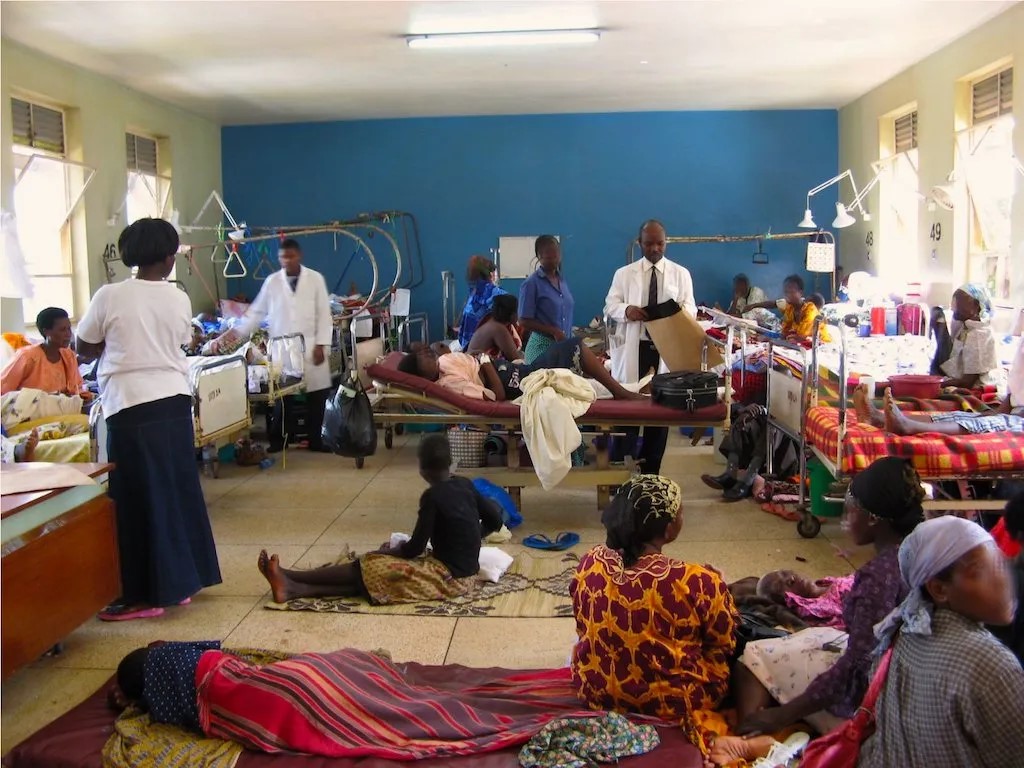
According to Médecins Sans Frontières (MSF), the situation has worsened dramatically in 2024. Dr. Sanjana Tirima reports alarming increases across northern Nigeria. In Maiduguri, northeast Nigeria, MSF’s inpatient therapeutic feeding centre admitted 1,250 severely malnourished children with complications in April 2024, double the figure from April 2023. The centre has had to expand to 350 beds, far exceeding its initial 200-bed capacity.

Similar trends are seen elsewhere. In Bauchi state, MSF’s facility at Kafin Madaki Hospital saw a 188% increase in the first quarter of 2024 compared to 2023 in the admissions of severely malnourished children. Northwestern states like Zamfara, Kano, and Sokoto have reported increases in admissions to inpatient centres ranging from 20% to 100%.

Dr Christos Christou, MSF’s International President, previously highlighted the multiple challenges facing northern Nigeria, including “overwhelming levels of malnutrition, frequent outbreaks of vaccine-preventable diseases, lack of medical facilities and personnel, and continuous insecurity.” The crisis is further exacerbated by widespread flooding, which has devastated farmlands and displaced millions.

Despite the escalating crisis, the humanitarian response remains inadequate. In May, the United Nations and Nigerian authorities issued an urgent appeal for US$306.4 million to address nutrition needs in Borno, Adamawa, and Yobe states. However, MSF notes this is insufficient as it doesn’t cover other affected parts of northern Nigeria.

Dr Tirima emphasises the situation’s urgency: “Everyone needs to step in to save lives and allow the children of northern Nigeria to grow free from malnutrition and its disastrous long-term, if not fatal, consequences.” She calls for immediate action to diagnose and treat malnourished children and engage in sustained, long-term initiatives to address the root causes of the crisis.

MSF and other organisations stress the need for a comprehensive and urgent response as the situation worsens. “We can’t keep repeating these catastrophic scenarios year after year,” Dr. Tirima warns. “What will it take to make everyone take notice and act?” The crisis in northern Nigeria remains a critical humanitarian concern requiring immediate and sustained attention from national and international stakeholders.

Onumoh Abdulwaheed wrote via onumohabdulwaheed@gmail.com.

The relevance of girl child education in national development

By Hajara Abdullahi

Girl Child education is a major cornerstone for national development. In developing countries, Nigeria, inclusive of the girl child education, keeps experiencing setbacks due to certain constraints, which include poverty, cultural practices, insecurity, climate change, etc. In Northern Nigeria, where these challenges are more persistent, enrollment of the girl child has been minimal despite efforts by relevant stakeholders.

On October 11th, the International Day of the Girl Child was celebrated worldwide; several campaigns and gatherings were held in Nigeria to commemorate the event. The Vice President, Senator Kashim Shettima, while addressing a conference marking the event, described Nigeria’s 25.6% out-of-school as a threat to the country, and he reiterated the need to take a specific action plan to address the menace.

According to UNICEF, Nigeria has 18 million out-of-school children, and out of these 18 million out-of-school children,60% of them are girls. This implies that we must invest, harness, and champion enrollment in girls’ education.

Education is a fundamental human right and a cornerstone of national development. Investing in girls’ education empowers individuals, communities and the nation.

Education is not just a fundamental human right but a cornerstone of national development. When we invest in girls’ education, we invest in the future of our communities and nation. A girl with an education is not just an empowered individual but a catalyst for change. 

 Below are some of the essential aspects of girl-child education for national development.

Economic Growth: Educated girls significantly contribute to economic growth. Studies show that a girl’s future earnings increase substantially for every additional year of schooling. Educated women participate in the labour force, start businesses and drive economic development. In Northern Nigeria, where unemployment is rampant, empowering girls through education can break the poverty cycle and boost the economy.

Health and Well-being: Education profoundly impacts health outcomes. Educated girls make informed decisions about their health and well-being, marry later, and have healthier families. Educated girls prioritise their children’s education and health, creating a virtuous development cycle.

Social Change: Educated girls engage in civic activities, advocate for their rights and challenge societal norms. They become leaders, role models and change agents, contributing to gender equality and national progress. Inspirational figures like Dr. Ngozi Okonjo-Iweala, Amina J. Muhammad, Professor Ruqayatu Rufai and Maryam Aloma Mukhtar exemplify how investing in girls’ education fosters social change and national development.

Sustainable Development Goals: Girls’ education is crucial to achieving the United Nations Sustainable Development Goals, particularly Goal 4: inclusive and equitable quality education for all. Prioritising girls’ education helps eradicate poverty, promote gender equality and ensure sustainable development.

Therefore, we need to commit to actionable steps. We need increased investment in girls’ education, community awareness programs that challenge harmful cultural practices, and partnerships with local organisations to create safe and supportive learning environments. Every stakeholder, from government officials to community leaders, educators, and parents, has a role to play.

In conclusion, let us remember that the education of the girl child is not just a women’s issue; it is a national imperative. Together, we can build a future where every girl in Nigeria has the opportunity to learn, grow, and thrive.

Hajara Abdullahi wrote from the Department of Mass Communication, Bayero University, Kano. She can be contacted via phlosopherquin162@gmail.com.