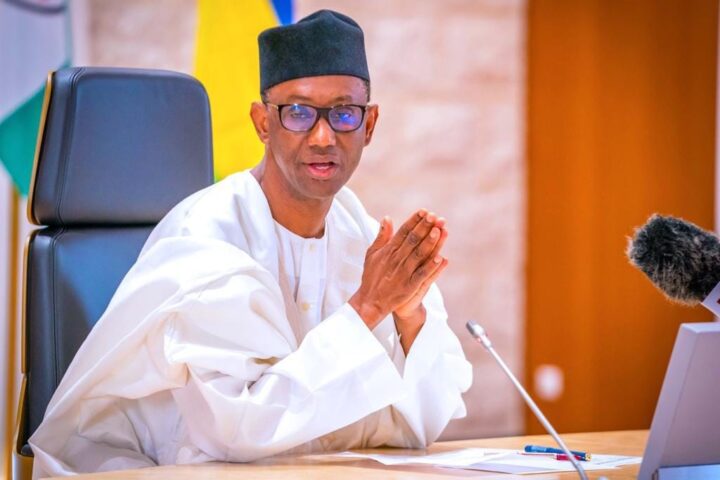
Nasir Ahmad El-Rufai, the former governor of Kaduna State, has officially announced his resignation from the All Progressives Congress (APC) and his decision to join the Social Democratic Party (SDP).
In a resignation letter submitted to his local ward in Kaduna State on Monday, El-Rufai cited irreconcilable differences with the ruling party’s leadership and expressed disappointment with the APC’s recent direction.
“I have served the APC diligently and have contributed significantly to its viability as a political platform,” he stated. “However, recent developments have revealed a concerning disregard for democratic principles and progressive values that I hold dear.
”As a founding member of the APC, El-Rufai played a pivotal role in securing electoral victories for the party in 2015, 2019, and 2023.
Reflecting on his tenure as governor, he emphasized his administration’s commitment to human development, education, healthcare, infrastructure, job creation, and investment.
He explained that his departure from the APC was motivated by growing concerns regarding governance and internal party dynamics.
“At this juncture in my political journey, I must seek a different political platform that aligns with the progressive values I cherish,” he remarked.
Upon joining the SDP, El-Rufai expressed his gratitude to mentors, colleagues, and supporters, reaffirming his dedication to advancing democratic principles.
“As a member of the SDP, I am committed to building a unified democratic front to challenge the APC in the upcoming elections,” he concluded.
During his time as Chairman of Hadejia Local Government, Bala T.O was not just a leader; he was a transformative figure. His leadership was characterized by a keen focus on the needs of his people. Under his stewardship, Hadejia saw numerous developmental strides in infrastructure, education, health, and local governance. His unique leadership style, which blended accessibility, transparency, and pragmatism, earned him the admiration of his constituents and political peers alike.
Honourable Bala Umar, widely known as Bala T.O, is a name that resonates deeply within the political landscape of Jigawa State. From his impactful tenure as the Chairman of Hadejia Local Government to his current position as the Special Adviser on Special Duties to Governor Malam Umar Namadi, Bala T.O has continually demonstrated unwavering commitment to public service and governance.
But beyond his political prowess, Bala T.O’s legacy is also tied to his deep-rooted understanding of governance. His work was driven by the belief that leadership should not just be about authority but about empowering the people, fostering unity, and prioritizing the well-being of all. He was particularly known for his efforts in building bridges between various community groups, ensuring inclusivity, and addressing the challenges faced by the common people of Hadejia.
In his current role as Special Adviser to the Governor of Jigawa State, Bala T.O continues to serve with the same fervor and dedication that defined his earlier career. The transition from a local government chairman to a Special Adviser is not merely a change in title, but a testament to his capacity for leadership at both local and state levels. His wealth of experience and extensive knowledge of Jigawa’s grassroots realities has positioned him as an invaluable asset to the state government.
As Special Adviser on Special Duties, Bala T.O now plays a crucial role in shaping policies and ensuring the successful implementation of programs that affect not only the people of Hadejia but all residents of Jigawa State. His position enables him to influence strategic decisions that directly impact sectors such as agriculture, infrastructure development, and social welfare – areas critical to the continued growth and prosperity of the state.
One of the standout qualities of Bala T.O is his dedication to ensuring that no one is left behind in the development process. He has remained a staunch advocate for the inclusion of marginalized communities and continues to push for policies that promote equal opportunities for all. His approach to governance is not about political gain, but about creating sustainable change that will benefit future generations.
Furthermore, his relationship with Governor Malam Umar Namadi (Danmodi) is one built on mutual respect and a shared vision for the future of Jigawa State. As a trusted adviser, Bala T.O plays an instrumental role in providing valuable insights, guiding the governor in making decisions that reflect the needs of the people. His counsel, honed through years of hands-on leadership experience, is a driving force behind many of the initiatives currently underway in the state.
As we look to the future, it is clear that Honourable Bala Umar (Bala T.O) will continue to be a key figure in the political and developmental trajectory of Jigawa State. His continued service, first as Chairman of Hadejia Local Government and now as Special Adviser, demonstrates the power of dedicated leadership and the impact one person can have on a community and beyond.
In conclusion, Bala T.O’s journey from local government leadership to becoming the Special Adviser to the Governor serves as an inspiration to all who believe in the power of hard work, integrity, and service. His story is a testament to the belief that true leadership is not defined by position, but by the positive change one can bring to the lives of others.
Have you ever walked into a mosque and sensed its walls whispering stories? Stories of faith, of community, of lives transformed? One quiet afternoon in Bauchi, as the sun cast long shadows across the courtyard of a newly renovated mosque, I found myself in the middle of such a conversation. But this was no ordinary dialogue.
The mosque itself began to speak, its voice a blend of gratitude and reverence, joined by the echoes of countless lives impacted by one man—Dr. Yakubu Adamu, the Commissioner of Finance and Economic Development, affectionately known as Mai Masallaci.
The mosque’s voice was calm yet commanding, like the adhan that calls the faithful to prayer. “Sit,” it seemed to say, “and listen to the story of a man who saw me not as a crumbling structure but as a sanctuary of hope.
When Dr. Yakubu Adamu first approached me, I was in ruins—my walls cracked, my roof leaking, my courtyard silent. But he saw beyond my decay. He saw the souls who gathered within me, the prayers that rose from my floors, and the community that depended on me. With his hands, he rebuilt me. With his heart, he revived me. And with his faith, he reminded me of my purpose—to be a house of Allah, a home of unity and hope.”
I leaned in, captivated, as the mosque continued: “But he did not stop with me. He traveled across the state, seeking out my brothers—mosques that had been forgotten and abandoned. He gave them new life, not just as structures, but as symbols of faith and community. He understood that building a mosque is a bridge between this world and the hereafter.”
Then, another voice joined the conversation—a gentle, heartfelt murmur that seemed to come from the air around us. It was the voice of his philanthropic gestures, the countless acts of kindness that had touched thousands of lives.
“He is not just a builder of mosques,” the voice said. “He is a builder of lives. I have seen him provide food for the hungry, scholarships for the bright but needy, and medical care for the sick. I have watched him sit with the poor, listen to their struggles, and offer material support and hope. He does not see charity as an obligation; he sees it as a privilege, a way to draw closer to Allah.”
The mosque nodded in agreement, its dome catching the sunlight like a crown. “Yes,” it said. “He is a man who understands that true success lies in serving others. His humanitarian services are not just acts of kindness; they are acts of worship.”
As the conversation deepened, the voices grew more numerous, each adding a layer to the story of Dr. Yakubu Adamu. The students he had supported spoke of his belief in education as a tool for empowerment. The elderly he had cared for praised his compassion and respect for the aged. The farmers he had assisted shared stories of his commitment to economic development and self-sufficiency. And through it all, one theme emerged: Dr. Adamu is a man who lives for others, a man whose life is proof of the teachings of Islam.
Now glowing with pride, the mosque turned to me and said, “But perhaps what sets him apart is his humility. He does not seek recognition or praise. He works quietly, tirelessly, knowing that his true reward lies with Allah. He is a leader who leads by example, a servant who serves with love, and a believer who lives by faith.”
As the sun began to set, casting a golden hue over the mosque’s courtyard, I felt a profound awe. This was not just a story of a man; it was a story of a legacy—a legacy of faith, service, and humanity. Dr. Yakubu Adamu is not just a commissioner but a guardian of the people, a protector of the faith, and a pillar of hope.
The mosque, its voice now a whisper, offered a final thought: “Tell the world about him. Let them know that in a time when selflessness is rare, Dr. Yakubu Adamu stands as a reminder of what it means to live a life of purpose. Inform them that his work is not just for this world but for the hereafter. And convey that we, the mosques and the hearts he has touched, are forever grateful.”
As I left the mosque that evening, the call to Maghrib prayer echoed through the streets, reminding me of the divine connection that Dr. Yakubu Adamu has strengthened through his work. His story is not just one of bricks and mortar, food and medicine, or governance and development. It is a story of faith, love, and a man who has dedicated his life to improving this world and the hereafter. May Allah bless him, protect him, and grant him the highest place in Jannah. Ameen.
Usman Abdullahi Koli wrote via mernoukoli@gmail.com.
I want to share an inspiring story about perseverance and determination. Some time ago, Malam Aisara Fagge, a visionary educator from Kano, conceived an innovative idea to empower youths with knowledge about Artificial Intelligence (AI) and train them to utilize ChatGPT effectively.
Malam Aisar took his enthusiasm to social media, publicly announcing his intention to collaborate with Professor Abdullah Uba Adamu on this project. Although the project didn’t come to fruition, an interesting turn of events unfolded.
Shortly after, I stumbled upon banners advertising training programs on ChatGPT in southern Nigeria with prices that seemed exorbitant. I shared these banners with Malam Aisara, whose response was profound: ‘When you have an idea, many people will try to replicate it.’ His words echoed the age-old adage that ‘imitation is the sincerest form of flattery.”
This experience came flooding back when I connected with Dr. Idris Ahmed on social media. He shares a similar passion for educating people about computer appreciation and AI and plans to make this vision a reality through his NGO, CUPS. I was impressed by his dedication, and I offered him my support.
What’s truly remarkable about Dr. Idris’s endeavor is his commitment to training many people, thereby pioneering a movement in this field. His initiative has the potential to bridge the knowledge gap and make AI more accessible to a broader audience in Nigeria and beyond.
I sincerely hope Dr. Idris receives the support and recognition he deserves to make this project a resounding success. I pray that Almighty Allah grants success to both Malam Aisara Fagge and Dr. Idris Ahmed in their endeavors, and may their efforts bring about positive change in the lives of many.
Abdurrazak Muktar Makarfi wrote via prof4true1@gmail.com.
The Nigerian political landscape is never short of intrigue, speculation, and high-stakes maneuvering. The latest storm centers around Mallam Nuhu Ribadu, Nigeria’s National Security Adviser (NSA), and allegations made by his ‘former’ ally and friend, Mallam Nasir El-Rufai, the former governor of Kaduna State.
El-Rufai has accused Ribadu of secretly positioning himself for a presidential bid in 2031, alleging that he is working to eliminate key northern politicians before the elections. In an Arise TV interview, El-Rufai said:
“Somebody wants to destroy my reputation. Why? Nuhu Ribadu wants to be president in 2031. He has to eliminate every northerner that he thinks is on the radar.”
These allegations have sparked intense debate, given Ribadu’s current position as the NSA, one of the most powerful offices in the country. The role demands absolute loyalty to the sitting president, and any sign of personal political ambition would be politically dangerous.
However, Ribadu has vehemently denied the claims, dismissing any suggestion that he is planning a presidential run in 2031. In his response, he stated:
“For the avoidance of doubt, I want to put it on record that I have never discussed running for president in 2031 with anybody.”
Currently, President Bola Ahmed Tinubu is in the second year of his first term and is widely anticipated to run for reelection in 2027. If he wins, his administration would extend until 2031. Considering this timeline, it seems premature for anyone in Tinubu’s inner circle—particularly someone in such a sensitive position as the NSA—to be planning a presidential bid so early.
To be fair to Ribadu, every seasoned political observer knows he is too intelligent and experienced to make such a politically reckless move. Launching a presidential campaign while still serving in a crucial role would create unnecessary distractions, fuel rivalries, and generate deep animosities within the government. It would also call his loyalty to Tinubu into question.
So why is Ribadu being linked to 2031?
First, his close relationship with President Tinubu has earned him the title of Tinubu’s golden boy (Dan Fulani). His reputation as a disciplined, intelligent, experienced, and competent leader makes him a natural contender in any discussion about potential successors. Any rising political figure will inevitably attract speculation in a political climate where future ambitions are often carefully managed behind closed doors but widely discussed publicly by everyday people.
Second, the political class understands that succession planning is always at play, even when not publicly acknowledged. While Ribadu may not currently campaign for the presidency, political opportunities can arise unexpectedly. Nigerian politicians are known for their ability to seize the moment when the circumstances align, even if it was not originally in their plans.
Politics is unpredictable, and today’s denials can quickly become tomorrow’s declarations. Whether or not Nuhu Ribadu harbors presidential ambitions, the reality is that he possesses the qualities of a strong contender—experience, credibility, and proximity to power. If the opportunity presented itself, would he take it?
Only time will tell. But one thing is sure: The road to 2031 has already begun, and the political maneuvering will only intensify in the coming years.
Throughout the week, discussions have arisen following the Christian Association of Nigeria’s (CAN) rejection of the closure of schools in some predominantly Muslim states in the North. In that context, I came across another article published by the Daily Trust on the same topic, written by a Muslim, or at least someone with a Muslim name; I cannot ascertain his faith.
This morning, I took some time away from assessing my students to read the articles. It is unfair to respond to a statement that one has not read.
I read the press release by CAN a few times over, hoping I might find some wisdom. Unfortunately, I couldn’t. CAN is its usual self, apprehensive of anything Islamic out of fear of losing relevance.
Christianity in Nigeria, as I often say, is merely surviving due to the presence of Islam. For instance, if Muslims were to cease going on hajj, all the Christian pilgrims’ boards, including the central one in Abuja, would naturally wither away. It is only when Muslims discuss Shariah that Christians recall the existence of Ecclesiastical law, which many of them know little about. The examples are numerous.
This time around, CAN understands that closing schools “for an extended period disrupts academic schedules and threatens the educational advancement of millions of students”. What CAN has forgotten is that Nigerian schools have always been closed for the same “extended period” of at least one month since our colonial days for Christian festivals. In fact, the Nigerian school calendar is designed to close all schools for at least two weeks each for Easter and Christmas celebrations.
The Christian holidays have been officially recognised and embedded in our school calendar in a so-called secular country. If CAN were concerned about religious balance, as they falsely claim, they would have advocated for the cancellation of the Christmas and Easter holidays and proposed something neutral.
Archbishop Daniel Okoh, the signatory to the press release, wanted Nigerians to believe that the closure of schools during Ramadan would compromise the education of Christian children and devalue Christian communities in the North. This is an admission by the CAN President that the education of Nigerian Muslim children has always been compromised and that Nigerian Muslims have no value in Nigeria since their children are forced to remain out of schools for Christian festivals.
I am waiting for the CAN President and his team to go to court as they have threatened. What I would like to assure them is that Nigerian Muslims are now wiser. CAN hasn’t yet seen anything. All traces of Christianity as imposed on other Nigerians must be removed from our national life. It is just a matter of time.
The opening argument of the Daily Trust writer is that there is no single injunction in Islam mandating the closure of schools during Ramadan. I wish he would tell us where Islam mandates the closure of schools for Christmas and Easter. Islam is a complete way of life. Isn’t that what he is trying to argue? Does Islam not prevent us from blindly copying Jews and Christians?
From the beginning, Muslims have paid for the unity of the North and, indeed, Nigeria with their religion and, in some instances, their blood. This must stop at some point. If we are to remain united, then the rights of Muslims must be acknowledged and granted.
The people who colonised us were Christians. This explains why Christianity is ingrained in almost every aspect of our national life. Now that Muslims are expressing dissent, some people are calling for unity. A shared Northern identity? Yes. One Nigeria? Yes. One religion? No, we are Muslims and will not continue to accept the imposition of another religion upon us.
Finally, let me call on our Governors and, indeed, the Federal Government to embark on a comprehensive reform of our school system to align it with our values and beliefs. All neocolonial items should be removed.
Prof. Abdussamad Umar Jibia can be contacted via aujibia@gmail.com.
Politics is a game of interests, influence, and sometimes, survival. But above all, it is about leadership and leading people with wisdom, fairness, and strategic foresight. At this critical point in Dr. Abdullahi Umar Ganduje’s political career, one thing is clear: his ability to build more friends than enemies will define his legacy far beyond his tenure in office.
Just recently, Ganduje received a vote of confidence from the All Progressives Congress (APC) leadership, a significant gesture considering the turbulence surrounding his political journey.
This is not just a lifeline; it is an opportunity he must seize to prove himself as more than just a money monger, as critics often describe him. If I were in his shoes, my approach would be simple: mend fences, consolidate power through unity, and rewrite my political narrative.
Power is Fleeting, but Influence Lasts
One of politicians’ biggest mistakes is believing that power alone is enough to sustain relevance. The reality, however, is that power is temporary, but influence, built through meaningful relationships, lasts far longer.
Ganduje must realise that his current standing within the APC is not just about political loyalty but also about how he navigates relationships, particularly in Kano and at the national level.
If I were him, I would prioritise reconciling with those I have wronged, whether within the party, in Kano politics, or even in the opposition. Political grudges only create unnecessary enemies, and in a democracy, today’s enemy might be tomorrow’s ally. The greatest leaders recognise this and act accordingly.
Rewriting the Narrative: Beyond Money Politics
Ganduje’s name has been tarnished by allegations of corruption, with many reducing his political identity to financial controversies. Whether true or not, perception is powerful in politics. Now, with a renewed opportunity, he must take intentional steps to reshape how people perceive him.
If I were Ganduje, I would focus on key strategies:
1. Promote issue-based politics: Shift away from financial influence and instead foster discussions on governance, policy, and party unity.
2. Public Engagement and Transparency: Tackle concerns regarding governance and finances directly. The more open and accountable a leader seems, the more trust they can restore.
3. Legacy Projects: Even beyond active governance, supporting meaningful initiatives in education, infrastructure, and youth empowerment can reshape how history remembers him.
Building Bridges for Political Survival
At this stage, every political move must be calculated with the future in mind. As a former governor, Ganduje still retains considerable influence in Kano politics, but influence without consolidation amounts to little. If I were in his position, I would engage in high-level bridge-building, both within the APC and beyond.
• Reunite Factions Within APC Kano: The state remains politically divided, and without unity, APC’s strength in Kano could diminish.
• Engage with Political Opponents: There is nothing undignified about reconciling with former rivals. In fact, it exemplifies true leadership.
• Strengthen National Alliances: The political landscape is unpredictable, and having allies beyond Kano is crucial for long-term relevance.
Final Thoughts
The vote of confidence that Ganduje received is not merely a validation; it is an invitation to prove himself, to lead differently, and to transition from being perceived as a controversial figure to a respected statesman.
If I were him, I would spend the next phase of my career doing exactly that: making more friends than enemies, consolidating my influence, and ensuring that my name, when written in history, is associated with strategy, leadership, and reconciliation rather than controversy.
This is the opportunity of a lifetime. Will he take it?
Commissioner of Education Engineer Lawan Abba Wakilbe continued his school supervision tour, visiting the Mafa, Dikwa, and Ngala Local Government Areas. He was accompanied by Bukar Sheriff Kime, Zonal Deputy Director of Monguno Zone, other educational board members, and the local education secretary.
Engineer Wakilbe commenced his tour at Ngom Primary and Junior Secondary School, where he also visited Government Day Secondary School, Vocational Enterprise Institute, Central Primary, and Junior Day Secondary School in Mafa local government.
During the visit, the Commissioner expressed concern regarding the low student turnout and the high absenteeism among teachers, emphasising the necessity for immediate improvement.
Engineer Lawal Wakilbe, during his visit to Dikwa Government Day Secondary School, Shehu Sanda, Central, Kalaa Garu Primary, and Junior Day Secondary School, inspected the completed teachers’ quarters and the ongoing construction of the Higher Islamic School.
During his visit to Dikwa, Engineer Lawan commended the attendance of teachers and students, and distributed learning materials and dignity kits to adolescent girls.
Commissioner Lawan Abba Wakilbe, on the second day of his visit to Gamboru, inspected Government Day Secondary School Gamboru, Gamboru Central, and Ndjamaina Primary and Junior Secondary School.
Engineer Wakilbe also inspected the Higher Islamic College Gamboru and Ladari Primary School. At Wulgo, heexamined the completed secondary school project, as well as the Primary and Junior Secondary School Wulgo.
The commissioner commented on the dedication of Ngala Education Secretary, Bulama Kole Bunu, and the Principal of Government Secondary School Gamboru, Mohammed Hamidu Talaki, during the distribution of learning materials and dignity kits to students.
This tour underscores the Borno State Government’s commitment to enhancing education quality and infrastructure across the state.
I would like to start by expressing my profound admiration for your work. I must admit that I have always been a great fan of yours, appreciating your leadership skills and vision more than any politician in Kaduna State.
Your impressive work ethic, policy foresight, demonstrated competence, and ability to resist criticism and implement what you consider the right thing earned you a place in my heart.
(Un)fortunately, I’m not the kind of fan who always praises his favourites and considers any criticism an attempt to discredit his master.
Sir, your recent actions, remarks, and holier-than-thou attitude have led some to speculate that you are suffering from Out-of-Office syndrome. However, I prefer not to believe them.
In your recent interview with Arise TV, you said things that, had I not watched the interview, I would have dismissed as typical political propaganda.
Firstly, you defined “friendship” as “someone that has the fidelity to some ethical and moral standards, and will be there for you when you need him, not when it’s time to party or enjoy.”
Of course, I agree with you to some extent. However, in this context, are you suggesting that you prioritise loyalty over accountability, even if it means ignoring the concerns of those who elected you?
I believe that, by your definition of “friendship,” Uba Sani should prioritise being a “friend “ to the people of Kaduna who are struggling to get a meal due to these “economic reforms “ (which you said you supported and are the right orthodox policies…) rather than showing loyalty to his predecessor.
In your interview with Charles, you mentioned that the Late Yar’adua invited you to join his cabinet, an offer you declined. This remark reminded me of another instance in which you used his death as a mocking tool to brag about your resilience.
Your allegations against Nuhu Ribadu and his subsequent response reveal a lot about your dynamics with him. They raise questions about who has maintained the values of true friendship and who has not. I won’t elaborate further.
Sir, as you are probably approaching the last decade of your active political career, I would advise you to focus on nurturing your private life (considering your frequent references to prioritising it) rather than investing time and energy in making new (or perceived) enemies.
Do not dwell too much on criticism and allegations; do what Kwankwaso did: allow your track record to speak for you.
Lastly, may your famous political slogan — “MURUS” — not be used against you.
For some weeks, I had been involved in judging a photo competition themed “Spirit of Kano”. One way or another, I was made the “Chief Judge” by the Curator, Dr. Shuaib Sani Shuaib, Executive Director, Makuba Center for Arts and Culture, Kano. He is also the Curator for Global Shapers Community, Kano Hub. Overall financial support was also provided by Engr. Anas Yazid Balarabe, who is also the founder of the cooperative.
As an amateur photographer with a deep and intense interest in art and the aesthetics of the environment, coupled with a fanatical advocacy for the best State on this side of the Milky Way Galaxy, I was honored to be appointed the Chief Judge. However, since it was an open competition and open voting, I designed the judgement criteria for the photos,which were used to judge the 100 or so entries by other judges. Photographers were urged to send pictures that, in their view, capture the “Spirit of Kano”. Many people participated, and many photos were sent.
These entries were beautifully shot and captured the Spirit of Kanawa and Kananci. They were all beautiful. However, I judged them based on what the images conveyed about Kano in various visual ways—history, architecture, food, clothing, urban life, historiography, etc. For me, choosing the best three was really difficult because there was so much beauty and talent in each photograph—faces, places, spaces. The entire collection was a riot of colorful visual poetry that describes Kano.
Each picture in the entries has unique features and communicates the dynamism of both urban and rural Kano. Thousands of words could be woven around each picture that communicate the vibrancy of Kano. My selection cuts across history, trade and lived-in experiences. I would have loved to see some architectural shots – the ones I saw were mainly Emir of Palace pictures (Ƙofar Kudu or thereof). A few shots of ‘mansions’ and ‘haciendas’ would have given an evolutionary trajectory of the Spirit of Kano, in addition to the alleyways and gidan kara.
Four judges trudged through the 100 or so entries and made their choices. These were then further pooled by common choice from each judge to pare down the selection to six, on which the final judgment of three was made. To ensure a fair and transparent selection process, the top three winners were chosen based on a combination of judges’ evaluations and public voting. The final ranking was determined by taking an average of the judges’ scores and the public vote ranking in which the winners emerged. Very transparent. Further, everything was done online.
The final judgment of the top three (shown here) truly deserves it. The winners, based on the highest scores, along with their prizes, were:
1- Muhamad Sani Abbas (₦250,000)
2- Alamin Mohammed (₦150,000)
3- Aisha Suleiman Halili (₦100,000)
Muhammad Sani Abbas’s best picture was of a young greengrocer measuring a customer’s order in a local market. The intensity of his face captured everyone’s imagination and admiration. The photo of the boy is a bookmark on Kano and its commerce—never too young to start. It was indeed a beautiful shot.
Alamin Mohammed took second place. Interestingly, the picture also shows another young lad galloping on a horse in full ‘royal’ regalia. Frozen in time, the horse rider captures Kano’s ancient tradition and royal heritage.
Third place went to a composite study of the Kano Emir’s palace guards (Dogarai) from a truly sensitive POV. The winner, Aisha Halilu’s portrait of a shadowed Dogari, makes the maximum use of light and shadows to accentuate the beauty of the setting. The Dogari, with his back to the camera, clearly was not the focus of the shot but the far houses he was gazing at—a contrast between the traditional Hausa architecture of the palace and the post-modern bungalows he was gazing at.
A picture by Ahmad Sufi, which I voted for, did not win, but that’s alright; after all, it was aggregate scores that mattered. I didn’t place it number one, but I had expected it to be at least number three. The outcome only highlights the high quality of the visual appeal of the photos entered in the competition.
The one that did not make it on my list was a market scene with an Arab (at least the guy looks like an Arab but dressed in Babbar Riga) holding on to a camel. Far in the distance is a communication tower. To me, the pictures talk volumes about migration, cultural adaptation, trans-Saharan road networks and contemporary communication – all visually encapsulating what Kano has been for centuries and those to come.
I think it is wonderful that an NGO of young, committed individuals could come up with this. It should be the purview of the Kano State History and Culture Bureau. A letter was sent to the Kano State Government requesting partnership/sponsorship, but there was no response at all. Even the prize money was sourced by Dr. Shuaibu, showing a commitment to Kano far greater than many of us.
What could the next steps be? Perhaps an annual event? Or a regionalisation of the competition? For instance, it would be fantastic to see the “Spirit of Zazzau”, followed by Rano, Daura, Katsina, Gobir, and so on, all the way to Niamey. This way, we could have an annual Spirit of Hausa Kingdoms as visual poetry, encouraging young people to appreciate the historical, cultural, and aesthetic qualities of their environment.