Northern Nigeria

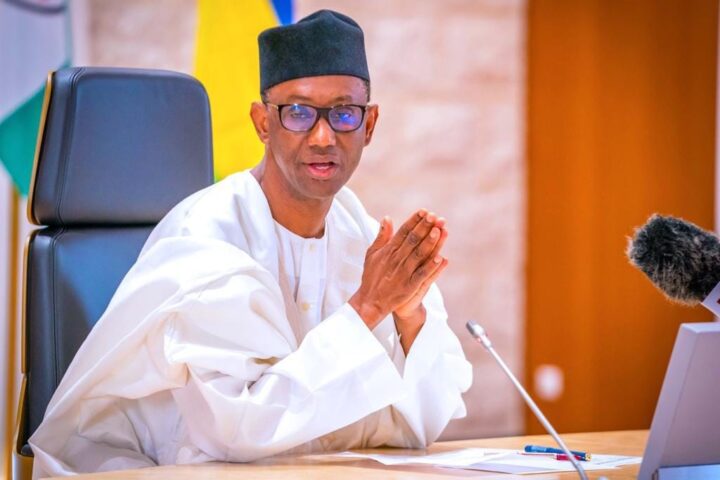
Borno: Education commissioner Wakilbe tours schools

By Rukayya Abubakar Othman

Commissioner of Education Engineer Lawan Abba Wakilbe continued his school supervision tour, visiting the Mafa, Dikwa, and Ngala Local Government Areas. He was accompanied by Bukar Sheriff Kime, Zonal Deputy Director of Monguno Zone, other educational board members, and the local education secretary. 

Engineer Wakilbe commenced his tour at Ngom Primary and Junior Secondary School, where he also visited Government Day Secondary School, Vocational Enterprise Institute, Central Primary, and Junior Day Secondary School in Mafa local government.

During the visit, the Commissioner expressed concern regarding the low student turnout and the high absenteeism among teachers, emphasising the necessity for immediate improvement.

Engineer Lawal Wakilbe, during his visit to Dikwa Government Day Secondary School, Shehu Sanda, Central, Kalaa Garu Primary, and Junior Day Secondary School, inspected the completed teachers’ quarters and the ongoing construction of the Higher Islamic School. 

During his visit to Dikwa, Engineer Lawan commended the attendance of teachers and students, and distributed learning materials and dignity kits to adolescent girls.

Commissioner Lawan Abba Wakilbe, on the second day of his visit to Gamboru, inspected Government Day Secondary School Gamboru, Gamboru Central, and Ndjamaina Primary and Junior Secondary School.

Engineer Wakilbe also inspected the Higher Islamic College Gamboru and Ladari Primary School. At Wulgo, heexamined the completed secondary school project, as well as the Primary and Junior Secondary School Wulgo.

The commissioner commented on the dedication of Ngala Education Secretary, Bulama Kole Bunu, and the Principal of Government Secondary School Gamboru, Mohammed Hamidu Talaki, during the distribution of learning materials and dignity kits to students.

This tour underscores the Borno State Government’s commitment to enhancing education quality and infrastructure across the state.

A letter to Mallam El-Rufai

I would like to start by expressing my profound admiration for your work. I must admit that I have always been a great fan of yours, appreciating your leadership skills and vision more than any politician in Kaduna State.

Your impressive work ethic, policy foresight, demonstrated competence, and ability to resist criticism and implement what you consider the right thing earned you a place in my heart.

(Un)fortunately, I’m not the kind of fan who always praises his favourites and considers any criticism an attempt to discredit his master.

Sir, your recent actions, remarks, and holier-than-thou attitude have led some to speculate that you are suffering from Out-of-Office syndrome. However, I prefer not to believe them.

In your recent interview with Arise TV,  you said things that, had I not watched the interview, I would have dismissed as typical political propaganda.

Firstly, you defined “friendship” as  “someone that has the fidelity to some ethical and moral standards, and will be there for you when you need him, not when it’s time to party or enjoy.”

Of course, I agree with you to some extent. However, in this context, are you suggesting that you prioritise loyalty over accountability, even if it means ignoring the concerns of those who elected you?

I believe that, by your definition of “friendship,” Uba Sani should prioritise being a “friend “ to the people of Kaduna who are struggling to get a meal due to these “economic reforms “ (which you said you supported and are the right orthodox policies…) rather than showing loyalty to his predecessor.

In your interview with Charles, you mentioned that the Late Yar’adua invited you to join his cabinet, an offer you declined. This remark reminded me of another instance in which you used his death as a mocking tool to brag about your resilience.

Your allegations against Nuhu Ribadu and his subsequent response reveal a lot about your dynamics with him. They raise questions about who has maintained the values of true friendship and who has not. I won’t elaborate further.

Sir, as you are probably approaching the last decade of your active political career, I would advise you to focus on nurturing your private life (considering your frequent references to prioritising it) rather than investing time and energy in making new (or perceived) enemies.

Do not dwell too much on criticism and allegations; do what Kwankwaso did: allow your track record to speak for you.

Lastly, may your famous political slogan — “MURUS” — not be used against you.

Best regards,

Ukasha Sani Idris

Facebook: Ukasha a Kofarnassarawa.

The Spirit of Kano Photo Competition

By Prof. Abdalla Uba Adamu

For some weeks, I had been involved in judging a photo competition themed “Spirit of Kano”. One way or another, I was made the “Chief Judge” by the Curator, Dr. Shuaib Sani Shuaib, Executive Director, Makuba Center for Arts and Culture, Kano. He is also the Curator for Global Shapers Community, Kano Hub. Overall financial support was also provided by Engr. Anas Yazid Balarabe, who is also the founder of the cooperative. 

As an amateur photographer with a deep and intense interest in art and the aesthetics of the environment, coupled with a fanatical advocacy for the best State on this side of the Milky Way Galaxy, I was honored to be appointed the Chief Judge. However, since it was an open competition and open voting, I designed the judgement criteria for the photos,which were used to judge the 100 or so entries by other judges. Photographers were urged to send pictures that, in their view, capture the “Spirit of Kano”. Many people participated, and many photos were sent. 

These entries were beautifully shot and captured the Spirit of Kanawa and Kananci. They were all beautiful. However, I judged them based on what the images conveyed about Kano in various visual ways—history, architecture, food, clothing, urban life, historiography, etc. For me, choosing the best three was really difficult because there was so much beauty and talent in each photograph—faces, places, spaces. The entire collection was a riot of colorful visual poetry that describes Kano. 

Each picture in the entries has unique features and communicates the dynamism of both urban and rural Kano. Thousands of words could be woven around each picture that communicate the vibrancy of Kano. My selection cuts across history, trade and lived-in experiences. I would have loved to see some architectural shots – the ones I saw were mainly Emir of Palace pictures (Ƙofar Kudu or thereof). A few shots of ‘mansions’ and ‘haciendas’ would have given an evolutionary trajectory of the Spirit of Kano, in addition to the alleyways and gidan kara.

Four judges trudged through the 100 or so entries and made their choices. These were then further pooled by common choice from each judge to pare down the selection to six, on which the final judgment of three was made. To ensure a fair and transparent selection process, the top three winners were chosen based on a combination of judges’ evaluations and public voting. The final ranking was determined by taking an average of the judges’ scores and the public vote ranking in which the winners emerged. Very transparent. Further, everything was done online. 

The final judgment of the top three (shown here) truly deserves it. The winners, based on the highest scores, along with their prizes, were:

1- Muhamad Sani Abbas (₦250,000)

2- Alamin Mohammed (₦150,000)

3- Aisha Suleiman Halili (₦100,000)

Muhammad Sani Abbas’s best picture was of a young greengrocer measuring a customer’s order in a local market. The intensity of his face captured everyone’s imagination and admiration. The photo of the boy is a bookmark on Kano and its commerce—never too young to start. It was indeed a beautiful shot. 

Alamin Mohammed took second place. Interestingly, the picture also shows another young lad galloping on a horse in full ‘royal’ regalia. Frozen in time, the horse rider captures Kano’s ancient tradition and royal heritage. 

Third place went to a composite study of the Kano Emir’s palace guards (Dogarai) from a truly sensitive POV. The winner, Aisha Halilu’s portrait of a shadowed Dogari, makes the maximum use of light and shadows to accentuate the beauty of the setting. The Dogari, with his back to the camera, clearly was not the focus of the shot but the far houses he was gazing at—a contrast between the traditional Hausa architecture of the palace and the post-modern bungalows he was gazing at. 

A picture by Ahmad Sufi, which I voted for, did not win, but that’s alright; after all, it was aggregate scores that mattered. I didn’t place it number one, but I had expected it to be at least number three. The outcome only highlights the high quality of the visual appeal of the photos entered in the competition. 

The one that did not make it on my list was a market scene with an Arab (at least the guy looks like an Arab but dressed in Babbar Riga) holding on to a camel. Far in the distance is a communication tower. To me, the pictures talk volumes about migration, cultural adaptation, trans-Saharan road networks and contemporary communication – all visually encapsulating what Kano has been for centuries and those to come. 

I think it is wonderful that an NGO of young, committed individuals could come up with this. It should be the purview of the Kano State History and Culture Bureau. A letter was sent to the Kano State Government requesting partnership/sponsorship, but there was no response at all. Even the prize money was sourced by Dr. Shuaibu, showing a commitment to Kano far greater than many of us. 

What could the next steps be? Perhaps an annual event? Or a regionalisation of the competition? For instance, it would be fantastic to see the “Spirit of Zazzau”, followed by Rano, Daura, Katsina, Gobir, and so on, all the way to Niamey. This way, we could have an annual Spirit of Hausa Kingdoms as visual poetry, encouraging young people to appreciate the historical, cultural, and aesthetic qualities of their environment. 

The fractured compass: El-Rufai, Ribadu, and the quest for Nigeria’s “North Star”

By Ibraheem A. Waziri

I am a son of Northern Nigeria, born into the 5th generational cohort—those of us ushered into life between 1968 and 1983, as the civil war’s echoes faded. From here, I’ve watched two giants of the 4th cohort, Nasir El-Rufai and Nuhu Ribadu, shape my homeland’s fate. They’ve lifted it at times, fractured it at others. To me, they’re more than names—they’re lodestars. Their brilliance has guided my hopes and, too often, left them drifting. 

El-Rufai has fueled my writing since 2013; his ideas have been a steady muse. Ribadu entered my life that same year, stepping into my Zaria home during my wedding week celebration, his vision setting my spirit ablaze. Now, in February 2025, their legacies show a compass split—its needle quivering between rival trails. For the North, for Nigeria, their reunion isn’t a wish. It’s a lifeline.

My tie to El-Rufai is ink, not intimacy. We met once, briefly, after he claimed Kaduna’s governorship in 2015—a moment too quick for him to recall. His ideas, though, I’ve known deeply. His 2015 election plans for Kaduna stunned me—clear, ambitious, a reformer’s blueprint. I dissected them as a commentator, later mapping his neoconservative path in my 2019 reflections. 

El-Rufa’i’s nine-page manifesto promised education, security, and infrastructure. He mostly delivered. I saw justice in his 2015 demolition of illegally grabbed lands at Alhudahuda College—even as friends grieved homes I’d known, now dust. El-Rufai is the architect and the systems man. A neoconservative who bets order can revive a stumbling North.

Ribadu came with a handshake and a dream. In my wedding week, through Abdulaziz Abdulaziz and Gimba Kakanda, he arrived at my Zaria doorstep, joining the celebration and seeking my support. Over tea and warmth, he sketched a Nigeria free of corruption’s grip. With my friend Dr. Waziri Garba Dahiru (now a professor), we told him how Dr. Aliyu Tilde’s pre-2011 presidential elections essay about him won us—and many Northerners—to his side over Muhammadu Buhari, the people’s hero then. His EFCC days had already made him a legend—a crusader chasing the mighty with a fire that echoed the North’s heart. He left my home with admiration, hoping that his progressive flame could guide us.

As a commentator, I’ve watched him and El-Rufai since—two men who once moved in harmony under President Olusegun Obasanjo. El-Rufai restored Abuja’s master plan with a surveyor’s eye. Ribadu hunted corrupt titans. Together, they danced a tandem of renewal. Both of the 4th cohort, born amid the civil war’s shadow, inherited a Nigeria of strife and potential. But ambition and ideals broke them apart. By 2011, Ribadu’s Action Congress of Nigeria presidential run clashed with El-Rufai’s loyalty to Buhari’s Congress for Progressive Change. The North’s compass cracked—progressive zeal versus conservative steel. 

El-Rufai’s rise in Kaduna cemented his neoconservative crown. Ribadu’s drift to the PDP and 2015 Adamawa loss dimmed his star. Yet his 2023 ascent as Tinubu’s National Security Adviser reignited it—tackling banditry and Boko Haram with a seasoned hand, though not without stumbles. Now, I see their rift clearly. 

El-Rufai’s Kaduna triumphs in 2015 earned my praise then. Ribadu’s path has shifted over time. Their jabs—subtle or stark—echo a generational clash I explored in my 2023 piece on the 4th cohort overtaking the fading 3rd. El-Rufai’s 2023 attack on Buhari’s inner circle, claiming they sabotaged Tinubu, and Ribadu’s quiet rise in Abuja hint at distance—yet also hope they might align again.

Why does this split haunt me? Northern Nigeria, my home, is a paradox—brimming with promise, torn by poverty, insecurity, and neglect. Bandits mar its forests. Boko Haram stalks its northeast. Education lags despite a proud past. 

As I wrote in 2019, the North’s fate is Nigeria’s pulse; its 19 states beat with the nation’s life. El-Rufai and Ribadu, with their tested mettle, stand among its best shots—but only together. El-Rufai’s Kaduna model—retooling institutions, lifting schools—maps a revival. Ribadu’s anti-corruption past and NSA role could strangle chaos at its source. Alone, they falter. Ribadu’s moral blade needs El-Rufai’s structural frame.

Reconciliation demands humility—something both have shown in fleeting glimpses. Why now? Nigeria’s security bleeds worse in 2025—bandits bolder, insurgents entrenched—while Tinubu’s early presidency offers a window for bold moves. Their Obasanjo-era alliance proves they can align. Back then, they were reform’s twin engines under his steady hand. Obasanjo could call them to the table again, his voice a bridge. 

Tinubu, as Ribadu’s boss and one whom El-Rufai respects, could push them too, melding Ribadu’s security clout with El-Rufai’s administrative spine. Friends like Abdulaziz or Dr. Tilde might spark it, but these giants could seal it. A Northern summit could fuse their strengths: Ribadu choking chaos at its roots, El-Rufai rebuilding what’s left. Nationally, their pact could drive devolution—state police, fiscal federalism—easing the North’s woes and binding Nigeria’s seams.

I’m no bystander. El-Rufai’s policies reshaped the Kaduna streets I walk. Ribadu’s 2013 visit lingers in my home’s walls. Their rift cuts me because I’ve staked my words—hundreds since 2013—on their promise. The compass lies broken but not lost. El-Rufai, the builder; Ribadu, the purifier—two halves of a whole I’ve followed for a decade. Their reunion could heal the North’s scars, pointing it toward hope. 

For Nigeria, it’s a shot at a shared destiny. As a 5th cohort voice, I plead in 2025: Mend the rift, reforge the compass, and let El-Rufai and Ribadu rise as our North Star. The stakes are mine. The hour is now. Our future demands it.

HardFacts Studios to premier “The Bitter Feminist” docudrama series

By Hadiza Abdulkadir

HardFacts Studios has announced the upcoming premiere of The Bitter Feminist, a docudrama series that addresses the challenges faced by women in Nigeria and sub-Saharan Africa. 

Set to debut at the iRep Festival in Lagos in March 2025, the series, created by Daniel Chukwuemeka and Ijeoma Chinonyerem, centres on Ringret, a young woman from Northern Nigeria who endured rape and forced marriage.

Co-creator Ijeoma Chinonyerem stated, “This project is significant for us. It’s about giving [a] voice to women whose stories often go unheard and challenging narratives perpetuating inequality.”

The five-episode series illustrates the lives of women identifying as feminists, highlighting their resistance to traditional gender roles. Through impactful storytelling and candid interviews, The Bitter Feminist addresses critical issues, including misogyny, child marriage, and consent. 

Directed by Priye Diri and produced by Isaac Newton Akah, the series promises to empower viewers and stimulate meaningful conversations about gender inequality.

Review without a review

By Abubakar Idris Misau

Part (I)

In his natural quest and curiosity, it’s enticing that man wants to understand everything about all things – even though it’s an obviously unattainable goal. Observing, reading, speculating, conspiring, discussing, studying, manipulating, theorising…, in answering an “if” question of history, the man hardly provides a strictly wrong or right answer. This is simply because anything could be anything. Everything is just within the spectrum of possibility. What “if”, for example, Nigeria was colonised by the Spaniards?; Is a question that can be answered from multiple dimensions.

Reviewing the autobiography of the Former Head of State and Commander-in-Chief of the Armed Forces of the Federal Republic of Nigeria, General Ibrahim Badamasi Babangida (IBB), titled A Journey in Service, is an inexhaustible assignment.

On a lighter note, borrowing the easiest yet [at least in ruffling feathers] most effective text analysis, a style often used by the critics of Sheikh Fantami and or his works, let us by taking a glance at the title of the memoir furiously carry our pens and jump into action. After all, we’ve heard hearsays much enough to take a side. Phew…

Firstly, they say he confirmed the victory of the renowned 1993 Presidential election by the business mogul Chief Moshood Kashimawo Olawale (MKO) Abiola. And, in a gentlemanly manner, this evil genius made no attempt to contest the annulment that occurred under his watch, prioritising peace instead. He expressed regret and sought forgiveness.

Is that right?! 

Well, he can say that. He is such a nice guy [in Donald J. Trump’s voice]. I like him. He’s a successful guy, a really successful guy.

Meanwhile, based on what we know about the man if not for his health status, Badamasi, a maestro in rhetoric, would definitely make an excellent graduate assistant (GA) in my University’s Department of Political Science. Though a GA for a start, the author of ‘A Journey in Service’ would most certainly be awarded his MSc the day he resumes, his PhD in a week, and attaining readership is a possibility within a month. By the time he is to be crowned with the professorship title during the immediate convocation, naturally, our character would be too humble not to request to be re-nicknamed the political GOAT – for, many steps ahead of Maradona, he is clearly the combination of Ronaldo, Messi, and Mbappe.

In the court of analysis, however, the one crucial question we ask whenever we put history on trial is whether to judge our subjects by their ideals or the outcomes of their actions. Give it a look: While politicians insist that they stand for democracy and human rights (thus, better than soldiers), the argument of the uniform men is not any weaker; they are the nationalists whose role it is to restore order, fight corruption, and wage war against indiscipline – by sometimes risking their own lives (hence, the right patriots to lead). The whole debate sounds so sweet and convincing that one is tempted to suggest a system of government or constitutional arrangement that allows for a tenure for one and another for the other – continually.

Leaning towards social critics, however, it is hard to believe either side. For if for nothing, their actions contradict the gospels they preach. Even to compound that, most of the military-era soldiers are now politicians in their own rights. Recall, for instance, it’s a fact known to many that when G-34 (which, among other groups, was to become the People’s Democratic Party (PDP)), was established by some Nigerian politicians, one of their aims was to form a movement with a force capable of extinguishing military governance, for good, once and for all. 

With Alex Ekwueme (the first elected Vice President (1979-1983) and Professor Jerry Gana (who previously served as a Minister) as the first Chairman and Secretary of the PDP, respectively, it’s laughable that retired soldiers not only joined but ended up hijacking the party to make one of them the presidential candidate and later the first president in Nigeria’s fourth republic. So, who is who? Who are we to believe? Who are we to blame? Who is deceiving who? Who is the actual heroic champion of the power? Are the politicians ready? Can we even see any difference between the civilians and the soldiers?

Once pictured as a civilian vs military dichotomy, transmuted to a South vs North dichotomy, the ‘June 12’ incident, nobody ever sees it as a Muslim vs Christian dichotomy. However, it was a power heist involving friends – with MKO at the receiving end.

In my view, ours is a zero-ideology political arena. I especially expect Marxists (hoping we still have them) to agree with me here: the bunch of unforgiving capitalists who rule[d] Nigeria, death or alive, soldiers or politicians, whatsoever, have no regard for the ordinary citizens in their mind. Quote me.

Part II

Helen Keller, the blind, deaf American human rights activist, disability advocate, and excellent writer, said, “The country is governed for the richest, for the corporations, the bankers, the land speculators, and for the exploiters of labor.”

As a Nigerian (socially between the working and middle classes) with my vision and hearing still intact, Alhamdulillah, I can’t see or hear anything different. Thus, I am so fed up with hearing “democracy was r*ped” or “A and B were dictators.” What wasn’t r*ped, and who wasn’t a dictator fisabilLahi? Is it Fulgencio Batista or Fidel Castro? 

In case it isn’t clear as [and appearing for] what it is, we may well take another look. In the interest of democracy and development, take the most recent samples to the nearest laboratory. Tell me, for I genuinely want to understand: of what importance was it to the North when their son was the president, or to the South when their own was helming the boat (oh, yacht)?

All military Heads of State and democratically elected Presidents aside, the relationship between Babangida and Abiola was for a very long time so good that some historians and analysts were perplexed by what unfolded before them after the annulment: the bitterness, the chaos, the deaths, and then the silence. With not much to hold on to, conspiracy theorists took to the street with “the General knows the politician very well, so…” But since he was elected by his countrymen, in a process seen by many to be free and fair, that makes no sense whatsoever. 

Close to the above is another contention, shared by the legendary historian, Max Siollun, in his ‘Soldiers of Fortune’, that MKO wouldn’t have been as successful without the role played by his soldier President friend IBB. So, if it was, as explained by a friend recently, a case of two elephants fighting whence the grasses suffer, so be it. However, suffice is to say that it was never about the sold dichotomies. It can’t be about anything to do with talaka. It was all about their own interests. They are the very same people, birds of the same feather, two sides of a single coin.

Wonderful! I also forget other issues such as the assassination of Dele Giwa, the execution of Mamman Vatsa, and his refusal to appear before the Oputa Panel – the Nigerian 2001-commissioned Human Rights Violation Commission. Here, I think we must content ourselves with just one question, since our sources indicate that he expressed hope for the resolution of the Giwa mystery and seems to deliberately avoid the barysphere. My question, albeit odd, is not directed towards the author: Now that we have the other side of the story, are Nigerian human rights activists – including journalists and lawyers – on par with IBB? I only wish Chief Gani Fawehinmi (SAN) were alive. The book would have made an excellent exhibit… May his soul rest in peace.

In conclusion, the words of a “rebel” came to mind. I have yet to encounter a better description of Nigeria and its people than the one found in ‘Because I am Involved’ by the first president of the former Republic of Biafra, Chukwuemeka Odumegwu Ojukwu. It was this Oxford-educated Nigerian military officer who remarked, “Our leaders are pseudo leaders; our intellectuals are pseudo-intellectuals; our professionals are pseudo professionals; while our occupations are pseudo occupations. Our middle class is pseudo middle class; our elite are pseudo elite; our socialists, Marxists, liberals, and even our conservatives are often very much pseudo.” 

Standing on the shoulders of William Shakespeare, our nation resembles a theatre, with players performing upon its stage while some manage the script and many observe with delight. From NSA-Canada to USAID-Boko H*ram, and now to the June 12 saga, we exemplify ‘one day, one drama’. Moreover, as can be readily deduced, Ojokwu was indeed a pseudo-rebel, just as this writer is a pseudo-writer.

To be continued!

Abubakar Idris Misau writes from Katsina, Nigeria. He studied Forestry and Wildlife at the University of Maiduguri and can be reached at abubakaridrismisau@gmail.com.

Politics and the erosion of integrity: The deterioration of Nigeria’s most esteemed institutions

By Muhammad Rabiu Jibrin (Mr. J)                 

Isn’t the religious institution now on the brink of suffering the same fate as the traditional institution, whose integrity, moral authority, and influence have been swept away by the political hurricane?

Historically, the Nigerian traditional and religious institutions were best known as the custodians of culture and justice, commanding immense respect and dignity. They were no-go areas with clear boundaries known to politicians. Their political neutrality, ethical brevity, and golden silence made them stand out, shielding them against political threats and disrespect. But with the gradual mental shift and negligence of purpose, the passage of time paved unnoticeable ways for political interference in their affairs, rendering them into a vulnerability that warms what once cooled them.

Although the Constitution of the Federal Republic of Nigeria does not clearly prohibit traditional rulers from engaging in politics, it expects public officeholders, including traditional rulers, to remain neutral. The state laws of most states, if not all, prohibit traditional rulers from participating in partisan politics, as such acts can be seen as a breach of their traditional duties and a justification for removal.

History has shown that most allegations against Emirs were connected to issues like partisan politics, outspoken nature, and mismanagement, among others. On March 9, 2020, the Kano State government under Governor Abdullahi Ganduje officially dethroned Sanusi Lamido Sanusi as the Emir of Kano. His grandfather, Emir Muhammadu Sanusi I (1953–1963), faced the same issue under the Premier of the Northern Region, Sir Ahmadu Bello, on April 10, 1963. Similarly, Emir Mustapha Jokolo of Gwandu (1995–2005) was deposed in June 2005 by the Kebbi State government under Governor Muhammad Adamu Aliero, while Emir Abubakar Atiku of Zurmi (2010–2012) was removed from his position by the Zamfara State government in 2012.

Having successfully influenced traditional institutions, are Nigerian politicians not now attempting to test the same waters on religious institutions through their appointments and donations services?

How our religious leaders glorify and endorse politicians while also criticising one another on political matters in mosques, churches, or during their religious sermons is akin to setting a bushfire that would consume all its inhabitants. It is not difficult for politicians to offer them lucrative sums of money, gift them extravagant cars, and so forth, enabling them to manipulate their views and dilute their words during sermons for material gain.

The silver lining is that the spiritual blueprints and the footsteps that guide them would resolutely remain unchanged till eternity, no matter their deviation.

The recent verbal altercation between Sheikh Sani Yahaya Jingir and Sheikh Muhammad Kabir Gombe, which stemmed from the issue of the ‘Qur’an Festival,’ is disheartening. I view Sheikh Sani Yahaya Jingir as a cleric who strives to speak the truth but often talks excessively. He is a mature, responsible Sheikh who should not demean himself by engaging in disputes with younger individuals like Sheikh Kabiru Gombe. His reputation, knowledge, and age should elevate him beyond such conflicts. He ought to discourage the young, emerging ‘Shuyukh’ under his mentorship from becoming involved in such matters, let alone involving himself.

As for Sheikh Kabiru Gombe, I see his utterances as disrespectful and illogical toward a man of that age, no matter the heat of the moment. If two ‘Shuyukh’ and their followers resort to ranting and calling each other names, what credibility do their preachings hold, and how will their followers perceive them? Where is the unity, patience, and love for one another that Islam teaches and which they claim to promote? No matter the misunderstanding, religious leaders should be careful with their words toward one another in all circumstances.

In conclusion, unless our religious leaders fight selfishness among themselves, adhere to the teachings of Islam, respect one another despite divergent views, and remain united, the future will unravel unfavourably. Only by adhering to the holistic teachings of Islam and the prophetic tradition can they stand resolute against any factor that seeks to erode their strength.

Muhammad Rabiu Jibrin (Mr.J) wrote via muhammadrabiujibrin@gmail.com.

How I found my ideal students

By Ishaka Mohammed

My employers often commended my efforts, increased my salary and gave me bonuses even when I didn’t see any significant impact of my tutelage as a private school teacher. I was worried about my studentsʼ poor comprehension, negative attitude towards learning, and low morals. I couldn’t even stop them from cheating in tests and exams.

Although it was safe to link my failure to a lack of formal teaching qualifications, I expected the impact of the workshops I attended. And to cap it all, most of the teachers I knew (with the required qualifications) weren’t getting any better results. I was frustrated; I blamed parents, society and inadequate facilities—in that order.

However, I was joyous to get a job with an international school in 2024. The school offered excellent educational facilities, teacher training, a six-figure salary, pension, heavily subsidised lunch, and transport and accommodation allowances, among other things. Everything about the school was promising.

Nonetheless, my first meeting with the students ended my excitement. I worked harder than ever before, but as each new week brought tougher challenges, I conceded that I could neither minimise nor tolerate the disruptive behaviour and utter disrespect of the children of politicians, diplomats, business tycoons, etc. They came to the school for two reasons: to have fun and build rapport with their future business partners or political allies.

I quit the job after a term. While I was leaving, some senior colleagues commended my courage to do what they had been unable to do for years despite facing the same challenges that prompted my resignation.

I became jobless but happier, and I didn’t wish to teach again. But a call from a school proprietor in a distant state changed my mind. The head of the department I resigned from recommended that I attend a school he believed would suit me.

This happened when I was already preparing to start a new position in a different industry. My prospective employer is notorious for delaying salary payments.

After weighing the salary factor and the state of education in Yorubaland, I chose to return to teaching, and bingo! My new students meet all my criteria, particularly regarding their morals. Even though they come from privileged backgrounds, they are humble, respectful, and eager for knowledge. 

There was a day when we didn’t have enough teachers to invigilate the tests, and I was the only one who seemed concerned. Two halls were left without invigilators, yet everything went smoothly. I was impressed by the students’ maturity and honesty.

My meeting with these students has reminded me of many things, one of which is the importance of being oneself. While I recognise the significance of adaptability, I still believe that some principles should not be compromised. I appreciate the gentleman who referred me to my new employer. I commend the parents and guardians of these learners, the school management, and all the staff for nurturing such remarkable members of society. Once again, I am optimisticthat Nigeria will be better in the future.

Ishaka Mohammed wrote via ishakamohammed39@gmail.com.

AI and the future of jobs: How automation will impact employment in Nigeria

By Nasiru Ibrahim

“The introduction of AI and automation is a double-edged sword: it holds immense potential for efficiency, but its consequences on job markets, especially in developing economies like Nigeria, need to be addressed through strategic workforce planning and skills development” (Bessen, 2019).

This article examines the positive and negative impacts of AI on the workforce, supported by economic theory and real-life examples from Nigeria.

Artificial intelligence is the direct opposite of human intelligence. It showcases the ability of machines, such as computers, to carry out tasks that require human intelligence. AI performs tasks such as writing, problem-solving, analyzing data trends, driving self-driving cars, harvesting fruits on farms, and other tasks traditionally performed by humans.

AI automation involves the use of artificial intelligence and technology to automate repetitive tasks that humans traditionally carry out in their daily lives. It enhances productivity, efficiency, and scalability, reduces production costs, and ensures round-the-clock availability for services such as banking.

AI depends on data to perform tasks and learns from humans through data annotation or labelling. This indicates that it cannot recognise images, interpret voices, or understand statements unless trained by humans. Generative AI like GPT–4 is transforming the labour market while influencing the demand and supply of labour in the overall economy. The automation of repetitive tasks in both skilled and unskilled jobs by companies has raised concerns about whether AI will harm or benefit the workforce. This debate has led to the application of traditional economic theory to explore and explain the economic effects of AI.

Economic Theory on AI

Austrian Economist Joseph Schumpeter’s theory of creative destruction explains how new technology and innovation reshape economies by replacing old jobs and technologies with new ones. This theory supports the argument that AI can create new industries, jobs, and opportunities, as seen in Nigeria’s growing tech sector, which includes Fintech, E-learning, E-commerce, and Agritech. Below, we explain these theories with examples from across Nigeria.

Firstly, in Fintech in Lagos, companies like Flutterwave and Paystack now employ AI engineers and data scientists to develop fraud detection systems and personalised banking tools.

Secondly, in E-learning in Abuja, platforms like Ulesson use AI for tailored learning experiences, creating roles like app developers and AI trainers.

Thirdly, in E-commerce in cities like Lagos and Kano, Jumia and Konga use AI for supply chain optimisation and chatbots, fostering jobs in logistics tech and digital marketing.

Fourthly, in Agritech in Kaduna, Thrive Agric employs AI for farm monitoring and analytics, generating demand for data analysts and field specialists.

Human Capital Theory

Human Capital Theory, developed by Gary Becker and Theodore Schultz, emphasises the importance of education and skills in economic productivity. In Nigeria, the demand for human capital has increased in sectors such as machine learning, data annotation, and AI development. The rise of AI has fostered a need for expertise in areas like data science and machine learning. Initiatives like Data Science Nigeria are aiding individuals in acquiring these skills, enhancing their employability and contributing to the nation’s economy. This aligns with Human Capital Theory, which asserts that investing in education and skills enhances productivity.

Pareto Optimality

AI has the potential to increase productivity and efficiency in Nigeria’s economy without worsening the condition of any particular group, achieving Pareto optimality. AI in Nigerian healthcare, such as AI tools for diagnosing diseases, is helping both patients and doctors. These tools make diagnoses faster and more accurate, improving care without harming anyone. This is an example of Pareto Optimality, where everyone benefits without undermining the benefit of anyone.

Dr. G. Yoganandham (2024), Professor & Head of the Department of Economics, in his paper titled Impact of Artificial Intelligence (AI) on the Economy, Politics, Ecosystem, Innovation, and Promoting Inclusive Workforce Frameworks (2024), stated:

“The global economy could benefit by $13 trillion from artificial intelligence by 2030, although 375 million jobs may be displaced. The workplace is one of many areas where AI will bring a revolutionary impact. It can streamline processes, reduce costs, and enhance decision-making. AI can also improve customer satisfaction by analysing data for predictive analytics, reducing accidents in construction and manufacturing, and creating new employment opportunities in data science, machine learning, and AI education.

However, workplace AI raises ethical concerns about racial bias, privacy, security, and democracy. While some argue it may lead to robotic employment, there is ongoing debate about its potential to foster innovative work, create new career paths, and improve judgment.”

From the above theories, it can be deduced that on the one hand, AI, ceteris paribus, could have a positive effect on the expanding workforce in Nigeria, in terms of:

Firstly, AI fosters the creation of new jobs and opportunities. It fosters the emergence of new industries and job roles, particularly in data science, big data technology, AI engineering, and cybersecurity. Companies like Data Science Nigeria (DSN) are equipping Nigerians with skills in data analytics and machine learning, creating employment opportunities in the tech industry.

Secondly, AI enhances productivity and efficiency. It reduces production costs and streamlines processes, enabling businesses to operate more efficiently. In agriculture, Hello Tractor uses AI to connect smallholder farmers with tractor owners, increasing farming efficiency and reducing costs.

Thirdly, improving demand forecasting and profitability. AI tools optimise supply chain management and demand forecasting, leading to increased profitability for businesses. Jumia, Nigeria’s leading e-commerce platform, employs AI algorithms to predict customer preferences, enhance inventory management, and boost sales.

Fourthly, upskilling the workforce. AI encourages the development of skills that align with technological advancements, offering workers better career prospects.

On the other hand, AI could have a negative impact on the workforce in Nigeria, in terms of:

Firstly, job displacement due to the automation of repetitive tasks can affect low-skilled workers, particularly in the manufacturing and service sectors. In Nigeria’s financial sector, banks such as GTBank have adopted AI-powered chatbots (e.g., Habari), thereby decreasing the need for human customer service representatives.

Secondly, bias in hiring and decision-making. AI systems trained on biased data can create discrimination, particularly in hiring processes.

Thirdly, ethical and privacy concerns. AI-driven technologies often raise privacy, security, and data misuse issues.

Fourthly, there is limited access to AI resources. Many Nigerians, particularly in rural areas, lack access to the infrastructure and education required to benefit from AI advancements. For example, I live in Gwiwa Local Government Area, Jigawa State, but the entire local government lacks basic ICT facilities, let alone advanced technological resources that would help people understand artificial intelligence.

While AI promises to increase efficiency and productivity in various sectors in Nigeria, such as agriculture, the question remains: Will the benefits outweigh the job losses, particularly in a country with high unemployment and underemployment?

In Northern Nigeria, where more than 50% of the population is engaged in agriculture, a phased approach is urgently needed. Before AI can be widely adopted, attention should be directed towards improving mechanised farming techniques to enhance food security and tackle inflation. 

Given the shortage of skilled labour prepared to use AI in agriculture, it is essential to prioritise education and training, followed by the mechanisation of farming practices. This would ensure that the workforce is adequately prepared to embrace AI when it is introduced. AI has the potential to boost agricultural productivity by facilitating the timely harvest of crops and minimising the risk of poor yields.

The lack of education in Northern Nigeria exacerbates these challenges. According to the World Bank, the literacy rate in Nigeria stands at approximately 31%, with the Northern region experiencing a significantly higher illiteracy rate. This deficit in educational access has fostered a profound sense of frustration, as many individuals find it difficult to survive amid escalating economic hardships.

People in these regions often face unmet needs, yet politicians offer solutions that don’t address the core issues. This disconnect between the people’s needs and the actions of those in power further deepens the divide and hinders progress. Many feel that immediate economic policies, such as harsh taxation and subsidy removals, are prioritised over long-term, sustainable solutions. There is an urgent need for more inclusive and sustainable economic policies that address the technological transformation driven by AI and tackle the underlying social inequalities.

While AI adoption in agriculture has the potential to boost productivity and reduce costs, the key to its successful integration lies in addressing the fundamental issues of illiteracy, poor governance, and lack of infrastructure, particularly in the Northern regions. Only through a concerted effort to improve education, promote mechanised farming, and gradually introduce AI can Nigeria hope to mitigate the potential displacement of jobs while reaping the benefits of technology.

Ibrahim is a graduate of the Department of Economics from Bayero University, Kano, and writes from Jigawa.

Inside NYSC Permanent Orientation Camp

By Usman Mujtaba Shehu

The National Youth Service Corps scheme idea was to expedite contacts across cultural zones and bridge the cultural gaps, and surmount cultural stereotypes.

Being in an NYSC dress is a dream come true for me. Having visualized how it would feel or how I would look in it about two decades ago, I’m thrilled to experience it finally. When I was younger, I used to wear my father’s NYSC ceremonial shirt. Although it was oversized, the tip reaching my knee sparked my interest in the NYSC program.

The question isn’t just about the dress but about the experience and feeling of being a Corp member. That’s what many people long for. During the registration process, I didn’t encounter many hitches. The main challenge was the duration of my university program, which was prolonged due to the long ASUU strike and the emergence of the COVID-19 pandemic.

Apart from these two reasons, all the delays were natural, stemming from the nature of my school’s (ATBU) calendar. The NYSC registration, receiving my call-up number, and anticipating my state of deployment were challenging. I spent 13 hours in the CAFE in the queue waiting to be registered. Additionally, I waited several more hours to receive my call-up number and was eventually deployed to Dakin Gari Orientation Camp in Kebbi State.

When I saw the call-up letter, I was sad, and my mind wandered to the 1-day, almost 12-hour journey ahead. After arriving at Birnin Kebbi, I had to find a taxi to the camp, which was a struggle. It took me 4 hours to get a cab and another 2 hours to reach my destination. I arrived at the camp in the evening, around 5:30 pm. Luckily, the registration queue had been reduced, so I didn’t have to wait.

After checking my bag, I proceeded to the admin block for registration. I discovered my platoon from my state code, which was like a registration number. And from the last digit, I knew I was in platoon 4. I collected my meal ticket, which served as a food ID, and was given a mattress and bed space in the Boys’ Hostel (3).

After settling in, I attended another registration session conducted by the platoon officer. Once completed, I received a set of light-green khaki, the NYSC ceremonial shirt, an orange boot, a white cover shoe, a customized cap, and two pairs of short white trousers and shirts. I felt mixed emotions, reflecting on the future and how it would unfold.

Is it true that the orientation is difficult? In the NYSC Orientation Camp, you feel a sense of belonging regardless of your background or who you are. This is rooted in the NYSC act and the orientation design, which aligns with their motto of “humility and service.” The process is humbling, bringing together people from diverse tribes, such as Yoruba, Hausa, Igbo, Ebra, Tiv, and Fulani.

Religious activities are also accommodated, with three Christian prayer points and one mosque. This allows Corp members to practice their faith without discrimination.

The sense of togetherness is reinforced by the uniform dress code, which includes white shirts and trousers, customized shirts with NYSC alphabets emblazoned on the front, and khaki trousers with boots and customized caps for ceremonies. Trust among Corp members develops quickly as they view themselves as similar or familiar, united by their platoons.

Platoons unite Corp members, and my platoon (platoon 4) leader, a Yoruba from Lagos, exemplified this unity. With 10 platoons, each comprising over 100 Corp members from different states, backgrounds, languages, and cultures, we were united under a shared platoon identity designed by NYSC to foster unity and patriotism.

People tend to trust those within their in-group, and belonging is a primal instinct. When Corp members display attitudes, beliefs, or platoon membership, others tend to like and trust them more. My response to lowering the Nigerian flag every 6:00 pm still amazes me. Every activity would come to a halt when the trumpet was blown.

My new identity became my platoon. I made new friends across all platoons, but Platoon 4 became like family. Competitions were organized to strengthen bonds within platoons. I participated in the football competition and cheered for my platoon in the parade competition, cooking, cultural dance (Edo Dance), and other events.

I attended over 30 lectures and sensitization sessions with my platoon, covering education, health, relocation, finances, and more topics. I only separated from my platoon during the Skill Acquisition and Entrepreneurship Development (SAED) launch. Corp members were allowed to choose their training. I attended and listened to about 30 lectures and sensitization sessions with my platoon. The lectures cover almost all areas, including education, health, relocation, finances, etc.

That was how we were shared with eight different skills Acquisition classes. I chose ICT and learned basic Data analysis and graphic design using pixels.

The orientation is rigorous and tedious. But when I reflect on the whole objective of the NYSC initiative itself, it’s worth it. It’s not a pointless activity but a scheme meant to instil discipline, love of country, and love of one another. As mentioned in the national anthem: ‘Though tribes and tongue may differ, in brotherhood we stand’.

Usman Mujtaba Shehu wrote via usmanmujtabashehu@gmail.com.