Northern Nigeria

Police arrest 30 over killing of northern travelers in Edo

By Uzair Adam 

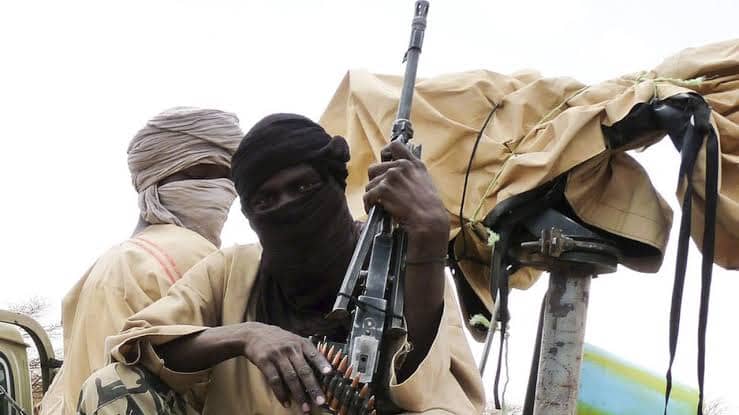
The Edo State Police Command has arrested over 30 suspects in connection with the brutal killing of 16 northern travelers and the burning of their truck in Udune Efandion.  

The Daily Reality reports that the attack occurred on Thursday along the Uromi/Obajana Expressway.  

Confirming the arrests in a statement on Friday in Benin, the command’s Public Relations Officer, CSP Moses Yamu, condemned the killings and assured that justice would be served.  

Yamu stated that the police were committed to ensuring justice for the victims and that no stone would be left unturned in the ongoing investigation.  

He revealed that a truck carrying 25 travelers from Elele, Rivers State, was intercepted by a vigilante group in Uromi. 

During the stop, some travelers were reportedly found in possession of locally made dane guns, raising suspicion among the vigilantes.  

“While this was ongoing, some vigilante members raised an alarm, claiming the travelers were suspected kidnappers. 

This led some community members and passers-by to attack and lynch 16 occupants. The truck conveying them was also set on fire,” Yamu said.  

Police operatives from the Uromi Division swiftly responded to the scene and managed to rescue ten of the travelers, two of whom sustained injuries. 

The injured victims were taken to a hospital and are currently responding to treatment.  

“In the course of investigations, 14 suspects have been arrested in connection with the crime. An emergency meeting was also convened with stakeholders and community members,” Yamu added.  

Meanwhile, a unit of the Police Mobile Force and other tactical teams have been deployed to the area to prevent further violence.  

The Commissioner of Police in Edo, Betty Otimenyin, urged residents to remain calm and cooperate with law enforcement while cautioning against reprisal attacks or unlawful gatherings that could escalate tensions.

Would Seyi Tinubu’s approach succeed in the North?

By Zayyad I. Muhammad

Whether you love him or dislike him, Seyi Tinubu is skillfully mastering the art of being close to power and leveraging his position as the son of Nigeria’s President. The President of Nigeria wields significant power and influence, and Seyi is gradually understanding both the intricacies of Nigerian politics and the delicate task of managing those around his father.

Now, he has taken on a significant and challenging task: restoring the APC’s once-unquestioned dominance in the North—a region that, while outwardly cordial, seems to be quietly drifting away from the party and the Tinubu/Kashim presidency. The North is revolting and smiling!

On this mission, Seyi could either succeed or fail, depending on his arithmetic skills, his father’s policies and programs, and, most crucially, President Tinubu’s willingness to hear uncomfortable truths, especially those his close associates might struggle to convey.

Seyi has identified a key battleground: the youth. His recent focus on distributing food items during Ramadan is a commendable step, so to speak. If executed strategically, it could yield positive results. However, food distribution alone remains a weak and short-lived strategy. 

What more can Seyi do? A multi-pronged approach is needed- an economic and political strategy. Beyond handouts, Seyi, as a young man, should focus on real empowerment. He must identify and support enterprising young Northerners who are not part of the political elite but are making tangible impacts in their communities. 

While he may have supported and empowered many individuals in the past, his new focus should be on fresh faces—ambitious, independent-minded young Northerners who, when given support, can drive real change. This could translate into both grassroots influence and renewed political goodwill for the APC in the region.

Expanding his political network thoughtfully will be impactful; Seyi needs to move beyond the usual circle of children from the political elite. The North is home to many educated and brilliant young minds who remain untapped. Bringing them into his circle could prove invaluable for rebuilding trust and influence.

Leveraging social media influencers will play a crucial role. This time, entertainment influencers will have little to no impact. Instead, Seyi should engage influencers whose voices carry weight—those known for insightful, educational, and impactful messaging that resonates with the region’s unique socio-political landscape.

Ultimately, Seyi Tinubu’s success in the North will depend on how well he moves beyond optics and embraces a more strategic, sustainable approach. The challenge is immense and thorny, but so are the opportunities. 

Zayyad I. Muhammad writes from Abuja via zaymohd@yahoo.com.

Veteran Kannywood actor Baba Karkuzu passes away  

By Habibu Maaruf Abdu!

The Kannywood film industry has lost one of its most beloved pioneers. Veteran actor Abdullahi Shuaibu, widely known as ‘Baba Karkuzu,’ breathed his last on Tuesday, March 25, 2025, the 25th of Ramadan 1446.

He reportedly died at the University of Jos Teaching Hospital after a prolonged battle with illness. 

His demise comes nearly a year after the passing of the celebrated Kannywood actress Saratu Daso, who died on the 30th of Ramadan, 1445. 

A respected figure in the Hausa entertainment industry, Baba Karkuzu made his debut in the 1980s with his iconic drama ‘Karkuzu na Bodara,’ which earned him the stage name by which he became widely known. His unique acting style and contributions to the industry played a crucial role in shaping the early days of Kannywood.

However, Karkuzu had struggled with health complications for several years, which led to blindness before his death. Reports indicate that he had been facing significant hardship since 2018, prompting renowned Nigerian footballer Ahmed Musa to extend a helping hand by donating ₦5 million and gifting him a house.  

His funeral took place according to Islamic rites today, Wednesday, March 26, 2025, at his residence on Haruna Hadeija Street in Jos, Plateau State.

Karkuzu’s death signifies the end of an era in Kannywood, leaving a legacy that future generations will remember.

Tribute to the late Abdu Kano, Karkuzu

By Sani Mu’azu

Inna lillahi wa inna ilaihir rajiun.

It is with a heavy heart that I mourn the passing of my dear elder colleague, friend, and legendary actor Abdu Kano, famously known as Karkuzu.

I had the privilege of knowing Karkuzu for over 40 years, and I can confidently attest that he was an exceptional talent who left an indelible mark on the Nigerian film industry. His versatility as an actor was unmatched, effortlessly transitioning between comedic and serious roles with ease.

One of my most cherished memories of working with Karkuzu was on the hit Radio Drama, Karambana – a dawo lafiya. Paired alongside the iconic Kasimu Yero and the legendary Hausa Pop Singer Sani Dan Indo, Karkuzu, who played the role of Liba, brought his unique energy to the project, which became an instant sensation among truck drivers and freelance workers. Before then and even after, we worked together on several film projects, including the early version of the movie Amina, where he played the role of Sankira along with Pete Edochie, shot around 1998.

What struck me most about Karkuzu was his resilience and dedication to his craft. Despite facing numerous life challenges, including health issues, he continued to act well into his old age, inspiring countless young actors and actresses along the way.

As we bid farewell to this Nigerian film icon, I pray that Allah SWT grants his soul eternal rest in Jannat Firdausi. May his family, friends, and the entire Nigerian film industry find the strength and fortitude to bear this immense loss. Ameen.

Rest in peace, Mallam Karkuzu. Your legacy will live on through the countless lives you touched and the unforgettable characters you brought to life.

Not all that glitters is gold

By Isyaka Laminu Badamasi

As the wave of politicians leaving various political parties, especially the ruling party, to join the SDP gains momentum, remember that not everything that glitters is gold.

During the buildup to the 2015 general elections, some politicians capitalized on the failures of the PDP administration at that time. They formed what is now known as the All Progressives Congress (APC), a decision we all regret in unison. 

As observers, and considering the caliber and number of individuals joining the Social Democratic Party (SDP), I must confess that the county’s political landscape leading up to 2027 will be fascinating in the days, months, and years ahead. 

Before then, we should not fold our arms while watching the gullibility of our people and how it has led us to where theAPC administration has brought us today. It is crucial that we examine the actors involved in this process of decamping, reminding ourselves not to be swept away by the razzmatazz of this drama and to avoid making another unforgivable mistake, as not all that glitters is gold. 

We should be very observant of who joined SDP from our states and from which political party. What are their contributions to the development of the state? Are they relevant to the party they left? Are they capable of changing the narratives in the scheme of things, or is it just to make headlines? 

While they have the right to make whatever political decisions regarding 2027, we shouldn’t be naive enough to believe that the ongoing alignments and realignments are unrelated to us. Remember the pervasive nature of politics.

Isyaka Laminu Badamasi wrote from Bauchi State via makwalla82@gmail.com.

El-Rufai’s defection and APC’s growing fractures

By Abdulhamid Abdullahi Aliyu

In a move that has sent shockwaves through Nigeria’s political landscape, former Kaduna State Governor Nasir El-Rufai has officially parted ways with the All Progressives Congress (APC) and pitched his tent with the Social Democratic Party (SDP).

While party defections are common in Nigerian politics, El-Rufai’s departure from the ruling party carries significant political implications that could alter the dynamics leading up to the 2027 elections.

For a man instrumental in the formation of the APC and a staunch ally of former President Muhammadu Buhari, El-Rufai’s departure raises critical questions. Is this a strategic move to remain politically relevant? A protest against President Bola Tinubu’s leadership? Or does it signal widening cracks within the APC that could deepen in the coming years?

El-Rufai’s political journey within the APC has been marked by loyalty, controversy, and influence. As a key figure in the party’s 2015 victory over the PDP, he was regarded as one of the strongest voices in Buhari’s inner circle.

His tenure as Kaduna governor further solidified his image as a reformist, albeit one who often courted controversy. From restructuring Kaduna’s civil service to his hardline stance on security issues, El-Rufai commanded attention. Under Buhari, he wielded significant influence, not just within Kaduna but on the national stage.

Many expected him to secure a prominent role in Tinubu’s government. However, cracks began to show when he was dropped from the ministerial list, allegedly over security concerns flagged by the National Security Adviser.

El-Rufai’s departure from the APC is not a hasty decision; it represents the culmination of increasing frustration. His rejection as a minister was perceived by many as a calculated marginalization, signaling the start of his estrangement from the ruling party’s core decision-making processes. 

Reports suggest he became increasingly disillusioned with Tinubu’s governance style, particularly in handling economic and security challenges. The former governor is known for his bluntness, and sources indicate that his inability to influence policies within the APC played a significant role in his decision.

While his supporters argue that his move to the SDP is based on principle, critics suggest it is driven by personal ambition—positioning himself for a possible political comeback in 2027.

El-Rufai’s choice of the SDP, rather than the PDP or a new political movement, is intriguing. The SDP remains a relatively small force compared to the APC and PDP, raising questions about whether he genuinely believes in the party’s ideology or sees it as a convenient platform to negotiate his future.

Some analysts believe El-Rufai is playing the long game—joining a smaller party now to avoid confrontations with APC heavyweights while testing the waters for potential alliances with other opposition figures ahead of 2027. Others argue that he has limited options, given his strained relationship with Tinubu’s camp and his unlikelihood of returning to the PDP, a party he once fiercely opposed.

Expectedly, the APC has brushed off El-Rufai’s departure, with the Presidency dismissing it as driven by “inordinate ambition.” Kaduna’s APC leadership has also claimed they are unbothered, arguing that his influence has waned significantly since leaving office. 

However, political observers note that El-Rufai’s defection could have ripple effects. While he may not command a nationwide political structure, his ability to shape narratives, especially in northern politics, should not be underestimated. Some opposition figures, including former Senator Shehu Sani, have downplayed his move, arguing that El-Rufai’s political relevance has diminished.

El-Rufai’s defection is not just about one man leaving a party—it reflects deeper tensions within the APC. Since taking power in 2023, Tinubu has had to balance competing interests within the ruling party, from former Buhari loyalists to his own political allies. The cracks within the party are becoming more visible, and if not managed properly, they could deepen before 2027.

For El-Rufai, the road ahead is uncertain. Aligning with the SDP may be a strategic step, but it remains to be seen whether it will translate into real political leverage. Is this the beginning of a broader coalition to challenge APC dominance, or will it end up as another failed defection story in Nigeria’s political history?

One thing is clear—El-Rufai’s move has reignited conversations about Nigeria’s shifting political landscape. Whether it leads to a major realignment or fizzles out as an individual protest remains to be seen.

Abdulhamid Abdullahi Aliyu, an NYSC serving corps member, writes from the Center for Crisis Communication (CCC) in Abuja.

Late Alaramma Malam Idi Nakamaku: A Qur’anic memorizer par excellence

By Ibrahim Sulaiman (Jama’are)

In circa 1993, my late maternal grandfather, Malam Musa Nagari (d. circa 2017), took me to Malam Idi Nakamaku’s Makarantar allo (a traditional Quranic school) in the Gandun Sarki quarters of Jama’are town, where I was enrolled as a Titibiri (an elementary student). He purchased a new allo (a wooden slate used as a hand-held writing board by students) for me, which I guessed he bought from the Jama’are weekly market. 

Even though they weren’t the same age, I realized that Allaramma Malam Idi and my Malam Musa Nagari were good friends. 

I was already enrolled in Abdulkadir Ahmed Primary School (formerly known as Zango Kanti Primary School). I usually attend the afternoon session at Malam Idi’s school alone with his regular Almajirai (students), most of whom come from nearby and distant towns and villages around Jama’are. 

That was a foundational journey I first had in Islamic studies. 

Sometimes, my maternal grandfather, Malam Musa Nagari, would lead me to school, hand me over to Allaramma, and jokingly say, ‘Ga dalibinka, Dan Izala’ (here is your student, member of Izala). This is because my father had already been a member of Izala (JIBWIS) since the early 1980s. (For an exploration of this statement and the struggle for religious space between Izala and other Sufi groups in Jama’are, see my MA thesis, ‘A History of JIBWIS/Izala in Jama’are, 1986-2015,’ submitted to the Department of History at Bayero University Kano in 2022.)

That was the start of it. Since then, whenever Malam sees me or I pass by him, he calls out, ‘babban dalibi’ (a senior student), even though I stopped attending his school when I was at the Titibiri level. True to form, he asks, ‘ya karatu’ (how’s studies), now referring to conventional education, and concludes with, ‘Allah ya yi albarka’ (may God bless).

As Malam is no longer with us, I will miss his prayers. Whenever I’m in Jama’are, I can hardly pass by Malam without stopping to greet him, and he has always been generous with his usual prayers.

Malam Musa Nagari and Malam Nakamaku have been a school for me. They have been a veritable source of inspiration. 

Malam Nagari, though a grandfather, was a no-nonsense type. We rarely exchanged banter, unlike typical grandparents in a Hausa/Fulani setting like Jama’are. He was a disciplinarian in the real sense of the word. Although we spent a lot of time together at home, on the farm, and in his vocation of building houses, that familiarity did not breach any contempt, as they say. Malam Musa Nagari once told me something I knew was intended to inspire me. ‘Ibrahim, let me tell you. Do you see my farms in their numbers? I only inherited one from my parents…’. This is a way of telling a teenager to ‘be hardworking’!

From Malam Idi Nakamaku, I learned the principle of goodwill. Even though I left his school to probably join Izala Islamiyya, Malam Idi has never stopped considering me his student, referring to me with the term baban dalibi. This has never been a source of concern for him; he simply wants to know how I’m progressing, even at the conventional school level. Malam never ceases to ask such questions; the last time we met was last year during Eid el-Kabir. 

To me, Malam Idi Nakamaku’s life epitomized an enduring commitment to promoting Quranic studies (what a blessed life!). It symbolizes selflessness and service to humanity, along with complete submission to the will of God. I believe Malam Idi Nakamaku embodies the traditional classical eclectic ascetic lifestyle characterized by Zuhd (asceticism or self-denial to achieve Ridhal Allah, meaning God’s pleasure) of early Sufi scholars, which continues to endure into this century.

The demise of Allaramma Malam Idi Nakamaku on March 4, 2025, was a great loss and, indeed, irreparable to the entire Jama’are Emirate. May his soul, along with that of his good friend Malam Musa Nagari, continue to rest in Janna til Firdaus.

Ibrahim Sulaiman (Jama’are) wrote from Abuja via ibrahimsulaiman193@gmail.com.

Walking Down the Memory Lane | The Kabara Tafsir and Surat Yusuf

By Prof. Abdalla Uba Adamu

A few comments about the ongoing Ramadan Tafsir at the Palace of the Emir of Kano conducted by Sheikh Qaribullah Nasir Kabara (translator, Qadriyyah) and Muhammad Hadi Gwani (reciter, Tijjaniyya) brought back nostalgic memories for many people. The conversation was started by Muhsin Ibrahim. Perhaps only those living or having lived in Kano may probably know of this Tafsir that has been consistently going on since about the 1940s, shifting location only once, from Chiranci to Kofar Kudu in Kano. On Sunday, 16 Ramadan/March 2025, I was part of a TV discussion on the Tafsir and its meaning to me. This was what promoted this sharing of memories. 

Tafsir is the scholarly interpretation and explanation of the Quran. It helps to clarify the meanings of verses, their context, linguistic nuances, and the reasons for their revelation. The combo of Sheikh Qaribullah Kabara and Sheikh Hadi Gwani in Kano is one of the hundreds of Tafsirs conducted during Ramadan in Islamicate northern Nigeria. 

Each individual has their preferences for the reciter/translator combo. Mine, inherited from my father, was for the Kabara Tafsir. The reason is up close and personal. I was born on 14th Ramadan 1375, or 25th April 1956. My father was informed of my arrival while he was at the Tafsir in the inner chambers of the Emir of Kano’s Palace near the reciters. My father was a Qadiriyya adherent and disciple of Malam Nasiru Kabara. 

The nostalgia was ignited by Muhsin’s reflections of Surah Yusuf, which was recited on the 9th day of every Ramadan. Perhaps the Surah draws the largest crowd apart from the day of the ending of the Tafsir (Hattama). I have always marveled at why there is a surge of attendees on any day the Surah is being recited/translated. I remember being annoyed one year when I was slightly late and had to virtually push and shove through a huge crowd – often “standing room” only – to get to my reserved seat deep in the open space of the Place just before the door leading to the “Soron Isa” antechamber. All eager to listen to Surah Yusuf. 

Significantly, the Juz’i containing the Surah ends on Ayat 52. But on Friday, 17th December 1999/9th Ramadan 1420, as I noted in my own copy of Yusuf Ali’s Translation of the Holy Qur’an, which I used as a guide in following the recitation, Sheikh Qaribullah suggested to complete the Surah to its 111 Ayats to maintain the narrative structure and continuity of its events. Thus, on the day, the Tafsir lasts longer than on other normal days, while the Tafsir on the following day, starting directly with Surah Al Ra’ad, always ends up being the shortest night of the Tafsir. 

There are many reasons for the attachment of thousands of people – some who attend the Tafsīr on the Surah Yusuf day only. While this has many lessons, I will examine it from an ethnographic perspective. The story of the travails of Prophet Yusuf has one central cultural importance to the Hausa – “haƙuri can dafa dutse”/Patience is a virtue. This was indeed played out by the way Prophet Yusuf went through so many challenges in life – simply because of the stupendous natural beauty bestowed on him by Allah (SWT) to begin with. 

But his trials centered around what I call “yan ubantaka,” sibling rivalry and jealousy inherent among siblings of different mothers. This is a theme in Hausa family structures where offspring sharing only a father seem almost always at each other’s throats. Of course, not all households are like this – I am sure you know some households with perfect harmony, despite different mothers (might even be your own particular circumstance). However, the general experience of many Hausa is precisely as described in Surah Yusuf – bitter rivalry towards the more outstanding brother – whether junior or senior. Attendees of the Tafsir, therefore, get solace at the spiritual formula and lesson of patience and perseverance and go home uplifted that, as for Prophet Yusuf, “komai nisan dare, gare zai waye”/there is light at the end of the dark tunnel. 

Another significant historical moment in the Kabara Tafsir was what I called The Switch. On 29th March 1990,equivalent to 3rd Ramadan 1410, while reading Surah Al-Ma’idah, Ayat 20, Mal. Nasiru stopped the translation. With an emotionally charged voice, he prayed for the Emir Alhaji Ado Bayero (the host of the Tafsir). Then he informed the congregation that the Emir had given permission for Qaribullah Nasiru Kabara to continue the translations. The massive roar of Allahu Akbar takbir startled the mass of Swallows (Bilbilo) perching on the trees in the Emir’s mangrove area (Sheka), where they took off en mass. It was indeed an emotional moment. Right away, Mal. Qaribullah took over the translations, and in a well-synchronized manner, Mal. Hadi led him through the recitation, changing the tonalities of his recitation with Mal. Qaribullah matching him tone for tone. More Takbirs followed every hill and valley of their voices. It was a truly historic moment. 

Finally, a massive controversy concerning filming the story of the Prophet Yusuf erupted in Kano in 2009. Luckily, it was not from Kannywood producers, who, aware of the prohibitions of depicting prophets of Allah in any visual form, dared not even attempt it. However, in 2009, a TV series, Yousuf-e-Payambar or Joseph, the Prophet, was screened at the 2009 Cannes Film festival. The 45-episode series was produced by Sima Film Productions, an affiliate of the Islamic Republic of Iran Broadcasting (IRIB). 

Although the series’ dialogue was in Persian, soon enough, the Lebanese Al Manar TV station, owned by the Shi’a Hezbollah, started re-broadcasting the series with Arab dub-over voices of the Farsi dialogue, and became available through the Middle East satellite TV networks. It was a Shi’a TV show, since apparently in the Shi’a understanding of Islam, there was nothing wrong with depicting Prophets in any visual medium. Further, the story of Prophet Joseph had universal constants that made it appealing throughout the Muslim world, regardless of doctrinal inclination. 

In the summer of 2009, a young Muslim Hausa student studying at the Al-Azhar University in Cairo somehow downloaded the entire Yousuf-e Payambar series with Arabic voice-over dubbing in his laptop and brought it to CD marketers in Kano, the biggest commercial centre in northern Nigeria. In Kano, somehow, it was dubbed over in the Hausa language. It was an instant hit. The marketers subsequently copied the series into eight-volume DVDs and released them to traffic light markets common in most African urban centers.

However, no sooner had the DVDs entered the market than two prominent Muslim clerics in the Shari’a State of Kano appeared on public radio and condemned the Series. These were Sheikh Amin Daurawa and Sheikh Ibrahim Khalil, the latter of whom was the Chairman of the powerful Kano State Council of Ulama. In their ‘fatwa’ – Islamic ruling – echoing the Al-Azhar proscription of visually representing a Prophet of Allah (SWT), they argued it is prohibited to depict any Prophet in any form visually. The basic problem was that while Shi’a filmmakers produced the Prophet Yusuf TV series, the consumers in Kano were Sunni and did not make the sublime distinction about the interdiction of prophetic images between Sunni and Shi’ite interpretations of Islam.

The fatwa resulted in the Kano State Censorship Board’s banning the sales of Joseph the Prophet DVDs and arresting and prosecuting marketers and vendors who sold the DVDs. However, while the series was banned in Kano, it became readily available in neighboring States, especially Kaduna and Bauchi, where Shari’a law was implemented more flexibly.

The Kabara Tafsir is available on the YouTube Channel I created specifically for it. So look for it if interested. If you want to know more about the controversies and censorship of the Prophet Yusuf CDs in Kano, read my article, “Controversies and restrictions of visual representation of prophets in northern Nigerian popular culture.” March 2017. Journal of African Media Studies 9(1):17-31. The journal publishers don’t want their articles on academic social media networks (ASMN),but they say nothing about personal sites! So, if you want to download the entire paper, it is Acibilistically available at this link.

For those old enough, there is also an Egyptian poster of the Prophet Yusuf/Zulaykha in the presence of her husband, al-Aziz (Potiphar) encounter (fully depicted in the TV series) which, together with other Prophets and saints, were also freely sold in Kano in the 1960s. This gives a historical perspective to how artists tried to portray this popular Islamic narrative in popular culture. The poster is in the article.

Maternal mortality: When childbirth becomes death sentence

By Maimuna Katuka Aliyu

Maternal mortality, the death of a woman during pregnancy or childbirth, remains a cruel and devastating reality. Despite advancements in medicine, millions of women, especially in low- and middle-income countries, face preventable deaths due to systemic failures and societal neglect.

Why Mothers Die

Several factors contribute to maternal mortality, often worsened by inadequate healthcare infrastructure and socio-economic challenges:

1. Severe Bleeding: Postpartum hemorrhage is the leading cause, especially in areas without skilled birth attendants.

2. Infections: Poor hygiene and lack of proper care lead to life-threatening infections after childbirth.

3. Pre-eclampsia and Eclampsia: High blood pressure during pregnancy causes fatal complications when untreated.

4. Unsafe Abortions: A significant number of deaths stem from unregulated and unsafe abortion practices.

5. Underlying Health Issues: Chronic conditions like malaria, HIV/AIDS, and anemia exacerbate pregnancy risks.

In rural areas, the situation is even grimmer. Women often avoid hospitals due to cultural taboos, ignorance, or financial constraints. Many endure days of labor at home, resorting to harmful traditional concoctions instead of seeking professional care. Poor infrastructure and untrained healthcare providers further complicate the situation, leaving mothers vulnerable to preventable deaths.

When it comes to Post-natal care, there isn’t any attention given to the mother after birth on what she eats and how she feels. Mostly, women undergo pain and tear of different degrees and suffer in pain.

Most women suffering from Eclampsia that are brought to the hospital who don’t go for antenatal care, health officials won’t know exactly what is wrong with them, so if she’s having headache, they either prescribe bordrex or sudrex in a chemist for you to take, if its malaria, they haven’t run any tests on you too confirm, they’ll prescribe paracetamol for you to take. Before you know it, she doesn’t have any blood in her body. Lastly, she’ll be rushed to the hospital breathing heavily, and before you get donors to supply blood to her, it might be too late.

People tend to give birth without control, good health, or good food to eat, which also makes the uterus suffer a lot.

The Four Deadly Delays

Maternal mortality is worsened by four critical delays that often seal a woman’s fate:

1. Delay in Seeking Care: Cultural beliefs, ignorance, and financial struggles hinder timely decisions to seek help.2. Delay in Reaching a Facility: Poor roads, lack of transportation, and distance to hospitals mean many women never make it in time.

3. Delay in Receiving Care: Bureaucratic processes, understaffed hospitals, and unskilled personnel result in deadly delays once women reach healthcare facilities.

4. Delay in Referral: When facilities cannot handle emergencies, referral systems are often inefficient, leading to further loss of life.

Ripple Effects of Maternal Death

The death of a mother devastates families and communities. Children without mothers face a higher risk of malnutrition, poor education, and even death. Economically, families are burdened by healthcare costs and the loss of a primary caregiver.

A Call to Action

Addressing maternal mortality requires collective effort:

1. Healthcare Access: Build well-equipped facilities in rural areas and train more skilled birth attendants.

2. Education: Empower communities with knowledge about maternal health and safe childbirth practices.

3. Family Planning: Provide accessible contraception to prevent unplanned pregnancies and reduce unsafe abortions.

4. Government Intervention: Strengthen healthcare systems, remove financial barriers, and implement maternal health policies.

Last Line

Maternal mortality is more than a health statistic; it is a tragic indictment of societal failure. No woman should die giving life. Tackling the root causes, improving healthcare systems, and fostering awareness can save countless lives. The time to act is now—because every mother matters.

The eternal quartet: Understanding the hadith debate in northern Nigeria

By Ibraheem A. Waziri

Last week, the Muslim online community in Northern Nigeria was abuzz with a debate between two prominent scholars: Shaykh Prof. Ibrahim Saeed Ahmad Maqari, Imam of the National Mosque, and Shaykh Prof. Sani Rijiyar Lemo, a well-known teacher and writer. They are discussing hadiths—sayings of the Prophet Muhammad—and their reliability. 

Maqari insists that only Mutawatir hadiths, which are passed down by many narrators, are certain. In contrast, Ahad hadiths, coming from fewer narrators, lack certainty; Da’if hadiths are doubtful; and Maudu’ hadiths are fabricated. Rijiyar Lemo argues that Ahad hadiths with strong chains—like those found in Bukhari or Muslim—are as trustworthy as Mutawatir hadiths, also rejecting both Da’if and Maudu’ hadiths.

This may appear to be a new split in Islam, but it isn’t. It’s an old debate reemerging, reflecting four fundamental ways we think: reason, belief, doubt, and rejection. Maqari and Rijiyar Lemo each adhere to one of four classic Muslim paths. Let’s simplify it to demonstrate that this isn’t a crisis—it’s just part of our nature.

The Scholars’ Stances: Old Roots, Modern Voices

Maqari aligns with the Ash’ari and Maliki approach. He’s cautious: only Mutawatir hadiths, widely shared and undeniable, confirm the Prophet’s words, especially for core beliefs. Ahad might be true but aren’t certain, Da’if are shaky, and Maudu’ are fabrications. His stance is logical, demanding solid proof.

Rijiyar Lemo takes the Athari and Salafi route. He’s straightforward: Ahad hadiths with strong chains are as good as Mutawatir—no need for a crowd if the narrators are reliable. He discards Da’if and Maudu’, trusting the vetting process.

This echoes a thousand years of Muslim thought, split into four theological groups—Mu’tazila, Ash’ari, Maturidi, Athari—and four legal schools—Hanafi, Maliki, Shafi’i, Hanbali. Maqari’s Ash’ari/Maliki; Rijiyar Lemo’s Athari/Salafi. The others linger in the background, forming four ways to see faith.

 The Fourfold Lens: A Universal Impulse

This isn’t just about hadiths—it’s how we view everything, through four lenses:

– Reason: “Prove it—how many narrators? Are they solid?” Maqari’s fans value his logic, insisting on Mutawatir’s wide agreement for certainty over Ahad’s limited sources.

– Belief: “My scholar says it’s true.” Rijiyar Lemo’s supporters trust a single Sahabi’s word if the chain is sound, no extra proof needed—just faith in the process.

– Doubt: “Are we sure? What if it’s wrong?” Questions linger for those unsure about either side.

– Rejection: “This is outdated nonsense.” Some walk away entirely.

Northern Nigeria’s Muslim online space shows all four: some cite Mutawatir facts for Maqari, others trust Rijiyar Lemo’s Salafi roots, a few question both, and some dismiss it outright. These align with the four schools, too. Picture a grid—reason on one side, revelation on the other—yielding four pairs:

– Reason + Reason: Hanafi and Mu’tazila  

  Hanafis use analogy and judgment for rules; Mu’tazila apply logic to beliefs like free will. They’re strict: theology needs Mutawatir or Ahad with three-plus narrators; rules use authenticated Azizi (strong Ahad). Reason leads.

– Reason + Revelation: Maliki and Ash’ari

  Malikis mix reason with Medina’s practices; Ash’aris back faith—like God’s traits—with logic. Maqari fits here: Mutawatir for beliefs, authenticated Ahad for rules like prayer times. Revelation guides reason.

– Revelation + Reason: Shafi’i and Maturidi

 Shafi’is prioritize hadiths and Qur’an, sorted logically; Maturidis use reason within scripture’s bounds. Mutawatir for theology, authenticated Ahad for rules like fasting. Revelation’s first, reason aids.

– Revelation + Revelation: Hanbali and Athari

Hanbalis stick to texts; Atharis take the Qur’an and hadiths as is. Rijiyar Lemo’s here: authentic Mutawatir or Ahad work for both beliefs and rules. Revelation rules.

Maqari’s Ash’ari/Maliki stance demands Mutawatir for certainty; Rijiyar Lemo’s Athari/Salafi view accepts authentic Ahad.

Four Across the Ages

Four isn’t just in this debate—it’s a pattern across time and cultures. In the West, psychologist Carl Jung saw four as a symbol of wholeness, like in mandalas or personality types—thinking, feeling, sensing, and intuiting. Stephen R. Covey’s four quadrants divide tasks by urgency and importance, offering a complete way to manage life. Game theory maps four outcomes—win/win, win/lose, lose/win, lose/lose—covering all possibilities in decisions, much like Karl Popper’s fourfold reasoning tests ideas through trial, error, doubt, and rejection. Four directions—north, south, east, west—guide us; four elements—fire, earth, air, water—once explained the world; four schools shape Islam. Even a Sudanese Sufi song by Abdurrahim Albur’iy, Misr al-Mu’mina, celebrates four in nature and Islamic history:

“We call upon You with the four and the four books,  

And the 114 surahs [Qur’an],  

With the six angels and the four noble ones,  

With our Prophet Muhammad and the four caliphs,  

And the six after them and the four imams,  

And the seven jurists and our four poles,  

The pegs of the earth in the four directions,  

The substitutes and the ten chiefs in four,  

Preserve my three and four limbs,  

And keep our four sides from the resting place,  

Remove the body’s illness in its four temperaments,  

Bless our week until Wednesday (fourth day),  

The ninety days of the year in four,  

And our seven seas and our four rivers,  

We are saved from four and gathered with four.”

Fours—caliphs, books, rivers—tie faith and life together across time.

Philosophy Meets Faith: Why Four?

Why four? It’s simple and complete. Two (yes/no) is too basic, three (yes/maybe/no) lacks balance, and five’s cluttered. Four’s just right: two ways to agree (reason, belief), one to question (doubt), one to reject. Like a square, it’s steady, covering all sides—seen in nature, history, and our debates.

Nothing New Under the Sun

Don’t let Northern Nigeria’s Muslim online space hype fool you—this is old news. Ash’ari scholars like al-Ghazali sought proof, like Maqari; Athari ones like Ibn Taymiyya trusted texts, like Rijiyar Lemo. Mu’tazila favored reason; Maturidi blended it with faith. Four schools, four views—same as today.

It’s loud now because Maqari’s at the National Mosque, and Rijiyar Lemo’s books reach many. People care about the Prophet’s words. But it’s not a new split—just two notes in an old four-part tune.

Takeaway: Embrace the Quartet

Don’t worry about this debate. It’s not Islam breaking—it’s alive, with views fitting four natural slots: Maqari’s logic, Rijiyar Lemo’s trust, plus doubt and rejection. Next time Northern Nigeria’s Muslim online space heats up—over hadiths or anything—spot these four: thinkers, believers, questioners, and naysayers, blending into many combinations. It’s how we work. Maqari and Rijiyar Lemo pick two corners of a square we’ve all been drawing forever. It’s not chaos—it’s our pattern.