Nigeria

SCAM: ‘NNPC is not recruiting’ – Management

By Uzair Adam Imam 

The Nigerian National Petroleum Corporation (NNPC) is not recruiting, the General Manager, Group Public Affairs Division, Mr Garbadeen Muhammad, said.

The General Manager made the declaration public in a statement issued in Abuja by the management. 

In the statement, Muhammad urged the general public to discard the rumour in the air that the company was recruiting. 

He reiterated that the information suggesting that NNPC Ltd. was recruiting was false and baseless. 

He stated, “the general public should please take note that NNPC Ltd. is not recruiting.

The statement noted that the NNPC has an official website to make announcements whenever the company intends to recruit. 

The official websites were identified as “(www.nnpcgroup.com); verified Twitter handle (@nnpcgroup); verified Facebook page (@nnpcgroup) and other credible media channels,” he stated.

Kannywood Film Review: ” There is a way”

By Anna Mohr

The movie, There is a way, directed by Falalu A. Dorayi and produced by Abba El-Mustapha, is a simple but effective feel-good movie retelling popular tropes and stories in a predictable but heartwarming way. Following the recipe of Shakespearean dramatics and clichéd Disney movies in the 2000s, such as Cinderella Story or High School Musical, it easily can stand on its own while also covering issues of the Hausa society and giving insights into its culture – an entertaining and so sweet movie you can taste the sugar on your lips.

Isham is a middle-class university student with a pure heart who wants to get his degree through hard work. He falls high over heels for Fadilla, the daughter of a wealthy businessman. The two desperately want to be together but must face several problems threatening to destroy their relationship.

There is a Way was the first Hausa movie I watched, and although the story has already been told a thousand times, I easily became invested with it. Even though I rarely watch romantic movies, I have a soft spot for them. The quality of the film is fitting to the story itself: simple but refreshing. Please, do not expect finesse camerawork or outstanding dialogues – you will surely be disappointed. But the blunt storytelling is made up of dramatics that can easily compete with those of the Bollywood film industry.

The movie itself is certainly no piece of art. It is amateurishly made: the camera is wiggling, and the lighter colours in the scenes are sometimes glaring and unnatural. At the same time, the movie uses effects such as slow-motion, certain scenes are muted to create tension and dramatic music is played in between.

The story itself is predictable as typical for a romantic movie and has similarities to our Western fairy tales and Elizabethan or ancient love stories: Man meets a woman and falls in love at first sight, but their love is doomed, and they have to face challenges before being together. Also, the poor protagonist and his rich-born love interest are no rarity in this genre. Another aspect I recognized in the film is the flat characters: We have a pure-hearted hero who cannot do wrong. But instead, tragedy happens to him, and his pureness is challenged. I found that quite wasted because characters are made to make mistakes. They can only grow when they do wrong and when they fail. There is a sense of relatedness that I miss.

The characters themselves are introduced in simplicity. When Fadilla’s parents appear on screen, they are introduced with “Hello Mum” and “Hello Dad”, which is blunt and unimaginative to share the family ties with the viewer. The dialogues are just as direct. The movie is in English, and there is no dubbing involved, meaning that Hausa people speak a language that is not their own. That includes that the dialogues are often wooden and lacking finesse. “I will tell you the secret of …” is just one example of the movie’s very direct way of communication, and I daresay that it would have been more natural if the characters had spoken in their own language. The English script has some sentences that are generally not used, leading to many exaggerated dialogues. For example, “you harbour a criminal” when Isham is accused of cheating in an exam.

So, why do I like this movie?

Easy: Because it has charm. It is charming how Isham and Fadilla are swooning about each other. How they tell each other Shakespearean confessions of undyeable love as if they just teleported into one of his sonnets; how they are the embodiment of a Greek tragedy, a Hausa variant of Romeo and Juliet; how the world is joined against them, but they are still standing side by side.

Viewing the Hausa society and culture in the movie is also fascinating. When watching it, you may recognize that male and female characters are never touching each other – not mother and son, not father and daughter, nor the lovers. In addition, women are wearing scarves – hijabs – around their heads, so you cannot see their hair.

Another interesting fact is the mention of Allah instead of God, which I needed some time to get used to the first time I watched the movie. Also, certain issues are discussed: For example, the gap between poor and rich, the importance of education and the problem of corruption and blackmailing at university. These aspects convey the information I would not find out otherwise and give more insights than any textbook in school.

To put it all together, the movie is a people pleaser. You can easily be invested in the plot and follow the relationship between Isham and Fadilla, although the story itself is simple and predictable. At the same time, there are interesting aspects of culture and society. So, I recommend watching it!

Anna Mohr studies at the University of Cologne, Germany. She can be reached via amohr9@smail.uni-koeln.de.

The sociology of Eid festivals in Nigeria 

By Hassan Idris

It’s quite important to demystify the fact that in the festivity of the Eid festival, which is a religious celebration amongst Muslims all over the world, there is quite a lot of sociologically significant display, which demands sociological explanations and outlooks. Religious festivals such as Eid hold greater importance to sociologists like Emile Durkheim (1858-1917). He developed a widely used theory for explaining what holds society and social groups together through his study of religion. He identified core aspects of religious structure and participation that sociologists today apply to the study of society in its entirety.

This includes the role of religious festivals and rituals in bringing about social cohesion, social solidarity and people together around shared practices and values. It also comprises ways that participation in religious festivals and rituals reaffirms shared values and thus reaffirms and strengthens the social bonds between people and the experience of “collective effervescence,” in which people tend to share in feelings of excitement and are unified in the experience of participating in religious festivals and rituals together. The Eid festival, an Islamic holiday celebrated by many Muslims as a religious holiday with religious rituals, values, and relationships, is one of them.

Thus, Durkheim defined religion as a“unified system of beliefs and practices relative to sacred things. Sacred to him meant extraordinary—something that inspired wonder and that seemed connected to the concept of “the divine.” He argued that“religion happens” in society when there is a separation between the profane (ordinary life) and the sacred. A rock, for example, isn’t sacred or profane as it exists. But if someone makes it into a headstone, or another person uses it for landscaping, it takes on different meanings—one sacred, one profane. Durkheim, who’s generally considered the first sociologist to have analyzed religion regarding its societal impact, believed that religion is about community. It binds people together (social cohesion), promotes behaviour consistency (social control), and offers strength during life’s transitions and tragedies (meaning and purpose).

With the applicability of the methodology of natural science to the study of society, Durkheim held that the source of religion and morality is the collective mindset of society and that the cohesive bonds of social order result from common values in a society. He contended that these values need to be maintained to maintain social stability, to which explanations of Durkheim on the importance and functionality of religion would be used to explain and understand the religious Eid festivals celebrated by all the Muslims in the world.

However, the word “Eid” means festival or feast. Therefore, it depicts the event that is being celebrated. Muslims celebrate two types of Eid yearly following two significant acts of worship. The first is called “Eid Al-Fitr”, which means “the fast-breaking Festival” celebrated after fasting the entire month of Ramadan. The second, known as “Eid-ul-Adha,” meaning “the festival of sacrifice which is celebrated immediately upon the completion of Hajj, the annual pilgrimage to Mecca. The Eid Al-Adha entails going for a pilgrimage to Mecca performed by millions of Muslims simultaneously once a year. Through Eid Al-Adha, the sacrifice Abraham was willing to make to God and the mercy God had upon him becomes celebrated and manifested.

Muslims celebrate the day by sacrificing a sheep or so and sharing it not just with family and friends but also with the less privileged. This celebration lasts four days, beginning the day after the completion of Hajj. The celebration of Eid Al-Fitr lasts one day, starting with the sighting of the new moon, which marks the end of the Islamic month of Ramadan and the beginning of the following month. During Ramadan, Muslims fast to purify themselves and get closer to God. Ramadan is like a retreat, a time to step aside worldly worries, focus on spirituality, and improve connections with the one who gave them life and blessings.

After going through a long spiritual retreat for a maximum of 29 to 30 days, it is only logical that a feast is held to mark the end of the month. This is what Eid Al-Fitr is all about. Like Ramadan, Eid Al-Fitr begins with the first sighting of the new moon, so most of the time, Muslims have to wait until the night before Eid to verify its date. If the new moon is not visible, the month lasts 30 days. The date changes annually on the Gregorian calendar and varies from country to country, depending on geographical location.

Though, in declaring the start of Eid, Muslim-majority countries depend on the testimonies of local moon sighters. The Judicial High Court then decides if Eid has arrived. When the sighting has been verified, Eid is declared on television, radio stations and mosques. The celebration of Eid Al-Fitr lasts one day, starting with the sighting of the new moon, which marks the end of the Islamic month of Ramadan and the beginning of the following month.

The first Eid Al-Fitr was celebrated in 624 CE by the Prophet Muhammad (PBUH) and his companions after their victory in the battle of Badar, a turning point in the prophets’ struggle with his opponents among the Quraish in Mecca during the early days of Islam. Inasmuch as all Muslims celebrate the festival, there are many doctrines and ways of celebrating it which are sociological and are of paramount interest and importance to sociologists and Anthropologists. However, the traditions of Eid Al-Fitr entail ‘Sawm’ ( fast), which is the practice of fasting during the holy month of Ramadan and is one of the five pillars of Islam.

Muslims believe that during Ramadan, the Qur’an text was revealed to the Prophet Muhammad (S.A.W). Muslims celebrate Eid Al-Fitr with “Salat Al Eid” (Eid prayers). There is no audible call to prayer for the Eid prayers. Muslims will gather in mosques or open spaces and offer two units of prayer–called “Rakat”. The prayers are followed by a sermon, in which the Imam asks for forgiveness, mercy, and peace for every being worldwide.

To further bolster the sociological social solidarity and love in Islam, which clarifies Durkheim’s postulation, the other key element of the Eid festival is giving money to the poor alias ‘Zakat al-Fitr’, sending Eid greetings and feasting with families. For many Muslims, Eid al-Fitr is a festival to show gratitude to Allah for the help and strength he gave them throughout the month of Ramadan to help them practice self-control. The phrase commonly used by Muslims as a greeting on this day is “Eid Mubarak”, which is Arabic for ‘blessed festival’.

Muslims begin Eid with the observance of the Eid congregational prayer, sometimes in the mosque but usually in an outdoor location. Before going for the Eid prayer, it’s encouraged to take a bath, wear the most befitting clothes, and look dignified for the celebration. On the way to the Eid Prayer, Muslims recite the words: Allah is great, Allah is great, Allah is great. There is no other God but Allah. Allah is great; Allah is great. To him belongs all praise. And after the Eid prayer, people gather to feast with their families and friends, where they get to savour the taste of various dishes.

Some even travel to their hometowns or home countries to celebrate with their extended families and rekindle the bond of kinship. There is a rich tradition of gift exchange during Eid. For example, it is customary to gift new clothes and shoes to children in Nigeria. Sometimes, the children receive money to buy sweets and snacks to enjoy with their friends and cousins. In western countries, however, children receive gifts instead of cash, and parents decorate their homes to create a mood of excitement for the family.

Finally, Eid is meant to celebrate the completion of spiritual duty and a time to bond and exchange hugs, kisses, and laughter with family, friends and the community. Each country has traditional foods, and sweets prepared ahead of Eid or on the morning of the first day. These foods range from special biscuits and bread to cakes and puddings. On the first day of Eid al-Fitr, voluntary fasting is not allowed as Muslims are encouraged to feast and celebrate the completion of a month of worship and abstinence from food.

Greetings for Eid also vary depending on the country and language. For instance, in Indonesia, Eid is called Lebaran, so Indonesians would say, “Selamat Lebaran”, which means Happy Eid. Other variations of Happy Eid are “Barka da Sallah” in Hausa, a Nigerian language. In addendum, with clothes being an essential marker of Eid, some people wear traditional clothes from their culture, while others pick out something new to wear. Eid is a time for every Muslim to share and express love, peace, and friendship worldwide and extend hands to their non-Muslim neighbours and friends during this festival.

Hassan Idris wrote from Kogi State via idrishassan035@gmail.com.

Hajj 2022: NAHCON apologises for failure to convey 1,500 intending pilgrims 

By Muhammad Sabiu

The National Hajj Commission of Nigeria (NAHCON) publicly apologized on Friday for its inability to transport 1,500 pilgrims for the 2022 Hajj.

Mrs Fatima Usara, the commission’s Assistant Director, Public Affairs Division, issued a statement on the unfortunate drama on Friday in Abuja.

She stated that there would be nine pilgrims from Bauchi, 91 from Plateau, and 700 from Kano State, who were supposedly travelling to the holy country.

Usara also expressed regret for the commission’s inability to transport an estimated 750 intending pilgrims from the Private Tour Operators sector.

She stated that the commission accepted responsibility for the hardships and disappointments experienced during outbound airlift operations to the Kingdom of Saudi Arabia by intending pilgrims for the 2022 Hajj.

Usara was quoted in the statement as saying, “Sadly, in spite of all efforts to transport all Nigerian intending pilgrims to Saudi Arabia for the 2022 Hajj, NAHCON was incapacitated in discharging this responsibility.

“Majorly due to last-minute setbacks that frustrated its plan to conclude transportation of pilgrims by June 27.

“Unfortunately, the chartered flights option that gave so much hope to NAHCON and the Private Tour Operators’ leadership also became a failure as their IBAN accounts failed accreditation by the respective authorities in Saudi Arabia.”

Meanwhile, a video of some aggrieved intending pilgrims who also didn’t make it to the 2022 Hajj has gone viral on social media, airing their grievances and cursing anyone who has a hand in their ordeal.

Buhari: Nigeria’s hodophile president leading the country to doom

By Ahmad Deedat Zakari

Within 48 hours, in the most populous black nation in the world, an Assistant Commissioner of Police was gruesomely murdered. Boko Haram insurgents infiltrated a prison in the country’s capital and released their members. The president’s security team and media convoy was attacked, leaving two injured.  

All these are happening amidst biting inflation that has enthroned hunger in the country. Nobody seems concerned about students of public universities in the country that have been at home for several months. Scores have already taken to cybercrime as an alternative to education.

Just like in Chinua Achebe’s Things Fall Apart, everything that holds us together as a nation is seemingly crumbling. It is unbelievable that it is happening under President Muhammadu Buhari’s watch, a man who is reputed for diligence and integrity.

It is saddening that the man Nigerians unreservedly love and elected to lead them is good at only travelling. While the nation burns and desperately needs succour, the president is on his way to Senegal.

Reports indicate that the president has made 11 international trips in five months. Sadly, the president’s official trips are not translating to anything good for Nigeria.

Buhari’s tenure ends in ten months, but will Nigeria survive these months’ hunger, insecurity and absence of education?

Deedat wrote from Lokoja, Kogi State, via ahmadzakari111@gmail.com.

Insecurity: Bandits attack Buhari Security Team in Katsina

By Ahmad Deedat Zakari

Presidential Spokesperson, Garba Shehu, disclosed that the Advance Security Team of President Muhammadu Buhari was attacked near Dutsinma, Katsina State, on Tuesday, July 5, 2022.

“The Presidency has described as sad and unwelcome, the shooting incident near Dutsinma, Katsina State, at the convoy of cars carrying the Advance Team of security guards, protocol and media officers ahead of the President, Muhammadu Buhari’s trip to Daura for Sallah.” Mr Garba wrote in a statement .

Mr Garba assured Nigerians that the attack was repelled by the military, police and DSS personnel accompanying the convoy.

However, he also stated that two persons in the attacked convoy were receiving treatment after sustaining minor injuries.

“Two persons in the convoy are receiving treatment for the minor injuries they suffered. All the other personnel, staff and vehicles made it safely to Daura.” Mr Garba wrote

Breaking: OPEC Secretary General, Barkindo, is dead

By Ahmad Deedat Zakari

Hours after meeting President Muhammad Buhari, GCFR at the State House, Abuja, the outgoing Secretary General of the Organization of Petroleum Exporting Countries (OPEC), Muhammad Sanusi Barkindo has passed away.

Mele Kyari, the NNPC GMD, announced Barkindo’s demise in the early hours of Wednesday .

“We lost our esteemed Dr Muhammad Sanusi Barkindo. He died at about 11pm yesterday 5th July 2022. Certainly a great loss to his immediate family, the NNPC, our country Nigeria, the OPEC and the global energy community. Burial arrangements will be announced shortly.” Mr Kyari tweeted.

Barkindo who was received by President Muhammadu Buhari at the State House on Tuesday died at the age of 63. The president had described him as a worthy ambassador of Nigeria during Barkindo’s visit to the State House

Barkindo was appointed as OPEC Secretary General in 2016 and his tenure comes to an end on July 31.

Why you should take advantage of free tuition to study in Germany

By Aminu Mohammed

I nurtured my desire to study abroad during my undergraduate days at the Department of Political Science and International Studies, Ahmadu Bello University, Zaria. It was the era when ABU was the hotbed of Marxism and radical thinking in the North, led by the late Marxist historian Dr Bala Usman and others like Dr Bako, Prof. Sadiq and Prof. Ayo Dunmoye. I was fascinated by the writings of Karl Marx and Max Weber, which prompted my desire to study in Germany.

Germany is the wealthiest country in Europe and a global leader in education and research. It is the land of scientists like Albert Einstein, Max Plank and philosophers such as Immanuel Kant, Arthur Schopenhauer, Georg Wilhelm Friedrich Hegel, Friedrich Nietzsche, Karl Marx, Max Weber, and Goethe, among others. The education in Germany is top-notch, especially in medical sciences, natural science and engineering. Studying in Germany is also cheaper and more cost-effective compared to other countries such as the United States, United Kingdom, Canada and Australia.

Many of you may wonder why I choose to write on this topic, considering the high cost of studying abroad. Many of you may still think that only the elite can afford to send their children to foreign universities and others from a humble background are not capable of doing so, probably due to their circumstances.

I want to tell you today that you should perish such thoughts that have limited our people, especially in the northern part of the country, making them doubt their abilities. I want to tell you that there are no limits to where you can go and what you can achieve if you believe in your dreams and work towards them. We live in an era of information technology where you can use your smartphone to search for information that will aid you in improving your life and career. There are many Nigerian students from the Southern part of the country; most do not have wealthy parents and are thriving in this environment.

Studying in German universities is tuition-free for both local and international students. There are two options: you can either study through scholarship or self-sponsorship by taking care of your living expenses on your own through a system called blocked account. The first option is highly competitive and more tedious than the second one. Therefore, I suggest that people without solid financial capacity focus on the first option by applying for a scholarship. You can check the universities’ websites offering your courses and see the requirements for obtaining the scholarship.

The German Academic Exchange Service (DAAD) currently offers scholarships to students from developing countries for the 2023 academic session. The scholarship covers everything, including a monthly stipend of 861 euros for master’s students and 1200 euros for doctorate students. So, you should apply as soon as possible before the deadline. It would help if you had an outstanding grade in your first degree, a minimum of two years of work experience, a good motivation letter, and volunteering experience, among others, to be accepted for the scholarship programme.

The second option, through a blocked account, requires a lot of money, which means that you are on self- sponsorship, hence will cater for your living expenses which include payment for accommodation, health insurance and other costs in Germany. This option is for those who can afford the blocked account stipulated by the German authorities, which is currently 10,332 euros approximately (N6.7 million). You must deposit this money in a German bank after getting admission before securing a study visa. Most students who arrived in Germany for studies used Fintiba bank, a financial institution based in Frankfurt, Germany.

Once you get admission, you can check the website of the German embassy in Abuja or Lagos, look for the requirements for the study visa, and then apply for a visa appointment. I will advise that after getting admission, you check the official website of the German embassy in Nigeria or visit the embassy in Abuja or Lagos to get information on how to deposit the money in Fintiba bank. Don’t give your money to anybody.

You can go to any Nigerian bank to do the international transfer to Fintiba bank once you get the details on how to go about it from the German embassy. The money belongs to you and is for your living expenses here. Once you arrive in Germany and go through a system referred to as legitimization at the bank, Fintiba bank will then transfer 848 Euro monthly to your account for 12 months. The money will not be transferred in bulk to your account but bit by bit.

.Of course, you can work here and earn money to support your living expenses. Students are entitled to 20 hours per week and can work more than 20 hours during holidays, especially when the university is on break. Most international students work here and earn good money. An hourly wage depends on cities, but it is mainly between 10.45 to 16 Euro per hour (N6, 500 to N10, 000) depending on the city and company you work for. Wages in bigger cities like Munich, Frankfurt, Berlin, Hamburg, Cologne and Dusseldorf are higher than in smaller cities like Kiel, Flensburg, Cottbus, Magdeburg, etc.

Public universities do not charge tuition fees in Germany. Depending on the University, you only pay a semester fee (alias social fee) ranging from 200 euros to 380 euros per semester. For instance, students in my university pay 264 Euros per semester. This covers dues for the student union and transportation. In other words, students do not pay whenever they board a bus or train, as the semester ticket covers the fare for buses and trains within the city of Kiel and up to Hamburg. So, our semester ticket covers movement throughout the state of Schleswig Holstein and Hamburg.

Most Nigerian and international students I have met here are on self-sponsorship. Theystudy and also work to take care of their living expenses. There is always a part-time job available for students, especially in big and smaller cities, and you can take advantage of that to earn money for your upkeep. Some students focus on studies only during the semester and only work during holidays, while some attend lectures on weekdays and only work part-time during the weekend. The choice is yours.

I must emphasize that studying in Germany is tough, and you must put much effort to succeed. People fail here quickly, especially students who focus on work without paying much attention to their studies. But the main thing is to strike a balance between your studies and part-time work, if you want to achieve your goals. Of course, many students have been able to secure jobs after their studies here. A lot of Nigerians that I know here work after completing their studies.

Moreover, for those apprehensive about their religion, there is a large population of Muslims in Germany, mainly from Turkey, Syria, and Egypt, among others. There are mosques everywhere. At least we have six mosques in my city, with even a mosque mainly for Africans to perform their prayer.

I still reiterate that you can do everything independently with your computer or laptop. You do not need the help of anybody or an agent to assist you in applying for admission, scholarship or the visa process. Don’t fall for any scammer. You can do this from beginning to end on your own until you find yourself in Germany. You don’t need to know anybody to be able to secure admission, scholarship or visa to Germany. I arrived in Germany in 2018 without knowing anybody or even a friend. My communication was with the University strictly. If I can do it, you too can do it. So, believe in your abilities and go after your goals. I wish you all the best in your endeavour.

Aminu Mohammed is at the School of Sustainability, Christian-Albrechts Universität zu Kiel, Schleswig Holstein, Germany. He can be reached at gravity23n@gmail.com or 219013@mail.uni-kiel.de.

Reflections on inflation and our ineffective population

By Nusaiba Ibrahim Na’abba

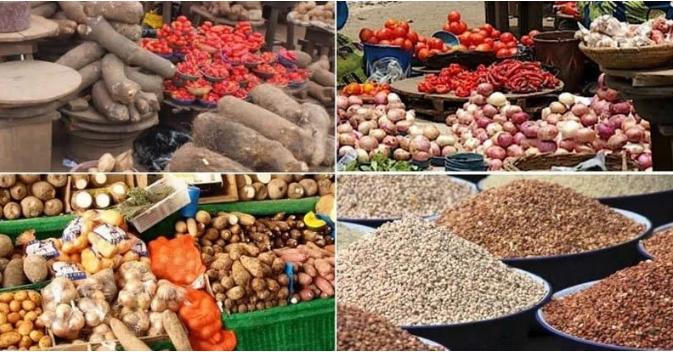
The ongoing unexpected outrageous hike in prices of goods and services stringed by inflation is not all new to our survival in Nigeria as we’ve learnt the hard way to navigate through hurdles and thorns to manage our lives. Simply put, things are at the moment not falling apart but in their right places – exactly where we want them to be. And by extension, we are reaping the seeds our predecessors sowed.

Contextualizing the global outrage on inflation unveils how our population crises are highly influential to the inflation catastrophe we are recently experiencing in Nigeria. Conversations around our incapacitated population have always been cumbersome. People keep reproducing to demonstrate their selfish reasons and associating them with religion, even when they’re fully aware of their inability to cater for their needs – a lifetime debate. Due to cultural and religious reasons, overpopulation is always quite a sensitive issue. Religious gatherings, cultural discussions and even governmental activities deliberately skip them to avoid chaotic scenes.

For reasons best known to the Nigerian government, the census that was supposed to take place a year after President Buhari assumed office in 2016 was unfortunately not prioritized in the list of essential development activities. There wasn’t even a convincing explanation for why it did not occur. I buy that the President was out of office as he severely fought to regain sound health. Still, his deputy, Prof. Yemi Osibanjo, was acting President until he recovered. He also didn’t give it the much significance it deserves. The worth of a National Census isn’t that shabby to escape their radar, as it assumes an unchallenged role in catalyzing the development of every society and nation-building.

Well, as it stands, many international sources now place the Nigerian population to have surpassed 200 million. But, referring to our precedents, the past administrations were unwilling to manage rapid population increase by corroborating it with needed economic, financial and health opportunities, among others. Instead, they were more or less obsessed with starting gigantic projects to leave them halfway done when leaving offices. Regrettably, from budgets, policies and programs among myriad activities, the population is often not carefully factored in.

At this point, explaining the statistical representations of our ailing population is almost unnecessary, especially since we are gradually failing to comprehend the magnitude of our plight in statistical terms. Presently, there exists a colossal number of youths that are desperately seeking jobs. Not only that, they are unemployed. Some are drug addicts, miscreants, and even kidnappers and whatnot. Their realm also includes people still hopeful for job opportunities, including a handful employed but in deep struggles, as they continue to shoulder countless responsibilities. This fraction is the largest among the demography of our country and, sadly, the most ineffective.

Then we have children, who contribute a fair share to the general population. A disturbing figure is that of out-of-school children due to their being part of the lower class and a lot who are quadrupling in number as insecurity is not slowing down in forcing them out of their communities. Visibly, most of them embrace street hawking and begging while others aimlessly litter the streets and little girls into forced labour. Picturing our population from a pie sketch, we also have the elderly, many of whom have delivered relentless service to the nation but have only been rewarded unkempt wretched feet as they search for their legitimate hard-earned pensions. And I don’t forget that we have People Living with Disabilities (PLWDs) who wallow in poverty. This is a fair elucidation of Nigeria’s population pie sketch.

Indeed, how inflation is ripping us apart in this country is an incredibly devastating experience. Development activities here have always journeyed long, and even more terrifying is that slow processes in everything aren’t much valued in today’s fast-paced world. As frightening as it appears, the race to the 2023 general elections is already painting a horrible scene for us. The primary elections recently concluded with alleged countless irregularities and corruption aren’t appealing. Hence, it becomes challenging to collate one’s thoughts regarding how life will likely be as we fight to forge ahead.

In a way, this current plight provokes the young minds who are already out of viable options to embark on deadly voyages to Europe. They risk their lives in search of a better life there. It is terrifying to know that the number of youths clamoring for these voyages includes graduates and those earning petty stipends and are well conscious of the dangers involved. However, they aren’t blameworthy for viewing their lives from angles of their responsibilities.

Many optimists, including myself, are hopeful about Nigeria’s transformation for the best. But, until alternative routes to utilizing our teeming population for efficient development are incurred, we’ll keep chasing the uncertain light at the end of the tunnel. Nigeria is behind schedule on capitalizing on effective strategies to breed an efficient population, opposing its self-anointed maxim of “no dey carry last”. We must reinvent this unfortunate wheel of inefficiency by adopting a knowledge-based economy model to harness the enormous potential of our massive population for the best.

Nusaiba Ibrahim Na’abba is a master’s student from the Department of Mass Communication, BUK. She is a freelance writer and researcher. She can be reached via nusaibaibrahim66@gmail.com.

ASUU Strike: Should students blame the Government or ASUU?

By Aliyu Idris

Anyone aware of the lingering strike in Nigeria’s public universities nationwide will sympathise with us students. Now it’s clear that students understand the government’s negligence and I-don’t-care-attitude towards the education sector because none of their sons and daughters goes to public universities.

The government that is supposed to take the necessary actions regarding the strike is showing a lackadaisical attitude towards it as if the education system is normal. Thus, the ASUU strike is not the topic of discussion today.

The government is hellbent on political affairs more than returning the students to their classes. Unfortunately, the issue of the ASUU strike has become a secondary matter to the government in national affairs, sad.

The strike has shattered the dreams of public university students. As a result, The graduation period of million students has been extended to another subsequent year(s) (I do not pray for that occurrence).

It’s an arduous task for public university students to graduate within the stipulated period allocated for their studies. Hence, almost every student’s ID card expires before they graduate.

The victims (students) of the ASUU strike have lost hope in learning and scholarship. Thus, since the government has failed to save their future, they have shifted their focus from education to other life activities such as businesses and learning skills to build their lives.

The statistics of students called up for NYSC in the camps nationwide is low compared to when public universities are not on strike.

The NYSC camps are filled with HND students, students from universities abroad, students from private universities in Nigeria and students from affiliated universities (FCE/CEO/Polytechnic graduates).

There may be the hope of fulfilling the ASUU demands soon (I pray) because I know the Nigerian politicians and INEC will need serving corps members to work for them in the 2023 general elections. However, until the strike is called off, the current corps members are insufficient for the election’s tasks.

The (our) striking lectures are not the problem but the government. May Allah put an end to this strike menace, amin.

Aliyu Idris is an undergraduate at Bayero University, Kano. He can be reached via aliyuidris063@gmail.com.