Nigeria

Osinbajo to attend African Carbon Market meeting in New York

By Ahmad Deedat Zakari

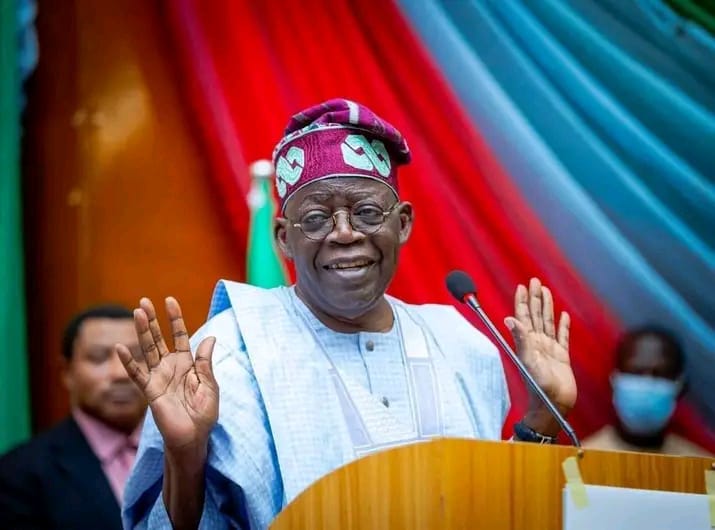
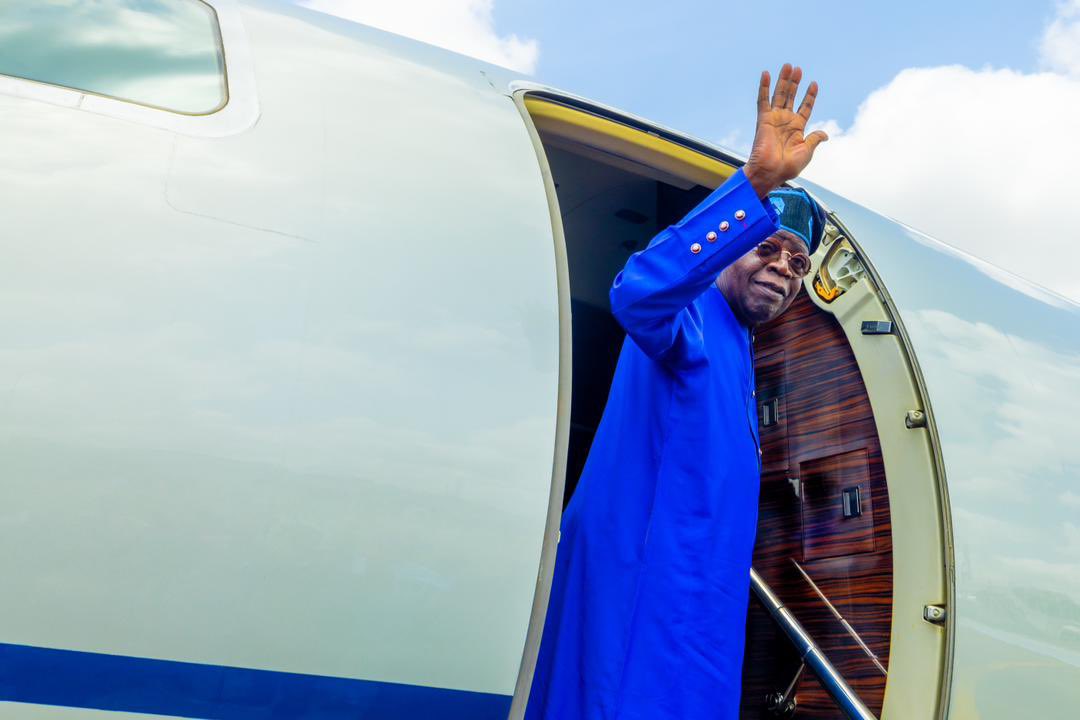
Nigeria’s Vice-President, Prof. Yemi Osinbajo is set to attend a meeting in the United States for African Carbon Market.

A statement by the Senior Special Assistant to the President on Media and Publicity (Office of the Vice-President), Laolu Akande said Prof. Osinbajo will be in attendance alongside other key actors in the clean energy market.

Mr Akande said the Vice-President will be delivering the keynote address at a high-level meeting hosted by the Rockefeller Foundation in New York.

He said : “In a major push for funding and technical support for the Nigerian Energy Transition Plan, Vice President Yemi Osinbajo, SAN, will be delivering the keynote address at a high-level meeting hosted by The Rockefeller Foundation in New York, with global agencies and potential financial partners in attendance to facilitate the activation of the Voluntary Carbon Market in Nigeria and on the African continent.”

He also noted that the high-level which holds on Friday will also be attended by officials from the US government and will explore potential opportunities which the carbon markets offer.

“The high-level meeting which holds on Friday will also be attended by officials from the US government and will explore potential opportunities which carbon markets offer to generate resources for clean energy transitions while accelerating economic growth in Nigeria and other African countries.” He said.

Nigerian senate to debate new CBN withdrawal policy

By Muhammadu Sabiu

The Senate has scheduled a hearing on the Central Bank of Nigeria’s (CBN) most recent cash withdrawal limit policy for Tuesday, December 13, 2022.

In its plenary session on Wednesday, the Senate voiced its concerns.

In a point of order, Senate Minority Leader Aduda Phillip called attention to the CBN’s new policy because it will have an impact on many people, particularly small company owners.

In response, Senate President Ahmad Lawan instructed the banking committee to speak with the CBN and discuss the issue during the screening of the CBN Deputy Governor, which is anticipated to take place before the next week. 

Recall that Lawan had previously advised the CBN not to approach the policy immediately.

The CBN limited the maximum weekly cash withdrawal over the counter (OTC) by corporate organisations and individuals to N500,000 and N100,000, respectively, under the new withdrawal policy.

The new withdrawal rule set the weekly limit cash withdrawal by Automated Teller Machine (ATM) at N100,000, with a daily maximum of N20,000.

Leaders feed on the sweat of the poor: A case of Aisha Buhari and Aminu Adamu

By Lawan Bukar Maigana 

Truth be told, Aminu Adamu’s post is not libellous if we look at it from a legal perspective because it is true that all leaders (including their families) feed on the sweat of the masses. And that is not a crime because the nature of their offices gives them the privilege. 

A political officeholder must feed just like every other person. The only difference is that the poor don’t have a budget for food, unlike those leading us. So, it is proper for a poor man to say that he feeds his leader, although not directly. 

Recently, N7.20 billion was earmarked for the maintenance of Villa facilities out of its N21.137 billion total budgetary proposal for the 2023 fiscal year, and it planned to spend N1. 96 billion for the purchase of vehicles (all in the money paid in tax by the masses.) 

The details of the 2023 budget show that President Muhammadu Buhari and the Vice President, Prof. Yemi Osinbajo, planned to spend the sum of N3.57 billion on feeding and travelling expenses. N2. 6 billion of the vast amount was for the President’s office, while N77. Eight million was for the office of Osinbajo. Is it a lie that leaders feed on the money of the poor? 

I believe these and others are the figures Aminu saw, which provoked the tweet that landed him in trouble. But the seemingly intolerant Aisha Buhari saw it and deemed it hurtful. Many see her decision to order the arrest, torture, and arraignment of Adamu, a final-year student of the Federal University, Dutse, as unconscionable because it has caused incalculable damage to her reputation. Everyone has been insulting her due to what many see as her overreaction. 

Her decision has further angered thousands of young Nigerians who are already angry with her husband’s administration which consequently metamorphosed into insults that were way more grievous than Aminu’s post. 

Nigerian youths have enough reasons to be angry with Aisha’s husband. There is much hunger in the land. Security and the economy are not in good shape. To make matters worse, the Academic Staff Union of Universities (ASUU) and the federal government have, in the last year, conspired to frustrate the lives and future of undergraduates. 

Mrs Buhari got the context all wrong. Aminu may be right after all. 

After all, it is true that they feed on the country’s resources which can easily be translated into “masses money.” She took his post personally because she is a professional beautician, and it is embarrassing for her to gain weight because weight hides beauty (according to some ladies). 

Generally, women don’t like body shaming. They take offence when told they are getting fatter because they fear that they may become unattractive to their husbands or men in general. Perhaps, that was why she overreacted. Again, her size increase may not have been due to any enjoyment but to an undisclosed illness, which will naturally make the tweet pain her even more. But she should have ignored him as a mother and fighter for women’s rights and youth inclusion. 

I have never justified immorality on social media platforms. Still, the overbearing action taken against him by the Mother of the Nation is unjustifiable and condemnable, even though he hurt her feelings.

The Aisha Buhari-Aminu Adamu situation is a lesson for all and sundry. We can say many things that we believe have no legal implications but can still get us in trouble. Therefore, we need to caution ourselves. 

Lawan Bukar Maigana writes from Abuja and can be reached via lawanbukarmaigana@gmail.com.

Food loss and waste: Scare of food insecurity

By Lawi Auwal Yusuf

An upsurge in food loss this year in some states, specifically those devastated by disastrous series of flooding that destroyed farmlands and carried away the produce, has raised some concerns about food insecurity in Nigeria. Several media reports actually talked about the widespread flooding damaging dwellings, large swathes of farmland, and infrastructure and displacing millions of people, only leaving them struggling to salvage the remains of their harvest. To this end, over 20 million Nigerians were projected to be facing food scarcity. Crops lost to the pandemic flooding coupled with lower yields, exorbitant prices of fertilizer and security challenges are likely to precipitate shortages and make prices costlier.

Indeed, Nigeria cannot afford to battle famine currently as it is facing a myriad of other extreme challenges. We recall that a 2021 UN report revealed that almost half of all food produced would never be consumed. Nigeria loses and wastes roughly 40% of its total food produced annually. Being the highest in Africa, with a total of 37.9 million tons of food that is thrown into the trashcans of households, restaurants, retailers and other food services. It further disclosed that each Nigerian discards almost 189kg of food every 12 months. No doubt, this trend, augmented by this year’s nosedive in the food supply, will famish more Nigerians.

But the big question remains, are Nigerian authorities conscious of this awful threat? Unfortunately, the government’s continued abysmal attention to the problem is evidenced by its lackadaisical disposition in dealing with the issue. The relatively paltry budgetary allocation to agriculture has made us more assured that they don’t give a damn about food security.

To add insult to injury, Nigerians are not yet willing to back away from food squandering, which they see as normal. The problem’s exacerbation implies that this behaviour is deeply entrenched as a lifestyle without visualising its social, economic and environmental repercussions. Wealthy individuals continue to store excess food while impoverished Nigerians remain at the mercy of starvation.  However, cutting food loss and waste is essential as more people continue to die of hunger every day, whereas millions of tonnes of edible food that can save their lives are extravagantly trashed into landfills.

Generally, food loss or waste is the food that is discarded and lost uneaten and occurs at either the production, processing, retailing or consumption stage of the food supply chain. Unlike in the Western metropolis where most food is wasted at the consumption level, contrarily, most food in the third world is lost at the production stage. Though food waste is a component of food loss, the two terms differ, considering the point at which the loss occurs.

Food loss is the decrease in quantity or the quality of food in the production and distribution process. While food waste is the removal of healthy food at the consumption level from the supply chain and usually occurs in shops or at home. Both are mostly caused by poor stock management, expiration, negligence or the indifferent act of throwing away half-eaten food.  

Consequently, food loss and waste undermine the sustainability of our food systems; hence, they cannot be resilient if they are not sustainable. When food is disposed of, all those resources used to produce it are wasted equally. This includes water, land, labour, energy, capital and precious time. Similarly, they have negative impacts on national food security as well as its availability. Nonetheless, they also help in pushing prices up while depleting farmers’ and retailers’ incomes.

It is gratifying to note that the disposal of food in junkyards leads to greenhouse gas emissions that exacerbate climate change. Studies have shown that more than 10% of global greenhouse gas emissions are a result of uneaten food. In addition, food disposal also produces methane, which is 23 times more potent than carbon dioxide. Bacteria produce methane as they decompose sludge in waste treatment facilities and other decaying matter in garbage lots.

Actions are necessary to check this exponential growth in food loss and waste that threaten national security in order to ensure self-sufficiency, maximize the use of the food we produce, increase profits and be thrifty with our natural resources. This will go a long way towards enhancing the efficient use of these scarce resources, mitigating climate change, increasing exports and reducing imports, and above all, supporting food security and nutrition.

 In view of the foregoing, it is necessary to combat the underlying causes like poor transport and storage facilities, unstable power supply, lack of preservation knowledge and techniques, and unplanned buying and excess cooking. Moreover, behavioural change will undoubtedly make a difference too.

Instructively, Nigeria must do all its best, come what may, to steady this monumental failure in food production as the demand for more food increases year on year due to its acutely growing population. Equally important is the need for the government to fill up the broader supply gap created by this year’s immense loss so as to meet up the national demand to forestall dearth in this already ailing country.

Lawi Auwal Yusuf wrote from Kano, Nigeria

Dangers of entrusting religious leaders with sex education responsibility

By Aishat M. Abisola

A few weeks ago, I read that the federal government ordered the Nigerian Education Research and Development Council (NERDC) to remove sex education from the basic school curriculum. This decision was made by the Minister of Education, Mallam Adamu Adamu.

This followed the call by experts that sex education should be placed in the hands of parents and religious institutions so that it would not be taught in schools in ways that would not further “corrupt” young children with phones and access to technology.

Adamu stated that since Nigeria is a religious country, morals and values should be taught in Mosques and Churches, adding that it would bring up children with strong morals and reduce the rate of out-of-school children.

When I read this, I was shocked for many reasons. First of all, the introduction of sex education into the basic education curriculum is still recent, and most schools are not even implementing it.

When I was in secondary school, my classmates and I were mainly taught about the biological and chemical aspects of reproduction, not the elements concerning sex and sexuality.

Secondly, how are they sure that sex education has not benefited the youths who are barely taught about it in schools?

Sex education can be defined as teaching and learning about a myriad of topics related to sex and sexuality. It dives into the values and beliefs regarding these topics. It helps people gain skills they will need to navigate their relationships with themselves, their partners, and their community and helps them manage their sexual health.

Sex education can be taught anywhere, in one’s house, school, community setting with trusted individuals, or online. As I stated earlier, I was not taught much about sex education in secondary school.

Luckily, my parents were there to answer my questions on sexual education and even imparted helpful knowledge that has helped me a lot in many ways.

When I learnt more about sex education and focused on what my parents taught me, I learned more about myself, my body, and how I could improve in terms of mental and physical health.

Despite common misconceptions that sex education corrupts children when taught about it at school, sex education can be more beneficial than you might expect. The full description of what sex education entails is as follows:

Human Development

This involves human anatomy, puberty and how it will affect them both physically and mentally, sexual orientation (the different types of sexual orientations), and gender identity (what it means to be male or female).

Relationships

Relationships consist of Interpersonal relationships such as family, friendships, romantic relationships, and relationships with healthcare practitioners.

Personal Skills

This involves areas surrounding communication, boundaries, negotiations, and decision-making.

Sexual Health

Sexual education covers the areas that deal with sexual health, like sexually transmitted diseases, Birth Control, and pregnancy.

Society and Culture

This involves Media Literacy, Shame, and stigmatisation associated with sex and sexual education, the way that power, identity, and oppression can affect sexual wellness and reproductive freedom.

But besides all this, my main concern is how sex education is so callously put in the hands of religious leaders and institutions.

Most parents can be trusted to impart their knowledge about sex education to their children so they are more aware and careful.

On the other hand, religious leaders and institutions cannot be trusted in the same way.

Historically and in recent times, both religious leaders and religious institutions have been known to use children’s lack of sexual knowledge against them in ways most foul.

Priests, pastors, and Imams have preyed on young children entrusted to them by unsuspecting parents.

The more commonly known religious institution to do so are the Catholics, but other religious institutions and their leaders have done the same.

In some Islamiyah (Islamic religious learning academies), Imams have inappropriately touched young children they were supposed to care for.

Some examples would be a French Catholic church that was reported after discovering that its clergy and lay members had sexually abused at least 330,000 children over the past 70 years.

Another example would be a young girl from Lagos whom a Friar sexually abused at her parish church. In 2020, an Imam had taped himself raping a five-year-old girl, and earlier this year, in July, another Imam was arrested for the sexual abuse of seven children.

In October this year, another Imam was arrested for sexually assaulting an 11-year-old. Men (Women as well) who are placed into positions of power are more often than not predators who seek to prey on those weaker than them.

These days, anyone can become an Imam or a pastor. Because of the relaxed nature in discerning whether someone is an actual man/woman of god or whether they can be trustworthy in a position of power, many people get hurt.

Young children should not be placed in their care, nor should they be allowed to discuss sex education with them.
For all we know, they could teach these young and highly impressionable children wrong things and could hurt them badly in the long run.

Statistics have shown that when children have been sexually abused, there is a high likelihood that they will go on to commit the same injustices that were performed on them.

Ultimately, it will perpetuate a cycle of pain and torment.

Appropriately trained sexual education professionals should be tasked with training children on what they need to know about sex education from a young age. This way, they will learn more about their bodies and the best way to know if what is being done to them is right or wrong.

Along with this, their community should also take care of children.

If more than one eye is trained on a child, then any odd behaviour will be noted and told to their parents so that they can take the proper actions necessary.

With these two in hand, parents won’t need to rely on religious leaders or religious institutions to teach children about sex education when children are more likely to be abused by them.

Perhaps then, the government will have more trust in the education system instead of leaving such a delicate and complicated matter in the hands of people who would instead make matters worse than fix anything.

Children are blank canvasses, and teaching them the right things will make lovely and ethereal colours glow on their canvas, but teaching them in the wrong manner will damage it.

Children are the hopes and future of their parents and forefathers; It is with them that a legacy of peace, faith, and kindness is ensured.

I hope whoever reads this takes my words to heart and acts righteously for these children who might be led astray due to improperly placed trust.

Aishat M. Abisola is a member of the Society for Health Communication, Wuye District, Abuja, via Aishatmohd02@gmail.com.

IGP denies disobeying court order

By Ahmad Deedat Zakari

The inspector General of Police, Usman Alkali Baba, has denied disobeying any court order.  

The denial is coming after Justice M O Olajuwon of the Federal High Court sitting at Abuja ordered the detention of the IGP on the ground of contempt of court. 

In a statement made available to newsmen and signed by the Police Spokesperson, CSP Olumuyiwa Adejobi, in Abuja on Tuesday, the IGP claimed ignorance of the said disobeyed court order. According to the Police, the order was not made during the tenure of the current IGP

“The Nigeria Police Force wishes to state emphatically that the office of the Inspector-General of Police, IGP Usman Alkali Baba, psc(+), NPM, NEAPS, fdc, CFR, did not disregard Court Order or the rule of law as the office is not aware of any Court Order, during the current IGP’s tenure, with respect to a matter making the round in the media that the IGP disobeyed a Court Order for the reinstatement of a dismissed officer of the Force.” The statement reads

However, the IGP said he had directed the Commissioner of Police in charge of the Force Legal Unit to investigate the allegation in a bid to ascertain the position of the court and proffer informed legal advice for the IGP’s prompt and necessary action.

The statement further stressed that the IGP is committed to upholding the rule of law and synergizing with the judiciary to ensure quick dispensation of justice.

Freedom of expression and the abuse of privileges

By Abubakar Suleiman

“There is freedom of speech, but I cannot guarantee freedom after speech.” – Idi Amin

The advent and tremendous upsurge of social media platforms have really enabled and deepened freedom of expression as guaranteed by the constitution of the Federal Republic of Nigeria. It has interestingly also destroyed barriers erected by politicians to insulate them from public criticism or scrutiny. However, this freedom has come with some blowbacks. The platforms aren’t the sources of the blowbacks, but the abuse of their usage is.

An issue on the front burner is the arrest and alleged torture or physical assault of one Aminu Adamu, a student of Federal University, Dutse, who was accused of posting a tweet suggesting the First Lady, Aisha Buhari, to be corrupt for squandering the poor man’s money and her body size is a sign of this alleged thievery. The arrest was allegedly carried out on the instruction or directive of the First Lady.

Surprisingly, as at the time of writing this piece, Mrs Buhari or her spokesperson is yet to give a public statement distancing her from this allegation which is a classic case of impunity or abuse of privileges or government institutions. Sketchy reports have it that it is the handiwork of an overzealous security detail attached to her. 

Warts and all, a Nigerian citizen has gone missing, and the Department of State Services (DSS), the Police and other security agencies have a duty to reunite him with his family or take him to a court of competent jurisdiction for whatever offence he must have committed. And, of course, whoever enabled this forced disappearance of Aminu Adamu should also be charged within the ambit of the law.

That said, it is worth noting that politicians or people in power are not alone in the abuse of privileges. What Aminu allegedly did was also a clear case of abusing the freedom of expression and the privilege conferred on him by the Nigerian constitution and social media, respectively. Some people are so engulfed by tendentiousness in partisanships sometimes that they miss the opportunity to network or create value for their business products or brands using social media platforms. 

One of the disadvantages of the freedom that comes with social media is the ability to break barriers unconditionally. It is devoid of a vetting process. Hence it sometimes makes ill-mannered people feel empowered to impugn the integrity or character of people they ordinarily would not dare or attempt doing that too. Plus, others will share this character assassination with glee and without verification.

Tellingly, that politicians or public officers should be subjected to scrutiny or held accountable as humanly possible does not mean they can be maligned, slandered or outrightly and falsely accused with no scintilla of evidence. Politicians or people in power have blood running in their bodies. They have emotions. And bad as they might seem, they also have some integrities to protect.

Bridges have been burnt in exchange for likes or savages on media platforms. Oftentimes effused hatred or unintelligent zingers have replaced verification and validation. In the comfort of basements, unscrupulous people have willingly or unknowingly plunged people into fierce physical or fight online, or even a country into chaos with uncouth written words borne out of unstable emotions. 

Some people just find it difficult to make a point without using insulting or derogatory words, while others will just classically defame or cast aspersions uncontrollably and even unintelligently. 

Interestingly, these people who enjoy and propagate this kind of bashing find it difficult to stomach the slightest of criticisms whenever they are subjected to one. I especially blame no politician or a person in power who approaches a court for this purpose. That they are politicians doesn’t mean their characters or integrities don’t matter.

Therefore, we really need to tread carefully with our engagements on social media platforms. If we derive pleasure in unfettered access to such platforms, then our usage of them should come with a high sense of responsibility.

Let me conclude with a few lines from Kalev Leetaru’s article published on Forbes with the title, “A Reminder That ‘Fake News’ Is An Information Literacy Problem – Not A Technology Problem,” he wrote, “schools no longer teach source triangulation, conflict arbitration, separating fact from opinion, citation chaining, conducting research or even the basic concept of verification and validation. In short, we’ve stopped teaching society how to think about information, leaving our citizenry adrift in the digital wilderness, increasingly saturated with falsehoods without so much as a compass or map to help them find their way to safety. The solution is to teach the world’s citizenry the basics of information literacy.”

Abubakar Suleiman writes from Kaduna and can be reached via abusuleiman06@yahoo.com.

Getting out of the closet: Mr Obi’s conundrum

By Mubarak Shu’aib Hardawa

With the 2023 general election underway in a matter of weeks, it turns out that William Shakespeare was right about sound and fury, signifying nothing: All the ObiDient social media noise and online activism will ultimately amount to zilch, zero, and zip. And here’s why!

The ObiDient online movement is still ongoing but packed significantly less of a punch, especially in the Northern part of the country where Obi needed to do a lot of backbreaking work to sell his candidacy. The fan base alone cannot push a candidate to the glory. Suppose there’s one general rule about winning Presidential Election in Nigeria. In that case, the candidate must have the luxury of time, money and a bare-knuckled brawler, which Mr Obi is trying to midwife at the moment. 

Remember in 2015, when President Muhammadu Buhari was contesting against then-President Goodluck Ebele Jonathan? Despite commanding the respect of the masses, he had to make an alliance with some political parties and run to the support of Atiku Abubakar et al. to make it to the finish line. That’s the trick Mr Obi wants to get up his sleeve by romancing Governor Nyesom Wike of Rivers State. But, unfortunately, it is a  move many ObiDient find uncanny, as some reactions suggest in the aftermath of his meeting with the Rivers State Governor. 

In a piece titled “I think this romance is dangerous”, Princewill ODIDI, a staunch ObiDient and a public figure, wrote: “Obi’s romance with Wike and the likes is gradually killing the ObiDient message of change.” He added, “I strongly feel as a leader of Labor party, Obi is playing a dangerous game. When the chips are down in February next year, all these guys will abandon Obi and return to their parties.”

I have never been one to jump on the ObiDient-hate bandwagon, but the fact is that Obi has to form allies with the people you, again and again, castigate if he means business. That’s politics for you. I’m saying this with neither glee nor sorrow, merely as an absolute political fact. The Obi’s goose is cooked.

But whether romancing with those whom ObiDient consider ‘corrupt’ affects his popularity among the fan base is another thing altogether. After all, the former PDP  vice-presidential aspirant has reshaped the Labor party in his image and still commands the loyalty of a deeply devoted core of die-hard fans, for whom he can do no wrong. 

Money, mo what? Money. Money plays a significant role in Nigerian politics. The last gubernatorial election held in Osun State was mainly seen as a repudiation of the claims that money isn’t a factor. ‘You no dey give shi-shi? Nigerian politics is not for you! You have to spend, spend and spend. Downplaying this fact is defined as “perilousness.” 

Although I understand criticism such as this one pointed at Obi’s way, among the ObiDient is like criticising Jesus in a rural evangelical church. I guarantee you; it would change no views. 

But these are hard pills which Mr Obi should make his supporters swallow. And that’s what real politics is. Breaking the duopoly of APC & PDP will cost not only Shi-Shi but also Bullion vans. I hope that didn’t ring a bell, Lol.

So rest in peace, ObiDients, it’s been a wild ride, but it looks like the world will finally return to normality again. And as much as it’s been fun, sooner or later, Mr Obi will be out of the closet by choosing between you or the power brokers.

Mubarak Shu’aib Hardawa wrote from Misau LGA, Bauchi State, Nigeria, via naisabur83@gmail.com.

ABU lecturer wins ASR prize for Best Africa-Based Doctoral Dissertation

By Ahmad Deedat Zakari

A lecturer with Ahmadu Bello University, Zaria, Dr Nadir A. Nasidi, has been declared winner of the African Studies Review prize for ‘Best Africa-Based Dissertation’

The Public Affairs Directorate of the institution announced Dr Nasidi’s success in a statement on Thursday, November 24, 2022.

According to the statement, “Dr Nadir A Nasidi’s dissertation ‘ A Contextual Analysis of Sufi Saint Paintings in Kano Nigeria’ has won the 2022 African Studies Review (ASR) Prize for the ‘Best Africa-Based Doctoral Dissertation”.

The statement said Dr Nasidi will also be given a certificate recognizing the award and a $500 e-certificate from Cambridge University Press.

The Vice-Chancellor of ABU, Prof. Kabiru Bala, has congratulated him saying that the “University always takes pride to see its students and staff excel in a given task.”

Dr Nasidi is a lecturer at the History Department of Ahmadu Bello University, Zaria and had defended the award-winning dissertation in 2021 at the same institution.

Skills rather than just degrees: A timely professional advocacy

By Engr. Mustapha Habu Ringim

Despite all his official commitments, Prof. Isa Ali Ibrahim Pantami’s internationally recognised contributions to the field of both Digital Economy and Islamic knowledge are unprecedentedly breaking colossal barriers to socioeconomic development in Nigeria and Africa at large. We are grateful to The Almighty Allah, Who has bestowed our society with such a rear gem.

The Islamic scholar and professor of cyber security, Sheik Pantami, is leaving, to some extent, a tripartite legacy for our future leaders to emulate. He is equally fostering a paradigm shift in his professional career and public office as a Minister of Communications and Digital Economy. He is an epitome of a role model, a philosopher with a positive legacy which will serve as a footprint or a sailable path for all potential leaders, academics and religious scholars to tread on.

However, Malam Pantami is building this astounding path against all criticisms from some of his academic colleagues and Islamic and Christian scholars. He patiently stands tall on his two feet. He forges ahead against all social media hypes, just like the flow of rivers, as “rivers never go reverse” – they gradually clear their paths to their destinations, entrenching a memorable route for explorers and navigators to follow passively.

Long before writing his essential book Skills Rather than just Degrees, his advocacy out of which the book was written, has already transformed so many lives, including myself and thousands of graduates of our innovation hub, through the effective programs and seminars conducted by the National Information Technology Development Agency (NITDA) under the excellent leadership of its Director General, a “Digital Transformer”, Kashifu Inuwa CCIE.

Prof. Muhammad Bugaje, the current Executive Secretary of the National Board for Technical Education (NBTE), is another advocate of the same subject. However, his slogan, “Skills but not Degrees”, is a bit tougher. Therefore, I sincerely urge these two erudite professors to actualise an inter-ministerial or agency collaboration between NITDA and NBTE to develop a realistic action plan and strategic roadmap for entrenching ubiquitous skill capital development in our society. 

The National Board for Technology Incubation (NBTI), Industrial Training Fund (ITF) and National Directorate of Employment (NDE) would equally play an essential role in the proposed collaboration. Such agencies are supposed to be under the same umbrella, the way it is done in Morocco, which as a result of their effective work-based learning, has achieved one of the highest economic growth among African countries, as pronounced by the European Training Foundation.

ENGAUSA GLOBAL TECH HUB, publicly recognised as “technical skills enthusiasts”, will formally seek permission from His Excellency Prof. Isa Ali Ibrahim Pantami to translate the book into the Hausa language. The translation will help fit it into the bilingual-based curriculum of ENGAUSA APPRENTICESHIP PROGRAMS. That opportunity would also pave the way for using the translated version in our public awareness programs on Radio, TV and social media. This book succinctly corroborates the mission and objectives of ENGAUSA HUB, as it goes with our motto, “Breaking Barriers and Bridging Gaps”.

Engr. Mustapha Habu Ringim is the founder/CEO of EngausaHub.com.