Kannywood

Hausa films can be powerful tool for positive change—Sheikh Daurawa

By Anas Abbas

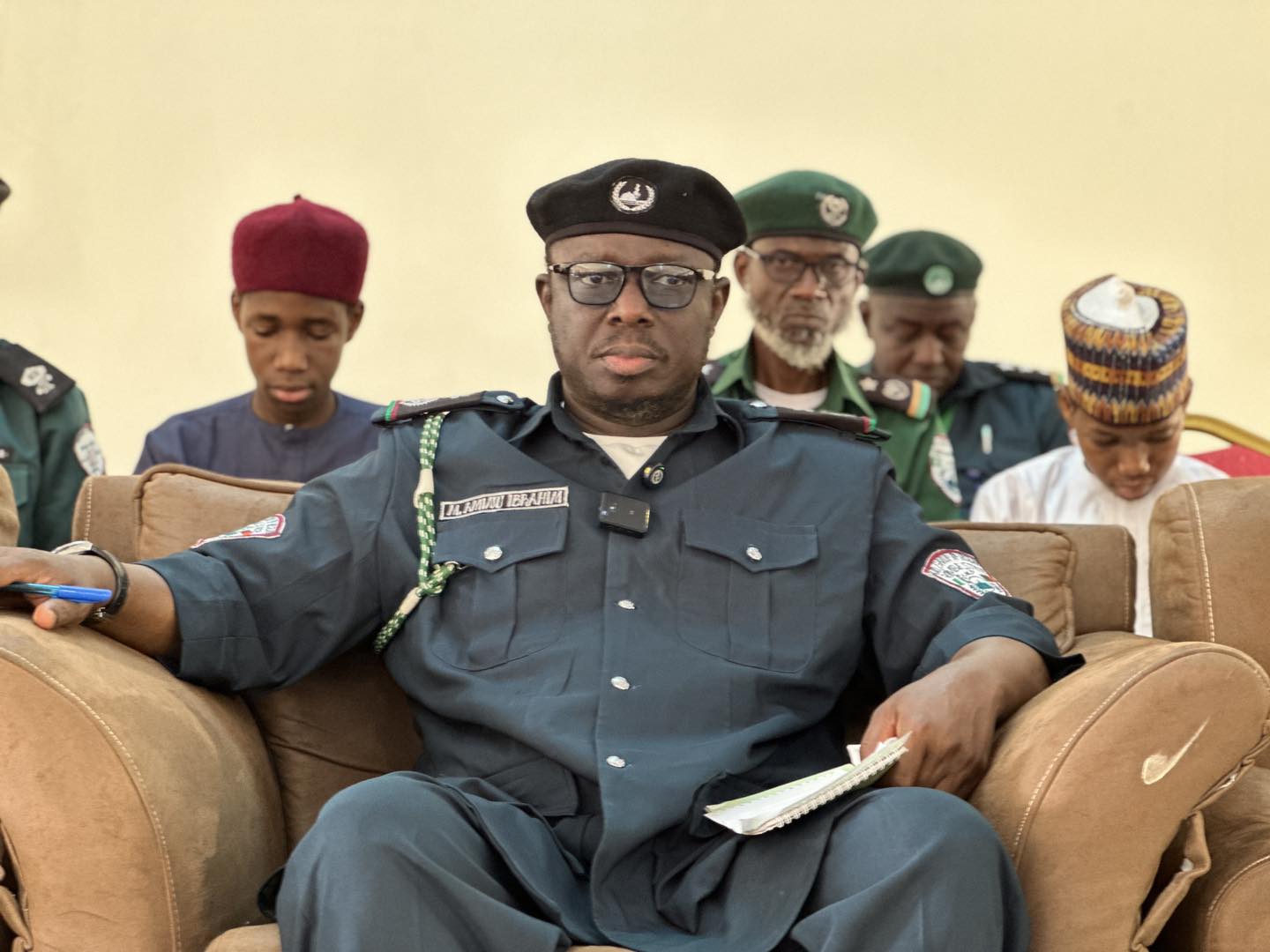
A Kano Islamic scholar, Sheikh Aminu Ibrahim Daurawa, stated that Hausa films can be important in shaping society.

He stated this at a symposium on Hausa film, culture, religion, among others, which was held via Zoom on Wednesday, July 10, 2024.

It was attended by other academic scholars and notable figures.

During the event, Sheikh Daurawa was quoted as saying, “We cannot stop Hausa film in our society; rather, we should use it to bring positive change , especially in our politics, economy, and even social lives.”

He encouraged the academics to use the medium to promote positive change, saying, “let the academic intellectuals bring film stories that will sharpen and change people’s behaviour.”  

Sheikh Daurawa also announced that Hisbah will venture into film production, focusing on stories that align with Islamic Shari’ah.

This move aims to promote values and principles that align with Islamic teachings. 

The symposium participants engaged in lively discussions on the potential of Hausa films to influence culture, religion, and societal values. 

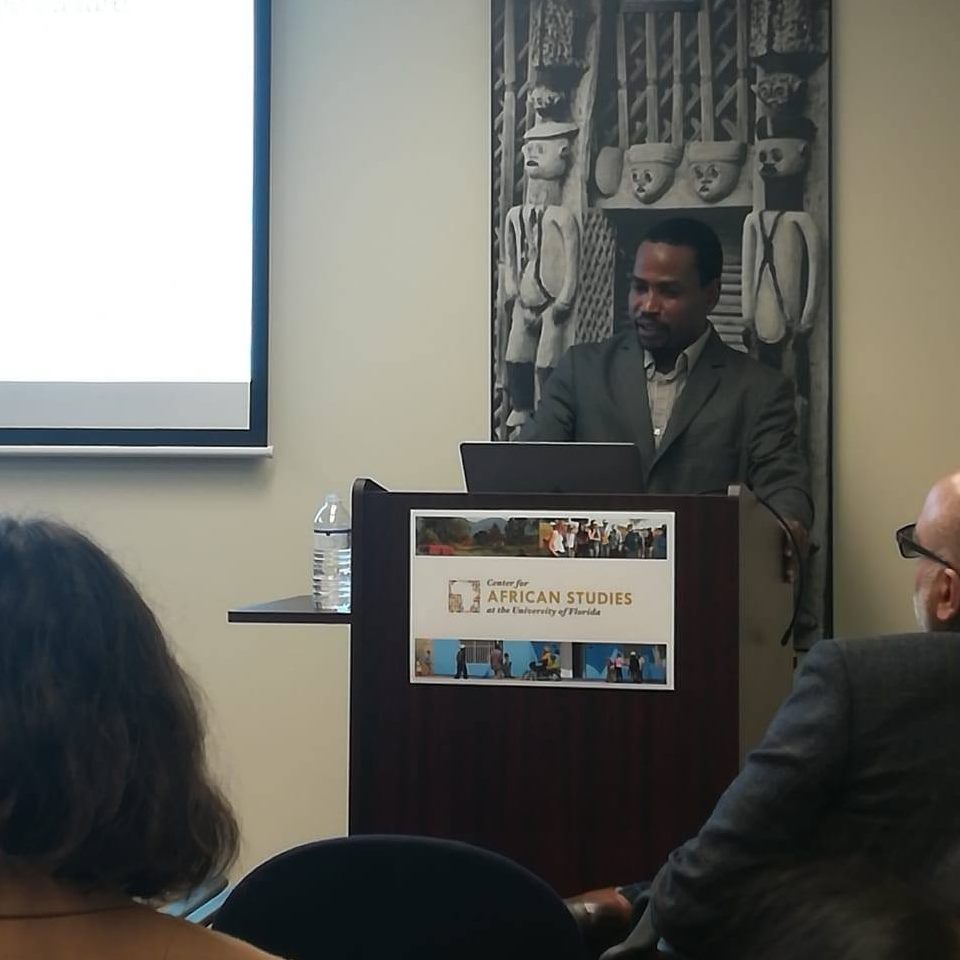
The symposium featured a diverse range of speakers, including Professor Abdallah Uba Adamu from the faculty of communication at Bayero University, Kano; Prof. Aliyu Muhammad Bunza from the department of Nigerian languages at Usman Danfodiyo University, Sokoto; Dr. Hadiza Salihu Koko from Shehu Shagari College of Education, Sokoto, and Prof. Ibrahim Mulumfashi from the Department of Nigerian Languages at Kaduna State University, Kaduna. 

The event tried to potray the need for responsible content creation and the importance of leveraging media for positive impact. 

Sheikh Daurawa’s call to action and Hisbah’s entry into film production are expected to spark a new wave of creative and values-driven content in the Hausa film industry.

Kannywood/Nollywood film review: NANJALA (the Right Choice)

Company: Jammaje Productions

Director: Ali Nuhu

Producer: Abubakar Bashir Maishadda

Language: English

Cast: Nancy Isime, Sani Muazu, Sola Sabowale, Ali Nuhu, Enyinna Nwigwe, Rabi’u Rikadawa, Segun Arinze, Abba el-Mustapha, Asabe Madaki, Abba Zaki, etc.

Release date (Nigeria): 16-6-2024

After successful screenings in Turkey and the United States, the reportedly most expensive Kannywood movie, Nanjala, has finally hit our domestic screens. The movie is a groundbreaking attempt to bridge the gap between Northern Nigeria’s Kannywood and “mainstream” Nollywood by bringing actors from both industries together in a neutral setting and on an equal footing.

The film narrates the story of Nanjala (Nancy Isime), whose father, Captain Sembene (Sani Muazu), harbors a deep-seated disdain for female children. He, therefore, neglects his three daughters, focusing his care only on his son, Dititi (Abba Zaki). Nanjala has been a voracious reader with dreams of becoming a journalist since her childhood. However, her father’s constant discouragement makes his friend, Captain Jammoh Jummoh (Rabi’u Rikadawa), adopt her to help her realize her dreams.

Years later, Captain Sembene’s family falls apart. His favorite son, Dititi, becomes a drug addict, and his daughter, Jarry, leaves home, fed up with his mistreatment. Meanwhile, Nanjala achieves her dream of becoming a journalist but encounters problems with people in authority who want her to stop exposing their corrupt government.

How does the story unfold from there? Find out for yourself at Platinum Cinema.

The film addresses themes of women’s empowerment, the endurance of the human spirit, corruption, and moral decadence. It debunks the chauvinistic belief that female children are mere burdens to their parents and incapable of achieving greatness. We see how Nanjala suffers, initially at the hands of her chauvinistic father and later as a journalist hunted by a corrupt government. Despite these challenges, she overcomes her fears and insecurities to eventually emerge triumphant.

Nanjala is indeed a compelling film that has enough to hold viewers’ attention throughout its runtime. However, while it may lack attention-grabbing twists and turns, the wonderfully constructed screenplay and perfect use of flashbacks make it an enjoyable experience that you wish would never end. The cinematography is also spectacular, fully doing justice to the film’s scale. I haven’t enjoyed any Kannywood movie as much as this one recently. One must applaud the makers for their courage and financial strength in bringing such a big project to life.

The eponymous character seems to be inspired by Kenyan political analyst and activist Nanjala Nyabola. She also shares similarities with a character played by actress Miriam Osimbo in the Kenyan comedy series Hullaballoo Estate. Therefore, the film is likely to resonate with a broad African audience for that reason, and for its setting (a fictitious East African country), casting, character names, and universally relevant thematic preoccupations.

The film also deserves distinction marks for its English dialogue. The diction and flow of words are exceptional. What is even more interesting is how the Kannywood actors deliver their lines as flawlessly as their Nollywood counterparts in the cast. Thanks to Mallam Kabiru Musa Jammaje, the executive producer who pioneered the trend of “Kannywood films in English.”

In terms of performances, Nancy Isime fully immerses herself in the character of Nanjala and plays it exceptionally well. Sani Mu’azu is excellent as her chauvinistic father, delivering his dialogue with expressions that prove his acting skills. Rabi’u Rikadawa will win your heart as Nanjala’s foster father, who stands by her through thick and thin.

Asabe Madaki (Majuma), the character of Jarry, and Abba Zaki (Dititi) are first-rate as Nanjala’s siblings, but their mother, played by Sola Sobowale, does not live up to expectations. However, Enyinna Nwigwe is admirable as an accomplished author who later becomes Nanjala’s love interest. Segun Arinze, Ali Nuhu, and Abba el-Mustapha all shine in their brief roles. But it’s Hajara Haidar (Falmata) who will impress you with her adorable looks and fluent English, giving her small role a huge impact.

In conclusion, Nanjala has opened a new page in Nigerian cinema. It is a “Pan-Nigerian” film that will resonate across the country and beyond. I strongly recommend this insightful and inspiring film to every parent, young ladies, and, of course, anyone who enjoys seeing Africans speaking English on screen.

Habibu Maaruf

Kano, Nigeria abduhabibumaaruf11@gmail.com.

Northern Nollywood, Southern distorted mirrors: Nollywood and the rest of us

By Prof. Abdalla Uba Adamu

Recently, an extremely prestigious academic journal requested that I review a film made by a Nigerian. I was surprised, as that is Muhsin Ibrahim’s forte. Further, I really don’t watch Nigerian films, aka Nollywood, personally preferring African Francophone directors. Nevertheless, I agreed to do the review. 

However, the link they sent for the film was password-protected. I informed them, and they requested the filmmaker to send the password. Being a request from a highly prestigious journal, he sent the code, and I was able to get on the site and watch the film online. I was surprised at what I saw and decided to delve further into these issues. Before doing that, I wrote my review and sent it off. The film, however, set me thinking. 

Like a creeping malaise, Nollywood directors are rearing their cameras into the northern Nigerian cultural spaces. Again. The film I reviewed for the journal was “A Delivery Boy” (dir. Adekunle Adejuyigbe, 2018). It was in the Hausa language. None of the actors, however, was Hausa, although the lead actor seems to be a northerner (at least from his name since an online search failed to reveal any personal details about him). 

Nothing wrong with that. Some of the best films about a particular culture were made by those outside the culture. Being ‘outliers’, it often gave them an opportunity to provide a more or less balanced and objective ‘outsider’s perspective’ of the culture. Alfonso Cuarón, a Mexican, successfully directed “Harry Potter and the Prisoner of Azkaban” (2004), while Taiwanese director Ang Lee did the same with “ Brokeback Mountain” (2005), even earning him an Oscar. 

In 2006 Clint Eastwood, an American, directed “Letters From Iwo Jima.” The cast was almost entirely Japanese, and almost all of the dialogue was in Japanese. It was very well-received in Japan, and in fact, some critics in Japan wondered why a non-Japanese director was able to make one of the best war movies about World War II from the Japanese perspective. Abbas Kiarostami, an Iranian filmmaker, directed his film, “Certified Copy” (2020) in Italy, which contained French, Italian, and English dialogue starring French and British actors. 

British director Richard Attenborough successfully directed Ben Kingsley in the Indian biopic Gandhi (1982). The film was praised for providing a historically accurate portrayal of the life of Gandhi, the Indian independence movement and the deleterious results of British colonization of India. It took away eight Oscars. American director Steven Spielberg’s “Schindler’s List” (1993) on a German, Oskar Schindler, was equally a powerful portrayal of an auteur genius by a “non-native”. The film won seven Oscars. 

In each of these examples, the directors approached their subject matter with a clean, fresh and open mind that acknowledges the cultural sensitivities of the subject matter. My point is that a person, outside of a particular cultural context, can make sensitive films that portray the culture to his own culture as well as other cultures. That is not, however, how Nollywood plays when it focuses its cameras on northern Nigerian social culture. Specifically Muslims. 

I just can’t understand why they are so fixated on Muslims and the North. If the purpose of the ‘crossover’ films (as they are labelled) they make is to create an understanding of the North for their predominantly Southern audiences, they need not bother. Social media alone is awash with all the information one needs about Nigeria—the good, the bad and the ugly. You don’t need a big-budget film for that. Or actors trying and failing to convey ‘Aboki’ accents in stilted dialogues that lack grammatical context. 

Yet, they insist on producing films about Muslim northern Nigeria from a jaundiced, bigoted perspective, often couched with pseudo-intellectual veneer. To sweeten the bad taste of such distasteful films, they pick up one or two northern actors (who genuinely speak the Hausa language, even if not mainstream ethnic Hausa) and add them to the mix, believing that this will buy them salvation. For southern Nigerians, anyone above the River Niger is ‘Hausa’. 

They started in the early 2000s, and people just ignored them. The directors then included Oskar Baker (Ɗan Adamu Butulu, Abdulmalik), Yemi Laniyan (Makiyi, Uwar Gida), Tunji Agesin (Halin Kishiya), Matt Dadzie (Zuwaira), I. Nwankwo (Macijiya) and many others. These came on the heels of the massive success of “Sangaya” (dir. Aminu Muhammad Sabo, 1999) when this particular film opened up the northern Nigerian film market. 

Those Nollywood producers jumped into cash on the popularity of Hausa films and made their own for northern markets. For the most part, these early ‘crossover’ films that I refer to as ‘Northern Nollywood’ were fairly mild and evoked no reaction. They were still rejected, as the Hausa can be the most discriminatory people you can come across. If you are outside their cultural universe, you remain there. Forever. 

The few Kannywood actors eager to be seen on the ‘national stage’ allowed themselves to be used to deconstruct Islam and Muslims on the altar of filmmaking in subsequent Northern Nollywood films. Let’s not even talk about character misrepresentation, which Muhsin Ibrahim has written extensively about. In these scenarios, the usual tropes for northerners in Nollywood films is that of ‘Aboki’ (a term southern Nigerians believe is an insult to northerners, without knowing what it means), ‘maigad’ (security), generally a beggar. If they value an actor, they assign them an instantly forgettable role rather than a lead. Granted, this might be more astute and realistic marketing than ethnicity because it would be risky to give an unknown Hausa actor a significant role in a film aimed at southern Nigerians. 

A few of these types of portrayals in Nollywood included Hausa-speaking actors in films such as The Senator, The Stubborn Grasshopper, The World is Mine, Osama Bin La, Across the Border and The Police Officer. 

When Shari’a was relaunched from 1999 in many northern Nigerian States, it became an instant filmic focus for Nollywood. A film, “Holy Law: Shari’a” (dir. Ejike Asiegbu, 2001) drew such a barrage of criticism among Hausa Muslims due to its portrayal of Shari’a laws then being implemented in northern Nigeria that it caused credibility problems for the few Hausa actors that appeared in it. With neither understanding of Islam nor its context, the director ploughed on in his own distorted interpretation of the Shari’a as only a punitive justice system of chopping hands, floggings, and killings through foul-mouthed dialogue. As Nasiru Wada Khalil noted in his brilliant essay on the film (“Perception and Reaction: The Representation of the Shari’a in Nollywood and Kanywood Films”, SSRN, 2016) “the whole story of Holy Law is in itself flogged, amputated and killed right from the storyline.”

“Osama bin La” (dir. MacCollins Chidebe, 2001) was supposed to be a comedy. No one found it funny in Kano. Despite not featuring any northern actor, it was banned in Kano due to its portrayal of Osama bn Ladan, then considered a folk hero. The film was banned to avoid a reaction against Igbo merchants marketing the film. I was actually present in the congregation at a Friday sermon at Kundila Friday mosque in Kano when a ‘fatwa’ was issued on the film. Even a similar comedy, “Ibro Usama” (dir. Auwalu Dare, 2002), a chamama genre Hausa film, was banned in Kano, showing sensitivity to the subject matter. 

The reactions against crossover films seemed to have discouraged Nollywood producers from forging ahead. They returned in the 2010s. By then, northern Nigeria had entered a new phase of social disruption, and Nollywood took every opportunity to film its understanding of the issues—sometimes couched in simpering distorted narrative masquerading as social commentary—on society and culture it has absolutely no understanding of. 

In “Dry” (dir. Stephanie Linus, 2014), the director developed a sudden concern about ‘child marriage’ and its consequences. Naturally, the culprits of such marriage, as depicted in the film, are sixty-year-old men who marry girls young enough to be their granddaughters. The director’s qualification to talk about the issue (which was already being framed by child marriage controversy in the north) was that she has ‘visited the north’ a couple of times. With the film, if she could get at least “one girl free and open the minds of the people, and also instruct different bodies and individuals to take action, then the movie would have served its purpose.” The ‘north’ was living in darkness, and it required Stephanie Linus to shed light on ‘civilization’. 

 “A Delivery Boy” (dir. Adekunle Adejuyigbe, 2018) that I reviewed was about an ‘almajiri’ in an Islamic school who was kidnapped from the school, to begin with and repeatedly raped by his ‘Alamaramma’ (teacher). The almajiri somehow acquired sticks of dynamite to create a suicide vest and vowed to blow himself up—together with the teacher. The Alaramma in the film lives in an opulent mansion, far away from the ‘almajirai’. In this narrative universe, the ‘almajiri’ do not learn anything and are unwilling rape victims of their teaches who actually kidnapped them and forced them into the schools. 

“The Milkmaid” (dir. Desmond Ovbiagele, 2020) evokes the idealistic picture of a Fulani milkmaid and became a basis for a Nollywood film. Instead of focusing on the political economy of the Fulani milk trade, the film focused on the trope of terrorism. “The Black Book” (dir. Editi Effiong, 2023), touted as ‘Nigeria’s John Wick’ shoots a significant portion in ‘the north’ – with ‘Islamist’ hijab-wearing females touting assault rifles hidden underneath their hijab. “Jalil” (dir. Leslie Dapwatda, 2020) visits the recurrent theme of kidnapping for ransom. In the north, of course. 

Then came the latest, “Almajiri” (dir. Toka McBaror, 2022). Claimed to be a true-life story (although it is not clear whether it happened to specific people or based on what the director believed to be a common event), it featured muscle-bound badass types of thugs with guns and dreadlocks as Almajirai. The film reinforces the southern Nigerian trope of any beggar in the north being an Almajiri. Such ‘almajiris’ are kidnapped and sold into virtual slavery and horribly abused. The idea is to blame the parental irresponsibility of northerners. 

For southern Nigerians, especially the Nollywood crowd, an ‘Almajiri’ is a beggar, a product of a failed education system, a terrorist, a bandit, and an ‘aboki’. They use concocted figures bandied about by alphabet soup agencies to proclaim ‘over 10 million almajiri are out of school’ and, therefore, twigs of the terrorism inferno. How can someone who has been part of a system of education for over half a century be considered out of school? But for Nollywood, if it is not ABCD, then it is not education. 

“Northern Nollywood” films are the precise reasons why there will ALWAYS be different film cultures in Nigeria. Kannywood talks to its publics, happily churning out now TV shows that address issues it deems relevant—in its own way. Both the northern and southern parts of the country (covering the three major languages) were actively engaged. However, they were mutually non-legible to each other. This was essential because they operate on virtually opposing cultural mindsets – making the emergence of a truly “Nigerian cultural film” impossible. 

Quite a few writers seem to suggest that Kannywood is a ‘subset of Nollywood’, and indeed, many would prefer for the term Kannywood (created in 1999 by a Hausa writer) to be dispensed with and replaced with Nollywood (created in 2002 by a Japanese Canadian writer). It is to protect our cultural representation in films that I stand as a lone voice in advocating for a ‘Hausa Cinema’ to reflect the cultural universe of the Hausa.

Professor Abdalla Uba Adamu can be reached via auadamu@yahoo.com.

Do intellectuals watch Kannywood films?

By Dr Musa Ibrahim

The popular Facebook user claiming intellectuals hardly watch Kannywood films and his supporters should understand 1) the need to ensure they conduct proper research on any subject matter or study the existing literature before speaking about it; 2) they could benefit from some guidance on critical engagement with terms, even if they are in our mother tongues, such as ‘wayewa.’ This would help them understand the concept from multifaceted perspectives and know how to use it when referring to ‘self’ and ‘other’ people’s ‘lifeworlds.’ 

When engaging with the Hausa terms ‘wayewa’ and ‘wayayyu’ (intellectualism and intellectuals, although the translations are subject to discussions), the critical questions we should ask about these terms in relation to Kannywood are: what is ‘wayewa’ (intellectualism)? Who exactly are ‘wayayyu’ (intellectuals)? Can we really know all ‘wayayyun mutane’ (intellectuals) and what they do in private and make sweeping statements about all of them without conducting thought research?

For me, it’s difficult to say who ‘wayayyu’ are because it’s subjective and varies from person to person. I mean, who someone regards as wayyaye might not be considered one by others and vice versa. Therefore, it appears to me that the person who made such a claim and their supporters may be ‘unintelligent/unintellectual’ (lacking in intelligence and intellectual approaches) or ignorant about the subjects they are referring to, especially since they ‘speculate’ about the so-called ‘wayyayun mutane’ without considering the diversity of the group. 

As a researcher of popular cultures in Africa, I can report as a fact that all categories of people in northern Nigeria and beyond watch Kannywood films. In the qualitative research we conducted, we interviewed academics, high-profile ‘ulama (Muslim clerics), lawyers, politicians, public workers (some of whom are highly placed decision-makers at various government levels), traders, and various categories of Western and/or Islamic-educated individuals who have been watching Kannywood films.

Ordinarily (if not because of our research), many of our interlocutors may not just openly admit to watching Kannywood films because of the unnecessary stereotypes associated with them. However, some of them go to the extent of referencing specific scenes from the movies they had watched to either illustrate their points or make comparisons with other films. Some influential people and their family members personally communicate with Kannywood stars they know from movies and spend millions to have them perform at their ceremonies. 

So, if we were to believe the claim that ‘intellectuals’ don’t watch Kannywood films, then we would have to say that all those who control the affairs of the region (in which the person making the claim probably lives) are not ‘wayyayu.’ However, regardless of the complexity of the terms wayewa and wayayyau, many would agree that people in the categories mentioned above, including our revered Muslim scholars who participated in the research, could fit into the ‘wayewa’ category or one of its categories (if there are many). Ba za mu ce dukkan su ba wayayyau bane.

So, the person making the claim and the bunch of uncritical minds who agreed with it have just succeeded in portraying themselves as lacking intelligence and critical thinking skills (which is synonymous to wayewa) to engage with the same concept, ‘wayewa,’ at least in this case. This is because they seem not to know ‘how’ and ‘when’ to speak for themselves and ‘how’ and ‘when’ to speak for others from an informed perspective (based on outcomes of scientific research). This also includes avoiding generalisations.

Despite politically motivated censorship from the 2000s to today, Kannywood has survived and thrived. This resilience is a testament to the support it receives from the silent majority, including highly influential individuals who appreciate its cultural significance and work behind the scenes to maintain its popularity and diffuse unnecessary tensions. This inspiring resilience assures us that Kannywood will continue to thrive in the face of differing opinions. 

To close my remarks, regardless of differing opinions about Kannywood, the cultural industry will continue to thrive in different forms. This sustained success should inspire confidence and optimism in the future of Kannywood and those who aspire to participate in the phenomenon, either indirectly as cultural studies scholars or directly as actors, directors, producers, scriptwriters, and associated roles.

Musa Ibrahim, PhD, can be reached via abbadanauta@gmail.com.

Adam A. Zango and matters arising in Kannywood

By Usman Abdullahi Koli, ANIPR

Adamu Abdullahi Zango, also known as Prince Zango, is a famous Kannywood figure. Adam has been acting in Hausa films for over 20 years. Zango is a multi-skilled individual who acts, sings, produces, and directs films while introducing new faces to the screens. However, despite his immense contributions, he has been a victim of accusations, controversies, and rumours, but they all turned out to be a bunch of false claims in the end. 

One of the major problems dragging the Hausa film industry back is enmity. No matter how talented an actor is, if he is not in the circle of those who consider themselves owners of the industry or if his stardom is at its peak, he is always regarded as worthless. An adage states that “united we stand, divided we fall.” The level of unity and support for one another in Kannywood is below expectations. 

Perhaps only in Kannywood do actors receive financial support when they come out crying in videos, exposing what they are going through. Such behaviour is contrary to other entertainment industries, where actors and actresses frequently check on colleagues and offer helping hands without disseminating the act on social media.   

Some years ago, in his philanthropic effort to give back to society, Zango promised to give out millions of Nairas to orphans in Kaduna. People from the industry and outside started saying he could only make promises without implementing them. This, among other factors, contributed immensely to the current reality Zango is facing in the industry. People don’t usually appreciate him or keep quiet about issues that affect him directly, turning his life into a topic of discussion every single time. 

Adam did not have the opportunity to attend higher education, but his zeal to actualise the ambitions of young people inspired him to sponsor a high number in Kaduna, Jos, and Kano States. The possession of assets, valuables, and material things by all those who work in WhiteHouse Family, an entertainment venture owned by Zango, is a testimony that he is full of kindness, selflessness, open-mindedness, and what he has never made him proud. 

What Zango is currently going through I don’t see it as depression, as claimed by many. There are people he wholeheartedly helped and trusted but turned against him. Additionally, he is facing a lot of trouble on social media from those who dislike him and are always fabricating lies about him. Yes, silence is not gold. He is supposed to speak up in his defence since no one is willing to stand up for him. The best one could do for the woman he loves is to marry and confide in her. What kills faster than a bullet is a betrayal from a life partner, and the bond of trust ends without a second thought. 

Many accused Zango of frequent marriages and serving his wives with hot breakfast (divorce) in short periods. As revealed by him, the truth of the matter is that most times, the failure of wives to be submissive, respectful, and faithful is glorified by our religion. Zango has been hiding the facts about what led him to divorce his wives from public space, but the ranting from near and far is unbecoming and unbearable. He has decided to let the hen out of the cage. Keeping some issues hidden is better, as exposing them is like adding salt to an injury. 

Furthermore, most of the films produced by Zango were created by local writers, not copies of Bollywood or Hollywood stories. The movie contributed to portraying real Hausa norms and values, cultures and traditions, dressings and foods, shelters and festivals while maintaining the religious injunctions. The languages used are authentic Hausa, along withidioms, styles, and proverbs, making it easier for children to learn. 

Despite dressing in Western attire in some movies, Zango still maintains the moral compass of Hausa and Islam. Factually, nobody can boldly point out where Adam is seen in a fantasy scene with women in films. Other characters have done worse than Zango in movies and feel that doing so is normal, without minding the repercussions on their families or people who took them as role models. By the way, who is morally upright in Kannywood? 

In summary, I have been an advocate for Kannywood, as I have written about misunderstandings between Rarara and former Governor Ganduje and the decision of MOPPAN to dismiss Rahama Sadau, among other topics in the Hausa entertainment industry. It should be noted that stakeholders and characters in Kannywood should see themselves as one family because commendation to one affects the rest and vice versa. People need to reciprocate kindness with kindness. Fans and mentees of artists should learn to respect each other by supporting themselves and resolving issues through dialogue. 

Adam Zango needs to control himself, especially in moments of anger, and stop making decisions at those times. He has faced worse situations before and stood firm. He can do it again. Let him consult relatives and trusted friends before taking any bold steps in his life. Finally, as a celebrity and a mirror to a limitless number of people, Adam Zango should ignore the negative comments, criticisms, and disrespectful and abusive words of followers on social media platforms. If he gives them no time to reply, they will have no choice but to stop. 

Kannywood has never had a gifted actor like Adam Zango in its history. He should cherish his God-given talent, be more focused and optimistic, and keep pouring out the best in him in both acting and music. Anything related to his personal life should be private, as antagonists always look for weak points or where he does wrong to attack him. He should remember that he is a son, father, and someone others admire. His words and actions, whether good or bad, would be replicated by them. 

Usman Abdullahi Koli wrote via mernoukoli@gmail.com.

OBITUARY: In memory of Saratu Daso, a Kannywood actress of eminence

By Habibu Ma’aruf Abdu

On Tuesday, April 9, 2024, the Kannywood community was shaken by the death of veteran actress Saratu Giɗaɗo, also known as Daso, at the age of 56. Her unexpected departure peacefully in her sleep on the final day of Ramadan plunged the Hausa film industry and the general public into a state of deep sorrow and disbelief.

Reflecting on the sudden death, a Kannywood scholar, Dr Muhsin Ibrahim, said: “The demise of Hajiya Saratu Giɗaɗo (Daso) really shocked me. In the beginning, I thought it was ‘fake news’. She was so alive a few hours ago.

“I have positive thoughts that she has received Allah’s mercy. She passed away while tirelessly soliciting help for orphans so that they too can celebrate Eid like other children…” he added.

Saratu Daso was undoubtedly one of the greatest, most successful and influential Hausa film stars of all time. When the news broke that she had died, a barrage of condolences instantly flooded the social media platforms. There was an unprecedented outpouring of grief from Kannywood personnel and the public alike. Thousands of people attended her funeral prayers, and many politicians paid homage to her, including the president of Nigeria, Bola Ahmed Tinubu

In a press release, the president describes the 56-year-old actress’s passing as saddening for the entire nation, which she honoured through her talent as a thespian.

The former governor of Kano state and presidential candidate Rabi’u Musa Kwankwaso also paid a condolence visit to console the family of the deceased actress.

Renowned for her captivating wit and acting prowess, the late Daso made her film debut in the year 2000 with the Sarauniya movie Linzami Da Wuta. She appeared in more than 100 films throughout her illustrious career, which spanned over two decades. Some of her notable works include Sansani, Mashi, Fil’azal, Daham, Dan Zaki, Gabar Cikin Gida, and Yar Mai Ganye.

Daso is famous for playing various roles in various film genres. She excelled in the portrayal of a dubious and aggressive elderly woman, which became her trademark. The fire she breathed in that role made her stand out among other elderly female actresses of her time.

“I’m often portrayed as a villain, and I know the nitty-gritty of villainous performances in films. I can act in various roles, but I enjoy villainous ones the most. Yet, I’m always ready to play any character if assigned to me,” she told BBC Hausa in an interview.

However, she was quite different in real life from the characters she depicted on screen. She was sweet and jovial. She once remarked, “I’m not aggressive. I’m very kind in real life. In fact, I’m such a taciturn.” Her kindness is one of the things that left a lasting impression on people within and outside the film industry. 

Actor Baballe Hayatu described her as “a good woman of great wit and charm”, while Alhassan Kwalle, chairman of the Kannywood Actors’ Guild, attested to her calm demeanour, stating, “We lived with her peacefully”.

Social media influencer and politician Maryam Shetty also wrote about her interactions with the late actress, saying, “…Daso was always a delight both on and off-screen. In 2016, I had the pleasure of meeting her at the Emir’s palace in Kano (where she was a constant face). We shared a lighthearted moment joking about our shared name.”

Similarly, another Facebook user, Hauwa Barde, affirmed Daso’s humility, noting that “…she would always reply if you commented under her post.”

An alumnus of Kaduna Polytechnic, Daso initially worked as a classroom teacher before joining the film industry. She could speak fluent English and was among the pioneering actors to star in Jammaje’s ‘Kannywood films in English.’ The genre’s promoter, Malam Kabiru Musa Jammaje, mourns the actress, reminiscing about their collaborations.

Jammaje explained: “I worked with her in our Jammaje Productions’ first film, There is a Way, as well as in Light and Darkness and In Search of the King. At one point, we even discussed the possibility of her teaching at Jammaje English Academy, although the plan never materialized”.

Saratu Daso’s legacy extended beyond her acting career; she served as Jakadiya (a traditional female protocol officer) for the 14th emir of Kano, Muhammadu Sanusi II.

She was also a dedicated philanthropist. Every Friday, she cooked food to share with orphans and her neighbours. The videos, where she gave iftar meals and advocated for orphans during the month of Ramadan, have been widely shared on social media as a tribute following her death.

Finally, as a Kannywood film reviewer, I believe that the history of the film industry would be incomplete without mentioning Daso’s contributions. Her departure leaves a void that will be difficult to fill. She will forever be remembered as a great actress of eminence who died during the blessed month of Ramadan while fasting, earning the praises of all and sundry. May Allah bestow His mercy upon her soul.

Habibu Maaruf Abdu wrote from Kano via habibumaaruf11@gmail.com.

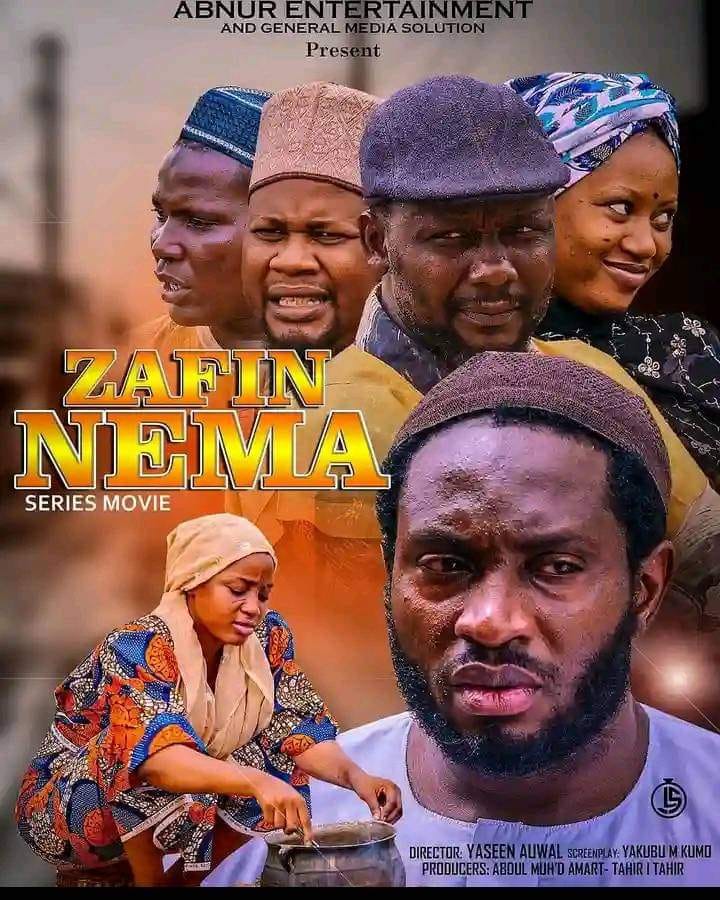
Kannywood Movie Review: Zafin Nema

By Muhammad Abubakar

It has been a while since I wrote a Kannywood movie review. The last film I reviewed was Ruwan Dare, directed by the uniquely skilled Auwal Yaseen. In this review, I will discuss the same director’s new series release (Zafin Nema), which shares some similarities with the previous movie.

Zafin Nema is a romantic comedy-drama about two lovers, Ilu (played by Sadiq Sani Sadiq) and Saude (played by Maryam Yahaya), who face numerous challenges. Ilu comes from a poor background, and Saude’s family, especially her paternal grandmother (Hajara Usman), disapproves of their relationship. As a result, Ilu and his friend Rabe (played by Tahir I. Tahir) set off to the city in search of money to marry Saude.

Ilu and Rabe vow not to return home until they become five times richer than Alhaji Dangana (played by Shehu Hassan Kano), whom Saude is forced to marry. Ilu’s financial struggles cause his relationship with Saude to fall apart, and her family’s obsession with material possessions doesn’t make things easier.

The movie is entertaining and leaves you curious about what will happen in the next episode. The cast delivers good performances, but the camera work is poor and looks like it was shot with an ordinary Android camera. However, the natural background is quite appealing.

One issue with the movie is that it’s without subtitles, despite Kannywood’s growing audience across Africa and beyond. Additionally, the subtitles in some Kannywood films are poorly done.

Surprisingly, the industry still produces movies with terrible subtitles despite having (seemingly) educated individuals. Therefore, I suggest they employ people proficient in English to handle subtitles.

Overall, Zafin Nema is a must-watch movie that you shouldn’t miss. I, therefore, recommend it for all and sundry.

Muhammad Abubakar wrote via muhammadabubakarsulaiman070@gmail.com.

Impending collapse of Nollywood, Kannywood, and music industries due to the AI revolution

By Haruna Chiroma

Before the advent of the internal combustion engine, imaging two horses engaging in a conversation about the era of internal combustion engines. One of the horses envisions a transformative job landscape with new opportunities, while the other horse opposes the idea, seeing it as a potential threat to their relevance in transportation and a possible complete displacement from the realm of transportation. Horses have no position in the post internal combustion engine era. That is my prediction for the future of the movie and music industries in Nigeria.

The Nigerian movie industry is notably divided into two main sectors: Nollywood, primarily representing movies from the southern region and Kannywood, which focuses on movies from the northern region.

In the music industry, songs are typically sung in English, Hausa, Igbo, and Yoruba. Both the movie and music industries are currently confronting the looming threat of collapse due to the disruptive impact of AI innovations, inventions, and discoveries.

The process of writing movie scripts by scriptwriters is time-consuming and varies in duration depending on the complexity and proposed length of the film. It can take anywhere from two weeks to three months to complete the initial draft before further refinement. However, with the advent of AI tools like ChatGPT, scriptwriters can significantly enhance their productivity. By utilizing ChatGPT, writers can expedite the scriptwriting process, potentially reducing the time required from months to just one or two days for complex movie scripts.

The movie industry is on the verge of collapse in the near future with the emergence of generative AI tools capable of generating video from written text. In the near future, traditional methods of movie production may become obsolete. Instead of the laborious process of location shooting, hiring actors, coordinating camera movements, applying makeup, arranging logistics, etc. a movie script written by scriptwriter can simply be fed into a text-to-video tool converter. This innovative technology will then generate a movie video representation of the script, revolutionizing the way movies are created. The tool comes equipped with video editing features, enabling users to fine-tune the video to match their requirements. The process that involves many people with different expertise working from different perspective may likely require between 2 – 3 people instead of the large number of people required in the traditional process of movie production.

Recently, OpenAI unveiled Sora, a text-to-video conversion tool, garnering widespread attention from mainstream media. This development prompted a filmmaker in Hollywood, Tyler Perry to suspend his 4 years $800 million planned movie production studio expansion arguing that Sora will eventually impact every aspect of the movie industry and jobs in the entertainment industry.

In an intriguing development, yet another valuable AI tool for video translation has emerged. This tool enables users to translate their videos into different languages such as Dutch, French, Arabic, Swahili, Chinese, Malay, and more. By doing so, the movie video creators can extend their reach beyond Nigeria and cater to audiences across Africa, Europe, and Asia, thereby expanding their potential viewer base to a larger and more diverse audience.

A deepfake movie can be produced by using the faces of renowned movie stars from both Kannywood and Nollywood, eliminating the need for these actors to physically appear in any physical location. The movie developer only requires the consent of the actors to use their faces in the deepfake video, adhering strictly to ethical guidelines in the creation of deepfake content. With these permissions in place, a movie can be crafted featuring the prominent actor(s) as the central characters, offering new possibilities in cinematic storytelling.

These emerging concepts pose a significant challenge to the movie industry, making it increasingly difficult for the traditional model to sustain itself. This trend mirrors the significant decline or almost collapse witnessed in industries such as landline telephones, photo shops, and magnetic tape, suggesting that the movie industry may face a similar fate of eventual collapse to the changing landscape.

Already the adult content industry is facing tough competition from deepfake adult videos generated by AI tools. Recently, several dedicated platforms have emerged, exacerbating challenges for the traditional adult movie sector. These platforms are attracting millions of visitors, with one particularly renowned platform drawing over 17 million viewers monthly. Typically, the platform features short deepfake adult content videos as teasers, enticing viewers to access the full content elsewhere.

While the short videos span various platforms, the primary one serves primarily for advertising and provides links to other platforms where complete videos are available for purchase.

The proliferation of deepfake adult videos has led to a surprising revelation: these videos are not freely accessible but are instead sold in dollars, accepting payments via credit cards, debit cards, or cryptocurrency. This burgeoning industry has now become a multimillion-dollar enterprise. For anonymity and ethical reasons, I intentionally omitted specific platform names to prevent further traffic influx.

This discourse underscores a poignant observation: the inevitability of the movie industry’s potential decline due to the transformative impacts of AI research. In January of this year, a deepfake pornographic image featuring a celebrity, Taylor Swift surfaced on various social media platforms. The video quickly gained traction on X (formerly Twitter), spreading rapidly like wildfire and amassing over 47 million views in less than 24 hours. Despite ethical considerations, many X users shared the video extensively before it was eventually removed and searching for the image was blocked by X. I foresee the collapse of the adult content industry in the next 3 years with the deepfake videos taking over.

In the music industry, numerous AI tools for music generation are currently in various stages of development, testing, or initial release. For example, MusicLM, an AI tool developed by Google, is designed for composing music and has shown promising capabilities in generating music.

Currently, an advanced version called MusicFx is undergoing testing in Google’s test kitchen before its public release. Users can simply prompt ideas into the music tool, and it will automatically compose the music. This advancement suggests that the future of music composition may require fewer people, as one individual can prompt the tool with ideas to generate music without the need for multiple collaborators.

Another tool is Suno V3, it generates music from text easily. Therefore, the music industry is at the verge of facing stiff competition and eventual collapse of the industry from these revolutions from AI.

Haruna Chiroma, Ph.D. Artificial Intelligence University of Hafr Al Batin, Saudi Arabia, freedonchi@yahoo.com.

Ali Nuhu: Shaping Kannywood with hard work and integrity

By Hussain Muhammad

In the tapestry of Kannywood’s illustrious legacy, one name shines with the brilliance of a thousand stars—Ali Nuhu.

His journey from a seasoned film actor to the Managing Director of the Nigerian Film Corporation is not only a testament to his hard work but also a narrative of how one individual can shape an entire industry.

Ali Nuhu’s career as an actor is marked by his ability to breathe life into characters, painting narratives that resonate with audiences across cultures and languages. Beyond his on-screen charisma, he remains untainted by the scandals that often beset the entertainment world, standing as a paragon of decency and grace.

His recent appointment as Managing Director further underscores his pivotal role in shaping Kannywood’s future. Through his leadership, he embodies the principles of excellence, integrity, and inclusivity, guiding the industry toward new horizons of success.

Ali Nuhu’s journey imparts invaluable lessons in perseverance and dedication. His unwavering commitment to his craft, coupled with his ability to navigate the pitfalls of fame gracefully, serves as an inspiration to aspiring artists and industry veterans alike.

As we celebrate Ali Nuhu’s accomplishments, we are reminded of the power of hard work, integrity, and humility in shaping not only individual careers but entire industries. His legacy will continue to inspire generations of filmmakers, actors, and enthusiasts, paving the way for a brighter, more inclusive future for Kannywood and beyond.

A critique of Ali Nuhu’s Gidan Sarauta

By Idris Ishaq Danwanka

The series Gidan Sarauta (“Royal House”), directed by Ali Nuhu, does not fully align with its title. The events portrayed in the series differ from what one would expect from a real Gidan Sarauta.

Let’s start with the characters: Ali Nuhu introduced Adam Abdullahi Adam (Abale), who played the role of a disrespectful son to a wealthy man named Rabiu Rikadawa, also known as Baba Dan Audu in Labarina. The character lacks a proper upbringing from his father and harbours a disdain for the less fortunate. While such behaviour may exist in certain places, it raises the question of why thuggery is associated with Gidan Sarauta. What message is Ali Nuhu trying to convey? 

Furthermore, would it be plausible for a devout Muslim on their deathbed to instruct their son not to show compassion towards the poor? Such teachings contradict the principles of Islam, where one is expected to seek forgiveness from Allah and reflect on their wrongdoings before passing away.

Additionally, I am not particularly pleased with the casting choices in the series. Umar M Sharif, who sometimes speaks femininely, is selected to portray a prince. While this may not bother me as much, it is concerning to see Garzali Miko, who lacks the necessary qualities for such a character, also playing the role of a prince.

Moreover, the series seems repetitive, with certain events unnecessarily repeated within the same scene. Additionally, Mommy Gombe, who is assigned a significant role, appears to be somewhat inadequate for the part.

In summary, I have several reservations regarding the direction, character choices, and portrayal of events in the Gidan Sarauta series directed by Ali Nuhu.

Idris Ishaq Danwanka studies English Language and Literature at Federal University Dutse.