Kaduna State

Bandits kidnap two Kaduna journalists, wives, others

By Abdullahi Mukhtar Algasgaini

Bandits invaded Dahjonu community in Millennium City, Chikun Local Government Area of Kaduna State, on Saturday night and abducted two journalists—The Nation’s Abdulgafar Alabelewe and Blueprint newspaper’s AbdulRaheem Abdu—as well as their wives and children.

Alabelewe is also the current chairman of the Correspondents’ Chapel of the Nigeria Union of Journalists, Kaduna State Council.

One of the victims’ family members, Taofeeq Olayemi, who confirmed the incident, said the bandits invaded the area around 10:30 p.m. and shot indiscriminately before carrying out their act.

Olayemi said the bandits kidnapped Alabelewe, his wife, and two of his children, while Aodu and his wife, who was also sick, were kidnapped, leaving their sick daughter behind.

He said, “Initially, they picked Abdulgafar, his wife, and three of his children and a girl staying with them before asking the girl to return with one of the children and left with Abdulgafar, his wife, and two children.

“They shattered their doors and windows and removed their burglary after scaling the fence.”

Olayemi, who is also a neighbour to the victims, added, “They came around 10:30 pm on Saturday and started shooting indiscriminately.

“They first forced Aodu’s door open and picked him and his wife and left their sick daughter behind.

“Then, they entered Abdulgafar’s house through the fence and jumped into his house.

“They went straight into his bedroom and picked him, his wife, and two of their kids and left immediately, after which the vigilantes arrived and started shooting into the air.”

As of the time of filing this report, the state Police Public Relations Officer, Mansir Hassan, could not be reached for comment as his telephone line was not connecting.

Civil society group reaffirms El-Rufa’i’s indictment, urges EFCC, ICPC for arrest

By Abdullahi Mukhtar Algasgaini

A civil society group, the Kaduna Citizens Watch for Good Governance (KCWGG), announced on Tuesday, July 2, 2024, that it has petitioned the Economic and Financial Crimes Commission (EFCC) and the Independent Corrupt Practices Commission (ICPC) to investigate former Governor of Kaduna State, Nasir El-Rufai, and his cabinet over alleged financial misappropriation of over N400bn during his administration from 2015 to 2023.

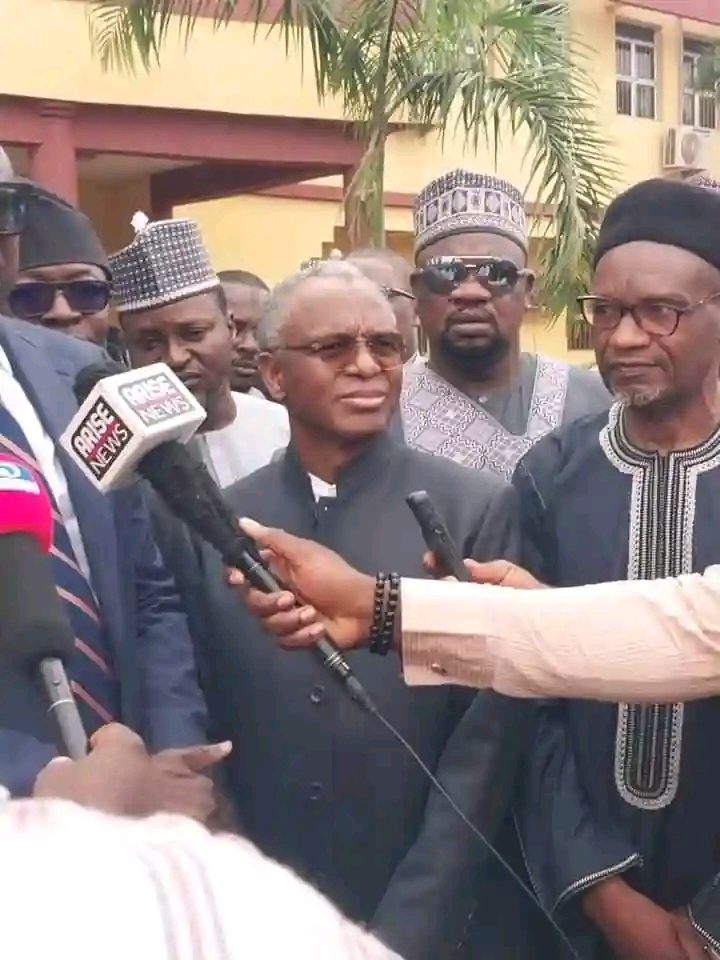
Speaking during a press conference held at Arewa House, Kaduna, on Wednesday, the chairman of KCWGG, Comrade Victor Duniya, stated, “Yesterday, the 2nd of July 2024, we officially lodged petitions at the headquarters of the Economic and Financial Crimes Commission (EFCC) and the zonal office of the Independent Corrupt Practices Commission (ICPC) Kaduna against the former governor of Kaduna State, Mal. Nasir Ahmad El-Rufai and many members of his administration.

“Our action was a result of the probe carried out by the Kaduna State House of Assembly Ad-hoc report on sourcing and usage of domestic loans from 29th May 2015 to 29th May 2023, which indicted the former governor and some of his key members.”

The ad-hoc committee report had indicted the former governor and some of his top government officials for the misappropriation of over N400bn.

Though the former governor has rushed to the Federal High Court seeking his fundamental rights, the civil society group (KCWGG) insisted that the anti-graft bodies should arrest the former governor and his appointees who were indicted in the probe.

Duniya maintained further, “Our petitions requested immediate investigations, arrests, and prosecutions of Mal. El-Rufai and his appointees involved in the mismanagement, siphoning, and many illegal financial and administrative activities contained in the report.

“Holding the former governor and those that looted the treasury and shortchanged the people’s interests accountable will deter other elected and appointed public officials from mindless looting of the public treasury with impunity.”

The petitioners told the two anti-graft agencies, “We have absolute confidence in the capacity and determination of the anti-graft agencies in combating corruption in Nigeria.

El-Rufai sues Kaduna State Assembly for defamation

By Abdullahi Mukhtar Algasgain

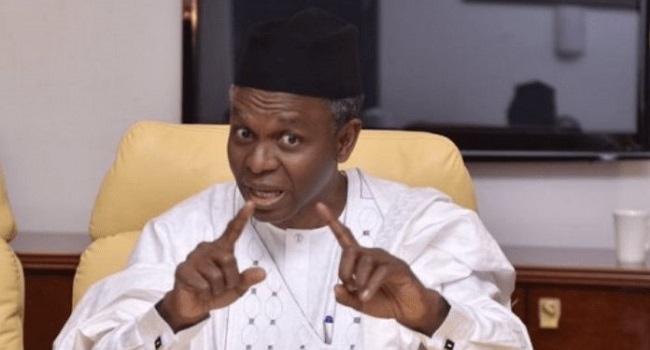
The former Governor of Kaduna State, Malam Nasir El-Rufa’i, has filed a defamation lawsuit against the Kaduna State Assembly. The lawsuit was presented today, Wednesday, at the Federal High Court in Kaduna.

El-Rufai is demanding a public apology from the lawmakers for a report they published, which he claims defamed him and his cabinet. The State Assembly’s report alleged that the former governor misappropriated over ₦423 billion during his tenure.

El-Rufai’s legal team argues that the report is both false and malicious, designed to tarnish his reputation and discredit his administration’s achievements. They assert that the allegations have caused significant harm to his personal and professional standing.

The former governor, noted for his developmental policies and efforts to improve infrastructure and education in Kaduna State, has consistently defended his administration’s transparency and commitment to public service. He maintains that the Assembly’s allegations are politically motivated and lack any substantive evidence.

The legal proceedings have drawn significant attention, with many awaiting the court’s decision on the matter. The outcome of this case could have substantial implications for El-Rufai’s political future and the current political landscape in Kaduna State.

The crisis of godfatherism 

By Bilyamin Abdulmumin

Since 2007, when the two-term tenure of Fourth Republic governors ended, one godfather crisis or another has occurred. The outgoing clung on to the anointing for several reasons: influence in godson administration, protection from their misgovernance, or, last and least for many godfathers, continuity (although it is the most important factor for good governance). 

The surprising succession crisis brewing recently involved Uba Sani and Nasir El-Rufai. It was unexpected because El-Rufai did not appear to be interfering with the Kaduna government. Unlike Wike, El-Rufai, known for reading and writing books, might have learned the lesson from previous cases, but Sani took the fight to his door. 

Uba Sani shook the table when, in a town hall meeting (apparently held to burst the bubble), he lamented the burden of loans he inherited and decried the lack of money not only for infrastructure development but also for threatening the state’s ability to meet its current expenditures.

That outburst was followed by mixed reactions. Some commentators point to hindsight, stating that it was their prophecy that came to pass. But for some, it was a big trouble for Uba Sani because, according to this category, he was given the green light to become a senator for one thing: to pave the way for getting the loan. So, this category sees Uba Sani as an accomplice rather than a victim. They unearthed his videos eulogising El-Rufai, which trended. 

The double trouble for Sani was that the effect of the loss was visible in Kaduna state, so wowing the public became an uphill task. However, the current dollar-to-naira exchange rate compared to when the loan was secured is rather unfortunate.

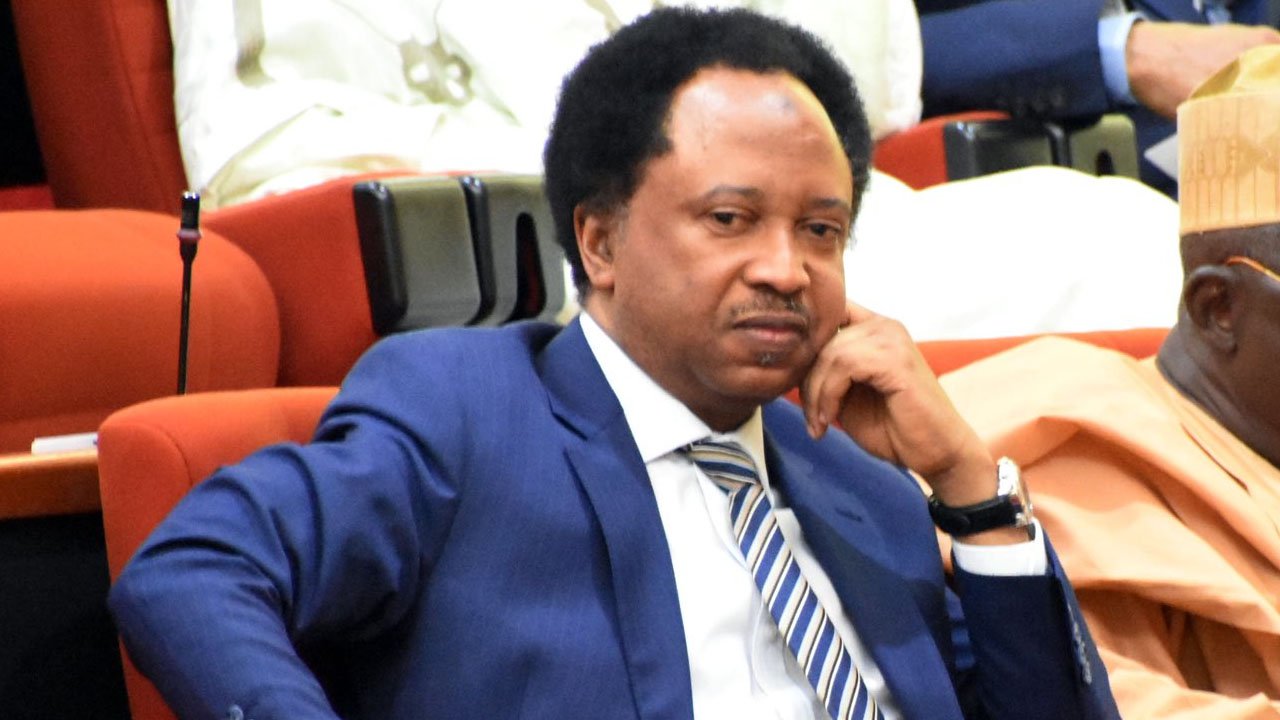
 One primary beneficiary of this situation is Shehu Sani. The former senator of Kaduna Central used the situation to settle scores. He took the case on social media, profiling himself vindicated. 

On the contrary, a Nigerian figure who will be taken aback by the looming political crisis in Kaduna state is his eminent Sanusi Lamido Sanusi. During the KADINVEST 7.0, SLM extols marvellous achievements in Lagos state thanks to the continuity. 

Bola Ahmed Tinubu laid the foundation for the modern Lagos state, which Fashola built upon. When Ambode came continued, but when he wanted to digress, it cost him his second term ticket (this can happen in Lagos, where a serving governor failed a primary election); the fruit of continuity is just bearing fruit in Lagos state under Babajide Sonwo-Olu. 

Uba Sani was shown nodding his head in belief during the SLS lecture. I told myself that Kaduna is lucky because if Uba Sani could only service the debt and continue with some uncompleted buildings, Kaduna would be great. 

El-Rufai remained quiet in the saga, unlike his disquieted son Bashir El-Rufai, who was a junior to Bello El-Rufai. Several commentators confuse Bashir with Bello- the current serving house Rep. The latter was cut between the devil and the deep blue sea, he recently gave an interview in which he eulogised Uba Sani as his mentor, mentioning how Sani paved the way for him, not his father. He even mentioned something philosophical: if anyone wants to go far, he can’t dare join issues with his master; someone aware of this philosophy must be tied down between supporting his father or his boss.

A theory explaining Sani’s outburst with El-Rufai was that the former was being cajoled by the presidency. With no love lost between El-Rufai and the presidency, he must part ways with his boss.  

Apart from the godfather himself, loyalties are a major factor fanning the flames of discord. The outgoing lieutenant’s influence will be hanging in the balance while the new government loyalties stampede to establish their loyalty to the new government. It becomes a struggle for survival. 

In the reactionary salvo that Kaduna state women leaders fire on Uba Sani, reading in-between the line, one could easily figure out self-serving because she decried how Sani has not been responding to her requests.

 The leaders involved in such a situation are in a delicate balance. They need deliberate effort to piece together the puzzle (provided that it is not too late); otherwise, the matter will blow out of proportion.

Bilyamin Abdulmumin wrote via bilal4riid13@gmail.com.

Nasir El-Rufai: The accidental public servant of many hues

By Lawan Bukar Maigana 

The sagacious former Governor of Kaduna State, Malam Nasir El-Rufai, is once again in the news with his usual controversial stance on government policies and decisions. 

Last week, after granting journalists an interview about his presentation at a capacity-building training for Borno’s top government officials in Maiduguri, he became the hot story on every national daily, both online and offline. 

According to him, the Nigerian government has reconsidered returning fuel subsidies, mentioning that President Tinubu’s administration secretly pays billions of Naira for fuel subsidies.

As a journalist specialising in fact-checking, I needed to investigate his claim because there were no credibility elements in his statements. I quickly ran a keyword search, and the result revealed that the Minister of State for Petroleum Resources (Oil), Heineken Lokpobiri, has refuted the claim and described it as ‘wrong.’

The trouble with El-Rufai started when the Senate withheld his confirmation over security checks during the ministerial screening in August 2023, even though he is a seasoned politician who used to be a minister. 

Since then, he left Nigeria to go abroad, failing to attend his son’s wedding ceremony, Bello Nasir El-Rufai. After his return from abroad, he was seen visiting strong politicians from the opposition party, which was said to be a political plot against the 2027 presidential elections. 

This was justified by his son, Bello El-Rufai, in a podcast interview with Seun of Channels Television, where he mentioned that his father and the President have never been on good terms, citing exchanges of unfriendly remarks in the past.

It is human nature to leave when discomforted or offended; therefore, Malam has the right to not only leave the All Progressive Congress (APC) but also form a new party, let alone merge with cult-like parties like the Labour Party (LP). 

El-Rufai is an outspoken politician whose relevance has passed because he couldn’t deliver his state to the APC, indicating he is now politically weak. It’s clear that politics transcends outspokenness. 

Another trouble facing El-Rufai now is with his successor, Governor Uba Sani. At a town hall meeting, he said that he inherited a huge debt burden of $587m, N85bn, and 115 contractual liabilities from the immediate past administration of Nasir El-Rufai, complaining that the huge debt has eaten deep into the state’s federal allocation. 

This has necessitated the formation of a committee by the Kaduna State House Assembly to probe El-Rufai’s administration, even though he has always proudly challenged the people of Kaduna to uncover any financial wrongdoing by him.

Allegedly, Bello El-Rufai, who proudly identifies himself as a replica and a clone copy of his father in politics, has thrown the public into scepticism regarding his father’s integrity. He was said to have sent insulting words and threats to the Speaker of Kaduna State Assembly, Hon. Yusuf Liman, since the establishment of the committee to probe his father’s administration that drowned Kaduna in debts, amounting to billions of Naira.

If I were El-Rufai’s son, Bello, I would appreciate the Kaduna State Government’s efforts to uphold justice and accountability in the state. I would privately intervene respectfully, if necessary, without being jittery about the outcome of the investigation.

Lawan Bukar Maigana writes from Maiduguri and can be reached via lawanbukarmaigana@gmail.com.

Academic slavery in school: A must-halt journey

By Sulaiman Mohammed

Education is often regarded as the foundation of every society, the key to unlocking prosperity and success for nations and individuals alike. Yet, despite its importance, the individuals responsible (teachers) often find themselves not only underpaid but also underdeveloped.

The most common complaint among teachers in private schools is the poor payment as monthly income they receive for their hard work and dedication. As a profession (teaching), it requires significant time, effort, and skill. Many hours are spent planning lessons, grading assignments, and providing individual student support. Teachers play a crucial role in shaping the future of society, yet many are struggling to make ends meet.

The low salary that many teachers receive fails to reflect the importance of their work and makes it difficult for them to support themselves and their families. This affects their well-being and their ability to teach and inspire their students effectively. 

In my community (Rigasa, Kaduna state), I know of many qualified and experienced teachers who left school for another or even a different profession outside of teaching, all courtesy of underpayment and undervaluation to the detriment of the students. 

Finally, to ensure that students receive a quality education, teachers need to be adequately compensated in terms of fair salary, access to benefits, and other professional opportunities for staff sustainable development. Only then can we ensure that our schools are staffed with dedicated and passionate educators who can provide the best education. 

This is in dedication to Mallam Salihu, Bn Masood, Yunusa Bala, Mallam Umar, Haruna Bala, and several other teachers in this profession. Keep on keeping on; the students and society are our concern.

Sulaiman Mohammed wrote via muhammedsuleiman213@gmail.com.

El-Rufai gears up for legal, political battle against Tinubu

By Uzair Adam Imam

The former governor of Kaduna State, Mallam Nasir El-Rufai, is bracing himself for a multifaceted showdown with President Bola Tinubu, poised to unfold in both courtrooms and the court of public opinion.

El-Rufai’s legal offensive is aimed at vindicating himself from allegations of being a security risk, which have tarnished his reputation and dashed his ministerial aspirations.

Despite his instrumental support in Tinubu’s rise to power, El-Rufai was abruptly dropped during Senate ministerial screenings, citing purported security clearance failures.

This stunning turn of events has spurred El-Rufai to action, with plans underway to challenge the accusations in court. Sources close to him have affirmed his resolve to clear his name and restore his integrity, leveraging his extensive international connections and legal resources.

Simultaneously, El-Rufai is mobilizing politically to challenge Tinubu’s influence in the court of public opinion, setting the stage for a potentially contentious lead-up to the 2027 elections.

While his exact role in the upcoming political landscape remains uncertain, El-Rufai’s strategic maneuvering against Tinubu underscores a rift that has emerged despite their past collaboration.

El-Rufai’s journey from a key ally to a formidable opponent of Tinubu reflects a complex dynamic within Nigerian politics, where alliances can shift rapidly, driven by personal ambitions and ideological differences.

As the battle lines are drawn, the nation watches with bated breath to see how this clash of titans will reshape the political landscape in the years to come.

Kaduna strangulated by debt burden of El-Rufai’s administration – Shehu Sani

By Uzair Adam Imam

Shehu Sani, the former Senator representing Kaduna Central, has raised the alarm over the suffocating debt burden gripping Kaduna State under the administration of former Governor Nasir El-Rufai.

Sani expressed regret that his warnings against El-Rufai’s aggressive borrowing were ignored, leading the state into a financial crisis of significant proportions.

Speaking to reporters, Sani highlighted the dire consequences of the debt accumulation, emphasizing that if his advice had been heeded, the state would not be grappling with the current predicament.

He recalled facing criticism for opposing a $350 million World Bank loan sought by the El-Rufai administration, foreseeing the looming challenges now faced by the state.

Governor Uba Sani, in a recent town hall meeting, disclosed that the state inherited a staggering debt of $587 million, ₦85 billion, and ₦115 billion in contractual liabilities from the previous administration.

This heavy financial burden has severely hampered the state’s ability to meet its financial obligations, including salary payments.

The current administration disclosed that a substantial portion of the state’s federal allocation is being diverted toward servicing the debt, leaving insufficient funds for essential expenditures such as salary payments.

With the sharp increase in exchange rates, the amount being repaid has almost tripled, exacerbating the financial strain on the state.

Out of the N10 billion received as federal allocation in March, N7 billion was deducted to service the state’s debt, leaving only N3 billion available.

However, this amount falls short of covering the state’s monthly salary bill of N5.2 billion, further exacerbating the financial crisis.

Sani cautioned that the repercussions of the state’s debt burden are now being felt acutely, underscoring the urgent need for concerted efforts to address the financial challenges facing Kaduna State.

Nigerian military rescues 137 kidnapped Kuriga students

By Uzair Adam Imam

Good news emerged on Sunday when the Nigerian Defence Headquarters (DHQ) announced the successful rescue of 137 kidnapped students from Kuriga.

A coordinated effort involving the military, local authorities, and government agencies led to the students’ liberation, according to a statement by Maj.-Gen. Edward Buba, Director of Defense Media Operations.

The primary and secondary school students, abducted on March 7, were freed early Sunday morning. The rescued group comprised 76 girls and 61 boys.

According to Buba, this operation signifies a broader commitment to combating terrorism. On March 21st, troops also secured the release of 16 hostages, including schoolchildren, in Sokoto State.

He added that the military remains steadfast in its pursuit of all hostages and will ensure those responsible face justice through the Nigerian legal system.

Security forces are also actively searching for the perpetrators behind the recent killing of 18 soldiers in Delta State. Justice, according to the DHQ, will be served.

The transfiguration “Ni Dan Rigasa Ne” phrase

By Abdullahi Yusuf

The phrase “Ni Dan Rigasa ne” (which means “I am an inhabitant of Rigasa”) was once notorious within the Kaduna metropolis, evoking a troubled history. Rigasa, a well-known community under the authority of Igabi Local Government Area of Kaduna State, boasts a dense population of over 3 million inhabitants, primarily from the Hausa tribe, making Hausa the predominant language of communication in the community.

In the past, the phrase “Ni Dan Rigasa ne” was akin to saying “I’m from O’block” in Chicago, United States. It connoted hailing from a place where violence was rampant, almost warning others to steer clear due to assumed tendencies for aggression. While certain notions about the community were stereotyped, these stereotypes held some semblance of truth, however generalised.

Due to Rigasa’s population density, a large number of out-of-school children roamed the streets. Some scavenged within different marketplaces, while a fortunate few were sent to learn skills. Many adolescents and young people in the community had been immersed in illicit activities, often engaging in violent altercations, causing harm to themselves and others while also perpetuating property destruction.

During this period, the term “Yan shara” was commonly used, referring to gangs of thugs armed with weapons, causing mayhem and inflicting injuries and damages. This unrest often served as an opportunity for robbery, leading to the theft of belongings from innocent passers-by.

Phone snatching was prevalent, and individuals lived in fear of being victimised in broad daylight. Such incidents resulted in injuries, disabilities, and even fatalities.

As a result, the community became daunting to outsiders, dissuading visits from people from other parts of the state due to the fear of potential unrest or falling victim to robbery.

“Yan hayi” was another term those living outside Rigasa used to describe the residents, signifying people residing in Hayin Rigasa. The word “Hayi” conveys “crossing,” and was derived from the fact that a river at the entrance of Rigasa had to be traversed before entering the community. During that era, being called “Dan Hayi” implied that one was unwise or unsophisticated.

These stereotypes gradually dissipated over time as Rigasa transformed into a burgeoning community with abundant, relatively affordable land. People from other parts of the state began to immigrate to Rigasa and construct houses. Consequently, Rigasa has become one of the most rapidly developed communities over the past two decades, a testament to its positive transformation.

Despite the aforementioned tumultuous events, the residents of the Rigasa community are among the most selfless individuals one could encounter. Their spirit of altruism and patriotism is unparalleled, and they channelled their unity towards overcoming adversities and shaping a brighter future for their community. Education served as the fulcrum for this positive transformation, marking the inception of their development journey. 

Over two decades ago, a group of forward-thinking individuals came together to establish a forum to foster education and community development to promote success. The Rigasa Students Forum (S-Foris) was formed to orient, educate, and mentor the people within the community, including the younger generation and the elder populace. 

S-Foris was instrumental in providing extramural lessons to students and introducing adult education to elderly individuals, particularly women who did not have the opportunity to acquire education earlier in their lives. The forum made significant strides in transforming the mindset of numerous youths in the community, achieving notable success.

Subsequently, other student bodies, such as the Rigasa Students Association (RSA) and Rigasa Old Student Association (ROSA), emerged with similar aspirations, continuing the trajectory of success.

Building on these achievements, the same group of individuals sought to elevate their advocacy efforts by expanding the scope of development-related initiatives. This led to the formation of the Rigasa Action and Awareness Forum (RAAF). RAAF operates as a pressure group, enlightening the community about various aspects of development and advocating for adherence to the rule of law. Moreover, the forum takes proactive measures to ensure that the government addresses the needs and concerns of the Rigasa community.

Due to the tireless efforts of a dedicated group, Rigasa can be considered a benchmark for positive change. The community boasts numerous talented individuals who excel across various domains of development. Academically, Government Secondary School Rigasa has produced a multitude of intellectuals who have excelled in academia. Moreover, developmentally, Rigasa is home to the leading youth civil society organisation in Kaduna, the Enhancing Community Action for Peace and Better Health Initiative (e-CAPH), headed by the vibrant young leader and prominent human rights advocate, Yusha’u M Abubakar. Additionally, the Village Debbo Care Initiative (VD Care), led by Samira Isah Modibbo, serves as another influential platform for women’s rights, among other organisations contributing to the community’s progress.

Before the 2023 election, during the voter registration exercise, RAAF played a pivotal role in mobilising citizens for registration and transfer, as Rigasa welcomed the addition of over 80 polling units. This effort led to mobilising over 10,000 additional votes within the community, presenting a significant political advantage considering the maxim “politics is a game of numbers.”

“Dan Rigasa” or “Dan Hayi” is no longer derogatory but a source of pride. Rigasa is now widely represented in learning institutions and governmental agencies across northern Nigeria. Rigasa youth have obtained prominent positions in government, excelled in business endeavours, and showcased their skills across various industries. The community has notably enhanced its security, becoming one of the safest locales in Kaduna State, fostering an environment where individuals can navigate without fear of robbery or threat to personal safety.

Amid these accomplishments, humanitarian services have also flourished. Zauren Al’umma, led by Idris Tumba, has emerged as a notable humanitarian organisation providing crucial aid to vulnerable individuals in diverse capacities, further accentuating the community’s spirit of benevolence.

Rigasa’s journey reflects a remarkable transformation, underscored by a commitment to education, civic engagement, and holistic community development. Rigasa people are fond of helping each other in an individual capacity and as an organisation.

I can confidently beat my chest wherever I find myself and proudly exclaim, “Ni Dan Rigasa Ne,” without fearing any stereotype or judgment. I am confident that Rigasa is now well-represented widely.

Abdullahi Yusuf is a graduate of Health Education, Bayero University Kano. He wrote from Rigasa, Kaduna, via abdoolphd@gmail.com.