Islam

Holy Qur’an University confers honorary doctorate on Sheikh Pantami

By Abdurrahman Muhammad

The University of the Holy Qur’an and Taseel of Sciences of the Republic of Sudan awarded Nigeria’s Minister of Communications and Digital Economy and renowned Islamic cleric, Professor Isa Ali Ibrahim (Pantami), with an Honorary Doctoral Degree in Qur’anic Science.

While the Honourable Minister was awarded in May 2021, he received the award certificate and shared the same on social media only recently.

According to the official social media handles of the Minister, he was the first person in sub-Saharan Africa to receive the award. The statement, in part, reads:

“With the exemption of North Africa, he was the first African to receive the recognition on the Glorious Qur’an.”

During Ramadan, Sheikh Pantami delivers Tafsir at the Annur Masjid in the Nigerian capital, FCT Abuja. He also holds other preaching sessions outside the Holy Month at the same mosque or elsewhere.

Time Waits for Nobody: A Ramadan reminder

By Salim Samaila Marafa

It was like yesterday, The crescent of Ramadan was sighted, and we started fasting. But here we are today, with a few days to Eid-el-Fitr. Indeed, the speed at which time flies is amazingly alarming.

Among God’s creatures, time is an independent creature that exists without hinging on anything. It flies without waiting. It comes and goes without notification, so you either learn how to manage it or fall victim to “lack of time.”

Time is an undefeated warrior. It saw the rising and falling of great heroes and significant events and memorable moments. But, It put all of them in the bin of history. That’s all. The only warriors who can defeat time are those who know how to use it well. Therefore, we should learn how to use and manage our time to our advantage before it shows its habit of slipping away without notice. Since our time is limited and our days are numbered.

Ramadan is the month’s name in the Islamic calendar, while the month is a small portion of the time. Therefore, we should use this time, Ramadan, wisely, positively and to our advantage.

Ramadan is Islamically considered a holy month of blessings and Allah’s abundance of mercy. Our beloved prophet (pbuh) even narrated that during Ramadan, Satan is chained, doors of hell fire are closed, and those of paradise are widely opened.

Also, Ramadan is Islamically considered a glorious period during which Allah spreads the mat of his forgiveness to his servant. So, as we are observing the fasting of day 18 today, skip reading this reminder and ask yourself this question “From day one of this month up to date, what did I do that can earn me Allah’s  forgiveness and blessing.” 

If the answer to the above question is ” I did this and that”, it is okay, but not enough. Redouble your effort within these few remaining eleven or twelve days. To have more blessings in your possession.

 However, if the answer to the above question is ” I did not do anything good,” then this is where your problem started. But don’t panic; you are not that too late. You still have 11 days ahead of you; you can turn over a new leaf before it’s over and be forgiven by Allah the almighty.

What should I do to be forgiven and blessed by Allah? 

This is a good question we should all ask ourselves. There are uncountable positive things one can do to earn Allah’s forgiveness in this holy month of Ramadan. 

First, take your Qur’an, open it with good intentions and read as many verses and chapters as possible. Remember, every alphabet (harafi) of the holy Qur’an attracts ten rewards when you read it in the sacred month of Ramadan due to the holiness and glory of the month. So, if you. You can read two chapters daily, meaning you can read the Qur’an before the month slip away.

Secondly, help those needy people around you. Give out voluntary charity (sadaqah) to those who deserve it. Allah will surely reward you and forgive you for it long as you did it for His sake.

Thirdly, do you have parents alive?

If yes, be obedient to them, and show a kind gesture towards them. Allah loves those who love and take care of their parents. If your parents are no more, Don’t worry, do what you should have done to them, to their friends and to old people in your neighbourhood.

And to your dead parents, ask Allah’s forgiveness and mercy for them whenever you observe a prayer or any act of ibadat. This is another way you can get Allah’s mercy and forgiveness.

When night spreads darkness over the world, don’t just sleep from A to Z. Wake up when night ages, perform ablution, observe at least two rakat Voluntary prayer ( salat) and ask Allah whatever you wish. The night is a special period during which Allah accepts the prayers of his servants.

Remember, you can do many other things to get Allah’s forgiveness and blessings, which I did not mention here. Just Do them. This is a Ramadan reminder from your brother in Islam. Have a good Reading.

May Allah accept our fasting, prayers and every act of ibadat. And may He count us among those He forgives in this holy month of Ramadan.

Salim Samaila Marafa wrote via salimsamailamarafa82@gmail.com.

Reminiscing Shaykh Ja’afar Mahmud Adam

By Abubakar Suleiman

The Holy month of Ramadan is the month wherein the glorious Qur’an was revealed; hence, virtually all practising Muslims worldwide are occupied by its recitation while they ponder its meanings.

Ramadan in Northern Nigeria is greeted with Tafsir sessions, that is, the exegesis of the glorious Qur’an by different Islamic clerics or scholars. Many of these sessions are aired on television, radio and sometimes live on Facebook and other social media platforms.

However, during this period, controversies are unfortunately never in short supply among the Muslim Ummah as scholars from different sects or strands in a sect reel out interpretations of some verses. Scholars who consider some of these interpretations as skewed or deliberate distortions of the intended meaning of those verses dish out rejoinders.

Therefore, rebuttals and counter-rebuttals are being voiced out from pulpits. Followers of these scholars, too, take to their keyboards and engage in online arguments or knowledge exchanges. Unfortunately, sometimes these arguments are not without ad hominem. And if one is not careful, the essence of Ramadan, a month wherein Muslim faithful devote a considerable part of their time to acts of worship, repentance and seeking Allah’s forgiveness, would be lost amidst fierce arguments on religious matters.

Despite being dead 16 years ago, people usually comb the archives to unearth Shaykh Ja’afar Mahmud Adam’s explanation or exegesis on trendy religious arguments. And often, the resurfaced audio or video clips serve as an arbiter or at least give clarity to the subject matter. Late Shaykh Ja’afar is that blessed.

This morning, I stumbled upon a video clip of the erudite scholar, Late Shaykh Ja’afar, wherein he elucidated the value of constructive argument as he gave the exegesis from the glorious Qur’an. The clip reminded me of my distant encounters with the blessed teacher.

Whenever I was in Kano state while he was alive, I would leave my relatives’ residence in the ancient city just to go listen to his sermon in his Jummuat mosque in Dorayi. After observing the Friday prayers, I would also rush to the mosque in Gadon Kaya and book a place with a praying mat for the Tafsir session that would take place in the evening after Magrib. After quenching my thirst for new knowledge on that day, I always look forward to the following Friday with eagerness and glee.

Far away from Kano, I always stayed glued to the radio with my pen and note to write maxims from Usuul Fiqh, Qawaa’idu At-tafsir, and many poems. I memorised many religious diktats from the late Shaykh long before I eventually came across them in books during my tutelage.

There are arguably many Islamic scholars who are more learned than him in the North, but he is arguably the most eloquent and knowledgeable when it comes to the exegesis of the glorious Qur’an. In addition, his unique style of translating the Qur’an with the Qur’an – the flawless and effortless ability to quote various verses relating to a verse under discussion – endeared him to many.

Plus, his didactic prowess and eloquent delivery are also laced with authentic prophetic traditions as understood by the companions of prophet Muhammad (SAW), who lived with him and were present when the revelation of the glorious Qur’an was taking place.

His telling and bold voice reverberate with powerful and meaningful Islamic knowledge. Furthermore, his ability to decompose complex religious issues into lucid tidbits made him phenomenal and outstanding. 

Despite these qualities, he is not without flaws, but Allah has blessed him with the humility to succumb to superior arguments and even own up to mistakes. He never hesitates publicly, acknowledging his errors, wrong perception, or explanation of a religious topic. It is normal to hear him say my explanation on so and so matter yesterday was not completely accurate, and here’s the correct explanation for it. This humble attribute is not very common among many religious clerics.

I was still carrying the pains of my mother’s death when the Shaykh was assassinated. My mother died six months earlier. However, the news of his assassination sent shivers down my spine. On that very day, knowledge was buried, wisdom was dwarfed and eloquence in didactic prowess nosedived. We seek solace in the fact that his legacies live on in the students he has groomed and his documented audio and video.

May Allah accept his martyrdom and grant him the highest stations in Jannatul Firdaus, amin.

Abubakar Suleiman writes from Kaduna and can be reached via abusuleiman06@yahoo.com

Ramadan: Dr Bichi distributes foodstuff worth millions

By Lamara Garba Azare

A chieftain of New Nigeria People’s Party (NNPP) in Kano State and former Executive Secretary of the Tertiary Education Trust Fund (Tetfund), Dr Abdullahi Baffa Bichi has distributed essential commodities worth millions of Naira to the needy as part of a humanitarian gesture to ease the suffering of the populace.

The items, which include rice, cooking oil, noodles and other commodities estimated at several hundreds of millions of Naira.

Interestingly, the commodity was given across the board irrespective of the party affiliations of the beneficiaries.

Those who benefitted from the gesture prayed to Allah to reward him abundantly.

A widow with 7 children who said she travelled from a far distance to come and collect the gesture burst into tears of joy when she was given 25kg of rice, noodle and cooking oil, saying the last time she saw rice was about a year ago.

“We have no words to thank Dr Bichi. If he had known how happy we are now, certainly, he would further understand the suffering of many of us. To be frank with you, the last time I cooked rice in my house was a year ago when I was passing by the Kabuga area, and I saw a large crowd of women going inside BUK quarters to collect food items. I joined them, and luckily I was given too.”

The coordinator of the distribution exercise, Honourable Ghali Mu’azu, said several thousands of people male and female from across the state have benefited from the gesture.

According to him, this gesture had been instituted by Dr Bichi for a long period of time, spanning over two decades, and priority was given to the elderly and those with physical challenge cutting across all strata of people.

“We gave out to every lucky person irrespective of his political leaning. Ours is to touch humanity by giving it to the needy among the populace,” he said.

Mr Ghali commended the compassionate attitude and benevolence of Dr Bichi, who he described as kind-hearted and a man with a big heart.

Much-awaited debate between Dr. Dutsen Tanshi, Sufi clerics suspended

By Muhammadu Sabiu

The Bauchi State Government has suspended the much-awaited debate between a controversial cleric, Dr Idris Abdulaziz Dutsen Tanshi, and other scholars who tagged his recent comments about “seeking humanly impossible” help from Prophet Muhammad (SAW) as inappropriate.
 
The suspension, according to the state’s Sharia Commission, is until further notice.

Recall that during a Ramadan Tafsir session, Dutsen Tanshi was quoted as saying, “We don’t need help from Inyass; we don’t need help from Tijjanni; we don’t need help from Abdulqadiri; we don’t need help from Shehu Usman. In fact, even from the Prophet. That’s the end of it.

“Whose help do we need? Allah. It’s left to them to twist my words. The Prophet himself said, ‘If you need help, seek help from Allah.'”

Consequently, in a letter the Bauchi State Shari’a Commission sent to the cleric late yesterday night, it says, “I am directed to write and formally inform you of the reschedule[d] date of the interactive session earlier slated for Saturday, 8th April 2023.

“That the new date will be communicated to you accordingly, please.” 

Hausa names as ethnographic identifiers

By Prof. Abdalla Uba Adamu

It happened 40 years ago. A friend’s wife in Kano had delivered a bouncing baby boy. My friend chose Maikuɗi as the name for the baby. The families on both sides were having none of this. Maikuɗi was not a name, they argued. But he saw nothing wrong with it – a nice traditional Hausa name. He was adamant. They were adamant. Cue in A Mexican Standoff.

Three days before the naming ceremony, he blinked first and apparently gave up. With a glint in his eyes, he decided to name the child Ibrahim. A beautiful Hebrew name but cognately shared by both Muslims and Christians (from Abraham, the father of all). Everyone was happy – until it dawned on everyone that Ibrahim was the name of my friend’s father-in-law. Tricky. In Hausa societies, the names of parents are never uttered. In the end, everyone ended up calling the boy Maikuɗi! Right now, the boy is a successful international businessman living in the Middle East. Earning serious cash and living up to his name – which means one born on a lucky day. Or Tuesday.

A few years later, the same friend’s wife gave birth to a beautiful baby girl. He decided to name her Tabawa. Objections reloaded. Cue in Dog Day Afternoon. As previously, my friend blinked first. He decided to name her Hajara, another cognate of Hagar, the wife of Abraham. It also happened to be the name of his eldest sister. His mother could not utter it – both the Hausa and Fulani system of cultural relations prohibit mothers from calling the names of their first series of children. In the end, everyone ended up calling the child Tabawa. She is currently a university lecturer and a doctoral student in Nigeria. Living up to her name – which means Mother luck, or the name given to one born on Wednesday (in Kano; in Katsina, it is Tuesday) is considered a lucky day. Two children, both lucky in their lives. Their traditional Hausa names became their mascots as they glided successfully through life.

So, why the aversion to Hausa ‘traditional’ names? You can’t name your child Maikuɗi, but everyone will applaud Yasar (wealthy – mai kuɗi?). Or Kamal (perfection). Or Fahad (panther). Or Anwar (bright). Or Fawaz (winner). You can’t name your daughter Tabawa, but it is more acceptable to call her Mahjuba (covered). Or Samira (night conversationist –TikToker?). Name your daughter ‘Dare’, and you are in trouble. Change it to Leila, and you out of it, even though this is an Arabic for ‘dare’ (night).

A lot of the names the Muslim Hausa currently use have nothing to do with Islam. Bearers of such names rarely know their actual meaning or context. They were Arabic and forced on us by the Cancel Culture that attaches a derogatory ‘Haɓe’ coefficient to anything traditional to the Hausa.

Therefore, my friend, whose family story I just related, another friend and I decided to get together and be Wokish about traditional Hausa names. Paradoxically, none of us is genetically Hausa (whatever that might mean) – one had roots in north Africa, another had Kanuri heritage, and one had Agadesian and Torodbe roots – but all of us self-identified, with absolute honour and tenacity, as Hausa. None of this ‘Hausa-Fulani’ aberrational nonsense.

‘Hausa-Fulani’ appellation, in my view, is a Nigerian Cancel Culture device to suppress the Fulani culture. The Fulani may have conquered the ruling of the Hausa (except in one or two places) and imposed their rule. The Hausa, on the other hand, have linguistically conquered the Fulani. In Kano, claiming Fulani heritage is considered anthropological purity – without knowing a single word of Fulfulde (the Fulani language). Substituting rulers does not get rid of the general populace who remain what they are.

The third friend then took the task with gusto. He spent over ten years compiling authentic traditional Hausa names that have absolutely nothing to do with ‘Maguzanci’ (the label gleefully and contemptuously attached to any Hausa who is not a Muslim by the Hausa themselves) before Islam in about 1349, at least in Kano). He also collected names that had only a tinge connection to Islam. The end product was a hitherto unpublished list of 1001 authentic, genuine, traditional Hausa names that reflect the cosmology of the Hausa.

Hausa’s anthropological cosmology reflects the worldview and belief system of the Hausa community based upon their understanding of order in the universe. It is reflected in their naming system – just like any other culture. The Yoruba Muslims, for the most part, have retained this attachment to their traditional cosmology. Farooq Kperogi has done wonderful work on Yoruba naming, although with a focus on their adaptation of Muslim names. The failure of the Hausa to do so was, of course, due to the suffocating blanket of Cancel Culture that the Hausa had been suffering for almost 229 years.

Now, let’s look at the names and their categories. The first category I created from the 1001 Names, which I edited, revolved around Being, Sickness and Death. As noted earlier, the traditional Hausa centre their naming conventions on ecological and cosmological observations—using time, space and seasons to mark their births. Based on this, the first naming convention uses circumstances of birth. This category of names refers to the arrival of a child after another child’s death, the death of a parent, the sickness of the child immediately after being born or a simple structure of the child that seems out of the ordinary. Examples include:

Abarshi. This is derived from the expression, ‘Allah Ya bar shi’[May Allah make him survive]. A male child was born after a series of miscarriages. A female child is named Abarta. A protectionist naming strategy is where the child is not given full loving attention after birth until even evil spirits note this and ignore it and thus let him be. Variants include Mantau, Ajefas, Barmani, Ajuji, and Barau. Now you know the meaning of Hajiya Sa’adatu ‘Barmani’ Choge’s name – the late famous Hausa griotte from Katsina (1948-2013).

Then there is Shekarau, derived from ‘shekara’, a year. A male child is born after an unusually long period of gestation in the mother’s womb. A variant of this name is Ɓoyi [hide/hidden]. A female child is named Shekara. Now you know the meaning of the surname of Distinguished Senator Malam Ibrahim Shekarau from Kano.

A third example is Tanko. This is a child born after three female children. Variants include Gudaji, Tankari, Yuguda/Iguda/Guda. I am sure you know the famous Muhammed Gudaji Kazaure, a Member of the House of Representatives of Nigeria and his media presence in late 2022.

Each of these sampled names reflects a philosophical worldview, reflecting spiritual resignation or slight humour. They, therefore, encode the traditional Hausa perspective of living and dying as inscribed in the way they name their children.

Names that even the contemporary Hausa avoid because of bad collective memory are those linked to wealth and being owned or slavery.

Slaves have prominently featured in the political and social structure of the traditional Hausa societies, especially in the old commercial emirates of Kano, Zaria, Daura and Katsina. Their roles are clearly defined along socially accepted norms, and they are expected to perform given assignments demanded by their masters.

Slaves in Kano are divided into two: domestic and farm-collective. Trusted and, therefore, domesticated slaves are mainly found in ruling houses and are prized because of their loyalty to the title holder. Farmyard slaves were often captured during raids or wars and were not trusted because of the possibility of escape. They were usually owned by wealthy merchants or farmers and were put to work mainly on farms

Although the institution of slavery as then practised has been eliminated in traditional Hausa societies, the main emirate ruling houses still retain vestiges of inherited slave ownership, reflected even in the categorisation of the slaves. For instance, in Kano, royal slaves were distinguished between first-generation slaves (bayi) and those born into slavery (cucanawa).

At the height of slave raids and ownership, particularly when owning a slave was an indication of wealth, the names of the slaves often reflected the status of the owner. Examples of these names include Nasamu (given to the first slave owned by a young man determined to become a wealthy man), Arziki (first female slave owned by a man), Nagode (female slave given away to a person as a gift), Baba da Rai (first gift of a male slave to a son by his father), Dangana (male slave of a latter-day successful farmer or trader, although later given also to a child whose elder siblings all died in infancy. The female slave variant is Nadogara), and Baubawa (slaves with a different faith from the owner), amongst others.

The changing political economy of Hausa societies since the coming of colonialism has created new social dynamics, which included the outward banning of slavery. Thus, many of the names associated with slaves and ‘being-owned’ in traditional Hausa societies became disused, unfashionable, or, which is more probable, to be used without any idea of their original meaning. It is thought that some records of them may be of value. An example is ‘Anini’, usually a slave name but later used to refer to a child born with tiny limbs. The ‘smallness’ is also reflected in the fact that ‘anini’ was a coin in the Nigerian economy, usually 1/10th of a penny—a bit like the small Indian copper coin, ‘dam’ (from which the English language got ‘damn’, as in ‘I don’t give a damn’).

Further, with the coming of Islam, slave names were eased out and replaced by conventional Muslim names as dictated by Islam, Retained, however, are slave names that also served as descriptors of the functions of the slave, even in contemporary ruling houses. Examples of these slave titles, which are rarely used outside of the places, include:

Shamaki (looks after the king’s horses and serves as an overseer of the slaves), Ɗan Rimi (King’s top slave official and looks after all weapons), Sallama (King’s bosom friend [usually a eunuch], same role as Abin Faɗa), Kasheka shares the household supplies to king’s wives [usually a eunuch], Babban Zagi (a runner in front of the king), Jarmai (the head of an army), Kilishi (prepares sitting place for the king), amongst others. These names are almost exclusively restricted to the palace and rarely used outside its confines. Cases of nicknames of individuals bearing these names remain just that but had no official connotation outside of the palace.

The coming of Islam to Hausaland in about the 13th century altered the way traditional Hausa named their children and created the second category of Hausa beside the first ‘traditional’ ones. This second category became the Muslim Hausa, which abandoned all cultural activities associated with the traditional Hausa beliefs. This was not an overnight process. However, taking it as it does, centuries. Even then, a significant portion of Muslim Hausa material culture remains the same as for traditional Hausa. The point of departure is in religious or community practices, which for the Muslim Hausa, are guided by tenets of Islam.

Affected at this point of departure is naming conventions. This is more so because Islam encourages adherents to give their children good meaningful names. These names must, therefore, not reflect anything that counters the fundamental faith of the bearer or reflect a revert to a pre-Islamic period in the lives of the individuals.

However, while predominantly accepting Muslim names, traditional Hausa parents have domesticated some of the names to the contours of their language. For instance, Guruza (Ahmad), Da’u (Dawud), Gagare (Abubakar), Auwa (Hauwa), Daso (Maryam), Babuga (Umar), Ilu (Isma’il), amongst others.

So, here you are. If you are looking for an authentic, ‘clean’ traditional Hausa name or trying to understand your friend’s traditional Hausa name (or even yours), you are welcome to 1001 Traditional Hausa names.

The list is divided into two. The first contains 869 authentic traditional Hausa names. The second contains 132 Arabic/Islamic that the Hausa have somehow domesticated to their linguistic anthropology.

The file is available at https://bit.ly/42HJl97.

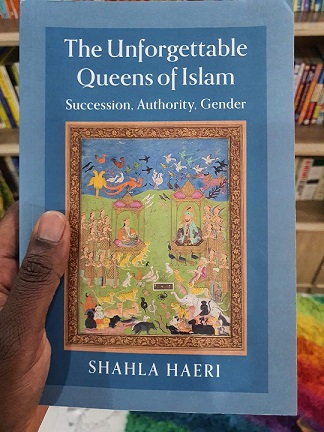
On Jonathan AC Brown’s Slavery and Islam

By Dr Shamsuddeen Sani

In a flurry of literary exploration, my daughter recently stumbled upon the book entitled Concubines and Power. Her curiosity was piqued as she asked me to explain the meaning of “concubine”. A seemingly simple inquiry prompted a deep and complex conversation encompassing a broad range of considerations about slavery, including its religious underpinnings and contemporary relevance.

That exchange reignited my intellectual curiosity, leading me to revisit the noteworthy insights presented in Jonathan AC Brown’s seminal work, Slavery and Islam. I was compelled to reflect on and share some of the most insightful revelations from this ground-breaking work.

The book meticulously examines the historical context and practice of slavery within the Islamic tradition, as well as the ways in which Islamic law and theology have addressed the institution of slavery. Brown argues that slavery was ubiquitous throughout much of human history and was not unique to Islam.

However, Brown also acknowledges that slavery played a significant role in the development of Islamic civilisation and that the Islamic legal tradition provided a framework for the regulation of slavery. He offers an insightful and nuanced perspective on this complex issue, providing valuable insights into the intersection of religion and human rights.

Brown’s book highlights a fundamental premise: the Islamic tradition’s nuanced and intricate approach to slavery. On the one hand, Islamic law allowed for the practice of slavery; on the other, it imposed stringent limitations on how slaves could be treated and offered opportunities for manumission. According to Brown, these regulations illustrate a deep-seated concern for the well-being of slaves and a profound appreciation of their inherent human dignity.

At the same time, Brown acknowledges that there were significant abuses of the institution of slavery within Islamic societies. For example, he notes that some Muslim scholars and rulers sought to justify and perpetuate the practice of slavery through a misinterpretation of Islamic teachings and that many slaves were subjected to inhumane treatment.

He argues that while there are certainly instances of slavery and human trafficking that occur in Muslim-majority countries, these practices are not inherently Islamic and are often the result of broader social and economic factors.

Ramadan starts Thursday, says Sultan

By Muhammadu Sabiu 

The Nigerian Supreme Council of Islamic Affairs has confirmed that the Ramadan crescent has been sighted in different locations in Nigeria.

This announcement was made by the Islamic Council in a statement on its official Facebook page on Wednesday night.

The statement reads, “His Eminence has received positive sighting reports of the Ramadan crescent from various locations nationwide. Thursday, 23rd March, is the first day of Ramadan.”

It added that an official statement would follow afterwards.

The sighting of the crescent marks the beginning of the ninth month of the Islamic calendar, in which Muslims fast for twenty-nine of thirty days before observing Eid al-Fitr.

Sheikh Sudais marks 40 years as the Imam of Masjid Al Haram

By Ahmad Deedat Zakari

Sheikh Abdulrahman Sudais, the renowned Islamic cleric and revered Imam of the grand mosque in Makkah, has completed forty years as Imam of the mosque. 

According to reports by the Haramain Sharifain on Tuesday, Sheikh Sudais was appointed as Imam of Masjid Al Haram, Makkah, by Royal Decree issued by the Late Custodian of the Two Holy Mosques, King Fahad bin Abdulaziz in 1984/1404 at the young age of 22.

Sheikh Sudais led his first Salah on 22 Sha’ban 1404, corresponding to May 1984. His First Salah in the Haram was the Asr Prayer.

Below is the brief biography of Sheikh Sudais:

Sheikh Sudais was born in the Islamic year 1381 in the City of Qassim, Saudi Arabia. He got his early education in Riyadh, and by the age of 12, he had memorized the whole Quran under the supervision of Sheikh Abdul Rehman Al Firyan.

Sheikh Sudais graduated from the Faculty of Sharia in the year 1402, Completed his final years of Studies at Umm Al Qura University in Makkah and earned a PhD Degree in Sharia in 1416.

He was appointed Imam of Masjid Al Haram in 1404 at the very young age of 22. Since then, Sheikh Sudais has been leading Taraweeh every year, and in 1441, he completed his 40th time of completing the Quran and reading the Khatam ul Quran Dua.

In 1433, he was appointed as the President of General Presidency for the Affairs of the Haramain in a decree ordered by the Late King Abdullah of Saudi Arabia just before the Grand Expansion started in Masjid Al Haram

Sheikh Abdul Rahman As Sudais was appointed by King Salman to deliver the Hajj Khutbah in the year 2016/1437. Later, by Royal Decree issued by the Custodian of the Two Holy Mosques, Sheikh Sudais was reappointed as President of the General Presidency for a period of 4 years in 1441.

In 1444, Sheikh Sudais completed 40 years of his appointment as Imam and Khateeb of Masjid Al Haram, Makkah.

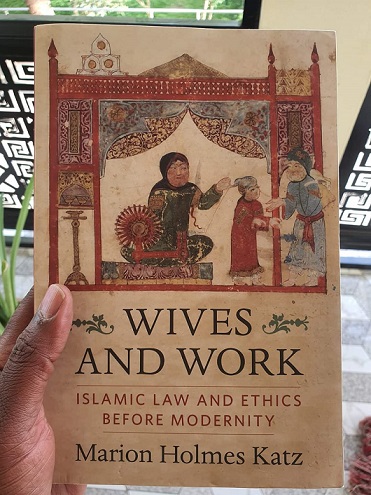
Polygyny: The silenced narrative of an added wife

By Khalilah Yahya Aliyu

Nothing like polygamy has been grossly abhorred and misunderstood in marriage, especially among women. It trends both ways, be it positive or negative, with the latter being blown out of proportion – leading to an intense phobia for women young and old.

Please note that we Muslims don’t practice polygamy. What we are allowed to practice is polygyny. The difference here is that in polygamy, both men and women are allowed to have multiple wives or husbands, respectively, while polygyny refers to a husband taking more than one wife, four to be precise. So, I will use polygamy for this article.

The piece will be dominated by my point of view, garnished with some spicy personal experiences. Writing this has been difficult because I felt as though I was laying bare a part of my soul. After going through numerous articles and books on polygyny, I realised that much attention is given to the perspective of the first wife or existing wives. Their fears and insecurities when confronted with polygyny and ways to overcome them were discussed in detail. Therefore, the added wife is left to nurse her worries and insecurities alone as it is being treated as non-existent.

During my secondary school days, we did ask ourselves questions regarding polygyny, and we all wanted to be the first wife. This position to our understanding back then, comes with these benefits:

Societal empathy towards the first wife, with the man and his new wives, considered wrongdoers, conspiring to destabilise the existing wife’s life.

You enjoy the man’s prime years and resources, which translates to more attention and care. You get a clearer understanding of the man’s personality as a husband, having spent more years with him and his close and extended family.

Being his first and as humans, we tend to get sentimentally attached to our first of everything, be it a child, car, job, etc.

Those are a few of the benefits. They could be more or less depending on the person and the current situation. All these made me crave that position, too, to the extent of being willing to welcome co-wives so that I could hold on to the bragging rights of knowing him first. Well, fate has an entirely different story lying in waiting for me.

I met this amazing man. I have always been an incurable romantic at heart, placing emphasis on those zings and sparks you feel when you meet someone you share a strong chemistry with. “This here is the man of my dream,” I exclaimed to myself. The feelings were mutual; I am sure you will be like, “why didn’t you get married right away” as it is the only legal way to have a relationship with non-Mahram. It wasn’t that easy because here I am, a not previously-married young lady from a monogamous home presenting a married man as a suitor to her family. The more the number of wives, the more difficult it is for our parents to accept the man as a spousal choice for their girls. In my case, it was even wives, not a wife, an unsurmountable wall, it seemed.

As parts of the tenets of our Deen, we must accept “qadr”, otherwise known as the divine decree, regardless of how it comes. I drew strength from this and presented him as my choice. During the waiting period before the wedding, I was riddled with nerves and bouts of insecurities. This shows that added wives, too, have fears. What if the other wives are better looking, cooks and humans than I am? No day passes without my heart racing faster when I think about what lies ahead. Your intentions might be noble, but you can’t say the same about the other parties with the recent ugly trend of co-wives harming one another. The what-ifs were actually numerous, including the ability of our husband to treat us fairly.

I channelled the energy generated by these fears into finding a better version of myself, seeking religious knowledge and reading more on human psychology to understand better the tricks of maintaining a healthy relationship between humans—anything on polygyny I devoured keenly to better prepare for what lies ahead. Marriage is a lifetime journey, and no preparation is termed too much. So when I felt ready, armed with prayers and all I have learnt, I plunged bravely into it and “Alhamdulillah”, it was not as difficult as I envisaged.

Though no amount of preparation is adequate when reality finally hits, coping mechanisms are needed to maintain a healthy relationship when jealousy glares its ugly head. A naturally occurring phenomenon, even our mothers, the wives of our noble prophet (S.A.W), were not spared. Feeling bouts of jealousy is normal, but borrowing a leaf from how our role models, Mothers of the Faithful, dealt with theirs will keep this strong emotion in check. How you handle this emotion can make or break you. I try to always look at a person as a human first, and no matter how jealous or angry I get, I will try my best to treat the person humanely. No one is worth your “Iman” I repeat, never lose your “Iman” over anything. Keep striving to maintain a better version of yourself. Study your co-wives because understanding their temperaments will make it easier for you to relate with them accordingly. It might not lead to friendship per se, but an amicable relationship is assured.

Plus, always remember that humans are dignified creatures, and every soul has its unique form of beauty. As a famous saying goes, “beauty is in the eyes of the beholder” sister, you are beautiful. Indulge in many positive affirmations, eat healthy, exercise, and maintain positive hygiene to boost your self-esteem should you ever feel your co-wives are better.

Contrary to popular belief of competition between co-wives, you are there to compete with no one; be yourself and try as much as you can to support and not bring them down. Remember, as your sisters in Islam, you owe them that. Banters will be thrown, especially that of knowing him before you did or you coming to marry their husband. He was never meant for them alone; it was decreed that he would marry you all in the manner or order he did. You have the same right as any of them, but this shouldn’t make you disrespectful. Support your spouse; it takes a lot of spunk and sacrifice to maintain a wife and talk more about wives.

Personally, polygyny has been a blessing. Ask pizza lovers; having a slice of it is better than not having a taste at all. I wouldn’t have been able to enjoy the good moments with the man of my dreams if it wasn’t legal for him to marry me too.

Regardless of being the first or last, we are all advised to make it work. Equip yourself with what it takes to build a peaceful haven or sanctuary for yourself, your husband, and everyone visiting your home. He is yours; make every moment count. It is not how much time is spent but how qualitative it is. To the added wife, know this, you are brave and unique, and you’ve got nothing to fear. Be yourself, and I wish you the best.

Khalilah Yahya Aliyu writes from Kaduna and can be reached via khalilah20@gmail.com.