Islam

Dr Zakir Naik: MURIC warns overzealous interlopers

By Muhammad Abdurrahman

An Islamic human rights organisation, the Muslim Rights Concern (MURIC), has warned those calling for the arrest of Dr Zakir Naik to mind their business. The organisation insists that the Islamic preacher is exercising his Allah-given fundamental human right of freedom of movement under international law. MURIC further warned that anybody found embarrassing to the Sultan’s guest would face the wrath of Nigerian Muslims. 

The warning was handed down on Sunday, 5th November 2023, by the Executive Director of MURIC, Professor Ishaq Akintola. 

The full statement reads:

“A campaign of calumny and religious hatred has been unleashed on an international Islamic figure, Dr Zakir Naik, who is currently in Nigeria. Dr Zakir Naik is in the country on the invitation of the Sultan of Sokoto and President General of the Nigerian Supreme Council for Islamic Affairs (NSCIA), Alhaji Muhammad Sa’ad Abubakar.

“The campaign is being sponsored by Christians who are jittery. They are aware of the visitor’s oratory, intellectual prowess and amazing ability to convince his audience with indubitable facts. We remind these overzealous interlopers that Dr Zakir Naik is exercising his Allah-given fundamental human right of freedom of movement. 

“Article 13 of the Universal Declaration of Human Rights of the United Nations guarantees the right to freedom of movement around the globe without interference. It says, ‘Everyone has the right to freedom of movement and residence within the borders of each state. Everyone has the right to leave any country, including his own, and to return to his country.

“Those behind this shameful exercise are meddlesome interlopers and Muslim haters disguising themselves as public commentators. They are motivated by hate, ignorance and gymnastic religiosity. 

“For the avoidance of doubt, we warn that anybody found embarrassing an official guest of His Eminence the Sultan and head of more than 150 million Nigerian Muslims will face the wrath of Muslims in this country.

“Why are our Christian neighbours so intolerant? How many times have Muslims raised objections when Christians invite foreign preachers? Several Christian preachers have toured this country without any Muslim protesting. 

“We recall the way Louis Farrakhan, the black American Muslim leader, was disallowed from giving a lecture in Nigeria in 1986. That ugly and disgraceful incident was engineered by the same set of people. It must not happen again.

“To those who are pursuing this ignoble goal, we say, ‘Take notice that Dr Zakir Naik is not Louis Farrakhan and Nigeria of 1986 is different from Nigeria in 2023. Nigerian Muslims of today, under a dynamic and visionary leadership, can give measure for measure.’ 

“The whole world knows the Indian government for what it is when it comes to religious tolerance. The crimes of the Indian state against its Muslim population of 204 million Muslims are legendary. Muslim haters in Nigeria should allow the Indian government to convince Interpol to do its dirty work for it. 

“India has failed to involve Interpol because its allegations against Dr Zakir Naik are religiously motivated. How did the Islamic scholar travel across several countries without Interpol arresting him if, indeed, he is a wanted person? Let the Indian government convince Interpol first.

“As far as we are concerned, Dr Zakir Naik has not broken any known law of Nigeria. He is, therefore, innocent and free to move around and deliver lectures. We remind the law enforcement agencies of their duty to ensure the safety and security of this Islamic scholar. Nothing must happen to him. It is needless to assert that any guest of the Sultan is a guest of all Nigerian Muslims.”

#LeaveDrZaikNaikAlone

What Hisbah truly does

By Usama Abdullahi 

The Hisbah corps members have come under criticism for their recent activities, which include raiding or disrupting a hotel or social gatherings where immoral actions are being condoned. I’m surprised about its criticism. Just like any other institution or agency, Hisbah has its flaws. But to write it off merely because of what it’s doing lately isn’t morally right. 

I wanted to stay clear of this issue. Still, I felt the need to chip in after listening to a minute-long interview the Commander-General Kano Hisbah, Sheikh Aminu Daurawa, granted to BBC Hausa regarding the backlash that greets their actions. In that interview, the Sheikh logically stated why they raided such “illegal” gatherings. 

Through his revelations, I realised that they don’t just raid a hotel or any social gathering for their selfish concerns, but they first receive calls for an investigation. You see, Hisbah doesn’t carry out things as badly as some people would have us believe. They simply do the bidding of their people. The calls are often made by the people living near the places where such social vices occur. 

Once they suspect something unusual in the said places, they do not fail to raise the alarm by calling Hisbah to carry out some investigations. And when the Hisbah Corps arrive at the scene of the “crime”, they don’t harass the suspects. Nor do they raid the entire place as they so wish. However, they go straight to the hotelier or owner of the place and inform them of their plan.

When they have the offenders in their custody, they usually preach to them and caution them against the consequences of their actions. But if they encounter serial miscreants, they take them to the court of law. So, if I may ask, what’s wrong with that? This is right on all fronts- both religiously and morally because they mainly target brothels where sex trafficking takes place. 

Those arrested during their first raid were those from different states or countries. This tells you that the situation is far beyond what you hear. However, Hisbah, as a morality police, is doing what most security personnel fail to do. It’s simply doing the job of a police officer and that of parents.

Only when we look past our sentiments can we acknowledge the benefits of what Hisbah is bringing to society. No matter how you twist, you cannot deny that Hisbah has achieved what the police force hasn’t for years. If you argue that Hisbah is trampling on the rights of their victims, then I’ll put this question to you: how many rules have the so-called victims broken so far? I understand that two wrongs don’t make a right, but there’s no way a law can work without having the law-breakers face their full wrath. 

Usama Abdullahi Writes from Abuja and can be reached at usamagayyi@gmail.com.

The Night Prayer (Qiyamul Lail): A test of true desires

By Abdurrazak Muktar Makarfi

In the depths of the night, when most of the world sleeps, there are those who choose to rise. They are the ones who understand the value of Qiyamul Lail, the act of waking up to pray during the night. This predawn vigil is not just a spiritual obligation for Muslims but also a powerful manifestation of one’s deepest desires and intentions.

Qiyamul Lail is an act of devotion and a reflection of one’s commitment to one’s faith. It is a time when the world is still, and the heart is most receptive to spiritual connection. The act of willingly sacrificing sleep to stand in prayer is a testament to the strength of one’s faith and the sincerity of one’s desires.

Desire, in its purest form, is the driving force behind our actions and aspirations. It is what motivates us to work hard, to overcome obstacles, and to strive for better lives. But how can we measure the depth of our desires? Qiyamul Lail offers a unique litmus test.

If you find yourself desperately wanting something in life, be it success, happiness, or peace, and yet you are not waking up for Qiyamul Lail, then you may need to question the authenticity of your desires. True desire demands sacrifice. It requires us to prioritise what matters most to us. When we value something deeply, we are willing to make sacrifices to attain it.

Waking up for Qiyamul Lail is not just about fulfilling a religious duty; it’s about demonstrating the intensity of your yearning. It’s a declaration that your connection with the Divine is so profound that you are willing to forgo sleep, one of the most basic human needs, to nurture that connection.

Moreover, Qiyamul Lail is a time for reflection, self-examination, and supplication. It is a chance to pour your heart out to the Creator to seek guidance, forgiveness, and blessings. It is a moment when you can lay your deepest desires and concerns before the Almighty with a heart filled with humility and hope.

In the stillness of the night, when the world is hushed in slumber, you have the opportunity to reflect on your aspirations and the path you are on. If your desires are sincere, if you truly long for your goals to be realised, then Qiyamul Lail is your arena to prove it. It’s a chance to show that your ambitions are not mere words but a profound yearning that drives you to action.

So, let the night prayer be a reminder—a reminder to measure your desires against your actions. If you’re desperately wanting something and you’re not waking up for Qiyamul Lail, then you don’t want it enough. But if you’re willing to rise from your slumber, stand in devotion, and whisper your desires to the heavens, then your desires are genuine, and you’re on the right path to fulfilling them.

Centenary Celebration: MURIC salutes Ansarudeen

By Abdurrahman Muhammad

The Ansarudeen Society of Nigeria began its three-month-long centenary programme on Friday, 20th October, 2023. Meanwhile, an Islamic human rights organisation, the Muslim Rights Concern (MURIC), has sent a message of solidarity to the society. MURIC described the Ansarudeen as the leading Islamic organisation in Nigeria in the area of education.

MURIC’s solidarity message was contained in a statement given to newsmen on Monday, 23rd October 2023, by the Executive Director of the organisation, Professor Ishaq Akintola.

The statement reads:

“A foremost Islamic organisation, the Ansar-ud-Deen Society of Nigeria (AUD), began its three-month-long centenary programme on Friday, 20th October, 2023.  The celebrations will come to an end in December 2023.

“MURIC expresses its unflinching solidarity with the AUD on this momentous occasion. We felicitate with the National President of this great organisation, Alhaji Aare Dr. Abdul Rafiu Ademola Sanni whose visionary guidance and exemplary leadership have propelled AUD to greater heights.

“AUD is a golden lamp that has illuminated all that is around it. Millions of Nigerians have benefitted from its programmes, particularly education. AUD primary and secondary schools are spread throughout the nooks and crannies of Nigeria, while the organisation has capped its educational edifice with colleges and a tertiary institution, Summit University, Offa, Kwara State. This is apart from its empowerment programmes for women and youths.

“We extend our acknowledgement to the spiritual leader of the AUD, Shaykh Abdul Rahman Ahmad. As the Chief Missioner of the society, Shaykh Abdul Rahman Ahmad has been a good ambassador.

“MURIC appeals to the federal and state Governments in the country as well as Muslim philanthropists to vigorously fund projects of the AUD. We charge the organization to remain focused and to pay greater attention to its youth wing in order to preserve its enduring culture of spiritual and social growth.”

Lost Heritage Series: The (w)rite stuff of Hausa Islamic learning

By Prof. Abdalla Uba Adamu

The painting evoked memories. And a sense of scholastic pride. Pride in being part of a process that has generated centuries of excellence. And today is Teacher’s Day, a case for celebration of scholarship from below. Even Google’s Doodle for the day acknowledges this.

Years ago, a painting was brought to me to purchase by an artist, Nura Yusuf – the artist being aware I am an art nut. It was a medium-sized canvas and truly beautiful in a photorealistic way. My Ajamization of Knowledge initiative inspired him. But there was no way I could afford the price he was asking, even if I accepted that it was a fair price. I asked his permission, though, to photograph it with my Sony DSC.

I eventually saw the canvas hanging in the outer waiting room of the Emir of Kano’s main reception chamber. Regretfully, you will only notice it if you swing your head up. I think, eventually, it was relocated.

Looking at the painting, as I said, evoked memories of Makarantar Malam Hussaini, Mandawari. Now renamed Makarantar Malam Buhari and reinvented as an Islamiyya school, along Sabon Titi, in the inner city of Kano. In the school, when Malam Hussaini was the Head, you left early if you reported early; otherwise, you stayed behind after the school closed to continue your studies.

Memories of going from house to house, requesting the good folks to allow us to brush their cooking pots with our bare hands, seeking the fine soot that covers the pots, the result of open-fire cooking with logs of wood. Once you gather enough powdered soot, you then dunk your hand in a bowl of water and wash the soot off. Next, you sprinkle a few crystals of gum Arabic in the water and boil the lot – effectively creating a syrupy ink, the classical ‘tawada’. While burnt wood from home cooking fires can do the job, the elite of Tsangaya inks is ‘zuge’, a burnt desert-date tree. The ink itself is often mixed in various colours, depending on its use in copying the Qur’an. These colours come in handy, especially on the graduating certificate – allo – when it is decorated with zayyana calligraphic designs. A whole industry has existed around this trade for years, especially in the heart of the city of Kano, northern Nigeria.

To make a pen, you need a thick dry stalk – gamba – from the grass used for fencing (zana) homes in rural areas. Using a Tiger razor blade (not Nacet, as it easily breaks), you sharpen the edge of the stalk and fashion a neat nib, creating an alƙalami — pen. There were many styles for the nib, depending on the writing to be done. For some, the alƙalami can be a true calligraphic tool.

Properly armed with a pen and ink, you begin the process of carefully copying the verses of the Qur’an, according to your grade, onto the wooden slate until you copy the right passages. You lean it against the wall for it to dry and await your turn to read what you copied by the teacher. Once properly groomed on the reading, off you go to practice reciting on your own.

Once you feel you are proficient enough, you go back to the teacher, read your passages and once satisfied with your diction, and cadence, you are permitted to go to the next passages – wash off the present one – wanke allo – and copy the next sequence. Due to the dark colour of the ink, the wooden slate often absorbs the ink and darkens the slate. The best way to get rid of it is to use sandpaper to scrape it completely – or, failing that due to cost, rice bran – ɓuntu – which works just as well – to remove traces of the previous ink. If the smudges or shadows of the ink still remain, you can use powdered limestone – farar ƙasa – to overlay the darker stain of the ink, giving a clean white surface on which to write.

Ink is kept in a pot, kurtun tawada, while the pens are kept in a pen holder, ƙorami/alkurdu. For adolescents starting up, it was the wooden slate. For the more advanced students, the writing is done on conqueror bond paper (usually imported from North Africa), but the pen is now a quill from the tail or wing feathers of a bird (chicken, duck, guinea fowl).

And in case one gets thirsty doing all that hard work, you can always quench your thirst from the water stored in your water bottle – jallo, made from a gourd. This type of water bottle enters into the Hausa lexicon with the expression: “ina neman sa kamar ruwa a jallo/desperately looking for him.”

This scholastic tradition is well-preserved in this painting by Nura Yusuf, who incidentally happened to be a brother to the writer and poet Khalid Imam. Being Teachers Day today, I dedicate this painting to all Alarammomi, Gardawa, and Ƙolawa, who are my fellow classmates in every Tsangaya in this country. We pray for the souls of our Malaman Tsangaya, who set us on the right path. Allah Ya jiƙansu da Rahama.

Our words have the power to build or break our marriages

By Aisha M. Auyo

In my last article, I wrote about how verbal appreciation affects marriage. In this episode, I will discuss how our words have the power to build or break our marriages. Words are not just for communication; they are for construction and destruction.

We are builders when we use our words wisely. With our words, we are creating a marriage that matters, a union that makes it through the good and bad, through thick and thin.

Here are a few things that you can build with your words in marriage

1. Intimacy

Intimacy is not just something physical. Share your heart with your spouse. Cultivating a marriage with meaningful communication will build deeper intimacy. 

Words move two hearts closer together and unite them as one. 

Dear wife, be patient with your husband – we all know men generally don’t talk as much… They are people of action.

Allah didn’t create marriage to be boring! Have fun for His sakes! From sending a naughty text during the day, a random phone call with words that will make your spouse want to finish whatever they are doing and come home to using words that will build anticipation.

Simple sentences like “I made your favourite dish” or “I’ll come home with your favourite smoothie” can do the trick. It is not the entity that matters. It’s about knowing that your Significant Other has thought about you and even tried to do what pleases you.

When you are together, set aside time for just the two of you to talk. Be intentional and selective with your words. Flirt with one another.

2. Build encouragement

Wives, one of the best things YOU can do for your relationship is to be an encourager. Encouragement can come naturally through sincere daily prayers. Through voicing delight in whatever is done or given to you, through words of gratitude. This will make him want to do more.

Men, women are highly receptive to words. Simple sentences could fuel her attitude for years. The phrase “Allah yai miki albarka” (We want this very badly), or “We can’t do without you”, is all she needs to hear to be her very best.

3. Build confidence

Life is hard, full of tough and sobering reminders that we live in a broken world. So, use your words to encourage and build hope in your spouse. 

Tell them you believe in them and trust their ability to excel. In a world full of competition, envy, and self-doubt, be the number one person who believes your spouse, uplift them, and make them trust themselves. From writing exams, presentations, business ideas, etc. Instil the seed of belief and confidence in them.

Men, please encourage your wife and boost her confidence in her looks and dreams. We need this like oxygen. With your support and trust, we can be the best version of ourselves.

Women, showing doubt in your man’s ability or dreams will kill his ego. His zeal to work hard, his zeal to excel. If there’s one thing that keeps men alive more than oxygen, it should be a massaged ego.

4. Heal

Words heal broken people, sick people, tired people, people who lost loved ones, even people in coma! I’m sure you’ve watched a movie where friends or families of a person in life support talk and say good things to them, and with time, the person in a coma comes back to life. This works not only in movies but also in real life. 

Soothing words for a broken person can help their physical and mental recovery immensely. Hearing someone say that they care about you, believe in your ability to heal, or that life will get better is often enough to improve someone’s mood in their lows.

Life-changing events, sickness, ailment, etc., can affect one spouse or the other. Be the person who brings harmony and healing to your spouse through words. Make it a point to say something positive to your significant other, even once a day.

However, let us always remember that our words can cripple, destroy and disrupt as much as they can build and construct. Verbal abuse is as powerful and destructive as physical abuse. It’s not every time we say what we feel. Most times (Not always woo), silence is better than some utterances. 

Avoid any word that will bring negativity, fear, or discouragement to your spouse. Never threaten or demean your spouse. If an issue needs to be resolved, choose your words wisely.

Know that words, once spoken out, can never be taken aback. The words ‘I’m sorry’, ‘I don’t mean it,’ and ‘it was a joke’ can never undo what you said. Some words create wounds that apology will never heal.

Aisha Musa Auyo is a Doctorate researcher in Educational Psychology, a wife, a mother of three, a homemaker, a caterer and a parenting/ relationship coach.

Fall of the Sokoto Caliphate: Some thoughts

By Huzaifa Dokaji

When people reflect on the fall of the Sokoto Caliphate in 1903, they often conjure up images of British soldiers armed with the formidable Maxim gun on the left, juxtaposed with local inhabitants wielding swords, bows, and arrows on the right, fervently chanting “Allahu akbar.” Unfortunately, this portrayal does not align with historical reality. The foot soldiers were mainly Africans, while Europeans primarily served as commanders and strategists rather than frontline combatants. The bulk of the invading forces were drawn from previously subjugated regions, frequently comprising individuals from the target community itself.

As demonstrated by Philip Afaedie’s PhD thesis, The Hidden Hand of Overrule: Political Agents and the Establishment of British Colonial Rule in Northern Nigeria, 1886–1914, individuals such as Adamu Jakada established their reputations and livelihoods by providing valuable intelligence to European forces. In the case of Kano, for instance, Ciroman Kano Abdu Lele, the son of Emir Kano Tukur (reigned 1893–1895), supported the British invasion in exchange for their promise to restore him to the Kano throne, which his family had lost after the Kano Civil War (1893–1895), known as the Basasa (of course they didn’t honour the agreement after the war!). Others, driven by diverse motivations, also aligned themselves with the British cause.

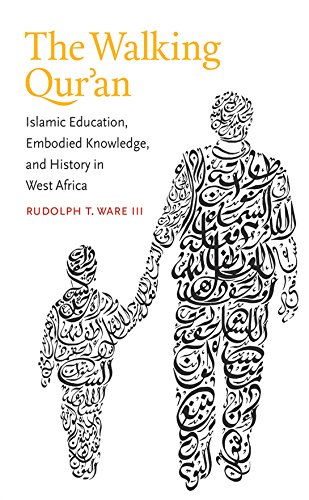
As recounted by Baba of Karo to Mary Smith (see Baba of Karo: A Woman of the Hausa Muslim), people in rural areas, fed up with pervasive political and social corruption, celebrated colonial conquest with a popular song, “Nasara kun dade ba ku zo ba”. The Resident of Kano also noted in an intelligence report to the British acting High Commissioner on July 9th, 1903, that the peasantry embraced British conquest due to their deep-seated resentment towards their rulers. “Nasara kun dade ba ku zo ba” carries more profound implications than its composers may have intended. Scholars like Murray Last (1967), Rudolph Ware (2014) and Paul Lovejoy (2016), along with others, have shown us how and why the Sokoto Jihad was one of the most important political and social revolutions of the 19th century, thanks to the egalitarian nature of its goals. However, Nasara kun dade ba ku zo ba demonstrates how such ideals were lost by the closing decade of the century, prompting common people to seek refuge in the hands of Christians. Nevertheless, the intellectual class remained committed to their quest for an egalitarian society through the Islamic ideological vehicle.

M.S. Umar’s seminal work, Islam and Colonialism: Intellectual Responses of Muslims of Northern Nigeria to British Colonial Rule, has powerfully shown us how such intellectuals reacted to British colonial conquest and the various strategies they adopted to challenge it. They saw it as temporary—God’s wrath upon an erring community. Defining the conquest as a temporary setback, the grand vizier of the Sokoto Caliphate equated it to the shaving of a beard.

In his poems titled Nuzhah and Intisaf, Sheikh Yahya an-Naffakh (b. 1898 and known as Malam) described the British conquest as the ‘triumph of absurdity’ caused by scholars who have replaced ‘the humility of Knowledge with the stupidity of ignorance’ and rulers who have exchanged ‘the wisdom of governance with the arrogance of past glory’. Malam himself came from a family that was a victim of such crass anarchy. The winning side of the Kano Civil War imprisoned his father, who was a legitimist. A young Malam secured his release by writing a petition to the Resident of Kano, Mr. Palmer, advocating against the unjust imprisonment.

Although oral traditions suggest that Dan Fodio prophesied the fall of the Caliphate to European Christians, it is more plausible that news of their encroachment reached Sokoto through traders and pilgrims travelling the trans-Saharan trade routes, ultimately reaching Mecca. For instance, in the early 19th century, the influential Lagos trader Madam Tinubu sent a letter to the Caliph of Sokoto, Bello dan Fodio, informing him of European activities along the coast. Furthermore, Paul Lovejoy’s research on Umar el-Fellati reveals that Fellati witnessed the British occupation of Egypt in 1882 and even acted as a double agent, providing the British with information about the Caliphate while simultaneously reporting on British activities in Northern Africa.

Huzaifa Dokaji is a PhD student and teaching assistant at the Department of History, State University of New York at Sony Brook. He can be reached via huzaifa.dokaji@stonybrook.edu.

A reminder and call for Northern Ulama to intervene in the Sudan conflict

By Baba Isa

While reviewing my collection of photographs, I stumbled upon a significant historical image that reminded me of a momentous event during a public lecture in Sudan. It was during this event that distinguished figures such as Prof. Salisu Shehu, Prof. Sagagi, and Prof. Maqari embarked on a special joint visit to Sudan some years ago. Their visit aimed to understand the exceptional approach Sudanese institutions took in providing training to Nigerian students on their soil, enabling them to return to Nigeria as productive individuals.

During this lecture, Prof. Salisu Shehu said, “The educational experience for Nigerian students in Sudan extended beyond academic excellence. These students, who received education in diverse fields, also imbibed qualities of respect, commendable attitudes towards their communities, and a sense of understanding towards various religious doctrines. This was different to their counterparts studying in different foreign nations.

Prof. Added that the Nigerian Sudan-educated students exhibited unmatched expertise and skills compared to their counterparts in Nigeria. Therefore, the Council of Ulama of Nigeria felt compelled to delegate us to come to Sudan and delve deeper into brief research and learn more about strategies employed by Sudanese institutions and their communities to empower these students. So that we can take back reports to Nigeria and put it into practice”.

The lecture was delivered at the International University of Africa (Indimi Hall) during this insightful visit, and I captured the picture.

Regrettably, the Sudan we love, the Sudan we learn from and once held in high esteem, an exemplar of a hygienic educational environment, now stands ravaged by conflict. It’s disheartening that we have not extended a helping hand to a nation from which we have drawn knowledge and inspiration. Sudan, which significantly contributed to the growth and development of our region through its educational support (like its massive Scholarship scheme to everyone in any course without exception)and enlightened Islamic scholars, medical doctors and other professionals, remains in dire need of our attention, prayers, and support.

Northern Nigeria has encountered setbacks in the realm of girls’ education. In the past, we lamented the shortage of female doctors, resulting in inadequate female doctors in healthcare for women in our hospitals. Our parents in the Northern region were hesitant to enrol our sisters in local institutions, let alone consider overseas education, given concerns about religious beliefs, cultural norms and environmental disparities.

These barriers hindered the prospect of sending our sisters abroad for education. This predicament led us to lag in conventional education and the attainment of female medical doctors. Recently, a positive shift has occurred as our parents have become more receptive to sending our sisters to study medicine and various other disciplines, especially in Sudan, due to the conducive educational environment and Islamically oriented. However, it is disheartening to note that challenges mar the current situation in Sudan.

The aftermath of the evacuation of Nigerian students from Sudan – more than 2000 – medical students, primarily females from the north- has left us searching for alternatives that can provide the same nurturing educational environment. Regrettably, no such choice has presented itself, leaving us feeling powerless.

Recent events have highlighted the impactful role that Northern Nigerian scholars have played in resolving crises, as evidenced by their intervention in the unrest following a coup in Niger. Drawing from this, I earnestly beseech our esteemed Northern scholars to extend their benevolent interventions to Sudan. While Sudan may not be a member of ECOWAS, its historical and cultural ties to us cannot be taken away. Just as we stand by Niger, we must stand by Sudan.

In this challenging time, I humbly implore our esteemed Ulama to exert their influence and restore peace and tranquillity in Sudan. Just as they have done in our region and Niger, their intervention could serve as a beacon of hope for a nation that has been an invaluable contributor to our growth and development.

Pharm. Baba Isa, Former President of the National Association of Nigerian Students in Sudan.

Working women in Islamic perspective: Prohibitory or permissibility

By Omar Muaz

As commonly understood by many people that a working woman only means one that goes outside her matrimonial home or her parents’ house to earn a living [in most cases a salary or an income] isn’t but, as rightly put in different ways by Amina Adamu, in her paper “Balancing the Home and Work: Tales of Working Women” one who has attained a certain level of education and use it as an opportunity to secure jobs. Or the one who earns a living inside her home by engaging in in-door businesses such as fish farming, tailoring, poultry, and even selling clothes and kitchen equipment, or lastly, one who earns a living within the confinement of her house by using their children to hawk and sell for them. Whichever one takes as a definition of a working woman, it’s fine and okay.

I have read many articles claiming modernism to be the root of working women. However, history has it that in traditional African society, women work as much as men [or even more] to sustain the family. They do house chores and look after children and even the man himself — besides cooking for the family, the women wash the man’s clothes and keep his room and the whole house tidy. In addition to all, as affirmed in The Journal of the Islamization of Knowledge and Contemporary Issues, Vol. 1, they go to the farm and cultivate crops to supplement the feeding and economic sustenance of the family. 

By the coming of Islam — a religion that propagates women’s seclusion based on the Quranic provision in Suratul Al-ahzāb, verse 33 “And abide in your houses and do not display yourselves as [was] the display of the times of ignorance.” and some authentic traditions of Rasūl, prophet Muhammad (PBUH) — to Nigeria in the eleventh century (Clerke and Lindern, 1984), women, more especially in the Northern part of the country, were restricted from going out unnecessarily which includes going to farm. They then concentrated on their roles as mothers while the men accepted and carried out their religious responsibilities of providing the basic needs for their family until the introduction of Western education [read: conventional education] to Nigeria in the 19th century.

The early 70s witnessed a large enrolment of girls into conventional schools, which started affecting the status quo of the family system, with women starting to work as civil and public workers in various organisations and parastatals at the attainment of conventional schools. Moreso, the spread of globalisation through the Western media led to the very foundation of the family, which includes respect, love, and trust for each other to start playing the second fiddle. 

From the 90s up to the end of the last century, 20th, many Islamic families subscribed to the global village by connecting the satellite dish to their homes and, of course, the internet. Probably, due to the impact of the Structural Adjustment Programme (SAP) — an ambitious structural adjustment program which was adopted in June 1986 as a result of initial reforms including substantial increases in domestic petroleum prices that were announced in the 1986 budget — in the 80s, the man no longer care and provide the basic facilities needed in their homes. Thus, the man lost his pride and respect as the breadwinner both from the wife and the children. Hence, women were left with the only alternative, which was finding means of supplementing the family income, even outside their homes (Emeagwali in El-Sohli & Mabro, 1994).

It’s worth noting from the above paragraphs women were traditionally working before the advent of Islam, more especially in Northern Nigeria, which abolished the practice with the world turning into a conventional one. Women work to supplement the family income with reasons, of course, varying. There are many women that work, despite their husbands or parents being rich, because they feel bored sitting at home. This category consists of almost 10% of the working Northern Nigerian women. Others go out to work to earn a living, while others, at the death of their husbands, provide shelter for their children. In addition to the mentioned categories, some work to serve humanity in governmental and Non-governmental organisations (NGOs).

Some Muslim husbands and parents, based on one of these cases, allow their wives and daughters to work while others, basing their argument on the Islamic concept of seclusion, keep their women at home. Now, the question is on the concept of women’s seclusion from in Islamic perspective. What is it? Women seclusion is a term referring to various practices designed to protect women from men in traditional Muslim societies, including confining women to the company of other women and close male relatives in their home or in separate female living quarters, veiling, self-effacing mannerisms, and the separation of men and women in public places.

According to the International Institute of Islamic Thought Nigeria Office’s journal, Al-Ijtihād, the issue of women’s seclusion in the Nigerian context, as has been identified, includes (1) complete seclusion — an opinion championed by traditionalists and fundamentalists who strongly believe that women’s role is exclusively restricted to her home only and therefore any other role outside her matrimonial home is forbidden. (2) partial seclusion — that women are allowed to go out when there’s need to go, such as hospital and visiting sick relatives and even attending Islamiyya schools, and (3) voluntary seclusion is seen as a more symbolic seclusion rather than physical.

The third, unlike the complete seclusion which was built on the widely circulated “myth” in some years back, at least in the Hausaland, that a woman has only three outings in her lifetime — that of her being delivered from her mother’s womb, going out to her husband house [being married], and then lastly taken to her grave —, is propagated by those in favour of women going out to work outside her matrimonial homes or parents’ houses and encouraged women who have attained conventional education to work in the civil service and other parastatals.

The existence of these divergent views, even during the lifetime of Usman Ɗan Fodio, triggered him to write a book “Kitabul Irshadul Ikhwān” in which he stated twelve instances where women are allowed to go out in Shari’a: going out in search of knowledge, participating in religious war [Jihād] where there’s need for their assistance, attending congregational prayers in mosques, attending Juma’at prayer, attending Eid prayer, attending prayer for rain [Salatul Istisqa], attending prayer for the dead [Salatul Janaza], going to pilgrimage, going to the court of law to sue or to be sued, visiting their parents and relatives, attending wedding ceremony [especially escorting the bride to her house because Aisha (RA) was reported to have done that] and buying and selling things especially when they don’t have someone to do it on their behalf.

In addition to the above-mentioned twelve occasions where women are allowed to go out, going out to teach isn’t in exclusion. There are instances — according to the prophetic ahādith, which were reported by Abu Dāwud, Ahmad and Imam Hakim — where women went out to teach even the wives of the prophet Muhammad (PBUH). The case of Shafa’a Bint Abda is a glaring example when the prophet (PBUH) not only recommended her for teaching His wife, Hafsa (RA), how to write but advised her to teach the wife how to cure rashes and bugs [Rukhyatul Namla]. Thus, Imam Ghazali, among many other Islamic scholars, emphasised the importance of women’s education, especially in the field of Medicine and Mathematics, with the essence of them specialising in these areas to cure sick Muslims and to teach Muslim children.

It can be concluded that women — even though they are fragile and weak because of them being created from a “crooked rib” of a man — among them are those who are blessed with the strength and energy to participate in even manual labour and, thus, they are not completely restricted, Islamically, to work as related above.

However, in order to have equilibrium in terms of matrimonial stability of the home on one hand and the woman’s pursuit for economic stability on the other, there should be an understanding between the two spouses [which is the man who is the head of the family and the woman under the umbrella and control of the man]. It’s recommendable that a working woman should fear Allah (SWT) in her mind wherever she goes and, when going out, should dress properly according to the dictates of the Shariah.

Allahu A’alam [ Allah knows the best].

Omar Muaz wrote via muazuumar45@gmail.com.

A socio-religious analysis of Davido’s protege, Logos Olori ‘Jaye Lo’ video

By Hassan Idris

Discussing trending and contentious topics has never been my preferred inclination, not because of a lack of opinions or the ability to articulate them but rather due to the potential conflicts it may engender with those who hold me in high esteem. Nonetheless, today, I shall delve into the trending and contentious subject matter that has generated a whirlwind of discourse on social media, polarising individuals along sectarian, regional, and religious lines and culminating in mutual vilification.

Specifically, I aim to scrutinise the 45-second video released by the Nigerian music sensation David Adeleke, famously known as Davido. In this video, men donned in white jalabia and caps dance boisterously in front of a mosque immediately after partaking in prayers. Adding further intrigue, Logos Olori, Davido’s protege, occupies a prominent spot atop the building’s roof.

Notably, even though the singer makes mention of the phrase ‘Alhamdulillah’ (praise be to God), the video and the accompanying song have been met with severe disapproval from many Nigerians and fans, particularly among the Muslim community, who perceive it as an affront to Islam. They vehemently demand an apology, accusing Davido of disrespecting their religious practices by intermingling sacred rituals with song and dance.

Despite the mounting pressure, Davido finally relents and takes down the video after two days of receiving criticism, opting for a predominantly silent stance and refraining from issuing formal apologies. Notably, Professor Wole Soyinka, in a surprising twist, urges Davido not to apologise for releasing the ‘Jaye Lo’ video, asserting that dancing in front of the mosque does not possess the provocative connotation purported by some.

Among the voices calling for an apology from Davido are prominent Muslim faithful such as Ahmad Ganga, Ali Nuhu, Ashraf Yaman, Ayaat Saeed, Basira Ugochi, and numerous others. Conversely, some Muslims have countered this demand, contending that the singer’s lyrics and actions did not overtly denigrate the Islamic faith. Furthermore, they argue that the video was not intended to ridicule Islam but reflected a cultural norm in Yoruba society.

Additionally, they highlight the existence of Islamic sects, such as the Tijjaniya and Shi’ite, in the northern region, who employ the Mandiri drums as part of their worship practices, thus, indicating that some Muslims themselves engage in similar expressions of religious celebration, with no objections from the community. Before delving into the sociological perspective of religion, it is imperative to recognise the profound significance of religion, particularly in Africa. For many Muslims, it is not merely the song or the jalabiya donned in the video that raises concern, but rather the potential mockery of prayer, a cornerstone of Islam, considered sacred and inviolable. It stands in stark contrast to profanity and warrants utmost respect.

Comparatively, other musicians like Naira Marley may espouse diverse perspectives, yet their words do not evoke similar anxieties. For instance, Naira Marley’s song proclaims, ‘God is the driver, while the Prophet (SAW) is the conductor,’ which, despite its unconventional nature, does not overtly trivialise prayer. Indeed, if Naira Marley had ventured into such territory, he would likely have faced a similar backlash. In response to the contention that some Islamic sects might engage in activities akin to the video’s content, it is essential to discern that while various expressions of worship exist, dancing during prayers remains absent from any Islamic sect. Moreover, the significance of the mosque, as elucidated in the Qur’an, holds paramount importance for Muslims, who regard it as the most sacred and cherished space in their lives. Thus, actions that appear to contradict the mosque’s sanctity are naturally met with vehement objection.

As for Professor Wole Soyinka’s intervention, his failure to fully grasp Nigeria’s religious and multicultural fabric, coupled with his atheistic beliefs, may have influenced his hasty entry into this contentious issue without considering the multifaceted perspectives. Thus, there seems to be an underlying layer of ethnocentrism at play, though it is crucial to clarify that this observation is not intended to belittle Soyinka in any manner.

Turning our attention to Durkheim’s Elementary Forms of Religious Life, the philosopher Charles Taylor’s elucidation of religion as a comprehensive system of beliefs and practices encompassing human existence and its relation to the ultimate conditions of being and other human beings presents a multifaceted framework for analysis.

Durkheim’s seminal work contends that religion is not confined to individual beliefs and practices but rather constitutes a sociological phenomenon that both shapes and is shaped by society. Central to his argument is the concept of ‘collective representations,’ which denotes shared symbols and ideas that foster cohesion among individuals, binding them together in a collective community. Collective effervescence, a cornerstone of religious experience according to Durkheim, entails the shared emotions and sense of unity that emerges when people unite for a common purpose, often manifested in rituals and communal activities.

Furthermore, Durkheim’s delineation of the ‘sacred’ and the ‘profane’ elucidates the fundamental distinction between holy or special elements (the sacred) and the mundane aspects of everyday life (the profane). The video in question seemingly breaches this sacred-profane dichotomy, incorporating elements considered sacred within a context that may trivialise their significance. To elucidate the connection between Durkheim’s ideas of the sacred and the profane, the concept of totemism emerges as an essential component of his thesis.

Totemism encompasses groups of individuals coalescing around a common totem, an emblematic object or animal that symbolises the collective community. The totem, imbued with sacredness, serves as a focal point in rituals and ceremonies, forging a shared sense of identity and unity within the group. By drawing this parallel, the video can be perceived as appropriating religious attire and symbols, potentially attenuating their original sacred import.

Moreover, Durkheim’s concept of ‘mana’ merits consideration of the video’s content. Mana constitutes a spiritual force or energy believed to inhabit sacred objects or spaces. Often linked to animism, the notion that objects and locations possess spirits or souls, ‘mana’ illustrates how the sacred imbue objects and places with special significance. Here, the video’s portrayal of dancing immediately after prayers may be construed as desecrating the sacredness associated with the mosque. As Durkheim transitioned his focus to modern societies, the idea of ‘mechanical solidarity’ comes into play, wherein traditional societies cohere through shared values and beliefs among relatively homogeneous groups.

Comparatively, ‘organic solidarity’ characterises contemporary societies, wherein specialised social bonds form through the division of labour, with various individuals and groups performing distinct functions. The video, juxtaposing modern entertainment (the dance) within the context of a sacred religious space, potentially mirrors the fragmentation and diminished shared values observed in present-day society, evoking notions of anomie.

As a sociologist and poet, I believe some may perceive the Muslim community’s response to Davido’s music video as an overreaction. While concerns are warranted, approaching the issue with knowledge and wisdom, as instructed in the Qur’an, would have been more constructive. Addressing Davido’s actions maturely and knowledgeably could have fostered a more amicable resolution. However, amidst the controversy surrounding the video, it is crucial not to lose sight of the pressing issues in the North, such as kidnapping, terrorism, and poverty, which demand urgent attention and resolution. Calling for uniformity in addressing these challenges alongside the concerns over the music video could have a more significant impact in addressing social issues and fostering a sense of collective responsibility.

Furthermore, it is essential for everyone, regardless of their religious background, to respect and understand the beliefs and cultures of others. Ethnocentrism and a lack of cultural relativity can perpetuate societal misunderstandings and divisions. Respect for all religions, and their sacred practices, should be upheld, emphasising the need for mutual understanding and harmony among diverse communities.

In conclusion, when scrutinising Davido’s music video from a Durkheimian sociological perspective, many potential issues concerning the sacred and the profane in religion emerge. The video’s portrayal of dance immediately after prayers and its use of religious symbols may be perceived as disrespectful and culturally insensitive by some Muslim community members. Moreover, its potential impact on social cohesion and integration in Nigeria’s diverse and multicultural society warrants introspection. Both sociologists and individuals must remain cognizant of religious sensitivities while striving for a profound understanding of different religious practices, fostering mutual respect and harmony within society.

While the controversy surrounding Davido’s music video persists, individuals and communities must engage in constructive dialogue, foster mutual respect, and address societal challenges with collective responsibility. Religion is paramount. It should be treated with reverence, regardless of the particular faith. Let us strive to uphold the principles of knowledge, wisdom, and cultural relativity in our interactions, aiming for a more cohesive and harmonious society. May we all be guided right in our actions and decisions.

Hassan Idris is a Sociologist & Poet and can be contacted via idrishassan25@yahoo.com.