Hunger

An open letter to President Bola Ahmed Tinubu 

By Abdulsalam Alkali

Mr President, when you contested for the presidency of this country, many Nigerians believed that you were a democrat. This made you endearing to Nigerians who believed that democracy was the only way to bring about the desired change for the country. Hence, Nigerians supported you in actualising your long-term dream of becoming the president of this country. 

For over 14 months that you have been the President of this country, Nigeria has been engulfed by economic instability, high inflation rate, insecurity and gross poverty. Due to some of your policies and programs, Nigeria has never had a bad situation like this before.

These aforementioned challenges have forced Nigerian Youth, including those of older ages, to protest in the hope of finding a panacea to the problems that bedevilled us as a country. Unfortunately, your recent broadcast failed to address the issues being raised by Nigerians. It was a plea and assurance, as usual. Mr. President, we need action because, at this point, people have virtually lost hope in your government.

Mr President, I want to remind you that the issues facing Nigerians require your immediate attention. It is your responsibility to take swift action to lift this country out of the dire situation it finds itself in and set it on the path to peace and prosperity. 

Poor Nigerians’ only concern is for the government to make things more affordable and work toward reducing the price of food and other basic necessities of life.

The recent protests may have subsided, but if the current situation persists, it will undoubtedly affect your chances and, by extension, disrupt the fragile peace we currently enjoy. Food security is crucial in maintaining a nation’s stability and ensuring national security. 

Abdulsalam Alkali writes from Maiduguri, Borno State.

Perpetrators of the Kano protest violence: Politicians or the youth?

By Anwar Usman

The nationwide protest organized by Nigerians purposely to highlight the sufferings and hard times that Nigerians are going through was later turned into thuggery, which resulted in vandalizing government properties and stealing people’s belongings.

Everyone who attends the gathering knows precisely what happened and who is responsible for the vandalization during the peaceful protest. It’s unfortunate that some people who didn’t even partake in the protest but only witnessed some part of the event on social media concluded that the protesters were the ones responsible for the vandalization of government properties and went ahead to fault this same youth who is agitating for good governance and food security.

I joined the peaceful demonstration as a citizen to exercise my democratic and civic rights. The demonstration began peacefully, with youth raising placards containing various inscriptions telling the government what was necessary. I also witnessed many instances where the same youth advocated for a peaceful demonstration by warning those trying to cause havoc or unnecessary problems.

It was not until after the address by the governor of Kano state that some angry youth were said to have joined the demonstration and vandalized the NCC office that’s yet to be commissioned. How is it possible for people who want the government to listen to their yearnings and aspirations to end up in this barbaric act? 

A lot of misinformation on social media claimed that this youth initially organized the demonstration to loot. But this opinion is strictly for those who think citizens should not tell the government the difficulties they’re going through through protest. These people are very well aware of the situation in the north and Nigeria.

In reality, these thugs were hired to disrupt the demonstration process. Is there any place that one can find rocks of the same size on a state road? How do the rocks get there? How could there be a political gathering while the protest is ongoing? This tells you that these uneducated thugs were hired to fault and disrupt the demonstration process due to some political reasons I wouldn’t like to mention here.

Look, this demonstration tells you how angry and hungry people are, especially the youth around 20-25 years of age. Although this is a planned demonstration, a time is coming when no one can stop these youth from expressing their anger. Youths were coming out in thousands to express their concern about what has been happening for a year now.

If you think the protest is the main cause of what happened, does that mean people should not participate? Everyone knows the danger of following the Kaduna-Abuja road due to kidnapping and banditry, but does that stop people from following the road? Don’t they want their lives? What about the people of Katsina who are now friends of bandit? 

The vandalization shouldn’t be the yardstick for generalizing these youth who are out to secure their future. If the protest is a means to express dissatisfaction over the government’s inability to meet certain demands, then people must partake,even if that can change their lives. 

Even in the US, the mother of democracy, during the protests, people carried out such acts (not stealing). Assume I’m lying, but fact-check what I said.

The question left unanswered is, where do you think Nigerian youth can find hope, and through what process? This is a democratic era. People must exercise their democratic rights before their leaders can listen to them.

Imagine a country where the president is publicizing that he has no CABAL or a SPONSOR! That is to say, the moment he assumed office, Nigerians were sold to him by the delegates of his political party, and no one could influence his decisions, positively or negatively.

I sympathize with the victims who lost their properties and some lives in the process of the protest, but this shouldn’t be the end. You must lose something to get something, and hopefully, the end of the struggle will yield a positive result.

It’s a time for Nigerian youth to abstain from drugs and vandalism. Do not let anyone use you to cause havoc and dump you in a dustbin. Think for yourselves, attend school, and build your future because success is yours.

The people behind this thuggery sent their children abroad, schooling in the world’s first-class universities, whereas the sons of the common person are dealing with drugs, joblessness, and uncertainties of life.

The government should use what happened in Kano as a case study. It’s always said that “a hungry man is an angry man.” The government should try to listen to Nigerians’ yearnings and provide immediate solutions to their sufferings. If not, no one can dare stop these youth the next time they’ll be on the street in the name of protest.

God bless Nigeria. May Nigerian succeed, amin.

Anwar Usman Hassan wrote from Kano via usmananwarhassan@gmail.com.

Nigeria: After protests, what next?

By Sulyman Pakoyi 

Nigerians protested across major cities against the prevailing economic hardship one year under President Tinubu. The country is witnessing its worst economic crisis in decades. 

According to the National Bureau of Statistics, inflation increased from 22.8 in June 2023 to 34.2 in June 2024. The government’s effort to cushion the effect isn’t yielding significant effort considering the removal of petroleum subsidies.

The unbearable cost of living has caused the protesters to demand that the government reduce inflation, provide job opportunities, and fight insecurity and corruption. 

However, if we look back in history, these demands are constantly recurring. Every successive government witnessed at least a protest highlighting these demands, but the demands remain unmet; the situation worsens yearly.

It asks whether the government listens to citizens’ frustration or whether the placard doesn’t state the demand clearly. 

As effective protest could be, it was never enough. After the protest, Nigeria needs to look inward to solve these challenges and alternatives that could proffer solutions after protests.

Advocacy is an important aspect of democracy. It plays a crucial role in holding government responsible. Advocacy on good governance would ensure that after demands are made, citizens can trace whether the government fulfills these demands. 

If advocacy were taken seriously, the government would take its responsibilities seriously and listen to people because there are different advocacy groups tracking government policies and actions.

It is pretty interesting to note that groups advocate good governance in Nigeria, but only a few Nigerians know them and their objectives. 

Also, most groups focus on the Federal government. Advocacy should include sensitizing the public on the responsibilities of other arms and tiers of government, especially the legislative. 

Elections occur every four years. Four to eight years of our lives are in the hands of people we decide to vote for at the polls. Their actions and policies affect our social-economic life.

Electing responsible leaders would save us from placards and fists on the streets expressing our frustration. Responsible leadership will discharge their duties as expected without the citizens on the streets with placards and fists to register their frustration.

While it is important to hold government accountable, citizens also have certain responsibilities. The change we clamor for needs to start with’ me and you.’

The responsibility of building a formidable society where the rule of law prevails does not lie solely on the shoulders of elected officials. Citizens need to take responsibility for their actions and remember that these actions have consequences. That way, a progressive society can be built.

It can’t be stressed enough that Nigerians must learn to hold grudges against the government. Government officials should pay for their inactions through elections, recall, or impeachment. 

The Constitution guarantees citizens the right to recall their representatives who do not serve their people. For instance, section 69 of the 1999 Constitution guarantees the right to recall a lawmaker if his/her constituents lose confidence in him/her.

We can’t continue to repay bad leaders with reelection every four years. Our lives depend on their actions. 

The government seems never to be bothered by the pressing issues and instead threatens with violence. It is audacious of a senate president to confidently tell Nigerians he would ‘eat while they are outside protesting.’ 

Protests should last more than a week in 365 days, and we should only engage when the peak of frustration is reached. Nigerians should be able to hold reasonable grudges at every opportunity. 

Protests should be more than placards on popular streets or in front of government offices.  It should teach lessons to the government and even the protesters on the streets.

Sulyman Pakoyi is a corp member serving at The Hope Newspaper.

The safety valve of society 

By Bilyamin Abdulmumin, PhD

In the 25 years of our current uninterrupted democracy, four significant protests stand out: the 2007 protest against fuel price hikes, the 2012 Occupy Nigeria movement, the 2020 EndSARS demonstrations, and the protest against hunger.

When Olusegun Obasanjo’s tenure ended, he bid the public goodbye with an unpopular move: increasing the pump price from 65 to 75 naira. Among the ensuing protestors, one placard was ridiculous: “Return the old price, or there will be a revolution.” Imagine adding 10 naira to the pump price, and someone called for a revolution. What would that person call for now?

Why would President Obasanjo end his tenure with a bitter pill for the public? This remains a puzzle I still cannot piece together. Isn’t it when leaders come to leave power that they show the greatest love for the masses? Perhaps this was Obasanjo’s way of punishing us for rejecting his third-term agenda. Maybe he wanted to give his successor, Yar’Adua, a golden baton by allowing him to reverse the pump price, a gesture for which he is still remembered. Anyway, let me not overthink.

The Occupy Nigeria in 2012 is still fresh in our memory. GEJ love lost with Nigerians reached its crescendo, giving rise to Boko haram and a pile of allegations of corruption under his watch as if that was not enough, the peacemaker and true statesman threatened to jack up the pump price to N145, the opposition would find the straw they were looking for, together with many Nigerians they lock down the nation in the protest. Tinubu admits to being involved in this and several other protests, but he tempered them with fragrance by emphasizing that they were peaceful protests.

Like many protests, ENDSARS in 2020 didn’t get momentum in the north thanks to clerics’ admonishing. The trouble is that the Hausa language protests, demonstrations, and riots are perceived differently. So, whenever there is a call for one, riots readily come to mind, which is outrightly prohibited by both scripture and culture. But I found one explanation from an Imam plausible; he said that it is not a peaceful demonstration that was forbidden but that it usually leads to havoc, looting, and sometimes even loss of lives. 

We, therefore, cannot afford to throw a baby with the bath water. There is a need to devise a way to conduct a peaceful demonstration void of wreaking havoc because a demonstration is one of the safety valves of society; whenever enough tension is built, demonstrations can act as a vehicle to bring down the tension. One radical idea is to borrow a leaf from developed nations like England; there should be places like the famous Hyde Park London, also known as Speakers’ Corner, where every grieved Nigerian can go there to voice out their frustrations. We can also have a Ground Zero in New York City where the bereaved gather to relieve their grievances and console each other. But most importantly, they are the safety valves of good governance, employment, recreational and vocational development, and vocational welfare and justice.

The earlier in the list of protests in Nigeria are June 12, SAP, and Ali Must Go. The former one is worthy of discussion. After the push of Nigerians came to shove, the then-military regime toyed with the idea of releasing the power to civilians. Because of several dribbles of public attention and back and forth, IBB would be nicknamed Maradona, which he later padded with air freshener; he said Maradona (Argentina) was playing against just 11 players, but he, as the president was fighting with millions of Nigeria. 

Finally, June 12 was set for the general election; in an unprecedented show of unity, Nigerians en masse elected MKO as president of Nigeria, but only for the military regime to turn down the verdict. Fortunately, or otherwise, the event coincided with the students’ peak, and academic unionism would shut down the country alongside the politicians and other pressure groups. 

Some overzealous went as far as hijacking the plane flying from Lagos to Abuja, diverting it to Niamey, and threatening not to release the plane and hostages until MKO was declared winner of the June 12, 1993, general election. 

This episode is reminiscent of Entebbe Operation; in Entebbe Operation that occurred in 1976, the Air France traveling from Tel Aviv to Paris would be hijacked and diverted to Entebbe, Uganda, where the hijackers demanded the release of 40 Palestinians. That incident became an international sensation thanks to Israel’s successful operation -like in the blockbuster movie, to rescue all the hostages.

The stand-up of the June 12 movement against the military led to the imprisonment of several activists. It claimed many lives, including those of Kudirat Abiola and, later, MKO Abiola himself. To commemorate this event, the Nigerian government changed Democracy Day to June 12, 2018. Although the military officially handed over power to a civilian government on May 29, 1999, the government recognized that no date in Nigerian history symbolized democracy more than June 12. According to this view, democracy was truly restored on June 12. It was only denied.

The August protest has changed nothing!

By Musa Kalim Gambo

Whether you like it or not, populism is the giant stallion politicians ride to victory in every race. They strike at the cords of the utmost desires of the public, exaggerate the failures of the existing structure, and swear by the deities they worship that they possess the magical cure. They have the staff that can open up the Nigerian Red Sea of trouble to ‘let my people go.’

So, this upcoming August protest in Nigeria is another populist stage—dramatic personas will sing the chorus of what everyone already knows, what everyone already endures, and what everyone already believes is no longer humanly possible for the current crop of Nigerian politicians to address. 

#ENDSARS was a huge success (?), to a relative extent. Youths expressed their rage at an overtly abusive agent of the government, a special unit of the Nigerian police force, the Special Anti-Robbery Squad, or SARS, as it became notoriously known in 2020.

The protest was beyond police brutality and high-handedness. This was when the country was amid the coronavirus pandemic, economic recession, and poverty –you could perceive the pungent odor of poverty in the air. Life was becoming unaffordable and unpalatable. So if poverty provides the ground for hunger, then hunger was close relative to anger and frustration,  then it was clear that #ENDARS was bigger than the demand for an end to police brutality. 

It could be concluded that the frustration, hunger, and anger that hung in the air were the oxygen in the protesters’ blood. It was the crucial component of the energy that drove the protesters to the streets—although the activation energy came from the said ‘police brutality’ through the SARS.

Four years later, these youths moved on, and the country’s situation did not seem to display any sign of positive change. The only visible changes, obviously, must be said—there’s a proactive approach to leadership. Even if some government areas prove difficult and impossible, the leadership is resilient. 

It is now widely seen that the federal government has hastily increased the national minimum wage, granted autonomy to local government, launched a student loan scheme, and is vigorously engaging with stakeholders on the eve of this August protest.

The government is already taking important measures to prevent a protest from escalating into an ugly situation.

Here in the North, the Ulama have strong control over the youth, and they are already calling on youths to avoid violence or any action that could potentially undermine the nation’s fragile state. So, if the protest eventually occurs in parts of the North, it is expected to be peaceful. 

The Northerner respects leadership – good or bad, as long as such leadership does not directly conflict with his religious belief, especially the unity of God. But this calm doesn’t suggest silence! Neither does it imply agreement with the prevailing hardship. There will always be strong condemnation and damnation against the extravagant and ostentatious lifestyle of the political elite amidst hardship among the talakwa. This is sometimes expressed in rhetorics – with Allah ya isa.

This weekend, the Hausa political praise singer Dauda Kahutu Rarara, had his Facebook page deleted after users reported him over a song. In Rarara’s usual style, the song in question seeks to indicate that the life of talakawa has improved under the current Nigerian government. It can essentially be said that the song trivializes the grievances of the public against the government. 

Rarara is known to reduce the opposition to his benefactors to nothing, sometimes even mocking them using his rhythm and lyrics. So, this was undoubtedly one of those instances met with the appetizer of the upcoming protest.

Back to the protest—one thing is certain in this part of the world:  no matter how hard the poor fight, the elitist lifestyle that serves as a precursor to their pathetic condition cannot be changed. Protests do not improve the quality of life in this part of the world; they rather push the poor from frying pan to fire, leaving behind ashes of instability and unrest that go on long after the protest is over.

So it’s best to be wise and think twice – peaceful dialogue and engagement with the authorities. 

Musa Kalim Gambo writes from Kaduna via gmkalim.ng@gmail.com.

President Tinubu: ‘Water don pass garri’

By Muhammad Danjuma Abubakar

In a democracy, citizens’ expression of choice for candidates is guided by factors such as hopes for peace, security, and welfare; better economic opportunities; effective and efficient management of resources; diversity and inclusion; practical respect for civil liberty and freedom; and regards for the constitution and constitutionalism, among others. This democratic choice is reflective of their collective aspirations for better well-being. 

From this expression of choice comes citizens justified high expectations from those they give mandates; this is why it is an indictment on the collective conscience of those elected to call for patience, prayers, and understanding from those who entrust them, as it undermines the initial trust and confidence placed on the elected by the electorates. 

Prayers, patience, and understanding are not required to run for office in Nigeria. Therefore, it is unreasonable for elected officials to demand these from the public to justify their failures.

Voters assess candidates based on their competence, experience, and fairness. Even during elections, voters are often impatient and look for leaders who will perform extraordinary feats and effectively meet their needs.

In this context, the expectations of Nigerians from President Tinubu, like those of Buhari, were high, spurred by his campaign promises and the political image and antecedents he portrayed to Nigerians.

This said, without fear of contradiction, President Tinubu was presented to innocent Nigerians with amplified messages like he is an architect of economic transformation, a builder of modern Lagos, a mentor of human resources, a top recruiter of quality talent, a bridge builder, a Nigerian with a broad national stature, and a kingmaker with little desire for power. Even the aftermath of his elections has shown a different picture. 

Even in the run-up to the election period, Tinubu stumbled and fumbled many times in words and deeds, either knowingly or unknowingly. 

First, he awed Nigerians by asserting that it was his turn to rule the country (Emi lokan) as if the elective office was an arranged turn-by-turn affair. Such a public statement, which appears to subordinate citizens’ interests, could be intolerable in more exposed democratic climes.

In addition to that controversy, he also went to the extreme by emotionally blackmailing his predecessor, Buhari, claiming he single-handedly made him president, as though he only constituted millions of voters.

As a politician, Tinubu’s political gamesmanship is second to none. This is why, knowing that large chunks of votes would come from the North, a Muslim-dominated region of the country, he decided to choose Shettima—a northern Muslim—as his running mate, despite criticisms from adherents of other faiths.

This move proved successful, as he was declared duly elected by the nation’s electoral umpire, INEC. But it is frustrating and worrisome that we are not better off as citizens and as a nation.

For the records, this is not suggesting that Tinubu’s predecessor left the power better than he met it, considering many shortcomings of his administration, including alleged high-scale corruption under his ‘nose’. Yet, the severity of this administration’s hardships and bad economic conditions surpasses’ Buhari’s.

Under Tinubu’s administration, life for the average Nigerian has taken a drastic turn. Poverty has deepened, and insecurity in the North has deteriorated much faster and worse than during Buhari’s tenure.

 This worsening condition is reflected in various negative indicators, including the soaring inflation rates in basic life necessities, such as food. 

An average Nigerian has not forgotten, not even at all, that during Buhari’s presidency, four good slices of meat were sold at N300 in the North. And a mudu of garri (cassava flour) was being sold for the same N300. The price of a mudu is now the price of a cup. 

Our situation today is akin to what a Nigerian street man would say: ‘Water don pass garri,’ which translates to ‘water has surpassed soaked cassava flour.’ This invariably means a terrible situation that has gone out of control, just as it appears to have gone out of the control of Tinubu’s presidency. 

The only way left for the suffering masses to voice their pains to a government that chooses to be tight-lipped is through peaceful protests legitimized under our constitution, which Tinubu himself led several times but is now not comfortable with and so perceived to be ruthlessly suppressing with state forces, harassments and intimidating the starving angry poor.

The DSS and police, expected to uphold professionalism, etiquette, justice, and respect for the rule of law, are focused on arresting and intimidating perceived ‘persons of interest.’ How on earth do the masses deserve such cruelty? The masses with whom lie the true powers in a democracy! 

As a matter of fact, why shouldn’t the common masses be outraged? Insecurity is at its worst. Inflation has soared to an unprecedented 33%. Amid pervasive hunger and widespread poverty, the government splurges on private jets and extravagant renovations for the VP’s residence. 

Meanwhile, educational institutions’ workers, including the NLC, are often treated dismissively, with no government-backed economic opportunities for the poor, the vulnerable, and even the educated youths. 

Having achieved his long-time ambition of becoming President, Tinubu only seems preoccupied with the temporary power of his office. His long arms of presidential powers reinforce the perception of vindictiveness against those perceived as either not in his good books or his predecessor’s appointees. 

Through the excesses of federal powers, it suffices to believe that federal powers subtly dabbled in issues outside its mandate, including the Kano Emirate saga, the Fubara vs. Wike conflict, and Ndume’s removal as Senate Chief Whip.

As for Sen. Ndume, are we to link his current travails to his choice in the run-up to the APC 2023 Presidential primaries?

 In the build-up to the APC Presidential primaries, Senator Ndume didn’t hide his mobilization and support for Tinubu’s co-contestant, Rotimi Amaechi. 

Talking about appointments, the current administration has also been accused of stripping northerners of their key positions and replacing them with Lagos men who had failed to deliver the same Lagos, which he was credited with its heights and development. 

One may rightly argue that the Buhari presidency, in a similar fashion, rewarded the region that gave him the highest votes through appointive positions. But it is worthy of note that Tinubu’s highest election votes also came from the northern region.

 Yet, this predominantly Muslim-dominated region is neglected. For instance, the Baro Port in Niger State, a significant project for the benefit of the entire North, is yet to receive any sincere attention, even with over 30 trillion Naira budget now in effect.

 For Tinubu’s presidency, water don pass garri since this is not what Nigerians voted for and hoped for. The administration is out of touch with people’s needs, and its actions are in sharp contrast with expectations.

Muhammad Danjuma Abubakar is a public affairs commentator and lives in Minna, Niger State. He wrote via muhammadcares4u@gmail.com.
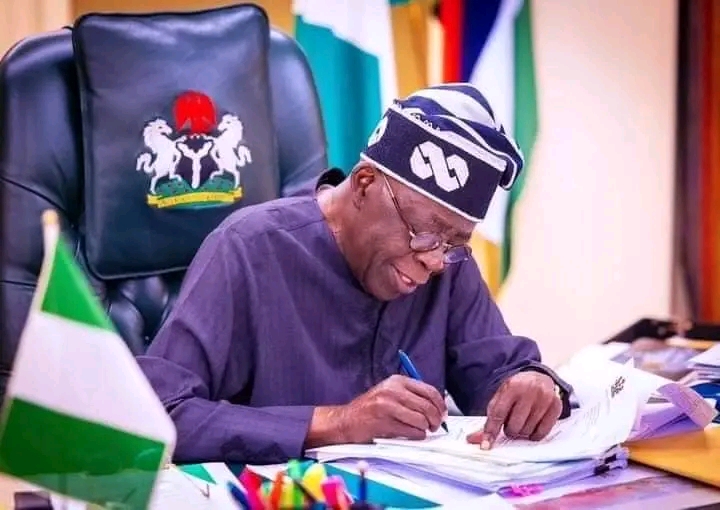
Tinubu’s ruthless policies exacerbate hunger in Nigeria – Dan Bello

By Uzair Adam 

Bello Galadanchi, widely known as Dan Bello, has publicly criticized President Bola Tinubu’s economic policies, claiming they are causing widespread hunger and suffering among Nigerians. 

In a recent interview on Trust TV’s Daily Politics, the famous skit maker voiced his concerns about the government’s approach, stating that people are enduring severe hardship, including consuming grass and contaminated water, due to avoidable policy decisions.

Dan Bello, who claimed to have no political affiliations, challenged the government to take legal action if it disagreed with his statements. 

He emphasized the plight of Nigerians who, in desperation, are seeking food door-to-door and argued that this crisis is not due to natural disasters but deliberate political choices.

He questioned the priorities of the ruling party, suggesting that their policies favour massive personal gains over addressing the basic needs of the population. 

“If their policies are genuinely beneficial, the criticism from content creators like myself won’t resonate with the people,” he argued. 

Dan Bello expressed his willingness to face legal consequences if it means drawing attention to the dire situation, urging the government to consider the human cost of its actions.

Hunger Protest: Kano police deny reports of casualties

By Uzair Adam 

The Kano State Commissioner of Police, Salman-Dogo Garba, stated that no deaths occurred during the #EndBadGovernance protest in Kano State, despite reports suggesting otherwise. 

At a press conference where suspects were paraded on Monday, Garba said, “Going by the records, so far, we are not aware of any casualties recorded.”

This claim contrasts with several media reports that assert at least five individuals were killed when hoodlums allegedly hijacked the protests.

Garba disclosed that the police arrested 873 suspects and successfully prosecuted 600 individuals for various offences, including “criminal conspiracy, inciting disturbance, riot, theft, mischief, and arson.” 

Additionally, 150 people were arrested for violating the curfew imposed by the Kano State Government, and six suspects are under investigation for the destruction and looting of the Kano Printing Press.

The Commissioner of Police also revealed that 76 suspects, including a foreigner, were arrested for flying Russian flags and are being investigated for sedition at Force Headquarters in Abuja. 

Other arrests include 41 suspects linked to major crimes like “armed robbery, kidnapping, and car theft,” and the police successfully recovered “two AK-47 Exhibit Rifles and other substantial properties looted by the hoodlums at Audu Baku Secretariat NCC Office, High Court Complexes, Kano Printing Press (KPP), Super Markets.”

The command also rescued 13 trafficking victims and recovered various items, including “two AK-47 Rifles and one Beretta Pistol, 47 live ammunition, eight motor vehicles, and four sacks containing Exol Tablets.” 

Additional items recovered include “two Bajaj Boxer Motorcycles, 22 cows, 15 sheep, and four donkeys.”

He added that despite the challenges posed by the protests, Garba reiterated that the Kano State Police Command remains “committed to maintaining law and order, preventing crime, and protecting the rights of citizens to peaceful protest.”

Nigeria: World Breastfeeding Week amid hunger protest

By Lawal Dahiru Mamman

Before the hunger protest under the banner of #EndBadGovernance ensued, organisers made their intentions public. Initially, they were considered “faceless groups” plotting under the cover of night. Ironically, once they revealed themselves, they were labelled “unpopular” groups, previously invisible in Nigeria’s politics.

Despite their perceived unpopularity, the call for a nationwide demonstration did not take long to gain momentum. The nation’s youth were enraged by their constant battles with hunger and their struggles to make ends meet. 

Sensing the state of the nation and the high possibility of the demonstration turning into a full-blown riot, the authorities summoned political, traditional, and religious leaders to rally their followers, giving the administration time for its tree of uncommon economic policies to bear fruit.

This move was counterproductive. Political and traditional leaders had lost their influence, and religious clerics had lost their authority. Posters flooded the streets of Nigeria, demanding better living conditions. The protest did not disappoint those who predicted opportunistic hoodlums would hijack it.

Protesters seeking to “End Bad Governance” looted and carted away various materials from both private and government-owned establishments. Tragically, some lives were lost. God rest their souls. It is worth mentioning that the exercise was peaceful in some locations with no hiccups.

To quell the protest, Mr President addressed Nigerians in a nationwide broadcast. Some accepted it as a speech of “compassion, unity, leadership, and direction.” Others dismissed it as “empty and annoying” because it did not address the pressing issues.

Interestingly, the first day of the ten-day hunger protest (August 1) coincided with World Breastfeeding Week (WBW). The first week of August (1-7) is supported by the World Health Organization (WHO), United Nations Children’s Fund (UNICEF), and many Ministries of Health, including Nigeria’s and civil society organisations such as WBW. 

This initiative encourages breastfeeding and aims to improve the health of babies around the world. This year’s event, themed “Closing the Gap: Breastfeeding Support for All,” is a campaign that celebrates breastfeeding mothers in all their diversity throughout their breastfeeding journeys. 

It showcases how families, societies, communities, and health workers can support every breastfeeding woman. Unfortunately, in Nigeria, this important occasion to celebrate and support our mothers, sisters, and friends in raising healthy babies has been overshadowed by the ongoing protest. 

At the same time, UNICEF has scored Nigeria low in this regard, lamenting that a whopping 76 per cent of babies between 0-6 months are denied exclusive breastfeeding. Although the exclusive breastfeeding rate in Nigeria rose to 52 per cent in 2017, it dropped to 38.9 per cent in 2021 due to a decline in the sustenance of the “Hospital Exclusive Breastfeeding Initiative” introduced to fast-track the rate. 

The Federal Government says it is working with development partners to achieve a 50% rate by 2030. The government’s support for breastfeeding initiatives reminds us that breast milk is the gold standard for infant nutrition. It is safe, clean, and contains immunity-boosting antibodies that shield babies from illnesses. 

Breastfeeding is crucial to achieving the United Nations’ Sustainable Development Goals (SDGs) by 2030. Despite the economic situation, let us all take a moment to appreciate and support all nursing mothers. 

By upholding the theme “Closing the Gap: Breastfeeding Support for All” of the 2024 World Breastfeeding Week, we recognise that nursing mothers are not only giving babies the best possible start in life but also playing a vital role in building a healthier, more sustainable future for all. Remember, breastfeeding is made easier when mothers have our support.

Lawal Dahiru Mamman writes from Abuja and can be reached at dahirulawal90@gmail.com.

Hunger Protest: Memo to religious leaders, youths and the Nigerian government

By Ismail Hashim Abubakar

The coming of the current President, Bola Ahmad Tinubu, on May 29, 2023, was not the beginning of the ongoing hardship that Nigerians have been grappling with. His predecessor, Muhammadu Buhari, elected with high hopes, introduced severe and draconian policies such as the closure of northern borders, which Nigerians consistently condoned due to their optimistic sentiments towards the exceedingly and unanimously celebrated integrity of the former army general. 

The masses and different sections of civil society, including religious leaders and respected elites, rejected slight censure of his policies. There were genuine reports of people being corporally attacked and penalised by mobs for openly criticising Buhari, who spent almost two-thirds of his eight-year regime being excused, exculpated and defended until people finally got convinced that the man was no better than other politicians.

Bola Ahmed Tinubu had a tough time becoming President owing to his many dark records and the stigma with which especially northerners viewed him. His eight-year rule as the governor of Lagos state (1999-2007) was a period that witnessed a series of massacres of northerners in Lagos and neighbouring towns within the same Southwestern geopolitical zone. These senseless mayhems were primarily engineered and perpetrated by the OPC militias, who were said to be connected to his alleged political brigandism. This significantly made Tinubu almost infamously unsellable to northern electorates when he showed his ambition to become Nigeria’s president in 2023. 

Perhaps Tinubu was fully aware of this or was at least made to know by his northern political allies and loyalists. That was probably why, as part of image-deodorizing strategies, Tinubu paid serial visits to Ulama, especially those who might have been earlier wary, sceptical and apprehensive of his patriotism, nationalism, vision for unity, morality and religious uprightness. 

How I wish one of the religious leaders present when Tinubu paid homage to respected Shaykhs in Kano soliciting for support and courting for votes had politely but point-blank told him that due to the experiences of northerners in the crises that erupted in Lagos and Southwest, our people would never accept him until he accepted to do some conciliatory moves which might assuage the age-old void and the stigma our people viewed him. One of them was to advise him to institute a committee that would investigate the OPC massacre of northerners in October 2000, present an estimation of the lives and properties lost and pay for their compensation. He should also charge the committee to offer recommendations to forestall future occurrences and forge unity and cohesion among diverse non-Yoruba ethno-religious groups and their host community living in the Southwest. I do not doubt that although this would sound politically awkward, it would have reminded Tinubu that these religious leaders were concerned with the plight of their people. He would eventually accept any other request for nation-building that northern leaders would have tabled before him as a condition and prerequisite for his election. 

Tinubu was able to successfully navigate these hurdles when the Ulama finally accepted him and joined his campaign train, partly due to the apparent reason for promoting a Muslim-Muslim presidency. In one short video clip uploaded on Facebook, one religious leader claimed that it was the Ulama who had insisted that Tinubu must relentlessly contest for presidential post in the 2023 elections, even after he was determined to withdraw from the race (the clip is available herehttps://www.facebook.com/reel/1198771691128341/?mibextid=pX794QQbNUXe42Mf.). All of this combined to prove that the Ulama were instrumental in catapulting Tinubu to the highest political office in the country and would expectedly have weighty words in his government. 

The removal of subsidy on the very day Tinubu was sworn in, followed by similar other thoughtless and capitalist policies, had quadrupled the hardship of the masses, drastically shelving the middle class in Nigerian society and forcing people to live in perpetual agony and unprecedented misery. People now eat leaves and grasses that would otherwise only be suitable for animals. Conversely, people in government were busy allotting themselves hefty allowances and big remunerations to ascertain their luxurious lives at the behest of citizens. The president procured a multibillion Naira jet and stupendously expensive yacht from the country’s treasury, besides other juicy and crazy packages, hastily designed and approved within a year of assuming office.

 All this while, several efforts have been made by various constituencies to admonish leaders, including the Ulama, who, in their pulpits and other public platforms, called on Tinubu’s government to soften its harsh policies and make life bearable for the poor. As this went on deaf ears, about a month or so ago, winds of mass protest started blowing all over the spaces and skies of the country, signifying that Nigerians have been pushed to the extreme of the wall where they could no longer withstand the increasing stroke of hunger. 

Although with barely-known leadership and organisers, the protesters’ demands are obvious and revolve around the reinstatement of fuel subsidy, ending insecurity in all its manifestations, fighting corruption, increasing minimum wage, etc. As soon as plans to hold the protest were laid bare, the northern Nigerian cyberspace became inundated with jurisprudential deliberations on the legality of protest in Islam, with the most popular faces among the Ulama, including those who allegedly endorsed and supported the candidature of Tinubu condemning the move, declaring protest as haram and forewarning the public of its costly consequences. Only a few known clerics have issued statements that support the protest, and their views seem to have been vetoed by their counterparts in the other camp. 

This worsened the situation as youths anxious to demonstrate their grievances through the protest interpreted the anti-protest fatwa as an attempt to thwart the masses from checking on and holding leaders accountable. Fingers of blame were brandished by youths against particularly scholars who openly campaigned for Tinubu and others who are known to have partisan loyalty to the ruling party, All Progressive Congress (APC) or have even served in any capacity under the APC-led state or federal government. The youths kept calling on the Ulama to form a united front, meet the president, and advise him to restore the fuel subsidy. 

In the psychology of most of the youths, since it was the Ulama who insisted that Tinubu must run, despite his alleged plan to recant the decision, but he finally bowed to the pressure of clerics, the latter have the power to force the president to make a U-turn on the removal of fuel subsidy. In the same vein, since the clerical establishment has been wielding enormous clout and their words “are” (or ought to be) highly respected in the Muslim north, the Ulama did not hesitate to voice their opinions on the planned protest, with little or no recourse to the psychology of the youths or an in-depth consideration of the precise reality of the majority of the youths. Some youths, in fact, never believe that most Ulama are passing through similar situations or do not have a full sense of their difficulty. And because the youth sometimes see some Ulama dining and rubbing shoulders with politicians, they concluded in the protest that they were helpless, with no one among elders to stand with or speak for them. Thus, they had no option but to come out en masse to protest. 

In addition, while the youths could recall a leading voice among the Ulama participating in prior protests without any condemnation similar to what was ringing in their ears, they considered the fatwa a clandestine cover given to President Tinubu. This was even conflated when the utterances of some Shaykhs sounded to be encouraging and emboldening the planned crackdown of the protest by Nigeria’s law enforcement agents, without in most cases, warning the security to protect human rights and be cautious of the sanctity of life. The protest has turned chaotic, with dozens of lives and properties worth millions of Naira lost. Still, the articulations of some Ulama reveal a disconnect with the plight of the masses. 

In my opinion, instead of the blanket condemnation of the protest, which was planned to be peaceful, albeit operationally difficult, the Ulama should have, in the first place, infiltrated the youths and hijacked the movement and, even if momentarily, emphasised to the government that they recognised peaceful protest as a constitutionally-sanctioned right and means of channelling grievances to authority. Had the youths seen religious leaders in this picture showering their blessings on the movement, they would have behaved more orderly, regained their confidence in the clerics and listened to any order that the Ulama might have issued to them, including possibly postponing the protest for some reasons. 

Scholars would have cashed in on the exuberance of the youths as a weapon to force the government to do the needful instead of appearing to have disowned the youths and cursed their movement. Since the reverse is true, the youths still feel that the federal government might have already felt encouraged and correspondingly justified not to listen to them but to also even embark on a mission to stop the protest with excessive force since the youths would be operating under an anathematised umbrella which lacked the blessings of men of God. To restore immediate sanity and stability in the strained relationship between the Ulama and the youths, the latter forming the large chunk of their following and being the backbone of any society, I below offer a few recommendations:

  • The Ulama, particularly those whose anti-protest fatwas are circulating, should convene an emergency public lecture to, in vehement and uncompromising language, condemn the crackdown of protesters, warn security agencies to desist from the ongoing brutality against protesters and innocent citizens, remind them of the right of the protesters to demonstrate, call on the government to institute an investigative panel and pay compensation for families of the people killed by Nigerian security, including both among the protesters and the innocent people shot ruthlessly inside their homes.
  • The Ulama should advise the government to recant its position and work towards simplifying life for Nigerians. It should immediately start by restoring fuel subsidy and reversing all financial policies that raise the price of the US dollar against the Naira. They should warn the government of possible degeneration that may escalate to anarchy if the government remains dogged and recalcitrant in responding to this request.
  • The Ulama should avoid making public comments that may sound like they are absolving politicians of their commissions and omissions while discharging their duties. In line with this, the Ulama should be meticulous and extra-cautious in their dealings with politicians and political leaders. As the latter have gone far in dislodging the influence of traditional leaders, they may go to any length to destroy the career of a cleric who is not careful and gives in to their devilish desires and selfish political interests.
  • The Ulama should further take the lead or accordingly guide the next measures, steps, and remedy processes that the youths are planning to resort to in place of the protest, which is fizzling out. These include the organisation of mass prayers, orientation on the need to resort to recall lawmakers and sensitising the public to strategise the public for future elections.
  • Youths and protesters should avoid issuing generalised, unverifiable allegations against the Ulama and desist from making scathing comments about their persons. They should wholeheartedly accept their views or honourably reject them in favour of contrary opinions. All this should be done in good faith.
  • The protesters should be careful not to allow mischievous elements within and outside the country to hijack the protest to promote perpetual conspiratorial ambitions in the land. In line with this, they should outright stop calling for a military coup and desist from waving the flag of any country.
  • Muslim scholars and intellectuals need to create a forum to deliberate Nigeria’s political climate vis-à-vis Islamic leadership provisions and formulate a political vision and working formula that will take into account Islamic political values and the existing realities of Nigeria’s political setting.
  • Last but not least, the federal government headed by Bola Tinubu should be cautious of its move to use force to quell dissent and remember that it is a democratically elected institution and not a military junta. Therefore, it must listen to its citizens and work towards ameliorating their conditions. It should focus on discharging its mandate and avoid meddling in the affairs of the state in a way that jeopardises its security. It should allow state governors to manage their affairs and intervene positively without the littlest detrimental political motives.

Ismail Hashim Abubakar wrote from Nouakchott, Mauritania and could be reached via ismailiiit18@gmail.com.