Religion

Saudi Arabia bans political, sectarian activities at Hajj sites

By Uzair Adam S

audi Arabia’s Ministry of Interior has declared a comprehensive ban on taking photographs, recording videos, and displaying political or sectarian expressions at all key Hajj sites.

According to a statement released by the ministry, pilgrims are forbidden from engaging in such activities within Masjid al-Haram in Makkah, Masjid an-Nabawi in Madinah, and at significant Hajj locations such as Mina, Arafat, and Muzdalifah.

Authorities noted that these actions could disrupt the spiritual sanctity of the pilgrimage and potentially sow division among pilgrims gathered from around the world.

The ministry stressed that Hajj is a time for worship, humility, and unity, and any acts that contradict these principles will not be allowed.

Pilgrims are urged to respect these directives and work closely with officials to ensure that Hajj 2025 unfolds in a peaceful, organized, and spiritually fulfilling manner.

“Security personnel will be stationed throughout the pilgrimage to monitor and enforce these regulations,” the statement added.

FG declares June 6 and 9 public holidays for Eid-el-Kabir

By Maryam Ahmad

The Federal Government of Nigeria has declared Friday, June 6, and Monday, June 9, 2025, as public holidays to commemorate this year’s Eid-el-Kabir celebration.

Announcing the holidays on behalf of the government, Minister of Interior Dr. Olubunmi Tunji-Ojo extended congratulations to the Muslim Ummah both within Nigeria and in the diaspora. 

Dr Tunji-Ojo urged Muslims to embody the spirit of sacrifice and faith exemplified by Prophet Ibrahim (Peace be upon Him) and to use the period to pray for a peaceful and prosperous Nigeria.

In a statement signed by the ministry’s Permanent Secretary, Dr. Magdalene Ajani, the minister assured Nigerians that the people-oriented reforms and initiatives carried out under President Bola Tinubu’s administration’s Renewed Hope Agendaare aimed at restoring Nigeria to progress.

Eid-el-Kabir, also known as Eid al-Adha, is one of the most significant festivals in Islam. It commemorates Prophet Ibrahim’s willingness to sacrifice his son in obedience to Allah’s command. In Nigeria, the festival is marked by prayers, animal sacrifices, and sharing meals with family, friends, and the less privileged.

The declaration of these public holidays allows Muslims across the country to observe the religious rites and festivities associated with Eid al-Kabir.

Morocco shuts livestock markets for Eid; king to sacrifice on citizens’ behalf

By Abdullahi Mukhtar Algasgaini

In an unprecedented move, Moroccan authorities have ordered the closure of livestock markets nationwide ahead of Eid al-Adha following a royal directive from King Mohammed VI.

The decision aims to mitigate the impact of severe drought and economic strain, which have drastically reduced livestock numbers and left many families unable to afford traditional sacrifices.

Local officials have been instructed to enforce the ban on all public and seasonal animal markets, with some provinces also suspending municipal slaughterhouses and restricting sales of sacrificial tools.

The measures seek to preserve Morocco’s dwindling herds and ease financial burdens on households grappling with rising meat prices.

In a gesture of solidarity, King Mohammed VI announced he would perform the Eid sacrifice on behalf of all citizens, echoing a tradition of the Prophet Muhammad (PBUH).

The move has drawn widespread praise, with many Moroccans viewing it as a compassionate response to the country’s challenges.

While the restrictions may disrupt customary celebrations, they highlight Morocco’s emphasis on unity and shared resilience during hardship.

From us, by us, for us: How homegrown Waqf initiatives can shift our gaze from international donors

By Abdullahi Abubakar Lamido, PhD

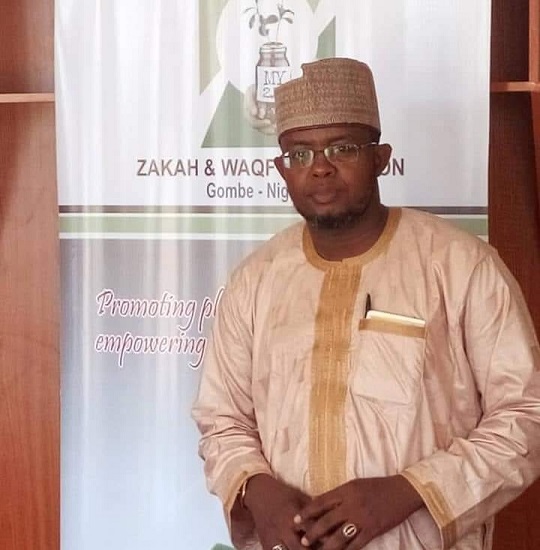
It was a warm afternoon in my office at the Zakah and Waqf Foundation in Gombe, and I had cleared my schedule for what was described as a “very important meeting.” A group of nine young professionals—doctors, nurses, and medical administrators—filed in with purposeful expressions. These were respected Muslim health workers in our community, competent and resourceful in their own rights, leading their Muslim body. 

They sat down, exchanged pleasantries, and after a few minutes, one of them cleared his throat and spoke. “We were hoping you could help us reach Qatar Charity. We want to build a mosque in our hospital.”

I paused. My mind raced not with criticism but with confusion. These were not poor villagers. These were professionals, all salaried, some likely earning above average. I asked gently, “How much will the mosque cost?”

“About ten million naira.”

“And how many Muslim staff do you have?”

“Roughly 500,” they responded.

I picked up a pen and scribbled something. “That’s twenty thousand naira each,” I said. “Divided over four months, that’s 5,000 naira per month.”

There was a short silence. “You don’t need Qatar Charity,” I told them. “You need yourselves; you need Gombe Charity.”

From my limited understanding, I explained that most international charities, like Qatar Charity, raise funds from within their own people first. They identify a problem in a country, develop a proposal, return to their citizens and say: “Donate to build a mosque in Nigeria.” If they can do that for us, why can’t we do it for ourselves? I then told them to put my name as the first donor of the twenty thousand naira to kickstart the project. 

That brief meeting offered a glimpse into a deeper issue—our chronic psychological dependence on external aid, even when we can act. The problem isn’t always material poverty; often, it’s a lack of belief in our collective strength—a poverty of the mind and will.

The Turkey Phenomenon: A Lesson Misunderstood

Take, for example, the popular trend in some Northern Nigerian states where applications pour into Turkish and other organisations for Qurbani (Udhiya) distributions. Turkish charities, may Allah reward them, buy cows and distribute meat during Eid.

But here’s a crucial question: Is this a model to emulate or one to reconsider? If every year, our people look outward to receive—and never inward to learn how to organise, fund, and distribute—we risk cultivating a culture of constant reception without reciprocity.

Islam is not a religion of passivity. It teaches us to act before asking, to solve before seeking, and to build with what is already in our hands. Prophet Muhammad (peace be upon him) taught us that the upper hand is better than the lower one—the hand that gives is superior to the hand that receives.

The Al-Basar Example: From Vision to Visionary Impact

Now, let’s discuss a model worth following—Al-Basar International Foundation.

Al Basar International Foundation is a non-profit international NGO. Founded in 1989 by a group of concerned professionals. Al-Basar is a shining example of what happens when people come together to solve a problem themselves. Their focus? Combating preventable blindness across the Muslim world. No dependency. No grand donor campaigns. Just strategic self-mobilisation as well as waqf and collaborative mindset. 

It works in Yemen, Bangladesh, Sudan, Nigeria, Pakistan, etc. In Nigeria, for instance, a 2019 campaign funded by King Salman Humanitarian Aid and Relief Centre in collaboration with Al Basar International Foundation saw medical volunteers from Saudi Arabia meet 8,000 eye patients and perform 800 eye surgeries to remove cataract and glaucoma in Ibadan, Nigeria, as well as in Lafia in Nasarawa State. 

The foundation manages the Makkah Eye Specialist Hospital in Kano state, Nigeria, where 4,000 free eye surgeries were carried out in 2021. The hospital treats eye conditions, including diabetic retinopathy. In 2022, Al Basar International Foundation, in collaboration with the King Salman Relief Center, sponsored 400 free cataract surgeries for residents of Kano, which took place at Makkah Eye Specialist Hospital. 

Over the years, Al Basar has conducted over 2,000 outreach programs worldwide, performed over 700,000 cataract surgeries, and dispensed nearly 2 million glasses. With 28 hospitals across six countries, the foundation has recorded 26 million outpatient visits. It also invests in education by establishing colleges to train eye care professionals, impacting Africa and Asia. Their school screening program has reached over 1 million children, providing immediate interventions and ensuring a comprehensive approach to their eye health.

Now ask yourself: is Al-Basar a government-funded operation? No. Did it start with foreign aid? No. It was “from them, by them, for them.” And now it is for us, too—because they nurtured it to the point where it could grow beyond them.

We should not only admire such models. We should replicate them.

Historical Echoes: Islamic Proofs of Self-Driven Solutions

Uthman ibn Affan (RA) and the Well of Rumah

When water scarcity plagued Medina, and a private owner monopolised a well, the Prophet (SAW) called for someone to purchase it for the Muslims. Uthman (RA) stepped up, bought the well, and made it a public waqf. He didn’t write to Yemen. He didn’t petition the Romans. He simply used what Allah had given him to solve a problem for Allah’s sake.

So, What Can We Do? A Homegrown Waqf Blueprint

If we genuinely want to stop relying on donors and start building resilient communities, here are practical steps:

Think Within, Act Within: Begin every solution by asking what the community already has—not what it lacks. Do you have professionals? Land? Skills? Social networks? Then, start from there.

Group Economic Self-Waqfing: Encourage professional groups (doctors, teachers, engineers, traders, lawyers) to dedicate a portion of monthly income to a fund. Even a modest 5,000 naira monthly from 100 people can generate sustainable capital. At Zakah and Waqf Foundation, we enjoy that from some professionals, and it works. 

Community Challenge Waqf: Identify a local challenge—maternal health, education for orphans, access to clean water—and collectively endow a waqf around it. Let the yield solve that problem perpetually.

Transparent Management Structures: Set up trustworthy waqf boards to manage resources. Trust fuels contribution. Accountability sustains it.

Celebrate Independence: Create cultural pride around self-funded projects. Showcase schools, hospitals, orphanages, and mosques built without a single foreign dime.

It is Time to Change the Script

Imagine if each LGA in Nigeria had one waqf-funded primary health centre, one vocational training centre, and one scholarship fund—all funded by local contributions from professionals, retirees, and small traders.

We would not be beggars. We would be builders.

It’s time to write a new story. One not of helplessness and application letters to foreign NGOs but of resolve, unity, and strategic giving. One of From Us, By Us, For Us—in the truest, most impactful sense.

When that story is told to future generations, they will say: There was a people who stopped waiting and started building.

Amir Lamido wrote from Gombe via lamidomabudi@gmail.com.

Reforming the Almajiri system: A path to inclusive education

By Ibrahim Inusa

Over the years, the Almajiri system of education has served as a traditional form of Islamic education in northern Nigeria, where young boys, often aged between 7 and 14, are sent far from home to memorise the Qur’an by their parents under the supervision of a Malam (teacher). While the system’s intent was to instil religious knowledge, encourage direct engagement in Islamic activities, and provide practical moral learning, it has largely become disconnected from its original purpose.

At present, the system has turned millions of pupils into nuisances, leaving most of them without literacy or numeracy skills. Pupils divide their day between reading and wandering the streets to beg for food and money, intended to cover their living and schooling costs. This model places the pupils in highly vulnerable situations, exposing them to all forms of exploitation and manipulation, and even rendering them a threat to national security.

The Almajiri system of education has been a cornerstone of learning for many Nigerian children. However, its implementation has raised concerns about child welfare, education, and human rights. As Nigeria strives for progress, it is essential to address the challenges within the Almajiri system. One major issue is the lack of regulation and oversight, which leaves children vulnerable to all forms of abuse.

Another significant challenge is the limited access to quality education. Traditional Almajiri schools focus solely on Islamic studies, neglecting secular subjects such as mathematics, science, and English. This restricted curriculum can hinder students’ ability to compete in the modern world. By incorporating modern subjects, Almajiri schools can offer students a more comprehensive education.

The Almajiri system also raises concerns about radicalisation. Some Almajiri schools may promote extremist ideologies, which can have far-reaching consequences. To mitigate this risk, it is essential to encourage critical thinking, tolerance, and inclusivity within Almajiri schools.

To reform the Almajiri system, a decisive approach is necessary. Government agencies, NGOs, and communities must collaborate to provide support for Almajiri students, including access to healthcare, nutrition, and protection from abuse. Almajiri schools should be encouraged to adopt a modern curriculum and teaching methods.

Furthermore, teachers and caregivers in Almajiri schools require training and support to provide a quality education. Community engagement is also important, and parents, guardians, and community leaders involved in decision-making processes are encouraged to prioritise children’s welfare and education.

The current Nigerian government can play a crucial role in reforming the Almajiri system through policy initiatives, such as the Almajiri Education Programme. However, more needs to be done to ensure effective implementation and sustainability. Long-term commitment to reform requires a sustained effort to improve the lives of Nigerian children. By working together, we can create a more inclusive, equitable, and prosperous society for all.

In conclusion, monitoring and evaluation mechanisms are essential for tracking progress, identifying challenges, and making adjustments to reform initiatives. Reforming the Almajiri system is a complex task that requires collaboration, commitment, and creativity. By working together, we can create a more just and equitable education system that benefits all Nigerian children.

Ibrahim Inusa writes from the Department of Mass Communication at Abubakar Tatari Ali Polytechnic Bauchi and can be reached via Ibrahiminusa216@gmail.com.

Waqf and orphans: Building a future for the forgotten

By Abdullahi Abubakar Lamido, PhD 

It was after a wet Thursday Asr prayer in a quiet neighbourhood of Gombe that Mallam Isa stood up to speak. The small mosque was dimly lit, the air heavy with humidity and the scent of earth. His voice trembled slightly—not from fear, but from the weight of the message he bore.

“Brothers and sisters,” he began, “let me ask you: what would happen if today, right now, your heart stopped, and your children became orphans?”

A hush fell. Even the children at the back stopped playing. That question pierced through the hearts like an arrow.

“You pray five times a day, you give Zakah and fast Ramadan, but have you made any plan for the ones you might leave behind?” he continued.

It was not just a rhetorical question. It was a wake-up call.

The Crisis of Orphans in Our Midst

In every corner of Nigeria—especially in the north—there are orphans. They are in the streets, in distant relatives’ homes, in understaffed orphanages, and in classrooms with torn uniforms and hungry eyes. Every funeral of a husband, a father, a provider, often produces not one or two, but sometimes 10, 15 or even 20 orphans. In a society with polygamy and a high birth rate, the multiplication may be frightening.

The silent cries of orphans echo through our communities, a poignant reminder of our collective responsibility. In societies like northern Nigeria, where large families are common and the spectre of loss ever-present, the number of children left without a guiding hand is staggering. 

Losing a parent can mean losing everything: food, shelter, education, and the loving embrace of family. While various efforts exist to care for these vulnerable souls – from individual families to community and religious organisations, and a few dedicated orphanages – a critical challenge remains: the lack of sustainable, reliable funding. This is where the profound and enduring institution of Waqf emerges as a beacon of hope, offering a pathway to a robust and self-sustaining future for orphans.

What do we do with this growing population?

Islam doesn’t leave this to chance. The Prophet Muhammad (peace be upon him) said:

“I and the one who looks after an orphan will be like this in Paradise,” and he held his two fingers together. (Bukhari)

This Hadith should not be a mere quote for charity posters—it is a divine incentive for action.

The Legacy of Layth b. Sa‘d: A Model for Us

Let us take a lesson from the noble jurist and philanthropist Layth b. Sa‘d, a contemporary of the great Imam Malik. He was not only a scholar of high standing (who was often described as more grounded in fiqh than Malik -Afqah min Malik), but also a man of immense wealth. One of his investment —earning over 70,000 dinars annually (The current Naira equivalent of 70,000 Dinars, based on the pure gold content of those Dinars and today’s market price of gold, is approximately ₦51,188,742,500, ie Fifty-one billion, one hundred and eighty-eight million, seven hundred and forty-two thousand, five hundred Naira). Yet he gave away so much that he didn’t even have zakātable savings. One day, he bought a house, only to discover it had been used as a shelter for orphans. Without hesitation, he declared:

“This house is now a waqf for them. Let it remain a refuge. And I shall endow another waqf whose profits will feed and clothe them.”

Today, we admire his foresight. But more importantly, we must emulate it.

The Missing Link: Waqf as Sustainable Support

Most of our current models for orphan care, although well-meaning, are unsustainable. We rely on inconsistent donations or goodwill that may not last.

But waqf is not a charity of the moment. It is a charity of the generations.

“When a person dies, all their deeds end except three: a continuing charity (Sadaqah Jariyah), beneficial knowledge, or a righteous child who prays for them.” (Muslim)

Waqf is Sadaqah Jariyah. And every orphan fed, educated, healed, or empowered through it continues your reward in the grave.

How Do We Build a Waqf for Orphans?

1. Family-Level Waqf

Families should dedicate one house, piece of farmland, or business as a waqf for orphans. It could be residential housing, a school, or a rental property whose income supports orphan welfare.

Imagine if, in every city block, one family donated one apartment to serve as orphan housing or as an investment asset to support orphans.

2. Community-Level Waqf

Mosques, Islamic centres, and community associations should establish orphan waqf portfolios. These can include:

Schools with waqf-run canteens and hostels

Hospitals or clinics with orphan wards funded through waqf

Skills acquisition centres that train orphans for real livelihoods

3. Organisational Waqf

Existing orphanages should stop relying solely on donations. Let them build waqf farms, shops, or event halls. The Prophet (peace be upon him) said:

“The best of people are those who are most beneficial to others.” 

Let’s be beneficial in a lasting way.

You Could Be Next

One chilling truth binds us all: no one knows who will become an orphan next. We plan our lives, but we often forget how fragile life is.

A car crash, a silent heart attack, a violent raid—your child could be orphaned tomorrow. So, build the system you would want them to find.

Would you want your child to sleep under a bridge?

Would you want them to beg for school fees?

Would you want them to eat once every two days?

“None of you truly believes until he loves for his brother what he loves for himself.” (Bukhari and Muslim)

Then love orphans as you would love your child.

Every Little Bit Counts: What YOU Can Do

Contribute to a waqf share initiative. You don’t have to give millions. Start with ₦1,000. Drops make oceans.

Educate others about the orphan waqf. Deliver a Friday khutbah, launch a WhatsApp and Facebook campaign, and distribute flyers.

Talk to local Imams, community leaders, and philanthropists. Propose orphan waqf projects.

Use your wasiyyah (will) to declare a portion of your estate as waqf for orphans.

Empower your children to understand this legacy so they can continue the chain.

Let us build an ummah where no orphan is neglected, where no child grows up feeling discarded, where our waqf institutions become sanctuaries of dignity.

Let Gombe, Kano, Lagos, Borno, Zamfara, Sokoto, Osun and every Nigerian state become shining examples of Waqf-Orphan Integration. Let Nigeria offer the world a new orphan care model—rooted in Islam, powered by community, and sustained by waqf.

And let each of us rise, in our small way, to be counted among those who build for the forgotten, the voiceless, the orphaned.

For on the Day of Judgment, it might just be that orphan’s dua that grants you the mercy you seek.

“They ask you what they should spend. Say: Whatever of good you spend must be for parents and kindred and orphans…”

— Qur’an 2:215

Amir Lamido wrote from Gombe via lamidomabudi@gmail.com.

Of shoes, sermons, and stealing saints: A comic tragedy of sacred thievery

By Isah Dahiru

There’s a Hausa proverb that says, Wanda ya saci akuya, ya saci itacenta—he who steals a goat has already stolen the rope tied to it. But who would have imagined that the sacred grounds of a mosque, a space where hearts are purified and souls are recharged, could become fertile ground for what I now call “holy heists”?

Last Friday, I attended Jumu’ah prayers like any regular seeker of divine mercy, looking forward to the serenity of the sermon and perhaps a gentle breeze under the neem tree afterwards. You know, that kind of spiritual therapy that reboots your inner battery. 

The Imam began passionately, with what I can only describe as a verbal balm for troubled marriages. He waxed poetic about marital life, reminding us brothers that a man’s greatness is not measured by how many goats he owns, but how gently he treats the mother of his children.

He quoted the Prophet (SAW), emphasising kindness, loyalty, and romance—even after ten years of eating her over-salted tuwo. He reminded us that he who denies affection at home may end up seeking counsel from side mirrors—and by side mirrors, I mean side chicks. It was a sermon of gold, and I had already drafted a mental apology letter to my wife (with a footnote asking for fried fish for dinner).

Then came the second khutbah—and brothers and sisters, the tone changed like NEPA light.

What followed was no longer spiritual nourishment—it was a full-blown security bulletin. The Imam, now resembling a mosque-based CNN anchor, solemnly announced the spike in theft within the mosque premises. Shoes, phones, even umbrellas—yes, umbrellas in dry season—had become an endangered species in the hands of holy day hustlers.

I blinked twice. “Wallahi, this must be fiction.”

Apparently not. The Imam cited examples. Men who had arrived barefoot left in polished Clarks. Samsung devices evaporated during sujud. One man reportedly came out of the toilet to find that not only had his shoes vanished, but so had his ablution kettle. An saci butar alwala!” someone muttered beside me.

My friend Musa Kalim, ever the idea machine, leaned in and whispered, “Wallahi Isah, the mosque should invest in designer shoes with trackers inside. Give them out before prayer. Anyone who deviates from coming to mosque without shoes to going home with a shoe—bing! The alarm goes off. ‘Thou shalt not misstep.’”

Another friend, Engr. After I narrated the ordeal and my frustration to him, Aminu offered another way to tackle the situation. Honestly, I laughed so hard I almost missed the supplication after the prayer had ended. But knowing that Aminu wasn’t joking made me return to my senses. This is the same man who once suggested using goats to deliver medicine in rural villages, and almost got a grant for it from Melinda and Gates Foundation.

I imagined it immediately:
“Mosque Sole Security (MSS): Track Your Blessings from Sole to Soul.”
A startup powered by shame and GPS.

But there’s a deeper sadness here. When the masallaci, the house of Allah, becomes the hunting ground for pickpockets, it signals a spiritual recession. It’s no longer just a pair of stolen shoes—it’s a metaphor for the theft of morals, the robbery of conscience, and the hijacking of trust.

There’s a popular Yoruba saying, “Ti ile ba n bajẹ, a fi ti ile ni nko,” meaning, “When a home begins to decay, it starts from the inside.” And truly, if criminals now comfortably perform ablution before proceeding to commit theft, then we must urgently recalibrate our moral compass.

Let’s consider the ridiculousness: someone prays beside you, says “Ameen” with gusto, maybe even sheds a tear during supplication—and minutes later, he’s making off with your Bata sandals like a post-prayer souvenir. What kind of shame is that?

The Prophet (SAW) warned us of a time when people would pray like angels and live like devils. Perhaps this is what he meant.

Maybe the solution isn’t just CCTV or Musa’s high-tech slippers (although I’d donate to that GoFundMe). Perhaps we need something more profound—a revival of taqwa, of God-consciousness, in our lives. Because let’s be honest, even if we padlock the ablution area, thieves without fear of God will find a way to sin in style.

Perhaps we need to return to the basics—teaching our children that a stolen shoe, even if it fits, carries the burden of its last prayer. Reminding our youth that every crime committed under the minaret echoes louder in the heavens than those committed in the market square. And as elders, we must not be afraid to call out wrongdoing—even if the culprit looks like a saint in a turban.

Until then, dear reader, as you go for prayers, carry your faith boldly—but your shoes discreetly. I suggest you start wearing bathroom slippers, the type no thief would proudly wear. And if, by misfortune, you find yourself shoeless at the end of the prayer, don’t wail. Just smile and say: “May the thief walk straight into the path of repentance—and a pothole.”

And should you ever catch one red-handed, don’t beat him. Sit him down, offer him zobo and a hard chair, and give him a khutbah so fiery, even his ancestors would consider refunding your shoes.

Isah Dahiru is a pharmacist and can be reached via easerdahiru@gmail.com.

Robert Francis Prevost becomes first American Pope

By Muhammad Abubakar

In a historic development, the Catholic Church has elected Robert Francis Prevost as the new pope, marking the first time an American has ascended to the papacy. The decision was announced from the balcony of St. Peter’s Basilica following the traditional white smoke signal from the Sistine Chapel on Thursday.

Pope Robert I, as he will now be known, hails from Chicago, Illinois, and previously served as the Prefect of the Dicastery for Bishops. Known for his pastoral sensitivity and administrative skill, the 69-year-old cleric has long been regarded as a bridge between tradition and reform within the Church.

Thousands of pilgrims gathered in St. Peter’s Square to witness the historic moment, many expressing surprise and hope over the unprecedented choice.

The new pontiff addressed the faithful in multiple languages, asking for prayers and unity in a world “deeply in need of peace, compassion, and truth.”

Analysts see his election as a signal of the Church’s growing global inclusivity and a recognition of the American Church’s rising influence.

More details about his vision and forthcoming priorities are expected in the coming days as he officially begins his pontificate.

Trump posts portrait of himself as Pope on social media 

By Muhammad Abubakar 

President Donald Trump has stirred controversy once again after publishing a digitally altered portrait of himself dressed as the Pope on his social media platform, Truth Social. The image, which depicts Trump in papal robes and regalia, quickly drew widespread attention and sparked debate online.

This unusual post follows Trump’s previous tongue-in-cheek remark in which he joked about becoming the next head of the Roman Catholic Church after Pope Francis. While many of his supporters saw the post as humorous and bold, critics accused the former president of disrespecting religious traditions.

The Vatican has not officially commented on the image or Trump’s earlier remarks.

Trump, known for his provocative and unconventional use of social media, continues to dominate headlines since his return to the White House for the second time.

When marriage becomes ‘Ibadah’

By Aisha M Auyo

Marriage is a huge opportunity to earn good deeds. By adjusting your intention, everything you do for your spouse can be an act of worship. It is that simple.

Seek to please Allah and be intentional. Every single thing you do with and for your spouse can be a form of worship when Ihsan is your motivation, and your heart is engaged in the remembrance of Allah in some way.

And by default, when good things become a habit, your good deeds are habitually earned too, insha’Allah.

From time to time, make a specific intention and say, “Oh Allah, I am doing this for my spouse only for Your sake and to earn Your pleasure.” You’ll feel the difference. A mundane task gets supercharged!

Umar ibn Al-Khattab reported: The Messenger of Allah, peace and blessings be upon him, said:

“Verily, deeds are only with intentions. Verily, every person will have only what they intended. Whoever emigrated to Allah and His Messenger, then his emigration is for Allah and His Messenger. Whoever emigrated to get something in the world or to marry a woman, then his emigration is for whatever he emigrated for.” (Ṣaḥīḥ al-Bukhārī 54, Ṣaḥīḥ Muslim 1907).

This hadith and post are especially important for my fellow women… wives… If all the good and extra things you do for your man are just so he wouldn’t marry another woman, know that your reward stops there. And he may marry other wives if that’s in his Qadr.

It might work if you’re being obedient, respectful, kind, and many other good things, just so you’d be his favourite among his wives, but know that the reward may stop there.

Let’s always remember that this world is only temporary… Our permanent abode is the aakhira. I am not in any way saying you should stop whatever you’re doing. In fact, I suggest we always try to improve, increase, and upgrade… 

Just be conscious of your intentions and be deliberate in whatever you do. Doing so, we will have double reward… here and in the hereafter, in sha Allah.

Aisha Musa Auyo is a doctoral researcher in Educational Psychology. A wife, a mother, a homemaker, a caterer, a parenting, and relationship coach. She can be reached via aishamuauyo@live.co.uk.