Religion

Sheikh Dahiru Bauchi’s letter: I am surprised by those who are surprised

By Dr. Dikko Muhammad

I’m surprised that some people find the said letter of Sheikh Dahiru Bauchi surprising. The fact is that many Nigerians see the courts as departments for the pursuance of politicians’ interest and more often, as stalls for the sale of “justice” to the highest bidder. And they have reasons to believe so. Why?

Senator Bulkachuwa told the Senate, on camera, that his wife, a former President of the Nigerian Court of Appeal, “extended her help to his colleagues” while in office.

A recently retired justice of the Supreme Court complained a lot of its workings. Not to mention the complaints against the top Oga of the Supreme Court who once led other justices to complain against the former top Oga of the Supreme Court.

Series of conflicting judgments are becoming a defining feature of ours courts.

The idea of the court as an umpire is fast becoming extinct. If any unknown backbencher politician wants me lock up tomorrow, being Sunday, don’t be surprised for the lines of judges ready to grant his request.

Where justice is delayed and denied, fears and favours determining verdicts, faith in the court is eroded. This is why our country has become a planet of jungle justice. People think that the courts are haven for criminals. The densely populated prisons in Nigeria are a repulsive testimony to the putrid stench of our entire judicial system.

So, it’s now left for our courts to either redeem their battered image or continue to sink into the abys. They’re designed to be the last refuge for the oppressed, not a refuse for the oppressor. If writing a letter would make it deliver justice, we should all be letter writers to the Supreme Court.

Dikko writes from Katsina State, Nigeria.

Allow married women to bear their fathers’ names – MURIC 

By Abdurrahman Muhammad

A call has gone to the Federal Government for a reform of Nigerian marriage laws that will allow married women to bear their fathers’ names. Making the call was an Islamic human rights advocacy group, the Muslim Rights Concern (MURIC). 

A statement signed by the group’s director, Professor Ishaq Akintola, on Monday, 18th December 2023, described the current practice whereby married women are forced to bear their husbands’ surnames as gender discriminatory, archaic and oppressive. 

MURIC condemned the current practice for depriving women of their Allah-given fundamental human right to personal and parental identity in marriage. The group advocated the adoption of the women-friendly Islamic practice, which allows married women to bear their fathers’ surnames after marriage. 

The full statement reads:

“Our attention has been drawn to the plight of married Muslim women who are being disallowed by employers from bearing their fathers’ names. This amounts to forceful enslavement, denial of Allah-given fundamental human right to parental identity and wrongful dismissal of loco parentis.

“We condemn the current practice for three major reasons, namely, for generating confusion in the society, for creating a monumental identity crisis among married women and for depriving women of their Allah-given fundamental human right to personal as well as parental identity in marriage.

“Instead of this, we advocate the adoption of the women-friendly Islamic practice which allows married women to bear their fathers’ surnames after marriage. 

“No woman dropped suddenly from the sky, and even if some appear out of nowhere, they must have been born, bred, nurtured, buttered and marmaladed by certain parents before they grew up and matured into womanhood. Their education was also sponsored by their parents at a time when the future husband probably knew nothing about them and spent no kobo on their upbringing and their education.

“It therefore beats logic, fairness and natural justice that a husband appears out of nowhere to commandeer a woman’s parental identity simply by marrying her. Such identity robbery also has its advantages. 

“For instance, women who are educated are forced to advertise change of names to their husbands’ surnames after marriage in order to retain the validity of their documents and properties. It often becomes very difficult and sometimes impossible for married women to be located or to retain old friends due to such a change of name. 

“Those who want to be sincere among married women today will confirm the stress they have gone through from this experience. Islam sets women free from such stress by permitting married women to retain their original family names.

“Contrary to the general claim that Islam discriminates against women, Islamic liberation theology actually teaches respect for the dignity of women in all circumstances. One of such circumstances is the period when women are in wedlock. Whereas Western civilisation robs married women of their original family identity by insisting that they should bear their husbands’ surnames, the Shari’ah allows women to bear their own fathers’ names even after marriage. 

“We therefore invite the Federal Government and other relevant authorities to set the machinery in motion towards allowing married women to bear their fathers’ names. In particular, we charge both houses in the National Assembly, the Senate and the House of Representatives, to introduce the necessary bills that will set Nigerian women free from undue masculine domination.

“This advocacy is not for Muslim women alone. We are certain that Muslim women are not the only ones who feel the pinch. MURIC would love to see every married woman who desires to be identified by her father’s name enabled to do so. Our lawmakers should frame the clauses in such a way that all women can enjoy the freedom to choose between bearing their fathers’ names or their husbands’. It is time to set Nigerian women free. They are the mothers of our society.

“We contend that the whole gamut of women’s liberation struggle boils down to a sham and a mirage until this goal is achieved. A married woman is not a slave. She is not just a dot in social statistics. She has a soul, and that soul yearns for love. She covets to love and be loved, not only by her husband but also by her family and vice versa. Nigeria must not fail her. Parental identity is sacrosanct. Husbands can never replace fathers in matters of parental identity, and that is what the current system compels women to go through. Enough is enough.”

Is schooling a waste of time?

By Ubaydullah Abdulmalik

When an average youth from a developing country is fooled into believing that schooling is a scam because degrees do not guarantee employment, there is little that can be done to help such a person. There is hardly a day that I scroll through social media pages without stumbling over multiple posts that discredit the relevance of schooling and tertiary education. This argument continues to generate debates on whether it is worth it to go to school and acquire degrees, in a society where degree holders and degreeless people “hustle” equally for survival.

So is schooling a scam? Well, I will start with a quote from Michelle Obama, she said and I quote; “The ability to read, write and analyze; the confidence to stand up and demand justice and equality; the qualifications and connections to get your foot in the door and take your seat at the table – all of that start with education.” – Michelle Obama

It is gradually becoming a prevalent notion within our society that degrees and advanced formal education have limited relevance in the 21st century, and this is only because they don’t guarantee jobs to those who pursue or acquire them. No one says a college degree is the only path to success in life, but honestly, how could schooling be considered a waste of time?

Primarily, based on the misconception that people go to school and graduate to get employed, this reprehensible fallacy is gaining more ground in the midst of our youths and students. Phrases like “school na scam,” “who degree epp,” and “this useless course” among others, are trademarks of this idea. it is an undeniable fact that unemployment is at an all-time high state and that in today’s society, degrees and other qualifications may not guarantee employment, let alone job security for individuals, but this does not render degrees useless or schooling a waste of time. Because many do not understand the real essence of education, they stand to benefit the least from it – a lot go through schools only to leave a little different than they arrived.

Time has changed and even though college degrees largely guaranteed an employment in the past, that doesn’t hold anymore today. With the rapid rise of technological innovations, artificial intelligence and automation, concerns about unemployment continue to grow globally.

In my own opinion, this only reflects the dynamic and ever-evolving nature of societies and human interactions. The nature and standard of education in the past befitted the market requirements, socio-economic realities and technological advancement of those people, then.

Education has constantly evolved with societies and human behavior, and as such, we must continuously align the standards of our educational system with the dynamic needs and challenges of the present era. But this is difficult to fathom for some people. Instead of asking why a degree or some other form of formal education may not easily guarantee or get one a job in today’s society, a lot are trying to dismiss the relevance of tertiary education as a whole. This is completely wrong.

This is one out of many disheartening posts and conversations that happen daily on social media. The gullible among youths and students are glaringly made to believe this, because of obvious reasons, that education no longer holds much relevance in today’s society. And it is a very big fat lie! I don’t subscribe to the conspiracy theories questioning the motives behind our contemporary educational system. I do believe, however, that certain errors need to be corrected in our educational system, especially our mindset, regarding the purpose of education.

There’s this general misconception or conditioning that we all grow up with; since childhood, we are made to believe that we go through school and obtain education (the 6-3-3-4 system) to ultimately seek a job, a notion that is wrong in its entirety. When people grow up to learn the hard truths, some misunderstand it all and they begin to question the relevance of education.

A change in mindset and orientation would solve it all. The upcoming generation must come to understand that the end goal of education is not solely employment. Of course employment is a major factor after acquiring education; and gainful employment is expected of anyone with “sound education”, however, employment is never the primary purpose of education.

Education is meant to train individuals and to equip them with the requisite skills needed to thrive in any environment and live a meaningful life. Education is meant to broaden horizons, sparking innovations and producing problem-solvers that would champion the emancipation and advancement of societies. 

As Kofi Annan puts it: “Knowledge is power. Information is liberating. Education is the premise of progress, in every society, in every family.” Education has always been and will always remain the golden key to success. It depends however on one’s perception of what education is. 

Most often, we only think of the superficial value of things and never care to reflect deeply on the real essence of education. 1000 years ago, no one went to school to get degrees and universities as we know them today, did not exist. Even so, the people of those ages had their forms of education and learning systems, be they formal or informal. Similarly, universities as we know them today, may not exist in the next two or three centuries, but the essence of education will persist in accordance with the context of that era. This is because education is boundless and timeless.

Ubaydullah Abdulmalik is an undergraduate student from Bayero University, Kano. He is a passionate advocate for quality education and digital literacy in today’s society. He can be reached via; ubaydulmalik530@gmail.com

Electoral victory: Whose Addu’a does Allah accept?

By Mohammad Qaddam Sidq Isa (Daddy)

There is a general but simplistic assumption that electoral victory necessarily implies Allah’s endorsement of the winner and His disapproval of the loser. 

Politicians, potential beneficiaries of the electoral victory of politicians, and overzealous followers engage in supposedly wholehearted Addu’a for their and their benefactors’ electoral victory.

The practice of Addu’a for electoral victory has grown into a phenomenon and has indeed become an integral part of politicking in Nigeria. It has, in fact, turned into an industry of a sort where huge amounts of resources are invested in engaging amateur, part-time and professional Addu’a service-providing malamai who provide their services to the highest bidders or whom they expect higher gain from them of whatever kind.

Besides, with the growing phenomenon of holding the so-called special prayer sessions in public places for the success of one politician or another, the ‘political Addu’a industry’ has been growing further, attracting more investments from politicians. This is even though such so-called special prayer sessions bear the hallmarks of Bid’a.

On their part, winners in elections and their followers brag that their electoral victory necessarily implies Allah’s acceptance of their Addu’a hence His endorsement of them. They equally mock their opponents and attribute their loss to Allah’s disapproval of them. Whereas, in reality, nobody knows for sure whether or not a particular electoral victory implies Allah’s endorsement, or whether or not a particular loss implies His disapproval.

Because the fact that politicking under democracy is inherently characterized by gross dishonesty, hypocrisy, cunning, deceitfulness, bribery and other serious vices, which arguably all politicians perpetrate in their struggle to outmanoeuvre one another, makes the whole system too filthy for Allah to have anything to do with it, in the first place,  let alone endorse any politician against another.

The winner, therefore, only wins thanks to his ability to somehow outdo his opponents in that regard, and the losers only lose due to their failure to outplay the winner, while none enjoys Allah’s endorsement, for all are equally guilty of the same grave sins, regardless of the extents of their involvements, respectively. After all, they actually never take Addu’a seriously in the first place; they only feign commitment to it in the context of their manipulation of religion for political interests.

Electoral victory under democracy is just like winning in gambling, which obviously never implies Allah’s endorsement.

Though craving for power and the temptations of what comes with it are irresistibly tempting, they aren’t worth the price of politicking under democracy, with all that it entails, which those involved pay in the hereafter. 

Mohammed Qaddam wrote via mohammadsidq@gmail.com.

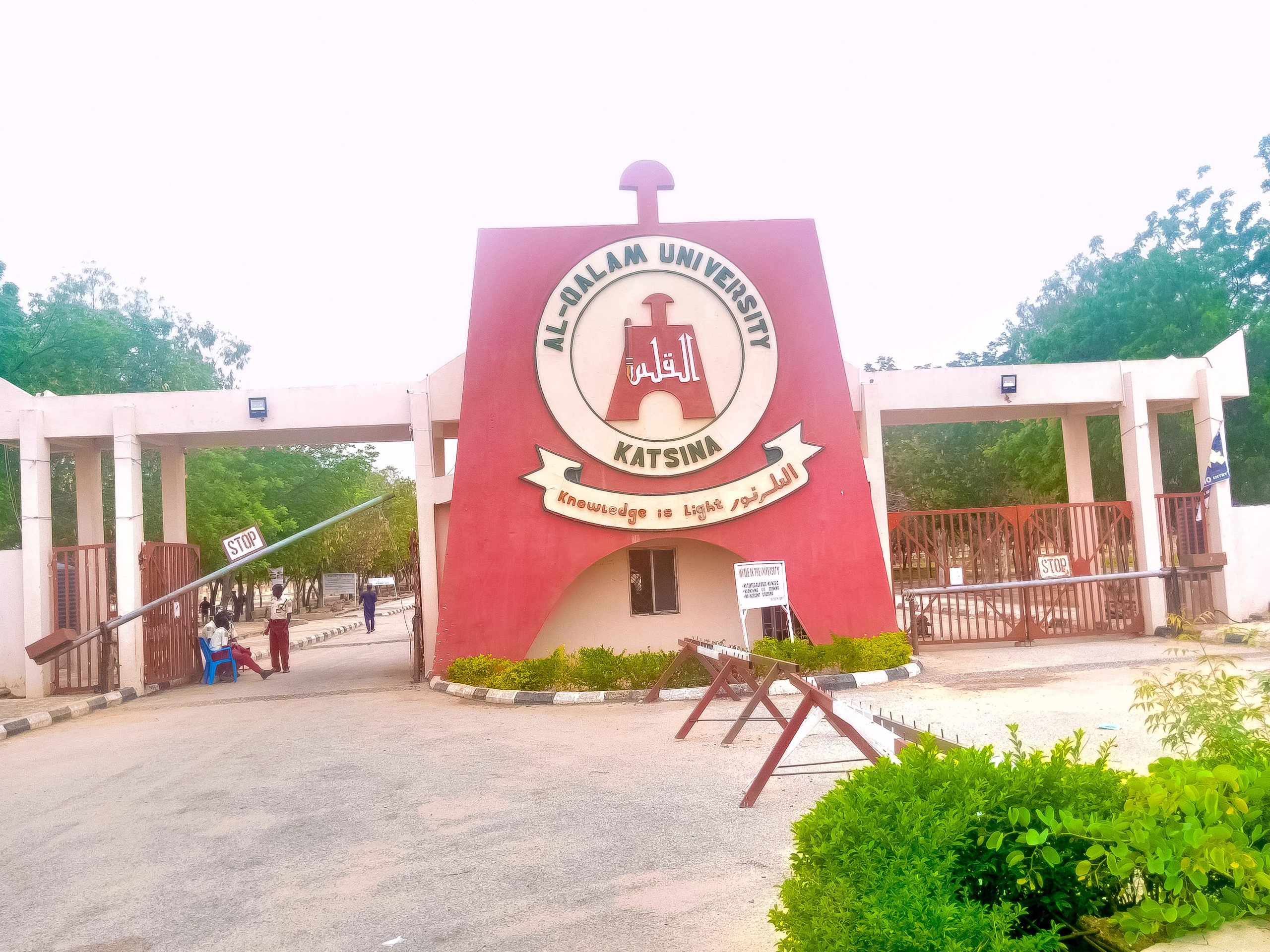
Al-Qalam University holds its 2nd combined convocation

By Abdulrazak Iliyasu Sansani

Barring any last-minute changes, Al-Qalam University will hold its 2nd Combined Convocation on Nov. 25, 2023. The day is what everyone associated with the university eagerly looks forward to seeing. 

Al-Qalam University, Katsina (AUK), hitherto known as Katsina University, Katsina (KUK), is located in Dutsinma Road, Katsina State, and known for the academic aspiration of those who seek knowledge deeply rooted in sound morals. Al-Qalam University was established in 2005 as Nigeria’s first private Islamic university.

The university has gone from strength to strength since its establishment 18 years ago. It presently runs six schools/colleges, which offer assortments of options for the students: The College of Social and Management Sciences, College of Natural and Applied Sciences, College of Education, College of Humanities, College of Post Graduate Studies, and School of Basic and Remedial Studies. It awards 22 undergraduate degrees (among which five courses offer both full-time and part-time programs), 11 master’s programs, and nine PhD programmes, all accredited by the National Universities Commission (NUC) in line with the laws governing university education in Nigeria. 

Recently, some new courses were accredited by the NUC, which brings the total number of programmes to 36 for the 2023/2024 academic session. Despite being a non-profit institution and the difficult economic situation in Nigeria today, the university continues to flourish. However, this is not far-fetched as it is run by an exemplary governing council and administratively headed by an astute academic, economic luminary, and open-minded scholar, Professor Nasiru Musa Yauri, who has not only built on what his predecessors had achieved but also devised different means to take the university forward. He is equally supported by the hard-working team across the various faculties and colleges to actualise the founders’ dreams of the first Islamic University in Nigeria. 

The Programme of the 2nd Combined Convocation is quite extensive. Therefore, I will highlight some of the events for want of space.  The Vice  Chancellor of Al-Qalam University, Professor Nasiru Musa Yauri, disclosed some of the events scheduled for the imminent second combined convocation while briefing journalists in Katsina on Nov. 19, 2023.  

According to the information, 139 postgraduates will be conferred with different honours during the convocation ceremony, including seven Doctor of Philosophy (Ph. D), 125 Masters, and seven postgraduate diplomas (PGD). 

“We are going to honour and celebrate graduates from the 2016 to 2023 sessions, which means on Nov. 25, we are going to confer degrees on graduates for eight sessions. 

“This is to say specifically that we are preparing to ensure that graduates of this 2022/2023 session are also going to be celebrated at the convocation ceremony,” the VC said. 

Apart from this, there is also a Qur’an recitation contest for all interested university students to participate.  This is one of the major events scheduled for the convocation. Winners of the Qur’anic recitation competition, both the female and the male categories, will receive N1 million each. 

A pre-vocation lecture will be delivered on Nov. 24, 2023, by a distinguished scholar, Dr Usman Muhammad Bugaje, on the topic: “The out-of-school-children and the  Conscience of the Nation: A Discourse on the Genesis, Prognosis and Solutions of the Almajirci Phenomenon.” 

A novelty football match between Al-University students (AUK All stars) and its alumni (AUK Legends) is part of the programme, emphasising that all domains of learning: cognitive, affective, and psychomotor are given priority. 

To cap it all, four eminent personalities who have made a tremendous difference in various fields of human endeavour will be conferred with honorary doctorate degrees: including the Emir of Katsina, Alhaji Abdulmumin Kabir Usman; Emir of Kazaure, Alhaji Najib Hussaini Adamu; Alhaji Sani Zangon Daura, and Alhaji Abdulsamad Isiyaka Rabiu. 

Al-Qalam University Katsina is where it is today because of the leadership, who have remained steadfast to the ideals of the founding fathers and have employed transparent methods. The Vice-Chancellor, for example, is accessible, and every Thursday has been set aside for any student with a suggestion or problem to meet the Vice-Chancellor and iron out the issue amicably. This is good leadership and highly remarkable.

I am not writing this piece to pretend we have a flawless system. There is no system without flaws. All systems have their shortcomings in one way or the other. This may not be apparent without meticulous observation. But this we understand as we explore the system or rather utilise the services of the system. Hence, I do not claim a perfect system exists here or advance anything error-free for the public. 

To buttress my points, I was personally affected by one of such fallibilities when I was wrongly accused of committing an offence I didn’t and have always stood against. Herein, Al-Qalam University, especially its College of Education, exercised due diligence by using all the legal instruments to get to the root of the matter and ensure justice was done. In my opinion, the greatness of any system or institution should be measured not by the duration it exists but by how effectively its services are rendered to those in need. This proves where the institution belongs. 

Prof. Nasiru Musa Yauri’s giant strides are evident, from academics and sports to other equally important sectors of this citadel of learning. With time, Insha Allah, this institution can reach the heights its illustrious founding fathers envisioned when they established this university in 2005. May Allah (SWT) help Al-Qalam University to reach its rightful destination for the benefit of Nigeria. 

Abdulrazak Iliyasu Sansani is a student of Al-Qalam University Katsina.
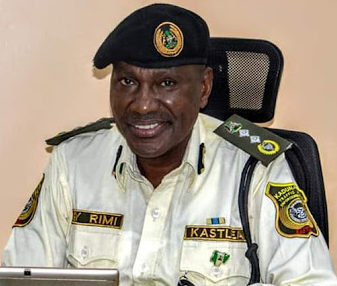
Stop harassing Kaduna KASTLEA marshals over Hijab – MURIC

By Abdurrahman Muhammad

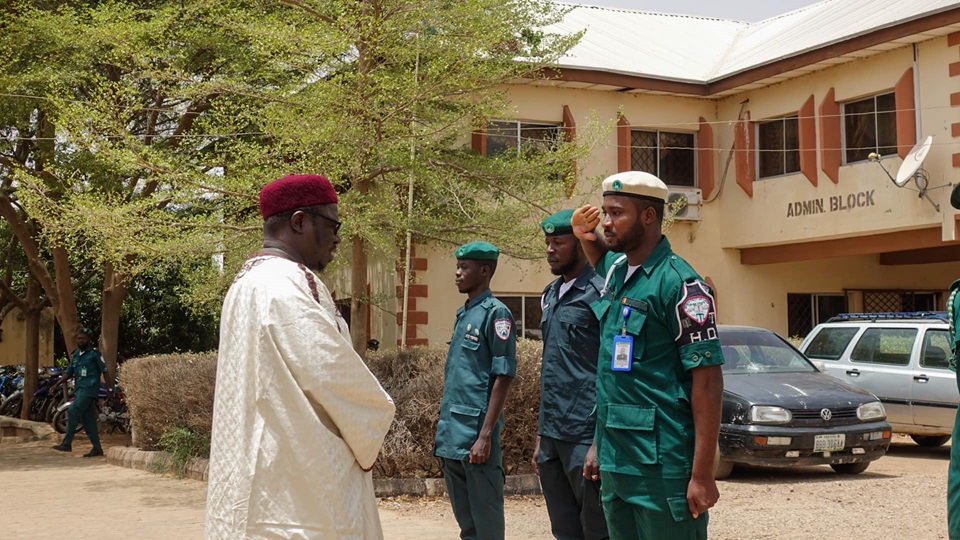
A call has gone to the Kaduna State House of Assembly to investigate the Kaduna State Traffic Law Enforcement Authority (KASTLEA). The appeal came from an Islamic human rights organisation, the Muslim Rights Concern (MURIC). The group accused the leadership of KASTLEA of harassing Muslim female marshals who wear hijab and their male counterparts who have beards.

This was contained in a press statement circulated on Friday, November 17, 2023, by the Executive Director of MURIC, Professor Ishaq Akintola. He said:

“We have credible information that the leadership of the Kaduna State Traffic Law Enforcement Authority (KASTLEA) has recently been casting aspersion on the use of hijab by female marshals and the growth of beards by their male counterparts. 

“The current head of KASTLEA, Carla Abdulmalik, a Christian lady, uses almost every opportunity to directly or indirectly caution marshals against the use of hijab. She reportedly issued a directive for the shaving of beards by the male Marshals. According to her, having beards makes the job unprofessional and disgusting.

“MURIC resents the anti-Muslim antics of Carla. She must be called to order before she plunges Kaduna into a huge crisis whose consequences no one can predict.

“Carla is exhibiting a common trait of Muslim-haters. She is most indiscreetly imposing Christian culture on Muslim marshals and manifesting hatred for all forms of Islamic appearance.

“We therefore call on the honourable members of the Kaduna State House of Assembly to investigate these allegations and make recommendations to Governor Uba Sani. 

“Carla must be called to order. Kaduna is the last place where one would expect to find the persecution of Muslim workers or students. This is an anomaly that should not be allowed to rear its ugly head anywhere in Northern Nigeria. We call on Islamic scholars to speak up on this matter and to put pressure on politicians in Kaduna on the need to protect Muslim marshals in KASTLEA.

“The Constitution is clearly on the side of religious freedom. Section 38 (i) & (ii) of the 1999 Constitution of the Federal Republic of Nigeria provides ‘every person shall be entitled to freedom of thought, conscience and religion, including freedom to change his religion or belief, and freedom (either alone or in community with others, and in public or in private) to manifest and propagate his religion or belief in worship, teaching, practice and observance’

“There have been no restrictions on religious freedom in KASTLEA since its establishment in 2014, and nothing in the 2017 act establishing the agency forbids hijab or beards. Muslim marshals in the agency have also never been intimidated by any of those who headed KASTLEA before Carla. Her persecution and stereotyping of Muslims under her must stop.”

Dr Zakir Naik: MURIC warns overzealous interlopers

By Muhammad Abdurrahman

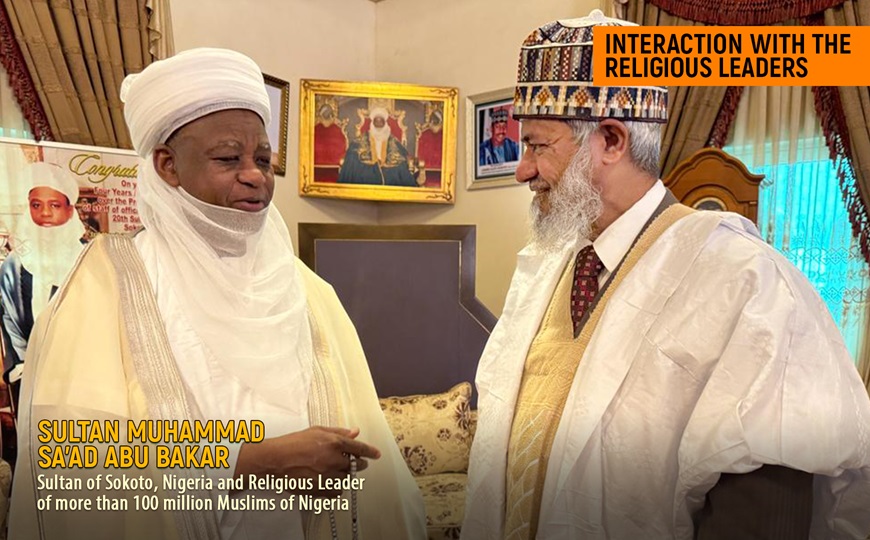
An Islamic human rights organisation, the Muslim Rights Concern (MURIC), has warned those calling for the arrest of Dr Zakir Naik to mind their business. The organisation insists that the Islamic preacher is exercising his Allah-given fundamental human right of freedom of movement under international law. MURIC further warned that anybody found embarrassing to the Sultan’s guest would face the wrath of Nigerian Muslims. 

The warning was handed down on Sunday, 5th November 2023, by the Executive Director of MURIC, Professor Ishaq Akintola. 

The full statement reads:

“A campaign of calumny and religious hatred has been unleashed on an international Islamic figure, Dr Zakir Naik, who is currently in Nigeria. Dr Zakir Naik is in the country on the invitation of the Sultan of Sokoto and President General of the Nigerian Supreme Council for Islamic Affairs (NSCIA), Alhaji Muhammad Sa’ad Abubakar.

“The campaign is being sponsored by Christians who are jittery. They are aware of the visitor’s oratory, intellectual prowess and amazing ability to convince his audience with indubitable facts. We remind these overzealous interlopers that Dr Zakir Naik is exercising his Allah-given fundamental human right of freedom of movement. 

“Article 13 of the Universal Declaration of Human Rights of the United Nations guarantees the right to freedom of movement around the globe without interference. It says, ‘Everyone has the right to freedom of movement and residence within the borders of each state. Everyone has the right to leave any country, including his own, and to return to his country.

“Those behind this shameful exercise are meddlesome interlopers and Muslim haters disguising themselves as public commentators. They are motivated by hate, ignorance and gymnastic religiosity. 

“For the avoidance of doubt, we warn that anybody found embarrassing an official guest of His Eminence the Sultan and head of more than 150 million Nigerian Muslims will face the wrath of Muslims in this country.

“Why are our Christian neighbours so intolerant? How many times have Muslims raised objections when Christians invite foreign preachers? Several Christian preachers have toured this country without any Muslim protesting. 

“We recall the way Louis Farrakhan, the black American Muslim leader, was disallowed from giving a lecture in Nigeria in 1986. That ugly and disgraceful incident was engineered by the same set of people. It must not happen again.

“To those who are pursuing this ignoble goal, we say, ‘Take notice that Dr Zakir Naik is not Louis Farrakhan and Nigeria of 1986 is different from Nigeria in 2023. Nigerian Muslims of today, under a dynamic and visionary leadership, can give measure for measure.’ 

“The whole world knows the Indian government for what it is when it comes to religious tolerance. The crimes of the Indian state against its Muslim population of 204 million Muslims are legendary. Muslim haters in Nigeria should allow the Indian government to convince Interpol to do its dirty work for it. 

“India has failed to involve Interpol because its allegations against Dr Zakir Naik are religiously motivated. How did the Islamic scholar travel across several countries without Interpol arresting him if, indeed, he is a wanted person? Let the Indian government convince Interpol first.

“As far as we are concerned, Dr Zakir Naik has not broken any known law of Nigeria. He is, therefore, innocent and free to move around and deliver lectures. We remind the law enforcement agencies of their duty to ensure the safety and security of this Islamic scholar. Nothing must happen to him. It is needless to assert that any guest of the Sultan is a guest of all Nigerian Muslims.”

#LeaveDrZaikNaikAlone

What Hisbah truly does

By Usama Abdullahi 

The Hisbah corps members have come under criticism for their recent activities, which include raiding or disrupting a hotel or social gatherings where immoral actions are being condoned. I’m surprised about its criticism. Just like any other institution or agency, Hisbah has its flaws. But to write it off merely because of what it’s doing lately isn’t morally right. 

I wanted to stay clear of this issue. Still, I felt the need to chip in after listening to a minute-long interview the Commander-General Kano Hisbah, Sheikh Aminu Daurawa, granted to BBC Hausa regarding the backlash that greets their actions. In that interview, the Sheikh logically stated why they raided such “illegal” gatherings. 

Through his revelations, I realised that they don’t just raid a hotel or any social gathering for their selfish concerns, but they first receive calls for an investigation. You see, Hisbah doesn’t carry out things as badly as some people would have us believe. They simply do the bidding of their people. The calls are often made by the people living near the places where such social vices occur. 

Once they suspect something unusual in the said places, they do not fail to raise the alarm by calling Hisbah to carry out some investigations. And when the Hisbah Corps arrive at the scene of the “crime”, they don’t harass the suspects. Nor do they raid the entire place as they so wish. However, they go straight to the hotelier or owner of the place and inform them of their plan.

When they have the offenders in their custody, they usually preach to them and caution them against the consequences of their actions. But if they encounter serial miscreants, they take them to the court of law. So, if I may ask, what’s wrong with that? This is right on all fronts- both religiously and morally because they mainly target brothels where sex trafficking takes place. 

Those arrested during their first raid were those from different states or countries. This tells you that the situation is far beyond what you hear. However, Hisbah, as a morality police, is doing what most security personnel fail to do. It’s simply doing the job of a police officer and that of parents.

Only when we look past our sentiments can we acknowledge the benefits of what Hisbah is bringing to society. No matter how you twist, you cannot deny that Hisbah has achieved what the police force hasn’t for years. If you argue that Hisbah is trampling on the rights of their victims, then I’ll put this question to you: how many rules have the so-called victims broken so far? I understand that two wrongs don’t make a right, but there’s no way a law can work without having the law-breakers face their full wrath. 

Usama Abdullahi Writes from Abuja and can be reached at usamagayyi@gmail.com.

Hisbah: The way forward

By Mustapha Abdurra’uf Tukur

The recent outpour of responses by the court of public opinion about the recent raid orchestrated by the Hisbah police in Kano was predictable. We live in an era of opinions, many of which are built not on concrete evidence and thorough understanding but on political and religious sentiments.

I will start by commending the good work done by the Kano State government in reappointing Sheik Aminu Daurawa to spearhead the activities of the Hisbah board. Considering his antecedents in Kano that inspired the same in other northern states, Daurawa genuinely deserved it. The Hisbah under his watch has started again by organising the mass wedding, which fits the stick and carrot approach in problem-solving.

However, as we continue to press down on amoral and delinquent activities, care must be taken not to dent the image of Kano and further plunge its economic viability and business friendliness to a lower ebb. The recent land issues didn’t help the cause.

Standards abound that could be set and upheld within the confines of law and human rights, which, fortunately, Islam upholds in very high esteem. As a student of knowledge, one comes to understand the care Islam gives in protecting dignity and using ethical and deliberate means to entice those astray back to its fold.

The laws establishing Hisbah as a government agency should be revisited such that powers be vested in them to be included in the licensing of the hospitality sector to ensure compliance with the religion and tradition of Kano.

As we seek to redress the amoral activities in this generation, particularly youths and underaged kids, who are constantly being involved in delinquencies, the best ways to tackle such is to enhance the scope the power and refine the activities of moral institutions, particularly in a conservative state like Kano.

A comprehensive law that protects such rights will propel Kano towards its full potential, making it much more peaceful and beautiful. Fulfilling the quotable of our mentor, Prof. Uba Abdallah, who professed, “He who is tired of Kano is tired of life…”

Allah ya ƙarawa Kano albarka.

Mustapha Abdurra’uf Tukur wrote via musteetk@gmail.com

The Night Prayer (Qiyamul Lail): A test of true desires

By Abdurrazak Muktar Makarfi

In the depths of the night, when most of the world sleeps, there are those who choose to rise. They are the ones who understand the value of Qiyamul Lail, the act of waking up to pray during the night. This predawn vigil is not just a spiritual obligation for Muslims but also a powerful manifestation of one’s deepest desires and intentions.

Qiyamul Lail is an act of devotion and a reflection of one’s commitment to one’s faith. It is a time when the world is still, and the heart is most receptive to spiritual connection. The act of willingly sacrificing sleep to stand in prayer is a testament to the strength of one’s faith and the sincerity of one’s desires.

Desire, in its purest form, is the driving force behind our actions and aspirations. It is what motivates us to work hard, to overcome obstacles, and to strive for better lives. But how can we measure the depth of our desires? Qiyamul Lail offers a unique litmus test.

If you find yourself desperately wanting something in life, be it success, happiness, or peace, and yet you are not waking up for Qiyamul Lail, then you may need to question the authenticity of your desires. True desire demands sacrifice. It requires us to prioritise what matters most to us. When we value something deeply, we are willing to make sacrifices to attain it.

Waking up for Qiyamul Lail is not just about fulfilling a religious duty; it’s about demonstrating the intensity of your yearning. It’s a declaration that your connection with the Divine is so profound that you are willing to forgo sleep, one of the most basic human needs, to nurture that connection.

Moreover, Qiyamul Lail is a time for reflection, self-examination, and supplication. It is a chance to pour your heart out to the Creator to seek guidance, forgiveness, and blessings. It is a moment when you can lay your deepest desires and concerns before the Almighty with a heart filled with humility and hope.

In the stillness of the night, when the world is hushed in slumber, you have the opportunity to reflect on your aspirations and the path you are on. If your desires are sincere, if you truly long for your goals to be realised, then Qiyamul Lail is your arena to prove it. It’s a chance to show that your ambitions are not mere words but a profound yearning that drives you to action.

So, let the night prayer be a reminder—a reminder to measure your desires against your actions. If you’re desperately wanting something and you’re not waking up for Qiyamul Lail, then you don’t want it enough. But if you’re willing to rise from your slumber, stand in devotion, and whisper your desires to the heavens, then your desires are genuine, and you’re on the right path to fulfilling them.