By Dr Babayo Sule
The revolution in social media, no doubt, made life fascinating for the present generation in information dissemination and data assembling but most importantly, in harnessing dialogue among inter-cultural and diverse complex groups cutting across the universe unprecedented. Many societies are positively utilising the leverage of social media to develop their political and socio-economic sectors individually and collectively. However, in Nigeria, social media is dangerously setting us on the path of collapsing our values and tolerance and it is ambitiously threatening to magnify ignoramus into the regalia of scholarship while scholars are being relegated to objects of caricature. This is anticipated in the warnings of Daniel J. Levitin in his Weaponised Lies: How to Think Critically in the Post-Truth Era and Nicole A. Cooke’s Fake News and Alternative Facts: Information Literacy in a Post-truth Era, that the era of honest ideas and truth is fast passing and this is palpable more in our environment where things are twisted deliberately for sentiment or personal agenda. This has manifested in the recent development in national issues where the bedevilling monster of insecurity is becoming worrisome. The high level of ignorance in understanding, interpreting, comparing and linking issues in Nigeria bordering religion, politics, economy and other social issues is nauseating. This is evident in the use and abuse of the term ‘Interfaith’ by social media interlocutors.
The two Arabic terms are mixed up unconsciously by itinerant merchants of social media but most surprising, by even some religious Sheiks either deliberately or out of ignorance. The term ‘Wahdatul Adyan’ (unification of religions) in the Arabic language can never be the same as ‘Hiwar Al Adyan’ (interfaith dialogue). Unification of religion means collapsing of faith to become one while interfaith dialogue means debates, comparative studies and discussions of understandings as well as the relationship among followers of a different faith. The word ‘Hiwar’, dialogue, was mentioned three times in the Qur’an 18:34; 18:37 and 58:1.
How can Islam, for example, collapse and become one with Christianity when Islam philosophises the unity of Allah (SWT) while Christianity accepts the doctrine of ‘Trinity’ or how can Islam unite with Judaism that does not believe in Jesus Christ and Prophet Muhammad (SAW), at least, the current version of it? Or how can Christianity unite with Judaism that does not believe in Jesus Christ? Can Islam ever accept any form of law besides the Shari’ah principles?
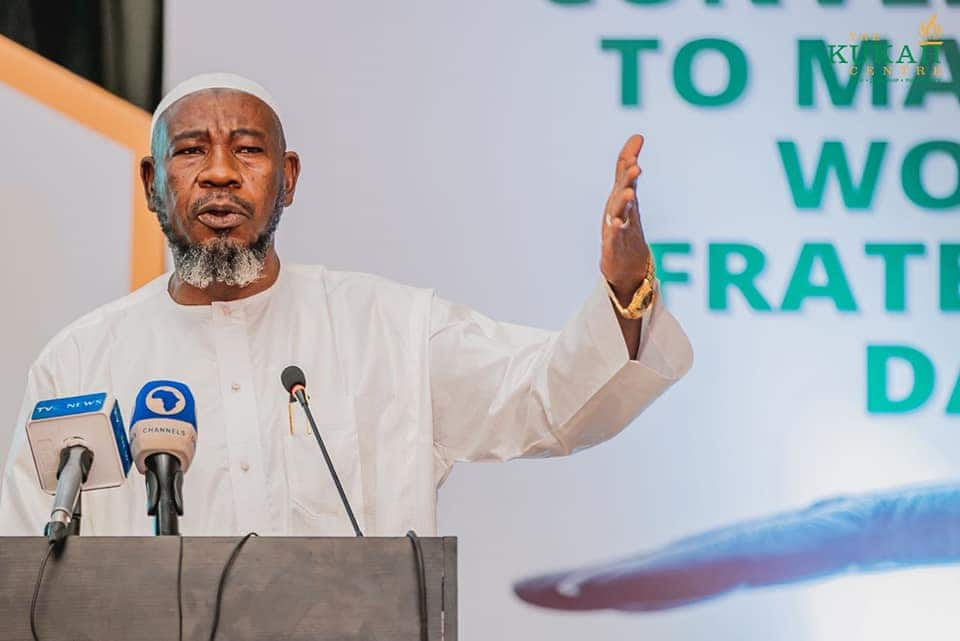
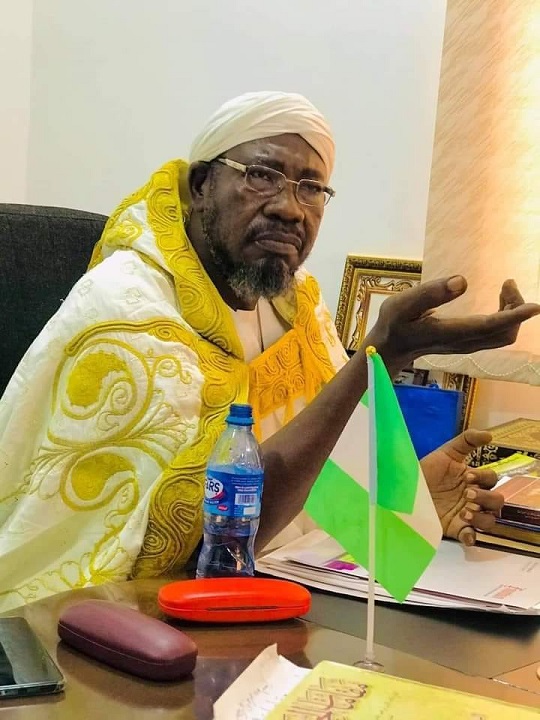
A scholar, popularly known as ‘Digital Imam’ made some utterances on escalating insecurity situation in a delivered sermon which eventually led to his removal. The crux of the matter is that I am not in support or opposing what the Imam uttered in his furious outburst. Many messengers have their philosophy, style, methodology and perspective of conveying messages based on their training, background, experience and the environment. How or why the Imam decided to deliver the message in the mode he did was not the main concern here. Some may see it right while others may see it as unfit and all are right in their perception. I am not in defence or support of the Imam and his words nor am I his spokesperson but some misperceptions, distortions and misrepresentations of the term ‘interfaith’ need to be cleared to avoid the created confusion. However, the annoying aspect of the issue is the way the ‘message’ was totally ignored and the messenger is being crucified on account of being what they called ‘Interfaith’.
And what is interfaith? Is it a polytheistic process or a pronouncement that will disqualify one from Islam? Does interfaith has a basis from the religious roots and branches? Is our education level annihilated to the extent that our social media pedestrians could not understand what it is or is learning Islamic scholarship withering away to the level of misunderstanding Islam or misusing it? What is the link between sermon on insecurity and participation of Digital Imam in interfaith? Interfaith means dialogue among the various Abrahamic religions of Judaism, Islam and Christianity to promote peaceful co-existence and to understand more the philosophy of each other to avoid sustained mutual hostility. The Merriam Webster Dictionary defines interfaith as activities involving persons of different religious faith. Going by this definition, who is not involved in activities with persons of different faiths in Nigeria?
Islam is a religion that by virtue of its philosophy encourages logic, wisdom and reasoning. It challenges its believers to ponder on signs and symbols of the divinity and unity of Allah and the truthfulness of the religion. Allah (SWT) dialogues with His Angles on the wisdom, logic and the reason for creating the weak Adam (AS) and placing him on earth despite the weakness and the vulnerability to sins (Q. 2 verses 30-35). If Allah (SWT) wishes, He will simply create without consultation or dialogue and made the Angels prostrate compulsorily without any resistance or disobedience by Satan but for His prior knowledge of all, He wanted it that way. Is there no lesson for mankind in it to understand that reasons and logic are used in dialogue to convince?
Allah (SWT) in many places commands that believers should reflect and find faith in Islam not follow what is bequeathed to them by their ancestors presenting to them logical arguments, scientific facts, miracles and points of pondering. Prophet Nuh (AS) engaged his people in peaceful interfaith dialogue to convince them to believe in his religion for 950 years using alternative views and arguments (Q.7 verses 59-64; Q.10 verses 71-73; Q.11 verses 25-49; Q.21 verses 76-77; Q.23 verses 23-30; Q.25 verses 37; Q.26 verses 105-122; Q.29 verses 14-15; Q.37 verses 75-82 and Q.71 the complete chapter).
What about Prophet Ibrahim (AS)? He could have argued forcefully with the divine support and protection and ridiculed his people for worshipping idols that they had created with their hands but instead, he chose the path of wisdom and logic and the power of peaceful dialogue to make them understand particularly being careful of the presence of his father among the idolaters. Several Qur’anic chapters and verses (Q.2 verse 258; Q.14 verses 35-41; Q.19 verses 41-50; Q.21 verses 51-73; Q.26 verses 69-104; Q.29 verses 16-27; Q.37 verses 83-113 and Q.43 verses 26-31).
In all the chapters and verses above, Ibrahim (AS) used a superior dialogue with wisdom, chosen soft words and logic to explain his faith before the idolaters. Then take the instance of Musa (AS) who had not only debates with the Pharaoh and his people but went the extra mile in the demonstration of faith and interfaith dialogue under the command of Allah (SWT) in the Pharaoh’s palace. Many chapters and verses (Q.7 verses 103-173; Q.10 verses 75-93, Q.11 verses 96-99; Q.17 verses 101-105; Q.20 the complete chapter; Q.25 verses 35-36; Q.26 verses 10-68; Q.27 verses 7-14; Q. 28 verses 1-50 and several others too numerous to mention all here). It should be noted that Prophet Musa (AS) dialogued with his people profusely in convincing them against Shirk (polytheism) after he rescued them from Pharaoh using logic and wisdom (Q.2 verses 40-61; Q.7 verses 137-141 and Q.20 verses 83-97) and Prophet Musa (AS) also dialogue and went into a voyage of discovery with Khidr (AS) (Q.18 verses 60-86).
Other Prophets (AS) dialogued in what is closer to interfaith with their people which time will not allow for all of them to be enumerated here but some few cases are still necessary. Prophet Ilyas (AS) dialogued with his people and showed them a reason to desist from worshipping a lamb as mentioned in Q.37 verses 123-132. Prophet Yusuf (AS) also convinced his inmates’ partners and his people of the unity of Allah (SWT) through an interfaith dialogue (Q.12 verses 37-41). Prophet Isa (AS) was shown the path of dialogue by Allah (SWT) when he was asked if he is behind the instigation for people to worship him when he responded beautifully, respectfully, logically and scientifically in this way (Q.5 verses 116-120) and he also tried and convinced his disciples on the miracle and powers of Allah (SWT) when they challenged him for manna (Q.5 verses 112-115) and elsewhere (Q.19 verses 30-33), Prophet Isa (AS) dialogue with his people to convince them while in his infancy that his mother Maryam (AS) was innocent and that he was a miracle of Allah (SWT).
The most astonishing aspect of those who wanted to confuse interfaith with unity of faith is their lack of acumen in understanding ‘Asbabul Nuzul’ (purpose of revelation of Qur’anic verses) otherwise they would have saved their ignorance before the public humiliation. One of the outstanding characteristics of the Makkan chapters and verses of the Glorious Qur’an is the dialogue between the Prophet (PBUH) and Makkan infidels to scientifically show them the logic and reason of worshipping Allah (SWT) alone and the dirtiness of idolatry. These chapters and verses are too many to mention here. When Christians from Najran (Nazareth), a place near Madina in those days, heard the preaching and teaching of Prophet Muhammad (PBUH) on Jesus Christ, they approached the Prophet (PBUH) for interfaith dialogue and that was the reason for the revelation of Q.3 verses 33-83 as mentioned by Al-Ghazali in his book ‘Asbabul Nuzul’ and also as narrated by Imam Ibn Kathir in his ‘Tafsir’ (Qur’anic exegesis or commentary).
The Prophet (PBUH) did not only engage in interfaith dialogue but he agreed that Muslims under threat and vulnerability can seek shelter in other places of different religions when necessary. He asked his companions to migrate to Ethiopia where a Christian king was ruling, Najjash (Negus). The Makkan oligarchs, Abu Jahl and Abu Sufyan sent a delegation to King Negus to convince him to return the Muslim believers to Makka so that they could persecute them until they revert to idolatry. They went to the king with gifts and presents but he rejected their request.
The representatives of Makkan infidels adopted emotional manipulation by telling King Negus that Prophet Muhammad (PBUH) and his followers were also saying evil things about Mary and Jesus Christ (AS). The king summoned Muslims to his palace and questioned them. One of the companions, the Prophet’s cousin, Ja’afar Bin Abi Talib, explained to him their idolatry and decadent situation before the emergence of Islam and went ahead to recite before him the Surah Maryam Q.19 verses 16-40. The scholars of history like Ibn Hisham and Ibn Kathir reported that king Negus and his people wept on hearing these verses which was the reason for revealing Q.5. verses 82-85. Later. King Negus converted to Islam and the Prophet (PBUH) prayed for him from Madina which served as the juristic justification for ‘Salatul Gha’ib’.
Apart from the above views on interfaith dialogue, many companions of the Prophet (PBUH) were reported in authentic hadiths by Bukhari and other reporters and scholars of the history of engaging Jews in Madina, Christians and pagans in interfaith dialogue using the Qur’an and other sources heard from the Prophet (PBUH). Ibn Taymiyyah, one of the medieval Islamic respected scholars devoted an entire book of two volumes in interfaith dialogue with Christians titled Al Jawabul Sahih li man Baddala Dinal Masih (Answer to those who Altered the Religion of Jesus Christ). Besides, contemporary Islamic jurists have their views on interfaith dialogue. For instance, Ismael Raji Al Faruqi characterises dialogue as Da’awah which includes preaching Islamic teachings, promoting virtues and avoiding vices and providing comprehensive knowledge to understand the purpose of life.
The Christians and Jews are addressed with respect in the Qur’an ‘as people of the book’. The Prophet (PBUH) was reported to have been visiting the ill in Madina irrespective of their faith (Tirmidhi). The Prophet was sympathetic, patient and understanding with people of other faith. He never imposed Islamic laws on them. Abu Hurairah narrated that once a group of Jewish scholars came to the Prophet (PBUH) and declared that one of them committed adultery. The Prophet (PBUH) judged the matter using the Jewish scriptures and not Islamic laws (Al Tabari).
In essence, most Islamic jurists agreed that Islamic teachings are not in favour of eliminating the preaching of other faiths. Islam is, instead, in favour of counterbalance as a means of creating a harmonious environment instead of confrontation. This is mentioned in the Quran (Q.22 verse 40). It is based on this that the power of Qur’anic dialogue challenged the entire universe to produce its like or to ponder on the saved corpse of Pharaoh Menerpter as a sign of miracle of Islam and the Glorious Quran open for a challenge by those interested. An attempt to do so earned Islam valuable converts such as Professor Mike Moore, Professor Maurice Bucaille, Professor Gerald Dirk, Dr Gary Miller and many famous global scholars of various fields of human endeavour.
The question to ask ourselves is, if not because of the flavour and the assistance of interfaith dialogue, how could the gallant intellectuals armies of Islam confront the entire world with intellectual discourses of comparative knowledge? The blessed Sheikh Ahmed Deedat, Sheikh Dr Zakir Naik, Dr Abu Ameenah Bilal Philips and other ones who stand tall in the hall of fame of comparative religion and remain unchallenged by all religions when it comes to dialogue and reasons. How many hundreds of thousands or millions have they converted to Islam successfully? Could those against interfaith serve Islam in this capacity? What about the blessed Adnan Oktar aka Harun Yahya who solely demolished Darwinism and Marxism by the mighty power of his Islamic dialogue pen? Have we forgotten our own, Sheik Auwal from Jigawa State who has been busy propagating Islam in America? What about the blessed Sheik Hussaini Yusuf Mabera? What about the good work of the Da’awah Institute of Nigeria in bridging the gap of knowledge closer to what even a layman can comprehend? Please what is the name of what they are doing? What about Nigerian Inter-Religious Council? What is it and who are the members? It is a civil society of interfaith dialogue and action involving the supreme spiritual leader of Islam, his Eminence, the Sultan of Sokoto and the Chairman of the Christian Association of Nigeria (CAN), other distinguished scholars of Islam and Christianity just for the information of the misguided interfaith antagonists.
It is frightening that the Nigerian Ummah is gradually drifting towards Al Qaradawi’s description of extremism and Abdulkadir Oudah’s ignorant followers and incapable scholars. Al Qaradawi in his book, Islamic Awakening Between Rejection and Extremism warned that extremism is an uncalled duty to Islam by ignorance which has six symptoms including bigotry and intolerance, commitment to excessiveness, uncalled for austerity, severity and harshness, thinking ill of others and Takfir stage which is the dangerous one. Abdulkadir Oudah in his view argues that Islam and Muslims are suffering from the comity of ignorant followers and the inaction of incapable scholars aided by amoral leadership.
The debates on interfaith by some scholars wrongly and the perception of ignorant followers exhibited this fear and it is tilting towards the symptoms of extremism warned by Al Qaradawi which we must be cautious of. Of course, some of the views may not lack relevance to late Dr Yusuf Bala Usman’s postulation of the manipulation of religion in Nigeria but it is shameful and uncalled for. Saying an opinion or a view before the public must have a moral burden. Ibn Qayyim Al Jawzi in his book Ilamul Muqi’ina an Rabbil Aalamin exponentially exposed us to the intricacies of those who can speak on Islamic issues and fatwas and the chain of authorities that can qualify one to be among them. I don’t think the interfaith interlopers qualified to be among the ones listed by Ibn Qayyim.
I am not in any way in convergence with Digital Imam on that fateful sermon. It is wrong to advocate for a boycott of the election in a democratic clime. It is an unpatriotic, irreligious and social disservice. We differ completely in this perspective. Instead, I am an unrepentant advocate for voting and election and a transparent one for the better. In an era where the leaders failed glaringly but their failure is not instilling remorsefulness in them to desist from power scramble, how could the voters sacrifice their legitimate opportunity to vote? In essence, I am calling on Nigerian voters not only to vote but to vote a protest vote on target. To identify candidates on their own, sponsor them, vote for them and guard their votes to succeed for better governance without regarding any party (parties that lack ideology or even principles) do not matter in developing democracies more than individuals in elections.
Based on the above observation, I am suggesting the following as remedies against this detrimental degeneration that will consume us if we are not careful.
1. The Digital Imam and other religious leaders should invoke the saying of Allah (SWT) in delivering their messages Q. 16 verse 125 “call to the way of your Lord with wisdom and goodly exhortation, and reason with them in the best manner possible. Surely your Lord knows best who has strayed away from His path, and He also knows well those who are guided to the Right Way”.
2. People should desist from throwing themselves into the arena of knowledge and scholarship based on anecdotal stories and emotions while those who know but are trying to divert the subject matter or discussions should fear Allah (SWT) and relay that which is the truth because “Not a word does he utter but there is a sentinel by him, ready (to note it)” (Q.50 verse 18) and “And do not pursue that of which you have no knowledge. Indeed, the hearing, the sight and the heart – about all those [one] will be questioned” (Q.17 verse 36).
3. Matters should be dealt with accordingly instead of manipulated. Matters of security discussed by a cleric should not be dismissed away for trivialities such as interfaith. Interfaith is a different subject matter so also a sermon and issues of insecurity why lump them unnecessarily?
4. The social media abuse should be checked by authorities before another Tunisian model is engineered deliberately out of ignorance or sentiments. Government has the legal duty to do so. In an era where wise people are using social media for business, we are busy abusing it for the promotion of ignorance.
5. A strong Shura committee is needed to check fatwas and online scholars that are incapable of judging a simple matter or need rigorous scholarship training before their views can see the light of the day.
6. Ahlul zikr should kindly intervene and educate our Ummah on critical issues to avoid misperceptions, distortions and misrepresentations of facts that can drag our youth into ideologies that will throw our society into further disaster.
Dr Babayo Sule is the H.O.D International Relations, Faculty of Social Sciences, Federal University of Kashere, Gombe State.