Politics

You can add some category description here.

Buhari loyalists reaffirm support for Tinubu, pledge to remain in APC

By Uzair Adam 

Amid speculations of discontent within the ruling All Progressives Congress (APC), key loyalists of former President Muhammadu Buhari have reaffirmed their support for President Bola Tinubu and pledged to remain in the party.

The group, operating under the Forum of the defunct Congress for Progressive Change (CPC), made the declaration in Abuja on Thursday, countering reports that some Buhari allies were planning to exit the APC.

Those present at the meeting included Katsina State Governor Dikko Radda, Niger State Governor Umar Bago’s representative, former Nasarawa State Governor Senator Tanko Al-Makura, former Katsina State Governor Aminu Bello Masari, and Chairman of the National Drug Law Enforcement Agency (NDLEA), Gen. Buba Marwa (retd).

Other notable figures in attendance were former Voice of Nigeria Director General Osita Okechukwu, former presidential aide Okoi Obono Obla, former APC National Secretary Waziri Bulama, ex-lawmaker Farouk Adamu, a representative of Speaker Tajudeen Abbas, and Foreign Affairs Minister Maitama Tuggar.

The forum emphasised that although individuals are free to pursue personal political interests, they should not do so under the guise of representing former CPC members.

Responding to whether the bloc would support Tinubu beyond the current administration, Hon. Farouk Adamu expressed confidence, saying, “We are with Tinubu just like our leader (Buhari), and it is our hope that Tinubu continues to remain our leader.”

Dangwani, Prof Farouk dump PDP, lead major defection to APC in Kano

By Uzair Adam

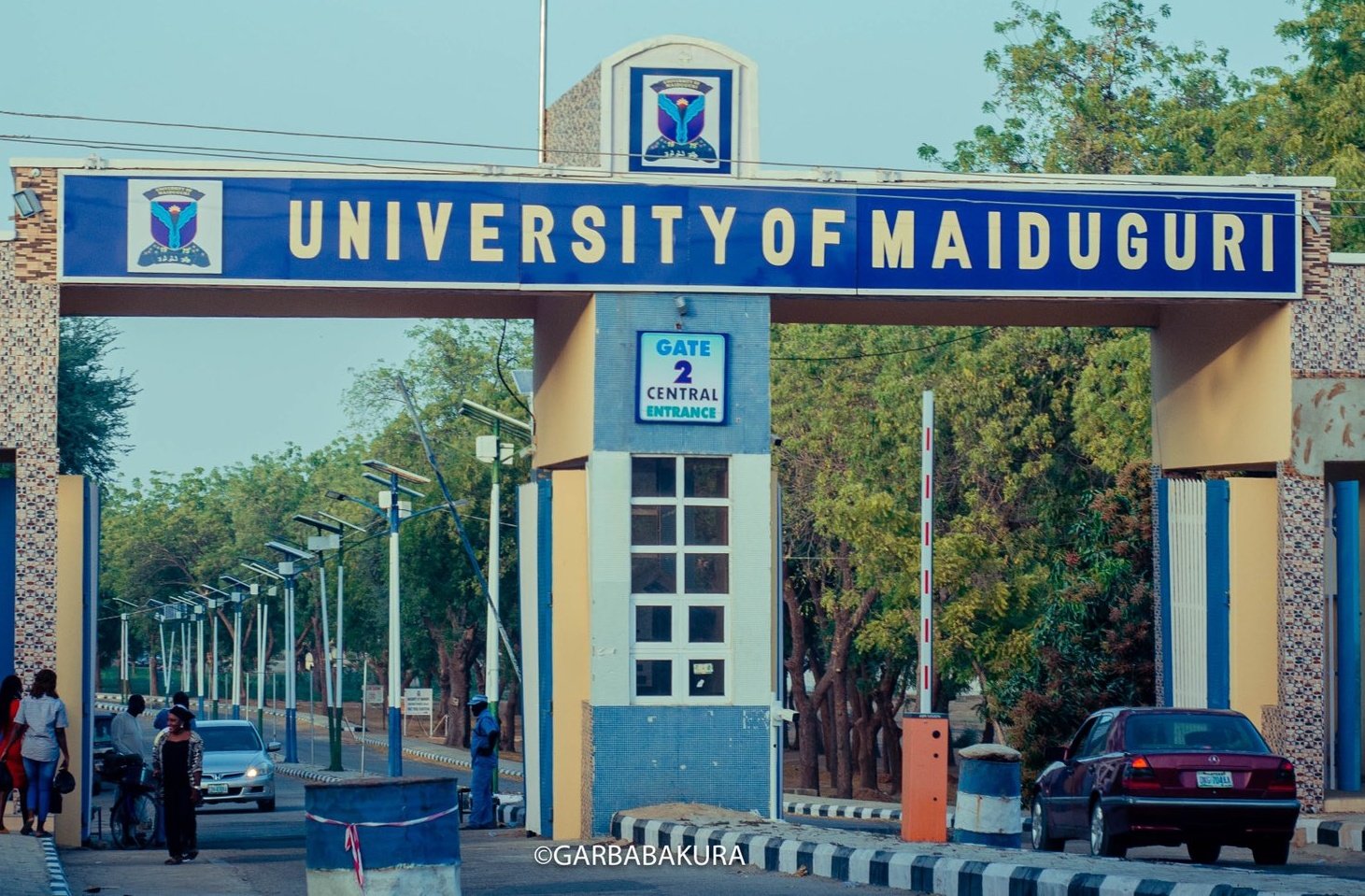
Dr. Yunusa Adamu Dangwani, former Chief of Staff to ex-Governor Rabi’u Musa Kwankwaso and current Chairman of the Governing Council of the University of Maiduguri, has officially defected from the Peoples Democratic Party (PDP) to the All Progressives Congress (APC) alongside his supporters from various local government areas of Kano State.

The defection took place on Sunday in Kano, where many top APC stalwarts gathered to welcome the former PDP chieftain and his political allies into the ruling party.

The Daily Reality reports that the event was described by attendees as a major boost to APC’s strength in the state ahead of the 2027 general elections.

Dangwani, who has previously held several strategic positions including Commissioner for Water Resources, board member of the Aminu Kano Teaching Hospital, and representative of the Northwest on the National Borders Commission, described his return to APC as a homecoming.

“APC is our home. We just went out and have now returned, knowing there is no place like home,” Dangwani said, adding that his defection was driven by deep reflection and the realization that the PDP was gradually collapsing.

“I have seen what the APC-led government under President Bola Ahmed Tinubu has done in the areas of security, economy, and social welfare.

“PDP, on the other hand, is going down the drain. No sensible person will remain in a cracked house and wait for it to collapse on him,” he stated.

He emphasized that his decision was also influenced by persistent calls from his political associates who believe in APC’s developmental programs.

“Everything has its time. This is the right time for us to leave PDP for APC and contribute to the progress of Nigeria and Kano State,” he added.

Though Dangwani was a governorship aspirant under the PDP in the last election, he clarified that he currently has no personal political ambition in the APC.

“My ambition is for APC to do well for the good of Nigeria. Wherever I find myself, I will contribute. I leave everything to God,” he said.

On the political climate in Kano, Dangwani expressed confidence that APC is on track to reclaim the state from the ruling New Nigeria People’s Party (NNPP), citing recent defections of NNPP lawmakers, including Senator Kawu Sumaila and House members Kabiru Alhassan Rurum and Abdullahi Sani Rogo.

He also criticized the NNPP government for what he described as missteps that would cost them future elections.

“People remember the demolition exercises, the chaos in the traditional institution, and even the existence of two emirs at the same time — something never witnessed before in the history of Kano or any northern state. These will surely make people vote them out,” he said.

Dangwani urged Kano residents to assess the performance of the APC and compare it with the NNPP’s governance. “The difference is clear. The people of Kano will speak through the ballot in the next election,” he concluded.

In his remarks, Kano APC Chairman Abdullahi Abbas welcomed the defectors and described Dangwani as a political heavyweight whose presence would strengthen the party.

“You came at the right time. No one will look down on you. We value hard work, not laziness,” Abbas said, calling on the new members to register with the party in their respective localities.

Professor Umar Farouk Jibril, a long-time associate of Dangwani and former Kano State Commissioner of Information also reaffirmed their commitment to the APC, stating that both he and Dangwani were founding members and are known for their integrity and hard work.

“Our track record speaks for itself. Even with political differences, we never abuse or defame others. That’s not what politics is about,” he said.

Kwankwaso’s move to APC: a Trojan horse that could destroy Tinubu’s 2027 dreams

By Abdurrahman Musa

As political fireworks ignite across Nigeria ahead of the 2027 general elections, one looming move threatens to shake the very foundations of the ruling All Progressives Congress (APC): the speculated defection of Senator Rabiu Musa Kwankwaso—former Kano State Governor and NNPP national leader.

To some within the APC ranks, welcoming Kwankwaso appears to be a masterstroke, but others are warning because, his entry could ignite a political inferno that burns the APC’s fragile peace in Kano, upends Tinubu’s re-election ambitions, and hands the opposition [which he might later join] a golden ticket to power.

Here is why:

Kano could explode as a factional earthquake looms

It is a known fact that Kwankwaso is no ordinary politician. He is a master strategist who always thinks for himself and what would favour him. Therefore, for him to join the APC, people should know that he will not just come with followers—he commands a powerful political cult – the fiery Kwankwasiyya movement that stands in direct confrontation with the Ganduje-led APC structure in Kano. Welcoming him is like inviting a hurricane into a house of cards. The party risks a full-blown internal war, splintering into rival factions, parallel commands, and electoral sabotage that could spell doom in 2027. APC’s strength in the North’s largest voting bloc may shatter into chaos.

Collapsing NNPP could be the PDP’s resurrection.

They said politics is a game of chess. When you think in a rush and make a wrong move, you woefully lose the game. Here’s the twist: dissolving the NNPP doesn’t automatically benefit the APC. In fact, it might just revive the PDP from the political coma. Kwankwaso’s defection could enrage his loyal base, pushing them straight into the waiting arms of Alhaji Atiku Abubakar and the PDP.

Mr President, do you remember 2023? The fragmented opposition in the North gifted Tinubu an edge. Destroy that balance and the pendulum swings possibly against you. Therefore, a fractured NNPP doesn’t guarantee APC victory—it may instead restore Atiku’s Northern stronghold.

A clash of presidential titans between President Tinubu vs. Senator Kwankwaso

Let us be honest—Kwankwaso isn’t joining to play a backup singer. His presidential ambition is loud, clear, and relentless. He might demand a Tinubu-Kwankwaso 2027 ticket or insist on a powerful stake in the party. If denied, he could turn against the APC from within—just like in 2019, when he was accused of deliberately undermining Atiku’s campaign in Kano while funneling resources into his gubernatorial candidate. If welcomed, Kwankwaso could shake the APC from the inside. If sidelined, he could sabotage it. History could repeat itself – this time inside the APC.

Kano youths might revolt against you

History has shown that youths are the vanguard of Kano politics. They are the ones that win you election. Currently, the streets of Kano pulse with the energy of Kwankwasiyya youth. Integrating them into the APC is not a handshake—it’s a negotiation with a volatile base. Mismanage it, and the backlash could be swift: boycotts, protests, or backing a rival candidate. The APC risks alienating the very people who once delivered it millions of votes. One misstep, the youth quake could be catastrophic.

Ganduje is the pillar—don’t shake it

In my own opinion, instead of importing instability, the APC should solidify Ganduje’s party leadership and Kano political camp. It guarantees a winning formula. Furthermore, consolidate strategic allies like Senator Barau Jibrin from Kano North and Senator Kawu Sumaila from Kano South, this offers a more convincing future and gradually win over NNPP supporters. With this, APC can present a united, formidable front—without the drama.

The ball is in your court, Mr President

Mr President, the choice is yours—so are the consequences This is no time for political gambling. The illusion of short-term gains from the Kwankwaso’s defection may cost you the presidency itself. The NNPP’s demise must not become PDP’s rebirth. The APC must learn from the PDP’s collapse—a tale of chaotic mergers and unchecked egos, in which Kwankwaso played a starring role. The hunger for Kwankwaso’s two million Kano votes is strong—but deceptive. It’s a honey trap. What looks like a prize could become a poison pill that wrecks the APC from within and opens the floodgates for a PDP resurgence.

Mr President, it’s your turn: “Emilokan“. But only if you don’t blow it. Listen to Kano. Consult the real stakeholders. Do not gamble away your second chance on a political wild card with a history of wrecking alliances from within. This is not just a political move—it’s a potential crisis in the making. Mr President don’t repeat PDP’s mistake. The voice of reason is calling. Will you listen?

Abdurrahman Musa writes from Kano. He’s a political analyst and APC stakeholder.

Understanding Fintiri’s style and the next Adamawa governor 

By Zayyad I. Muhammad 

Ahmadu Umaru Fintiri’s remarkable success in politics and governance is built on three solid pillars. First and foremost, he holds an unshakable belief that power is granted solely by the Almighty Allah, who bestows leadership upon whomever He wills. This belief is not just theoretical for Fintiri, it defines his attitude toward leadership, power, and responsibility.

Secondly, Fintiri is a man of conviction. He cannot be swayed or coerced into decisions. However, he remains open-minded and receptive to superior arguments. This rare blend of firmness and intellectual humility sets him apart in a political environment where many leaders either succumb to pressure or refuse to listen to alternative views.

Thirdly, Fintiri possesses an in-depth understanding of governance and political power, how it works, when to deploy it, and where it can be most effective. His grasp of these dynamics has allowed him to wield power not for personal gain, but in service of meaningful, people-focused development.

From his early days as a member of the State House of Assembly, through his rise to Speaker, Acting Governor, and now two-term Executive Governor of Adamawa State, Fintiri has consistently demonstrated strategic acumen. What has kept him ahead of his adversaries is not just political skill, but his deep-rooted belief that power belongs to Allah alone. This faith has given him clarity, courage, and calmness in the face of political storms, enabling him to remain fearless, resolute, and capable of making difficult yet visionary decisions. These are decisions that echo not only in the present but will define his legacy for generations to come.

His independence of thought, combined with a willingness to embrace sound reasoning, has driven unprecedented transformation in Adamawa State. In a state once typified by political patronage and a “yes-sir” culture, Fintiri has introduced a new style of leadership; one that prizes merit, innovation, and long-term development over short-term political expediency.

Under his leadership, Adamawa has witnessed a massive infrastructural renaissance. Roads, flyovers, and underpasses have sprung up, redefining mobility and connectivity. The 1,000 housing for the masses. He has established three mega science schools, one in each senatorial district, positioning the state as a hub for scientific and technological advancement. He also ensured the construction of 21 model nursery, primary, and junior secondary schools across all local government areas, ensuring that every child, regardless of background, has access to quality education.

Fintiri’s health interventions are equally groundbreaking. From the provision of free kidney treatment to the establishment of one of the most advanced medical laboratories in Nigeria at the Specialist Hospital in Yola, his vision is clear: a healthy population is the foundation of a prosperous state.

His administration has also been proactive in addressing youth unemployment and gender inclusion. Through programs like PAWECA (Poverty Alleviation and Wealth Creation Agency), thousands of women and young people have been empowered with skills, funding, and job opportunities, restoring dignity and creating pathways for self-reliance.

Leadership, as Fintiri understands it, is both a divine responsibility and a human enterprise. Often, when the Almighty Allah grants leadership, He also grants a unique wisdom, the ability to see what ordinary eyes cannot. Fintiri not only possesses this foresight, but he also understands the fine balance between authority and service. He knows when to exercise power and when to listen; when to act boldly and when to build consensus.

A perfect illustration of this wisdom was his recent declaration that his successor must be a grassroots politician. This was not a vague or politically convenient statement, it was a profound and strategic vision. What Fintiri meant was clear: his successor must share his belief in putting the people first, must be committed to inclusive and comprehensive development across all socioeconomic sectors, and must be a leader with the intellect, experience, and moral compass to lead Adamawa into the future. Such a successor, in Fintiri’s view, must be refined, educated, visionary, and capable of seeing tomorrow through the prism of today.

In summary, Governor Ahmadu Umaru Fintiri exemplifies a rare style of leadership rooted in faith, defined by principles, and driven by results. You may agree or disagree with his politics, but one cannot ignore the defining qualities that make him not just a political figure, but a true grassroots leader .

Zayyad I. Muhammad writes from Abuja via zaymohd@yahoo.com.

Satirical Apology: A closer look at Senator Natasha’s letter

As I scrolled through the timeline of Senator Natasha H. Akpoti, her most recent post, titled “Satirical Apology Letter,” sparked confusion and elicited public reactions from her followers and various opinion leaders across Nigeria. Many are left questioning whether it constitutes a genuine apology or if it is merely another provocation in the ongoing feud between her and the President of the Nigerian Senate, Godswill Akpabio.

The senator representing Kogi Central wrote the letter in a manner that satirically questioned her adversary’s integrity and condemned the corrupt aspects of the Nigerian political system, describing it as a matter of mere compliance rather than merit.

Previously, if you can recall, the unrest between the two began in February this year, due to a minor disagreement over a change of seat, which was rejected by the female senator. This disagreement later escalated into allegations of sexual harassment against the Senate President, which Senator Akpabio and his family denied. The discord ultimately resulted in her suspension from the Senate for six months.

As I continued reading the letter, it felt like waking up from a brief slumber regarding the case. While the public believed it was over, Natasha returned with determination and strongly re-emphasized her stance on the issue. She not only criticized her suspension by the Senate under leadership of Akpabio but also offered a sarcastic condemnation of the current system that led to her situation.

Senator Natasha’s Apology Letter rebukes to the status quo. The second paragraph critiques the current happenings in the Senate chamber. Although the sentences are framed as an apology, they are laced with biting sarcasm. Some individuals perceive the letter as an attempt to remain relevant, as she was nearly forgotten after the case was silenced. This sentiment was expressed by several citizens in the comments on her Facebook post.

In my opinion, the letter exemplifies passive-aggressive diplomacy. Senator Akpoti Uduaghan claims to apologize for her “failure to recognize that legislative success… is apparently not earned through merit, but through the ancient art of compliance.” The implication is clear: the political arena, particularly in Nigeria, is not a space where competence and the will of the people necessarily dictate success. Instead, it is a realm governed by deference to the powerful and the perpetuation of unwritten rules that demand personal loyalty over professional integrity.

Some people believe that the female senator wants to settle the case, but she is concerned about how the public will react. A direct apology could raise questions from the public, especially from those who have supported her from the beginning. They may ask whether she was sincere in her allegations or if she intended to tarnish Akpabio’s reputation. Nevertheless, what is truly remarkable about this piece is how it is presented as a ‘satirical apology letter.’ Instead of directly admitting fault, it takes a different approach.

The senator ridicules the notion that her refusal to engage in patronage or political favoritism warrants an apology. She frames her decision to decline the “requests” of influential figures in the Senate not as a betrayal, but as a badge of honor—a testament to her commitment to her mandate and her constituents, rather than a subservient compliance with behind-the-scenes negotiations.

The letter’s central message is encapsulated in its bitter, mocking phrase: “Please find it in your magnanimous heart… to forgive this stubborn woman who mistakenly believed that her seat in the Senate was earned through elections, not erections.” The wordplay here is both clever and sarcastic, implying that political power in Nigeria is often not merely a matter of democratic legitimacy, but rather the outcome of personal ambition, ego, and, at times, quite literally, the ability to manipulate others through unseen means.

As stated in the letter, the bold assertion regarding the nature of power and politics is undeniably risky. However, it is this very willingness to challenge complacent norms that renders Senator Akpoti Uduaghan’s letter so impactful. In a world where political leaders often issue insincere apologies when faced with allegations of corruption or incompetence, her letter serves as a powerful reminder of the fierce independence and self-respect that are frequently compromised in the quest for political survival.

Moreover, the satire is not directed at a single individual; rather, it serves as a broader condemnation of the system that perpetuates this toxic political culture. Akpoti Uduaghan critiques not only Akpabio’s conduct but also the institutional framework that enables the manipulation of power, allowing it to be transferred based on personal alliances rather than merit. The reference to “quid pro quo” arrangements and the necessity for private, off-the-record negotiations highlights a system in which transparency and accountability are frequently overshadowed by more secretive and, at times, questionable practices.

The final line, “Unafraid, Unbought, and Unbroken,” serves as both a declaration of defiance and a reminder that some individuals in the political arena remain unyielding against the forces that seek to undermine genuine progress. It is a call for a return to integrity and for leaders who are willing to challenge the status quo, regardless of the cost.

I believe that Senator Natasha should not surrender; however, considering how the system operates in Nigeria, it is crucial to find ways to ensure that the conflict does not negatively impact her constituents. Given that she and Senator Godswill Akpabio were good friends in the past, it would be beneficial to seek reconciliation, even though the damage has already been inflicted on Akpabio’s part.

Naziru Muhammad writes from the Department of Mass Communication at Abubakar Tatari Ali Polytechnic in Bauchi.
ajiyanwaka@gmail.com

Coalition, 2027 power play and the need for unity 

By Isyaka Laminu Badamasi

In the move to ouster Bola Ahmed Tinubu’s administration and the All Progressive Congress (APC) from the mantle of leadership in 2027, the need for unity among our political leaders can not be overemphasised.

The recent visit by Atiku Abubakar and other top politicians to former president Muhammadu Buhari for the post-Sallah, cast serious doubts in the minds of Nigerians who are yet to recover from the shocks of the former president’s betrayal of 2015 – 2023. The Wazirin Adamawa clearly stated that the visit has nothing to do with the proposed merger.

Be that as it may, Atiku as the prominent opposition leader should also be very careful with the crop of politicians is aligning with to achieve this objective, as some of those seen in his entourage during the visit are people with questionable backgrounds, whose their reigns in power left an indelible mark of anger and uncertainty in the minds of their people, they are heartless with no sense of sympathy to the people, they are not different with Tinubu.

As the Hausa saying goes, one need not select water in an attempt to squelch a fire, but in some situations, there is a need for that, as some waters may be more harmful than the fire. The selection of who to join hands with towards emancipating this country from the hands of incessant geezers is of the utmost importance. Sending President Tinubu out of the villa in 2027 is non-negotiable and shouldn’t be handled with kid gloves.

As it stands today, Nigerians yearn for someone who is ready to implement policies and programs that will make their lives very easy and promising, someone who will bring an end to the wanton killings all over the country caused by one insecurity or another, someone who is ready to ensure that Nigeria remains one and united. 

For this, the need for the political leaders to unite and make necessary adjustments to face the heartless APC administration head om is very paramount,  any move that can not guarantee the aspirations of common man in the streets can not move to an inch, and, it will be for the advantage of Bola Tinubu and his APC to remain in power beyond 2027.

To those power drunk, who are making a mockery of the movement, should be reminded that the pre-2015 merger that brought APC to power is still workable. APC and Tinubu should get prepared.

Isyaka Laminu Badamasi,  a public affairs commentator and advocate for sustainable development,  writes from Bauchi. 

The birth of performance-based politics in Jega  

By Bilyamin Abdulmumin, PhD

There is much to learn from the politics currently unfolding between the Jega community, their constituency representative, and the Kebbi State government. 

It all began with rising criticism directed at the state government over the glaring lack of infrastructure development in the community. What made the criticism particularly serious was the surprise and visible projects by Hon. Mansur Musa Jega, the National Assembly member representing Jega, Gwandu, and Aliero. Unarguably, since the return of democracy, this constituency has never witnessed such a scale of project delivery. So, unsurprisingly, prayers and praise were poured in from all quarters.

With Senator Muhammad Adamu Aliero of Kebbi Central also delivering notable developments, public frustration quickly turned toward the state government—the governor, the state assembly member, and the local government chairman. During the latest Eid prayer, one fierce Imam echoed the sentiment in his sermon before thousands of faithful. 

In a bold rhetorical salvo, the Imam asked: “Where are the capital projects from the state governor? Or from the local government chairman? Has governance been reduced to merely paying salaries?” 

On the other hand, the Imam turns to the constituency member to invoke Allah’s blessings on him for conspicuous township developments. These prayers were the straw that broke the camel’s back. The video went viral, sending shockwaves through the state government and its supporters.

But then, almost immediately, something interesting happened. Based on the advice, the government mobilised contractors to immediately mark for dualisation one of the busiest roads (leading to the house of the town chief). Behold, performance-based politics (which should have been the case) has given birth. 

One interesting lesson from this development is that a politician’s performance speaks louder and travels faster than any political campaign: A politician’s performance becomes an automatic means of political campaigning. Imagine an Imam on Eid grounds before thousands campaigning for one candidate. That’s the power of visible performance.

Another interesting piece revealed by the saga was the political influence of the population. Jega is among the few local governments in Kebbi State with the highest population, hence one of the most influential politically. The old town forms what would be called a swing state in America for its political dynamism or K states in Nigeria for its sheer number of electorates, so winning it is a sign of success in Kebbi State. A reason why the state governor didn’t joke with the Imam and the electorate’s outcry. This shows that a large population, when strategically mobilised, can become a political asset.

 While delivering constituency projects also depends on what committees a representative belongs to, Mansur still deserves credit because there are allegations of constructors conniving with constituency members to divert billions of naira from constituency projects. 

We criticise politicians when they fail; we should also encourage them when they try.

Is the PDP dead?

By Kabiru Danladi Lawanti, PhD

By every objective measure, the People’s Democratic Party (PDP) has ceased functioning as a viable political entity in Nigeria. Its carcass continues to move but without pulse, purpose, or coherence. As a ruling party, the PDP had its moments, but its legacy is weighed down by monumental abuses of power, systemic electoral malpractice, and industrial-scale corruption. 

From the open manipulation of election results mid-process to the weaponisation of state institutions for partisan gain, the party leadership helped normalise impunity at the highest level. Two decades on, many of these cases—alleging theft of billions—are still unresolved.

But the party’s death didn’t happen overnight. It began in 2007, when President Olusegun Obasanjo imposed a sick candidate on Nigerians, followed by Goodluck Jonathan’s directionless presidency. In 2014, a mass defection gutted its internal cohesion, when five of its governors established the new PDP to challenge what they called a lack of internal democracy within the party. 

Losing power in 2015 should have been a moment for self-correction. Instead, the PDP lost its ideological compass. It abandoned the one role opposition parties must play in democracies: the duty to provide clarity, contrast, and credible alternatives. 

Even as the All Progressives Congress (APC) drifted into policy incoherence from 2017 onward and the confusion that followed – petroleum prices increase, ASUU and other university union strikes, economic recession, open stealing never seen before in the nation’s history, fuel subsidy removal, minimum wage controversy, etc.- the PDP remained inert—leaderless, rudderless, and largely invisible.

Today, what remains of the PDP is a loosely held patchwork of political actors in retreat. Governors are defecting. Its 2023 vice-presidential candidate has walked away. State-level structures are hollowed out. Internal leadership is fractured, and there is no unifying idea or strategic doctrine to rally around. What does this tell us? The PDP is not in decline. It is defunct.

Nigeria is experiencing a vacuum of governance across federal, state, and local levels. What is needed is a credible alternative with intellectual spine, strategic clarity, and moral authority. The PDP has forfeited that opportunity. Nigerians are now confronted with two bleak options: to stick with a failing ruling party or scavenge among opportunistic startups branded with catchy acronyms and no ideological soul.

The PDP’s collapse is more than a party’s fall—it is a signal of deeper systemic decay in Nigeria’s political architecture. But in every collapse lies an opening: for principled political entrepreneurship, grounded in values, competence, and execution. Who will offer that? The people that landed us in this mess in the first place or new faces? 

We need new faces in the political arena. These people parading themselves as opposition are no different from the PDP or APC; they are the same. Our youth need to return to their senses, and most people we see in leadership positions started showing their ability to lead in their early 20s. We must step forward if we want to see a Nigeria of our dreams. The time for lamentations is over.

The future belongs to those who can build systems, not just win elections.

The unfinished battle for local government autonomy

By Lawal Dahiru Mamman

In countries where governance works in favour of the people, citizens always look forward to progress and innovation. In contrast, Nigeria often clings to nostalgia, with many, including those who never lived through certain eras, romanticising what they fondly call the “good old days.”

Believing that the past was always better than the present, some advocate for a return to free education and overseas scholarships. Others yearn for the days of kobo coins, arguing that Nigeria’s economy thrived when they were in circulation and the naira held strong against the almighty dollar.

The era of Native Authorities, which largely financed itself through poll taxes and prioritised education, is also missed. Back then, local administrators ensured students were transported to and from school dormitories at the beginning and end of each term, reinforcing a system that valued structured governance and community welfare.

These administrative units, established under British colonial rule, eventually led to local governments (LGs). Initially, the LGs performed well, maintaining orderly markets, paying teachers’ salaries, and addressing essential grassroots needs.

However, over time, they lost autonomy and are now seen as mere appendages of state governments. Recognised as the most crucial level of governance due to their proximity to the people, successive administrations have made efforts to grant LGs full autonomy.

Yet, these efforts have consistently faced resistance. In 2012, former President Goodluck Jonathan declared his commitment to local government autonomy, emphasising that meaningful national development was impossible without functional local councils.

He argued that empowering LGs would have mitigated the rising insecurity. Jonathan also opposed the state-local government joint account, insisting that councils had a pivotal role in his administration’s “Transformation Agenda.”

At one point, he took legal steps to actualise this vision, but the dream of LG autonomy remained unrealised. Former President Muhammadu Buhari also pursued this goal. In May 2020, he signed an Executive Order granting financial autonomy to the judiciary, legislature, and local government councils.

Experts hailed this as a landmark move toward a more people-centred governance structure. Buhari’s rationale was grounded in Section 7 of the 1999 Constitution, which mandates LGs to oversee primary, adult, and vocational education, develop agriculture and natural resources (excluding mineral exploitation), and maintain key public services.

Their responsibilities also include street naming, house numbering, waste disposal, public convenience maintenance, and the registration of births, deaths, and marriages—basic yet crucial civic functions that remain poorly executed in today’s Nigeria.

Additionally, LGs are tasked with assessing and collecting tenement rates, regulating outdoor advertising, and overseeing public health and alcohol control. However, despite Buhari’s efforts, his administration’s push for LG autonomy, much like Jonathan’s, ultimately failed.

Now, President Bola Ahmed Tinubu finds himself at the center of this enduring struggle. He successfully secured a Supreme Court victory affirming LGs’ constitutional rights and their role in advancing grassroots governance.

He hailed the judgment as a win for democracy. However, what initially appeared to be an achievement began to feel like a setback. Many believe that state governors, who have long controlled local government resources, are deliberately frustrating the implementation of this autonomy for personal gain.

The requirement that LGs must conduct elections to receive direct allocations has further complicated the issue, as state governments continue to manipulate the process to maintain dominance.

By its very nature, local government should be the most accessible level of governance, open to all—from the ordinary citizen who walks barefoot to the community leader who mobilises residents for communal projects.

Yet, it has become a political chessboard where governors install their loyalists as council chairmen or caretakers, reducing them to mere appendages rather than independent administrators. Governors have historically played a decisive role in shaping Nigeria’s presidential politics.

With the 2027 elections casting a long shadow, party defections and quiet coalition-building are underway. This leaves Tinubu in a precarious position: will he stand firm on his commitment to full LG autonomy for sustainable economic development, or will he yield to political pressures and look the other way as 2027 approaches?

The battle for local government autonomy remains unfinished. The question now is whether Tinubu will see it through or let history repeat itself.

Lawal Dahiru Mamman writes from Abuja and can be reached via dahirulawal90@gmail.com.

Kaduna governor blames northern elites for region’s woes

By Uzair Adam 

Kaduna State Governor, Uba Sani, has said political leaders from northern Nigeria have failed the region and should collectively apologise to the people for decades of underdevelopment and neglect.

Speaking during an interview with Trust TV, Sani stressed that criticism of government policies should be driven by the genuine interest of the people and not by political ambition.

“Every democracy must allow criticism, but it must be constructive, and in the interest of the Nigerian people. That’s what we did as activists — not because we wanted power,” he said.

He noted that those who have held public office in the last two decades — including himself — bear responsibility for the challenges facing the region.

“Anyone who is from northern Nigeria and held a political office in the last 20 years, we all need to look at ourselves in the mirror and apologise to the people of northern Nigeria. We let them down,” he admitted.

Reflecting on his own time in office, the governor said the region’s problems stem from long-standing structural and economic neglect.

“I’ll say it here today — all of us; I was a senator in this country, and the problems of northern Nigeria didn’t start two years ago,” he added.

Sani also criticised the outcomes of the massive social intervention programmes under former president Muhammadu Buhari, saying they failed to uplift the region due to deep-rooted financial exclusion.

“Buhari spent hundreds of billions on social interventions,” he said. “But the North became poorer even after that because 70% of the population, especially the masses, were completely financially excluded.”

He pointed out that anyone who had served as a senator, minister, governor, or vice-president from the region over the past 20 years shares in the blame.

The governor cautioned politicians against misleading the public and lauded honest critics who maintain integrity and a people-first approach.

“We must not deceive the people of northern Nigeria. We must not mislead them. I’ve no problem with people criticising the government — people like Dan Bello Galadanchi. 

“Those individuals have the moral right to speak. But those who contributed to the rot and now claim to have repented — I think that’s wrong,” he said.

_________________________________

Muhsin Ibrahim, PhD

Institute of African Studies

University of Cologne 

Blogwww.muhsin.in