Politics

You can add some category description here.

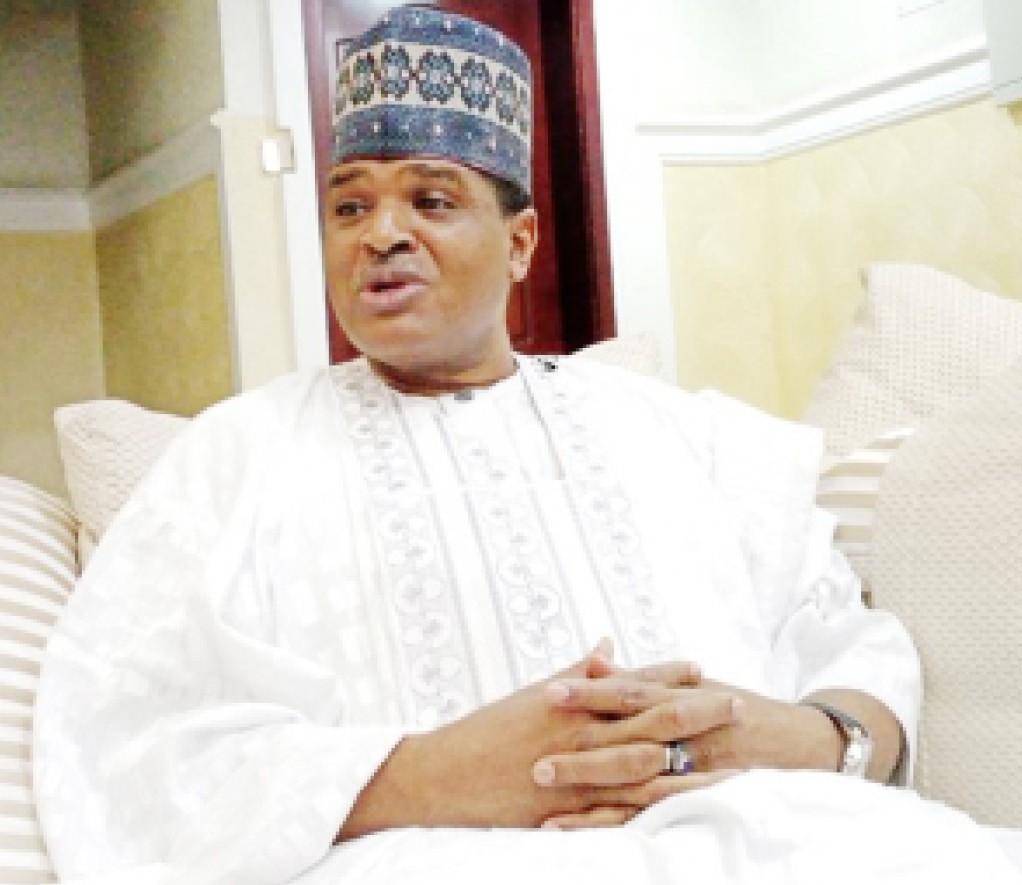
Kano 2023: No govt will succeed without NGO’s and CSO’s – Gawuna

By Aisar Fagge

Kano State Deputy Governor and All Progressives Congress (APC) gubernatorial candidate, Dr Nasiru Yusuf Gawuna said no serious government will succeed without the contributions of Civil Society Organizations (CSO’s) and Non-Governmental organizations (NGO’s).

Gawuna made this statement on Monday, 14th November, 2022 during a continuation of interactive session series organised by a coalition of 21 Kano CSO’s and NGO’s aiming to promote peace and development of Kano State.

Gawuna said, “We are not enemies of NGO’s. That’s why we are here. We’ll work together with NGO’s and CSO’S especially on the issues concerning education, youth and women.

“In many places, government alone cannot do all it’s work. They need the intervention of NGO’s. I have seen one person in Kenya teaching the whole school. We too here are going to involve NGO’s in improvising classrooms to cater the needs of our school pupils,” he stressed.

“I urge you journalists, NGO’s and CSO’s to to enlighten people about the activities of government and its programmes,” Gawuna appealed.

Other issues the APC candidate discussed were his development agenda on employment, health, education, agriculture, infrastructure, climate change, etc.

Convened by Dr Aminu Magashi Garba, the sessions allowed the gubernatorial candidates to interact with members of NGO’s, CSO’s, media practitioners and community leaders and share their blueprints on critical areas such health, education, youths, women, environment, commerce, agriculture, technology among others.

The event that commences on 9th November was graced by gubernatorial candidates of People’s Redemption Party (PRP), Salihu Tanko Yakasai; Bala Muhammad Gwagwarwa of Social Democratic Party (SDP), Mal. Ibrahim Khalil of African Democratic Congress (ADC); Engr. Bashir I. Bashir of Labour Party (LP) and Sha’aban Ibrahim Sharada of Action Democratic Party (ADP). Participants were hoping to see Abba Kabir Yusuf of New Nigeria Peoples Party (NNPP) and Sadiq Wali of Peoples Democratic Party (PDP) in the subsequent meetings.

NBC sanctions Arise TV for broadcasting fake news

By
Ahmad Deedat Zakari

The National Broadcasting Commission, NBC, has imposed N2 million sanction on Arise TV for broadcasting fake news.

NBC Director-General, Balarabe Shehu Helah, disclosed this in a statement on Monday.

The Director-General described the action of Arise TV as an unfortunate breach of the Nigerian Broadcasting Code, grossly unprofessional and insensitive.

“This is the most unfortunate breach of the Nigerian Broadcasting Code and gross display of unprofessionalism and insensitivity by your organization at this time of electioneering,” he said.

The Director-General argued that Nigeria’s extant laws on broadcasting clearly prohibited fake news. He added that the NBC has taken its time to enlighten broadcasters on the provisions of the Nigerian Broadcasting Code and the Electoral Act as the 2023 General election approaches.

Consequent of the breach, the NBC sanctioned Arise TV and requested they pay the sum of N2 million naira with two weeks.

“Consequently, pursuant to Section 5.1. 3 of the Nigerian Broadcasting Code, Arise TV is hereby sanctioned and shall pay a penalty of 2, 000, 000.00 ( Two Million Naira only) Note that the penalty shall be paid within two weeks of the receipt of this letter or sanction shall be graduated,” the statement reads.

Arise TV maliciously reported that the Presidential Candidate of the All Progressives Congress, APC, Bola Ahmad Tinubu is under investigation by the Independent National Electoral Commission, INEC, of alleged forfeiture in a US Court. Arise TV had admitted their guilt and apologized to the party and person involved.

2023 presidency: All Jigawa votes are for Tinubu—Gov. Badaru

By Muhammadu Sabiu

The governor of Jigawa State, Muhammad Badaru Abubakar, has pledged to cast all of his state’s votes for Asiwaju Bola Ahmad Tinubu, the APC’s presidential candidate, in the general election of 2023.

This was said by the Governor on Sunday at the Hadejia kickoff of the Jigawa North East APC gubernatorial campaign.

He noted that the event was intended to introduce to the populace the gubernatorial, senatorial, and other zonal candidates.

Bola Tinubu, according to Governor Badaru, is the only presidential candidate who can protect the nation from economic suffering and endeavour to advance national development.

He was quoted saying, “Looking at his track record and experience, I am sure he has plans and policies that will help in the development of the country.”

According to him, the huge crowd that gathered at the event is a clear indication that Jigawa State is a stronghold of the APC.

On the needless war of billboards in Bauchi

By Mukhtar Jarmajo

Indubitably, Bauchi State is one of the hottest political spots in Nigeria. With a very volatile electorate, the state has remained one to watch whenever Nigerians are to go to the polls. More so, especially in recent times, the opposition in Bauchi state is hardly passive. In most cases, the government in power is challenged by a strong opposition which, from recent experience, the latter defeats the former at the polls. 

For instance, in 2015, the then-opposition All Progressives Congress (APC) defeated the ruling Peoples` Democratic Party (PDP), culminating in the emergence of M. A. Abubakar as the governor of Bauchi state. And in 2019, the now-ruling PDP succeeded in ousting the APC from power. Such is the case of Bauchi State, where the electorate is apparently democratically well exposed, so much so that the political landscape is as undulating as it is sophisticated.  

And as Nigerians walk to the polls next year, the political temperature in Bauchi state is already rising, with the two main governorship contenders working hard to outdo each other. However, instead of issues to characterize the electioneering campaigns where the government in power will try to convince the electorate that it has performed well, just as the opposition APC will try to show the electorate how the former has not done well, it beats even the wildest imaginations that politicians in the state have resorted to destroying the billboards of their opponents. There is obviously no need for that.

The PDP-led government in Bauchi state can present its performance sheet to the electorate with a view to convincing the people how it delivered all the promises it made ahead of the 2019 governorship election. It should tell the world how it impacted the lives of the people. On the basis of indices, let the world learn how governor Bala Abdulkadir Mohammed has not failed to transform education, agriculture, healthcare delivery, transportation, roads, security and the civil service in the almost past four years. 

And for the opposition APC, let it convincingly tell the good people of Bauchi state how the PDP-led administration has failed. Also, on the basis of indices, it should prove that it can do better by presenting reasons, amongst which should be the credentials of its standard bearer, Sadique Baba Abubakar. Let the world know how the erstwhile Chief of Air Staff met the Nigerian Air Force in almost the same situation Bauchi state is in today and turned around matters only to leave it a better place. 

In essence, rather than develop primitive tendencies, politicians in Bauchi state can focus on issues so that the electorate can know who is the best and can therefore make informed decisions on election day. After all, democracy is about the people in terms of their well-being and general development. 

Jarmajo wrote from Wuse, Abuja. 

2023 elections: NGOs hold interactive sessions with Kano guber candidates

By Habibu Maaruf Abdu

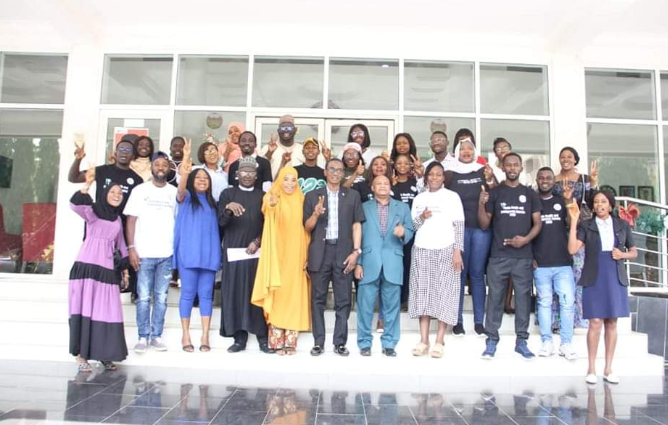
21 Kano-based Non-Governmental Organisations have organised interactive sessions with the aspirants for Kano state gubernatorial position ahead of the forthcoming 2023 elections. The two-day event took place on the 9th and 10th of November 2022 at the Babale Suite conference hall in Kano.

Convened by Dr Aminu Magashi Garba, the interactive sessions allowed the candidates to share their campaign blueprint with the NGO community and have a dialogue with them on critical thematic areas such as; Health, Education, Environment, Commerce and Industry, Agriculture, Technology, Women and Youth Development, among others.

Sessions with PRP candidate Salihu Tanko Yakasai and Bala Muhammad Gwagwarwa of SDP were held on the first day.

The second day saw sessions with ADC’s Mal. Ibrahim Khalil, LP’s Engr. Bashir I. Bashir, and ADP’s Sha’aban Sharada.

It was said that plans are on the ground to organise sessions with other major contenders, such as the NNPP, APC and PDP candidates, in the coming days.

Recall that the Kano Civil Society Organizations and Nigeria Medical Association (NMA) held similar sessions with the candidates a few weeks ago.

Alleged massive looting: We’ll hold Ganduje responsible – NNPP

By Muhammadu Sabi’u

One of the strongest opposition parties in Kano State, the New Nigerian People Party, has reacted to the alleged involvement in the looting of a huge amount of money by some three Nigerian governors.
 
Recall that the news alleging that three currently serving state governors are being watched for attempts to launder money by paying employees’ salaries under the table resurfaced a few days ago.
 
Reacting to the allegation, a Deputy Public Relations Officer of the NNPP in Kano State, Hon. Musa Nuhu Yankaba, hints that one of the governors in question is Dr Abdullahi Umar Ganduje of Kano State.
 
In an interview with Premier Radio Kano, he said, “If he [Governor Ganduje] refuses to come out and clear himself, we, as natives of Kano State and members of an opposition party, will not accept that, and we will expose him, so as to tell the people of Kano all that is going on and for proper action to be taken.”
 
Despite all these, the anti-graft agency, the EFCC, did not reveal the identities of the three governors involved in the scandals.
 
However, the chairman of the EFCC noted in an interview that two of them were from the North, and the third was from the South of the nation.
 
He added that information at the agency’s disposal showed that the three governors had come up with strategies to inject the money into the system by paying their state employees’ wages on a table-payment basis.

2023 elections: Kannywood members join APC presidential campaign team

By Muhammadu Sabiu

The All Progressives Congress, APC Campaign Council’s Director-General, Governor Simon Lalong, has approved select Kannywood members to join the council ahead of the 2023 presidential election.

Lalong made the comment in a statement published in Jos, the state capital, signed by his spokesperson, Dr Makut Macham.

The inclusion of film practitioners, according to the director general of the APC’s presidential campaign, was done to increase the involvement of artists from the northern region in the campaigns.

According to Lalong, Bola Tinubu, the APC presidential candidate, recently visited Kano and spoke with group members, which led to the approval.

He added that the APC presidential candidate had pledged to give Kannywood members a chance to participate in the campaigns, showcasing their skills while also aiding the party in winning the upcoming general elections.

The Kannywood group has Abdul Amart as Director, Ismail Afakallah as Deputy Director and Sani Mu’azu as Secretary, with other leaders heading different divisions.

Why struggle for political power cannot save the North

By Aminu Mohammed

This article may ruffle feathers and annoy some people, but it is done with good intentions. I have observed youths’ excitement and political campaigns for presidential candidates on different social media platforms. In some cases, friends and associates have turned to foes for having opposing views on their candidates. Some even terminate a business relationship because of politics.

Indeed, I am aware of the difficulties faced by the people, especially the increasing cost of living worsened by inflation. Nigerians are suffering because of the bad economic policies of the present government and the ongoing depreciation of the Naira, which has plunged millions of people into poverty. In other words, people’s living standards are getting worse, as life was better a decade ago than now.

First, I want to clarify that I’m not too fond of politics and have no interest in any presidential candidate for the 2023 elections. However, as a Nigerian, I am a bit worried about how our people campaign for their candidates on social media platforms. Some clerics have gone to the extent of warning people not to vote for candidates outside their region. Unfortunately, the northern youth have not learnt any lesson in the last seven years.

The fact of the matter is that the current structure and governance system only benefits the elite and their cronies, as well as a coterie of aides, while most people are pauperized. The northern youths who are dissipating energy on these presidential candidates should note that the elite do not care about them but their aggrandizement. The northern political elites are hiding under the name “Arewa” to deceive the masses while using proceeds of corruption to buy properties in London, Dubai, New York, Kuala Lumpur and Paris.

Have they pondered to ask why public universities were closed for eight months, and the elite did not see the urgency to address the plight of the striking lecturers? Has the life of an ordinary northerner improved in the last seven years, although President Muhammad Buhari is in power? Was there any economic transformation in the North in the previous seven years? In my 12 years of experience as a journalist in Nigeria and my interaction with politicians and government officials, I have concluded that politics will not rescue the North, but only an attitudinal change towards entrepreneurship and commerce will change the narrative.

Attitudinal change towards entrepreneurship/commerce

I have never seen a society transformed based on political patronage. I have never seen a prosperous community due to its people being fixated on political power. So let me clarify that our fixation on political power will not save the North. It will not take millions of children out of the streets or rescue our economy.

Our focus should be on improving our economy, empowering women through education, and creating businesses and initiatives that will improve the general well-being of our people. I have seen many cases of global transformation based on entrepreneurship and commerce. For example, we have all witnessed China’s transformation based on the manufacturing and development of small and medium-scale enterprises. This is also the case with countries in South East Asia such as South Korea, Malaysia and Singapore. Thus, emphasis should be placed on the youths’ personal development and self-reliance. The idea of depending on politicians for handouts instead of pursuing self-reliance in the North should be de-emphasized. No society has prospered based on such practices of handing out peanuts to hangers for survival.

 Acquisition of vocational/ digital skills

Our focus and pursuit of political power have never helped us in the past, and they will not help us going into the future. It only helped to enrich the northern political elite and establishment at the expense of the majority. What will save us is a society with an amalgamation of empowered youths equipped with the requisite education and modern skills relevant to the global economy.

I want to reiterate that our youth should learn vocational skills to support themselves and stop wasting their time blaming their relatives for not helping them or sitting in “Majalisa”. Academically inclined people should learn digital skills offline or online to get remote jobs or fend for themselves. They can also learn digital skills for free on platforms like Coursera, Simplilearn, Udemy, and Udacity, among others. I am appealing to northern youths not to waste their time antagonizing friends and associates over these charlatans masquerading as leaders.

Aminu Mohammed is at the Kiel School of Sustainability, Chrtistan Albrechts Universität zu Kiel, Schleswig Holstein, Germany. He can be reached via gravity23n@gmail.com. 

Obidients and the Godification of Obi

By Sule Abubakar Lucky Mark

The throwing of verbal punches soars dramatically, and I don’t know when it will come to a screeching halt. These Obidients are radical but not tactical. To them, all that glitters is Obi, and all that is Obi glitters! And if it is not Obi, then it should not be any other person. All that is Obi should be deified, but all that is not should be demonised, demolished and desecrated. What insolence!

Of course, political wrangling is not bad. On the contrary, a sensible, harmless political dispute beautifies democracy, especially as it has almost become our culture in Nigeria during electioneering. However, if it is taken to the extremes, that is when such political culture becomes autocratically undemocratic!

When people declare their interest/candidacy, they automatically sign up for public scrutiny and surveillance. And as we all know, deep-seated criticism is one of the essential components of democracy. ‘It’, according to Professor Farooq Kperogi, ‘marks the difference between autocracy and democracy.’ Unfortunately, this central democratic constituent is subdued in Nigeria, especially by some of these Obidients.

Peter Obi has been literally deified (aka ‘godified’) by most of his supporters, especially the ones I have seen and met. Whenever Obi is subject to intense scrutiny, it is considered blasphemy. They have malevolently vilified me (and others, too) for harmlessly asking questions and even writing objectively on Obi. Some of them come up with unsubstantiated claims that some people have paid me to write what I write or that I have some political affiliations with certain presidential candidates. Some of the Obidients go as far as sending irritating, threatening and accusatory PMs to me. Funnily enough, an elderly Obidient told my first cousin that my cousin should not greet him again for supporting a different candidate from his.

This visceral deification of Obi was surprisingly taken to the extremes when I saw some Obidients threaten other people with metaphysical and extrajudicial threats of death. On Facebook and, especially, on Twitter, the more intense your criticism of Obi, the higher your threat. And the milder your criticism of Obi, the milder your invective from the Obidients!

Democracy, as I always say, is choice-driven. So, you can’t use asinine threat, weak-kneed verbal causticity, and the modern pejorative sense of rhetoric to compel others in a democratic setting. Coercion is an infringement on the democratic rights of people!

Every criticism hurled at Obi is considered by this set of Obidients as sacrilegious. When Obi is brought under even the littlest public scrutiny, such public scrutiny would be instantly met with their stiffest form of opposition. Their belief in the sacredness of Obi is as strong as they come, but I can unequivocally say that Obi, like every other Nigerian politician, is not some infallible demigod. So, the beatification of Obi should stop now!

If the ‘Obidient movement’ is for ‘political revolution’, as they say, why do they still tow the path of vulgarity which could eventually stymie their goals? Such hostility towards other people could make Peter Obi’s chance of winning the election peter out because the more they are hostile towards people, the more they unwittingly drive prospective supporters away.

Supporters are won over through brilliant persuasion, not through the usual throwing of verbal punches at other people and the hurling of rhetorical missiles at prospective voters/supporters!

Sule Abubakar Lucky Mark via suleabubakarmark2020@gmail.com.

Why ‘The Atiku Plan’ is better for youth empowerment and job creation

By Abdulhaleem Ishaq Ringim

As rightly identified by policy documents of both Atiku Abubakar and Bola Ahmed Tinubu, young people remain the country’s most valuable assets. However, this tremendous resource base is severely underutilized, as evidenced by unemployment and underemployment numbers. This makes job creation and youth empowerment significant points of policy focus and concern for both candidates. 

Tinubu, to start with, in the 3-paged “Youth Empowerment and Entrepreneurship” section of his policy document titled “Renewed Hope 2023”, outlined a number of strategies his administration would implement if elected into office to ensure enhanced job creation, youth entrepreneurship development and empowerment. 

Identifying the lack of access to credit at the fore of the challenges impeding youth entrepreneurial development, Tinubu plans to ensure easy access to low-cost credit for youth-led enterprises and simplification of loan application processes. He plans to leverage the instrumentality of the CBN to develop suitable incentives for commercial banks in this regard and mandate federally owned and affiliated financial institutions to develop similar schemes. 

He also plans to bolster intergenerational business mentoring and cooperation with 2 million volunteer entrepreneurs and professionals across the nation committed to working with youth to find employment, hone job skills and create businesses. Per the plan, a Youth Advisory Council would be inaugurated to the Employment Action Plan the administration would develop if elected. 

In his bid to reform the National Youth Service Corps(NYSC), Tinubu intends to develop and strengthen a job-matching programme for graduates to enable more corps members to enter the private sector during their service years. Employers would also be incentivized to retain corps members at the end of their service.

Additionally, he intends to expand business incubation centres to support youth innovators to acquire and protect through patent and trademark registration, intellectual property and other proprietary rights over inventions and innovations. 

As far as governance and political appointments are concerned, his administration intends to preserve at least 3 cabinet positions for persons under 40, 6 more positions for persons under 50 and 20 per cent of political appointments to MDAs to persons under 40. A Presidential Fellowship Scheme would also be established to train future leaders. 

On the other hand, Atiku dedicated 10 pages to discussing his plans on “Job Creation”, where he outlined four pathways(to jobs ) his administration would create if elected President come 2023. 

The first pathway is the Informal Sector Pathway to Jobs. It starts with relaunching the National Open Apprenticeship Programme(NOAP). The programme would recruit 100,000 Master Crafts Persons(MCPs) annually who would, in turn, train 1,000,000 apprentices(especially those who have lost the opportunity to attend or complete basic education) on various trades and skills. 

The MCPS and apprentices(upon graduation) would be beneficiaries of 21st-century standard business advisory services, and their training clusters would serve as robust ecosystems that would guarantee ease of access to finance and other ancillary services. 

National Board for Technical Education(NBTE) would be mandated to create a credible, recognized and verified skills/competencies certification system for the beneficiaries of the programme. The certificates would serve as credentials for employment purposes in the “new-collar” or informal skills-based sector. The Programme, of course, would be operationalized in close collaboration with the private sector and relevant trade associations. 

The second pathway is the Entrepreneurship Pathway. It starts with working towards the speedy passage of the National Research and Innovation Fund(NRIF) Bill. When passed, the Fund would receive funding from the CBN’s MSME Fund, Development Bank of Nigeria, Bank of Industry and other private sector institutions and donor agencies. It is expected that at least 100,000 budding entrepreneurs will be added annually. 

Support from the NRIF will be in the form of grants, loans or equity investments in small enterprises. It shall be provided either as start-up capital or to scale up innovations that have already demonstrated a strong track record of impact and effectiveness. 

Atiku also seeks to introduce and actively promote a Graduate Trainee Internship Programme (GTI), which would target National Youth Corps members. The GTI will transfer useful employability skills to Corps members to increase their chances of finding sustainable employment. While they undergo entrepreneurship training, the NYSC will be matched with potential employers for internship/traineeship in the private sector. 

The technical and financial capacity of the Industrial Training Fund (ITF) would be grossly improved to operate its internship and apprenticeship programmes at a much higher scale to cover a minimum of 2 million workers per year.

The Schools to Jobs Pathway is the third pathway identified by Atiku. Here, a formal Technical and Vocational Education and Training (TVET) system will be supported and technical colleges and vocational skills acquisition centres will be re-positioned to produce skills and competencies for innovation and the creation of new ideas and products inside enterprises from where future jobs and future prosperity will derive. 

This would be followed by training of a low-level workforce, such as operatives, artisans, craftsmen and master craftsmen for commerce, industry, agriculture, and ancillary services. The absorptive capacity of the formal post-basic TVET and Vocational Centres will be increased from the current total enrolment and completion of fewer than 200,000 students to 500,000 in 2025 and 1,000,000 by 2030. 

Additionally, selected vocational training institutions would be remodelled into a one-stop shop to provide vocational training, entrepreneurship (accounting, management training expertise), life-skills programmes, etc. 

Enterprise start-up training programmes to be delivered by SMEDAN would be provided to the graduates of technical and vocational training centres who opt for self-employment. Upon completion of the training, participants will submit business plans to Micro Finance Banks and apply for loans from the Bank of Industry, which will be supported by a start-up grant from the National Innovation Fund. 

Graduates of the technical colleges will receive loans and Business Development Service coaching and support from SMEDAN/ Business Development Service Providers. On successful repayment of loans, graduates will receive a final grant (matched to the value of the original loan value) to boost their businesses.

The fourth and final pathway, as outlined by Atiku, is the MSME /ICT Special Entrepreneurship Pathway. This shall start with the facilitation of the establishment of the SME Venture Capital Fund by the private sector to provide longer-term capital for targeted small firms. The administration shall aim to attract a minimum of $250 million in private-sector funding for Nigerian small businesses. 

The administration would create a platform for de-risking SME lending, increase the MSMEs funding window from N200 billion to N500 billion, and set aside the same for the new platform. Awareness of the National Collateral Registry of Nigeria will be rigorously promoted, and the collateral registration process will be further simplified, especially for places without internet access. Enhanced registration access will help unlock much-needed finance for MSMEs. 

The administration would also establish the Financial Innovation Fund((FIF) to incentivize commercial and Microfinance banks to develop innovative solutions for providing credit facilities to the MSMEs sector. The Small-scale Industries and Graduate Loan Guarantee and the Small -Scale Industrial Credit Scheme shall be reformed and reintroduced. 

Special focus on the ICT sector will be provided by Atiku’s administration, and Nigeria shall be aggressively marketed as an outsourcing destination. With a robust IT infrastructure in place and more than 150 million mobile phones, opportunities abound in Business Process Outsourcing with the potential to create 2 million direct and indirect jobs. Nollywood, a great labour employer, would be actively promoted to make it the 3rd largest film industry in the world. 

And on political appointments, 40 per cent of the cabinet would be reserved for youth and women. 

On comparison, one would notice certain points of convergence from the above excerpts as directly culled from both policy documents. For example, both documents identified a lack of access to credit and finance as a major impediment to youth entrepreneurial development. 

However, while the Tinubu plan heavily stresses easing access to commercial loans and simplification of loan application processes, Atiku’s planned interventions seem more specific, overarching and diverse (with adequate involvement of the private sector). They also seem more sustainable as most of them would be backed by legislations and institutional pillars like the NRIF, SME Venture Capital Fund, Financial Innovation Fund etc. 

Another point of convergence is the identification of the imperative of intergenerational business mentorship as a veritable avenue for job creation, youth empowerment, and entrepreneurial development. However, with ease of access to funding interventions, the Atiku plan seems more practical considering specific policy prescriptions like the establishment of the NOAP under the Informal Sector Pathway to Jobs. It also seems more sustainable as it seeks to create a new labour market and standard for employment to be legitimized by the new NBTE skills/competency certification system. 

Additionally, while Tinubu’s NYSC reform focuses heavily on ensuring more corps members join the private sector mainly by simply incentivizing employers to retain them, the Atiku plan approaches the problem more prudently as it seeks to equip corps members with high-value employability and entrepreneurial skills through the Graduate Trainee Internship(GTI) programme before matching them with potential employers. No incentive matches the availability of employees with enhanced employability and entrepreneurial skills for private sector employers as it means enhanced productivity. 

The same goes for other interventions that both policy documents commit to pursuing. One intervention, however, that is important but seems missing in the Atiku plan is the Presidential Fellowship Scheme proposed by Tinubu to serve as a platform that gives young people the opportunity to experience and participate in public service and governance as with Kaduna State’s Kashim Ibrahim Fellowship and Lagos State’s Lateef Jakande Leadership Academy. 

Notwithstanding, the Atiku plan clearly provides more specificity and seems more practical and sustainable(backed by legislation and institutions). It is also more diverse in scope and solutions pathways for identified impediments towards enhanced job creation and youth entrepreneurial development. The Atiku plan is better for job creation and sustainable youth empowerment.

Abdulhaleem Ishaq Ringim is a political/public affairs analyst. He writes from Zaria and can be reached via haleemabdul1999@gmail.com and @pragmatist_AIR on Twitter.