Politics

You can add some category description here.

Again, El-Rufa’i orders collection of old Naira notes in Kaduna

By Sumayyah Auwal Ishaq

The Governor of Kaduna State, Malam Nasiru Ahmad El-Rufa’i has ordered ministries, agencies and departments in the state to accept old and new currency.

In a statement signed by the Special Adviser, Media and Communication, Mr. Muyiwa Adekeye said that, “In line with the subsisting order of the Supreme Court, the Kaduna State Government has directed its ministries, departments and agencies to ensure that their collection agents continue to accept payments made in all denominations of the naira, old and new”.

It further stated that “the laws of Kaduna State do not allow personnel of government agencies to be involved in cash collection of revenues. The collection agents authorised by state government agencies do offer citizens a route for cash payment, and are expected to comply with the subsisting court order”.

As Nigerians head to the polls

By Salim Yunusa

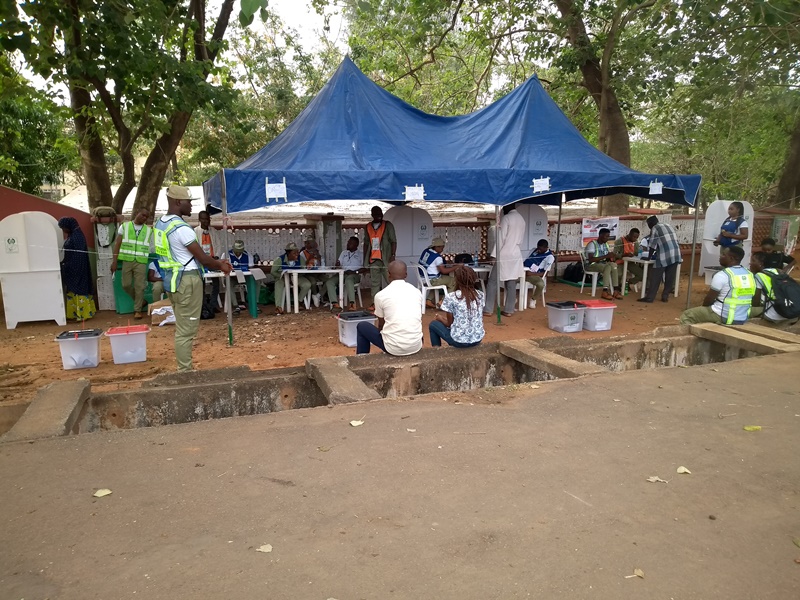
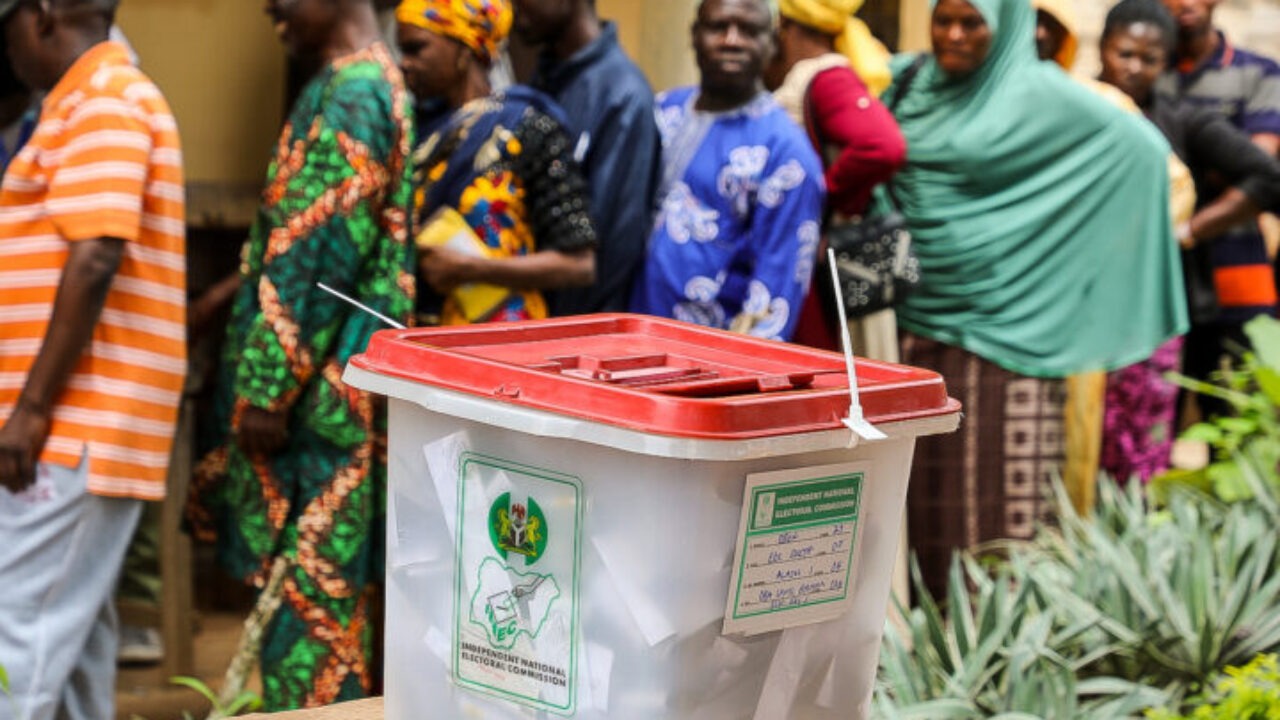
In less than a week, Nigerians will get to exercise their democratic and electoral rights in carefully selecting and choosing new leaders that will steer the affairs of the country and represent them across local, state and federal levels; with the hope of bringing on board people that will – among many other things – secure the country and improving its economy.

The last 8 years have been characterized by a turbulent administration; with glaring insecurity caused by banditry and kidnapping in the North-West and North Central, IPOB uprising in the South – East and the lingering Boko Haram insurgency in the North – East.

The Nigerian economy took hits and was severely battered, with double digit inflation figures and millions of Nigerians plunged into poverty. Recently, the cashless policy, which is good in the long run, has caused untold hardship to many Nigerians, with protests and riots in some places.

As Nigerians head to the polls, they’re left with clear choices of who they want to steer the affairs of this country; a leader who can tackle the insecurity ravaging the country, a leader who can improve and strengthen the economy and mostly, unite a nation whose unity is precariously held by few loose strings.

Nigerians should elect a leader with a clear-cut vision on how to effectively utilize the millions of youths that are unemployed and underemployed. They should vote vote a leader devoid of religious, ethnic and regional bias for the betterment of the country.

Someone who will prioritize education – enrollment of the millions of out-of-school children roaming on the streets – and will put to an end the incessant industrial strikes bedeviling the public universities.

Nigerians should opt for a leader that listens and doesn’t infringe on their rights – whatsoever right that may be. We have seen how this administration banned Twitter, one of the most popular platforms that gave young Nigerians a voice, for six months. We have seen how the government cracked down on young Nigerians protesting police brutality during the #EndSARS protests.

We have seen how the government has tried to gag press freedom through the introduction of the social media bill. No sensible Nigerian should bring forth a leader that will enshrine this.

As Nigerians go to the polls, they should remember that the greatest mistake they made was placing all their hopes in the hands of one person; thinking that one person alone would ‘change’ the country. They should know – and if they do know – they should remember that change and nation building is not a job that can be done and achieved by just one man.

That it is a collective responsibility of everyone to play their part in making the country work for everyone. They should know that there is no magic wand that will swish away the problems of this country and that there’s no messiah that will come and save us.

Luckily for Nigeria, the problems are clear – and that’s half the problem solved. It is left to us to choose what is right over what is easy; to look away from hype and what is in vogue and to opt for options that will put first the interest of Nigerians and Nigeria.

Salim Yunusa is a prolific writer, poet and public affairs commentator. He writes in from Zaria, Kaduna.

2023: Buhari working for PDP, says Ganduje

By Ahmad Deedat Zakari

Kano State Governor, Abdullahi Umar Ganduje, has accused President Muhammadu Buhari on working for the defeat of the All Progressives Congress (APC) in the forthcoming presidential election.

In an audio recording, Ganduje was quoted in Hausa saying, “President Buhari should remember that for several times he was trying to contest Presidency but he could not make it until there was an alliance , but now after enjoying everything , he turned back against the same democratic system that saw him to office.”

This is coming from Ganduje after Buhari’s address to the nation on Tuesday. Buhari had in his address poignantly refused to obey the Supreme Court order on the extension of time for the use of old Naira notes. A move Ganduje and other APC stalwarts believe jeopardises their chances in the February election.

Ganduje then criticised and counselled the president thus: “I wonder why the President is hellbent in making the same Party that helped him to win elections lose out, what did we do to him that he is this ignorant on several advice forwarded to him.”

“This same Buhari he contested again and again but he couldn’t win not until there was an alliance, now he wins and win again for the second term, but now that he is living, he wants to cripple the same Party that brought him to power why?

“This Currency Swap Policy, why didn’t the President bring it seven and a half years ago or after elections, but now one must be compelled to think that there is an ulterior motive in the whole thing.”

Election safety advice

By Abdurrazak Mukhtar

As the election season draws near in Nigeria, it’s imperative to prioritise one’s safety. Political elections, although crucial to democracy, can often lead to tension and conflict. Thus, citizens must be aware of the potential dangers and take necessary precautions to ensure their well-being.

Safety should always come first, and in times of political elections, it’s of utmost importance. By staying informed through reliable news sources, avoiding large gatherings and protests, and following safety advice provided by local authorities, individuals can take control of their safety during such times.

For instance, it’s recommended to steer clear of crowded areas during demonstrations or political rallies and to dress in a manner that doesn’t identify one as a supporter of a particular political party.

Moreover, respecting the rights of others is a fundamental aspect of ensuring a peaceful and safe election season. Political differences should never be used as an excuse for violence or intimidation, and individuals must refrain from engaging in illegal activities. This not only protects the safety of others but also helps maintain peace and stability in the country.

In conclusion, as citizens gear up for another election season, it’s essential to prioritise one’s safety. By being aware of the potential dangers, following safety advice, and respecting the rights of others, individuals can participate in the democratic process peacefully and responsibly.

Therefore, let’s work together to promote harmony and ensure that the elections in Nigeria are conducted in a fair, transparent, and safe manner, securing a peaceful and stable future for generations to come.

Abdurrazak Mukhtar can be contacted via prof4true1@gmail.com.

Lee Kuan Yew and African leaders: A comparative note

By Muhammad Muzdaleefa

Founding leaders of nations matter. A country’s founding moment is often a make-or-mar moment in the life of the country. The trajectory on which the founding leadership sets the country, as well the power of their founding example, often defines and determines the future course of events way past the founding generation. Founding precedents tend to have an exceptional degree of endurance, because founding leaders command a kind and degree of legitimacy and license that is exceptional and which gives them and their example and precedents a special status and the propelling force of path dependency in their country’s history.

George Washington’s founding example, of not offering himself up for election again after serving two terms as (first) president of the new republic, even though nothing in the US constitution at the time imposed term limits on an incumbent president, initiated a tradition of American presidents not going beyond two terms; a tradition that remained in place until Franklin Delano Roosevelt breached it in the 1930s/40s, causing it to be restored by constitutional amendment. Additionally, the contemporary trajectory of American federalism, including the enduring fault lines in its politics, can be traced back to the Federalist/anti-Federalist split in the founding generation; between the Hamiltonian (strong federal/center) and the Jeffersonian/Madisonian (strong states) visions.

The death of Lee Kuan Yew, the founder of modern Singapore and its prime minister from 1959 to 1990 (then senior minister after that), has brought the usual apologists of autocratic rule in Africa out of their holes, doing what they do best: making all manner of inapt comparisons and prophecies of “what would have been” had one or the other favorite African autocrat been allowed to rule for as long as Lee Kuan Yew did. There is the implicit suggestion that similar longevity in office would have turned Lee’s African contemporaries into a Lee Kuan Yew or transformed their African states from Third World to First. It is a fanciful thought, one not borne out by the record.

First of all, Africa’s first generation of autocrats did, in fact, stay in power for very long periods. Nyerere, Kaunda, Banda, Houphouet Biogny, Mobutu, Bongo, Senghor, all were in power continuously for nearly three decades. And many current ones, including Mugabe, Museveni, and Biya have equaled or broken the record. None has managed any transformation of the Lee Kuan Yew kind, except in the opposite direction. So, the difference between Lee Kuan Yew and his African contemporaries was not just a matter of longevity in power, it was far more than that. Time itself is a value-neutral resource. It is what you do with the time you have that determines the future course of events. Africa’s autocrats did very different things with their time in power than Lee Kuan Yew did with his. They were bound to reap different results.

Second, while Lee Kuan Yew was an authoritarian leader, he was not an autocrat. It is an important distinction. Lee built and worked through institutions. He did not destroy the rule of law. Lee’s government passed and enforced draconian laws, but arbitrary and personal rule did not displace government through institutions, rules, and procedures. Lee also assembled and worked with a solid team (the first group of which is featured in the book “Lee’s Lieutenants”). His was not a one-man project; he was captain of a team. Lee’s Lieutenants brought to the table a complement of talents and abilities that Lee, as leader, effectively harnessed and synthesised into a shared vision. There was no “Lee Kuan Yewism” to which all were obliged to swear allegiance or else. And while Lee Kuan Yew did not like or think much of his opposition, he never declared a one-party state. His party contested elections and won those elections repeatedly. The franchise was not aborted. Nor were opposition parties. Absence of electoral turnover is inconsistent with competitive parliamentary politics. The Liberal Party’s overwhelming hold on power in postwar Japan is a case in point.

Lee Kuan Yew ruled for as long as he did, in part because he did not replace Singapore’s Westminster parliamentary system with a presidential system. The title “President” apparently had no particular allure for the supremely self-confident Lee. He was happy to be a “mere” prime minister, which meant that, as long as his party continued to win a majority in parliamentary elections and he retained his own seat and leadership of the party, he was free to remain prime minister. Term limits have been traditionally associated with presidential systems, not parliamentary systems. Today, his party remains in power, even if its electoral strength has diminished over time.

Lee’s contemporaries in Africa, on the other hand, moved quickly to replace their parliamentary systems with presidential rule. It was one step on the road to autocracy. It freed them from accountability to their party, to cabinet, and to parliament. From that foundation, other blocks in the autocratic project fell into place.

There are many other ways in which Lee Kuan Yew and his African contemporaries were fundamentally different. They, like Lee, did not care much for human rights, free speech, free press, and the like. Lee Kuan Yew believed in “Asian values”, not “Western democracy”. And his African contemporaries too defended their own idiosyncratic versions of African exceptionalism. But that’s pretty much where the similarities end.

Instructively, Lee Kuan Yew recalls telling himself, after a 1964 visit to Africa that took him to 17 countries, “I was not optimistic about Africa”. Lee said. And while in Lagos in January 1966 for the Commonwealth Heads of State conference, Lee again recalls, after observing the Nigerian government at work: “I went to bed that night convinced that they were a different people playing to a different set of rules.”

Nothing is gained, except more of the same escapism and revisionism that keeps us stuck in the counter-developmental past, by trying to cast one or the other African autocrat in the mold of a Lee Kuan Yew. We have had no Lee Kuan Yews. Not that we need or must have one. But, well, just saying!

Ganduje drags Buhari to Supreme Court over Naira notes

By Uzair Adam Imam

The Kano State Governor, Dr. Abdullahi Umar Ganduje, has dragged President Muhammadu Buhari before Supreme Court on Thursaday over naira notes redesign.

Governor Ganduje asked the court to command the Central Bank of Nigeria (CBN) not to stop collecting the old naira notes of N200, 500 and 1000.

He added that the naira redesign has also contradicted the provision of the 1999 constitution of Nigeria.

In a complaint filed by Sunusi Musa SAN yesterday, Ganduje said President Buhari alone had no right to instruct the CBN to stop collecting the old naira notes without consulting the House of Assembly.

Ganduje also decried about the way people are suffering in the country because of this newly introduced policy by the CBN.

In his interview with BBC Hausa, Musa said the court will hear the case on Wednesday next week.

The Daily Reality recalls that the governors of Kaduna, Zamfara and Kogi had earlier dragged president Buhari to the court over same case of naira redesign.

However, some analysts are seeing it as a power tussle between Buhari and Tinibu cabal ahead of 2023 elections.

2023: Presidential elections and the battle between two categories of Northern elders

By Ibraheem A.Waziri

Every election season in Nigeria comes with its provoking premises and issues! This time around, apart from the usual North and South, Muslim and Christian divides that are often most prominent than party affiliations; a new dynamic which has not yet caught public attention has been added up to the mix. The struggle to maintain relevance between two different categories of Northern eldership or leadership. These two categories, in the realm, are separated primarily by order of generational cohort (GC) in age!

Falling back to the scholars in anthropology, we learn that a GC is usually pegged at 15-20 years. All persons born within such intervals are regarded to, more or less, belong to the same groupings defined by the same circumstances; social, economic, and cultural events and would likely share some core elements in perspectives, tastes and life preferences.

Since the completion of the taking over of Northern Nigeria by the British in 1903, a generation who will eventually become Nigerians from the territory began to be given birth to that same year. Therefore the first generational cohorts (GC) of Northern Nigerians can be said to be those born between 1903 and 1919. That is if the mode at which boys usually reach puberty is considered as the norm to be 16 years!

The second GC came between 1919-35. The third was between 1936-51. This GC is the one that did the 1967 military counter-coup and prosecuted the then Nigerian civil war from the Northern Nigerian side led by 2nd GC member, General Yakubu Gowon, as Head of the Nigerian state.

One can be right to say that the 3rd GC of Northern Nigerians has been influencing politics and government policy not only in the North but in Nigeria from that time until now! The politicians among them, intellectuals and business owners, have been holding the region at its nape!

After the 2019 elections, some pundits among us have been harping about the fate of the North come 2023, as it was obvious that the 3rd GC are threatened by senesces and, therefore, very weak. The assumption is that they will reach a consensus among themselves to identify an able group of successors to hand over the affairs of the North and fade themselves into retirement, having put in their best for about 57 years now! The longest any GC have been there and probably will ever be.

None of us thought that the successor cohort, the 4th GC, born between 1952-67, would need to necessarily put up a fight to dislodge the 3rd GC from the power circle and forcefully take over like what is happening now in the ruling party.

However, since the statement made in Abeokuta on the 25th of January, 2023, in a campaign rally, by Asiwàju Bola Ahmed Tinubu, the All Progressive Congress (APC) party presidential candidate; to the effect that there are saboteurs in the Presidency – which ironically is occupied by his party – who are against his emergence as winner of the 2023 presidential Elections slated to hold 25th of February, 2023.

Bola Ahmed Tinubu, though a Southerner, enjoys the support of 14 of the 19 Northern Governors, who are from the ruling party. 11 of them also belong to the 4th GC. 1 belongs (Borno State) to the 5th GC. 

Kaduna State Governor, an outspoken element among them, has granted a series of interviews on the 1st and 2nd of February 2023. To a number of media Houses, including BBC and TVC, in both Hausa and English, implying that some 3rd GC Northern influencers around President Muhammadu Buhari (who is himself a member of the same cohort) are plotting to work against their candidate! By following other means, they do that to ensure a member of the 3rd GC, Atiku Abubakar of the opposition People Democratic Party (PDP), and a Northerner emerge as the winner of the 2023 presidential Elections!

The ultimate question now, apparently, is whether the people in the North will agree to prolong the tenure of leadership and eldership of the 3rd GC Northerners, adding another eight years to their 57 years, making it 65 long years. Or, in the alternative, they want to hand over the realms of their leadership and eldership to the 4th GC Northerners; to bring their own uniqueness to the table early enough.

It is obvious that the 4th GC Northerners, born during the years building up to the civil war to its end, have different perspectives and arguments about how Northerners should see themselves and live with their neighbours in Nigeria. They don’t view Southerners with the kind of suspicion the 3rd GC Northerners think of them. It is why in the first place, they would resolve to fulfil the unwritten agreement of power shift to the South in 2023.

Some members of the 5th GC of Northerners, either those born between 1968-83, would appreciate seeing a new perspective taking control of the space and atmosphere of Northern Nigeria come 25th February 2023. It will guarantee an experiment with fresher perspectives that are sure catalysts to positive change and comprehensive progress, not the same old perspective that has dominated the space for 57 years. 

Also, it is only when the 4th GC Northerners move a little higher on the ladder that the 5th GC Northerners, the post-civil war generation, will enjoy a certain degree of influence at some social plane. The same thing with the 6th GC Northerners, born between 1984-1998, the military rule generation. Also, the 7th GC Northerners, born between 1999 – 2015, Fourth Republic, Peoples Democratic Party (PDP) rule generation. Each movement on the ladder creates opportunities for growth and stability for others to play their role and display their God-given talent for the benefit of all.

These can be among the reasons why most Northern Nigerians would consider lending their support to the 4th GC Northern leaders in their bid to take control now. Politicians and bureaucrats like Nasir El-Rufai, intellectuals and opinion leaders like Dr Aliyu Tilde, Mahmud Jega; Abdulaziz Abdulaziz of the 5th GC and a host of other businessmen and religious leaders deserve this chance to move us to another level of life-changing perspective with Asiwàju Bola Ahmed Tinubu Nigerian leadership come 25th February 2023!

Ibraheem A. Waziri wrote from Zaria, Kaduna State. He can be reached via iawaziri@gmail.com.

Naira Scarcity: Peter Obi urges Nigerians to be patient with FG

By Ahmad Deedat Zakari

The Presidential Candidate of the Labour Party, Peter Obi, has urged Nigerians to be patient with the Federal Government as regards the hardship caused by the new currency redesign.  

Mr Obi made the appeal in the early hours of Sunday in a tweet via his official Twitter handle.

The redesign of Nigeria’s currency has enthroned scarcity of Naira notes and caused severe hardship to Nigerians who are unable to get cash to carry out their daily transactions. 

Mr Obi, while pleading with Nigerians, said currency redesign is not peculiar to Nigeria, and it comes with long-term economic advantages despite the initial inconveniences. 

He tweeted: “The currency redesign is not peculiar to Nigeria. It is an exercise that comes with some inconvenience and pain, but it has significant long-term economic and social benefits. Even though there are improvements that can be made, I urge Nigerians to bear with the CBN and Federal Government with the hope that the general populace and Nigeria will harvest the gains that will come with the reforms.”

Aso Villa cabals sabotage APC

By Aliyu Nuhu

From what governor Nasiru El-Rufai said, the currency redesigning and fuel scarcity are the handiwork of the cabal in Aso Villa to ruin the electoral chances of the APC candidate, Asiwaju Bola Ahmad Tinubu. The president’s wife validated the claims by endorsing El-Rufai’s views.

Now it makes a lot of sense to me. No sitting government with victory in mind will introduce such harsh policies that shut down the economy few days to election. Northerners will go into the polls with anger and no one will vote for APC. I don’t think there is anywhere, except Borno and Yobe the president can go without being pelted with stones. Let him try it.

I have reviewed the policy again and again and could not see the economic sense in it. Withdrawing cash from circulation in a cash economy is a recipe for disaster. CBN has effectively shut down the informal sector of the economy. The North is 95% cash economy. Everything is at a standstill.

I wholly agree with El-Rufai. Emiefele is acting a script to undermine Tinubu. His policies are for political reasons after all he has never hidden his partisanship by attempting to contest in the election. The cabal surrounding the president wanted the vice president to succeed his principal and it didn’t work because no one could defeat Tinubu in the primaries. I was wondering why Osinbajo contested when it was obvious that Tinubu could not be beaten. Now I understand. It was the cabal that gave him the false hope of winning. Today, due to apathy, Osibanjo is not even attending Tinubu’s campaigns.

Unfortunately the opposition politicians are not cashing on the crisis to make political fortunes out of it. Only Kwankwaso knows how to exploit such situation. This is the time to push Nigerians against APC. But they appear docile as if they don’t know the art of political brinkmanship.

As for Tinubu he is not doing the right thing. This is the time for damage control for his electoral benefits. He should distance himself from the new currency policy and promise to reverse it. He should be beyond any fear by now. Buhari can’t do him anything. The president is now a political nonentity. Without Kano and other parts of the North, Buhari is nothing. As long as the governors are with Tinubu he has nothing to fear.

As for Buhari, just forget about him. He has never been in charge of the government. He is just a figure head. If he were the candidate in this election will he allow this kind of crisis?

Some of Buhari’s people are working against Tinubu—El-Rufai

By Muhammadu Sabiu 

Malam Nasir El-Rufa’i, governor of Kaduna State, alleged that some officials in Nigeria’s Presidential Villa are working against Bola Tinubu, the APC candidate for president.

The governor added that although the populace had a candidate for the APC presidential primary, he or she would not win.

Responding to questions on Wednesday’s episode of Sunrise Daily on Channels Television, he claimed that some individuals conceal themselves behind President Muhammadu Buhari, who has the commitment to do the right thing.

He was quoted as saying, “I believe there are elements in the Villa that want us to lose the election because they didn’t get their way; they had their candidate. Their candidate did not win the primaries.

“They are trying to get us to lose the election, and they are hiding behind the president’s desire to do what he thinks is right. I will give two examples: this petroleum subsidy, which is costing the country trillions of Naira, was something that we all agreed would be removed. 

“In fact, I had a discussion with the president and showed him why it had to go. Because how can you have a capital budget of N200b for federal roads and then spend N2 Trillion on petroleum subsidy? This was a conversation I had with the president in 2021 when the subsidy thing started rising. He was convinced. We left. It changed. Everyone in the government agreed, and it changed.

“The second example I will give is this currency redesign. You have to understand the president. People are blaming the governor of the Central Bank for the currency redesign, but No. 

“You have to go back and look at the first outing of Buhari as president. He did this; the Buhari, Idiagbon regime changed our currency and did it in secrecy with a view to catching those that are stashing away illicit funds. It is a very good intention. The president has his right. But doing it at this time within the allotted time does not make any political or economic sense.”