Politics

You can add some category description here.

Danmodi and the burden of history in Jigawa

By Kabir Musa Ringim

Now that the election is won and lost, the winners are strategizing and restrategizing, the losers are grieving or heading to court, the politicians are politicking, lobbying, and cross-caperting to be invited to the dining table, the contractors and investors are hoping for their returns on investments, and the technocrats are lurking while the masses are waiting for the transition to start enjoying the dividends of democracy.

Jigawa, as the most peaceful and most homogenous state in the country, witnessed one of the best gubernatorial elections nationwide this year, characterized by being largely peaceful, free, and fair with little or no incident of violence or strife. Contrary to the presumptions prior to the poll, people shamed the rabble-rousers, the agents of disunity, and the promoters of strife with the intent to sow discord and instability by voting the most competent candidate all over the state without minding his zone. It is heartwarming that Mallam Umar Namadi Danmodi won in 26 out of 27 LGAs and got more than 30,000 votes in the remaining LGA; the figure is higher than that of most LGAs thought to be his bases or strongholds.

The result stopped a dangerous precedent that may be the cause of mayhem and instability in our dear state. A few weeks before the elections, both protagonists and antagonists latched onto the intense emotions of the gullible by fueling turmoil to score cheap political goals. It was reported that our hidden enemies with evil agendas were disappointed to learn that we’re still united, and we left no clue as to when and how they will see us divided. Jigawa people are united in every aspect: in faith, language, dress, houses, economy, education, etc. No amount of intrigue, espionage, or blackmail will make us lose our guard and allow the purveyors of hatred to cost us our peaceful coexistence, which was the envy of most states.

But as the transition date of May 29th approaches, I start to sympathize with the incoming governor. The vast expectations on him are far too many. The people are looking up to him as a messiah to rescue them from the pangs of poverty and hunger. The masses hope he will resuscitate the ailing educational sector and revive the falling health sector while maintaining the progress made in the economy, roads, and infrastructure championed by his immediate predecessor. I can say without any fear of contradiction that no Jigawa governor-elect in history has enjoyed the widespread support Danmodi is currently enjoying, to the extent that the opposition is almost crushed and driven into extinction. Thanks to his great personality, personal integrity, magnanimity, and charming character.

The first task of great priority facing the new governor is how to strengthen the peaceful atmosphere by being fair and just to all, irrespective of zone or political affiliation. He should strive to be the governor for all and sundry. Another urgent task of equal importance is that he should put an end to the recent widespread and politically motivated suspension of traditional rulers so as to save our traditional institutions and cultural heritage from mockery and extinction. More importantly, while deciding on his prospective cabinet members, he should consider the technocrats to work with him alongside the usual politicians; I believe he will do this by considering his speeches at the meetings he held with us, the Jigawa academics, at different times in Dutse.

The selection of cabinet members is what determines the success or failure of any administration. The composition of the cabinet will make or break any administration. Danmodi should exercise restraint and not reward political loyalty by imposing incompetence on Jigawa people. As Professor Sheikh Mansur Sokoto recently advised the Zamfara state governor-elect in a widely shared video clip, there are so many ways to reward politicians, not necessarily by appointing them to sensitive positions they are incapable of managing. My advice to Danmodi at this crucial stage is to consider professionalism, competence, capacity, and character when choosing his political appointees. A square peg in a round hole will result in nothing but disaster, and history will not be kind to Danmodi if he enables that.

Secondly, our governor-elect should build on the progress of his predecessors in all sectors and capitalize on their weak areas. Saminu Turaki’s ICT development, Sule Lamido’s institutions and infrastructure, free girl child education, and haihuwa lafiya, Badaru Abubakar’s gains in economy, revenue generation, and infrastructure, should be sustained or resuscitated. Recruitment of teachers and health workers should be treated as a matter of urgent attention. A state of emergency should be declared on poverty and unemployment among youth and women to arrest the sad situation of living in extreme poverty amidst abundance of wealth prospects and means of prosperity. Flood mitigation procedures should be employed so as not to exacerbate the already dire situation of perennial flood incidents.

Lastly, I wish the governor-elect all the best as he steers the affairs of our deer state in the next four years. I pray that he finds a way to deliver in this difficult terrain. The hopes are high, the expectations are immeasurable, and the politicians seeking relevance or appointments are numerous, but the mandate belongs to us, the masses and ordinary citizens, as we are by far the largest in number.

Kabir Musa writes from Ringim and can be reached via ringimkabir@bupoly.edu.ng

Ripples from the Adamawa 2023 inconclusive governorship election

By Zayyad I. Muhammad

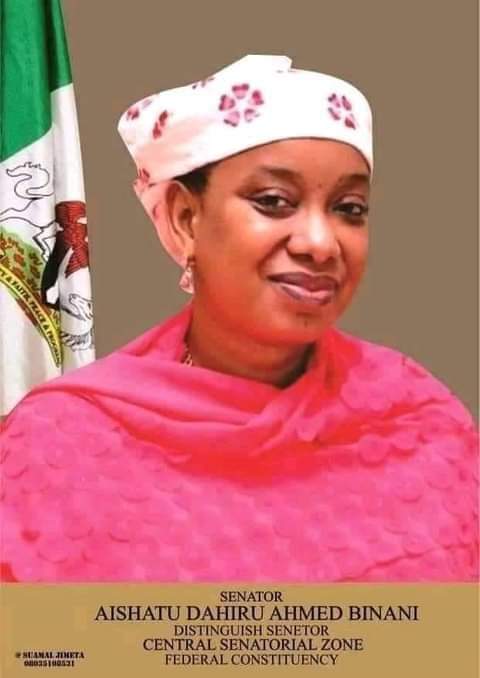
The Independent National Electoral Commission (INEC) has fixed Saturday, April 15th, 2023, as the day for the Adamawa state governorship supplementary election in 69 polling units across the state. Governor Ahmadu Umaru Fintiri is going into the supplementary election with a margin lead of 31,249 votes. Senator Aishatu Dahiru Ahmed Binani needs a miraculous miracle to dilute this margin from the 37,706 expected votes in the 69 polling units where the supplementary election will be conducted. Though miracles, they say, do happen!

Despite the opened anti-party she faced from some members and executives of her party. Her disregard for the crucial aspect of politics – collaborations with everybody and anybody, plus her failure to send an olive branch to some of the APC governorship aspirants who lost to her during the APC governorship primaries, including the indifference to her candidacy exhibited by some stakeholders of the Adamawa APC, Binani has proved a point- Binani shook Governor Fintiri in a way he never expected.

Candidate Fintiri came to the March 18 governorship election over-confident but with poor calculations and with so many off-the-shelves strategies. For instance, he thought that his 2019 bloc vote was still intact, but he was wrong- many people in the bloc vote have realised that they’ve nothing to gain from it- it was mainly Fintiri’s ‘cousins’ and close associates who mostly enjoy the goodies meant for the bloc vote. Fintiri’s second mistake was the poor deployment of logistics – this is obvious from how he performed in the Adamawa North Senatorial District- his primary constituency- Fintiri got only 53% of votes, losing 3 of the 5 LGAs. Though Binani also performed poorly at her central zone- she got only 45% of the total votes – winning only 3 of the 7 LGAs.

When the controversial Fufore LGA result was announced, Gov was pictured celebrating victory with his Aides. However, a few minutes later, when the final result was declared inconclusive – again Fintiri was pictured in a deflated mode. Students of politics and history should study INEC’s declaration of Adamawa 2019 and 2023 governorship elections as inconclusive relative to the man ‘ Ahamdu Umaru Fintiri’- it always brings out ‘the punctured him’. In 2019 when the election was declared inconclusive, Fintiri ran to former Vice President Atiku Abubakar for help and equality in 2023.

When his re-election was also declared inconclusive, Fintiri returned to Atiku for another help. In fact, in 2019, former governor Boni Haruna saved the day for Fintiri. In a press conference, Boni highlighted the difference and the importance of registered voters and PVC collected, which today has become a working document for all political parties and INEC itself.

 Fintiri is a man that often boasts that he is a man of great political sagacity, he often claims to have retired many people or has ‘shaved’ their heads from politics, but whenever he is faced with an intricate political situation, he suddenly becomes punctured and runs to same people for help.

As earlier mentioned, Binani needs a miracle, or the 8th wonder of the world, to upstage Fintiri’s 31,249 votes lead from a pool of just 37,706 votes. Nevertheless, whoever wins the 2023 Adamawa governorship election, will face a big legal tussle; that’s why people were shocked when Fintiri and his convoy were seen returning from Fufore LGAs, in the name of collection results to the state collation centre. It is simply bizarre- when a contender in an election turns himself into the electoral and collation officer.

 Politics is about interest and survival – the APC members and executive who worked against Binani – did it to survive- For the executive to protect their seat, while for some of the stakeholders- it is about 2027 calculation if there is an incumbent governor from the APC, the ticket is closed for eight years. And supporting Fintiri is also another of their calculations. If he wins, he will leave the scene after four years. Thus, 2027 will be free for all.

For some of the prominent PDP stakeholders who were also indifferent to Fintiri’s candidature, they did it to remind Fintiri that ‘big’ is ‘big’- Fintiri went to the election almost solo with his lieutenants, but he could not get an outright victory but managed an underdog-like inconclusive win.

 In conclusion, Governor Fintiri has the brightest chance of coasting to victory in the April 15th supplementary election, but he’s the biggest ‘loser’ in this election- his political might has been reduced to its lowest. He now knows that going to the Senate in 2027 is not as easy as he thought, and bringing a successor from the PDP is not in his absolute control. Another loser is the APC and some of its executives that opened antiparty – Adamawa APC remains fragmented for some time to come- this will hunt the party in the next cycle of elections, as pay-back-time will be the order of the day in the party for many years to come.

Binani, on the other hand, her chance of winning the election is near zero, but she is one of the biggest winners in the election – despite little support from her party in the state and open anti-party from some party executives, she made points and strong political statements. Another winner of this election is some PDP stakeholders and the PDP itself- this election has removed them from any shackle – had it been that Fintiri had a smooth ride; won the election with a significant margin effortlessly, he would attempted to ride on anybody in Adamawa politics in his second term.

 Zayyad I. Muhammad writes Abuja via zaymohd@yahoo.com.

Buhari fires NIPC boss

By Ahmad Deedat Zakari

President Muhammadu Buhari has sacked the Executive Secretary and Chief Executive Officer of the Nigeria Investment Promotion Commission, Saratu Umar.

The Special Adviser to the President on Media and Publicity, Femi Adesina, disclosed this in a statement he signed on Thursday.

According to Mr Adesina, the President has communicated the directive of Umar’s termination of appointment to the Honourable Minister of Trade and investment, Otunba Richard Adeneyi Adebanjo.

He also stated that the president ordered that the most senior director in the commission takes over immediately.

The statement reads: “President Muhammadu Buhari has terminated the appointment of Hajiya Saratu Umar as the Executive Secretary/Chief Executive Officer of the Nigeria Investment Promotion Commission (NIPC), with immediate effect.

In a directive to the Honourable Minister of Industry, Trade and Investment, Otunba Richard Adeniyi Adebayo CON, the President also mandated the most senior Director in the Commission to immediately take over in the interim. “

Rarara’s Invective Barbs: innuendoes, body shaming, and Kano politics

By Prof. Abdalla Uba Adamu

For the past 43 years that I have been a researcher, there were two areas I stay clear of: politics and religion. If you see my hand in any of these two, then the entry point is popular or media culture. For instance, I have recorded a lot of Kano Qadiriyya’s Anfasu zikr, not as a devotee, but as an ethnomusicologist – focusing on the body percussion and movements (after studying the wonderful works of Margaret Kartomi on body percussion while in Morocco). Similarly – and to balance things somewhat – I recorded Tijjaniyya zikr sessions at Chiranci in the city of Kano as part of a larger study on religious performances. All my recordings were uploaded to a dedicated YouTube public channel. I was, therefore, amused when people try to pigeonhole me either as Qadri or Tijjani. I am neither.

Politically, I am apolitical, meaning I really don’t care who rules the country. I don’t even vote, having done once a long time ago (at the insistence of a dear friend), and promised never to do it again. But performance arts brought my attention to protest songs and the prosecution of singers in Kano. The end product was a paper, “Poetic Barbs: Invective Political Poetry in Kano Popular Culture” which I am sure is floating somewhere in a modified form. And I thought that was it.

In 2014 I came across a song that I found amusing. I was playing it on my laptop when someone exhibited surprised that I was listening to the songs of Dauda Adamu Abdullahi Kahutu, with a stage name of Rarara. That was the first time I even heard the name. The song was “Zuwan Maimalafa Kano.” It attracted my attention in two ways. First, its lyrical construction, as well as its delivery, was just amazing. Rapid fire. He should have been a rapper, a genre of music I am totally besotted on (old school DMX, 2Pac, Snoop Dogg, Ice Cube, Queen “The Equalizer” Latifah, y’all). It was clear Rarara was singing off the cuff, not reading from a setlist or lyrical sheet. Second, it was the most detailed invective song I have heard in the Hausa Afropop music genre. I started digging and latched on to him and his songs. So, for the last seven years or so, I have been following every song he released using the invective matrix.

So, what is an invective song? Invective is the literary device in which one attacks or insults a person or thing through the use of abusive language and tone. If you like, “zambo/shaguɓe”. Invective is often accompanied by negative emotion. Invective can be divided into two types: high and low invective. High invective requires the use of formal and creative language, while Low invective, on the other hand, makes use of rude and offensive images. From 2010, Rarara became a master of popular Hausa invective oral poetry. He used his skills to abuse, insult and body shame anyone he was paid to insult. Including former masters and associates.

A pattern evolved. His switchbacks. Chronologically, his earliest non-invective song was “Saraki Sai Allah” (in honour of then Governor Ibrahim Shekarau’s turbaning as Sardaunan Kano in 2010 by the late Emir of Kano, Alhaji Ado Bayero). In 2011 – barely a year later – when Shekarau failed to anoint Rarara’s ‘master’, Deputy Governor Abdullahi T. Gwarzo, to succeed him, Rarara became ballistically invective – and established a career in body shaming, abuses and innuendoes against various previous masters. Shekarau bore the blunt of colorist abuses – often a case of the kettle calling the pot black. No one was spared his invective barbs. Deeply cut. Insulting. Spread over 39 songs, from 2014’s “Malam Ya Yi Rawa Da Alkyabba”, to 2023’s “Tangal-Tangal.”

I have seen social media calling Rarara out on his not being a Kano indigene, getting rich in Kano through his songs, and yet insulting Kano’s leaders. This is all true. However, ‘da ɗan gari a kan ci gari’ (enemy within). Only about three songs in my analytical corpus by Rarara were free-standing (i.e., unsponsored). All the others were commissioned and paid for – by politicians from Kano, to abuse other politicians from Kano. Rarara always acknowledges his sponsors in the opening doxology of his performances.

Rarara was a highly unprincipled and unethical businessman. Show him the money, and he will praise his closest friend and abuse the friend’s enemy. Show him more money, and he will insult the same friend he praised, and heap praises on the enemy he insulted. Does anyone remember that the glorified “Ɗan Ƙaramin Sauro” (irritating mote) was part of the demeaned “Banza Bakwai” (Bastard Seven)? The bromance did not end well, did it? Business unusual.

In any event, Rarara’s invective braggadocio came back to hit him hard on 5th April 2023 when his opponents used his mother’s picture in unflattering terms and splattered it all over social media and gave her a feminine variation of an insulting name he used against one of his targets. Apparently when the shoe is on the other foot, it pinches.

Thus, instead of focusing on political ideology and promises of creating a better life for the electorate, often politicians in Kano (and I think Kano, as usual, is the only state that uniquely does this) would pay more attention to denigrating, shaming, and condemning opposing candidates, creating an unfavorable imagery of the politician to prevent his being voted. Rarara was a perfect malleable puppet in this process. He has the same emotional value to Kano politicians as an alien from Saturn. Despite his lyrical brilliance and acerbic wit, he was expendable. How many singers from Kano can you recall doing the same invective insults as Rarara to Kano politicians? Two? Three? Their corpus is not as extensive as that of Rarara. Conversely, how many politicians from Katsina pay Rarara money to insult other Katsina politicians? I can only remember one.

Wary of possible legal action against direct defamatory speeches, politicians often find it easier to engage what I call ‘political drones’ to communicate their defamatory messages through the popular medium of singing. In this way, when push comes to shove, it is the singer who would face legal – or in some cases, physical – wrath in one way or other. Unethical singers like Rarara – who was arrested, but not charged in 2014 over “Zuwan Maimalafa Kano” – were willing to pay the price in exchange for the stupendous amount of money they will receive. At least they will have enough for medical care when their houses were wrecked, assaulted and incapacitated to continue singing.

And the politician who caused it all? He can’t even remember the song that made him popular, having moved on to greener political pastures. Until the next election cycle when he will latch on another expendable drone to help him heat up the polity through more invective songs using campaign words he does not have the guts to utter himself.

Rarara’s defense of not uttering specific names in his invective taunts and body shaming do not stand up to scrutiny under Nigeria’s defamation laws, and demonstrates that while he was a brilliant lyricist, he needs to understand the law. This is because his invective defamation in the form of his songs is publicly available (indeed, he made them so), created a narrative about individuals that are easily identifiable either by their physical appearance or public behavior, created a negative impression on the person being so targeted, and was not misquoted as Rarara’s utterances (from his songs) were publicly available and subject to an only interpretation as intended. A clever prosecutor would have enough to jail Rarara on listening to any of his invective songs, if someone complained hard enough.

Invective songs can often have their positive sides in the sense of making politicians – or their targets – aware of public perception of their misdemeanors, or at most, errant behaviors. Rarara’s invective narrative in the selected songs I analyzed, however, do not demonstrate their oversight functions in public accountability for politicians. Regardless of whether explicit names were uttered or not, their narrative was focused on kicking them when they are down, and subjecting them to public ridicule. This questions the artistry of Rarara as a purveyor of aesthetic values of the Hausa oral arts.

Academicians ignore Rarara and his art – and I think that’s a mistake. True, some would argue that his songs have no aesthetic, intellectual or ideological value. On the contrary, they do. In their own way. They are beautiful as lyrical discourses. His delivery is truly artistic, even if the content is inelegant. Unlike other songs in the repertoire of political communication, his are not protest songs, and thus lack ideological focus. They neither educate, illuminate or illustrate any aspect of political culture. They only entertain – at the expense of the dignity of the people he attacks. His songs synthesize Hausa rural lexicon overlayered with abusive, often self-constructed urban jargon to enhance general appeal – and act as rabble rousers for politicians who think like him. It is a unique, if unadmirable business model in the performing arts.

Subsequently, Rarara’s songs cannot be compared, by any stretch of imagination, with the classical Hausa protest poets such as Sa’adu Zungur, Mudi Sipikin, Aƙilu Aliyu, Abba Maiƙwaru and Aminu Kano, whose artforms were fueled by educative political ideology, certainly not profit. Mudi Sipikin, for instance. used his poetry to attack the system of colonial rule. Aƙilu Aliyu wrote poems directly attacking the NPC. Abba Maiƙwaru wrote a 10-line NEPU poem for which he and Aminu Kano were arrested in the mid-1950s.

Zungur used his poetry originally to warn the emirs of the north of the necessity for reform, as illustrated in his central work, Jumhuriya ko Mulukiya [Republic or Monarchy]. In this work, he called for political and social problems to be solved on the basis of the existing Islamic institutions, rejecting alien political concepts. He later used his poetry to appeal directly to the common people. In a similar vein, one of the earliest poems written for a northern political party was by Aminu Kano, and called ‘Waƙar Ƴancin NEPU-Sawaba’ [Freedom poem for NEPU-Sawaba], and published in 1953 and put in the final form by Isa Wali. It was one of the earliest statements of Nigerian nationalism.

Despite all these, I argue that as researchers we can’t afford to ignore a current of knowledge flowing right at our feet. But the cold shoulder given to Rarara by our community, opposed to Aminu Ladan Abubakar (ALAN Waƙa) who is a toast to the academic and intellectual community, merely emphasizes the expendable and ephemeral nature of Rarara’s art. Ten years after the release of any ALA song, it will still have relevance. The relevance of Rarara’s songs rarely last to the next song release. Instantly forgettable.

Nevertheless, just as we struggled for the recognition and documentation (if not acceptance) of the Kano Market Literature in the 1990s when everyone was denigrating it, we need also to document the stream of popular culture, including Rarara – warts and all – flowing around us at all times. As far as I can see, only Maikuɗi Zukogi has focused attention on two of Rarara’s songs. More needs to be done.

As soon as I tell myself that I will wrap up the research, he will release a song insulting a former master or associate. Subsequently, I delayed publishing the research until he insulted two people, and true to expectations, he did. These were President Muhammadu Buhari (Matsalar Tsaro) and Governor Abdullahi Umar Ganduje (Lema ta sha ƙwaya). With the ‘Hankaka’ barb against Ganduje in the Lema song, my fieldwork became almost complete. His destruction of “ɗan ƙaramin sauro” leaves only the references to be completed. As I argued, based on his corpus, Rarara sells to the highest bidder with neither conscience nor ideology. The huge profit he makes serves as insurance against future loss of earnings when Kano politicians become mature enough to stop patronizing him to insult each other (and themselves) and utilize his skills in more constructive ways.

My thanks to a team of eager research assistants, headed by my ever-faithful and close companion, Hassan Auwalu Muhammad – a former songwriter and lyricist himself. He was the one who mainly, patiently, transcribed the songs, which I wove into a narrative going to almost 40 pages! I plan to upload the lot during my Summer break when the children are all here on holiday! By then, the threatened wobbling ‘Tangal-Tangal’ had stopped and probably settled for a four-year legal battle.

Professor Abdalla Uba Adamu can be contacted via auadamu@yahoo.com.

Open letter to Mallam Adamu Adamu

By Mukhtar Jarmajo

Sir, you are aware that the 2023 general elections have come and gone and the dust it has raised in the Bauchi State All Progressives Congress (APC) is yet to settle. Also given that you are one of the prominent leaders of the party who definitely call the shots, most of the issues at hand clearly have your name, among others, written on them. It is therefore only right that you open up and clear the air on the grey areas where you are alleged to have worked in different dimensions with your party. This is important not only because it will help in making sure that your statesmanship and gentlemanly statue remain intact, but also because it will see to it that posterity remembers you as a true party man. 

Honorable minister, it is alleged that you did not support the APC governorship candidate in Bauchi State, retired Air Marshall Sadique Baba Abubakar in the just concluded general elections. It is also alleged that you did not support him because of the following reasons: 1. If the APC in Bauchi State gets a governor, you will seize to be the party leader in the state. You are therefore comfortable with the present arrangement; 2. If he becomes governor, Air Marshall Sadique Baba Abubakar may not be submissive to you unlike the present governor who you are alleged to have been working together with; and 3. The Katagum factor. 

While it is very difficult to believe all these allegations because of your known principles of altruism, you will do a great deal of service to your political party, the APC, if you clear the air especially when certain reasons are used to back the allegations. They are: 1. Throughout the campaign period, you did not attend any of the party’s rallies in Bauchi State; 2. The Bauchi State APC Chairman, who allegedly was brought by you from the Social Democratic Party (SDP), has also not been on ground to discharge his responsibilities. It was alleged that you were together in Abuja; 3. In contravention to the agreement that a state governorship aspirant was to coordinate the APC Presidential Campaign Council in his state, you allegedly worked day and night to replace Air Marshall Sadique Baba Abubakar with your friend; and 4. It is not yet clear whether or not you were in Azare, your home town, both during the presidential and governorship elections to vote.

With all these at hand, it is alleged that Mallam Adamu Adamu, the Honorable Minister of Education in an APC led administration worked hard to ensure that the APC presidential candidate, Asiwaju Bola Ahmed Tinubu lost Bauchi to PDP’s Atiku Abubakar. Similarly, you allegedly worked to ensure that most of those who vied positions to the national assembly in Bauchi State did not win. Certainly, this scenario is difficult to understand just as the entire picture is hardly legible. But you are in the best position to clear the air. 

Jarmajo wrote from Kukadi/Gundari Ward, Misau Local Government. 

Revamping Kano’s agricultural sector: A path to economic growth under Abba’s stewardship

By Bashir Abdu Muzakkari, Ph.D.

The agricultural sector is the backbone of many developing countries, and Nigeria is no exception. The newly elected governor of Kano state, His Excellency Engr. Abba Kabir Yusuf has made a series of commitments regarding the development of agriculture in the state. These commitments range from the rehabilitation and expansion of irrigation facilities to the promotion of women in agriculture.

These commitments are aimed at improving the productivity of farmers, promoting food security and boosting economic growth in the state.

One of the first commitments made by the governor-elect is the rehabilitation and expansion of irrigation facilities in the state. This is a critical step in ensuring that farmers have access to water, which is essential for crop production. With the rehabilitation and expansion of irrigation facilities, farmers in Kano state will be able to increase their yields and improve their livelihoods.

Abba has also committed to the rehabilitation of earth dams in the state. This is another bold step in ensuring that farmers have access to water for crop production. With the rehabilitation of earth dams, farmers will be able to store water during the wet season and use it for irrigation during the dry season.

The establishment of agro-industrial estates in the state is another commitment made by the governor-elect. These estates will provide a platform for farmers to process their agricultural products and add value to them. This will not only increase the income of farmers but will also create employment opportunities for the people of Kano state. He has also committed to the establishment of commodity aggregation centres. These centres will serve as collection points for agricultural products and will facilitate the marketing of these products. This will help farmers to access new markets and increase their income.

In addition, the governor-elect has also committed to the upgrade of the Kano Zoological Garden and wildlife conservation in Falgore forest. This is an essential step in preserving the biodiversity of the state and promoting eco-tourism. It will also create employment opportunities for the people of Kano state.

Abba Kabir Yusuf has also committed to the provision of agricultural financing for farmers in the state. This is important in ensuring that farmers have access to credit to expand their operations and improve their livelihoods.

Furthermore, the governor-elect commits himself to the provision of agricultural extension services. These services will provide farmers with the necessary knowledge and skills to improve their agricultural practices and increase their yields.

Similarly, Engr Abba Kabir has plans for the promotion of climate-smart agriculture. This is an approach to agriculture that aims to reduce greenhouse gas emissions and adapt to the impacts of climate change. It will help farmers in Kano state to become more resilient to the effects of climate change.

Another commitment made by the governor-elect is the introduction of regenerative agriculture. This is an approach to agriculture that aims to restore soil health and improve biodiversity. It will help farmers to improve the quality of their soil and increase their yields.

Finally, the incoming governor intends to modernize abattoirs in the state. This will improve the quality of meat products in the state and create employment opportunities for the people of Kano state.


In conclusion, the proposals made by the newly elected governor of Kano state, His Excellency Engr. Abba K. Yusuf on agriculture are crucial in promoting sustainable agriculture, improving food security, and promoting economic development. The rehabilitation and expansion of irrigation facilities, the establishment of agro-industrial estates, and the provision of agricultural financing and extension services are essential commitments that will improve the overall agricultural productivity in the state.

The governor-elect’s commitment to promoting climate-smart and regenerative agriculture practices and empowering women farmers is also commendable and will have a significant impact on agriculture in Kano state. By fulfilling these policies, the agricultural sector in Kano state will be sustainable, resilient, and productive.

Bashir Abdu Muzakkari, Ph.D. writes from Kano.

Dr Nasiru Yusuf Gawuna has paid his dues

By Ibrahim Siraj Adhama, Ph.D.

The governorship election in Kano has come and gone. The battle has finally been won and lost. No doubt it will go down as one of the most keenly contested guber elections in our State in recent history. At the end of it, a winner emerged in the person of NNPP’s Abba Kabir Yusuf, alias Abba Gida-Gida. While congratulating him, his party and his teeming supporters, it is our collective prayer that Almighty Allah will give him the courage, wisdom, guidance and tenacity to lead Kano to greater heights.

Not unexpectedly, the March 18th election has left in its wake several talking points that will continue to dominate public discussion and intrigues that may take years to unravel. Its outcome will go a long way in shaping the future of Kano politics for a long time to come. Questions will continue to be raised about the legality or otherwise of the returning officer’s result declaration when it appeared there were more registered voters affected by cancellations than the margin of lead between the two candidates with the highest number of votes against the provisions of the 2022 Electoral Act and INEC election guidelines. Not a few people will be tempted to suggest a spectre of legitimacy haunting governor-elect Abba’s declaration arising from that controversy until all doubts are justifiably cleared.

The purpose of this piece, however, is to x-ray the governorship contest vis-a-vis the heroic performance of His Excellency Nasiru Yusuf Gawuna, candidate of the ruling APC, who, despite not winning the big prize, has given a very good account of himself as a great and promising young leader and politician with immense rich and potential. All fair analysts will give it to him that he had fought a good fight.

It is safe to argue that no candidate of a ruling party has gone into an election with many odds working against him as Gawuna in the just-concluded election. From his living under the burdensome shadow of Governor Abdullahi Umar Ganduje to widespread disillusionment against his party, APC, across the levels, from Kwankwasiyya’s massive followership and unflinching determination to effect a change to highly biased and unfriendly media, Gawuna’s task of winning could not be more daunting.

Gawuna contested the election as Ganduje’s backed candidate and a possible successor. One needs to understand how unpopular Ganduje’s government has become to appreciate how much of a liability that was. Ganduje had been practically on a mission to cultivate as many enemies as possible for himself, his administration, his party, his family and everything associated with him. Ganduje had, for a better part of his administration, pressed the self-destruct button.

Ganduje’s controversial land grab and conversion policy, his poor handling of education and students’ welfare, the falling standard of healthcare and poor state of hospitals in the State, his mismanagement of A Daidaita Sahu cyclists, his apparent lack of empathy towards such vulnerable groups as junior workers, pensioners and retirees, his failure to provide leadership towards resolving his party’s internal wranglings thereby causing the defection of key members to opposition parties, among other terrible blunders and unforced errors, Governor Ganduje has made things a lot easier for the opposition NNPP.

With Ganduje, you needed no enemy; he was his government’s number one detractor and his party’s foremost de-campaigner. His largely self-inflicted injury had overshadowed his modest achievements, especially in peace and security, urban renewal, expansion of economic opportunities and general infrastructural development. Hardly do people take note of these achievements.

Consequently, the opposition succeeded in making every declaration of support for Nasiru Gawuna as an endorsement of Ganduje’s litany of “atrocities”. Efforts to prove that the Deputy Governor might not himself be happy with Ganduje’s ways and will almost certainly correct those mistakes, given a chance, were taken with a pinch of salt. Many who campaigned for him faced the daunting challenge of convincing other voters that he would act differently. It’s that difficult!

As the ruling party in control of the centre, the APC did not help matters either. In a move that had the potential of jeopardizing the chances of the party’s candidates nationwide, the Federal Government announced a plan to redesign the country’s currency ostensibly to curb vote-buying and payment of ransom to bandits and kidnappers. This policy, coming on the eve of general elections, fueled speculations within the ruling party itself that certain fifth columnists close to President Muhammadu Buhari were part of a plot to rock the ship of the APC, considering how unprecedented cash crunch riled up already suffering Nigerian masses against the ruling party. Though APC has somehow managed to win the Presidential election and maintain control in most States, the damage done by this ill-advised policy to the party’s electoral fortune could just be imagined.

That His Excellency, Deputy Governor Nasiru Yusuf Gawuna, was able to score nearly nine hundred thousand votes is no mean feat given these circumstances. For me, he should be grateful to Almighty Allah, who made it possible for him to harvest this massive figure in spite of all attempts to rubbish him or undermine his chances using Ganduje’s failures. This feat is majorly attributable to his ability to connect well with some key segments of society who stood by him.

In appreciating Gawuna’s performance, though, I pay little heed to reports of widespread vote-buying. This is due to the realization that both NNPP and APC were culprits; available evidence has shown that the two major parties had tried different tricks at voter inducement. And as experts would say, vote-buying itself works on nothing, and it mostly targets undecided voters.

Since his foray into politics 20 or so years ago, Gawuna has been rising and rising. The outcome of this election represents a temporary setback which does not in any way signify his downfall as naysayers would want to believe. For careful observers of his trajectory in politics, it’s just a matter of time before he recovers and continues to rise higher and higher. Let his detractors know that the man is not going down anytime soon.

With the highest number of votes obtained by an APC gubernatorial candidate anywhere in Nigeria, Gawuna looks set for something very great, especially with an APC federal government of Asiwaju Bola Tinubu in place. No doubt, Gawuna will be an invaluable asset in Jagaban’s cabinet, going by experience. After serving for 20 years as Local Government chairman, commissioner and deputy governor, who knows if Allah is preparing him for national service? Only time will tell, and our prayers are with him now and always!

Dr Ibrahim Siraj Adhama is a Senior Lecturer from the Department of Mass Communication, Bayero University, Kano and can be reached through isiraj.mac@buk.edu.ng.

How Lawan and Machina tussle causes divisions in Yobe

By Muhammad Suleiman Yobe.

The controversy over getting the ticket for the APC in Yobe North senatorial district between the President of the Senate, Ahmed Lawan and Bashir Machina has created a serious gap and misunderstanding among the people of the region.

Yobe North region is the most populace senatorial district with 6 local government areas in the state. These are Bade, Nguru, Jakusko, Machina, Karasuwa and Yusufari, and 99 per cent of the residents are Muslims living peacefully with one another despite the fact that there are differences in languages and ethnicity.

The majority of the residents are Manga [ Kanuri ] Hausa, Badawa, Fulani and other minorities, but these differences do not cause problems for the residents for more than 1000 years, as history revealed, more especially if we consider how residents are joking between tribes.

Of course, many things happened between 2022 to 2023. Some happened before primary elections, during the primary and after the primary election as well as the general election that was held this year.

Recalled that in May 2022, Bashir Sheerif Machina won Yobe’s north senatorial primary election, unopposed as organized by the All Progressive Congress, APC.

But the senate president Ahmed Lawan was said to have participated in another primary organized by the APC after he contested the presidential ticket unsuccessfully in June.

Machina was reportedly asked to step down for Lawan, but he insisted that he was the rightful candidate.

Amid the controversy, the APC submitted the senate president’s name to the Independent National Electoral Commission (INEC) as the candidate for Yobe north.

The electoral commission subsequently refused to list any candidate for the district.

Aggrieved, Machina instituted a suit asking the court to declare him as the authentic senatorial candidate.

In September 2022, a federal high court in Damaturu, the Yobe state capital, ordered the APC and INEC to recognize Machina as the candidate.

A month later, an Abuja court of appeal affirmed Machina’s election as the candidate of the APC for the Yobe north senatorial district.

On 6th February 2023, the supreme court sitting in Abuja affirmed Senate President Ahmad Lawan as APC candidate for the zone and was re-elected for the fifth time in the just concluded 25th February presidential and national assembly elections.

This tussled between Lawan and Machina has caused serious problems and enmity between the residents of the area from the supporters of each side.

Each side accuses its opponent of harming and exchanging unpleasant words, especially on social media sites, which is why in this month of Ramadan, the supporters of one side prayed badly for one of the leaders.

In the same way, during the election campaign, there were conflicts and political divisions between each party, which is a strange thing in the region.

During the election, there were some factions with a massive anti-party, and there were some factions that fought other, which led to bad fighting between them.

This conflict has once again created enmity between the residents of other towns, especially regarding the local governments’ origin of Bade and Machina.

In the same way, this problem has created division in the management of the development of the towns in the area and divided the members of the APC, which is the reason why the party lost the election of a member representing Bade Jakusko in the green chamber and two Yobe state members house of representatives, representing Nguru outside and Bade Central.

Surely, this is the right time for traditional rulers of the zone, politicians and the entire leaders in the state and country should sit and reconcile these politicians for the development of the state. Because this coast has nothing to do with the development of the region except for regression.

Muhammad Suleiman Yobe wrote from Jigawa state. He can be contacted via muhammadsuleiman190@gmail.com.

Kwankwaso, Kwankwasiyya and Arewa beyond 2023

By Aminu Alhassan Kuba

During the 2023 general elections, Eng. Rabiu Musa Kwankwaso contested for the office of the President Federal Republic of Nigeria under his newly registered party, the New Nigeria People’s Party (NNPP). Unfortunately, he came a very distant 4th, winning just one State out of 36 plus the Federal Capital Territory, Abuja, with a little over 1 million votes. His party also presented candidates for the governorship in a few other states apart from Kano, and the closest it came to winning apart from Kano was in Taraba.

Before the elections, Senator  Rabiu Musa Kwankwaso had been engaged in a fierce political battle with his erstwhile political friend and deputy and present governor of Kano State, Dr Abdullahi Umar Ganduje.

In 2015, Kwankwaso supported Ganduje to succeed him, but afterwards, trouble started. In a video I watched sometime in 2018, Ganduje accused Kwankwaso of envy. He said he did everything to respect and be loyal to his former boss, but it seemed Kwankwaso wanted everything. He accused Kwankwaso of wanting to be governor by proxy.

The fight between the two finally culminated in the now infamous inconclusive governorship election of 2019, where Kwankwaso tried to unseat Ganduje and replace him with his former PA, former commissioner, son-in-law, now governor-elect Eng. Abba Kabiru Yusuf. In that titanic battle for Kano, Ganduje emerged victorious.

The win led to other unfortunate matters, including the dethronement and banishment of the then Emir of Kano, His Royal Highness Muhammadu Sanusi II, the balkanisation of the Kano Emirate into five (5) smaller entities and the eventual appointment of two of Sanusi’s cousins among others as Emirs of Kano and Bichi, respectively.

In the succeeding four years, the political rivalry and fight between Kwankwaso and his old friend and political ally only intensified, culminating in the defeat of Ganduje’s candidate by same Kwankwaso’s son-in-law Eng. Abba Kabir Yusuf in the just concluded governorship election in the State.

Following NNPP’s victory, Kwankwaso’s supporters mainly and some commentators have sought to present Kwankwaso as some political wizard in Northern Nigeria. While this is true to a certain degree and circumstance, it is more accurate if Kano and not Northern Nigeria was the point of reference.

Kwankwaso has indeed managed to remain politically relevant compared to his Northern governor colleagues, alongside whom he contested and won elections to become governor in 1999. However, since his stated goal is not to become or produce the governor of Kano State but to lead Nigeria as President and Commander in Chief, the fairest comparison should be with those who have demonstrated similar ambition. And in this category, the most worthy comparison should be with the President-elect, His Excellency Asiwaju Bola Ahmad Tinubu, former Senator and Governor of Lagos State.

This comparison is even worthier considering that Lagos and Kano share similarities in population, political history, economy and commercial relevance to South and Northern Nigeria, respectively.

Let’s take a dive

In 1992 when Tinubu won a seat to become Senator of the Federal Republic, Kwankwaso won one in Nigeria’s House of Representatives and became its deputy speaker.

In 1999, both Tinubu and Kwankwaso contested and won to become governors of Lagos and Kano, respectively.

In 2003, while Tinubu was re-elected for a second term in office despite Obasanjo’s backstabbing and cynical takeover of the entire South West (except Lagos, of course), Kwankwaso lost his seat to a former permanent secretary, Malam Ibrahim Shekarau, whom he had humiliated and relegated to a classroom teacher. Shekarau went on to serve two full terms as governor of Kano. Kwankwaso was eventually appointed Minister of Defence by Obasanjo.

In 2011 Kwankwaso returned to Kano for a second shot and won. He served the next four years, delivering spectacularly on the massive infrastructural transformation of Kano and investing heavily in education and social services. In addition, he provided scholarships to hundreds of Kano indigenes to undertake postgraduate studies around the world. By the end of his tenure in 2015, he easily transited to the Senate under the newly minted alliance party, the APC, with General Muhammadu Buhari’s CPC, Asiwaju’s AC and Atiku’s rebellious PDP G-5 governors.

 In the same period, Tinubu chose not to run for office but worked to build a formidable political base with the South West as its fulcrum, installing governors in at least four of the region’s six States, many of them his former commissioners and going beyond to support former comrade Adam Oshiomhole to take Edo from the PDP.

In the same period, Tinubu not only built the Lagos-Ogun axis as Nigeria’s financial and economic powerhouse, but his former appointees also became a Vice-President, ministers, governors, chief executives of agencies and parastatals of the Federal Government.

Kwankwaso and his Kwankwasiyya movement have failed to go beyond the borders of Kano into neighbouring states like Jigawa, Katsina, Kaduna, Bauchi, etc.

Notably, they have ruled Kano with his former deputy turned adversary for 16 years. Despite its industrial and commercial potential, Kano has failed to significantly grow its internal revenue base to compete favourably with its peers in the country. In a shocking manifestation of its leadership crisis, a civil service state like Kaduna now generates more internal revenue than Kano.

Again, in education, Kano tops the list of states with the most out-of-school children. This is where I find difficulty in understanding Kwankwaso’s education investment model of sending vast numbers of Doctors, Pharmacists, Nurses, Engineers and other university graduates outside Nigeria to undertake postgraduate studies while millions of children are roaming the streets wretched, hungry and illiterate.

While I do not begrudge the beneficiaries of his scholarship largesse, many of whom I know personally, I think the billions of naira public funds he spent in that endeavour would have been best spent in strengthening Kano’s capacity to educate its underprivileged poor urban and rural population.

Therefore, it’s now twenty-four years after Kwankwaso and Tinubu first became governors; Tinubu could comfortably lose Lagos but still win in the rest of Nigeria and become President; Kwankwaso could only win his Kano and ended up a distant 4th in the same presidential race. This is a testament to how far both have come.

To bolster the point further, while Kwankwaso has managed to build a competent and diverse political team across Nigeria, on the one hand, even in his beloved Kano and over 24 years, he could only find his son-in-law and former PA worthy of his trust to become governor.

Beyond Kano in the wider Arewa, he has failed to create a political support base. Instead, he is mainly seen as the head of a violence-prone, uncouth, fanatic and cult-like group willing to insult and denigrate anyone who dares to disagree with its methods. This is not without justification either. Evidence in utterances, actions and inactions from him, his closest lieutenants and supporters that they are willing to use violence to achieve political ends when push comes to shove.

The behaviour of his supporters after the governorship election in Kano in which his candidate was declared the winner and his silence speak volumes. After attacking and burning down Rarara’s property within the Kano metropolis, no word of condemnation or reproach came from the Madugu [leader] or this party.

Despite Kwankwaso’s failings, however, at this moment of Nigeria’s political journey, Arewa needs a viable opposition to put the APC-led government on its feet from May 29th this year. And Kwankwaso’s NNPP, with a base in Kano, could position itself as a viable platform for the role. From the results of both Presidential and Governorship elections so far declared and its history in this part of Nigeria, PDP can no longer pose a serious challenge to the ruling APC.

Now practically wiped out of the North East, North West and North Central except in some minority enclaves like Taraba and Plateau and unfortunate governance failure examples like Zamfara and possibly Adamawa, PDP is practically dead. In Bauchi and Adamawa (maybe), I don’t see PDP surviving beyond 2027. All these added that Alhaji Atiku Abubakar, its leading financier, is now both old and tired. A Kwankwaso-led NNPP could therefore become a viable alternative for the greater North.

But for NNPP and Kwankwaso to take up this role, I suggest they need to rebrand; Kwankwaso needs to convince the rest of Arewa and Nigeria that his movement can grow beyond the personality cult Kwankwasiyya is now.

He must also convince the rest of Arewa and Nigeria that Kwankwasiyya is not a violence-prone provincial cult that quickly resorts to arson and looting at the slightest opportunity. Finally, he must convince the rest of Nigeria that when his interests clash with that of the State, that of the State will take precedence and that he is willing and able to reign in his supporters.

Aminu writes from Kaduna and can be reached via aminukuba@yahoo.com.

Kano Governor-elect nominates 65-man transition council

By Muhammadu Sabiu  

The 65-person 2023 Transition Committee has been unveiled by Kano State Governor-elect Engr. Abba Kabir Yusuf (Abba Gida Gida) ahead of his inauguration. 

Sanusi Bature Dawakin Tofa, the press secretary to the governor-elect said this in a statement on Friday. According to the statement, Dr. Abdullahi Baffa Bichi, a former executive secretary of the Tertiary Education Trust Fund (TETFUND) and senatorial candidate for Kano North on the platform of NNPP in 2023, has been named chairman of the committee, with Abdullahi Musa, a retired permanent secretary, to serve as secretary. 

The statement says, ‘’His Excellency, the Kano State Governor-elect will inaugurate the Committee on Saturday 1st April, 2023 by 2:00 PM. Below is the full list of the Main Committee membership, while sub-committees on various sectors and sub-sectors would be announced in due course.” 

A report seen by The Daily Reality has given the list of committee members as follows: 

Sen. AB Baffa Bichi, PhD Chairman 

Prof. Hafiz Abubakar Member

Hon. Shehu Wada Sagagi Member

Hon. Umar Haruna Doguwa Member

Hon. Ahmad Garba Bichi Member

Dr Ali Haruna Makoda Member

Barr Maliki Kuliya Member

Barr. Haruna Isa Dederi Member

Dr. Danyaro Ali Yakasai Member

Engr. Muhammad Diggol Member

Dr Ibrahim Jibrin Provost Member

Sheikh Aminu Daurawa Member

Dr. Labaran Abubakar Yusuf Member

Prof Sani Lawan MFashi Member

Alh. Umar S. Minjibir Member

Dr. Danjuma Mahmud Member

Engr. Kabir Jibrin Member

Dr. Farouk Kurawa Member

Engr. Dr. Marwan Ahmad Member

Dr. Aminu Garba Magashi Member

Alh. Aminu Ibrahim Abba Member

Alh. Laminu Rabiu Member

Engr. Bello Muhd Kiru Member

Engr. Garba Ahmed Bichi Member

Hon. Tajudeen Othman Member

Hajiya Sadiya Abdu Bichi Member

Hon. Yusuf Jamo Member

Hon. Nura Dankadai Member

Alh Yusuf Lawan Member

Hon. Umar Maggi Gama Member

Hajiya Azumi Namadi Bebeji Member

Prof. Auwalu Arzai Member

Rt. Hon. Gambo Sallau Member

Bar. Muhuyi Rimingado Member

State Chairman, NLC Member

State Chairman, KACCIMA Member

Alh. Audu Kirare Member

PS Adda’u Kutama Member

PS Aminu Rabo Member

Alh. Sule Chamba Fagge Member

Alh. Usman Adamu Gaya Member

Engr. Tijjani Yunkus Member

Engr. Abubakar Argungu Member

Alh. Yahaya Musa Member

Rt. Hon. Alasan Kibiya Member

Prof. Dahiru Sani Shuaibu Member

Arc. Ibrahim Yakubu Member

Dr. Kabiru Muhd Kofa Member

Dr. Mustapha Sani Member

Sheikh Malam Abbas Abubakar Daneji Member

Bar. Bashir Yusuf Mohd Member

Bar. Ibrahim Wangida Member

Umaru Idi MemberDr. Sulaiman Wali Member

Hon. Rabiu Liliko Gwarzo Member

Alh. Kabiru Gwarzo Member

Hajiya Aisha Kaita Member

Hajiya Aisha Lawan Saji Member

Ali Yahuza Gano Member

Hon. Auwal Mukhtar Bichi Member

Alh. Musa Fagge Member

Hon Wakili Aliyu Garko Member

Tukur Bala Sagagi Member

Dr Nura Yaro D/Tofa Member

PS Abdullahi Musa Member/Secretary