Politics

You can add some category description here.

Rarara: Loyalty for sale

By Bilyamin Abdulmumin

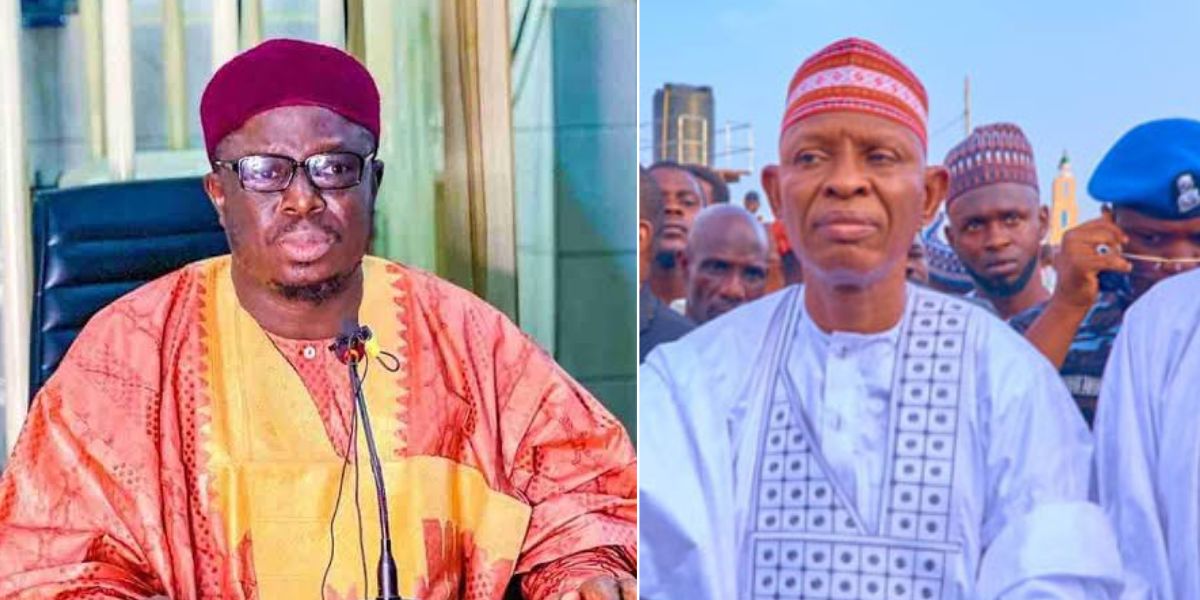
When the former president Muhammadu Buhari’s praise singer Dauda Adamu Abdullahi Kahutu (Rarara), held a media conference some time ago, he stirred up the hornet’s nest. A press conference that initially appeared to lament about being sidelined in the current government ‘that they work hard to enthrone’ took an unexpected turn. Rarara would veer off the course to make damning allegations about the administration of his former boss. 

One of these damages, which sent shockwaves in social media, was that President Buhari did not leave the office until he brought every part of the country to a grinding halt, stating, ‘sai da ya yi dama-dama da kasar nan’. A journalist immediately posed the question that many Nigerians would be wondering: You were in the administration for eight years but haven’t raised a finger until now. Why? Rarara’s response was typical; he claimed he had been hopeful that something positive would happen, so he remained aloof during the eight-year tenure. 

However, sceptics, who don’t take things at face value, could argue that the president had an eight-year mandate. Within those years, how long would have been enough time for Rarara to raise the alarm? This was not to mention the apparent romance Rarara had had with the government during those years. This reminds me of one scandal that occurred during the Goodluck Ebele Jonathan (GEJ) government, and upon the pressure from the public, GEJ appeared determined to leave no stone unturned, so he gave two two-week ultimatum to the committee he set up to finish the investigation to bring the culprit to book.

However, to the most awe and shock, the person indicted for corruption would join the then-presidential foreign tour immediately after the order. A typical case of saying something, but body language says another. When considering the complete picture of the scenarios, the questionable timing and an unconvincing response led almost everyone to dismiss Rarara’s claims with a wave of the hand.

Rarara also launched another salvo, asserting that the 100 days of Bola Ahmed Tinubu were better than the entire eight years of Muhammadu Buhari. While the general view is that Buhari didn’t meet the messianic expectations set for him, drawing a parallel between eight years and 100 days for two different governments is like judging a sprinter’s performance in the first few meters of a marathon. For Rarara to make this shallow comparison, he must be among the Nigerians who thought 100 days was enough for the government to make substantial development. Ever since the United States president, Franklin D. Roosevelt, coined “first 100 days”, the gesture kept going wild; Nigerians have since imported and made it a ritual.

Because the mainstream media has amplified it and become embraced by the public, the newly elected Nigerian officials have become desperate to show that they could lift Zuma rock in the first 100 days in office. Assuming the new government has no serious court litigations to contend with, and the previous administration has little influence on their government, when did the busybody officials finish digesting the thousands of pages of the transition document handed over to them to decide on the administration trajectory? It is even the previous government budget that is already running. When they started to make their own, when were the projects conceived and implemented and matured for the public’s admiration? The speed at which a project is untimely executed to impress the public would go down the heel with double the speed.

In another arsenal that Rarara unleashed, he claimed to have contributed more to Buhari’s success than Buhari did himself. Following the historic dethronement of the incumbent in 2015, people pondered on the key figures that played the most significant role in paving the way for this landmark event: Rarara, President Buhari, and the Card Reader. Including Rarara in this list is a testament to his significant contribution to President Buhari’s success. However, that is not the complete story. All successful people have a tale to share; one crucial factor that defines them is consistency. They persistently push forward until circumstances align for success. So, in that moment of triumph, who rightfully claims the bragging rights?

Two theories were put forward to explain Rarara’s controversial media conference. One theory suggested that Rarara was acting based on the consent of the current administration, an indirect way of informing the public about the status quo of the country they inherited. Masses were already a block of ice waiting for an opportunity to rupture, no thanks to the ever-increasing prices of goods and services. This gave the ruling APC a conundrum: Should they give themselves excuses by condemning the previous administrations, or should they avoid self-sabotage and keep quiet? Therefore, Rarara, lacking a political appointment but commanding a Northern audience, became a strategic mouthpiece. This theory is plausible enough because, beyond the surface, the government could employ several manoeuvres to shift the public’s focus during hard times to avoid citizens’ wrath. 

The second theory shared by many, including Prof. Abdallah Uba Adamu, was that Rarara is a typical gold digger; his loyalty is not through thin and thick. He has consistently known to forsake one boss at a time of scarceness and identify with another where the abundance is emerging. From praise songs to invective ones; from Saraki Sai Allah for Shekarau to Malam yayi rawa da alkyabba, from dawa ta bare for Kwankwaso to Tsula tsilla tsilla, from uban Abba for Ganduje to hankaka.  But despite that, the nation was surprised to wake up with Rarara’s latest bombshell.  Because Rarara seems to have gone aboard when it comes to Buhari and his government, he goes all out against the critics of Buhari not only in his songs but also in several interviews he offered. 

As Rarara now courts new relationships with incumbents like Nasir Yusuf Gawuna, Dikko Umar Radda, or Bola Ahmed Tinubu, caution is advised. His track record of shifting loyalty raises questions about the depth of his commitment. These figures and their supporters should be wary of potential shifts and assess the sincerity of the newfound alliances.

Bilyamin Abdulmumin wrote via bilal4riid13@gmail.com.

Atiku Abubakar: A unifier?

By Kamal Alkasim

Atiku Abubakar, former vice president and perennial presidential candidate, has long styled himself as the “Unifier” of Nigeria. Yet, recent events raise questions about his ability to live up to this label.

Internal Divisions and G5 Exodus:

Atiku’s party, the People’s Democratic Party (PDP), has been plagued by internal divisions. The G5 group of five aggrieved governors, led by former Rivers State Governor Nyesom Wike, have publicly parted ways with Atiku and the party leadership. This exodus has significantly weakened the PDP’s chances in the 2027 presidential election.

Lost Allies and the Rise of New Political Alliances:

Further complicating the picture, two major figures who ran for president in 2023, Peter Obi and Rabiu Musa Kwankwaso, have left the PDP. These departures have deprived Atiku of potential allies and created a new political landscape with the emergence of a possible merger between the PDP, Labour Party, and New Nigeria People’s Party.

Unifying Action Needed:

While the details of this potential merger remain unclear, it presents a fresh challenge for Atiku. Should the merger materialise, it will demand exceptional unifying skills to navigate the competing ambitions of Obi, Kwankwaso, and other stakeholders within the new entity.

Unification Through Action, Not Words:

The question remains: when will Atiku be a “verified Unifier”? While words are persuasive, concrete action will ultimately determine his ability to bring together disparate political forces and forge a unified front.

Negotiations and the Struggle for Power:

Atiku faces a tough road ahead. He must navigate the complex negotiations with Obi, Kwankwaso, and other influential figures while overcoming internal party divisions. Ultimately, his success in securing the presidential candidacy and uniting the disparate political forces will be the true test of his unifying credentials. 

Kamal Alkasim is a freelance writer. He can be reached via kamalalkasim17@gmail.com.

Urgent call for investigation, accountability in Kaduna tragedy

By Mansur Hassan, PhD

In a shocking turn of events yesterday during a peaceful gathering for Maulud in Kaduna State, Nigeria, the unthinkable unfolded as the Nigerian army allegedly dropped bombs on the assembled crowd, resulting in a devastating loss of innocent lives.

What makes this tragedy even more horrifying is the apparent repetition of the attack, casting serious doubts on the claims of a mere mistake.The sequence of events, where the army reportedly first unleashed destruction and then returned within a short span to inflict more harm, raises profound questions about the true nature of this incident.

Can such a grave error be repeated in the same location, with devastating consequences, all within a span of 30 minutes? The assertion that this was a mistake demands thorough scrutiny and a comprehensive investigation.

It is imperative that the Nigerian government takes swift and decisive action to probe this incident thoroughly. The loss of lives and the trauma inflicted upon those who survived demand justice, accountability, and reassurance for the affected community. The international community should also pay close attention to ensure that the investigation is transparent, impartial, and free from any influence.

This tragic incident underscores the urgent need for reforms and increased accountability within the military and security forces. The government must ensure that those responsible for this appalling act, if found guilty, face the full extent of the law. Only through a transparent and unbiased investigation can trust be restored in the institutions meant to safeguard the welfare and security of the people.

In these trying times, our hearts go out to the victims and their families. We stand united in condemning this senseless violence and urge the government to prioritize justice, transparency, and accountability in the pursuit of truth regarding the Kaduna State tragedy.

Dr. Mansur Hassan is a Senior Lecturer, Department of Mathematics, Yusuf Maitama Sule University Kano and can be reached via mhassan@yumsuk.edu.ng

2027 presidency: Atiku Abubakar strategises to maintain control amidst PDP power tussle

By Sabiu Abdullahi 

Former Nigerian Vice President Atiku Abubakar is reportedly gearing up for the 2027 presidential race while simultaneously working to solidify his influence within the People’s Democratic Party (PDP). 

However, internal tensions have surfaced as Atiku and his allies express discomfort with the current acting National Chairman, Ambassador Iliya Damagum. 

Accusations have been raised against Damagum, with Atiku’s faction claiming his allegiance to the G-5 axis of the party, led by the Minister of Federal Capital Territory, Nyesom Wike.

Despite various attempts, including the unsuccessful and forceful return of National Secretary Senator Sam Anyanwu, efforts to remove Damagum have fallen short. 

The crux of the issue lies in Damagum’s perceived support from Wike, the G-5, and key members of the PDP Governors Forum, headed by Bauchi State Governor Bala Mohammed, who harbours presidential ambitions for 2027.

Atiku and party leaders are rallying behind the suspended National Chairman, Dr. Iyorchia Ayu, advocating for his reinstatement through a legal battle, viewing it as the last resort to rescue the PDP from Wike and the G-5. 

Notably, Dr. Bukola Saraki, a former President of the Senate, has resisted calls to assume the role of the next national chairman.

Sources indicate that Saraki is wary of presiding over a party embroiled in internal strife, opting to observe the unfolding PDP crisis before making any definitive decisions.

The cold war within the party and the ongoing court case involving Ayu have created an atmosphere of uncertainty, influencing Saraki’s reluctance to take on a leadership role at this tumultuous juncture.

Dirty politics will bring Kano down

Appeal court confirmed the candidate of the opposition party Dr. Nasiru Yusuf Gawuna, of All Progressive Congress (APC), as the winner of the March 2023 gubernatorial election.

But if we can recall, immediately after the first announcement of the election results in the radio stations and some social media handles, we heard the voice of the opposition candidte,Dr. Nasiru Gawuna saying that he is Muslim and for that; he accepted everything that happened to him with good faith. But later, the leadership of the party coming out with a lot of controversies, rising issues of invalid votes, rigging of election and many other sinister ways of usurping power. Later we heard that the tribunal has deducted 165,663 votes from Engineer Yusuf’s total votes as invalid votes, stating that the affected ballot papers were not stamped or signed and therefore declared invalid.

The verdict comes nearly two months after the Kano Governorship Election Petition Tribunal, on September 20, sacked Yusuf, declaring the All Progressives Congress (APC) candidate, Nasiru Gawuna, as the winner of the March 18 election. Abba Yusuf, who contested on the platform of the New Nigeria Peoples Party (NNPP), was declared the winner of the election by the Independent National Electoral Commission (INEC) after the polls in March, 2023.

But remember what is currently going on in Kano is as a result of a clash or misunderstanding between the Kwankwasiyya and Gandujiyya political movements which started some years back in the year 2016, and these misunderstandings continue until 2019 election when the same issues like this occurred, which led to inconclusive. And from that time to date there is no sign of reconciliation between these two political movements.

The leaders of both movements; Engr. Rabiu Musa Kwankwaso and Dr. Abdullahi Umar Ganduje are very prominent people in the politics of Kano and even Nigeria as large. Without mentioning these two names, the politics of Kano in this 21st century will not be complete. What I want to say here in essence is that, before this quagmire, Kwankwaso was the boss to Ganduje, who was first governor in this dispensation, while Ganduje was his deputy. And after the tenure of Kwankwaso ended, Ganduje was the successor of Kwankwaso. Therefore, the duo had worked together for long, but selfish interest, envy and the devil crept in between them.

After Abba Kabir Yusuf become the governor of Kano State, he started his tenure by demolishing of what his government described as illegal structures in Kano. This reckless demolishing raised tension and made many people from the opposition to redouble their hatred towards his government. It was also alleged that after the incident, Abba lost some of his fans or supporters but believe me you upon all the demolishing, the majority of Kano people are still with Abba, and this is simply because, most of the demolished properties are genuinely illegal and they were all erected on the public places.

Finally we all know that the Kwankwasiyya movement is with the poor masses. If you can see the last four years of Kwankwaso, one can understand a clear view of what I am saying. There are so many developmental projects, like the issues of empowering youths and women, healthcare, education, scholarship scheme which is unprecedented in nature, among many other goodies to the good people of Kano, which Abba continues from his boss.

Kwankwasiyya or Gandujiyya; I appeal to both parties to leave politics aside in order to rescue Kano and to develop Kano and its environs or else even the existing development will automatically decay. I believe reconciliation will only happen if actually Kano is in their minds, before they allow their dirty politics to take Kano down.

Haladu Muhammad, writes from Maiduguri, Borno State.

Why the North needs to stand for Abba Gida-Gida

By Sani Umar Adamu

It’s said “An injustice to one is an injustice to all”. The cursory in justice would be an insincere simulacrum that spells the rogue society, but only to who knows must say the least. Going by the saying ‘what the heart thinkenth the tongue speaketh’ with all viable indications the awaiting judgement would not serve and do away with stud whom were racing to twist the world known mandatory, just on the floor of pristine judgement which by the way would be the Nigeria’s biggest justice robbery.

Abba was returned elected and officially declared winner by the INEC, the election which was supervised by both the internal and external observers was believed to be freed from any howl, in fact; it was an afflatus to stimulate by other states. Only greedy and depredator would cease the rectitude of the election and thinkenth to reverse the will of millions. We have known that the only substitute to the lies and unfairness is shaping the mendacity to bring in seizing, itch and threatening of the democracy. 

We became tootles in reticent the voices of our concern are in taciturnity where we no longer feel the pain in others; the pain of my neighbor is no longer threatening, as if telling the truth is synonymous to being a workshy. The naked truth has become something invisible – that which can not be seen simply because the ambitions and hopes are tied to president’s apron string. To cleanse the Augean stable – we definitely need to voice up our concern learn from the history of Hercules who was to clean the stables of Augeas King of Elis in which were 3000 oxen and which stables had not been cleaned for thirty years. Hercules performed the task in a single day by leading the rivers Alpheus and Peneus through the farmyard… this is to show how quality of trusting and voicing the concern is. So on no account we should lay out our hands, our voices and our fortitude to this least moiety-imballlance  we have received from the judgement of the Kano state governor. With menacle or co-adjutor, with wantonness or pride we all have to coalesce to break the unspeakable inept trench drawn between justice and injustice. 

To secret or not to do the Injustice is lethal and apparently we shouldn’t live in negation to it’s very existence, the wrath horror would summon the every existence of our survival. And when the fury unleash it wouldn’t spare the opulents or the one in abject poverty we all be the receiving edge and in the midst the pollutants disseminate the unity in our lands and finally mock the affirmation of our peaceful coexistence. 

A close shave to this prospicience is to replete the almost will of justice towards its impartial equilibrium. That’s the Justice must be served in no conjunction or appeliation to party membership, it should be served on the ground of impartiality. The crooked or inanimate cupidity to topple the incumbent and democratically elected Governor will be checked  and stopped on the spot. It’s truly beyond comprehension to figure out why all this hatred in the name of polity? Comparisons are odious, and an empty bag will not stand upright. Decisively this justice miscarriage sensed the intended failure to oust the duly elected Governor. At length the plutocracy is in sight and this will bring the collapse of our youngish democracy and it’s an injure to the prescribed rule of law and when this happens just wait for the time to commiserate the down fall of the entire system at large.

Sani Umar Adamu (Kawun Baba) can be reached via umarhashidu1994@gmail.com.

ReplyForward

Kano Governor files appeal against tribunal ruling, claims error in ballot analysis

By Sabiu Abdullahi 

Governor Abba Yusuf of Kano state has filed an appeal at the Supreme Court challenging the decision of the Kano State Governorship Election Petition Tribunal. 

The tribunal had declared Yusuf Gawuna of the All Progressives Congress (APC) winner of the March 18th, 2023 election, deducting over 165,000 votes from Yusuf’s tally due to alleged lack of proper endorsements on the ballot papers. 

In a notice of appeal filed by his lawyer, Wole Olanipekun, SAN, Yusuf argues that the tribunal made a significant error in its analysis of the evidence presented by the APC. 

According to the appeal, the analysis conducted by the APC’s own witness only identified 1,886 ballots without proper endorsements, a stark contrast to the 165,616 deducted by the tribunal. 

The appeal argues that the tribunal erroneously deducted over 165,000 votes from Yusuf’s tally due to a misunderstanding of the evidence presented. 

It claims that the analysis conducted by the APC’s witness identified only 1,886 ballots lacking proper endorsements, significantly less than the number deducted. 

The appeal further clarifies that even among the ballots flagged, many had partial endorsements like signatures or stamps, not justifying their complete removal. 

The appeal emphasizes that all the disputed ballots carried official markings like the INEC logo, coat of arms, and serial numbers, confirming their legitimacy. 

Governor Yusuf’s legal team is confident that the Supreme Court will recognize the errors in the tribunal’s decision and restore his rightful victory.

The outcome of this appeal will have significant implications for the political landscape of Kano state and could set a precedent for future election disputes. 

The Supreme Court is yet to schedule a hearing for the appeal.

Both parties will present their arguments to the justices, who will then issue a final ruling on the matter.

Court of Appeal sacks Bauchi State deputy speaker, orders rerun in polling units 

By Sabiu Abdullahi 

The Court of Appeal, Abuja Division, has delivered a decisive blow to the political landscape of Bauchi State by nullifying the election of Jamilu Barade, the Deputy Speaker of the Bauchi State House of Assembly. 

This development, which transpired less than four days after the court sacked the Speaker of the Assembly, Abubakar Suleiman, has sent ripples through the state’s political corridors. 

The three-man panel of the appellate court, in a judgment issued late Monday, set aside the ruling of the Bauchi State House of Assembly Election Petitions Tribunal, which had earlier upheld Barade’s election as the duly elected member representing Bauchi Central State constituency. 

The tribunal had dismissed the petition filed by the APC candidate, citing lack of merit. 

Dissatisfied with the tribunal’s decision, the APC candidate took the case to the Court of Appeal, which ruled in his favor, ordering a rerun in several polling units where allegations of overvoting had been raised. 

The court found substance in the claims that there was overvoting in nine polling units, leading to the nullification of Barade’s victory. 

In its far-reaching decision, the Court of Appeal mandated the Independent National Electoral Commission (INEC) to retrieve the Certificate of Return previously issued to the Deputy Speaker. 

Ribadu: An icon at 63

By Muntaka Abdul-Hadi Dabo

Monday, 21st November 1960 will forever remain a memorable day for Nigeria and the rest of the world. For it was on that day an iconic figure was born. The day is also a birthday for some prominent and famous people like Brain Ritchie and Brian McNamara in the United States,  and in this special month of November, people of the US went to the polls to elect their 46th president.

Malam, as he is fondly called by many is celebrating his 63rd birthday today. A man of impeccable character who exemplifies iconic leadership traits in all his public and private life is a globally recognized brand. He was, and still is a blessing and inspiration to millions of people near and far. He has successfully built an incorruptible record of service that still remains unbeatable by any public officer in the past and present Nigeria. Needless to add that he was the pioneer chairman of the Economic and Financial Crime Commission (EFCC).

Since leaving the service of the EFCC, his unstained reputation continues to ring loud bells in almost every household across Nigeria and beyond,  because of his outstanding performance in every office he occupied, particularly in the last two decades. He rose to global prominence when he was appointed to head the anti-graft Agency by the then President Chief Olusegun Aremu Obasanjo between the period of 2003-2008. His doggedness, foresightedness and fearlessness made him confronted corruption head-on, and this exemplary style of leadership catapulted EFCC as the most performing agency at then. Presently, the EFCC has lost its past glory. The excellent, selfless and competent services that were rendered and the subsequent achievements recorded by Mallam still remains undefeated to this day.

Recalled that it was during his tenure that most corrupt politicians and public office holders were brought to book for various but grave corruption charges labelled against them. The brave and fearless Malam touched those who thought they were untouchable, and they all ended up in prison. It’s interesting to note that contrary to what some misguided people say about him – that he was being used by Obasanjo to witch-hunt the latter’s political opponents, most of the people that were arrested by the EFCC under Ribadu were all convicted and sent to jail by a competent court of law. Under the leadership of Nuhu Ribadu, EFCC issued thousands of indictments and achieved about 270 convictions. One notable case was that of his boss, the then Inspector General of Police Tafa Balogun, who was convicted, jailed and made to return £150 million under a plea bargain. Bode George, DSP Alamieyeseigha were not all spared by the Nuhu Ribadu-led EFCC.

It is a common knowledge to any discerning mind that one of the arrested politicians James Ibori offered $15 million bribe and a mansion abroad to the EFCC boss so that his case could be closed, but as expected of the no-nonsense and honest police officer, Ribadu turned down the offer by not accepting the illegal money that can turn his fortune to a billionaire! He deposited the money in the central bank of Nigeria to serve as evidence against Ibori of Delta State who then fled the country in 2010 but was apprehended in Dubai and eventually extradited to the UK. Ibori was found guilty by the UK court on money laundering where he served only a 4-year prison term out of the initial 13-year sentence handed to him.

It saddens me whenever I read negative comments about Nuhu Ribadu, even though I don’t expect him to be liked by everyone, but it’s quite unfortunate when people who made a lot of sacrifices and served their fatherland diligently are not much celebrated in their homeland. Could it be a deliberate attempt to let the labour of our present heroes go in vain? While in the service of Nigeria police force and the Economic and Financial Crime Commission (EFCC), Malam Nuhu Ribadu diligently served his motherland and recorded quite a number of tremendous achievements that no one has so far recorded such in the history of EFCC. The most notable amongst his achievements are the delisting of Nigeria from the FATF’s list of Non-cooperative countries and territories, admission into the prestigious Egmont group and the withdrawal of US Treasury advisory on Nigeria by the FINCEN, these, together with many unmentioned achievements, were critical to the perception of Nigeria globally.

Nuhu Ribadu, a trained lawyer and fearless crime fighter, is a proud recipient of several awards as a police officer, prosecutor and chairman of EFCC. He received the IGP special awards in 1997, 1998 and 2000. In 2008, he received the World Bank’s Jit Gill memorial award for outstanding public service for having led a courageous anti-corruption drive in Nigeria as head of EFCC. In 2008, Ribadu completed the senior Executive course of the Nigeria Institute of Policy and Strategic Studies where he was conferred with the Membership of the National Institute, MNI.

In June 2010, Babcock University Ogun State awarded him a Doctor of Laws (honoris causa) in recognition of his resolute change as well as his fierce stance against corruption in the face of sponsored disgrace and death threats. This has resulted into positive changes and global acclaim hitherto considered impossible. Since 2014, notable newspapers and magazines have repeatedly voted Dr Nuhu Ribadu as man of the year, in recognition of his outstanding achievements as a committed crusader against corruption and other related crimes.

No matter how Malam is perceived, one thing is certain, and that’s his outstanding achievements which can’t be questioned or taken away from him. The diligent and excellent services he rendered to his fatherland were not only recognized in Nigeria, but internationally. His outstanding performance later earned him a work with the United Nation as the UN Special Envoy to Afghanistan by the UN Department for International Development. The Adamawa-born politician, TED fellow and a Senior Fellow in St. Anthony’s College of University of Oxford, London has since written his name in Gold, especially when he conceded defeat in the 2015 gubernatorial elections in his state, losing to the candidate of APC. Sincerely speaking, Ribadu was the best governor Adamawa couldn’t have because of his party affiliation then (PDP), not because he lacks the basic qualities to govern the good people of Adamawa State. But as a true believer, Malam accepted the outcome of the elections in good faith and congratulated the then Governor Jibrila Bindow, knowing fully that power belongs to Allah alone, and He gives it to whosoever He wishes and at any time. This is something very rare to get from our politicians, but Ribadu stands out to be entirely different among today’s politicians.

In 2018, Malam was alongside eight individuals and organizations from Asia, America, Africa, Oceania, and Europe for their decisive role in curtailing the menace of corruption and corrupt practices. He together with former vice President of World Bank, Leonard Frank McCarthy, became the joint winners in the category of Anti corruption lifetime achievements

Indeed, Malam Nuhu Ribadu has received the ‘Game Changer’ award by ThisDay newspaper 2015 for initiating a series of no-nonsense measures as chairman of the EFCC and for giving individuals with questionable character a big chase. He is still the best in every capacity he occupied. His white garment of integrity still remained unblemished even after coming into contact with people of questionable characters.

Since 2010, Ribadu has been involved in active politics, and as one of the founding members of the APC, he played a key role that ensured the re-election of former President Muhammadu Buhari in 2019 general elections and President Bola Ahmed Tinubu in 2023. The retired Assistant inspector general of police has done a lot for Nigeria and the international community, and we can’t deny the fact that his quest to serve humanity has contributed immensely to the growth of our democracy to its present state.

Ribadu, the greatest anti-corruption Czar of Africa has indeed shone among stars, led among leaders and shown what it takes to be a great agent of change. At the moment, he is the most adorable and celebrated politician in Nigeria and is gaining aggressive popularity both home and abroad on daily basis. It’s my candid opinion that it will take a decade or more before any politician can compete with Malam in terms of popularity, acceptance and public goodwill.

The year 2012 saw Nuhu Ribadu accepted to head an inquest into government’s revenue from the oil sector under the administration of one of the most patient and tolerable President Nigeria ever had Dr Goodluck Jonathan, an assignment he handled with his characteristic passion and dexterity, turning in a report that has since become reference point on reforming the Nigeria’s oil industry.

He (Ribadu) is today, the current National Security Adviser to President Bola Ahmed Tinubu, a position he assumed in June this year and he’s doing an amazing job.

On the occasion of his 63rd birthday today being 21/11/2023, I join well-meaning Nigerians and the international community in wishing this exemplary leader all the good things that life can offer. May Allah (SWT) continue to shower him with more blessings, grace, good health, wisdom and knowledge to contribute more to the development of Adamawa State in particular, Nigeria, and the world at large. In sha Allah.

NB: This article was written in November 2022 to celebrate the 62nd Birthday of the greatest anti-corruption Czar Africa has ever witnessed Mallam (Dr) Nuhu Ribadu and edited for the same purpose in November 2023 to celebrate his 63rd Birthday.

Muntaka Abdul-Hadi Dabo is a Research Scholar, African Centre of Excellence on Technology Enhanced Learning (ACETEL)
National Open University of Nigeria (NOUN). He can be reached via; ace21160006@noun.edu.ng, muntaka.dabo@gmail.com, +2348036397682

The making of a leader: What young politicians can learn from Kwankwaso’s leadership

By Abdulgaffar Tukur Kalgo

As an aspiring young politician in Nigeria, there are several key lessons you can learn from Dr Rabiu Musa Kwankwaso’s exemplary leadership and political career.

As a leader, you most likely admire the political and leadership influence of Kwankwaso. His rise through the ranks of Kano politics demonstrates how one can gain political influence through vision, hard work, and perseverance.

Kwankwaso began his political career with his election as a Nigerian House of Representatives member at just 26 years old. His rise from humble beginnings to governor of Kano State and Nigeria’s presidential candidate is a valuable lesson for young leaders to learn to build a meaningful political career.

Kwankwaso focused on grassroots development and empowering youth and women, which gained him a reputation as someone who could get things done.

Though his presidential bids were unsuccessful, Kwankwaso’s accomplishments showcase how vision, courage, relationships, and mentorship can shape a leader. He illustrated that a leader can emerge from anywhere through hard work and perseverance. For aspiring leaders, Kwankwaso exemplifies the dedication and skills needed to lead in Nigeria’s complex political landscape. By learning from his experiences, young leaders can work to shape a brighter future for their region.

Key Leadership Qualities of Kwankwaso:

You must cultivate certain vital qualities to become an influential leader like Kwankwaso.

Vision and Purpose

Effective leaders have a clear vision and a sense of purpose that motivates and inspires followers. During his governorship, Kwankwaso envisioned a Kano State that invested in education and infrastructure and worked tirelessly to make that vision a reality. Young leaders should develop their vision for positive change and pursue it with passion and perseverance.

Integrity and Ethics

Leaders build trust through integrity, honesty and ethical behaviour. Kwankwaso was praised for his incorruptibility. Aspiring leaders must demonstrate strong moral principles and lead by example.

Confidence and Decisiveness

While seeking input from others, leaders must ultimately be confident and decisive in their judgment. Kwankwaso pursued his agenda boldly and took action when needed based on the information available. Young leaders should trust their abilities while also accepting responsibility for their decisions.

Communication Skills

Effective communication is essential for motivating and guiding followers. Kwankwaso connected with his people and groups through charismatic and persuasive rhetoric.

To build a meaningful career, you must develop a vision for progress, take risks, make alliances, and empower others.

I think that’s Kwankwaso’s Political Philosophy.

Abdulgaffar Tukur Kalgo wrote via abdulgaffarkalgo@gmail.com.