Politics

You can add some category description here.

Nepotism in Nigerian politics: A tale of two governors

By Umar Sani

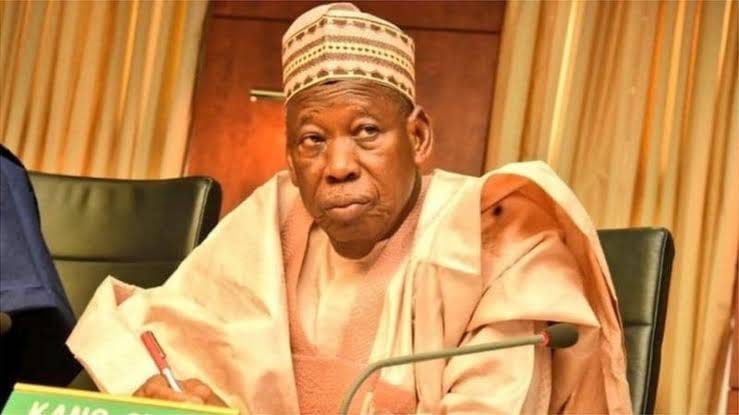
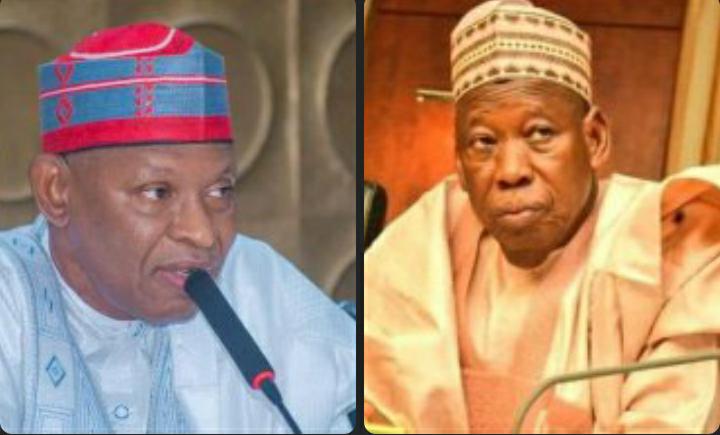
In the intricate tapestry of Nigerian politics, nepotism is often woven deep into the fabric of governance. Recent events surrounding Engr. Abba Kabir Yusuf, popularly known as “Abba Gida Gida,” and Dr Abdullahi Umar Ganduje illuminate a troubling pattern of favouritism and cronyism that continues to plague the nation’s political landscape.

In a move reminiscent of his predecessor, Abba Kabir Yusuf has nominated Mustapha Kwankwaso, the son of his godfather Engr. Rabiu Kwankwaso, for a commissioner position. This decision raises eyebrows, echoing past criticisms of Ganduje’s administration, where appointments seemed to prioritise personal connections over merit.

Such actions underscore a disturbing reality: the entrenched culture of nepotism in Nigerian politics, where loyalty to political dynasties often outweighs competence and merit. While the faces may change, the playbook remains eerily similar, perpetuating a cycle of patronage that undermines the principles of accountability and good governance.

The parallels between Abba Kabir Yusuf and Abdullahi Umar Ganduje serve as a sobering reminder of the challenges facing Nigeria’s democracy. Despite differing affiliations, both governors have succumbed to the temptation of nepotism, prioritising the interests of elites and families over the welfare of the broader populace.

This nepotistic trend erodes public trust in the political system and exacerbates social and economic inequalities. When positions of power are monopolised by a select few, talented individuals from marginalised communities are denied opportunities for advancement, further entrenching the status quo of privilege and exclusion.

As the nation navigates its democratic journey, it is imperative to confront and address the scourge of nepotism head-on. Transparent and merit-based governance systems must be championed, where appointments are made based on qualifications rather than personal relationships.

Moreover, robust mechanisms for accountability and oversight are essential to ensure public officials are held accountable for their actions. Civil society organisations, independent media, and vigilant citizens play a crucial role in exposing and challenging instances of nepotism and corruption, fostering a culture of transparency and accountability in governance.

Ultimately, the fate of Nigerian politics rests in the hands of its citizens. By demanding accountability, transparency, and a commitment to the common good, Nigerians can pave the way for a brighter and more equitable future, free from the shackles of nepotism that have privileged few.

Umar Sani Adamu (Kawun Baba) wrote via umarhashidu1994@gmail.com.

Re: Dump your Dollars to avoid tears, Naira appreciates – Presidency warns

Baffa Kabiru Gwadabe, PhD

When I first saw the news, I was overwhelmed by the efforts of Mr. Cardoso as the apex Bank Governor trying to stabilize the Naira. In the news cover, it was reported that “the Presidency has warned Forex speculators to discard their Dollars, saying that the Naira will soon appreciate”. But the above statement was said to be made by the President Bola Tinubu’s Special Adviser on Information and Strategy, Mr. Bayo Onanuga, through his Twitter (now X) handle on Thursday 21 March, 2024.

Mr. Onanuga urged Dollar speculators to quickly dump their Dollars to avoid ‘tears’ that may ensue after continued appreciation of the Naira. Mr. Onanuga was reacting to the recent disclosure by the CBN that it had cleared $7 billion foreign exchange backlog inherited by the Bank.

The development was confirmed by the CBN’s Acting Director, Corporate Communications, Mrs. Hakama Sidi Ali. According to her, the CBN had employed the services of Deloitte consult as an independent audit company to judiciously assess the forex backlog claims and all valid claims based on the recommendations of the company were settled by the Bank. She further indicated that all invalid claims or transactions were referred to the relevant authorities for further investigation.

Similarly, the above efforts, coupled with others such as the seeming ‘credibility of the CBN’ in keeping to its policies have made the Naira to appreciate to some levels and also to the rise in Nigeria’s foreign reserve to $34.11 billion early this month, which is almost the highest recorded since the last 8 months. This is welcoming for Nigeria as import-dependent economy and led Mr. Onanuga to talk to speculators in his tone of ‘Dump Your Dollars’. The ‘dumping of the Dollars’ is my point of entry from which I want to make some remarks.

Let me start by saying or informing Mr. Onanuga that the Dollar crisis in Nigeria is beyond speculations. To a greater extent, it is an issue of ‘store of wealth or value’ using the Forex, specifically the US Dollar. Many Nigerians that had the opportunity of accumulation of ‘large wealth’, try their ways in ‘safe-keeping’ same by converting certain amounts of Naira to the Dollar or other major currencies like the Euro, the Sterling Pounds etc. This has remained the practice in the country and has reached the extent of what I called the ‘unconscious journey’ or the ‘hardened behaviour’ of not seeing the Naira as any promising currency that is stable. In other words, the Naira will always keep depreciating.

With the kinds of policy efforts by the CBN and the Federal Government, this behaviour or trend may have its last gate. What I am saying, in short, is that the practice of scouting and safe-keeping of the Dollar at whatever rate to keep in ‘graveyards’, ‘underground safe-tanks’, ‘security safes’, ‘travelling bags or brief cases’, ‘laundering overseas’ and ‘deposits in commercial banks’ to mention but a few storage strategies of the Dollars may be curtailed.

I now ask some questions regarding the calls for ‘dumping’ by Mr. Onanuga. If Nigerians that had scouted and stored the Dollars were to repent and bring out some or all of their stored Dollars, where should they dump them? Is the dumping ground ‘safe’ without creating a new round of speculations and corruption? Are the dumpers ‘safe’ from stigmatization and punishment? Are the dumping sites going to be the CBN like during the New-Old Naira notes swap, the commercial banks or the BDCs or new hubs? Will the Dollar holders be allowed to spend the Dollars domestically for their transactions? The questions are many and could go on and on, but I stopped at just number 5, as other people may ask some more questions.

For some of the questions asked above, the answers may be very clear, just like the water colour in the day time. All that is needed in answering those questions is for the CBN and the Presidency to be more proactive and strategic enough in handling the long-standing crisis of the Dollar. This is just to say that there is a better need for change of strategies and operations.

The duo should greatly be reminded of the popular saying that ‘once-beaten, twice shy’. I hope to focus specifically on providing only 2 answers based on my little understanding and focus of the rejoinder, the ‘dumping of the Dollar’ and the ‘domestic spending of the Dollar (dollarization)’.

The dumping should strictly be accommodated by the CBN and new accredited dealers or service providers that are trustworthy other than commercial banks or the BDCs. The commercial banks and the BDCs had been tried and tested at different times and different exchange rate regimes but have failed in their own domains. For instance, most commercial banks hoard, receive bribes, kick-backs, brokering or profit from the CBN official Dollar allocations, thereby further widening the gap between the official rate and the black-market rates.

For the BDCs, they are the agents, on many occasions, that served as the foot-soldiers in scouting and mopping-off all the available Dollars in the market with huge Naira for their clients and launder same in some instances.

Additionally, the Binance crypto market speculations of the rates appeared to be new in the perpetuation of Dollar atrocities in the country but still cannot be ignored.

On the answer to the question of spending the stored Dollar domestically, the answer is a resounding yes. Those with Dollar currencies in their possession should be allowed to transact at accredited points and this will ensure more liquidity of the Dollar domestically and reduce demand pressure to squash undue speculations and arbitraging. Allowing the Dollar to co-exist with the Naira in the domestic economy at reasonable scale is called ‘partial dollarization’. This is important because the Dollar in Nigeria based on the recent happenings and the CBN’s approaches is ‘strangled’, ‘suffocated’, ‘compressed’, and ‘thirsted’ for the Naira. So, what the Dollar now needs the most include but not limited to ‘some breath’, ‘exit-doors’, ‘chimneys’, ‘exhausts’ and ‘water’. So, Mr. Onanuga, the issue is not only about the ‘dumping’ but the provision of ‘sustainable dumping sites or exit-doors or chimneys for the strangulated Dollar’.

Moreover, I know some economists and others will question the very proposal of ‘partial dollarization’ of Nigeria, where Dollar will be used as a medium of exchange in addition to the Naira. Their major argument will be that the ‘partial dollarization’ will jeopardize Nigeria’s CBN monetary policy autonomy, because the CBN has no control over the Dollars that will be in circulation in the country. This is very true but with proper monitoring of the inflationary trends, this can be dealt with but it is good that I remind my colleagues in Economics of the concept of ‘unholy trinity’; where it is practically not possible to control the trinity at the same time. The unholy trinity is made up of the fixed exchange rate regime, independent monetary policy and free capital movement (see Figueredo et al., 2023).

Therefore, dollarization is necessary for Nigeria as it has already been practiced in many countries in the World and is one of the hidden secrets for their stable exchange rate systems or regimes. For those that visit countries such as the UK, US, Turkey, UAE, China, Germany, Saudi, Japan etc, they find at the airports currency exchange boots to convert currencies at ease and also realize at some hotels and malls or restaurants, price menus being quoted in 2 or more currencies for one to choose. Therefore, Nigeria should start its own journey.

On a final note, let me make little summary in bullet points to fine-tune the statement by Mr Onanuga that says ‘Dump Your Dollars’ but the ‘dump’ should be in this order:

  • Dump your Dollars with the CBN at its various State offices and Headquarters;
  • Dump with new aggregators to be approved by the CBN for onward submission to the CBN at a much regulated and controlled service charges;
  • Dumpers or depositors of the Dollars must not have domiciliary accounts but for those that have one, part of the amounts could be lodged into the accounts;
  • Domiciliary accounts in Nigeria need to be reviewed with a view to embracing the best global practice for the stability of the Naira;
  • There should be authorized currency exchange boots at major International airports in the country for small exchanges, like buying and selling of not more than $1,000 or so for travelers in and out of the country.
    For the case of ‘partial dollarization’, the following are recommended:
  • Real estate or physical assets and automobile dealings could be accredited to receive Dollars under stipulated guidelines and this will ease their trouble scouting for Dollars for their imports;
  • Major shopping malls and stores, restaurants, hotels/suites, hospitals (private), pharmacies, schools (private and all categories) should be accredited to receive Dollars under the CBN stipulated guidelines;
  • Entertainment industry and certain concerts in major cities of Nigeria such as Lagos, Kaduna, Abuja, Portharcourt, Benin, Kano, etc should be allowed to receive Dollars for their gate fee charges under the CBN stipulated guidelines.

Thank you and see you next time.

Dr. Gwadabe (Baffa) is an academic staff of Bayero University Kano, Nigeria, from the Department of Economics. He can be reached at: bkabirugwadabe@gmail.com

NANS demands investigation after stampede at NSUK claims lives of students

By Uzair Adam Imam

The National Association of Nigerian Students (NANS) expressed outrage over the deaths of two students at Nasarawa State University, Keffi (NSUK) during a stampede caused by the distribution of palliatives.

NANS President, Comrade Lucky Emonefe, called for a “thorough investigation” into the incident.

“The tragic event at Nasarawa State University, Keffi, which resulted in the loss of two lives and numerous injuries, is vehemently condemned,” Emonefe said in a statement.

He offered condolences to the bereaved families and demanded that “those responsible for the mishandling of the distribution of palliatives be held accountable.”

NANS urged authorities to adopt “modern distribution methods” to prioritize safety during aid distribution.

They also called on the university to provide counseling and support services to the affected students.
 

Gandu’s “Sakona” is a definition of humility and morality in the Kwankwasiyya movement

By Salihi Adamu Takai

Contemporary political singers are known for the satirical content of most of their songs. Political songs are very descriptive of invective barbs, innuendos, and allusions. They are primarily meant to satirise opponents. Rarara’s invective style in his music can be the worst political song depicting invective barbs nowadays.

Tijjani Gandu is an exceptional political singer who uses minimal invective barbs. His songs are mostly for a one-sided party or his godfathers. Gandu is known for the centralised theme of his songs. He mostly only focuses on the party and the esteemed quality of his beloved and favourite politician.

“Abba Gida Gida” was the first song in 2019 to elevate Gandu’s reputation as a talented political singer. The song was accepted and spread to every nook and cranny. It was very stylish with its theme of mobilising for the then PDP gubernatorial flag bearer in Kano State (Engr. Abba Kabir Yusuf). The candidate was challenged for not being famous. So, Gandu released the song “Abba Gida Gida”, which made the candidate very well-known.

Gandu is always ready to challenge any chaos in Kano politics to protect the governor’s dignity. It has been known for the whole week that Kano State Governor Abba was criticised for his open statement against the inappropriate action of the Kano Hisba. The statement was misconstrued. The people’s opinions were very different. Some supported the Governor’s statement, and some opposed it.

Amid the chaos, Tijjani Gandu released a song recently titled “Saƙona,” my message. In the song, the singer, Gandu, sends sympathetic messages that make thousands of people weep while listening to the music. The song has some words of mercy and humility. The saying “Abba ya san girman malamai, shi ya sa ya ɗau Hisbah ya ba ta kullalle” means Abba respects Islamic clerics, so he appointed the most deserving person to head the Hisbah.

The singer tried to maintain his dignity of not being an abuser – he doesn’t abuse anyone in the song – he only calls the attention of the entire public to discard any misconceptions from any political opponents of the Hisba saga.

Nigerian Senators’ diatribe and their corrupt national budget opprobrium

By Nura Jibo

Senator Abdul Ningi remains a hero of Nigeria’s democracy. His revelations, as the senator from Edo North implied, will haunt their reputation, causing them to receive years of contempt and opprobrium from the Nigerian people.

No one takes any of the current Nigerian senators seriously.

The entire country and world leaders view their tongue-lashing as an overt confession to the national budget’s animadversion. What irony!

Indeed, the mentality of Nigerian politicians, both young and old, is the same. To enter politics, contest, “win” either fairly or by crooked means, and serve the 1st, 2nd, 3rd, and 4th terms.

This could be easily spotted in the Senate chamber. It is full of geriatrics who served eight years as governors in their respective states and have now become senators to take cover in the Senate and hide their political obloquy.

In the past two days, Nigerians have been left in no doubt that the Nigerian senators, including their Senate President, are already in a state of disgrace resulting from public opprobrium. And this is quite understandable.

There is no way a Nigerian citizen could trust any senator with his hard-earned electoral vote. Unless the senator steals it by fabricating figures the way they surreptitiously did in the 2023 national budget, where some of them were allocated ₦500 million as publicly confessed by one of their own!

For one of their own to call all of them culpable, or better yet, culprits, is certainly an obloquy and political hara-kiri—an indelible series of political somersaults.

What Senator Ningi presented was a testament to the fact that the entire Senate is now embroiled in a disturbing saga of corruption and self-incrimination, demonstrating a reckless disregard and disrespect for the public good.

Indeed, this Senate’s attitude is certainly an intentional breach of decorum that exposes them to the vagueness, vagaries, verbosity, and waffle of their statutory unconscionability!

May Allah SWT save Nigeria and its people from this kind of Senate’s malicious misrepresentation(s) of the people under the tutelage of budget padding.

Arewa conundrum: a clarion call for agenda and patriotic fervor

By Idris Ishaq Danwanka

Esteemed compatriots and guardians of our collective Northern ethos, in the wake of recent fiscal disclosures, a disconcerting schism has been unveiled that warrants our immediate attention and stringent critique. Senator Abdul Ahmed Ningi, erstwhile Chairman of the Northern Senators Forum, has valiantly illuminated a disquieting anomaly within the fiscal year 2024 budget proceedings.

With the budget initially proposed by President Bola Ahmed Tinubu amounting to 24 trillion Naira, the subsequent and inexplicable inflation to 27 trillion Naira post-senate approval instigates profound perturbation and necessitates scrupulous examination.

The crux of the matter lies not solely within the numerical discrepancies but more so in the disheartening dearth of collective fortitude amongst our Northern sentinels. Senator Ningi’s resignation from the venerable chairmanship of our forum, following his laudable challenge to the opaque augmentation of the said budget, is a testament to a troubling lack of solidarity and a deviation from the path of unwavering patriotism that our region is historically known to uphold.

It is incumbent upon us, as the custodians of Arewa’s legacy, to transcend the paralyzing grip of fear that threatens our tenure within the senate.

The specter of suspension or dismissal should not deter us from our sacrosanct duty to the masses. We must rally behind the banner of transparency, accountability, and unwavering integrity that Senator Ningi has hoisted, even in the face of potential political ostracism.

The significance of unity cannot be overstated in our quest for regional and national development. A fragmented front is a disservice to the populace we have sworn to serve. It is only through a cohesive and unyielding stance that we can effectively steward the resources of our polity and engender a milieu where probity is not just expected but demanded.

Let us not shy away from our responsibility to interrogate and impugn any act that undermines the fiscal sanctity of our nation. To falter in this regard is to capitulate to the whims of those who may not prioritize the collective good over individual aggrandizement. The import of our togetherness is the bulwark against the forces of division and the cornerstone of our advocacy for the masses.

In conclusion, it is our imperative to eschew the parochial fears that stifle our voice and to stand shoulder to shoulder with those who dare to speak truth to power. The Arewa spirit is one of resilience, unity, and an unyielding commitment to the greater good. May we find the moral fortitude to embody these virtues and to restore the faith of our people in our esteemed institution.

Let us not delay in reclaiming our esteemed position as paragons of rectitude and as the vanguards of the people’s will. The time for action is now; the call for unity and patriotism, ever resonant.

Yours in service to our region and our nation;

Sen. Idris Ishaq Danwanka,
B.A. English Language and Literature, Federal University Dutse.

JUST IN: Senator Ningi resigns as chairman of Northern Senators Forum

By Uzair Adam Imam 

Senator Abdul Ningi of Bauchi State has announced his resignation as chairman of the Northern Senators Forum, following his suspension from the Senate.  

Ningi had been accused of making misleading claims about the size of the 2024 budget, which he alleged was padded with N3.7 trillion in additional funds.  

He has denied any wrongdoing, but the Senate has suspended him pending an investigation into the matter. 

In response to the allegations made by Senator Ningi, the Senate has suspended him for three months while it investigates the matter.  

The Senate has stated that there is no evidence to support Ningi’s claim that the 2024 budget was padded.  

The Senate also expressed its concern over the potential damage to the reputation of the body and the Nigerian people caused by Ningi’s remarks.  

Meanwhile, Ningi tendered his resignation letter as the chairman of the Northern Senators Forum following his suspension. 

“I will like to resign my position as the chairman of the Northern Senators Forum. This is of course necessitated by unfolding events in the National Assembly, the North and the Nation at large. 

“I will like to specially thank members of the forum for the opportunity given to me for the last eight months to spearhead this very important forum. 

“I believe this forum is very important to the progress and development of Northern Nigeria,” the letter reads.

An open letter to Jigawa State Governor, Malam Umar Namadi

By Garba Sidi.

I hope this letter finds you in good health and high spirits. 

I am writing to bring to your attention the commendable efforts of Honourable Abdulladir Umar Bala (T.O.) during his tenure as the Chairman of Hadejia Local Government. As a concerned citizen of Hadejia and someone who deeply cares about our town’s progress, I wish to express my support for Honourable Abdulladir Umar Bala’s candidacy for a second term.

Throughout the years, it has been observed that, apart from Bello Auyo, no other leader has contributed as significantly to the development of Hadejia as Honourable Abdulladir Umar Bala. His dedication to improving our town is evident in the transformative projects initiated under his leadership.

The essence of democracy lies in representing the people’s will, and Honourable Abdulladir Umar Bala (T.O) has proven himself to be a leader who genuinely understands and serves the people’s needs. “Government is the people, for the people, by the people,” and this principle resonates with the Hadejia community, which admires his leadership.

Furthermore, I would like to highlight Honourable Abdulladir Umar Bala’s unwavering commitment to the All Progressives Congress (APC). He wholeheartedly supported the party, actively participating in the campaign for His Excellency Mallam Umar Namadi, contributing significantly to the success of the 2023 elections.

Despite facing unjust attempts to tarnish his image, Honourable Abdulladir Umar Bala perseveres to bring beneficial projects to Hadejia. Recognising that certain political rivals may be trying to sow discord between his administration and your esteemed government is crucial. I sincerely hope you see through these divisive tactics and acknowledge the positive impact he has had on our community.

The people of Hadejia are well-informed and discerning, and they can distinguish between genuine efforts for development and misleading narratives meant to undermine a dedicated leader. Denying Honourable Abdulladir Umar Bala the opportunity to run for a second term could be perceived as a hindrance to the progress and development of our town.

I trust that this message will reach you, and I urge you to consider the positive contributions of Honourable Abdulladir Umar Bala (T.O.) to Hadejia. Allowing him to run for a second term would be a decision in favour of continued growth and prosperity for our beloved town.

Thank you for your time and consideration.

Hikima fails to meet demands: My prophecies about his partisanship happened

Yakubu Nasiru Khalid

In March 2023, I wrote an open letter to Barrister Abba Hikima titled “Should a social fighter be a partisan?” The Daily Reality published the letter in the same month. In it, I declared the influence of politics and suggested partisanship in politics. All that I prophesied would happen to him is happening now. One cannot eat two corns at the same time. 

On this day, 10th March 2024, I came across several posts by Hikima that revealed his hidden connections with a governor, Abba Kabir Yusuf (AKY). These posts, which criticised AKY’s government for mismanagement and unfulfilled campaign promises, were rife with political cultism, a trait often associated with the members of the Kwankwasiyya sect.

As I studied him, he always thought he was right and did not make an excuse for fault or blunder. This is quite the wrong line of thinking, as he prefixed the title “Esq” in front of his name to address these issues in such a way. 

Hikima’s attempt to expose the weaknesses of AKY aims to get fame and widespread admiration from the opposing parties, but this will be in vain. As he considers himself a public saviour, this is outright wrong for him, and it’s too early to do so. Read, listen, make an excuse, advise and take action; these are what should be done for a well-sounding veteran social worker or fighter.

“Any momentary triumph you think you have gained through argument is a Pyrrhic victory: The resentment and ill will you stir up is stronger and lasts longer than any momentary change of opinion. It is much more powerful to get others to agree with you through your actions, without saying”~law 9

Most people who are happy about Hikima’s criticism writings are either members of opposing parties or those called “absolute blind loyalists” because they swallow everything without asking a question. What happened to Abba Hikima and AKY is almost identical to what happened to Sheikh Aminu Daurawa and AKY. 

Many believed Daurawa was wrong, but the way Abba made corrections was unreasonable and impolite. People are not making a fair judgement. Resolving a conflict encourages one to insist on objective criteria, not personal interest. How many times did Abba meet the governor privately for these issues? 

Lastly, I suggest he work smartly and silently within either a line of partisanship or as a social fighter. He can only do one at a time. A man who constantly complains is not the right person. Be a problem solver, not a complainer. 

Yakubu Nasiru Khalid wrote via yakubunasirukhalid@gmail.com

Ramadan: Kano governor urges reopening of borders to ease food crisis

By Uzair Adam Imam

Kano State Governor, Abba Kabir Yusuf, has appealed to President Bola Ahmed Tinubu to consider reopening the country’s borders for the importation of foodstuff in order to address the current food crisis.

Governor Yusuf stressed that the closure of the borders has had a significant impact on the people of Kano State, leading to increased food prices and suffering.

In a statement issued by the governor’s spokesperson, Sunusi Bature Dawakin Tofa, Kano Governor Abba Kabir Yusuf called for the reopening of the country’s borders to address the current food crisis.

The statement was released following a meeting between the governor and the Controller General of the Nigerian Customs Service, Alhaji Bashir Adewale Adeniyi, at the Government House in Kano.

Governor Yusuf noted the critical condition of hunger and starvation in the country, which has been exacerbated by the sharp increase in commodity prices.

The statement read in part; “We wish appreciate the President’s intervention on the ongoing national food initiative which he considers Kano as the host for the initiative to be launched believing that the programme will cushion the effects of food scarcity if implemented”

Governor Yusuf stressed the urgent need for intervention, including the reopening of the borders to allow for the importation of commodities.

In his meeting with the Controller General of Customs, Bashir Adewale Adeniyi, Governor Yusuf highlighted the hardships faced by the people, particularly during Ramadan.

He stressed that the opening of the borders would be a crucial step in alleviating the distress of the people.

In addition to advocating for the reopening of the borders, Governor Yusuf commended the Customs Service’s initiative to distribute food items to the people of Kano, who have been facing hardship and hunger.

He urged the Customs Service to ensure that the food reaches those who are most affected. The governor also pledged his support to the Customs Service in its efforts to benefit the people of Kano and Nigeria as a whole.

In his response, Adeniyi emphasized the importance of building strong ties between the Nigerian Customs Service and the Kano community.

He emphasized the Service’s commitment to collaboration and constructive dialogue, and pledged to implement policies that would improve business processes and strengthen engagement with all stakeholders.

In addition to his interaction with stakeholders, the Controller General Adeniyi revealed that the Customs Service had made extensive plans to address the challenges of food scarcity and hardship in Kano. This includes the distribution of food items to the people of Kano.