Opinion

Kamala Harris’s race and the futility of one’s true identity 

By Sa’adatu Aliyu 

As the US election approaches and President Joe Biden steps aside for Vice-President Kamala Harris to run as president in 2024, questions swirl within both White and Black communities about Harris’s recent declaration as a Black woman. Despite her long-standing identification as a woman of Indian and Jamaican descent, Harris has only recently begun associating herself with the Black community. However, this sudden shift doesn’t surprise me, as politicians often use false identities to win popular support.

Can one simply claim a new identity without shared experiences and cultural heritage? Well, in the woke 21st century, perhaps. Is Harris’s declaration a genuine attempt to connect with the Black community or a calculated move to garner support? The timing of her proclamation, coinciding with her presidential bid, only fuels doubts about her authenticity.

But honestly, I am not in the least surprised by this sudden cross-dressing because it’s not uncommon to see politicians taking on false identities and doing strange things just to win popular support among the people, which will serve them during elections. I mean, among many others, I recall Joe Biden reciting a prophetic Hadith during the 2020 elections, attempting to prove his commitment to Muslim interests. This tactic is a familiar ploy to rally specific communities and secure votes. 

However, he was only using the strategy that every politician employs to rally Muslim communities to vote for him, and some bought it. Gullible and naive as they were, they had thought he was the man who wouldn’t see colour, let alone religion. However, Biden’s term turned out to be one of the regimes in which Palestinians suffered heavy persecution at the hands of his Israeli allies.

Now, I fail to understand the reason behind former President Donald Trump and the Republican Presidential candidate’s surprise that a dogged opponent is simply employing a political strategy to win the sympathy of the Black community, who, to a large extent, may determine the outcome of the US election. This is similar to how Trump capitalises on white supremacy and “America First” idiosyncrasies. Thus, it’s surprising that anyone is shocked when someone magically signs up to be a Black woman overnight as if we do not live in a world where our mere utterance and public declaration of being something automatically makes us that thing. I mean, take gender, for example.

I was born a boy, but I felt and wanted to be a girl, so I showed up and simply made a formal declaration. Isn’t gender, after all, a social construct? Perhaps Vice President Harris thought it was enough to be Black by merely making an official declaration of being Black, even though she’d always flaunted her Indian and Jamaican heritage with pride. And I don’t blame her. If Kamala Harris one day wakes up and says, “I am a Black woman and belong in the Black community,” so be it. She could just as easily choose to argue that she’s a white woman by simply being married to a white man or by saying she’s white. It’s easy to be a chameleon these days, changing into the colour that best fits our situation to achieve our desires.

With reference to Mrs Harris, who suddenly feels and declares herself a Black woman, and in relation to Simone de Beauvoir’s notion in her famous feminist book The Second Sex that “One is not born but becomes a woman,” perhaps it’s time to put the issue of race behind us. Let’s consider race, like gender, a social construct and integrate everyone irrespective of colour, as long as they feel and make the formal proclamation: “Although I was born Black, I feel I am white, and therefore, I am what I think I am.” Just like transgender people, who are increasingly being accepted into their desired gender community, we should similarly accept individuals who self-identify with a particular race. After all, we’re all one.

To that effect, if race is perceived as a social construct, then one is not born black but becomes black, and one is not born white but becomes white.

 Let us remember that for several decades, Black people have struggled for full acceptance into the world of white people. Some have straightened their hair with hot irons and a range of relaxers, worn contact lenses to have the “bluest eyes” to be accepted “under Western eyes”, and gone as far as bleaching their skin. However, this has not made them white nor granted them full acceptance into the white community because, despite all these efforts to change into somebody else, they are simply not that person.

Just because I say I am a doctor and put on a doctor’s uniform, parading myself as one, does not make me a doctor when I am a writer. The pen and scalpel are not interchangeable just because I say they are. And if, as a writer, I insist on performing the duties of a doctor, we’ll sure be heading for disaster. 

Therefore, if one is not born but becomes a woman, how about we stop seeing colour? How about we think of race as a social construct, too, and integrate everyone into one big, happy, peaceful family? Why is race still an issue? If some people recognise gender as a social construct, why haven’t the same group of people wholly recognised race as a social construct?

Perhaps it’s because cross-dressing doesn’t change certain realities. 

Sa’adatu Aliyu is a writer from Zaria. She is pursuing an M.A. in Literature at Ahmadu Bello University and lecturing at the university’s Distance Learning Centre. Her writing interests include prose fiction and international politics.

My Android application of the year

By Ishaka Mohammed

If I had had enough money a few days ago, I would have bought a new phone because of a certain feature I seriously wanted. However, I got an alternative from the internet. A free Android application brightened my gloomy day, so I call it my app of the year.

My wireless microphone couldn’t capture my voice during video recording but worked well with pure audio recording. I tested the mic on two Android phones and got the same results. 

I complained to the guy from whom I bought the mic, but he ghosted me for several days after informing me that it worked well when he tested it. I knew this guy through a friend, so I thought he was a retailer, not knowing he was a shopping agent. 

I later met with the retailer, who stressed that the one-month warranty period had elapsed. However, he examined my phone and said I needed a more advanced one to be able to use a wireless mic for video recording. He proved his point beyond doubt by testing the same mic on his phone and other mics on mine.

It was a difficult situation for me. After examining my options, including the cost of using effective noise reduction apps or getting a quiet open space to shoot videos, I almost resolved to stop creating audiovisual content for a while.

But I later watched a YouTube video on a related challenge and tested the recommended app and bingo! My problem was solved.

Open Camera is a free, offline app written by Mark Harman. It might save somebody’s neck the way it did mine. It’s on the Play Store.

Kleptocracy or Democracy? A critical assessment of the Nigerian state and the way forward

By Anwar Usman

Nigeria has over 200 million people from multiethnic and religious backgrounds, which has caused the country to suffer from various uncertainties. The country’s return to democracy in 1999 made the citizens think that a Messiah had come to their aid. Unfortunately, the truth is like the story of Judas, who was said to have betrayed Jesus Christ at Calvary.

Nigerians managed to follow whatever their leaders came up with mindlessly, without thinking of the negative consequences that such a policy would have on them. How do you even expect people who don’t know their democratic and civic rights to think in a way that depicts an environment of literacy? It’s almost impossible!

The imposition of artificial hardship, starvation, insecurity, unemployment, and so on made Nigerians reconsider their thinking and think differently. The only thing that an average Nigerian needs is “food.” Ask anyone, and they will tell you the same. Now, let me ask you (reader) this question: When Nigerians were not hungry, how many times have you heard of any protest/riot, especially in the north? 

No matter what the ruling class would do, an average Nigerian will tell you “Su da Allah” because they are contented and believe that Allah will take charge of that. That was when things were okay. The masses could afford 2/3 square meals daily, and things were readily available, not because Nigerian politicians were not looting.

Now, the devaluation of the Naira and the removal of fuel subsidies worsen Nigeria’s situation. The ruling class does all it feels like without any question from the citizens, even though people were said to be the backbone of democracy.

Experience of what Nigeria is about and how things have been going over decades triggered the situation in Nigeria today. A wealthy person today is bankrupt tomorrow and later becomes a beggar the next day.

The citizens of Nigeria are not violent. They accept whatever is imposed on them wholeheartedly, unlike people in other countries like Sudan, Kenya, etc. Kenyans, for instance, didn’t protest because of the high cost of food—no! It’s because of an additional levy that Nigerians endured over decades.

The only language that people in power understand is to go against their wishes. No government likes to be criticised. They know the sufferings of Nigerians, but all they do is give palliatives, cups of rice, and pasta or disburse N20,000using a random sampling technique.

For instance, the minister of humanitarians alone was accused of misappropriating 826 billion; likewise, the minister of finance, not to mention the CBN Governor and aviation minister, deceived Nigerians with a non-existent Nigerian airline, all during President Muhammadu Buhari. Nothing has been done about that yet.

Now that hunger has started killing people, the cost of living is high, including the devaluation of the Naira, which made people take a U-turn. It’s always said that “a hungry man is an angry man” Nigerians are ready to die! 

If one says the protest wouldn’t bring anything positive, I wonder. Do you want things to continue the way they are till eternity? Do you like our younger ones to continue floating in the streets? What would you feel when you find out that the leaders of tomorrow embrace drugs? These are things that no one can resolve except YOU yourselves! These people don’t care if all our youth would embrace drugs. It’s an added advantage to them; they’ll only use them as thugs during the campaign.

Even if things would worsen due to this protest, let it happen. You must lose something to get something! Even if you’re not ready to die today, hunger might kill you tomorrow. We’ve seen many instances of people being depressed, suffering from hypertension, melancholy and other related disease that were not known before.

The same people who failed to apprehend Boko Haram suspects and left the northern states bloody are what some people are saying we shouldn’t protest against. Nigerians are now refugees. The neighbouring states granted them asylum. Guess what? The government is not ready to do anything. 

Do you think we should continue following these people suffering from Kleptomania? Fold out arms because you’re afraid of something? Look, even if you didn’t protest today due to fear of being killed, insecurity is there for you! And the future of youth and the younger ones is not safe.

If the government is ready to review and listen to the yearning and aspirations of Nigerians and implement the pending policies, including the subsidising of petrol and the Naira that’ll benefit the citizens directly, then the reverse is the case. We can have a dialogue and reach an agreement about what the government ought to do, and in that process, the protest can be suspended. 

We wouldn’t forget our brothers in Katsina and Zamfara who are waiting to either be killed or kidnapped; Something must be done about them, too. If not, mobilisation will continue, and we’re ready to sacrifice our lives for the betterment of future generations.

May Nigerians protest peacefully. May the protest yield a positive outcome, ameen.

Anwar is a Faculty of Communication at Bayero University, Kano studentHe can be contacted via usmananwarhassan@gmail.com.

Protests and economic growth: Understanding the potential impact, by Ibrahim Abubakar Lajada

By Ibrahim Abubakar Lajada

In light of recent widespread protests across Nigeria, there are growing concerns regarding the potential economic impact of the ongoing unrest.

While acknowledging the importance of peaceful demonstrations as a means of expressing public grievances, it is essential to understand how these protests might lead to disruptions and slow down economic growth in the country.

While the right to protest is a fundamental aspect of democratic societies, it is important to recognize how prolonged demonstrations can influence economic performance.

I know many of the protest organizers in every state and I’m willing to engage with them on behalf of the government.

Economic disruptions resulting from protests

Protests, while often driven by legitimate issues, can have significant economic consequences, including:

Business Disruptions: Businesses in protest-affected areas may face closures, reduced operating hours, or interruptions in their operations. This can lead to financial losses, reduced productivity, and economic instability, particularly impacting small and medium-sized enterprises that are crucial to Nigeria’s economy.

Supply Chain Interruptions: Protests can disrupt key transportation routes and logistics networks, leading to delays and increased costs in the supply chain. These disruptions can affect various sectors, including manufacturing and retail, causing a ripple effect throughout the economy.

Investor Uncertainty: Persistent unrest can create an environment of uncertainty that deters both local and foreign investment. Investors may be hesitant to commit resources in a climate marked by instability, which can slow down economic growth and development.

Increased Government Expenditures: Managing protests and ensuring public safety can require substantial financial resources. Governments may need to divert funds from other critical areas, such as infrastructure and social services, to address the immediate needs arising from the unrest.

Balancing Rights with Economic Stability

It is crucial to balance the right to peaceful protest with considerations for economic stability. Constructive dialogue between protest organizers, government officials, and community leaders is essential to addressing grievances while minimizing economic disruptions.

Call for Constructive Dialogue and Solutions

I urge all stakeholders to engage in open, constructive dialogue to resolve underlying issues without causing undue harm to the economy. By working together, Nigeria can find solutions that address social concerns while supporting economic growth and stability.

Ibrahim Abubakar Lajada is a former presidential candidate and can be reached via Lajadaibrahim@gmail.com or +1 3143331112

On the nationwide protest

By AM Ashafa

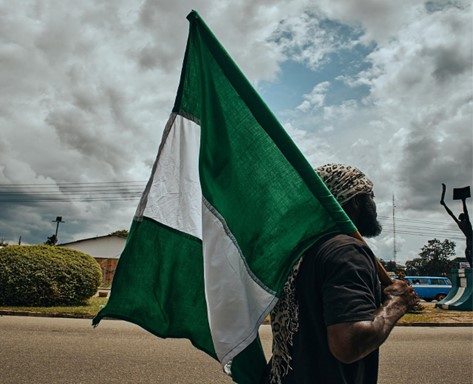
There has been nothing left that has not been said for and against the proposed nationwide protest in Nigeria. The government mobilised various people and groups to fight against it. In the first place, mercenary anti-protests amongst religious groups, youth groups, women, and tribal groups were brought or mobilised, allegedly spending a lot of national resources to campaign against the protest with some recorded successes and failures. 

The government also pointed at the opposition and other Jacobins as being behind the protest with the intent of taking over the government. Indeed, this may sound like Yahoo’s political argument. What has not been said much is that both the government and protesters are patriotic. The question is, who is more patriotic among them?

First, is a protest criminal? Is the expression of disliking government political decisions an act of criminality? Certainly no. On the other hand, is the government stopping a protest that, in its wisdom, tends to cause destruction to be allowed to happen? Certainly no. This means there’s a need to strike a balance. Any example of countries where protests turned into violence is mere pessimism. People won’t say that police brutality in response to protests was largely 95% of the reason why peaceful protests often turned violent.

The government has a responsibility to listen to its citizens. Citizens, not those controlling the government, own the police and all law enforcement agencies and machinery. The condition of members of the armed forces and their families in the harsh and messy socio-economic quagmire is no better than that of the entire citizens. Yet, they have a responsibility to save the citizens, the country, and the government that will make life bearable. 

The government must try hard not to criminalise protests. Protesters must try hard not to engage in violence and criminal destruction of public and private properties to vent their anger. When I heard one cleric saying obedience to all kinds of leaders in all brutal policies is obedience to Allah and doing otherwise with protests is criminal disobedience to Allah, I quickly reflected on the protestations in 1804 by Usman Danfodiyo, whose protestations brought about the Sokoto Caliphate that brought sanity to the Hausa society of the 19th century. 

My question to that cleric is, was he saying that Danfodio and the successive leaders of that largest political state in pre-colonial Africa were and are products of criminality? Certainly, Danfodio led a peaceful protest until the King of Gobir, Uunfa, responded with a high-handedness that the peaceful protesters couldn’t bear. The tide then turned, and the rest is history. 

We must always learn from history. Government and protesters must never ground our country. It’s for all of us. We have no other country but Nigeria. We must collectively refuse to be idiots in how we handle its stability and future.

A feminist reading of Jammaje’s Nanjala

  • Production:    Jammaje production
  • Producer:       Abubakar Bashir Maishadda
  • Director:        Ali Nuhu
  • Cast:               Sani Mu’azu, Ali Nuhu, Nancy Isime, Enyinna Ngwige, Rabi’u Rikadawa, Segun Arzine, Abba Al-Mustapha, Asabe Madak, Abba Zaki.

Nanjala, an eponymous and one of the most expensive movies in the Kannywood industry by Jammaje Production, is a breathtaking movie that explores and thematises patriarchal power, domination and mistreatment towards women gender. Nanjala, a leading character, is victimised by her chauvinistic father, who disbands her for being a female in favour of a male child, Dititi (Abba Zaki). Captain Jimmoh (Rikadawa) becomes her adopted father and helps to actualise her dream of becoming a renowned journalist.

Furthermore, Captain Sembene’s family is set on fire as his beloved son, Ditit, becomes a spoiled child, drug addict, thief and clubgoer. Plus, his other female daughter, Jarry, takes a leave from home for her father’s chauvinistic mistreatment. Falmata, another victim of Captain Sembene’s chauvinism, befriends her biological brother, Ditit, with a view to wed him.

Nanjala becomes a renowned and influential journalist who tirelessly fights and exposes corruption in the government. She encounters obstacles along the way from the authority. She is detained in cells for exposing corruption. Finally, she appears triumphant.

Mistreatment and domination are long-held traditions shown to women by a patriarchal world. Women, as chauvinists maintain, are disaster and second-class citizens who can’t contribute to one iota of life. In those days, women had to cancel their identities to have their voices heard—the same as Nanjala has to take a leave from a patriarchal home to attain her potential. 

Thomas Aquinas (1274) opines, “A woman is really an imperfect man… an incidental being … a botched man’’. Nanjala’s treatment by her father affirms Aquinas’s stance that women are imperfect and a botched to her male brother, Dititi. Plus, according to Baudelaire, “woman is natural, that is abominable’’ Some men consider women disgusting. This perception runs through Nanjala’s father, who finds the female gender abominable – divorcing Falmata’s mother for carrying a female unborn child, making life unbearable to Majuma (Asabe Madaki) and causing a great aspersion on Nanjal and Jarry, whom all are females. They have to leave their homes to feel at home.

The belief that women are nothing but second-class citizens, abominable and sex machines for men to exploit became prevalent during the Victorian period (1837-1901) and also in plenty of their literature. We see the fate of Susan Henchad, who is auctioned in Thomas Hardy’s The Mayor of Caster Bridge (1886), women who are sexually exploited by men at Sixa in Mango Beti’s Poor Christ of Bomba (1956) and Firdaus’s sexual abuse by men in Women at Point Zero (1975). Likewise, patriarchal domination doesn’t put a halt here but tries to silence any emerging powerful female voice. 

Women like Gorge Eliat (1919-1880), Gorge Sand (1904-1876), Charlotte Bronte (1816-1855), etc., succumb to patriarchal pressure and accept defeat to vie with men intellectually and literarily. Comparatively, Nanjala encounters the same treatment, where patriarchs try to silence her intellect and voice. They envy her fame, success, and education. Men are jealous of women’s successes, but Nanjala struggles and succeeds. 

For women to succeed in the patriarchal world, they have to be educated, pushed, and struggled. We see how women break the bonds. Li succeeds in The Stillborn (1984) via struggle and education, as Ada in Second-class Citizens(1974). Also, we see in the Kannywood movies- Hauwa Kulu (2019) where Hauwa (Hasana Muhammad) and Laila (Hadiza Gabon) in Manyan Mata (2023 succeed through education. However, Firdaus in Women at Point Zero (1975) and Nnu Egu in The Joys of Motherhood (1980) fail because they are illiterate or barely educated.

Meanwhile, Simone De Beauvoir (1908-1986) asserts that “males define what it means to be human, including what to be female. Since the female is not male”. Beauvoir maintains, “She becomes another”. Indeed, this derogatory portrayal has been born by females throughout many centuries. In the film, Nanjala’s father has this perception run in his blood. He evidently defines who a human being is to him, his male child, Ditti.  He loathes all his three daughters – Nanjala, Jarry, Falmata and Majuma because they are “others”. Women become secondary or non-existent players. 

Finally, Beauvoir asserts, “Women must break the bonds of their patriarchal society and define themselves if they wish to be a significant human”. This is what Nanjala does, and she becomes a “being” in the patriarchal society. Meanwhile, Kate Millet (1970) says, “A female is born, but a woman is created”. As Nanjala defines herself as a true human being, discarding the notion of femaleness in her, she creates womanness, as Millet (1970) puts it, through hard work, education, struggle, and boldness.

By way of conclusion, Nanjala mirrors patriarchal society and uncovers stereotypical portrayal of women as “others”, Second-Class Citizens, incidental beings, imperfect men, and abominable and other derogatory names forced women to accept by men. The film depicts the power of education and struggles as the only means for women to break the long-held tradition enjoyed by men and bury women’s intellect.

If not for education, Nanjala would have been buried alive like other female characters. The film is a clarion call to women to be educated, to disown being relegated to non-existent players or “others”. Nanjala succeeds and becomes a “human being”, whereas Majuma, Jarry and Falmata become second-class citizens.

Reviewed by Abba Musa Ibrahim. He can be reached via abbamusa6888@gmail.com.

Professor Muhammad Lawal Mayanchi: A brief tribute

By Dr. A. M. Lawal

Until fate brought us together at the Federal University Gusau, Professor Muhammad Lawal Mayanchi was an uncle I hardly knew. Growing up, he was a military man who lived far away from home and rarely visited. The few times he visited after his compulsory retirement, I was away in school. So, my first major interaction with him was at FUGUS. 

The first day we met, his attention was divided. On the one hand, he was trying to make up for the lost time he had with me and, on the other, as the then Dean of Students, he was busy trying to control and keep students in line so they could board the University shuttle to town in an orderly fashion. From there, I witnessed first-hand his discipline and how obsessed he was with entrenching the same to the students. Watching him, I could not help but admire his drive to make his children, as he called his students, as disciplined and driven as he was. 

From that day, Prof. usually called me to ask about my progress as a man and as an academic. Where I erred, he often reported me to Professor Ahmad Galadima for reprimand. Thereafter, he would call me to either his house or his office for counselling. In shaping me, Prof. Galadima was the carrot to Prof. Galadima’s stick. And it worked—perfectly. 

Whenever and wherever I met Prof, he always told me his life stories and the challenges he faced post-military career before asking me the lessons I learnt from them. Spending time with him was like being in a class where one is taught the dynamics of life. 

In hindsight, it is clear that during my last physical interaction with Prof, he had a premonition of his death. We discussed some family matters after which he told me, ‘as we are leaving the scene, the leadership of our families both immediate and extended, will fall on your shoulders. You have to be ready. I have a feeling it will be sooner than we think.’  

And then Prof left us. Now we have to fill in the void he left behind. Or at least try to. A task as daunting as it is challenging. 

May his soul continue to rest in Allah’s bosom, amin.

Dr. A. M. Lawal wrote from the Department of Chemistry, Federal University Gusau, Zamfara.

How can President Tinubu stop the August 1 protests?

By Prof. Abdussamad Umar Jibia

It is no longer news that the Asiwaju Bola Ahmad Tinubu-led Federal Government has been inviting anyone it considers influential to help it prevail on Nigerian youth to stop the planned August 1-10 protests. The organisers of the protest, as I was told in most of the social media platforms I asked, are hunger, insecurity, and poverty, among the other things mentioned by the angry youth. 

Food sufficiency and security of lives and property are the necessary requirements for the prosperous living of any society. Every other thing follows. 

The fact about the people Tinubu has been inviting is that Nigerians consider them part of their problem. Traditional and religious rulers, politicians, etc., no longer command the respect they used to command in those days. A hungry man is angry with every other person, including a fellow hungry man. So, how can they listen to the pot-bellied traditional and religious leaders of these days? 

Certain other things have not been helpful to Tinubu. At this critical moment of his administration, he should not have allowed the controversy around Dangote Refinery to surface. Even before the removal of the oil subsidy, we were told that the Dangote refinery would provide a final solution to the problem of fuel supply, which has been part of our national life for a few decades. Just as production is set to begin properly, we are being told that Dangote refined fuel is not good after all and that the refinery has not been licenced. How do you expect Nigerians to be happy?

Since the altercation between Dangote and NNPC officials started, Nigerians have become aware of the Tinubu family’s underground oil business. I was just reading an essay in a social media group about how Oando, a Tinubu family-owned company, began to refine oil in Malta and export it to Nigeria through a series of underground moves. 

True or false, the story is now well known to every Nigerian who can afford a China-made Android phone. The onus is on the Tinubu administration to give its own side of this story. Until then, Nigerians will continue to believe that the Dangote Refinery initiative is being killed to advance the personal interests of the President. Would that not be enough to mobilise them to protest?

However, President Tinubu can avert the protests by taking certain bold steps, which would only take a patriotic leader to implement.

Tinubu, as a devout Muslim, can copy from Umar bn Abdulazeez, an Umayyad Caliph. Before Umar became the leader of the caliphate, he led a very lavish lifestyle like his wife, who was a princess of the caliphate. As soon as he assumed office, Ibn Abdulazeez put all his wealth and that of his family into the public treasury. He lived the rest of his life humbly and died honourably. Today, he is remembered as one of the best examples of leadership in human history. Is that too much for President Tinubu?

Mr President should remove every obstacle around the proper take-off of the Dangote refinery. It doesn’t matter whether or not Alhaji Aliko Dangote supported the APC candidate in the 2023 presidential election. Dangote is a Nigerian, and Nigerians stand to gain from his investment. The Federal Government should provide the refinery with Nigeria’s crude oil and make sure the price falls to the barest affordable minimum without short-changing the investor. Note that the present hardship confronting Nigerians began with the removal of subsidy and the rise of fuel pump price. 

President Tinubu should give licences to other Nigerians who want to set up refineries. As a matter of national policy, the importation of refined petroleum products must stop immediately.

The Tinubu Government should give a timeline it can stick to for the resumption of operations of its three refineries. Nigerians are aware that billions of Naira are spent every month on personnel and overhead costs for refineries that are not working. On the other hand, hardworking Nigerians are now being promised a paltry N70,000 as minimum wage.

Banditry and kidnapping must be ended to achieve food security and protect lives and property. To do so, President Tinubu should remove all bandits’ sympathisers from his government and give an ultimatum to his commanders to target and neutralise all bandits’ leaders, some of whom are now traditional rulers. Leaders of criminals are well known to the people and to the Government. It takes the will of the federal government to confront them.

Ending banditry and kidnapping would also effectively close down all IDP camps and return all campers to the farm. 

That is not all. The Federal Government should return the cost of electricity as they met it. This should be announced and effected immediately. It is noteworthy that Gencos and Discos were sold to public facilities at giveaway prices. Thus, they do not have the moral right to charge Nigerians prohibitively for their services, which, by the way, are not satisfactorily delivered.

The National Assembly can also play its own part by suspending its recess and taking a decision to end the regime of billions of Naira getting into the bank accounts of its members in the name of constituency projects and all manner of allowances. They should earn a salary equivalent to that of a senior civil servant in a Federal Ministry. 

To show their seriousness, all senators and rep members should immediately return SUVs bought for them with public funds. State commissioners are more numerous and use similar official vehicles even though they are not elected. This has been the argument of National Assembly members since 1999, but it is not valid. State commissioners have ministries under them, and you, as National leaders, are supposed to set an example for others to follow.

If this Government can do the above, and immediately too, it would have the moral authority to confront anyone who goes to the street to call for an end to bad governance. 

The constitutional conferences, restructuring, resource control, INEC, EFCC, etc., are all political and do not directly affect the common man on the street.

Professor Abdussamad Umar Jibia wrote via aujibia@gmail.com.

EFCC’s anti-graft war and politics of sponsored protests 

By Haroon Aremu 

In a period marked by ongoing high-profile corruption cases by the Economic Financial Crimes Commission (EFCC), the Nigerian authorities urgently need to address the potential dangers of protests and the pressing demand for justice. 

Specifically, some high-profile corruption cases under anti-graft agencies warrant thorough examination to understand the depth of the issue and the necessary steps required for resolution and swift justice dispensation.

Bodies like the National Youth Service Corps (NYSC) scheme preach the promotion of national security, awareness and consciousness; thus, I cannot but wonder how these situations affect Nigeria as a nation and proffer feasible solutions.

Communication and information management delivery is important as we have some high-profile cases in the country, and Nigerians eagerly await their conclusion. The EFCC charged with this responsibility should ensure a quick but thorough investigation to reduce corruption in our society, thereby bridging the gap of mistrust between the agency and the populace.

It can be recalled that the former Minister of Petroleum Resources, Diezani Alison-Madueke, has been accused of corruption and money laundering involving billions of dollars. The EFCC has seized properties and assets worth millions linked to her. She is facing charges in Nigeria and is under investigation by the United Kingdom’s National Crime Agency.

 Former governor of Ekiti State Ayodele Fayose is charged with receiving N1.3 billion from the Office of the National Security Adviser (NSA) for his election campaign. The EFCC arraigned him, and his trial is ongoing. Also, the former Federal Inland Revenue Service (FIRS) chairman, Babatunde Fowler, is under investigation for alleged financial mismanagement and fraud. 

Similarly, Yahaya Bello, former governor of Kogi State, stands accused of an N80.2 billion fraud. The Chief Judge of the Federal High Court, Justice John Tsoho, has kept the case in Abuja, declining Bello’s request to transfer the trial to Kogi State.

The long list also included former Governor of the Central Bank of Nigeria (CBN) Godwin Emefiele, who is being charged with financial mismanagement and corruption while leading the apex bank. 

 EFCC’s investigation into Betta Edu, suspended Minister of Humanitarian Affairs and Poverty Alleviation, is ongoing, with specific details yet to be fully available. Also, Sadiya Umar Farouq, the former Minister of Humanitarian Affairs, Disaster Management, and Social Development, is accused of embezzling funds meant for social welfare programs. It is gratifying that the court has asked her to account for over N790bn she embezzled while in office.

Amid these significant corruption cases, there are speculations that some individuals facing probes by the EFCC might be sponsors of planned protests against the anti-corruption agency. This has raised concerns about the motivations behind these demonstrations and their potential impact on national stability.

While peaceful protests are a democratic right, they can spiral into violence, property damage, and disruption of public order. The EndSARS protests serve as a stark reminder of where lives were lost, properties destroyed, and chaos ensued. Protests pose risks to participants and bystanders and can escalate into broader conflicts with law enforcement or opposing groups.

As a concerned citizen, I always preach sustainability in national security and justice enforcement, given the complexities surrounding these high-profile cases and the associated risks of protests.

Efforts to address these issues involved community engagement programs to address grievances before they escalate into protests. This fosters trust and opens channels for dialogue. Strengthen intelligence networks to anticipate and prevent potential violence. This involves monitoring social media and other communication channels for signs of unrest.

There is also a need to provide specialised training for law enforcement officers on de-escalation techniques to handle protests more peacefully and effectively while ensuring transparent and accountable governance to build public trust. This includes clear communication about the progress of high-profile cases and actions taken.

Similarly, fostering continuous dialogue between government officials and civil society to find mutually agreeable solutions to contentious issues is another alternative approach. The EFCC should collaborate closely with police and military personnel, especially during arrests, because the police have higher immunity for legal arrests of public figures, which can help manage high-tension situations more effectively. 

Finally, Navigating the dual challenges of addressing high-profile corruption cases and managing potential protests requires a multi-faceted approach. Swift and fair dispensation of justice, combined with proactive and strategic security measures, will strengthen national security and uphold the rule of law in Nigeria. 

The ongoing cases involving figures like Diezani Alison-Madueke, Ayodele Fayose, Babatunde Fowler, Yahaya Bello, Godwin Emefiele, Betta Edu, and Sadiya Umar Faruq, among others, must be handled with care. Nigerians expect a swift investigation and dispensation of fair judgment to restore faith in our anti-graft agencies and judicial system, which will ultimately deter future corruption.

Haroon Aremu Abiodun is a corp member with PRNigeria Center Abuja and wrote in via exponentumera@gmail.com.

The diminishing value of formal qualifications in Nigeria’s labour market

By Isah Kamisu Madachi

The ubiquitous use of social media and other online platforms, marking the advent of the digital era facilitated by technological advancements, has revolutionised the Nigerian economy and labour market. The longstanding tradition of obtaining certificates and waiting for office work is declining, leading to a paradigm shift in the Nigerian certificate-based economy from valuing certificates to emphasising skills, akin to the trend in developed countries. It is silently moving from your paper to what you can offer. 

While I was not born in the 1970s and 80s, I believe it was difficult, if not impossible, to find someone with a certificate from a Nigerian institution engaged in skilled trades such as carpentry, tiling, wiring, and plumbing. During that period, when a certificate was earned, the expectation was to be employed by the government or a private organisation. However, the contemporary scenario is different, as it is common to find individuals with higher degree qualifications still actively engaged in such work. The emphasis on the value of practical skills is evident almost everywhere, including social media, classrooms, public lectures and capacity-building seminars.

Drawing from my sociology background, I am engaged in various activities such as YouTubing, blogging, essay writing, and video editing. A friend of mine, a law graduate, works with a radio station because of his oratory prowess. My mentor, who graduated years before I joined the university, now works with a leading newspaper in Nigeria because of his ability to write well. It is a common misconception among Nigerians to equate education or skill with certificates.

As a student, I have witnessed how things have changed. An internationally respected lecturer from my department who also worked in the same profession in the United States of America for many years remarked that nobody had ever inquired to see his certificate for the time he spent there. He only lists his certifications and compliments them with the knowledge and skills attached.

This shift from certificate-based to skill-based education is affecting the Nigerian education system because, despite the evolving changes in this endeavour, it seems to have found it difficult to adapt to the new reality. In schools, the focus is still highly on the certificates and theoretical aspects of the courses offered instead of skills. This continues to create discrepancies between what the job market needs and what schools produce.

Seeing overwhelming numbers of unemployed Nigerian graduates roaming the streets led frustrated Nigerian youth to conclude that school is a scam, chanting the famous “school na scam” phrase. This conclusion descended on even those who have yet to experience the reality of life after graduation. Gradually, it has become popular to the extent that overwhelming youth in Nigeria today choose to behave as if they just come to school to acquire the certificate but to learn nothing, despite the seemingly irrelevance of the certificate in the job market. 

To adapt to the changing global trend, Nigeria requires education reform to address the production of half-baked graduates, which is a consequence of the unfavourable learning conditions created by underfunding education. Many experts have raised alarms about the outdated nature of the Nigerian education curriculum, pointing out its mismatch with the needs of the Nigerian labour market. Effective reforms are necessary to address these issues.

Isah Kamisu Madachi, a fresh sociology graduate, writes from Katagum L.G.A, Bauchi State, and can be reached via isahkamisumadachi@gmail.com.