Opinion

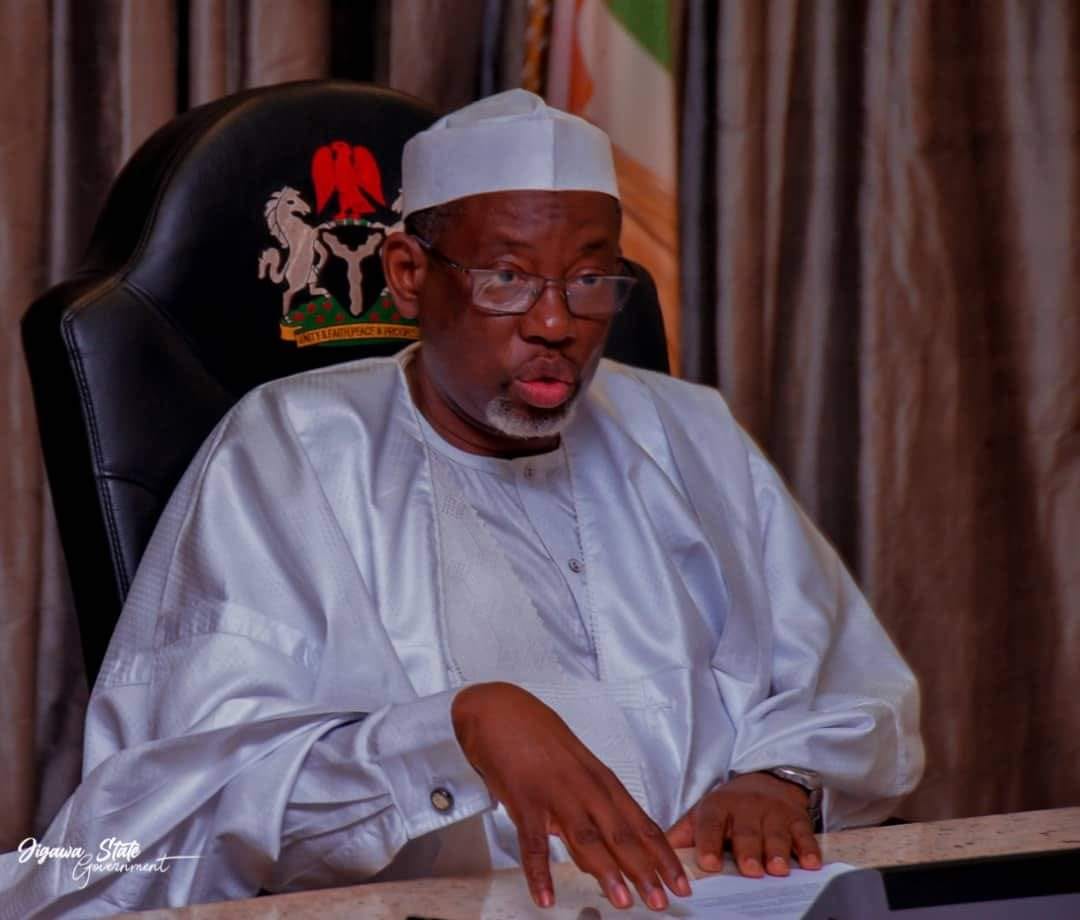
The birth of performance-based politics in Jega  

By Bilyamin Abdulmumin, PhD

There is much to learn from the politics currently unfolding between the Jega community, their constituency representative, and the Kebbi State government. 

It all began with rising criticism directed at the state government over the glaring lack of infrastructure development in the community. What made the criticism particularly serious was the surprise and visible projects by Hon. Mansur Musa Jega, the National Assembly member representing Jega, Gwandu, and Aliero. Unarguably, since the return of democracy, this constituency has never witnessed such a scale of project delivery. So, unsurprisingly, prayers and praise were poured in from all quarters.

With Senator Muhammad Adamu Aliero of Kebbi Central also delivering notable developments, public frustration quickly turned toward the state government—the governor, the state assembly member, and the local government chairman. During the latest Eid prayer, one fierce Imam echoed the sentiment in his sermon before thousands of faithful. 

In a bold rhetorical salvo, the Imam asked: “Where are the capital projects from the state governor? Or from the local government chairman? Has governance been reduced to merely paying salaries?” 

On the other hand, the Imam turns to the constituency member to invoke Allah’s blessings on him for conspicuous township developments. These prayers were the straw that broke the camel’s back. The video went viral, sending shockwaves through the state government and its supporters.

But then, almost immediately, something interesting happened. Based on the advice, the government mobilised contractors to immediately mark for dualisation one of the busiest roads (leading to the house of the town chief). Behold, performance-based politics (which should have been the case) has given birth. 

One interesting lesson from this development is that a politician’s performance speaks louder and travels faster than any political campaign: A politician’s performance becomes an automatic means of political campaigning. Imagine an Imam on Eid grounds before thousands campaigning for one candidate. That’s the power of visible performance.

Another interesting piece revealed by the saga was the political influence of the population. Jega is among the few local governments in Kebbi State with the highest population, hence one of the most influential politically. The old town forms what would be called a swing state in America for its political dynamism or K states in Nigeria for its sheer number of electorates, so winning it is a sign of success in Kebbi State. A reason why the state governor didn’t joke with the Imam and the electorate’s outcry. This shows that a large population, when strategically mobilised, can become a political asset.

 While delivering constituency projects also depends on what committees a representative belongs to, Mansur still deserves credit because there are allegations of constructors conniving with constituency members to divert billions of naira from constituency projects. 

We criticise politicians when they fail; we should also encourage them when they try.

Before your next Umrah…build a Waqf

By Abdullahi Abubakar Lamido

The dusty path to Al-Ma’arif Islamiyyah School was unusually quiet that Wednesday afternoon, except for the gentle crunch of sandals on gravel and the animated voices of two young girls wrapped in flowing white hijabs.

Unknown to many passersby, the conversation between these two girls wasn’t just about school or homework. It was about something deeper—something that could transform communities: the power of Waqf. As they walked, they debated a topic that many adults still struggle with: Should we prioritise spending on annual Umrah trips or invest in sustainable Waqf projects that empower girls through education and skill-building?

“Ameena, wait for me!” called out Hafsah, adjusting the corner of her veil.

Ameena slowed down and turned with a grin. “Wallahi, you’re always dragging your legs like an old lady.”

They both laughed.

But as they turned the bend, Hafsah lowered her voice and leaned in. “By the way, my aunt and her entire family are travelling for Umrah again this Ramadan. That’s like the fifth time in a row! Imagine the reward, subhanallah!”

Ameena nodded with a smile, but her eyes said more. “Masha Allah. No doubt, Umrah is virtuous. The Prophet SAW said in Sahih al-Bukhari, ‘Umrah to Umrah is expiation for the sins committed between them.’ And in another Hadith, ‘The performance of Hajj and Umrah removes poverty and sins just as a furnace removes the impurities from iron.’ So yes, it is beautiful.”

Hafsah beamed. “Exactly! That’s why they go every year. My aunt says you can never get enough of Makkah. The barakah there is like no other.”

Ameena stopped, picked a tiny stone, and tossed it thoughtfully. “I agree. But I can’t help thinking… what if, just what if, they did something different this year? Take the entire amount they usually spend—tickets, hotel, feeding, shopping—and invest it in a Waqf. A sustainable, income-generating waqf specifically for girls’ education and skills development.”

Hafsah blinked. “A waqf? Instead of Umrah?”

“Not instead of,” Ameena corrected gently, “but perhaps before another one. Let’s say they make a solid waqf just once. From then on, the proceeds can fund multiple Umrahs and sponsor tens—maybe hundreds—of girls like us. Wouldn’t that multiply the rewards?”

Hafsah frowned slightly. “Hmm. But that’s not the same spiritual feeling as being in Makkah.”

“True. But listen to this Hadith,” Ameena said, eyes lighting up. “The Prophet SAW said: ‘Whoever goes out to seek knowledge is in the path of Allah until he returns.’ That’s in Sunan al-Tirmidhi. And in Sahih Muslim, the Prophet said that feeding the hungry, helping the poor, or removing a harm from the road are all Sadaqah. These actions have also been likened in reward to Umrah.”

She continued, “In fact, Imam Ibn Rajab said some charitable actions—because of their benefit to society—can surpass voluntary Hajj and Umrah in reward!”

Hafsah looked unconvinced. “But those are small things. Can they compare to walking between Safa and Marwa?”

Ameena smiled knowingly. “Let me share a story about our Islamic heritage, as reported by Ibn Kathir—one of the great scholars and righteous predecessors, Abdullah ibn al-Mubarak, once set out for Hajj. Along the way, he passed through a town where a young girl was seen taking a dead bird from a garbage heap. 

Curious, he followed her and learned that she and her brother had nothing to eat, surviving off scraps and carrion due to poverty and oppression. Ibn al-Mubarak was so moved that he cancelled his pilgrimage, gave her all the money he had set aside for Hajj—except a small portion for their return—and said: ‘This is better than our Hajj this year!’

Can you imagine? A scholar of his stature suspended the journey of a lifetime because he saw a greater reward in feeding the poor.”

Hafsah bit her lip, thoughtful.

“And what of the Hadith in Sahih al-Bukhari,” Ameena continued, “where the Prophet SAW said: ‘He is not a believer whose stomach is filled while his neighbour goes hungry.’ Don’t you think our people—who travel yearly for Umrah with their entire household—should ask themselves if their neighbors are fed, educated, and safe first?”

There was silence for a while. Then Hafsah asked, “But maybe they feel their own worship is more important.”

Ameena didn’t flinch. “Worship is important. But Islam is both ‘ibadah and mu’amalat—personal devotion and social responsibility. A society where girls are unskilled, uneducated, and poor is a society in crisis. Allah says in Surah Al-Balad, ‘But he has not attempted the Ascent. And what will make you know what the Ascent is? It is freeing a slave. Or feeding on a day of severe hunger, an orphan of near relationship, or a needy person in misery.’ That’s the real struggle.”

She paused, then added, “And here’s a shocking stat: According to UNICEF, more than 50% of girls in Northern Nigeria are out of school. Many of them end up as child housemaids or hawkers. Imagine if we had waqfs in every state—centres for literacy, vocational skills, business mentorship. Wouldn’t that be more pleasing to Allah than redundant luxuries?”

Hafsah exhaled slowly. “You’re making too much sense. But some people say they don’t have the time or knowledge to create a waqf.”

“They can partner with existing foundations,” said Ameena. “Or even just dedicate a part of their wealth to it. Start with a shop, a farm, or a borehole project. Let it generate income. Let it teach a girl to write, to code, to recite Qur’an beautifully, to become a teacher, to stand tall.”

By now, they were at the gate of the Islamiyyah school.

Hafsah turned and looked at her friend. “You know, Ameena, if your words were a waqf, they’d be multiplying rewards already.”

Ameena chuckled. “Then let’s start the first one—with our pens, our voices, and our footsteps.”

They both stepped in, side by side, into a class that taught not just religion, but purpose.

Inside the classroom, the discussion continued to swirl in Hafsah’s mind. That evening, as they sat under the neem tree during Qur’an revision, she whispered to Ameena, “You know what? I’m going to talk to my parents tonight. I’ll share everything you said—every Hadith, every idea. Maybe they can be the first to try this new way: build a waqf before the next Umrah.”

Ameena smiled, eyes glowing. “And I’ll talk to mine too. If they see how serious we are, and how much it could benefit the Ummah, I believe they’ll listen.”

The next day, during break time, the girls called a mini gathering under the school’s mango tree. A handful of curious classmates sat cross-legged in the dust, munching on groundnuts and zobo. Hafsah stood up and declared, “We want to tell you about something that can reward you even after you die. Something more powerful than a yearly trip to Makkah…”

She spoke. Ameena backed her up. Together, they planted a seed.

Later that afternoon, they approached their teacher, Ustaz Sani, known for his stern look but soft heart. A little nervously, they explained their idea.

To their surprise, Ustaz Sani leaned back, eyes shining. “Ameen! This is the spirit of Islam! The Prophet SAW once said, ‘The most beloved of deeds to Allah are the most consistent, even if they are small.’ 

But let me add more,” he said, reaching for a worn book on his desk. “Imam Al-Ghazali wrote that a waqf is a shield for society, a way to preserve faith, knowledge, and dignity. Some waqfs in history lasted over 700 years, sponsoring scholars, doctors, and imams! Even the famous Al-Azhar University in Egypt started as a waqf.”

The girls’ faces lit up.

“Keep spreading the message,” he urged. “You are not too young. Let your classmates know. Let your family hear. Let the whole Ummah remember:

Before your next Umrah… build a Waqf.”

Amir Lamido wrote from Gombe and can be contacted via lamidomabudi@gmail.com.

Is the PDP dead?

By Kabiru Danladi Lawanti, PhD

By every objective measure, the People’s Democratic Party (PDP) has ceased functioning as a viable political entity in Nigeria. Its carcass continues to move but without pulse, purpose, or coherence. As a ruling party, the PDP had its moments, but its legacy is weighed down by monumental abuses of power, systemic electoral malpractice, and industrial-scale corruption. 

From the open manipulation of election results mid-process to the weaponisation of state institutions for partisan gain, the party leadership helped normalise impunity at the highest level. Two decades on, many of these cases—alleging theft of billions—are still unresolved.

But the party’s death didn’t happen overnight. It began in 2007, when President Olusegun Obasanjo imposed a sick candidate on Nigerians, followed by Goodluck Jonathan’s directionless presidency. In 2014, a mass defection gutted its internal cohesion, when five of its governors established the new PDP to challenge what they called a lack of internal democracy within the party. 

Losing power in 2015 should have been a moment for self-correction. Instead, the PDP lost its ideological compass. It abandoned the one role opposition parties must play in democracies: the duty to provide clarity, contrast, and credible alternatives. 

Even as the All Progressives Congress (APC) drifted into policy incoherence from 2017 onward and the confusion that followed – petroleum prices increase, ASUU and other university union strikes, economic recession, open stealing never seen before in the nation’s history, fuel subsidy removal, minimum wage controversy, etc.- the PDP remained inert—leaderless, rudderless, and largely invisible.

Today, what remains of the PDP is a loosely held patchwork of political actors in retreat. Governors are defecting. Its 2023 vice-presidential candidate has walked away. State-level structures are hollowed out. Internal leadership is fractured, and there is no unifying idea or strategic doctrine to rally around. What does this tell us? The PDP is not in decline. It is defunct.

Nigeria is experiencing a vacuum of governance across federal, state, and local levels. What is needed is a credible alternative with intellectual spine, strategic clarity, and moral authority. The PDP has forfeited that opportunity. Nigerians are now confronted with two bleak options: to stick with a failing ruling party or scavenge among opportunistic startups branded with catchy acronyms and no ideological soul.

The PDP’s collapse is more than a party’s fall—it is a signal of deeper systemic decay in Nigeria’s political architecture. But in every collapse lies an opening: for principled political entrepreneurship, grounded in values, competence, and execution. Who will offer that? The people that landed us in this mess in the first place or new faces? 

We need new faces in the political arena. These people parading themselves as opposition are no different from the PDP or APC; they are the same. Our youth need to return to their senses, and most people we see in leadership positions started showing their ability to lead in their early 20s. We must step forward if we want to see a Nigeria of our dreams. The time for lamentations is over.

The future belongs to those who can build systems, not just win elections.

The unfinished battle for local government autonomy

By Lawal Dahiru Mamman

In countries where governance works in favour of the people, citizens always look forward to progress and innovation. In contrast, Nigeria often clings to nostalgia, with many, including those who never lived through certain eras, romanticising what they fondly call the “good old days.”

Believing that the past was always better than the present, some advocate for a return to free education and overseas scholarships. Others yearn for the days of kobo coins, arguing that Nigeria’s economy thrived when they were in circulation and the naira held strong against the almighty dollar.

The era of Native Authorities, which largely financed itself through poll taxes and prioritised education, is also missed. Back then, local administrators ensured students were transported to and from school dormitories at the beginning and end of each term, reinforcing a system that valued structured governance and community welfare.

These administrative units, established under British colonial rule, eventually led to local governments (LGs). Initially, the LGs performed well, maintaining orderly markets, paying teachers’ salaries, and addressing essential grassroots needs.

However, over time, they lost autonomy and are now seen as mere appendages of state governments. Recognised as the most crucial level of governance due to their proximity to the people, successive administrations have made efforts to grant LGs full autonomy.

Yet, these efforts have consistently faced resistance. In 2012, former President Goodluck Jonathan declared his commitment to local government autonomy, emphasising that meaningful national development was impossible without functional local councils.

He argued that empowering LGs would have mitigated the rising insecurity. Jonathan also opposed the state-local government joint account, insisting that councils had a pivotal role in his administration’s “Transformation Agenda.”

At one point, he took legal steps to actualise this vision, but the dream of LG autonomy remained unrealised. Former President Muhammadu Buhari also pursued this goal. In May 2020, he signed an Executive Order granting financial autonomy to the judiciary, legislature, and local government councils.

Experts hailed this as a landmark move toward a more people-centred governance structure. Buhari’s rationale was grounded in Section 7 of the 1999 Constitution, which mandates LGs to oversee primary, adult, and vocational education, develop agriculture and natural resources (excluding mineral exploitation), and maintain key public services.

Their responsibilities also include street naming, house numbering, waste disposal, public convenience maintenance, and the registration of births, deaths, and marriages—basic yet crucial civic functions that remain poorly executed in today’s Nigeria.

Additionally, LGs are tasked with assessing and collecting tenement rates, regulating outdoor advertising, and overseeing public health and alcohol control. However, despite Buhari’s efforts, his administration’s push for LG autonomy, much like Jonathan’s, ultimately failed.

Now, President Bola Ahmed Tinubu finds himself at the center of this enduring struggle. He successfully secured a Supreme Court victory affirming LGs’ constitutional rights and their role in advancing grassroots governance.

He hailed the judgment as a win for democracy. However, what initially appeared to be an achievement began to feel like a setback. Many believe that state governors, who have long controlled local government resources, are deliberately frustrating the implementation of this autonomy for personal gain.

The requirement that LGs must conduct elections to receive direct allocations has further complicated the issue, as state governments continue to manipulate the process to maintain dominance.

By its very nature, local government should be the most accessible level of governance, open to all—from the ordinary citizen who walks barefoot to the community leader who mobilises residents for communal projects.

Yet, it has become a political chessboard where governors install their loyalists as council chairmen or caretakers, reducing them to mere appendages rather than independent administrators. Governors have historically played a decisive role in shaping Nigeria’s presidential politics.

With the 2027 elections casting a long shadow, party defections and quiet coalition-building are underway. This leaves Tinubu in a precarious position: will he stand firm on his commitment to full LG autonomy for sustainable economic development, or will he yield to political pressures and look the other way as 2027 approaches?

The battle for local government autonomy remains unfinished. The question now is whether Tinubu will see it through or let history repeat itself.

Lawal Dahiru Mamman writes from Abuja and can be reached via dahirulawal90@gmail.com.

Perinatal oral health: A neglected aspect of maternal and child well-being

By Oladoja M.O

Across all health-related policies, discussions, and publications, maternal and child care undoubtedly ranks among the top three priorities of our national healthcare system. Without mincing words, it constitutes a core aspect of public health that rightly deserves every ounce of attention it receives. One might ask, why is this so? 

A report by the World Health Organisation (WHO) underscores the alarming statistics, revealing that, in 2020, a maternity-related death occurred nearly every two minutes. This equates to approximately 800 daily maternal deaths from preventable causes across various regions of the world. 

Similarly, UNICEF, in one of its latest reports, noted that while Nigeria constitutes only 2.4% of the world’s population, it accounts for a staggering 10% of global maternal deaths. Recent figures indicate a maternal mortality rate of 576 per 100,000 live births, ranking as the fourth highest globally. Furthermore, an estimated 262,000 neonatal deaths occur annually at birth, the second-highest national total in the world.

Beyond these mortality figures, numerous other health complications afflict this demographic, often with far-reaching, detrimental consequences. Some of these complications include hypertension, gestational diabetes, infections, preeclampsia, preterm labour, depression and anxiety, pregnancy loss or miscarriage, and stillbirth. These conditions may jeopardise the health of the mother, fetus, or both, and can be life-threatening if not properly managed. With such distressing statistics, it is impossible not to prioritise this critical issue.

Recognising the gravity of the situation, the government has implemented several initiatives to address maternal and child health concerns. Notable programs include the Midwife Service Scheme, which aimed to enhance the healthcare workforce by deploying midwives to provide maternal health services in rural areas, and the Saving One Million Lives Program for Results, a performance-based funding initiative aimed at improving maternal and child health outcomes at the state level.

Additionally, the Maternal Mortality Reduction Innovation Initiative (MAMII) prioritises life-saving interventions for women and newborns, strengthening healthcare services in the 172 most affected local government areas through supply- and demand-side strategies.

However, despite these concerted efforts and the significant attention accorded to maternal and child healthcare, a critical yet insidious aspect of this discourse remains grossly overlooked—oral health. Among the myriad etiological factors contributing to maternal and child health complications, the intersection of oral health and overall maternal well-being is frequently ignored. 

A 2024 study highlighted that a mother’s oral health status, knowledge, literacy, attitudes, behaviours, and socioeconomic status are pivotal determinants of childhood caries. Another recent study underscored the detrimental impact of poor oral health during pregnancy, linking it to adverse outcomes such as preterm birth, low birth weight, preeclampsia, gingival ulcerations, pregnancy granulomas, gingivitis, and pregnancy tumours (epulis gravidarum). 

According to a CDC physician, improving pregnant women’s oral health is one of the most effective strategies for preventing early childhood caries. She further emphasised that oral health is an essential component of prenatal care, as poor maternal oral health can significantly compromise both maternal and neonatal health, setting the foundation for lifelong health challenges. Additionally, periodontitis has been strongly associated with adverse pregnancy outcomes, including preterm birth and low birth weight.

Given these profound implications, one would expect a holistic approach to maternal healthcare—one that integrates oral health awareness and services into prenatal care. Unfortunately, this is far from reality. A 2024 scoping review revealed that dental service utilisation among pregnant women in Nigeria is alarmingly low, with visits largely driven by curative rather than preventive needs.

Despite the serious risks associated with poor oral health during pregnancy, oral health education remains conspicuously absent from antenatal awareness curricula, and primary healthcare centres lack dedicated oral health officers.

Thus, this serves as a call for urgent action and heightened awareness. The advocacy for integrating oral health education into antenatal classes must persist, as maternal knowledge of oral healthcare is often inadequate. 

Pregnancy is a critical period that necessitates heightened attention to oral health, and dental clinic visits should be regarded as an indispensable component of prenatal care. Most importantly, the government must prioritise the strategic deployment of public oral health officers to ensure that this vulnerable demographic’s unique oral healthcare needs are adequately addressed.

Oladoja M.O writes from Abuja and can be reached at: mayokunmark@gmail.com

The Hausa reading culture is dead: Long live the Hausa reading culture

By Prof. Abdalla Uba Adamu

As we celebrate the World Book and Copyright Day (the UNESCO, not UK version) on 23rd April 2025, and even though it is targeted at children and youth, let’s reflect; after all, we were once children and youth. A historical excavation of our reading habits shows how lucky we were.

Hausa folks over 50 have always lamented the death of reading culture among contemporary Hausa youth. Such old fogies always hark back to the days of reading, mainly English language authors: James Hadley Chase, Denise Robins, Jacqueline Susann, Frederick Forsyth, Nick Carter, Stephen King, Robert Ludlum, Harold Robbins, Ayn Rand, Wilbur Smith, etc. Almost always English. Always British or American. The novels written by these authors, I would argue, laid solid foundations for their knowledge, command and mastery of the English language. 

And the comics. Tintin (actually, Tan-Tan), Asterix, Mad Magazine, Marvel comics (Spiderman, Fantastic Four, Thor, X-Men, etc). The entire comics of London’s Fleet Street. Evoking memories of Valiant, Thunder, Eagle, Commando, Cor!!, Buster, Tiger, Battle. Even football comics (even though I don’t particularly like football at all), such as Roy of the Rovers. The novels, the comics and the TV shows (Star Trek, Space 1999, Man from U.N.C.L.E., Man from Atlantis, Perry Mason, etc.), to be frank, laid the foundation of what I am today. Not much from Africa, though. But the little we had was superb as well. These included Lance Spearman’s African Film, Fearless Fang’s Boom, and a romantic tear-jerker, Joy.  

All were readily available at the Post Office in Kano and major supermarkets of Leventis and Kingsway. The latter in particular became a must-visit place for me in the 1970s. Nothing, absolutely nothing, beats the wonderful smell of fresh books being stacked on their shelves. And it wasn’t just books. I scrimped and saved pennies and shillings until I had enough to purchase my first vinyl record album – Rare Earth’s Get Ready in 1972, three years after it was released in 1969, when I first heard a single version on the radio. 

This was what defined reading culture, at least for those of us in the urban centres who grew up with it. And even if one can’t afford fresh new books and comics from Leventis and Kingsway stores, there are many places in Kano centred around Plaza in Fage, Coca Cola Roundabout, and even the main Post Office frontage itself, where hundreds of second-hand books are sold, even up to now. 

Exchanging books and discussing their plots, characters, and titles set the tone of conversations with friends. The most popular pulp fiction writer, of course, was René Lodge Brabazon Raymond, most popularly known as James Hadley Chase. Interestingly, his novels were written in the 1930s and later, painting an often-depressing picture of his setting (mainly the United States, even though he was British). Titles like Tiger By the Tail, Tell It to the Birds, Just a Matter of Time, Knock, Knock! Who’s There? There is a Hippy on the Highway that evokes our hastily copied Americanism. The garish covers, almost always graced by a long-legged sultry female model, made many truly judge the book by its cover. 

These foreign novels existed alongside African novels, particularly those published by Heinemann since 1969. The Heinemann African Writers Series produced a massive variety of novels, almost 225, many by people from the eastern part of Nigeria. For most of us, though, their postcolonial themes seemed too intellectual. Further, they were made part of the set reading for those offering literature, so again, many who want to read a novel just for pleasure rather than pan-African political philosophy simply avoided them. 

The struggle for the souls—and pockets—of school children in the 1970s continued in efforts to dislodge James Hadley Chase. In 1977, Macmillan Publishers decided to publish a low-cost paperback series under what they called the Pacesetters Series. These were published from 1979 to 1988 and became massively popular. I remember seeing one of the earliest, The Undesirable Element by Mohammad Sule from Kano, published in 1977, while we were students at ABU. 

When Sule finished the novel (which he wrote while a student at the now Rumfa College Kano), he initially took the manuscript to the Northern Nigeria Publishing Company (NNPC) in Zaria, which rejected it because it was in English. Luckily, Macmillan was in partnership with NNPC and the MD, a Briton, asked his wife to evaluate it. She did it positively and recommended it to Macmillan London, who were just about to start their Pacesetter series. See providence. If NNPC had accepted it, they would have created a large pool of English language novelists in northern Nigeria

For Baby Boomers (1946-1964) and Generation X (1965 to 1979), the Structural Adjustment Program (SAP) of 1986 severely affected their reading culture in one way: the books just dried up, whether foreign or local. Foreign became too expensive, local became too repetitive and static. We simply went back to the old classics and read them again and again. It was Robert Ludlum re-read (especially The Parsifal Mosaic) for me. 

All this was for ƴan boko. What about Hausa novels or reading materials? There are very few. By the 1980s, all the classics had been read, and no new ones were coming out. These included Magana Jari CeIlya Ɗan MaiƙarfiGogan NakaNagari Na KowaSihirtaccen GariDau Fataken Dare, and a whole bunch of plays. Writing and publishing was very strenuous. Publishers could only publish if the books were to be made part of the set reading for WAEC, which limits the writer’s imagination and creativity. 

Then Hafsat AbdulWaheed came along with So, Aljannar Duniya in 1980. The first published Hausa language novel. The first by a woman from northern Nigeria. Plotting the classic Hausa marriage situation. A revolution was ignited in Hausa language fiction, leading to Mills and Boons style romantic fiction or Littattafan Soyayya. In less than five years, both male and female writers had emerged with stories to tell. Writers’ collectives were formed. The printing presses of party politics made it easier to self-publish. So, the writers ignored the snotty hoity-toity “big” publishers, especially NNPC (although NNPC can PRINT your book for payment, as they did with Balaraba Ramat’s early novels).  

In less than five years, the emergent authors have published more volumes than Heinemann (225) and Pacesetters (130). This made Hausa the most voracious reading public in Nigeria. Prof. Graham Furniss of the SOAS London even published a bibliography of the genre, including a whole website based at SOAS. When they became too much for the Kano State public culture, for that was where they flourished, a censorship board was created in 2001 to curb them. When that did not work, the Kano State government burned them in 2007 to cleanse the youth of the books. A harsher censorship regime debilitated them even more, throwing them out of business. The Hausa reading culture died. 

Then the Smartphone came in 2007—the then-Kano state Governor publicly burned Hausa books the same year. The same year, a harsher censorship regime was instituted in Kano that made life hell for the creative industries (Maryam Hiyana, anyone?). The iPhone, while not the first smartphone (Blackberry, anyone?), nevertheless revolutionised communication in its innovative approach to design. Clone copies with Android operating systems cemented the mass appeal of the smartphone. Eventually, it became commodified. 

Then, in 2013, Hausa novelists had their epiphany. They realised that with Facebook bubbling away, they could write their novels and escape censorship. Sure, no money, but they would be sharing their ideas. Things then blossomed from there. They created hundreds of Facebook pages for Hausa novels. When they became technologically proficient or engaged those who were, they created blogs sharing Hausa novels and creating massive readership throughout the Hausaphone world. For instance, Hafsat Hausa Novels (H²) had 471,000 members last time I checked. 

Then they discovered Wattpad, which had been in existence since 2006. They moved on the site with massive gusto, creating novels in three presentation modes – Hausa, English and Enghausa. Mainly by women. The migration online redefines “reading culture” if it is seen as engagement with text. Wattpad’s metrics alone convincingly show that the Hausa reading culture has been revived. For instance, Jewel by Maymunatu Bukar had 1.1 million reads. Thus, E-books and online literary content became increasingly popular, and social media can be used to share and discuss these resources

And let’s not ignore social networks and social media posts and COMMENTS. Agreements, disagreements (including insults typical of Arewa Social Media), expanded explanations – all are READING, and far livelier than just reading a book on your own. But again, social media gives us the opportunity to discuss – have a debate – about the books we like/hate (Goodreads, anyone?). 

“Reading culture” is a dynamic and evolving concept that encompasses more than the mere act of reading. It is an intricate web of practices, values, and institutional structures that defines how individuals and communities interact with texts. Whether viewed through a sociological, historical, or digital lens, understanding reading culture involves recognising the interplay between technology, policy, and the deeply personal ways that texts influence and reflect who we are.

I therefore argue that reading social media is very much part of today’s reading culture. It is a re-invention of reading culture. It may differ from traditional literary reading in depth, tone, and purpose, but it still involves interpretation, meaning-making, and cultural exchange. In any event, all the books, comics, and TV shows you so favoured are now digitally available (I have sourced all of these that defined my youth).

As reading culture adapts to the digital age, social media becomes an important arena for literacy and engagement in all spheres. Hey, you might even find the rest of the James Hadley Chase books you missed (you know he published 98, right?). 

Happy World Book and Acibilisian Day to y’all.

Rising through the storm: Kashim Shettima triumphs over trials

By Lawan Bukar Maigana 

From the ashes of battle-weary Borno to the powerful corridors of Aso Rock, Vice President Kashim Shettima has consistently defied the odds. His journey has never been one of privilege but of perseverance, grit, and unswerving faith in destiny.

As governor, he governed Borno State at a time when Boko Haram unleashed one of the worst humanitarian crises in Nigeria’s history. While others fled, Shettima stayed. He took bold, calculated risks to keep his people safe, rebuild destroyed communities, and stabilise a state under siege. Many thought Borno would collapse—yet under Shettima’s leadership, it stood.

Transitioning to the Senate, Shettima faced different types of warfare—political manoeuvring, underestimation, and party intrigues. Yet again, he rose above, earning his place as a voice of reason and strength within the APC, known for his eloquence, intellect, and firm grasp of national issues.

Today, as Nigeria’s Vice President, Shettima faces yet another challenge—this time from within. A coordinated campaign has emerged, allegedly pushed by political actors with ambitions for 2027, aiming to sow discord between him and President Bola Ahmed Tinubu. Fake news merchants have been deployed to twist narratives and fabricate rifts. But the facts remain stronger than fiction.

President Tinubu’s trust in Shettima runs deeper than many understand. Tinubu chose Shettima as his running mate—without pressure, without external consultation, and certainly without seeking endorsement from even the most powerful figures like former President Muhammadu Buhari. His decision was based on conviction, not compromise.

Each time the media speculates on a rift, President Tinubu swiftly dispels it, reiterating his confidence and respect for Shettima. This alliance is built on shared vision and mutual respect, not convenience.

Kashim Shettima has emerged stronger, wiser, and more determined through every fire he has walked. History shows us that adversity sharpens his focus. This latest round of animosity, though loud, is fleeting. Just like before, he will rise—not only to prove his critics wrong, but to reaffirm the values of loyalty, resilience, and visionary leadership.

The noise will fade in the end, but Shettima’s legacy—like his rise—will endure.

Lawan Bukar Maigana is an award-winning journalist and humanitarian who can be reached at: lawanbukarmaigana@gmail.com.

No women, no peace: A call for transformation in conflict-prone Northern Nigeria

By Hauwa Mohammed Sani PhD

The phrase “No women, no peace” has become a rallying cry for those who recognise the critical role of women in peacebuilding. Yet, in conflict-prone regions like rural Northern Nigeria, this vision often feels like a distant dream. During my recent visit to communities of displaced women, coinciding with the Ramadan period in March 2025, I witnessed heartbreaking realities. Despite the challenges, I remain convinced that positive change is possible and that women hold the key to it.

My first heartbreak came from witnessing the deplorable conditions in which these women live; hunger, poverty, ignorance, and social exclusion were evident in their lives. 

The second heartbreak occurred when a child fetching water fell into a deep, uncovered well. I have never felt a more profound sense of helplessness. 

Although these women may not be able to read, write, or comprehend my work, this article represents my humble contribution to the society I belong to, with the hope that it will reach the ears and eyes of those it may concern.

As a researcher, I am supported by the Science for Africa (SFA) Foundation in Nairobi, Kenya, and the Carnegie Corporation through the Preparing Outstanding Social Science Investigators to Benefit Lives and Environments in Africa initiative (POSSIBLE Africa) Postdoctoral Fellowship. My research aims to go beyond portraying women as victims to spotlight their potential as active peacebuilders in Northern Nigeria.

The statistics are staggering: In the conflict-prone zones of Northern Nigeria, women and girls suffer disproportionately from conflict, displacement, and violence. They flee their homes, lose their livelihoods, and often face trauma that leaves lasting scars. During my visit, I saw this pain firsthand. The tears I shed were more than emotional; they were a testament to the suffering I witnessed.

It is pathetic to recount that these women’s expectations have shrunk to a single plea: “May the government come to our aid.” When I inquired about their own efforts toward peace, they shared that they engage in regular prayers and fasting. Yet, they feel that their tormentors are always one step ahead because they are often accompanied by clerics. Still, they seek spiritual protection and divine intervention, clinging to faith as their last refuge. 

Some even recounted instances where women, in acts of desperation and courage, pretended to be mentally unstable or “mad”, hoping that such displays might scare off their oppressors, which in many instances worked.

This mindset illustrates the psychological toll of prolonged violence and displacement. Over time, a person’s sense of agency may erode. Many begin to see themselves solely as victims, dependent on external rescue.

But women are not just victims of conflict. They are also agents of change. In some rural Northern Nigeria, women are organising themselves into cooperatives, advocating for their rights, and supporting one another to rebuild their communities and foster peace.

How can we support these women in their quest for peace and development?

Amplify their voices: Provide platforms for storytelling, problem-sharing, and solution-finding, for example, through theatre for development, etc.

Build their capacity: Offer education, psychosocial support, and economic empowerment tools. Address root causes: Confront the structural issues, poverty, injustice, and exclusion that feed cycles of violence.

Healing Collective Traumas: From Erasure to Memory

Violent conflict does not just destroy homes; it scars communities. Healing collective trauma involves:

1. Acknowledgement and Recognition: Validating and recognising the suffering of affected communities.

2. Truth-telling and Documentation: Recording stories and preserving collective memory.

3. Community-Based Initiatives: Promoting healing through solidarity groups and cultural activities.

4. Education and Awareness: Raising understanding to encourage empathy and reconciliation.

Conclusion

“No women, no peace” is more than a slogan. It is a truth we must act upon. Women are essential to peacebuilding, particularly in conflict-prone regions like rural Northern Nigeria. By recognising their voices, supporting their efforts, and addressing the systemic roots of violence, we can build a future where peace is not just possible but sustainable.

Hauwa Mohammed Sani, PhD, is the Deputy Director of the Institute for Development, Research &Training at Ahmadu Bello University, Zaria. She can be reached at hauwamohammedsanim@gmail.com.

Tinubu’s assault on Rivers and Democracy: which state will be next?

Abdulhamid Abdullahi Aliyu

With a single stroke, President Bola Ahmed Tinubu has upended Nigeria’s constitutional order, suspending Rivers State Governor Siminalayi Fubara, his deputy, and the state legislature under the guise of a state of emergency.

This unprecedented and legally questionable move raises urgent questions: Has Nigeria’s democracy just been hijacked? If a sitting president can summarily remove elected state officials without due process, what stops Abuja from toppling any governor who falls out of favor?

The political crisis in Rivers has been simmering for months, with intense factional battles within the People’s Democratic Party (PDP) leading to threats of impeachment against the governor. But was the situation truly dire enough to warrant a presidential intervention of this magnitude?

Under Section 305 of the 1999 Constitution, a state of emergency can only be declared in cases of war, imminent danger of invasion, total breakdown of public order, or natural disasters. Even then, such a declaration requires National Assembly approval.

More importantly, the Constitution does not grant the President the power to suspend a sitting governor, deputy governor, or members of the state legislature.

By single-handedly ousting a duly elected state government and replacing it with a military figure, Tinubu has overstepped his constitutional bounds, effectively staging what many legal experts are calling a “constitutional coup.”

If this move is allowed to stand, it raises a troubling question: which state is next? Today, it is Rivers; tomorrow, it could be any other state where the President or ruling party faces political opposition. The implications are chilling—no governor, regardless of electoral mandate, would be safe from federal interference.

Would this have happened in Lagos or Kano? Would a northern state be subjected to such federal strong-arming? The answer is clear. Rivers, an oil-rich and politically volatile state, is an attractive target.

But what happens when this dangerous game of executive overreach extends beyond Rivers? If Tinubu can remove Fubara this easily, then Nigeria’s entire federal structure is under threat.

Beyond the political chaos, a more pressing question emerges: Is this really about governance, or is it about controlling Rivers’ oil wealth? History has shown the federal government’s keen interest in oil-producing states—from the militarization of the Niger Delta under past administrations to the strategic placement of federal loyalists in key oil-rich states.

The pattern is all too familiar. Could this move be less about political stability and more about tightening Abuja’s grip on Rivers’ vast economic resources?

With the Constitution clearly violated, all eyes now turn to the judiciary. Will the Supreme Court rise to the occasion and declare this move unconstitutional? Or will the courts bow to political pressure, allowing a dangerous precedent to take root?

The judiciary must recognize that this is not just about Rivers—it is about safeguarding Nigeria’s fragile democracy from the creeping shadows of authoritarianism. If this unconstitutional takeover is not reversed, no state governor in Nigeria will ever govern with full confidence in their electoral mandate again.

Since the return to civil rule in 1999, Governor Siminalayi Fubara is now the third sitting governor to be suspended by a Nigerian President under a democratic setting. In 2004, former President Olusegun Obasanjo suspended Plateau State Governor Joshua Dariye and the State Assembly over ethno-religious violence in Jos and other parts of the state, appointing Maj. Gen. Chris Alli (rtd.) to take charge.

Two years later, Obasanjo removed Ekiti State Governor Ayo Fayose and his deputy over political crises and impeachment controversies, installing Brig. Gen. Tunji Olurin (rtd.) as the new head of the state.

In 2013, President Goodluck Jonathan declared a state of emergency in Borno, Yobe, and Adamawa States in response to Boko Haram’s escalating insurgency. However, unlike his predecessors, Jonathan did not suspend the sitting governors; instead, he allowed state governments to continue operating alongside increased federal military intervention.

Now, in 2025, Tinubu has declared a state of emergency in Rivers State, citing political crisis and governance breakdown. But his move goes even further—suspending Governor Fubara, his deputy, and all members of the House of Assembly for six months.

While past interventions were carried out under Section 305 of the 1999 Constitution, the legality and necessity of removing elected officials have always been controversial. The Constitution outlines a clear procedure for declaring a state of emergency: the President must issue a proclamation, publish it in the official Gazette, and submit it to the National Assembly for approval.

Yet, in Rivers, Tinubu has acted unilaterally, preempting legislative approval and exceeding constitutional limits by removing elected officials.

As these events unfold, one thing is certain—2027 is shaping up to be a defining moment for Nigeria’s democracy. Will the courts uphold the rule of law, or will this be remembered as the moment Nigeria’s democracy took a dangerous turn?

The Nigerian people, civil society, and democratic institutions must resist this unconstitutional move by all legitimate means. If left unchecked, this will mark the moment when the line between democracy and dictatorship in Nigeria blurred beyond recognition.

Abdulhamid Abdullahi Aliyu- an NYSC serving corps member, writes from Center for Crisis Communication (CCC) in Abuja.

Easter wellness tips: eat light, move more, stress less

By Maimuna Aliyu Katuka

Easter is a season of joy, reflection, and renewal. While it is often associated with festive meals, it is also an opportunity to embrace healthier habits without taking away from the fun and spirit of the celebration.

As the world becomes increasingly health-conscious, we can find creative ways to enjoy Easter while taking care of our physical and mental well-being.

By making thoughtful choices, we can turn this season into a meaningful and health-positive experience for ourselves, our families, and our communities.

Easter, which marks the resurrection of Jesus Christ, according to the Christians, is one of the most significant holidays in Christianity. For many, it symbolizes the triumph of life over death—a powerful reminder of hope, rebirth, and new beginnings.

Even non-Christians often take advantage of the holiday to travel or spend time with loved ones, making it a perfect occasion to reflect on personal wellness and communal values.

Whether you are planning a large family gathering or a quiet weekend retreat, here are some practical tips to help you celebrate Easter in a healthy and fulfilling way:

Healthy Eating and Drinking Habits

1. Balance indulgence with healthy choices:
Enjoy traditional Easter treats in moderation. Complement your meals with fruits, vegetables, and whole grains to maintain a balanced diet.

2. Stay hydrated:
Drink plenty of water throughout the day, especially if you are consuming rich or salty foods.

3. Choose healthier alternatives:
Opt for baked or grilled meats instead of fried ones. Dark chocolate or fruit-based desserts can also be tasty and nutritious options.

Staying Physically Active

1. Take a walk or hike:
Incorporate light physical activities like walking, hiking, or biking into your day to stay energized and connected with nature.

2. Plan outdoor games:
Organize family games or community sports that encourage movement and bonding while having fun.

Supporting Mental Well-being

1. Practice mindfulness:
Take time to relax, meditate, or simply enjoy the presence of family and friends. Mindfulness can help ease stress and promote gratitude.

2. Set boundaries:
Prioritize self-care by setting healthy limits on social and work commitments. Maintain a balance that supports your mental peace.

Additional Smart Tips

1. Plan meals ahead:
Prepare healthy dishes and snacks in advance to reduce the temptation of unhealthy choices.

2. Be mindful of portion sizes:
Enjoy your favorite dishes without overindulging by keeping portions in check.

3. Educate the next generation:
Teach children the importance of healthy living. Turn Easter traditions into learning moments about good nutrition and staying active.

Last Line:
As we prepare to celebrate Easter, let us take this opportunity to embrace a lifestyle that reflects the true spirit of the season—renewal, joy, and wellness.

By making simple, conscious changes, we can foster healthier habits that last beyond the holiday.

So, gather your loved ones, get creative with your traditions, and make this Easter not just memorable—but meaningfully healthy.