Opinion

Making Waqf a serious business in Nigeria

By Abdullahi Abubakar Lamido


Waqf, translated as Islamic endowment, simply means a perpetual charity. As a strategic Islamic socio-economic institution, it entails dedicating a benefit-creating or revenue-generating asset for the sustainable provision of free public services to the society – especially for the less privileged. It can be created by an individual, a group of individuals, a corporate body or even a governmental institution. Waqfable asset is that which is legally owned by the endower and is cable of perpetually creating benefit or generating revenues which would be channelled to defined religious or charitable purposes.

From the dawn of Islam passing through the periods of the companions, Umayyads, Abbasids, Ayyubis and the Ottomans, waqf was maximally utilized as a unique instrument for addressing virtually all aspects of societal religious, economic, educational, healthcare and environmental development needs. In fact, what “substantial historical evidence” suggests, as established by Islamic economic historians like Murat Cizakca and before him, Marshall G.S. Hodgson, is that, “waqf, not zakah was the most important institution for redistribution of wealth” in Muslim history.

Historically, waqf has sufficiently financed virtually all aspects of public welfare and developmental needs, especially education and healthcare. To wit, in the area of education, it was used for building schools, libraries, laboratories, student hostels and lodgings for teachers, scholars and researchers. It also funded scholarships, payment of teachers’ salaries and the provision of food, clothing, learning and instruction materials as well as creating conducive teaching-learning atmospheres. Great Muslim Universities were built as waqfs and have continued to be substantially financed from waqf proceeds. It grew so ubiquitous that “A person can be born in a house belonging to a waqf, sleep in a cradle provided by that waqf, be educated in the school of the waqf and read the books provided by it, become a teacher in the waqf school, earn a waqf-financed salary and at his death be placed in a waqf-provided coffin for burial in a waqf cemetery”.

Relating to health, waqf has been used to build hospitals, clinics and medical laboratories which provide a wide range of free medical services, including surgery. It is documented that it was due to the advancement in service provision through waqf that the need was not even felt for governmental ministries or departments for education and health, as these were fully financed by waqfs.

Education and health were not the only areas of waqf interventions. Waqfs sustainably financed all forms of social, economic and community development services including transportation, environmental protection and beautification among others. At some historical epochs, various Muslim nations relied on waqf sources for a substantial portion of their national income.  Waqfs were used to finance the building and maintenance of mosques, traveller’s lodgings, orphanages, bridges, water-wells, public conveniences, soup kitchens, roads, street lights and gardens.  In fact, in many Muslim communities, waqfs were created for the sustainable provision of all conceivable public welfare services. Until the colonization of Muslim societies, waqf remained a significant contributor to socio-economic development in many Muslim countries. It was colonialism that changed the subject of the formula.

Having realized how waqf provided social, cultural and economic independence to especially Muslim scholars and intellectuals, who incidentally were usually the most resilient class against selfish imperial policies; the colonial “monsters”, implemented well-orchestrated policies that saw to the hibernation of the waqf sector. They syphoned many waqf assets, weakened many, deliberately rendered many irrelevant, and calculatingly destroyed the functioning and autonomy of waqfs by subjecting them to government control. They created governmental ministries that coordinate waqfs, with all the negative consequences of that.

Worth stressing is the fact that western imperialists destroyed the waqf system in Muslim lands only after they had already copied the concept from the Muslim Middle East through the crusaders, and then developed it as an instrument for financing developmental services. In her celebrated 1988 study titled “The Influence of the Islamic Law of Waqf on the Development of the Trust in England: The Case of Merton College”, Monica Gaudiosi established that it was actually the waqf institution that gave birth to the concept of Trusts and Foundations in the West.  Modified and enhanced waqf was used to establish great western institutions such as the Merton College which still shares clear similarities with the waqf institution. And except for a few changes in the English law of Trust, most features of waqf have remained unchanged in the western practice of Trusts till date.

Interestingly, for more than two decades now there has been a growing global waqf reawakening. From the Middle East to Africa, and from the West to the East, waqf consciousness has continued to balloon. Despite the big blow that colonialism did to the waqf sector, making it reduced to merely an atomized institution concerned with financing some aspects of the spiritualties, the global Muslim communities have now rejuvenated their commitment to reposition waqf as a dynamic Islamic, third sector socio-economic institution. Waqf is seen and promoted as an engine of poverty reduction, wealth creation and distribution, employment generation and socio-economic development. In 2016, the World Bank noted that if properly harnessed “even if partly”, waqf, alongside zakah, can eradicate poverty in Africa, the Middle East and Southeast Asia. For a long time, combine global assets are estimated to be close to USD 1 trillion and growing.

Conversely, the story of waqf in Nigeria is largely different from other Muslim communities like Turkey, Morocco, Egypt, Saudi Arabia, and even others like Malaysia, Indonesia and Singapore. Yes, waqf knowledge and practice have existed in Nigeria for well over a millennium. But for several reasons, including historical, it was not comprehensively institutionalized in Nigeria’s pre-colonial history as a holistic, comprehensive socio-economic institution that provides a wide range of public welfare and developmental services. Its knowledge and practice have largely been reduced to the religious waqf, mostly mosques, cemeteries and religious schools. Even these waqfs, hardly had other revenue-generating waqfs for their sustainable funding as obtained in other climes.

But why should waqf be of great significance to Nigerian Muslims? It is of course factual that poverty is largely a Muslim phenomenon in Nigeria. All official statistics show that the states with the highest poverty rate are the Muslim dominated states. The majority of the Muslim population live in sorry conditions of socio-economic deprivations; poverty, hunger, squalor, illiteracy and poor healthcare. Muslims account for the highest number of out of formal schools and vulnerable children. These – combined with other factors – have resulted in rising insecurity and underdevelopment. For long, the solution to this has been largely viewed by many as the sole responsibility of the government. Only a few have realized that while governments have a great responsibility, Muslims can only alleviate their sufferings if they explore, among other things, Islamic socio-economic institutions in addition to agitating for good governance.

One important instrument that can significantly reduce the poverty and socio-economic backwardness of the Nigerian Muslims is no doubt the waqf institution. The flexibility and dynamism of the waqf institution provide for the mobilization of diverse resources in the forms of cash, landed properties, real estate, and other resources, which would be developed and invested, such that their revenues and fruits would be channelled to developmental services.

Nigerian Muslims already have the potentials for this. The long history of Islamic belief and practice, the enthusiasm of the population towards anything connected to Islam, the high spirit of giving that exist within the rich, middle class and even the masses, the availability of Islamic intuitions such as mosques, Islamic schools and media channels, the prevalence of governmental and non-governmental zakah and waqf institutions, among others, all provide a handy infrastructure that can be explored and utilized in the campaign for a new holistic waqf regime in Nigeria.

Particularly, the growing atmosphere of waqf consciousness among the elites and Islamic scholars, as exemplified in the increased awareness creation and establishment of Islamic charitable foundations in especially the last five to seven years, all point to existing opportunities for making waqf a veritable instrument for socio-economic empowerment. All this can also be added to the vast arable land an array of professionals and intellectuals that the Muslim community is blessed with.  It is our opinion that with these and several other potentials, if philanthropic waqf were to be well studied, promoted, institutionalized and maximally harnessed and utilized, poverty would be largely reduced and socio-economic empowerment would be greatly triggered in Nigeria.

In this regard, there is the need to utilize several platforms for waqf discourse such that its potentials would be unearthed, its dimensions analyzed, its impediments examined; goals defined, priorities set and methods of actualizing the dream well spelt out. These platforms should bring together the Islamic scholars, business persons, professionals, community leaders and all important stakeholders to common thinking tables. In the light of this, the AZAWON Newsletter presents itself as a primary platform for debating, dialoguing and analyzing waqf matters (alongside other Islamic social finance instruments).

Scholars, intellectuals, professionals and other concerned citizens are therefore invited to continue contributing articles, reports (written, pictorial or otherwise), opinions, comments and all valuable information that can enrich and smoothen the journey to making waqf a serious business in Nigeria.

Malam Abdullahi Lamido is the Chairman, Zakah and Waqf Foundation, Gombe, Nigeria. He can be reached via lamidomabudi@gmail.com.

Emerging intrigues in Adamawa politics

By Mohammed Zayyad

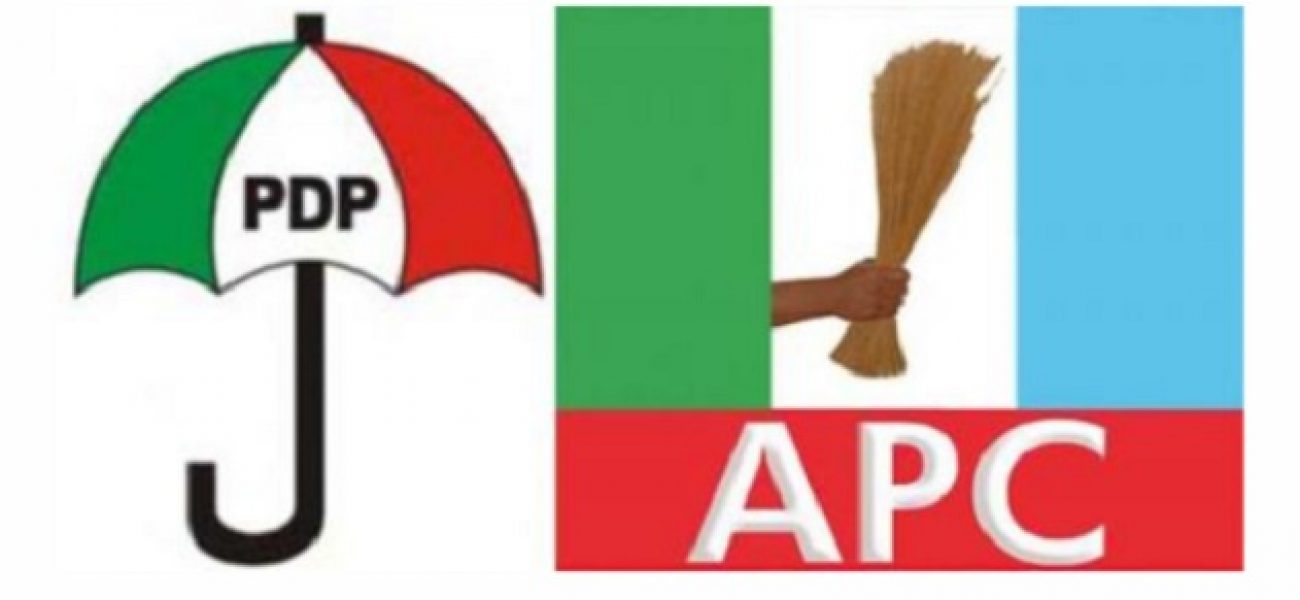
The Ward and Local Government Congresses of the All Progressive Congress (APC) and the replacements at the wards, and the preparation for the LGA congresses by the Peoples Democratic Party (PDP) have brought to the fore the emerging intrigues in Adamawa politic: The attempt to outweigh each other in the control of the two party’s structures among the party stakeholders is apparent.


The APC congresses, in most cases, were conducted based on Abuja’s directives of consensus and that the incumbents offer the Right of First Refusal, including accommodating newcomers. While for the PDP – if you have held the office for up to 8 years, death or resignation, your office is automatically vacant.


An interesting scenario in the APC is in Mubi North and Mubi South LGAs – the place has a former immediate governor – Bindow Umaru Jibrilla, and a sitting Senator, Ishaku Cliff Abbo. Abubakar Jafaru Member Representing Mubi North, Mubi South and Maiha Federal Constituency appeared to have been schemed out. For instance, while the Bindow and Cliff group were at Yazaram Cinema waiting for the election to be conducted, the actual election took place at Yelwa Primary School, with Jafar having the upper hand. What also weakened Bindow active participation was the issue of the leaked audio against President Muhammadu Buhari.


Another place of interest is Yola North, Yola South, Girei and Song LGAs- Senator Aishatu Dahiru Ahmed Binani, Adamawa Central, wanted to replace most of the Exco at those LGAs, but all her candidates lost woefully. Many people were surprised by Binani’s politics. The Excos Binani wanted to replace were those that assisted her in getting the senatorial ticket by narrowly defeating Aliyu Wakili Boya, Sarki Matasa.
In the APC congresses, three governorship hopefuls- Muhammadu Umaru Jibrill Bindow, Senator Cliff Ishaku Abbo and Senator Aishatu Dahiru Binani were casualties, while three other governorship hopefuls Modi Halilu, Nuhu Ribadu and Abdul Razak Namadaz appeared to have made their intelligent moves silently. Namdas doesn’t have any issues at his constituency.

On the other hand, Boss Mustapha was not that enthusiastic – he only showed interest in one or two places in Yola North and Hong LGA. Former Governor Murtala Nyako played the role of a stabilizer and elder. The person that called the shots the most was Comrade Mustapha Salihu, APC NorthEast Vice Chairman. He doggedly implemented the APC Caretaker Committee’s instruction of consensus, giving the incumbent the right of first refusal and accommodating newcomers. The big game will be at the state congress. In particular, the State Chairmanship position- the big picture will be more precise- the grievances, crises, and contentment from each stakeholder and the group will be more open.

The PDP, being the party in power in the state and having some considerable interest within it, its replacements at the ward level and preparations for other congresses were unique. Governor Ahmadu Umaru Fintiri made some political attempts- Most of the loyalists of Chief Joe Madaki and former Governor Boni Haruna were blocked.

An interesting place is the Numan Federation, where the Deputy Governor comes from. Crowther Seth was made ineffectual at his base; the person pulling the string is the Member Representing Numan, Demsa and Lamurde constituency, Kwamoti Laori; he is Fintiri’s right-hand man. It is still a surprise to many that Crowther Seth was made ineffective at Numan Federation. However, some pundits said it shouldn’t be surprised- Seth, as Deputy Governor, still operate from his house, of which the road to the house is not even tarred. Therefore, many people see Numan Federation as the big losers in the Fintiri government, despite being the joker for the PDP in the 2019 governorship election.

To be fair to Governor Fintiri, a sitting governor often dictates the direction of his party, and, Fintiri’s politics now goes beyond Adamawa; it has national elements in it- so he must have ‘the home’ in his control. Fintiri has some big PDP national assignments. This is also knit with his political ambition and the Wike connection. It was reported that Governor Wike flew to Yola twice or thrice in a specific week to confer with Fintiri and left within some hours. – Any political tête-à-tête that cannot be done via a cell phone is a big one.

There is a report that Fintiri will definitely try as much as he can to replace A.T. Shehu as the state chairman of the PDP. That’s why some politicians are of the view that Fintiri refuses to empower Shehu economically.


Fintiri means business, you can’t blame him. Recently, when the move to fill in the vacant position at the PDP Board of Trustee which was created by the death of former Governor Wilberforce Juta, Fintiri presented the name of Hamza Madagali Adamawa PDP Organizing Secretary, but former Vice President Atiku Abubakar and PDP former National Chairman Uche Secondus intervened, and presented the name of Boni Haruna, being a former Governor as Wilberforce Juta.


As the intrigues in both the Adamawa PDP and the APC further unfold, we will analyze it from the angle of the moment.


Zayyad I. Muhammad writes from Abuja, 08036070980, zaymohd@yahoo.com.

After 16 years, Germans vote for Merkel’s successor

By Muhsin Ibrahim

German Chancellor Angela Merkel doesn’t need any introduction. Divorced and with a doctorate in Physics, Merkel, 67, has been a leader of Germany for sixteen years. She is the first woman to lead Europe’s economic powerhouse and the beacon of democracy.


Chancellor Merkel wanted to leave in 2016. However, many people, including world leaders, encouraged her to stay. With Donald Trump coming to power in the US, Brexit knocking on the door of the European Union and the smoke of refugee crises still smouldering, almost everyone knew that Merkel was the best in that crucial position. Thus, she re-contested in 2017 and, expectedly, won.


But, whatever has a beginning has an end. Germans go to poll tomorrow, Sunday 26, 2021, to elect Merkel’s successor. The electorates are practically voting for parties, not a particular candidate for the chancellery. The parties would, of course, want to have the majority to form a government, but it does not happen. Often if not always, a party will have to negotiate with another party – or even other parties – to have enough votes to appoint a chancellor in the Bundestag. The negotiations can take months.


There are three chief contestants from three major political parties. They are 60-year-old Armin Laschet (CDU/CSU), 40-year-old Annalena Baerbock (Greens) and 62-year-old Olaf Scholz (SPD). The first, Mr Laschet, is the current Minister-President of North Rhine-Westphalia (where Cologne is) and leader of Merkel’s party, CDU.


Despite Merkel’s endorsement of Mr Laschet, he is unlikely to win. It may surprise you to know that what may cause him this defeat is mere laughter. Deadly flooding killed people in Germany and some neighbouring countries in July. The President of Germany visited a town destroyed by the catastrophic flood. While the President was delivering a sombre speech, a camera caught Mr Laschet laughing behind him. Since that faux pas, many people have lost confidence in him.


Ms Baerbock is young, energetic and confident and started her campaign with a lot of optimism. Nonetheless, her party does not have enough clout to win nationally. But, that is not the real issue for their candidate. You may also find it astonishing to hear what has befallen Baerbock’s candidacy and tarnished her reputation. It was possible plagiarism and padding of her CV.


Olaf Scholz is Vice-Chancellor and Minister of Finance. So far, opinion polls favour his chances of succeeding Merkel. Unlike the two other leading contestants, he has almost no major ‘sin’ affecting his campaign. Moreover, his party, SPD, was in power until Merkel’s outstanding victory in 2005. Thus, they are thirsty for a win and are therefore doing everything possible to come back.


Frau Merkel will be greatly missed. People around the world will never forget her extraordinary benevolence during the 2015 refugee crisis. As a German resident with no right to vote yet, I wish for the best outcome in the elections. May we continue to live in peace and prosperity, amin.

Muhsin Ibrahim is a Nigerian. He studies and works at the Institute of African Studies and Egyptology of the University of Cologne. He can be reached via muhsin2008@gmail.com.

Open letter to Kano State governor on possible Coronavirus outbreak in Kwari market

Dear Sir,

This is to draw your attention and that of NCDC to the ongoing controversy over the cluttering of Kwari Market. We hope you will temper the issue with compassion and shrewdness befitting your sage, administrative excellence and political dexterity. Sir, if you solemnly declared that Kano will become a megacity in the very near future, which you did as reported on Blueprint Newspaper, August 21, 2020, why do you now allow our markets, especially Kwari to be congested? You made the declaration “on the eve of the Kano Economic and Investment Summit (KanInvest) which held in May, 2017, where stakeholders and bigwigs in the business sector converged to share ideas concerning issues affecting the economy, especially as it concerns Kano state”. There you rightly observed that the crowded population of Kano of about 20 million people will multiply in 5 years time. With Coronavirus threatening our lives, now is the time to decongest the city or else risk spreading the virus like wildfire.

In the process of affirming your declaration, you continue with the construction of the new Economic City of Kano located at Dangwauro Town along Kano -Zaria federal highway. However, your construction of a mall at the popular Kantin Kwari textile market named ‘Yan Tebura Mall has opened a dangerous door of congesting the market. What follows the mall are structures being erected on Taambo and Bayajidda Streets in the market. Unfortunately they are becoming a greater bone of contention because they stand on the way and so will endanger our hygiene, your excellency. After the recent rainfalls in Kano, the market was always flooded as the main waterways there happen to be on these streets. With the buildings being erected on them, the ancient market is seriously damaged, congested and so the megacity target is defeated.

Moreover, the damage brought about by the new buildings includes blockage of the former known 16 entries to the market which were serving as good ventilation and escape exits in case of a stampede. Still, the structures have saturated almost all the streets in the market, whereas the frontage of every shop is also “officially” being choked with iron stalls which would lead to disaffection, disharmony and clashes between the shop owners and stallers. To make matters worse, the installers of these iron stalls are damaging some newly tarred roads as they fix the stalls on the edge of the roads to larger part of the roadside drainage. Therefore, as the whole pathways are narrowed to almost nothing, people have to be squeezing around, highly vulnerable to Coronavirus infection.

These problems are not far from the government’s sidelining of the market people in the activities of the market, especially on strategies to improve the government’s revenue. This way, the outsiders brought in to supervise and advise on such affairs, as in the case of an administrator appointed from the head of service, come to enrich themselves only at the expense of anything good in the market. They never protect the interests of the market but theirs and sometimes end up starting a fire of enmity among business friends. It is a wonder how an outsider could tell an owner of a house where roofing leaks. Instead of looking at what is good for the market, those people look at what could bring them money no matter how damaging they appear to the good people of Kano. In that respect, owners of shops have to pay 200 thousand Naira to buy their shop front if they do not want that iron stall stationed there for sale.

Worse still, over five thousand labourers stand the risk of losing their livelihood if the contentious buildings continue. As a politician who is committed to forestall the increasing poverty-induced insecurity in the State, we are sure that you would not take this risk. Notwithstanding, the already erected structures have no accessibly enough toilets as those available are far upstairs and so women customers going to the market suffer super shame when they want to ease themselves in the centre of a Shari’a compliant state, under you, Khadimul Islam. In case of a fire accident like that of Sabon Gari Market, God forbid, the large fire fighting vehicles that need room for manoeuvre would never get entry as the ways are now being blocked. So against this background, all concerned persons in the market say no to the project and even go to court.

Following on from that, the State High Court, on 12th August, presided by Justice Suleiman Baba Namallam, has restrained the Government of Kano State from blocking or erecting structures at any part of Taambu and Bayajidda Streets at the popular market, pending the hearing and determination of the motion on notice. Nonetheless, It has never been our intention, your excellency, to be at loggerheads with your government over this issue. We are only after decongesting the market especially to observe the Coronavirus protocol; to help the government, on the other hand, in spacing the already jam-packed market in preparation to reaching the megacity status and to target the recent Federal Government’s campaign of “Ease of Doing Business”.

Nevertheless, Your excellency, we appreciate your effort towards making Kano a megacity as you ease traffic congestion by finishing the construction of the Sabon Gari axis 2km bridge inland flyover (named after the Kano business mogul Alhaji Aminu Alhassan Dantata) along Murtala Muhammad Way, which is the longest in West Africa; the Sharada/Panshekara Junction Underpass; the Bukavu Barracks underpass; the Underpass, Flyover and Roundabout at Dangi road connecting Zaria road-Zoo road and Silver Jubilee road as well as the now-under construction Hotoro NNPC (Muhammadu Buhari) bridge among others. These justify your administration’s commitment to the safe development of the sprawling city of Kano. In spite of that, we also need our existing markets to be spacious, uncrowded and comfortable so as to have good standards of health and hygiene regulations, especially Covid-19 protocol.

It is our fervent hope that Kano will continue to benefit from the wealth of your immense administrative experience and astuteness in politics, especially in this much worrying matter. Show the world that you are an ace politician, agreeable to the yearnings and aspirations of your people by justifying the confidence collectively reposed on your administration and unselfish persona.

We pray that may Allah Subhanahu wata’ala strengthen your resolve in elevating the status of Kano to compete with other megacities around the world. May you be successful in your future political endeavour. May Kano remain peaceful forever! Amin thumma Amin!

Yours,
Concerned Citizens!
08067444787

Five years of mental restructuring

By Sulaiman Maijama’a
In this life, there exist folks endowed with a God-given passion for propelling the progress of others. They drive pleasure in nurturing younger ones by shaping and improving their cognitive ability, making them emboldened to face the realities of life early, to navigate their way to the promised land and get rid of the traps of the terrain. To call these people mentors, in my view, they are underrated. They are God-sent and, therefore, worthy of being celebrated. If Allah, the Almighty, wishes you good, He makes you come across them, thereby opening a new page in your life.
Every successful person, I believe, has a story of someone to tell. My story will be incomplete without mentioning Malam Abdul Ahmad Burra, a teacher-turned-mentor whose seminal ideas instilled in us are inspirational and fruitful. My five years encounter with him opened a fresh perspective in my life. I believe, in the process of my narration, words will fail me. I may not put it as perfectly as it is, but my oratorically more skilful friends can best tell the story.
I did not know Abdul Ahmad Burra before 2016. In late 2016, however, Abubakar Tatari Ali Polytechnic, Bauchi recruited new teachers cut across respective departments of the institution. Malam Abdul was among the lecturers recruited in the Mass Communication department. During a sessional break a few weeks to the completion of our Industrial Attachment and so, immediately we resumed ND Two, we had a good fortune to have been the first set of students he taught.
His first impression in the class spelt the type of person he is; a down-to-earth, serious-minded person with a wealth of experience within and outside academia. This imbued in us, sense of determination, commitment and perseverance to pursue our lofty dreams to the best of our ability. Shortly after that, he introduced to us a new method of teaching with which we were not familiar. Every week before the commencement of his lectures, he would challenge the class to bring updates of topical issues in the country. If you told the story, he would annihilate you with a barrage of follow-up questions as if you were giving analysis on CNN. This made our class always keep abreast of happenings in the country, and before we knew it, we became so conversant with National Discourse.
I was almost always the student who updated the class, and that is how Malam Abdul discovered me. Our relationship, therefore, grew and blossomed into a brotherhood. A couple of weeks after taking a semester examination, Malam called and issued me a list of about seven students, including myself, and asked me to summon them.
“A glad tidings to you”, he said, “you are the best students who scored ‘A’ in my course’ “.  He offered us pieces of golden advice and motivated us to maintain the speed. Later, when he realised that my CGPA was moving with Distinction, he became a driving force, propelling and challenging me to ensure that I graduated with it.  In 2017 when we graduated,  as our final result was about to be released, he was the one who excitingly broke the news that I graduated top of my class with Distinction. Thanks to Allah to whom I owe it and the encouragement of Malam Abdul!
After my graduation in 2017, Abdul did not leave me alone; he instructed that I should not, in all conscience, waste a year at home, should apply for a university immediately. I intended to apply to ABU, Zaria. Going by my preference for language comprehension, I wanted to switch to BA English. However, Malam Abdul protested that Mass Communication was the best destination for me. He further suggested that I go to Bayero University, Kano (BUK), for the institution has the best communication department, professors and facilities. In order not to put all our eggs in one basket and end up losing, my friend Shamsudeen Musa and I came up with two plans: to make two separate applications, one for BUK and the other for ABU, Zaria. We did.
Meanwhile, generous Malam Abdul Burra went from Bauchi to Kano to ensure that we secured the BUK admission that year. While waiting for the admission, he suggested that I start volunteer work with any of the radio stations in Bauchi to be well-grounded in the practical aspect of Journalism. When I told him that I did not have a connection with any of the stations, he took me to Bauchi Radio Corporation (BRC), which made the process possible for me to work.  The first report I presented to the Editor was given a headline. My reader will guess, with more than scientific precision, how excited I was. I worked with the BRC for almost a year.
In the same vein, one evening in early 2018, this idol invited me to his house for a fruitful discussion. He told me that since I had the upper hand in broadcast practice, and being an intelligent boy, according to him, I would make a good writer, and so, he wanted me to put my hand in the writing business so that I would be multiskilled. I was too young and inexperienced but, he encouraged me that whether I “write right” or otherwise, it is a learning process, which with practise would eventually lead to close perfection. I heeded the advice; began to write since then. Should I live without writing now, I would feel incomplete. The impact it has had on me today is immeasurable. To whom the credit goes?
Late 2018, when the BUK Direct entry admission list for the Faculty of Communication was out, to our great excitement, only my friend Shamsudeen and I, whom Malam Abdul worked for, made to the list in the whole Bauchi State. Upon informing him, his excitement defied expression. Having faith and confidence in us, a further challenge he put on us to go to BUK and made him proud. Did I have any excuse to relent?  I felt the urge and thirst for learning to justify the confidence Malam reposed in me. I worked harder and expanded my reading time because I thought that anything less than First Class would be a disappointment to him.
Four semesters down the line, Alhamdulillah! With all sense of humility, I made First Class in Two semesters. Two semesters to my graduation now, I feel obliged to pen down this tribute in acknowledgement of the tremendous impact his mentorship has had on me.
I would not do justice to myself if I did not mention that Malam Abdul facilitated me ways to work for financial earnings at different points in time. For example, during the 2019 election, he engaged me in a particular assignment. My budget for that year was, therefore, increased!
May the light in him continue to flicker, ameen.
Maijama’a wrote from the Faculty of Communication, BUK. He can be reached via sulaimanmaija@gmail.com.

Towards achieving food security in Nigeria

By Abdulrahman Yunusa

Perhaps, this current administration has come with the solid whims of making an agricultural revolution, but they failed to understand that it’s one of the most challenging plans to achieve. It’s most demanding because it’s beyond paperwork, lip service or even baseless table talk. Instead, it requires tireless effort and viable policies to realise.

Likewise, it’s really a sacrificial movement that needs to go beyond the border of border closure tactics. Modern farming techniques are required, well and learned agriculturists versatile in modern farming should be hired to do the job efficiently.

Contrary to the above, the government brought poor hands couple with the introduction of outdated personalities to do the job. It is a clear indicator that we are not ready to achieve our goals.

 I think all these failed tried politicians have been used by the father of mediocrity and ineptitude to prove how vast and expert this administration is when it comes to the game of political deceit. So can we keep channelling our traps into the wrong portion and be anticipating a rattling result? But, of course, things never work out in such a fraudulent way.

Imagine putting the wrong panel in a position and expecting it to work perfectly. Is this not a self-deceit at its truest form? If it happens to be true, then malfunction within their administrative circle would forever prevail since meritocracy has become a key factor to be sidelined by the change charlatans. As they move to change the seemingly poor narratives here, today, the incapacitated hands are making the job uglier than it was.

Therefore, as a country dancing in between the edge of capitalism, socialism and liberal economic system as a guiding economic instrument, they should promptly take off the fruitless idea of border closure and let food float into our country. Say this because for one to develop, he must underdevelop someone, and that could be made possible only when we have a shoulder to lean upon while trying to make the dream reality.

Also, technology should be the leading figure in this journey. All these outdated farming tactics and machines should be utterly dispelled and be substituted with modern ones.

On no reasonable ground, one will expect people to produce the enormous quantity of food that will suffice a big country like Nigeria and even have a surplus that could export to neighbouring countries using the 1908s farming system. Meanwhile, at the moment where they are battling with their stomach, and annoyingly the price of fertiliser and other farming equipment couple with chemicals are at a high price.

Most importantly, people need to be fed well before heading to the farming ground, where most of their energy is utilised. Failure to provide them food at an affordable price will drastically reduce the outcome of their farming during the harvesting season, yet the desired goals will never be achieved that way.

Our govt needs to work on its farming system mechanism to fill the existing gap in the realm of agriculture and food security. 

Abdulrahman Yunusa is a political and public affairs analyst. He writes from Bauchi and can be reached through abdulrahmanyunusa@gmail.com.

7 simple things you can do to protect your kidneys

By Dr. Khadijah Tijani

The kidneys are two bean-shaped organs located in the abdomen. Their main function is to detoxify the body by removing waste products and excess water in form of urine. They also perform other vital functions such as regulation of blood pressure and secretion of hormones like erythropoietin (responsible for red blood cells production) and vitamin D (maintaining bone health, etc).

Any insult to the kidneys could result in irreversible damage, and kidney failure is not only expensive to treat but extremely distressing to the victims and their caregivers. It is quite worrisome that almost every day I scroll down my timeline on Facebook, there is always one person putting up a fundraiser for themselves or someone else suffering from kidney failure.

There are some causes of kidney injury that can neither be predicted nor prevented (such as acute haemorrhage, burns, congenital disorders, etc). But there are also some preventable causes that we should be aware of and guard against. When it comes to kidney health, prevention is definitely better than cure. Here are 7 simple tips on how to maintain healthy kidneys…

1. DRINK PLENTY OF WATER
Apart from regulating the amount of water in the body, the kidney itself depends on adequate water (and blood) supply. Dehydration puts a strain on the kidneys and if this reaches a certain threshold, the kidneys begin to shut down. Dehydration also predisposes you to develop kidney stones, which can damage your kidneys by obstructing the pathway of urine flow. Aim for 3 litres of water daily. You may need more or less depending on the weather and your activity level.

2. DO REGULAR HEALTH CHECKS
There are certain medical conditions that “kill” the kidneys slowly. These diseases are silent killers in the sense that they are often not manifested by clear signs and symptoms until they have damaged the kidneys and other vital organs to a considerable extent. Chief among these diseases are HYPERTENSION and DIABETES. Checking your blood pressure and sugar levels periodically will ensure early detection and quick intervention.

3. EAT RIGHT
The importance of a healthy diet cannot be overemphasized. Avoid junk snacks and sugary drinks. Take a balanced proportion of every class of food but pay attention to more fruits and vegetables. Clean and healthy foods protect your kidneys from excess toxic wastes, therefore the more healthy food you ingest, the better.

4. STOP DRUG ABUSE
The kidneys are actively involved in the metabolism of many drugs. When you take medications (either orthodox or herbal concoctions) indiscriminately, you are exposing your kidneys to more workload than they can handle. Also, some drugs are inherently toxic to the kidneys, so if you have a history of kidney disease, your doctor will help you adjust the dose or change to a less toxic alternative.

5. STOP SMOKING AND ALCOHOL
Cigarette smoking and alcohol ingestion have direct effects on the kidneys because these products increase the amount of toxins that your kidneys need to deal with. Hence, it is clear that avoiding them will be beneficial to the kidneys and the entire body.

6. DON’T TAKE ANY DISEASE FOR GRANTED
Whenever you fall ill, contact your doctor and get treated as soon as possible. Simple infections can become complicated if ignored or poorly managed. For example, malaria is a known cause of kidney failure. When infected red blood cells are broken down in large numbers, they produce a high concentration of toxic substances which can damage the kidneys if proper treatment is not sought.

7. MANAGE CHRONIC HEALTH ISSUES
Some chronic illnesses pose a great threat to the kidneys. Examples are diabetes, hypertension, sickle cell disease, cancer, etc. Because of the vital role of the kidneys in maintaining a healthy body, they are easily affected by any deviation from the norm. Hence, individuals who have any of these diseases should take extra care by managing their conditions well and doing regular “kidney function tests” to ascertain how healthy the kidney is and detect early signs of kidney failure.

To sum up, early signs of kidney disease may not be easily recognized by people, so, it is extremely important to take precautions against the preventable causes and seek prompt treatment for any medical condition that may result in irreversible kidney damage.

Dr. Khadijah Tijani
askodoctorkt@gmai.com
Ibadan, Nigeria.

GOGIS under Dr Kabiru Usman Hassan

By Adamu Umar Kumo

Gombe Geographic Information Systems (GOGIS) is an agency under Gombe State Ministry of Lands and Survey saddled with the responsibility of modernizing land administration in Gombe State in accordance with international urban planning standards and practices to pave the way for infrastructural development in Gombe State.

To ensure a solid foundation has been laid for successful takeoff and smooth running of the agency, His Excellency, Governor Muhammadu Inuwa Yahaya appointed a competent personality and Contemporary Town Planner with more than a decade of experience in the profession, Dr Kabiru Usman Hassan to pilot the affairs of the Agency.

GOGIS, under the leadership of Dr Kabiru Usman Hassan, has modernised the process of issuing land titles and other related documents using state-of-the-art facilities. The transition and integration of land information into a unified geographic database has given the agency easy access to information about any piece of land or landed property with a click of a finger. This has drastically reduced duplication and other forms of malpractices and corruption in land administration.

With the approval of adequate funds for aerial mapping that will cover the whole Gombe State (both inhabited and uninhabited areas) using high resolution remote sensing facilities, GOGIS will soon be partaking in the exploration of resources in the state. This will go a long way in wooing investors to Gombe state and eventually boost our economy.

As GOGIS continue to undertake “Operation Show Your Land Title Documents”, the operation aimed at sensitizing people on their duty as law-abiding citizens to pay their ground rent and other related taxes, the agency has succeeded in many fronts by mobilizing industries, banks, fuel stations and other commercial institutions to pay their dues. To lead by example, most at times this kind of operation is done by a team of professionals under the leadership of the DG himself. This singular task has helped Gombe State Government in broadening its revenue base to cope with the current economic realities.

The establishment of the Gombe State Special Development Zone has been one of the focal projects of Governor Inuwa Yahaya’s administration aimed at providing a well-planned layout with adequate social amenities for the establishment of institutions to consolidate investments in the state. GOGIS has been at the forefront in carrying out this task. From mapping, census of the existing structures to sensitization, the agency has been playing a pivotal role in making the project a reality.

Settling disputes is another aspect where GOGIS deserves recommendation. GOGIS corporate office receives numerous complaints on a daily basis regarding distortions of layouts and indiscriminate erection of structures. With prompt intervention from GOGIS, many community clashes and individual disputes have been averted.

With GOGIS under this workaholic Director-General, Dr Kabiru Usman Hassan, Gombe State is in sha Allah set to be the most convenient state to live in the country.

Adamu Umar Kumo writes from Gombe State.

It’s time to rekindle the old North

By Mohammed Zayyad

Recently, an event happened that will serve as a vital lesson to the people of northern Nigeria and the old generation of the region’s leaders in particular.

On September 10, 2021, a former Commissioner of Works in the Governor Abdullahi Ganduje administration, Engr. Muaz Magaji posted on his verified Facebook account that a renowned Islamic cleric and the National Secretary-General of the Jama’atu Izalatil Bid’ah wa Iqamatus Sunnah, Sheikh Muhammad Kabiru Haruna had in a phone call conversation told Governor Mai Mala Buni of Yobe State that he would decamp from the ruling All Progressive Congress (APC) if the former Kano State Governor, Rabiu Musa Kwankwaso is allowed to join the ruling party.

Some hours later, Sheik Gombe also posted on his verified Facebook account a 12-hour ultimatum to Engr. Muaz to withdraw the statement, or the Sheik will file a legal suit against the former Commissioner of Works over alleged defamation of character. Sheik Gombe said he had never meet Gov. Buni. And, he is neither a politician nor partisan. His only job is preaching.

On Saturday, September 13, 2021, a truce was reached. After that, Muaz visited Sheik Gombe at his residence in Abuja. In attendance were the National Chairman of Jama’atu Izalatil Bid’ah wa Iqamatus Sunnah, Sheik Abdullahi Bala Lau, National Leader of The Tijjaniya Youth Africa, Ahmadu Tijjani Umar Maigeru. The outcome of the meeting: Muaz had withdrawn his statement, apologised, and a friendship was born at that moment.

A deep look at this event and the people involved will serve as a big lesson to northern Nigeria, which faces social disorder and insecurity due to the eroded beautiful culture and norms.

First, the whole idea of the meeting between Sheik Kabiru Gombe and Engr. Muaz Magaji was initiated and implemented by the National Leader of the Tijjaniya Youth Africa, Ahmadu Tijjani Umar Maigeru, a frontline gubernatorial candidate in Kaduna State. Ahmadu Tijjani is of the Tijjaniya sect while Kabiru Gombe is of the Izala. This has shown the rekindling of the old habit in the north – humanity first – where sect, race, tribe, and geography don’t matter. Ahmadu Tijjani must be commended for such foresight in initiating the meeting to reach a truce, Sheik Gombe for being magnanimous while Muaz for being levelheaded.

Second, for accepting to withdraw his statement, apologising, and making friends, Muaz has helped society in some ways. Fake news can quickly be decimated if a high profile person that shared it will come out to denounce it and apologise as well. And, differences between individuals or groups can be resolved with dialogues and understanding.

The coming together of these men to resolve a matter that was supposed to be settled in a Court of Law is a clear case of the need to rekindle the old north where every issue is resolved within the community, people were their brothers’ keepers, who, every day bring out from their homes their breakfast, lunch and dinner for neighbours, including even strangers to eat.

In the old north, your father’s friend is automatically your father and can decide on you without first consulting your parent. In the old north, people allocate some portion of their houses to strangers to settle. In the old north, no child will be seen wandering around without the community showing any concern. That’s was the monolithic North! It has to be rekindled as a one-step in solving some of the region’s current social problems, especially insecurity. 

Zayyad I. Muhammad writes from Abuja, zaymohd@yahoo.com.

APC vs Goodluck Ebele Jonathan

By Mallam Musbahu Magayaki

The political calculation of the All Progressives Congress (APC) may likely lead the party to oversight if they fail to set their house to order. There is a rumour that the party is romancing former President Goodluck Ebele Jonathan. APC reportedly declared that they will allow him to recontest for the presidential race in the 2023 general elections if he joins the party.

Lo and behold! Despite this rumour, one Jonathan supporter joined the party after spending many years criticising the party on social media fiercely. Thus, Jonathan’s supporters are defecting to the APC. Will this signal his presidential ambition?

Let’s assume the presidential ticket goes to the south-south; what is the fate of the Southwest that has been promised the presidential ticket in a zoning agreement? Even though the zoning policy is not democratically based on the constitution in the country that is practising democracy.

Meanwhile, a candidate for president and his running mate from the same region sounds too odd. That is, you can not pick a president from the southeast and a vice president from the southwest. In addition, the recent party local government congress elections hindered the party, leading to factions in some states. However, this may cause the party to lose its members if decisive actions are not taken promptly while confronting the party’s national convention elections.

Any political party that gives a glimpse into the Party’s instability will eventually experience its entire tendency to fail. A few weeks ago, in the opposition PDP, the leading crisis crumbled. Many political analysts argued that the party lost its spirit as a real opposition party since there would be no political party prospering in the conflicts.

Nevertheless, when the ticket goes to the South-south, the Southwest may not vote for the party because the national leader of the party’s presidential ambitions would not realise his ambition. As a result, even though he has not declared his interest in the race yet, the APC may lose Lagos, Kano, and many other northern states.

Mallam Musbahu Magayaki writes from Sabon Fegi, Azare. He can be reached via musbahumuhammad258@gmail.com.