Opinion

Fame, fortune, and fallout: The Peller paradox that’s stirring Nigeria

By Haroon Aremu Abiodun

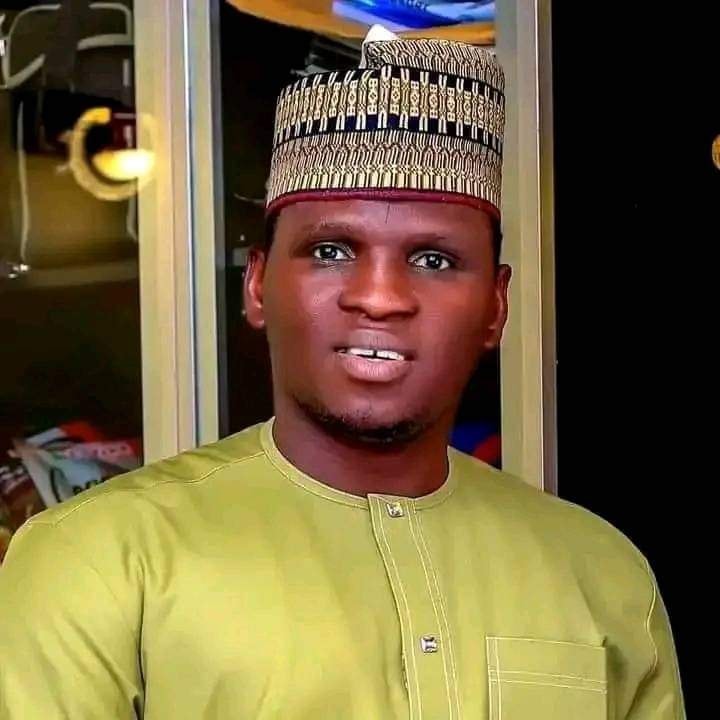
It all began like any other viral moment on Nigerian social media, but then it took a turn. Popular TikTok sensation Hamzat Habeeb Adelaja, popularly known as Peller, shocked followers recently with a post that seemed almost too generous to be true. He was hiring a cameraman for a monthly salary of ₦500,000. The news spread like wildfire, and in no time, graduates, yes, university graduates, trooped in for interviews, hoping to clinch the role under the young entertainer’s banner.

But beneath the glitz of that social media post lies a stark irony, a brutal reflection of Nigeria’s current socioeconomic reality: a secondary school certificate holder interviewing degree holders for a position in the gig economy. Is this a triumph of hustle over education or a symptom of a failing system?

This scenario has ignited widespread controversy. Should someone with Peller’s academic background employ graduates? Is he flaunting success in a way that undermines the value of formal education? Or is he, in his own unorthodox way, contributing to job creation in a country where unemployment is a ticking time bomb?

Regardless of where you stand, one truth remains: Nigeria’s youths are not only unemployed, they are disillusioned.

But, beneath the glamour, is Peller’s youth the key to his controversial rise? At age 20, can Peller truly shoulder the weight of fame, fortune, and the emotional toll that comes with being in the public eye? Fame is a double-edged sword, and wealth earned in the public space, especially in a country like Nigeria, where social values matter, can either elevate or destroy a brand.

Some have attributed his behaviour to immaturity, a lack of exposure, or poor guidance. Others question the roles played by his management and inner circle. Are they enabling his excesses or helping him stay grounded?

Peller’s youth and maturity seem to be dancing to different tunes at times in sync, at other moments, sharply distinct. While his age brings the energy, creativity, and audacity that fuel his rise, it may also limit the depth of judgment that comes with lived experience. Despite his fame and financial success, one thing remains true: maturity isn’t measured by wealth or followers. 

He may be richer or more popular than his advisers, but that doesn’t make guidance obsolete. In fact, the higher one climbs, the more essential wise counsel becomes. No matter our age or status, we all need mentors, correction, and continued learning because growth, like fame, should never outpace wisdom.

This is not Peller’s first brush with public criticism. During the heated JAMB controversy months ago, he was branded a poor role model. Critics say he misuses his influence. Admirers say he is just being himself. But the question is not just what Peller does, it’s what he represents.

When individuals like Peller become the aspiration of thousands of young people, what message are we sending? That fame, regardless of how it’s earned, trumps knowledge, experience, and decorum?

One might ask, is this a systemic failure or a personal flaw? But the deeper question is this: Can we really blame Peller for being a product of a broken system? Or should we point fingers at the society that created him, a society where education is devalued and unemployment drives graduates to accept roles from entertainers with no formal qualifications?

This is a national dilemma. Young people are no longer looking to engineers, doctors, or scholars as role models. They now look to influencers, many of whom may lack the maturity or training to handle such responsibility.

This isn’t just about Peller; it’s about perception, power, and public influence.

The Brand at Risk: PR Implications

From a public relations perspective, Peller’s every move is now under a magnifying glass. As a brand, his current trajectory presents both opportunity and risk. He is loved by many but also watched with scrutiny by an equal number. His brand power lies in his authenticity, but even that must be managed with intentionality because one viral moment can either grow his brand or ruin it.

In a society where cultural norms still dictate public perception, Peller must understand that his brand isn’t just about content; it’s about conduct. His platform gives him power, and with that comes responsibility.

PR experts warn that failing to manage this carefully could result in brand erosion, reduced partnerships, and a gradual loss of public trust. A sustainable career in entertainment requires more than charisma—it demands discipline.

Beyond the Buzz: What should Peller do? It’s easy to dismiss these concerns as envy or moral policing, but that would be a mistake. Peller is a Nigerian pride, a self-made entertainer who carved a niche and created employment. That in itself is commendable. But with influence comes expectation. With status comes scrutiny.

This article is not to tear Peller down. It is to offer a lens of accountability, reflection, and growth. The same media that celebrates must also question, not out of hate, but out of hope that Nigeria’s influencers will see themselves not just as entertainers, but as leaders in a generation gasping for direction.

Peller can choose to be more. He can use his platform to elevate the values of integrity, hard work, and education, even as he continues to thrive in entertainment. He can show that success does not require disrespect, and that influence is not a license for irresponsibility.

Whether he likes it or not, Peller is not just a content creator. He’s a movement. And movements, when misdirected, can lose their magic or worse, mislead millions.

Final Thought

Peller’s story is still unfolding. He is talented, young, and full of potential. This is not a final verdict, but a cautionary tale. The camera is rolling, the nation is watching.

The real question is: What will Peller do next?

Haroon Aremu Abiodun, An Author, public Affairs Analyst. He wrote in via exponentumera@gmail.com

The Caliphate did not die in Burmi: My travelogue to Maiurno

By Abdulrahman Sani

I went to Sudan to study Arabic. That was the beginning, simple and deliberate. But in truth, Arabic was only the surface. Sudan offered more than language. It stirred old questions I had carried with me since adolescence. Questions about memory, exile, and what remains after collapse.

My first encounter with the Sokoto Caliphate’s legacy wasn’t through archives or oral traditions. It was through theatre. I was in secondary school when I read Attahiru by Ahmad Yerima. The image of the Caliph fleeing colonial forces, defiant to the end, burned itself into my mind. I didn’t fully understand the politics then, but I felt the tragedy. That single text became a spark.

Later, I found the writings of Dr. Usman Bugaje, measured and searching. And then came Muhammad Shareef, the African American founder of Jamaa’at Danfodio in the United States, whom I had the pleasure of interviewing [here: https://youtu.be/_5Uj1S0lXQM?si=1BpJ9vusnW2HqWf4]. His writings were rich, wide-ranging, and full of overlooked geographies. It was through him that I first read about Maiurno, a small village in Sudan that held the echoes of Sokoto’s fall.

The very idea of it intrigued me. Remnants of the Caliphate had not only survived but also resettled, rebuilt, and renamed. I wanted to know what happened after Burmi. I wanted to know what exile looked like, generations later.

I mentioned this to my friend Malam Hassan, and soon after, we were on our way — me, him, and our guide. Before Maiurno, I spent some time in a Hausa village in Sudan. The familiarity was immediate. I saw areas named after Illela, heard idioms that sounded like home. It was as though Sokoto had sent a whisper into the desert, and it had echoed back in Sudanese tones.

Maiurno came into view quietly, without ceremony—a flat, sun-beaten village, carrying itself without fanfare. But history rarely announces itself. You feel it in the silences.

We made our way to the Sultan’s palace early in the morning. As we approached, an elderly man greeted me in Fulfulde. I hesitated, then responded in Arabic, admitting I didn’t understand. It was one of those quiet humiliations. A Fulani, abroad, unable to answer in the language of his own people. He smiled politely and said nothing.

We waited. There were others before us, people from another town in Sudan who had come to report a case. In the meantime, I noticed the crocodiles. Yes, crocodiles. They lay in their enclosure like royal guards, unmoving. It felt surreal but somehow fitting. The Sultan was no mere figurehead. He was the acknowledged leader of Hausa and Fulani communities in Sudan, a man of both presence and authority.

When he finally emerged, he received the guests before us. He listened without interruption or impatience. Then he settled their matter with a wisdom that didn’t need to explain itself. That kind of clarity is rare.

Then he turned to me.

I told him why I had come. I said I was interested in the Fodiyawa manuscripts said to be preserved in Sudan. He nodded with understanding, but explained that the key lay with the Sardauna of Maiurno, a scholar of great standing who, ironically, had travelled to Nigeria, my own country.

The Sultan was fluent in Hausa, Arabic, and Fulfulde. He spoke with the calm rhythm of someone used to being listened to. He smiled and said, “I know in Sokoto your Fulfulde doesn’t go beyond Balinjam.” It was said lightly, but it landed with accuracy.

He spoke of his relative, Professor Mukoshay, the author of the Fulani-Hausa dictionary. Then, briefly about Hayat ibn Sa‘id, a name that deserves more telling than time allowed. Before long, I realised I should be recording this. I asked his permission. He agreed with grace.

He began narrating how their ancestors had come to Maiurno after the fall of the Caliphate, how they had built their homes, mosques, and memory on Sudanese soil, and how they still kept contact with their families in Nigeria. He spoke too of the Jamaa’at Danfodio in America with quiet admiration, amused by how history had found new shapes and tongues.

After the conversation, he did something unexpected. He asked, gently, for my contact. I gave it. We shook hands, and I took my leave.

What struck me wasn’t just the story. It was the clarity with which he carried it. My visit to Maiurno took place in 2019. At the time, the country was in a fragile transitional moment, unsure of what lay ahead. But even then, the Sultan stood out–quiet, composed, and principled. In later years, during the war with the RSF militia, I would hear that he remained steadfast and stood with the state when others hesitated. The president himself visited to thank him.

Maiurno wasn’t just a trip. It was a quiet, necessary crossing, from curiosity to memory, from story to place. The Sokoto Caliphate may have fallen in Burmi, but it lives on. In names. In speech. In places like Maiurno, where its sons still remember.

Abdulrahman Sani can be reached via X: @philosopeace.

An open letter to the chairman of Hadejia Local Government

Dear Honourable Yaro Abba Ari,

I write to you as a deeply concerned indigene of Hadejia Local Government Area, more specifically, a resident of Dubantu Quarters. I do so with a strong sense of responsibility and hope, believing that your esteemed office, under your capable leadership, will give due attention to the pressing issues that have plagued our community for quite some time.

First and foremost, I would like to sincerely commend your administration for the developmental strides made in various parts of the local government area. These achievements reflect your commitment to progress and service delivery. However, I am compelled to draw your immediate attention to some ongoing challenges that continue to affect the people of Dubantu Quarters — challenges that, if not addressed, may further deteriorate the well-being and safety of our community.

The first major issue of concern is the worsening condition of the drainage systems in Dubantu Quarters. Every year, particularly during the rainy season, our community suffers from excessive waterlogging and flooding. Rainwater, due to the absence or blockage of proper drainage, flows freely over the roads and into homes, causing significant disruption and damage. The situation has unfortunately become a recurring crisis that leads to the destruction of properties and, in the worst cases, loss of innocent lives. Residents live in constant anxiety as heavy rains turn roads into rivers, making movement dangerous and threatening the safety of families.

Secondly, I would like to bring to your kind attention the growing security and social concerns in specific parts of Dubantu Quarters — particularly areas that remain in complete darkness at night due to a lack of public lighting infrastructure. These dark zones have become gathering points for immoral and misguided youths, who often engage in illicit activities such as the abuse of toxic substances — including syrul (codeine cough syrup), ganja, and other harmful drugs. These activities not only endanger the lives of the individuals involved but also pose a significant threat to the safety and peace of law-abiding citizens, especially during the night hours.

Despite numerous efforts by responsible members of the community to curb this growing menace, their attempts have been largely ineffective due to the absence of necessary support, tools, and enforcement capabilities. The community is doing its best with the limited resources at its disposal, but the situation clearly calls for strong governmental intervention. 

As a result, and in the spirit of community development, I humbly and earnestly appeal to you to take the following specific actions:

Reconstruction and proper maintenance of Drainage systems in Dubantu Quarters will help ensure that rainwater is channelled correctly, reducing the devastating impact of seasonal flooding and safeguarding the lives and properties of the residents.

Installation of solar-powered Street lights in critical dark areas within Dubantu Quarters. Improved lighting will not only enhance visibility and security but will also deter criminal and immoral behaviour that currently thrives under the cover of darkness.

Collaborative Engagement with Law Enforcement Agencies and Community Leaders to Develop and Implement a Strategic, Community-Driven Solution to the Issue of Drug Abuse. This should include awareness campaigns, youth sensitisation programs, and the creation of positive alternatives that engage our young people in meaningful and productive activities.

Your timely intervention in these matters will go a long way in alleviating the hardship currently faced by the residents of Dubantu Quarters. Moreover, it will serve to reaffirm the trust and confidence that the people of Hadejia Local Government Area have placed in your leadership.

We remain optimistic that you will treat these concerns with the urgency and seriousness they deserve, and that your office will take immediate steps to implement lasting solutions.

Thank you very much for your time, attention, and anticipated positive response.

Yours sincerely,

Garba Sidi

An Indigene of Hadejia Local Government Area

sidihadejia@gmail.com

Green numbers, red realities

By Oladoja M.O

The Bola Ahmed Tinubu administration has unarguably embarked on a bold and unapologetic mission to retool Nigeria’s economy. From the abrupt removal of petrol subsidies to the floating of the naira, the unification of multiple FX windows, and most recently, the signing of the landmark Tax Reform and Fiscal Policy Bill, there is no denying that the government has chosen a macro-to-micro economic approach. That is, fix the big picture first, then let the gains gradually filter to the people.

And indeed, the “green lights” are beginning to blink. Global credit rating agencies such as Fitch and Moody’s have upgraded Nigeria’s outlook. Foreign investors are expressing renewed interest. Oil production is improving, FX liquidity is easing, and fiscal buffers are being rebuilt. From a purely macroeconomic standpoint, Nigeria appears to be reclaiming its place as a serious economy with a reform-minded leadership.

But there’s a contradiction that cannot be ignored: on the streets of Agege, Aba, Makurdi, and beyond, the economy is still red; red markets, red household budgets, red transport fares, and red faces of frustration. Prices have tripled in some cases. Wages have barely moved. Many can no longer afford their children’s school fees. Traders are losing capital to inflation. Food is fast becoming a luxury. Amid this hardship, Nigerians are asking the most honest, piercing question of the moment:

“If the economy is growing, why am I still shrinking?” “If the economy is growing, where is the growth in my pocket?”

This is not a question born out of ignorance. It is a legitimate cry that speaks to the disconnect between macroeconomic progress and microeconomic relief. Yes, the big numbers are looking better, but the lived realities of the majority are deteriorating. To understand this discrepancy, we must first understand the difference between macroeconomics and microeconomics. 

Macroeconomics concerns itself with the national economy, including factors such as GDP growth, inflation rates, budget deficits, and foreign exchange reserves. These are the indicators investors, multilateral organisations, and economic analysts watch. Microeconomics, on the other hand, deals with everyday realities: how much you earn, what you can buy with that income, whether your small business can survive, and whether prices of food, fuel, and medicine are manageable. In theory, macroeconomic stability should, over time, trickle down and improve microeconomic conditions. But in practice, especially in a country like Nigeria, that process is rarely smooth or automatic.

The truth is that reforms, especially big, structural reforms create what economists call a “lag effect.” That is, the pain comes first; the relief comes much later. Floating the naira made the exchange rate more transparent and investor-friendly, but it also instantly raised the price of imported goods. Removing fuel subsidy fixed a long-standing fiscal leak, but it also sent transport and food prices soaring. And because Nigeria imports a significant share of its consumption, inflation spiked, with devastating effects on the poor. Salaries have not caught up. Social safety nets are thin. Informal workers who make up over 60% of Nigeria’s labour force are primarily left to fend for themselves.

Yet, this is the path the government has chosen. And it is important to say this clearly: choosing a macro-first approach is not inherently wrong. In fact, for a country like Nigeria, plagued by decades of financial mismanagement, it is even necessary. Fixing subsidies, unifying the exchange rate, and rebuilding fiscal credibility are long overdue. Every administration must work with the strategy it believes in, and this government has opted to “stabilise the roof before fixing the foundation.” That, in itself, is a policy choice one with clear upsides.

However, macroeconomic success without a visible microeconomic impact is a hard sell to a hungry population. People don’t live in GDP. They live on garri, transport fares, and electricity bills. While international investors applaud the courage of reforms, local citizens are asking: Where is the evidence that my own life is getting better?

The administration is not blind to this concern. The recently signed Tax Reform and Fiscal Policy Bill is part of a broader effort to expand the tax net and capture the informal sector, both to raise revenue and bring more economic players into visibility. But again, for the everyday Nigerian, these reforms are abstract. What matters is how they translate into food on the table, money in the pocket, and hope in the future.

So, how do we build a bridge between this macro-level retooling and the micro-level reality of the people?

First, we must move beyond tokenistic interventions like cash transfers and instead design innovative relief tools that tie micro-support to long-term productivity. For example, introducing community-based digital vouchers that support food or fuel purchases but are redeemable only when tied to school attendance, digital payments, or participation in a training program would ease the current pressure while also boosting the country’s long-term human capital.

Second, the government must decentralise economic adaptation. Nigeria is too diverse for a one-size-fits-all economic playbook. Establishing “Local Reform Chambers” committees made up of state governments, market leaders, and community associations can help interpret macro policies at a local level and propose area-specific interventions. If subsidy removal causes a shock in Zaria or Owerri, let those communities co-design their response, be it cooperative transport schemes or communal food banks, funded partially by the government and partially by local actors.

Thirdly, data must become a feedback tool, not just a planning tool. The government should publish a monthly Macro-to-Micro Progress Report that clearly shows how reforms are improving incomes, lowering costs, or reaching underserved communities. Let people see the path of change, even if it’s still under construction.

Finally, the government must actively invest in skills, tools, and local infrastructure. Don’t just train youths to code; train them to fix machines, install solar panels, manage cooperatives, and build homes. Make markets more productive with solar lighting, shared storage, and access to water. These are the enablers that convert national growth into grassroots empowerment.

Conclusively, it is fair to acknowledge that the current administration is taking steps that previous governments only danced around. The reforms are not without merit and frankly, not without courage. But reforms are not complete until they reach the people.

The Nigerian people are not impatient; they are simply in pain. And when they ask, “If the economy is growing, why is my pocket not?” they are not being unreasonable. They are asking for what every citizen deserves: a place in the progress. Now is the time to move beyond balancing spreadsheets and begin balancing lives because growth is only real when it is felt.

And no reform is complete until the people rise with the numbers.

Oladoja M.O writes from Abuja and can be reached at: mayokunmark@gmail.com

Bauchi’s unique politics and its swinging character

By Zayyad I. Muhammad 

Bauchi is one of the few states, perhaps the only one, in northern Nigeria that has consistently upheld a politics rooted in independence. The people of Bauchi are known for their distinct political culture: no candidate, political party, or ideology can be imposed on them. Incumbency holds little sway, and public or political office holders often fail to win elections.

From the days of the Northern Elements Progressive Union (NEPU) in the First Republic, to the politics of the Second Republic, and even the cult-like support for Muhammadu Buhari in more recent times, Bauchi has carved out a political identity that is both unique and enduring.

A review of Bauchi’s electoral history, particularly in gubernatorial contests, reveals a striking pattern of political independence that many analysts regard as unmatched in Nigeria. 

For instance:

In 1979, they elected Tatari Ali as Governor under the National Party of Nigeria (NPN) against their kinsman within the North East, in the person of Alhaji Ibrahim Waziri of the GNPP.

In 1992, they elected Alhaji Dahiru Mohammed Deba as Governor, alongside Alh Ibrahim Tofa of NRC, against the popular candidature of MKO Abiola 

Somehow in 1999, after a rerun election, PDP managed to win, and Adamu Mu’azu got elected as Governor, but later lost the bid to win senatorial elections after serving for 8 years as Governor. 

In 2007, Mal. Isa Yuguda won as Governor under ANPP against the incumbent PDP when Yar’Adua was president. 

In 2011, the state aligned with the opposition APC to produce Mohammed Abdullahi Abubakar as Governor, but lost his re-election bid despite being the sitting governor to the Present Governor Bala Mohammed of the PDP.

This pattern speaks volumes:

Abuja or any ‘interest’ cannot and has never dictated the governor’s emergence in Bauchi state. Imposing candidates rarely work. Incumbency does not guarantee re-election. High-profile public and political office holders have little impact. Governors have lost re-election, senatorial bids, and attempts to anoint successors in several Cases. The swinging nature of Bauchi politics is one of its most intriguing features

Equally remarkable is the background of those elected. Since 1999, Bauchi governors have consistently emerged from modest or unexpected circumstances- ‘Zero level, so to speak. Governors Adamu Mu’azu, Isa Yuguda, Mohammed Abubakar, and the present Bala Mohammed all came from zero disposition, meaning they did not hold a position or office for at least two years during the election period. This trend illustrates the state’s openness to merit and its resistance to political imposition.

Looking ahead to the 2027 elections, it appears to be the state with the highest number of contestants so far. 

1. Mohammed Auwal Jatau – the current Deputy Governor of Bauchi State

2. Muhammad Ali Pate – the current Minister of Health

3. Dr. Nura Manu Soro – Ex-Finance Commissioner and President Tinubu campaign Coordinator. 

4. Ambassador Yusuf Tuggar, current minister of foreign affairs. 

5. ⁠Senator Shehu Buba, a serving senator from the APC 

6. ⁠Alhaji Bala Wunti, former MD of NAPIMS

7. ⁠RTD Air Marshal Sadiq, former APC gubernatorial candidate 

8. ⁠Senator Halliru Jika, former senator 

9. ⁠Dr. MUSA Babayo, former chairman of TETFUND 

10. ⁠Senator Dahuwa Kaila, a serving senator, among numerous others. 

With such a lineup and Bauchi’s long history of voter independence, the 2027 elections promise to be as competitive and unpredictable as ever.

Bauchi’s politics remain firmly anchored in progressive and populist traditions. Candidates without a clear vision or strong grassroots connection are regularly rejected at the polls, and 2027 is likely to uphold that tradition.

Only time will tell.

Zayyad I. Muhammad writes from Abuja via zaymohd@yahoo.com.

[OPINION]: We need more than just roads and gutters in Mabera

By Muazu Malami Mabera

In the realm of development communication, we have learned that successful project implementation hinges on a thorough understanding of a community’s norms and values. Engaging stakeholders is paramount to ensure that objectives align with the genuine needs of the people, rather than assumptions made by outsiders.

Many, including the Sokoto State Government have mistakenly narrowed the challenges facing Mabera to the mere lack of roads and gutters. While the dilapidated road infrastructure is indeed a pressing issue, it is far from the only one. Our community grapples with multiple, interrelated challenges that require urgent attention.

One of the most critical issues is access to potable drinking water. Residents often find themselves purchasing water from barrow pushers, paying between ₦150 and ₦200 per jerrycan. For medium-class families, this can amount to over ₦2,000 daily, as they may consume an entire barrow of water. Despite the recent commissioning of a new water project in the Tamaje/Dambuwa area, Mabera has yet to benefit from these developments.

Another significant concern is the imbalance in political representation at the state level. Mabera constitutes nearly 50% of the population in Sokoto South Local Government, yet we have never produced a single commissioner. This disparity is not due to a lack of qualified individuals; rather, it stems from systemic issues related to power-sharing and equity at the state level. Other areas have managed to produce two or three commissioners simultaneously, highlighting the inequity faced by our community.

Moreover, Mabera has long been overdue for an elevation in its traditional leadership structure. For decades, we have been governed by a ward head, despite the fact that Mabera has now been divided into nearly seven distinct areas:Mabera Fulani,Mabera Gidan Dahala, Mabera Iddi,Mabera Gidan Jariri,Mabera Tsohon Gida,Mabera Kantin Sani and Mabera Jelani.

Currently, all these areas fall under the jurisdiction of a single head known as Magajin Mabera. We urge the relevant authorities to consider this matter seriously and take necessary actions to establish a district head for fair and effective traditional governance.

Ultimately, it is essential to recognize that while infrastructure improvements such as roads and gutters are important, they do not address the full spectrum of issues facing Mabera. A holistic approach that considers our community’s diverse needs is crucial for sustainable development.

Muazu Malami Mabera
Email: muazumabera@gmail.com

Beauty at a price: The cost of overestimating physical attractiveness

By Khairat Suleiman

Physical attractiveness is recognised as one of the strongest societal currencies, with research suggesting it fosters confidence and can translate into personal and professional success for many women. 

A 2023 study from the Journal of Social Psychology found that attractive individuals are perceived as more competent in initial social interactions, particularly in image-driven industries, which can be especially relevant in contexts like that of the Hausa/Fulani parts of Northern Nigeria, where cultural norms often emphasise appearance in social and marital roles. However, this focus can overshadow the importance of education, skills, and intellectual growth.

Consider the 2022 case of 5-year-old Hanifa from Kano State, who was tragically murdered by her head teacher tragically murdered. Her death sparked temporary outrage on social media, with behavioural psychologists attributing much of the reaction to her good looks, as noted in various analyses. This example, while digressive, highlights how attractiveness influences societal perceptions, even in tragic contexts.

While beauty can open doors, overemphasising it often has consequences. A 2025 LinkedIn report highlighted that women with advanced skills in fields such as technology, finance, or leadership earn 20-30% more than those relying on appearance-based roles, which often have shorter career spans. Investing in intellectual and professional growth not only leads to personal fulfilment but also challenges societal expectations, with confidence from career milestones being just as enduring, if not more, than that from physical enhancements.

Social media plays a vital role in promoting beauty standards over career-focused content. A 2024 analysis of TikTok content revealed that posts about Brazilian Butt Lifts (BBLs), Botox, and skin bleaching receive millions of views, often outpacing career-focused content. Influencers promote these aesthetic procedures by sharing recovery tips and glowing results, which normalise and glamorise them. 

Meanwhile, women sharing career advice, skill-building tips, or educational opportunities are underrepresented, with a search for “career growth for women” on Instagram yielding fewer than 10% of the results compared to “beauty tips.” This imbalance creates a feedback loop, bombarding young women with messages prioritising looks over substance.

In the Hausa/Fulani parts of Northern Nigeria, career women face additional challenges due to stereotypes that suggest women’s value lies primarily in their appearance, undermining their professional and intellectual capabilities and hindering progress toward gender equality. An example is a female broadcaster from an international radio station who was ‘praised’ for her beauty while her professional qualities were ignored, with viewers even bullying and discrediting other broadcasters with equally laudable professional qualities for not meeting the ‘attractiveness’ standards. These stereotypes are rooted in cultural norms, thus often confining women to domestic roles and limiting their participation in many life-changing activities.

We need to amplify platforms and role models that celebrate diverse definitions of success. We need more women sharing skill-building resources, career tips, or educational opportunities, rather than BBLs, Botox, aphrodisiacs, and skin bleaching, which have surged in popularity. Self-care isn’t inherently harmful; the key is balance. Looking good should complement, not overshadow, a woman’s intelligence and abilities.

Khairat Suleiman can be reached via khairatsuleh@gmail.com.

Appraising President Tinubu’s transformational strides in two years

By Jamilu M Magaji

On May 29, 2025, President Bola Ahmed Tinubu, GCFR, marked his second anniversary as the President and Commander-in-Chief of the Armed Forces of the Federal Republic of Nigeria. This milestone represents not just the passage of time, but a turning point in Nigeria’s modern political and economic history—a testament to bold reforms, strategic governance, and a relentless pursuit of national development. 

In just 24 months, President Tinubu’s administration has laid a firm foundation for economic revitalisation, security stabilisation, and human capital investment. The following is my attempt to appraise the two years of transformational strides of the presidency driven by purpose, progress, and the promise of a new Nigeria:

1. Empowering Nigerians through Strategic Financial Interventions

One of the hallmark initiatives of the Tinubu administration is the Presidential Loan and Grant Scheme, which has supported over 900,000 entrepreneurs and small business owners. This lifeline of financial empowerment is revitalising the informal sector and unlocking grassroots innovation. Complementing this effort, the Students’ Loan Scheme has already benefitted over 300,000 young Nigerians, giving them access to quality higher education without the financial burden that has held back generations. These programs signal a long-overdue democratisation of access to capital and education.

2. Restoring Fiscal Stability and Investor Confidence 

In a remarkable feat, Nigeria has cleared over $10 billion in FX debt, a move that has stabilised the naira and restored international confidence. This bold financial reengineering is matched by a surge in Foreign Direct Investment (FDI), with over $50 billion in new commitments, indicating trust in Nigeria’s economic direction. In addition, Nigeria’s net foreign exchange reserves have seen an unprecedented jump — from $3.99 billion in 2023 to $23.11 billion in 2024 — a result of stringent reforms, strategic investment policies, and renewed international engagement.

The oil and gas sector, once plagued by underinvestment, is also experiencing a renaissance. Over $8 billion in new investments have been unlocked, laying the groundwork for energy security and industrial expansion. Meanwhile, the solid minerals sector attracted over $800 million in processing investments in 2024 alone, positioning Nigeria for a post-oil economy.

3. Infrastructure and Economic Growth on the Fast Lane

President Tinubu has significantly accelerated infrastructure development, with over 440 road projects currently underway, including more than 2,700 kilometres of new superhighways. These projects are not just roads — they are economic corridors, connecting communities, facilitating trade, and enhancing logistics nationwide. This infrastructure push has underpinned Nigeria’s 3.84% GDP growth in Q4 2024, the highest in three years, signalling a recovering and resilient economy under proactive leadership.

4. People-Centric Reforms and Regional Inclusion

The federal government approved and commenced payment of a N70,000 minimum wage, reinforcing its commitment to the welfare of Nigerian workers. This is a bold move by the government to address rising living costs and boost workers’morale. Moreover, the administration has introduced four new landmark Tax Bills, ensuring a more equitable, transparent, and growth-oriented tax system. These legislative milestones are simplifying compliance and boosting non-oil revenue streams.

Furthermore, new Regional Development Commissions have been established, decentralising development and giving states a stronger voice in the national growth agenda. This was a nod to Nigeria’s long-standing diverse regional aspirations.

5. Securing the Nation, Securing the Future

Perhaps one of the most critical achievements is in the area of national security. Under President Tinubu’s leadership, over 13,500 terrorists have been eliminated, significantly degrading insurgent capabilities and restoring relative peace to previously volatile regions. These gains are the result of strategic military coordination, improved equipment, and the unwavering resolve to secure every inch of Nigerian territory.

In conclusion, let me say that two years into his presidency, President Bola Ahmed Tinubu has demonstrated that transformative leadership is possible when courage meets vision. As the nation looks ahead, Nigerians are increasingly hopeful that these gains will be deepened, institutionalised, and scaled for future generations.

Magaji, a Public Affairs Analyst based in Birnin Kebbi, Kebbi State, can be reached via: mjmagaji@gmail.com.

Hausa digital neologisms

By Prof. Abdalla Uba Adamu 

Let me start with a context. It happened on June 27, 2024, Gabon’s Show on YouTube.

“Zarmalulu no work” was an expression uttered by TikTok influencer Sayyada Sadiya Haruna, describing the state of her marriage to another TikToker, Abubakar Ibrahim, a Hausa Rapper based in Kano, northern Nigeria, and known by the stage name G-Fresh Alamin. She used the expression during her interview with Hadiza Aliyu Gabon, a Kannywood (Hausa cinema of northern Nigeria) film actress, in an episode of Gabon’s YouTube Show, “Gabon,” on June 27, 2024. Haruna used the expression to inform Gabon and her viewers that G-Fresh was impotent on their wedding night, using ‘Zarmalulu’ as a social code for his non-performing reproductive organ.   

The expression, which quickly became a meme referring to the male sexual organ and its (dis)abilities, became a trending term in Hausaphone social media counterculture, and G-Fresh, usually full of swagger and macho posturing, was highly ridiculed and his swagger deflated, as it were. In this process, Haruna has provided males with an easy way of explaining their erectile dysfunction to either their partners or their healthcare provider in a less embarrassing and amusing way. The use of the term openly reveals a growing vocabulary of erotic neologisms in Hausa social media and reflects the emergence of what I refer to as Hausa digital counterculture.

This media incidence – which received massive views, significantly improving Gabon’s financial standing – reflects one of the fascinating aspects of language development within the context of media anthropology. I am pretty sure that Margaret Mead, the doyen of cultural anthropologists, would have welcomed social media and its potential in studying digital natives. Safer, too. With the increasing creation of conventional and alternative communities on social media, a new discipline has emerged to enable people to study others without the necessity of being in the same physical space and time with them. So, what exactly is “media anthropology”? 

Media anthropology is the ethnographic and critical study of how media—especially digital and social media—are embedded in the cultural, social, political, and economic lives of people. It is a subfield of anthropology that examines how people create, utilise, interpret, and are influenced by media in their daily lives. It blends the traditional ethnographic methods of anthropology—such as participant observation and in-depth interviews—with the analysis of media technologies and content.

My initial focus was on Hausa literature and its transformations – from physical print to online publishing, then to the film industry – encompassing feature films and distribution through tapes, CDs, DVDs, and YouTube series. I then moved on to music, from griot wordsmiths to rap and hip hop. It was all pretty exciting. Then, social media made its entrance and created multiple new entries into the field. 

As a media anthropologist, I immerse myself in communities—both online and offline—to understand how people engage with digital media. For this study, I focused primarily on Facebook as a social network. Hundreds of communities were created on Facebook—mainly by young people—that discuss a wide range of topics, providing a rich source of data concerning youth subcultures and how social networks offer a subversive template for creating new identities and expressions. 

As I swing from one community to another – using Robert Kozinet’s Netnographic methods – I began to notice a new pattern of language usage among young Hausa online digital natives. Then I started gathering new words and expressions that offer alternative meanings to their conventional ones. For the most part, they tended to be innocuous, while hiding a deeper, often darker meaning, and are essentially communicated to ingroup members of the communities. Quite rapidly enough, some of the words began to take on a new urban lexicon on their own. 

A typical example is “capacity,” an innocuous word that means exactly what it says: maximum production or containment. Yet, digital natives have turned it into “kafasiti” to indicate an urban cool, swagger, ability, capability, “arrived”, etc. The word is now used in multiple forms and contexts to refer to attainment of either distinction or class (“Alaji, wallahi an baza kafasiti a bikin nan”). 

But, then, old words have always had new meanings in Hausaphone urban language use. For instance, “shege” is literally a bastard in Hausa, but recontextualised to mean “an expert” or “outstanding.” “Mugu” (bad) became an adjective for extremities (“mugun kyau”, extreme beauty). “Arne” (pagan) transformed into contemporary “bro” (kai arne, yaya dai/yo, bro, wazzup?). “Kwaro” (insect) translates into a tenacious, usually studious person. For southern Nigerians, “Aboki” is an imagined insult referring to any northerner, whether Hausa or not, rather than “friend,” its actual meaning. 

Hausa digital natives utilise the unconventionality of the social media they inhabit to create neologisms that often reflect hidden, dark, or altered meanings, frequently dealing with in-group lexicons. After trawling through various sites and TikTok videos, I was able to gather approximately 35 neologisms and incorporate them into a paper I am still working on. 

Looking at these digital coinages and the transformation of words, I was struck by the fact that many of them refer to bawdy or sexually suggestive language along the entire sexual preference spectrum. They tend to be more common in social networks (e.g., Facebook, WhatsApp, Telegram, Signal), where interactions are mainly conversational, than in visual social media (e.g., TikTok, Instagram). The reason is that visuality often identifies the person easily, and in Kano, an Islamicate state in northern Nigeria, this could lead to prosecution on moral grounds. On social networking sites, users often use aliases instead of their real names. Such anonymity gives them the freedom to express their thoughts and use these neologisms in their correct grammatical sense. The sentences are meaningful only to in-group members, within or outside the online communities. 

Examples include “Malam Zakari da almajirai biyu”, referring to the male reproductive organs. “Kaya” (load, baggage) referring to trophy (girl, money, etc), “tarkon alƙali” (judge’s trap/jailbait) for pedophilic behaviour, royal rumble (orgy) and murfi (cover) referring to lesbian activity.

As I noted, over 70% of the neologisms in my collection were bawdy and sexually slanted. Their creators chose the anonymity of online communities not only to create new coinages but also to perpetuate them, without any fear of social labelling or prosecution. Some of these words will gradually become part of conventional social usage, along with their attendant meanings. There is no stopping them. Their very existence highlights another way social media is influencing our culture, language, and traditions. 

But, what do you think – good, bad, indifferent? Whatever your feeling, what can we do about it? Hausa is not the only language facing this, though. A recent book by Adam Aleksic, Algospeak: How Social Media Is Transforming the Future of Language” (July 15, 2025), reveals the international nature of this phenomenon through “algorithmic speech”. As the blurb indicates:

“From ‘brainrot’ memes and incel slang to the trend of adding ‘-core’ to different influencer aesthetics, the internet has ushered in an unprecedented linguistic upheaval. We’re entering an entirely new era of etymology, marked by the invisible forces that drive social media algorithms. Thankfully, Algospeak is here to explain. As a professional linguist, Adam Aleksic understands the gravity of language and its use: he knows how it has evolved and changed, how it reflects society, and how, in its everyday usage, we carry centuries of human history on our tongues…New slang phrases emerge and go viral overnight. Accents are shaped or erased on YouTube. Grammatical rules, loopholes, and patterns surface and transform language as we know it. Our interactions, social norms, and habits—both online and in person—shift into something completely different.”

No, I don’t have “eCopy” to Acibilistically share. You gotta buy the original print copy if you are interested in the way in which social media usage transforms contemporary language. I can give you the cover of the book for free, though!

Disability is not a license to bed

Street begging is often wrongly associated with disability. When someone loses a leg, an arm, their sight, or any part of their body, many assume that the next step is to become a street beggar — as though it’s prescribed. This harmful stereotype is one of the reasons PWDs are widely known for begging.

I have personally experienced this bias before. It happened when I got out of a tricycle that had pulled up at Kabuga Underway. I was unfamiliar with the area and trying to find my way to Bayero University, Kano (New Site). I approached a passerby and handed him a scrap of paper on which I had written:

“Assalamu Alaykum. Please, where can I get a tricycle to the BUK New Site?”

The man was around thirty to thirty-three years old. He had a neatly trimmed beard, wore a stylish sky-blue shirt paired with dark jeans, and black shoes.

To my surprise, he refused to collect the paper. Instead, he reached into his pocket and brought out a one-hundred-naira note and offered it to me. I was stunned and disappointed.

I declined the money and insisted that he read the paper. Reluctantly, he took it, read it, and then immediately apologised. He directed me to the place where I could find a tricycle to BUK.

I didn’t hold it against him. I understood. He had likely encountered deaf individuals who were begging with a solicitation note on the streets and had generalised.

But this is precisely why I strongly condemn street begging. Disability should never be an excuse for begging. PWDs should not be reduced to beggars simply because of their condition. We must challenge this narrative.

Instead, society should actively support PWDs. Disabilities can indeed limit one’s ability to perform certain tasks. But that doesn’t mean we are incapable. Those who are uneducated should be empowered with vocational skills to start small businesses. Those who are educated should be given equal opportunities for employment.

The real problem is not disability. It is the lack of support, education, and inclusion. Street begging is not a destiny for PWDs. With the proper support, we can live independently, contribute meaningfully to society, and break this damaging stereotype.

Ibrahim Tukur is a Disability Rights and Inclusion Advocate. He can be reached via email at: inventorngw@gmail.com.