Opinion

Baba Buhari: The leader we lost

By Abubakar Musa Idris

I will never forget the 2015 elections. The chants of “Sai Baba!” were everywhere. We had fallen in love with a man. To us, he wasn’t just Muhammadu Buhari—he was Baba, the man who had captured the imagination of a weary nation. 

In those moments, Nigerians didn’t just vote for a candidate; they believed in a symbol, a promise that something better was possible. As the election results came in, I sat glued to the television, pen and paper in hand. 

Each state collation felt like history unfolding. There was electricity in the air—a kind of national awakening. It wasn’t just that we were watching a man become president; it was the quiet miracle of a peaceful democratic transition. We believed we were witnessing the rebirth of our nation.

Baba had his flaws, like every human being. But I will never forget what he did for agriculture, for infrastructure, and most especially for security. As a son of Yobe, I saw firsthand the fear that once gripped our people—the empty markets, the shuttered schools, the silence that replaced the sound of daily life. 

But I also saw how things slowly began to change. Soldiers came. Communities began to breathe again. It wasn’t perfect, but it was something. It was hope. In agriculture, the Anchor Borrowers’ Programme lifted countless farmers. The vision of feeding ourselves, of restoring dignity to rural life, started to take root. 

In infrastructure, we saw roads, rails, and power projects long spoken about finally begin to materialise. You didn’t need a policy paper to understand it—you just had to look outside your window. But what stayed with me most was his integrity. In a land where power often corrupts, Baba remained astonishingly simple. No long convoys, no palatial estates. 

Just his home in Daura, another in Kaduna, and a reputation built not on wealth, but on character. He reminded us that leadership doesn’t have to be loud or luxurious to be meaningful. Now that he’s gone, we mourn not just a man, but an era. Baba showed us that leadership could be humble, disciplined, and deeply patriotic. 

He may have left Aso Rock, but his footprints remain in our fields, our roads, our memory. May Allah forgive his shortcomings and grant him al-jannah firdaus. Nigeria will never forget Sai Baba.

Falcons, D’Tigress receive millions — Northern world champions snubbed by Tinubu, rescued by Atiku

By Salisu Uba Kofar-Wambai 

There is no doubt that football remains one of the strongest unifying forces for Nigerians, especially during major tournaments when our national teams fly the green-white-green flag at continental or global competitions. The story was no different recently.

The nation erupted in joy when the Super Falcons delivered a stellar performance at the recently concluded African Women’s Championship, coming out victorious in style. For their success, the players were rewarded with ₦160 million, luxury apartments in Abuja, and national honours of Officer of the Order of the Niger (OON).

Before the cheers died down, another shock arrived from the basketball court. Nigeria’s women’s basketball team, D’Tigress, achieved victory in Africa for the fifth time — an unprecedented milestone in the continent’s history. They also received ₦160 million, national honours, and additional perks from the Tinubu administration as recognition for making the country proud.

These are well-deserved accolades, and we congratulate them wholeheartedly. But in the backdrop of Nigeria’s biting economic hardship — worsened by currency devaluation and the removal of fuel subsidy — one cannot ignore that the families of these women are now among the lucky few.

It is also not lost on observers that all these celebrated athletes hail from southern Nigeria, where culture and religion give more room for women to thrive in such sports. For northern women, however, social norms and religious considerations largely shut the door on similar opportunities.

The resentment deepens when we recall another recent achievement — this time not on the field, but in the arena of intellect. A group of Nigerian students from the North travelled to London and conquered the world, emerging champions at the prestigious English-Speaking and Debate Competition. Unlike the Falcons and D’Tigress, these young women did not just defeat African teams; they beat the entire world.

Yet, to the disappointment of many, the president’s response was a mere congratulatory statement issued through his media aides. No grand reception, no cash reward, no national honours. To some in the North, this is another example of what they perceive as a lopsided and selective reward system — a reflection of the same imbalance they accuse the administration of in project allocations. This, despite the North delivering 64.5% of the votes that secured the president’s 2023 electoral victory.

Thankfully, there was a silver lining. Former Vice President Atiku Abubakar stepped in, awarding the victorious students scholarships to pursue their education to any level they desire. This gesture is commendable and serves as a reminder that recognition and reward should not depend on geography or political convenience.

Why sermons won’t save President Tinubu’s re-election

By Malam Aminu Wase

As 2027 approaches, political activities are beginning to intensify, and the ruling party appears to be doubling down on a familiar strategy, leveraging religious platforms to soften public perception and garner support. Prominent scholars, respected within their communities and beyond, have begun to echo the call for the re-election of President Bola Ahmed Tinubu (PBAT). However, no matter how persuasive or well-intentioned their sermons may be, they are unlikely to succeed. The real barriers to re-election lie not in public misunderstanding, but in harsh realities, widespread economic hardship and perceived religious marginalisation.

For millions of Nigerians, the daily struggle for survival has reached unbearable levels. The cost of living has skyrocketed, inflation is biting, and essential commodities have become luxuries. Unemployment, insecurity, and a declining naira have added to the misery. No sermon can explain away the pain of a father who cannot feed his family or a mother who must choose between school fees and food.

These issues are not simply the result of global economic trends; they are widely seen as the direct consequence of poor policy decisions and failed leadership. The fuel subsidy removal, naira redesign, and other policies implemented under the administration of PBAT have plunged the nation into deeper poverty. The promises made have not matched the lived experiences of ordinary Nigerians.

But the issue runs deeper than economic pain. From the outset, the PBAT ticket was mired in controversy due to its Muslim-Muslim composition, a bold and, to many, insensitive political gamble in a nation as religiously diverse as Nigeria. While religion should not define leadership capability, the symbolic message of that choice alienated a significant portion of the population, particularly Christians in the North and across the north central, who felt unrepresented and sidelined.

Now, as sermons and appeals emerge urging the faithful to give PBAT another chance, they appear tone-deaf to these deeper grievances. Nigerians are not voting out of loyalty to religious leaders; they are voting out of lived reality, one marked by pain, exclusion, and hopelessness. Religious endorsements may have once carried weight, but today, the electorate is more discerning and less forgiving.

The nation is yearning not for sermons, but for solutions. Not for promises, but for results. Not for symbolic gestures, but for genuine leadership that reflects the diversity and aspirations of its people. Trying to wrap political desperation in religious robes will only deepen the resentment.

In 2027, the real campaign message will not be on posters or pulpits; it will be in the stomachs of the hungry, the frustration of the jobless, and the prayers of those seeking justice and inclusion. If the ruling party fails to address these concerns directly, no endorsement, religious or otherwise, can rescue what is already a sinking ship.

Malam Aminu Wase is a political analyst and advocate for good governance and Youth inclusion. He can be reached at aminusaniusman3@gmail.com.

Menopause: The unseen yet visible transition in womanhood

By Khairat Sulaiman

Globally, across different cultures, parents, especially mothers, are known for their unconditional strength, love, and countless sacrifices. From conception to childbirth to raising a child, mothers make innumerable sacrifices, and while some of these choices may not always be in the best interest of the child, they often stem from a place of love and concern. Yet as time passes, a subtle shift unfolds. The caregiver becomes the one who needs care, particularly in Africa, the Middle East, and Asia, where elderly homes are uncommon.

This partial role reversal is particularly complex when dealing with African mothers, whose identities have long been shaped by cultural values, religious beliefs, and deeply rooted notions of motherhood. To correct, guide, or suggest new ways of thinking often feels like a violation of cultural norms and everything they’ve ever believed in. But the truth is, just as we evolve into different stages of adulthood, our mothers are evolving too. One major transition is menopause.

Many women begin their journey into womanhood with fears, myths and half-truths. Until recently, parents and guardians often shied away from conversations around reproductive health and menstruation. 

The body undergoes a host of changes, from an increase in the size of particular body parts to hormonal fluctuations and emotional rollercoasters. She begins to adapt to this new normal, each month bringing a different experience, all of which she’s expected to bear gracefully and quietly. And as with all things that begin, there must also be an end. The end of menstruation is menopause.

Menopause isn’t just the quiet departure of menstruation. It marks the biological full stop to a woman’s fertility, typically arriving in her late 40s or 50s. Menopause brings hot flashes, mood swings, weight gain, sleep disturbances, hair thinning, memory fog, and a decline in oestrogen levels, which impacts everything from skin elasticity and bone density to a sense of identity. 

In many African societies, where motherhood defines a woman’s value, the end of fertility can feel like “the end of usefulness” or “an expiration date”. It’s an intensely physical, emotional, and psychological shift. Many mothers enter this phase in silence. 

Studies have shown that only a minority of women explicitly discuss menopause with their children, so it remains largely unspoken and unacknowledged, especially in conservative African settings. As a result, few children know how to help their mothers navigate this transition, and understanding these sudden personality changes can be both confusing and painful. It’s also difficult for mothers to acknowledge that they, too, need support.

As the first daughter, my mother’s menopause affected my life as profoundly as it did hers. The mood swings, the tears over seemingly trivial things, the constant irritation, I didn’t know how to manage. So, I misread it as hostility and dislike, and I withdrew. When it was time to choose where I would study, I picked somewhere far away, hoping distance would shield me from what I was too young to understand, but looking back now, I realise how much she must’ve been going through physically, emotionally, and mentally. 

Menopause wasn’t just a phase for my mother; it was a transformation, one that demanded compassion, not avoidance. I wish I had been able to see that then. I wish I had asked more questions, offered more hugs, and stayed present instead of pulling away.

As our parents age and evolve, it is crucial to create a relationship of mutual growth and understanding. It’s essential to lead with empathy rather than confrontation. Her reactions are often shaped by unspoken trauma, generational expectations, and physical changes beyond her control. So, meet her emotions with calm curiosity instead of matching frustration. Preserve her dignity using language that empowers rather than instructs. 

Gently introduce new ideas like therapy, rest, or lifestyle adjustments by sharing relatable stories or easing her in with familiar examples. Bear in mind that these suggestions might not sit well with her, but patience, consistency, and a little diplomacy could work magic. Normalise open conversations about menopause and ageing, just as we would with menstruation, to help her feel less isolated. Above all, women love compliments and support, so continue to affirm her worth beyond her role as a mother; remind her she is still loved, beautiful, needed, and valuable, just as she is.

Khairat can be reached via khairatsuleh@gmail.com.

From progress to politics: Hadejia Chairman’s effort to erase Hon. Abdukadir Umar Bala’s impact

By Garba Sidi.

It is with deep concern and growing anxiety that we observe the unfortunate political manipulation of development projects initiated by the former Chairman of Hadejia Local Government, Hon. Abdulƙadir Umar Bala, popularly known as T.O. Instead of initiating new projects of his own, the current Chairman, Honourable Yaro Abba Ari, has resorted to politicizing the legacy of his predecessor by either repainting existing infrastructure or dismantling projects completed under T.O.’s administration.

One glaring example is his unnecessary repainting of the town’s main gate — a project that had already been fully executed and completed before T.O.’s exit from office. Rather than embarking on a new initiative, the current chairman chose to repaint the already beautified gate just to claim credit, an act which many see as wasteful and driven by political jealousy.

Even more disturbing is his decision to demolish the small market built by the former chairman at Kofar Mandara within the town of Hadejia. That market had provided a much-needed business environment for local traders and also brought ease to residents in the neighbourhood who could access daily essentials without travelling far. This demolition represents not only a disregard for community welfare but also an irresponsible squandering of public funds invested in the project — an act that is completely unjust and alarming.

As it stands today, Honourable Yaro Abba Ari has spent a whole year in office as the new Chairman of Hadejia Local Government. Yet, there are no visible new projects or initiatives that have directly benefited the people of Hadejia. All we witness are his constant movements and public appearances with little or no tangible impact. The people of Hadejia continue to ask what exactly his administration is focused on, but we have yet to find a convincing answer.

Under the leadership of the former Chairman, Hon. Abdulƙadir Umar Bala (T.O), every ward or neighbourhood facing electricity challenges was provided with solar-powered streetlights. This significantly reduced crime and improved safety at night in those areas.

Moreover, the former Chairman supported the initiative of His Excellency Governor Malam Umar Namadi (Ɗanmoɗi), who had trained young people in borehole repairs. T.O. ensured that these skilled youths were employed by the local government to repair all faulty boreholes within Hadejia, thereby empowering them and improving access to clean water.

Recognising the water challenges faced by communities that rely on electric-powered boreholes, T.O. made it a point to distribute petroleum to every ward whenever there was a power outage. This allowed residents to run generators and continue to access water without interruption.

During his time in office, when Hon. Bala (T.O) noticed an increasing number of beggars — including women, young girls, and children — which was becoming a social problem, he initiated a reintegration program. He sent them back to their hometowns and provided them with startup capital to help them become self-reliant.

He also took decisive action against the growing problem of prostitution, especially among independent sex workers residing in the Gandun Sarki area. He ensured their relocation to their families and provided support to improve their lives, thereby contributing to the moral and social well-being of the entire Hadejia community.

In addition, the former Chairman did not forget the prisoners. He routinely visited the correctional facility in Modaci, Hadejia, to provide food and welfare materials to inmates, showing that his concern extended even to those behind bars.

He constructed numerous shops, aiming to stimulate the local economy and provide employment opportunities for the youth, paving the way for economic self-dependence.

Given all these progressive and people-centred efforts made by Hon. Abdulƙadir Umar Bala (T.O.) during his tenure, it is truly disheartening and alarming to witness the destruction and politicisation of his legacy. This act is motivated by political rivalry and not the public interest.

I am calling on the people of Hadejia to rise and take action — to rescue our town from the regressive direction it is being pushed into. We must unite to defend and preserve the progress that has been made, and ensure that our leaders are held accountable, not driven by political envy but by the duty to serve.

The silent collapse: PDP’s backbone joins the coalition

By Malam Aminu Wase

The Peoples Democratic Party (PDP), once Nigeria’s foremost opposition force, is currently grappling with a profound internal crisis that threatens to undermine its political relevance ahead of the 2027 general elections. At the heart of this turmoil is the controversial role of the Acting National Chairman, Umar Damagun, whose leadership has come under intense scrutiny amid allegations of collusion with President Bola Ahmed Tinubu’s administration.

Sources within the party allege that Damagun has entered into a clandestine, financially motivated agreement reportedly worth billions of naira, prioritising personal enrichment over the party’s integrity and survival. Such accusations, if substantiated, confirm long-standing suspicions of internal sabotage that have contributed to the erosion of the PDP’s foundational structures and cohesion.

Compounding the party’s woes is the recent defection of two of its most influential stalwarts, former Jigawa State Governor Sule Lamido and former Kaduna State Governor Ahmed Mohammed Makarfi, who have openly declared their support for an emerging opposition coalition. Their departure signals not only a significant loss of political capital but also highlights growing dissatisfaction with the current leadership’s direction and strategy.

Within the PDP, a palpable divide has emerged. While some factions advocate for strategic alliances with other opposition groups to challenge the ruling party effectively, others insist on reinforcing the PDP’s internal mechanisms and rejecting any coalition that could dilute the party’s identity. Calls have also intensified for Damagun’s removal, citing constitutional provisions that mandate the national chairmanship be zoned to the North Central region, a directive the current leadership has been accused of flouting.

Despite these fractures, Damagun has publicly dismissed claims of disloyalty and sabotage, reaffirming the party’s commitment to reclaiming power in the upcoming elections. However, the growing unrest among party loyalists and the departure of key figures underscore the urgent need for the PDP to address its internal challenges decisively.

As Nigeria approaches the 2027 elections, the PDP faces a critical juncture. The party must navigate this internal upheaval with transparency, unity, and strategic foresight to restore confidence among its supporters and maintain its position as a viable opposition force. Failure to do so risks not only political marginalisation but also the erosion of a legacy built over decades as a pillar of Nigeria’s democratic landscape.

Malam Aminu Wase writes from Kaduna. He can be reached at aminusaniusman3@gmail.com.

As floodwaters rise, NEMA’s warnings face test across Nigeria

By Abdulhamid Abdullahi Aliyu


In yet another reminder of Nigeria’s vulnerability to climate shocks, the Nigerian Meteorological Agency (NiMet) has issued a fresh flood alert affecting 20 states across the country. From Sokoto to Bayelsa, Delta to Kaduna, and Lagos to Yobe, millions of residents in high-risk areas have begun fleeing or taking preventive steps. At the same time, emergency management agencies race against time to prevent a repeat of past tragedies.

The warning, coming in July at the peak of Nigeria’s rainy season, forecasts intense rainfall in the weeks ahead—an event that could trigger flash floods, landslides, and mass displacement. Already, parts of Lagos, Yobe, Ondo, Benue, and Imo states have begun witnessing early signs of flooding, raising anxiety and putting public preparedness efforts to the test.

In the eye of this looming storm is the National Emergency Management Agency (NEMA), which has intensified its pre-disaster strategy in partnership with state emergency agencies. Over the past few weeks, the agency has supported community sensitisation campaigns, mapped out temporary shelters, coordinated inter-agency response frameworks, and closely monitored vulnerable zones through real-time disaster surveillance.

Speaking during a recent stakeholder briefing, NEMA’s Director-General, Mrs Zubaida Umar, reiterated the need for state and local governments to go beyond issuing alerts and activate their flood mitigation plans. “Preparedness is not a choice. It is the only guarantee against irreversible loss,” she noted. Her message captures a reality that has plagued Nigeria for over a decade: early warnings often fail to inspire early action.

From the 2012 flood disaster that displaced over two million people, to the more recent 2022 crisis that killed over 600 and affected 4.4 million Nigerians, the patterns are familiar—and sobering. The annual flood season has become a cycle of warnings, delayed responses, avoidable deaths, and post-disaster relief efforts.

This year, however, there is cautious hope that lessons from the past are prompting swifter action. In Kaduna, for instance, the state emergency agency (KADSEMA) has launched haven centres across flood-prone LGAs, in partnership with NEMA, the Federal Fire Service, and others. Dredging of the River Kaduna has begun, and awareness campaigns are ongoing across radio and community platforms.

In Adamawa State, the government has released ₦700 million to support preemptive evacuation, warehousing of relief materials, and sensitisation in at least 15 vulnerable local government areas. “We don’t want to be caught unprepared again,” said Dr Celina Laori, Executive Secretary of the state’s emergency agency.

Elsewhere, NEMA’s field offices are working closely with state authorities to mobilise communities. In Imo, the agency has carried out public sensitisation and positioned ambulances and emergency supplies ahead of potential displacement. In Edo and Jigawa, residents in floodplains have begun self-evacuating following community engagements supported by emergency officials.

But beyond government actions, ordinary Nigerians are taking charge of their safety. In Lekki, Lagos, residents like Olumide Samuel have moved their families out ahead of expected flooding. “We do this every year—it’s not ideal, but it’s better than waiting to be rescued,” he said. In Benue, parents have relocated their children from vulnerable areas even as water levels on the River Benue slowly rise.

Despite this, concerns persist about the capacity of some states to manage what lies ahead. A 2022 report showed that over ₦620 billion in ecological funds have been allocated to state governments over the past decade, yet many states lack sustainable flood defence infrastructure. Environmentalist Mayokun Iyaomolere argues that while awareness has improved, it is not backed by adequate investment or enforcement. “Drainages are still blocked. Buildings still rise on waterways. We’re preparing with buckets when we need bulldozers,” he said.

Part of the challenge lies in the intersection between environmental degradation and urban planning failures. Deforestation, sand dredging, and the uncontrolled construction of buildings on floodplains have eroded the natural barriers that once absorbed rainfall. In many cities, rapid urbanisation has outpaced infrastructure, leaving gutters choked with refuse and floodwaters with nowhere to go.

To bridge this gap, NEMA has not only issued advisories but also strengthened its simulation exercises and inter-agency coordination. Earlier this year, mock flood drills were held in Anambra and Kano states, simulating real-time evacuations and testing communication chains. The goal is to make preparedness a routine rather than a reaction.

Nonetheless, simulation alone is not a substitute for policy reform. Experts insist that Nigeria must move beyond warnings and develop a national flood resilience plan—one that prioritises sustainable drainage, the relocation of communities in high-risk zones, and long-term investment in ecological restoration.

For now, the battle is one of time and commitment. Floods are not a surprise event in Nigeria—they are a certainty. What remains uncertain is how well-prepared the nation is to confront them.

As rivers swell and the skies darken, millions of Nigerians await what may come. But unlike in years past, there is a growing realisation—within government agencies like NEMA, state actors, and among citizens themselves—that early warnings must finally lead to early action.

Abdulhamid Abdullahi Aliyu writes on disaster management, humanitarian affairs, and national development.

Kano’s crying streets

By Fatima Ishaq Muhammad 

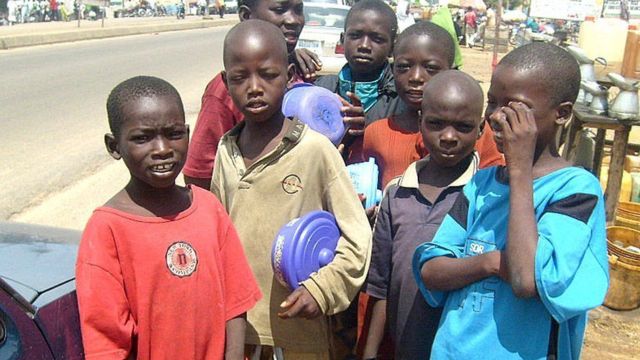
Kano, the city of ancient walls, now bears a heavy burden of the haunting presence of women and children who line its streets, begging for survival. From Sabon Gari to Kofar Ruwa, from traffic lights to mosque entrances, their stretched palms have become a renowned yet disturbing sight, painting a picture of poverty, moral negligence, and broken systems.

What was first considered a social crack has now widened into a full-blown crisis. Most of these street beggars are displaced women, widows, divorcees, and children.

Some as young as four roam the streets daily in search of food, coins, or sympathy. For the women, it’s often the last resort after being abandoned or driven from rural homes. For the children, it’s a stolen childhood, spent in sun-scorched rags rather than classrooms.

The roots of this problem run deep, encompassing widespread poverty, displacement from conflicts in the Northeast, the collapse of social welfare structures, and the controversial Almajiri system, all of which contribute to the cycle. 

While religious and cultural values once nurtured compassion and communal responsibility, they have been distorted over time to excuse neglect and indifference.

Government efforts, while numerous in announcements, remain largely cosmetic. Street begging has been “banned” multiple times in Kano State, but the bans vanish as quickly as they are declared. 

Relocation schemes and rehabilitation centres are often poorly managed or underfunded, leading many beggars to eventually return to the streets, as it is the only place they know.

Even worse, some of these children are exploited, trafficked, or “hired” to pose as beggars in a growing underground network. Women, too, face harassment, sexual violence, and daily humiliation. 

The streets that should offer opportunity are now a stage for public suffering, and this suffering is becoming normalised.

The situation is more than a humanitarian concern; it is a social and security time bomb. The longer these vulnerable groups remain on the streets, the more likely they are to fall into crime, radicalisation, or permanent poverty. And as the city’s population grows, so does the danger of institutional failure.

But all hope is not lost. With the right political will, inclusive policies, and collaboration between government, religious institutions, and civil society, change is possible.

 Empowering women with skills and microloans, integrating Almajiri children into formal education, investing in social welfare, and offering proper shelter to displaced families are realistic solutions not just dreams.

Kano must reclaim its dignity. The crying voices on its streets are not just those of beggars; they are those of citizens, future leaders, mothers, and children with untapped potential. Ignoring them is no longer an option. As the city grows, so should its compassion and responsibility.

Until we act, the story of Kano will not be written in its history books or palaces, but on the tired faces of women and children who call its streets home.

Fatima Ishaq Muhammad wrote via fatimaishaq021@gmail.com.

‎Politics: A game of this world for the next

By ‎Sadiq Aliyu Waziri

‎With cliches such as the game of politics, playing politics, the political arena, politics is a dirty game, politics is a game of chess, politics is a game of power, politics is a game of cat and mouse, and many others alike, which metaphorically compare politics to a game, many that participate in it think it is a game-literally. It was Dr. Abdulaziz T. Bako who made the analogy, on Facebook sometime back, of how football fans supported their clubs to how many Nigerians took politics. However, is politics a game? 

‎The former Nigerian President, General Muhammadu Buhari, passed away two days ago. Moments after the announcement, photos of the widow of the late former President were seen circulating on social media. The images were captioned, stating that the deceased had bequeathed her to seek forgiveness from Nigerians on his behalf. She pleaded with Nigerians to forgive her husband before he was laid to rest. ‎

‎Since the announcement of the passing, followed by Aisha Buhari’s words, people became divided, with a section of them expressing their shock, forgiving and praying for the deceased. In contrast, others reminisce about Buhari’s time in office, voice out their dismay, and even go to the extent of publicising their rejection of the late President’s prayer. Again, there has been another section of people who even publicly celebrate the death. 

‎Let us recall that Buhari, just two years ago, was the most powerful, famous, and arguably the most loved Nigerian politician before he came to power in 2015. Who would have thought then that people would say unkind words about him or even celebrate his death? People idolised him; they fought and died for this man to gain power. 

‎Perhaps seeing Buhari’s widow, who at once felt she could not put up with a teasing statement from an immature university student, at people’s mercy, begging on her husband’s behalf, might make those who “play” the “game” of politics rethink their position, to realise that it is not a game. It never has been and never will be. 

‎To many of the player-participants, politics is merely a game to be played and won, with the ultimate goal of securing leadership positions and staying relevant. To many of the supporter-participants, it serves as an avenue to support and cheer the players, making money, securing appointments in some cases, and engaging in trolling one another. They come out and defend whatever wrong their bosses do and discredit and blemish whatever right their rivals do, simply because it’s all a game to them.‎

‎If they take politics as a game, it is at their own peril. And, it is high time that the people who participate in politics and take it as such understood that politics touches people’s lives. And that they do not have separate lives from their political activities. Every action, decision, cheer, support, defending, discrediting, blemish, etc., will be accounted for. They could view politics as a game, if that is what they choose, but it’s about this world for the next one.   

‎Sadiq Aliyu Waziri wrote via sawaziry@yahoo.com.

Nigeria’s predicament: Why the gods are not to blame 

By Zekeri Idakwo Laruba

Many years ago, though I can’t quite recall what class I was in at the time, I read with deep suspense the secondary school play The Gods Are Not to Blame, a gripping adaptation of Sophocles’ Oedipus Rex by Ola Rotimi. The story left a lasting impression on me.

‎‎The play retells the classical Greek tragedy in a Yoruba setting, replacing Delphi with Ifa, but retains the central tragedy: a prophecy that Odewale would kill his father and marry his mother. The oracle had spoken. His parents, terrified and confused by the fate foretold, did everything to avoid it. They gave the boy away, hoping to cheat destiny. But in doing so, they unknowingly set in motion the very events they hoped to prevent.

‎Like a mirror held up to society, the play reminds us that fate, while powerful, is often enabled by human choices. And as I reflect on Nigeria’s present economic and political situation, I am compelled to draw a parallel. The gods, be they ancestral spirits, destiny, or structural circumstances, are not to blame for our predicament. The fault lies within us, among the citizens, and in our daily conduct. Nigeria’s crisis is not rooted in some divine curse, leadership, or preordained calamity. The tragedy is man-made, self-reinforced, and perpetuated by generations of unchecked habits.

‎The go-to culprit for our country’s dysfunction is always leadership; yes, he must be voted out. And in fact, we have had our share of weak, corrupt, selfish or visionless leaders. But to lay the entire burden of national failure on leaders alone is to ignore the broader ecosystem that produces and enables them. Leadership, in many ways, reflects the society from which it emerges.

As the former national secretary of the Congress for Progressive Change (CPC), Buba Galadima, recently argued on Arise TV, the problem isn’t merely the constitution or even the political structure. The constitution may have its flaws, yes, but no document, no matter how perfectly worded, can save a people who refuse to uphold its spirit. The rot goes deeper, into the very fibre of society.

‎The average Nigerian seeks change, including better roads, reliable electricity, transparent governance, and reduced costs for transportation and foodstuffs, but is reluctant to make the personal sacrifices necessary for this transformation. We want leaders who won’t embezzle funds, but we are ready to bribe our way out of traffic offences, rig student union elections, or inflate business invoices for profit. We demand accountability from the top while practising impunity at the grassroots.

‎‎What we face is not a constitutional crisis, but a moral and cultural one. An attitudinal crisis. A society where dishonesty is normalised and rewarded cannot produce integrity at scale. A nation where people cheat customers, underpay staff, evade taxes, and applaud fraudsters as “smart” will always find itself circling the drain of underdevelopment.

‎‎You see it in business, in education, in religious institutions, even in our homes. The trader who mixes sand/stones in beans to increase weight; the employer who withholds salaries while funding a lavish lifestyle; the pastor or imam, even herbalist, who uses fear to manipulate followers; the teacher who extorts students for grades; the parent who teaches a child to lie to visitors, these are not the acts of the gods. They are human choices.

‎‎Much is said about fighting corruption in public office. But who will fight it in the private lives of citizens? In that small business of yours, are you sincere? Do you treat your staff the way you demand to be treated by your political leaders? Do you keep your promises? Are your scales balanced? Do you honour contracts? These questions are not rhetorical; they are foundational.

‎Corruption does not begin at the national budget office; it begins in the market stall, the classroom, and the family dinner table. Before it becomes institutionalised, it is psychological. We must cleanse the mindset that normalises dishonesty, excuses shortcuts, and praises the rich regardless of how their wealth was acquired.

‎What Nigeria urgently needs is a complete national reorientation campaign, not the kind that involves empty slogans or jingles on the radio, but a sustained, grassroots movement to rebuild ethical standards. We need to teach honesty not just as a virtue, but as a power. We must reintroduce shame where wrong is done and rekindle collective pride in doing things right.

‎This means rethinking our educational curricula to emphasise civic duty and moral reasoning. It means reforming religious institutions to prioritise substance over spectacle. It means applying social pressure on influencers, celebrities, and community leaders to model ethical behaviour. It also means supporting the rare public officials who dare to lead by example.

‎‎If the gods are not to blame teaches us anything, it is that destiny is not an external enemy; it is a consequence of our own decisions. Nigeria is not doomed. It is not a failed state by fate. But we must be honest: we are dangerously close to reaping the full harvest of our collective neglect.

‎To change our national direction, we must start with the mirror, not the ballot box. Reforms must begin in the marketplace and the family unit before they can translate to public office. Only then will the constitution come alive. Only then will good leadership be sustained. Only then will Nigeria’s story turn from tragedy to triumph.

‎The gods are watching, yes. But they are not to BLAME. WE ARE!

Zekeri Idakwo Laruba is the Assistant Editor of PRNigeria and Economic Confidential. He can be reached via idakwozekeri93@gmail.com.