Opinion

PWI at 6: A Northern Nigerian Literary Voyage

By Shehu Mubarak Sulaiman

“I believe that the best learning process of any kind of craft is to look at the works of others” – Wole Soyinka

About a month ago, I woke up to a message on my Facebook Messenger. I was perplexed as to why a message would come in that early. It was dawn, and the skies had not brightened significantly enough for the layman’s morning to be declared.

The sender was someone who had once informed me of his interest in poetry. He had slid into my inbox a couple of months ago, and had registered his love for my writings, after which he requested that I mentored him.

Without wasting much time, I had introduced him to Poetic Wednesdays Initiative and urged him to follow-up on their activities. I had also introduced him to similar platforms, like the Poets in Nigeria Initiative Facebook Group.

 A week later, I sent him a flyer for a forthcoming workshop and asked him to register. The workshop was organized by Poetic Wednesdays Initiative, and was to be facilitated by top-notch poets: Umar Abubakar Sidi and Dr. Ismail Bala. To cut the long story short and hit the nail on the head, Abdul-Rahman Jafaru Wali, a medical student of Ahmadu Bello University, Zaria was the person in my inbox.

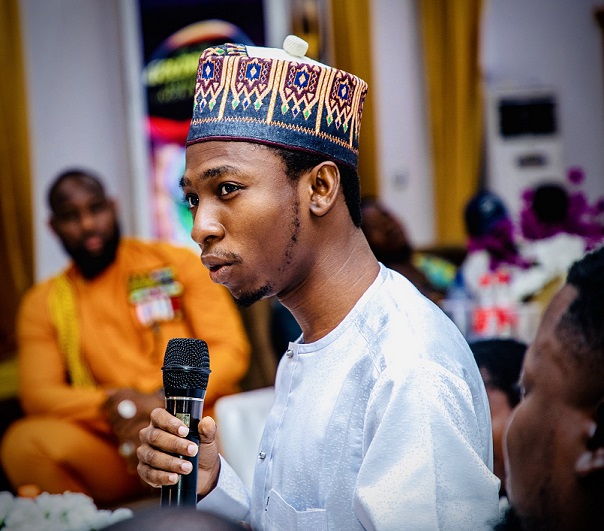
He had messaged me that early to inform me of his emergence as one of the ten winners of the recently-concluded “The Nigeria I See” poetry competition organized by MOP (Movement of the People). His feat had come just about a month after he had registered for a workshop organized by Poetic Wednesdays Initiative.

That is a practical portrayal of how much of a platform Poetic Wednesdays Initiative is, one does not come and leave empty-handed.

For three years now, I have been approached consistently by people slightly younger or even older than I am. Their solicitation has over the years lost every element of surprise. Whenever I receive a message from a stranger on Facebook, half of the time, it’s about poetry writing or writing pertaining to other genres of literature.

The question had always been the same from all of these people. They keep asking: “How can I learn poetry?” This is such a difficult question to answer, as there is a never-ending debate about whether poetry writing is an innate or a learnt skill.

Regardless, I refer back to Wole Soyinka’s quote about learning the craft of writing; how it relies heavily on imitation, and Poetic Wednesdays Initiative had always been my first recommendation for them.

First, if the advances are offline, I will ask them if they have a Facebook account. And if they answer in the affirmative, I’d urge them to like the page, and submit poems of any quality every Wednesday of the week. Over the years, I have lost count of people I had introduced to this platform.  Some of them have now grown to become a significant fraction of the finest writers that we have around.

The journey of these wonderful poets and wannabe poets reminds me of my own journey. I had started just like them, a newbie, and a sprouting seed.  In the concluding months of the year 2016, I had grown tired of talking about my dream of becoming a writer. The more I talked about it, the more I felt like a fraud, my impostor syndrome was becoming more and more intense that I had contemplated giving up writing altogether.

I was at the crossroads, one road led to an Eldorado of a life I had always made up in my head; the fantasies of what a celebrated writer’s life seems, and the other led to a path of giving up, a one-way route to despair.

Being a science student was more than enough deterrent already. I talked to a friend who had graduated from the university a year before me and who I believe had more life experience than I. He spoke of his friend called Salim Yunusa, who has founded this small literary platform that aims at nurturing young talents in literary-inclined endeavors.

I talked to Salim Yunusa and he introduced me to a platform called Poetic Wednesdays, that was before it became Poetic Wednesdays Initiative. It was the newly-founded platform of his. I had written a couple of poems before then, but I had posted none, they were all in my phone’s notepad, longing to be seen.

So, all I did was waited for that fateful Wednesday before making my entry. My poem was handpicked and afterwards posted on the page. I followed the poem up, and relished some of the praise-coated comments. That was my first official encounter with poem writing.

As time went by, submissions from me became more and more regular. I enjoyed every bit of it; the praise, the feeling of having written something someone else enjoyed reading. Amidst all that nursing school monotony, consistent memorization, and voracious reading to stay afloat, I found an escape.

I had started to look forward to every Wednesday, it felt refreshing reading through poems on the page, and sometimes using them as a blueprint to craft mine. I started to make friends online, Facebook transfigured from a place where I come to catch up on viral gossip, or post pictures, to a place where I have direct contact with intellectuals and like minds. My time online started to become more of an educative endeavor rather than a fun-seeking one.

Weeks passed by and I had started to play with different themes, I had become a favorite on the platform. People looked forward to every Wednesday, so they could catch a glimpse of my poem and savor all its flavors. I had copied styles of poets like Maryam Gatawa, Salim Yunusa, Sani Ammani, Nasiba Babale, and a host of others, before I had come to find my feet.

In 2018, there was a literary hangout somewhere in Ahmadu Bello University, Zaria organized by this selfless platform. We dined, and recited poems for the relish of fellow poets and literature lovers present. We had a swell time. In 2019, I rendered my masterpiece titled “I AM NORTH” at one of Poetic Wednesday Initiative’s get-together at Kongo Campus, Ahmadu Bello University, Zaria.

It is the reception it received that had led me to promoting it on different platforms. The video of the poem was played at the 2020 edition of the Nigerian Students Poetry Prize event that held in Lagos. The written form of the poem was published on Daily Trust Newspapers, Yasmin El-Rufai Foundation official website, and other notable platforms in Nigeria.

The creatively titled essay of Sa’id Sa’ad “Poetifying the North” is not a coincidence. I particularly love the witty coinage of the word ‘Poetifying’. Indeed, the North has been ‘Poetified’.   Today, in northern Nigeria, as opposed to the nearest past, there is a resurgence of literary activities and discussions like never before. There has been a fast-rising awareness of what literature stands for, and many have continued to embrace it.

Virtually all the states in northern Nigeria have one festival or the other, celebrating literature and further educating young minds on the importance of both literature in English as well as in other indigenous languages. This is not to say that the region had always been dormant in the realms of literature and arts, that won’t be fair to a region that has produced notable writers like Helon Habila, Abubakar Imam Kagara, Abuabakar Adam Ibrahim, Ahmed Maiwada, Ismail Bala, Aliyu Kamal, Victor Dugga, Maria Ajima, Zainab Alkali, Abubakar Gimba, and many others.

It is to say that the awareness about writing, reading, and other literary-inclined endeavors has been quite unprecedented in the last decade. Many young people have come to find it as interesting as any other thing young people enjoy. There are now more festivals, literary contests, literary magazines, literary organizations, school-based literary clubs and so on.

The younger generation had come to transform reading and writing from a tortuous exercise to something exceptionally pleasurable.

The perception towards literature has taken an entirely different dimension. If I am asked to pinpoint literary organizations in the north that have contributed immensely to this growth and literary resurgence, I will place Poetic Wednesdays Initiative amongst the first five on my list.

For the fact that it deals basically with young people and neophytes who may have or have not written anything before, it lays a solid foundation for those who develop cold feet when literary matters are being brought to the table.

This is quite hypothetical, but if one is to assemble ten young writers in northern Nigeria today, I am rest assured that two to three of them would attribute their literary indoctrination and growth from having to read, follow, or interact with poets and literature lovers like the likes of Salim Yunusa, Nasiba Babale, Aliyu Jalal, Mujahid Ameen Lilo, Abdulbasit Abubakar Adamu, Abdul-Rahman Abu-Yaman, Hajaar Muhammad Bashar,Usman Karofi, Maryam Gatawa, Sani Ammani, Abduljalal Musa Aliyu, Sa’id Sa’ad Ababakar and many more.

These writers that I have all had or still have something to do with Poetic Wednesdays Initiative. Nothing makes one more proudhearted.

Poetic Wednesdays Initiative’s six years anniversary is a celebration of poetry, literature, passion, creativity, community development, man-power development, and social change. As it stands, the initiative has organized offline creative writing workshops for more than three hundred secondary school students in Kano, Katsina, Yobe, and Kaduna. It has organized several literary hangouts for free, while also partnering with literary organizations like PIN (Poets in Nigeria), Ahmadu Bello University Arts Festival (ABUFEST), The Arts-Muse Fair, Open Arts, Creative Writer’s club, ABU, Minna Book and Arts Festival (MinnaBAF), Hausa International Book and Arts Festival (HIBAF) and many others, all to promote literary activities, especially in northern Nigeria.  

If this literary organization is assisted in its selfless strides, the future of literature in northern Nigeria will be as rosy as it could ever get.

On learning to let go before it’s too late

By Aisha Musa Auyo

When I was in primary school, my grandmother visited us, and she was mesmerized by our nature-friendly environment. She said we were wasting resources by not utilizing the space with livestock. So she suggested animal rearing, that she would send a sheep first, and if all goes well, that sheep will give birth to many others, and in a few years, we will have a flock. She kept her words and sent a pregnant sheep. It was assigned to me since I’m the eldest.

The Fulani in me took over, and the bonding was natural for my sheep and me. I fed her morning and night. I brought her out and tied it with a rope in the afternoon for grazing. I then returned her to the barn in the evening. On a fateful Friday afternoon, I brought her out and tied her to a guava tree in our compound so that it would graze as usual.

I can’t recall what happened, but she cleverly freed herself. (That euphoria when a captive gains independence ). She walked, played, jumped and danced! Then, when she became aware of her absolute freedom, she began to run, somewhere far away from our house, and I followed her. The race continued, but I managed to hold the rope.

My sister went in to let my parents know of the happening. I was still holding the rope, but I fell while that ‘wicked’ sheep was still running. I was somersaulting and screaming but still managed to see my parents laughing like crazy outside. My world was spinning, and I had bruises all over my face.

Finally, when I couldn’t bear it anymore, I let go of the rope, thus the sheep, and as I managed to open my eyes, my parents were at the spot to pick me up, but still laughing at my stupidity. ‘Yar fari’ (first daughter), they all chorused! Firstborns are believed to be idiots!

They calmed me down, soothed my wounds and finally, they said, “This could be avoided. You should have simply let go of the rope and the sheep. She will come back”.

This is a life lesson I learned the hard way. I’m glad it happened in my early days of life, as within two days, the wounds healed, and all the bruises disappeared in a week. All thanks to the fruits and medication that I’ve been taking. But from that day, I learned to let go of anything I perceive as a threat to my life or my happiness with immediate effect.

My instincts always alert me of immediate danger, and I respond unhesitatingly. Sometimes even too early that people around me think I do not give people or situations the benefit of the doubt or that I make early conclusions. Still, better early than late. Letting go comes easy because I’ve learned before that holding on to what doesn’t want to stay leads to bruises, wounds and pain.

The recent trends in domestic abuse have made me think, how can we reduce this menace in the upcoming generations? How can we raise mentally sound and selfless generations that will not abuse and tolerate abuse? What are we doing in our power to sensitize our wards of this growing menace?

People, especially women, tend to hold on to their mental and physical abusers be they friends, husbands, relatives, house helps or any other person. They endure all kinds of pain and suffering while trying to hold on to what they think is theirs until they are finally bruised, injured, suicidal, or killed. That’s when they let go. No, this has to stop!

I’m not in the position to punish abusers, but the little I can do now is to enlighten you, the reader, to learn to let go of that which harms you or threaten your happiness and or well-being. Learn to follow your instincts, they are there for a reason, and most often than not, they don’t fail us.

May Allah protect us from abusers, amin. May we never abuse anything under our care, amin. May Allah give us the strength to leave that which will harm us. May we never get attached to what isn’t ours, amin. May the love and respect we give be appreciated and reciprocated, amin. May we see the light even in darkness, amin.

Aisha Musa Auyo is a Doctorate researcher in Educational Psychology. A mother of three, Home Maker, caterer, parenting and relationship coach. She can be reached via aishamuauyo@gmail.com.

Dear children of the masses, wake up

By Hassan Ahmad Usman

What else do we need to see before we believe that we don’t have anyone to cry out to, fight with, or even be our hope? 

Two things happened over the weekend that explained clear how dualism exists in Nigeria. First, the gap between the so-called “elites” and the masses is so wide that you can’t imagine these two people living and sharing a country.  It is a clear call for us, the less privileged children, to have sense and redirect where we burn our energies and pursue a realistic future.

First, when airline operators announced their resolution to stop operations on May 9 due to the ever-increasing prices of aviation fuel, we thought it was time for them too (elites) to feel how discomfort Nigeria can be and how a malfunctioning Nigeria is not suitable for anyone. But our curiosity got punctured when we woke to the news that the operators had suspended the planned stoppage of operations.  Why? How? We only have one answer – it is something that has to do with them (“elites ” or “big men” if you like). They don’t deserve humiliation. On the contrary, they deserve a swift response to what affects them (even behind closed doors). They are the true Nigerians.

 How do you expect an Atiku, Tinubu, Moghalu, Wike, Amaechi and the rest to campaign without air transport? Osinbajo will undoubtedly use the presidential fleets. So he’s a bigger boy. 

On the hand, ASUU announced the end of their warning strike of three months with another three months of strike ( it doesn’t even sound logical). How can you go on strike while on strike? So it is another painful morning for the children of the poor and their parents. 

It is high time we understood that to survive in Nigeria with these same elites; we must go beyond being their praise singers or political foot soldiers for actualizing their political dreams.  We must understand that our unborn children deserve much more than we have.  

Our schools have been closed for a quarter of this year, and we’ve braced up for another quarter to go unaccounted for.  Unfortunately, given the political atmosphere looming for the next general election, the ground is set for them to cultivate many young, hungry people for political thuggery with the help of our lecturers who never see sense in keeping us in school to shape us for the future.  

My dear children of the masses, our lives and future are not and never tied to any politician.  Therefore, despite our condition, we can dream and aspire just like their children. What we need is to focus and keep building in ourselves.

Let’s equip ourselves with relevant skills. The certificates ASUU and the Federal Government of Nigeria are denying us are becoming irrelevant on the global stage. Yes,  education is good, but there is no specified timeframe for it. We can build ourselves before going back to classes. So, let’s endeavour to show that we’ve not only come of age, our senses, too, have come of age.  

Hassan Ahmad Usman writes from Lafia, Nasarawa State, Nigeria. He can be reached via basree177@gmail.com.

Almajiri System: The way out of the Armageddon           

By Lawi Auwal Yusuf

I have been keenly following the recent raging altercation aroused by the hard-hitting comments of Nafisa Abdullahi. Many people have voiced their diverging opinions; some took an affirmative position while others came out against her. However, there is a consensus between the different parties that Almajiris are in a dire condition. Hence, no one would like to see his son in such a critical situation.

Though everybody has the leeway to express his mind, why are we wasting our energies on arguments that will come to nothing? These children are clamouring for justice, not a palaver over their plight. Such wrangle will never let us escape from the shackles of mutual antagonism. I believe that this issue is beyond mere accusation and counter-accusation. On the contrary, we have to go the extra mile. We have to give it our best shot to mark a turning point in this issue. Thus, we must debate matters that will help us clinch a victory over the problem. Put another way, it is more important to shift our attention from pointing accusing fingers at each other and focusing on the solution. This tendency to emphasise the problem rather than the solution is deeply entrenched in society and ravages our daily lives. Instead, it is more logical to put the solution above the issue.

Concentrating more on the problem will put us on a road that goes nowhere. It will keep us going around in circles, remain coasting and yield no helpful result. It will always go against us while our efforts remain in the doldrums. If you think this is the right way to ward off the problem. Indeed, you are living in a dream world. It is time to stop the dispute, draw a line under the issue and face reality, as this intractable desertion is getting out of hand.

Those on the same wavelength with the actress should know that not all the children they see on the street begging are actually Almajiris. Many children from impoverished homes disguise themselves as Almajiris to beg for food or scavenge through garbage, looking for valuable materials to sell for a living.

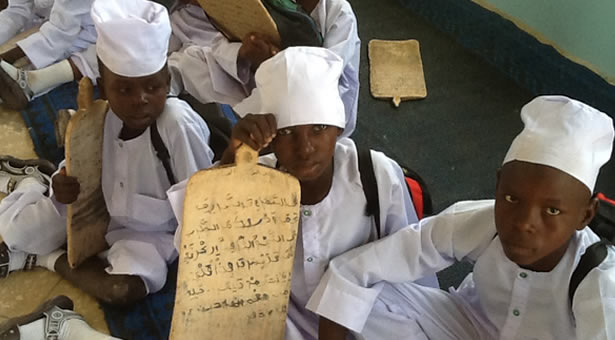
Furthermore, I want to remind those lilliputians that ridicule the Tsangaya that immensurable successes had been achieved through the system. It was the only institution that catered to the educational needs of our people before the inception of Western education. It was the bedrock of our ancient civilisation that paved the way for modern civilisation. It was the institution upon which the foundation for the development of society rested. It was attended by both the nobles and the commoners.

The Sultans of the Sokoto Caliphate, emirs of its semi-autonomous city-states and other members of the aristocratic class all went to Tsangaya. Also, they received their leadership skills training there and trained other administrators who served in different capacities. Moreover, Tsangaya scholars designed the constitution used to govern such a gigantic empire effectively. In addition to all these, it rolled out the khadis (Shari’a court judges) that administered justice, the Imams that led prayers, and Muftis that issued verdicts to guide authorities and the people on both their spiritual and worldly affairs. They also served then as the think tank.

Similarly, great scholars impart knowledge, herbalists that cure ailments, astrologists that determined praying times, crescent sighting, weather forecasts and navigation routes came from such a school system. On this basis, Northerners were proud boastfully that they were literates with a systematic way of life even before the imperialists invaded the region. So, we must be grateful for that.

On the other hand, those who take an unfavourable position from the Kannywood model should understand that the system now doesn’t go; it has a lot of issues and needs momentous changes. It is not what it used to be before. It has taken a different dimension in the last decades. We can’t keep going like that. The Tsangaya must be radically renewed, and these downtrodden children must be liberated from such bondage. Their future must be secured. They need to be under the vehement supervision of their parents, accompanied by their affection, psychological support and care. They have to enjoy the comfort of their homes and the bond of kinship ties, as we have all enjoyed. They deserve a decent life.

Lastly, politicians that have been dilatory in dealing with this problem and wash their hands on the matter must back away from such attitude. They must show genuine commitment to eradicating this menace. We must help these children to salvage the country because we have no other country than Nigeria. IT’S OURS!

Lawi Auwal Yusuf wrote from Kano, Nigeria, via laymaikanawa@gmail.com.

Islam is a religion of knowledge; learn it

By Professor Abdussamad Umar Jibia

Nigerian Muslims following discussions on the execution of a young woman by unknown youth in Sokoto would note that several obscure social media “Islamic scholars” have emerged. Some of them arrogated to themselves the right of ijtihad, a thing some of the most outstanding Islamic scholars avoided unless absolutely necessary. Unfortunately, people kept sharing such stuff as it suits their position on the matter.

When you decide to be a Muslim, you have taken a big decision to be a student of knowledge throughout your life. We all know this because the first passage of the Qur’an revealed to our Holy Prophet (Peace be upon him) is essentially an instruction to sit up and learn. After that, the Prophet lived the remaining 23 years of his life interpreting the Qur’an revealed to him piecemeal using both verbal and practical approaches. By the time he left, the religion was complete, and a whole body of knowledge was on the ground, safely transferred from generation to generation of Muslim scholars.

The knowledge is vast as it covers all aspects of life. Take the five pillars of Islam, for example. Whole books have been written on aqidah, which constitutes the first pillar of Islam. There are books on Salah (prayers), the obligatory and supererogatory aspects of it, prayer timings, adhan, iqama, the core body of prayer, etc. Same with Zakah, Fasting and Hajj.

The daily transactions of a Muslim in the market are well detailed in terms of halal and haram. In addition, there are books on rights, including rights of other Muslims, non-Muslims, neighbours, colleagues, animals, the environment, etc.

How would the sick be handled while still alive and after their death? What happens to their heritage? How is it shared? These are clearly stated.

All aspects of Islamic knowledge are available in detail, and, in sum, Islam is not a teach-yourself religion. Instead, it has to be learnt from those who know it.

Take it easy. I am not saying every Muslim must be a professional Islamic scholar, just like not everyone must be a medical doctor or an Engineer. You are probably 40, 50 or even 60 and above and have been working hard in the area Allah has placed you in. Keep working hard to earn a lawful means of livelihood for yourself and your family. That is an aspect of Jihad you are making.

I believe you would agree with me that you would not accept any quack to offer medical services to yourself and your family in the event of sickness. Most likely, you would look for the best affordable specialist to treat you and your loved ones. You would check their qualifications. You would not pick a document from an unknown specialist on the internet and begin to apply their medication and think you would be okay. When you want to build a house, you will look for the right architect to design it for you and the right engineer to supervise the work.

You are doing all of the above when it comes to Islamic knowledge. When you are going on hajj for the first time, for example, you would typically meet the scholar in your area to ask questions. You would probably attend the courses organized by the local pilgrims’ board. You are doing that to avoid wasting your money and make sure that you perform a hajj Allah would accept.

When your father dies, you would call someone you believe has a good knowledge of inheritance to help you share what has been left by the deceased. You do that for zakah, etc.

As a Muslim born to a Muslim family, you learnt to recite the Qur’an and pray from your Islamiyya days. Many thanks to your parents who took you there. Yet, you keep learning from your local Sheikh to make sure you recite the Qur’an even better and perform a prayer that is devoid of mistakes.

My brother, if you only consult an Islamic scholar you trust on all of the above, which are what you do daily and/or from time to time as a Muslim, why do you think you need a social media “scholar” to tell you the Islamic position on blasphemy, a thing not essential in your daily routine of Ibadat? I guess you are not contemplating insulting the personality of the Holy Prophet (SAW), and you are most probably not aspiring to be a Shariah court judge to know the kind of punishment you would pass on a blasphemer.

But in case you have abandoned your Sheikh and/or dropped all your Islamic books, thinking you don’t need to learn more about Islam, I am afraid that you are already preparing yourself for eternal destruction. So please go back, get an Islamic teacher you trust and continue.

As for the Sokoto case, we have shown sufficient anger, and anyone contemplating a repeat of what the young woman did would have to think many times. Let us leave the Muslim leadership to handle the rest. We should have confidence in the Sultan and his team.

May Allah forgive our shortcomings. Amin.

Professor Abdussamad Jibia can be contacted via aujibia@gmail.com.

Let’s talk about empowering Arewa women

By Aminu Mohammed      

It is no longer a secret that we have many single ladies and divorcees in search of elusive husbands to marry in the North. This has become worrisome not only to the women but their parents, who are tired of seeing them at home. The increasing incidence of poverty and idleness among our women may not be unconnected to a lack of skills and capital to embark on a meaningful trade or vocational training. Most women in the North are further impoverished following the death of a husband or incapacitation due to the loss of a job. In some instances, the family suffers if the breadwinner becomes sick over a long time.

Although appreciable progress has been made in increasing female enrollment in secondary schools and tertiary institutions across Northern states, even at that, the region is lagging in terms of education. We still have a highly marginalised segment of the society peopled by an armada of illiterate and disempowered women.

Have we bothered to question the rationale behind the increase in social vices, especially sexual immorality, in our society? Have we pondered the root cause of poverty and inequality in our midst? Do we still think that poverty is spiritual and caused by our actions and misdeeds? The fact is that we have marginalised our women and do not see the need for them to excel and go after their passion and dreams. Instead, we believe that women should just stay at home and take care of the kids while the man goes out to look for means of sustenance.

It is pertinent to note that parents spend a lot of money preparing for their daughters’ marriage ceremonies by buying all sorts of assorted kitchen wares and household items without prioritising the education and empowerment of their daughters. Many parents do not see the need for their daughters to have the requisite training or education to become self-reliant. That is why most women in the North become a burden to society in the case of divorce or the death of a spouse.

Have we asked ourselves why we have so many idle women living in squalor and deprivation due to divorce or the death of a spouse? What can we do to empower our women so that they can live meaningful lives and achieve their dreams? Most of these idle women have goals, dreams and innate talents that could be harnessed for societal progress. Of course, cynics and chauvinists may argue that women are fickle-minded and should not be allowed to chart the path to self-reliance. This is due to fear that they may not be submissive to their husbands. However, that is not always the case in concrete terms.

Of course, I believe in female empowerment for societal development, even though I am sceptical about the feminist utopia. However, I am indeed aware that an empowered girl-child through education and vocational training is a pride to her parents and the community. Thus, an empowered woman will ensure an excellent educational upbringing for her children.

I believe that parents should focus on allowing their female children to acquire vocational training and practical skills before marriage to support their families in one way or the other. The focus should not be only on marriage rites and traditional practices, to the detriment of her future wellbeing. The clothing materials, especially “lefe” and many boxes of clothing materials that we dissipate energy in gathering for the wedding activities, will never translate into wealth in concrete terms.

Parents should realise that marriage is not a poverty alleviation scheme and that giving away their daughter to a rich person does not guarantee her happiness. Some families even go to the extent of incurring colossal debt to procure the needed wedding materials to impress relatives, friends, and society, which leads to anguish and regret.

I must reiterate that disempowered women are a burden to society. Therefore, I believe that skill acquisition programmes should be inculcated in our women, especially those who are not fortunate to acquire tertiary education. Of course, those with tertiary education should also learn entrepreneurship to fend for themselves due to the limited job opportunities in the country.

Islam does not prohibit women from education, mercantilism and trade. Even the prophet’s wife, Khadija (RA), was an independent woman and a merchant. So, there is no basis for the argument that women should be locked at home without any meaningful enterprise only to serve as a tool for satisfying their husbands’ sexual needs.

It is not enough to marry off your daughter to a man without adequate skills for survival. Parents who do not see the need to educate their female children should make sure that they acquire a vocational skill or trade before marriage. This ensures their economic survival in case of a spouse’s death or loss of job. We cannot run a society where a large segment is marginalised and lack the wherewithal to participate in any meaningful economic activity. That will not augur well for the progress and development of the Northern region.

Aminu Mohammed is at the school of Sustainability, Christian- Albrechts- Universität zu Kiel, Schleswig Holstein, Germany. He can be reached via stu219013@mail.uni-kiel.de or gravity23n@gmail.com.

Vanguard of Falsehood: In defence of Prof. Maqari

By Ibrahiym A. El-Caleel

By the special grace of God, nothing shall befall the Imām of National Mosque, Professor Ibrahim Ahmad Maqari, for the calculated report published by Vanguard Newspapers. The media house submitted a report on the Sokoto incidence wherein they sandwiched truths, half-truths and micro-truths.

The Imām didn’t justify mob action anywhere in his tweets and Facebook posts. He only maintained that Muslims have redlines. Circumferential lines that shouldn’t be approached, lines that must not be crossed to disrespect their faiths. And this is both factual and non-negotiable. So, the Imām was very much on point. No amount of deliberate media intimidation can change this hard fact.

You may say the Imām was not making a personal statement. He was stating what is obtainable in the thoughts of every Muslim with some adequate knowledge of Islamic law. It is in the books of Islamic law.

Unfortunately, we are not seemingly ready to make progress on this recurrent problem. People are reiterating the measures that can be taken to avert future episodes of this issue, but no one is ready to listen. Instead, the suggestions are mischievously twisted to mean tacit justification for mob lynching. What sort of regressive society have we become? We prefer to dwell on polemical exchanges rather than orienting ourselves towards some mutual understanding. Between polemics and societal orientation, which paves the way for harmony in a plural society?

Muslims are saying blasphemy isn’t tolerated in Islam. When genuinely committed to the rights of Prophet Muhammad (Peace Be Upon Him), the provision by Islamic law is execution. And in Qur’an Chapter 6, verse 108, Muslims are categorically prohibited from blaspheming anyone’s religion – be they Christians, Jews or Traditional Worshippers. It is not allowed in Islam. The Qur’an has warned about it. This prohibition was made so that no one blasphemes Islam out of revenge. By this, Islam respects the boundaries or redlines of every religion.

Are Christians saying that their religion encourages them to blaspheme Islam? Where was that stated in the Bible? I believe nowhere! This means it is purely an act of mischief for anyone to choose to make a living from ridiculing or blaspheming a Muslim’s faith since the instruction isn’t Biblical.

These are honest discussions that will promote harmony and give us some sanity. It will also give us a civil society. This is what a national mosque Imām, Professor Ibrahīm Maqari, says. He was not justifying mob action by any implication. So do not put words into his mouth, please. Vanguard Newspapers lied as usual. Barefaced. And this is not the first time they have submitted such a mischievous report whose jeopardizing tendencies they are underestimating.

But it is understandable since yellow journalists would always take pleasure in misfortunes like this. It gives them the advantage of selling volumes of papers and gathering traffic. Woe onto he who follows unethical methods to garner influence and gain income. Woe onto him!

Ibrahiym A. El-Caleel writes from Zaria and can be reached via caleel2009@gmail.com.

Jungle justice is ugly, but blasphemy is not exactly pretty

By Ishaq Habeeb

I know emotions are tense at the moment, and people are understandably choosing their words carefully not to appear fanatical or “un-woke”, but as we condemn the lynch mob that murdered Deborah in cold blood, let us also condemn her recklessness to save the next Deborah from other such murderous lynch mobs abound.

Deborah was only right to caution people to stop posting irrelevant, least of all, religious messages to a school platform, comprising people of varying faiths, formed solely for sharing academic updates, but dead wrong and at once suicidal, to speak blasphemously about a man whom she – should – know (since she spoke the Hausa language, a tribe, about 80/90% of whose natives are Muslims) majority of the group members, hold in the highest esteem.

Sadly, in Nigeria, you only need to become an Admin of a WhatsApp Group – with a clear cut mission – to know how practically impossible is it to govern Nigerians and have them obey simple rules.

I understand that it is hard to blame the dead in moments like these, but there are young people here who are reading our takes on topical issues, and our takes to shape their ideas and actions.

So, condemning only the lynch mob while ignoring the victim’s manifest, brash and unbridled lack of respect for other people’s revered personalities is, to say the least, lynching the stark truth to appease our emotions, and that is both shortsighted and dangerous.

We must do well to avoid living in half-truth denial and speak the whole truth from both sides so that young observers will not go around believing it is okay to do what Deborah did and that the only person to blame squarely is the lawless lynch mob.

Obviously, we can’t reason lynch mobs out of jungle justice(s). Still, we can reason with our living sister Deborahs to study their environments and always be mindful of their utterances, and this isn’t limited to people’s belief systems. It cuts across all strata of people’s lives endeavours. A stitch in time, as they say, saves nine.

Conclusively, as the regional coordinator of a Pan African movement, I’ve had to, on several occasions, scold/remove members for posting Friday/Sunday messages to the movement’s WhatsApp platform, even though it has a self-defined purpose and a strict rule against posting ANY irrelevant and PARTICULARLY religious messages.

As an admin, I’ve been called many atheistic names privately by those shambolic recalcitrants for simply doing my job, as clearly spelt. I fear if they could have their way, perhaps, I may as well face Deborah’s fate.

Ishaq can be reached via: simplyishaqhabeeb@gmail.com.

Slavery and Islam: Some notes

By Prof. Abdussamad Umar Jibia

The trending topic that every Nigerian is talking about is the execution of a young woman who insulted the personality of the Prophet of Islam (May peace be upon him). There is not too much I have to say on it. It is clear that Nigerian Muslims have spoken. We have a redline; no one would insult the Holy Prophet of Islam and get away with it. If democracy is all about what pleases the majority and protects the right of all, then there should be a law criminalizing any attack on the personality of our Holy Prophet with the appropriate punishment; unless some people feel it is part of their right to insult him. If, on the other hand, democracy is about being anti-Islam and crossing its redlines, then our problem has just begun.

The discussion on the Sokoto incident as I followed it on social media has revealed the level of hypocrisy in many of those who claim to be Muslims. Many commentators were not worried about the magnitude of the evil the woman committed but the way she was executed. Others would say, “She should be taken to a court of law”, etc., as if they are not the same people who would condemn any law that applies execution as the punishment for blasphemy.

Specifically, in a Whatsapp group I belong a particular person was so deep into his attack of the “perpetrators of the murder” that he went out of his way to be making other unsavory comments about Islam. The particular point I took him on was his association of slavery to Islam. To him it was the British who liberated slaves relying on a colonial document written by Lugard.

But he is not alone. A Northern writer with large followership among Northern elites once accused the Arabs of killing slaves because we don’t have African Arabs like we have African Americans. That, to the best of his imagination was because Arabs killed their slaves.

The danger is not about these people but the unsuspecting followers they can influence. Unfortunately, most social media followers are fascinated by beautiful grammar even if it is bereft of facts. In particular, I have always wanted to respond to the claim on the killing of African slaves by the Arabs. With my discussion with another Northerner I decided to write a few lines on this.

It is well known that it is not Islam that came with slavery. Islam came and met the practice of enslaving fellow humans well established not only in Arabia but in all other societies. The methods of acquiring slaves and the way they were treated were devoid of sanity in most societies. These methods were practiced before Islam came and continued to be practiced after the coming of Islam in societies where the impact of Islam was yet to be felt. Sadly, even in some Muslim societies where ignorance or selfish desires prevailed some of these methods were practiced.

One way slaves were acquired was through war. In war, the victor could treat the vanquished enemy the way he liked. They could simply kill them, torture them to death, put them under their control as soldiers or otherwise make them slaves.

Another way slaves were made was through guardianship. A father or grandfather had absolute authority over his offspring. He could sell or gift them away as slaves; could lend him or her to someone else, or exchange him or her with another’s son or daughter. A community chief could sell out one or more of his subjects as slaves.

Invasion was another method. In many cases, strong communities invaded weaker ones, enslaved all men, women and children and sold them. This is chiefly how many Africans found their way to other continents as slaves.

Other methods include pawning, tribute, etc. depending on the geographical location and time in history.

Islam restricted the means of enslavement to only one method. Jihad. The Qur’anic meaning of the word is maximum struggle in spreading and defending the message of Islam. As long as falsehood is confronting the truth and evil is opposing good and mischief and its doers are standing in the way of reform, Islam does not allow Muslims to seclude themselves with rituals and look the other way. Just like a Muslim is enjoined to give Zakah that symbolizes kindness, he is enjoined to perform another form of worship that symbolizes opposing evil. That is Jihad. Of course this write-up is not about Jihad.

When Jihad becomes an armed struggle and prisoners are taken, a favour is done to them. Instead of being killed they are taken to Muslim community as slaves to serve as house helps, on the farm and help in other activities not beyond their ability.

Of course, it is not a rule in Islam that war captives must be enslaved. Captives can be released freely by the leader or after payment of ransom (Q47:4). Both of these happened during the lifetime of the Prophet (Salllahu alaihi wa sallam). Peculiarities of situation would always guide the leader. Islam also prohibits torturing the enemy or mutilating their body as practiced in other climes.

The rules of treating slaves are summarized in the following Hadith, quoted in parts, “They are your brothers and servants. Allah Has put them under you. Whosoever has his brother under him, he should feed him from what he eats and clothe him from the type of cloth he uses. Do not assign them to do any work that is too much for them. When you assign them, help them.” (Bukhari and Muslim reported it).

In addition to this golden rule of treating slaves, Islam introduced incentives for freeing slaves. For example, freeing a Muslim slave would emancipate the freer from hell fire on the Day of Judgment, according the Holy Prophet (May peace be upon him) himself. Kaffara (expiation) for incorrect breaking of fast, abrogation of oath, killing by mistake, zihar, etc. can be done by freeing of slaves, sometimes as the first option.

The claim that Arabs killed their slaves stems from ignorance of the above and the fact that intermarriage took place between Arabs and freed slaves. Even in modern day America or Europe, how many whites marry blacks? The former still look at the latter as slaves. The fact is that even among themselves, enslaved people in America were not legally allowed to marry until recently. One woman was allocated to several slaves to share, so she gave birth to another slave whose father did not matter. This beastly practice was unheard of in what our ‘liberals’ condemn as “puritan” Islamic societies.

The Shiite-brainwashed “intellectuals” probably forgot that in Islam a master can have intercourse with his female slave subject to laid down conditions and when she gives birth to any child she qualifies for her freedom and her child has full rights of a child. Some of the famous early generations of Muslim rulers were children of such slaves. A handy example is Abdurrahman bn Muawiya of Spain. The only maid slave the Holy Prophet had, Maria, was an African and she gave birth to his son Ibrahim. This is unheard of in western societies.

I challenge any believer in western civilization to cite an example where a white master married a slave.

Thus, slaves were integrated into the Arab/Muslim society. Not only were they integrated but many of them learned Islam and excelled in Islamic scholarship. The list is long but a few would suffice. Nafiu m. Abdullahi bn Umar, Ata’ bn Abi Rabah, Tawoos bn Kaisan, Yazid bn Abi Habeeb, Makhul, Maimoon, Addhahhak, Ibrahim Annakha’iy are some of the famous scholars of early Muslim generation who were originally slaves.

Coming down to recent history of West Africa, what confused many who get their knowledge of Islam from secondary sources is the conduct of some West African kings. For example, Kano and Zaria were Muslim states and war between them was far from being Jihad. People enslaved as a result of that war were enslaved unjustly and Allah will judge between them and those responsible for their enslavement.

Another wrong pre-colonial enslavement method was raiding of minor tribes by major tribes for the purpose of generating slaves. Such slaves were kept in the palaces of traditional rulers or sold out to foreigners. This is clearly outside what Islam permits, regardless of whether or not such major tribes are predominantly Muslim.

Sheikh Abubakar Gummi had very tough times trying to educate some traditional rulers who still kept such slaves in their palaces that such practice was unIslamic.

Most western-educated people in Muslim societies are misled by Shiite propaganda. It is well known that Shiites have deep animosity towards Arabs and Islam.

Prof Abdussamad Umar Jibia

On blasphemy and mob justice

By Zakariyya Shu’aib Adam

Blasphemy, especially against the Prophet, is the sacreligous utterances about anything related to his personality. Scholars have written books exclusively on the subject. Some of the books include Ar-risalah by Muhammad Ibn Suhnun; As-saarimul Maslool by Shaykhul Islam Ibn Taymiyyah; As-saiful Maslool by Taqiyyuddeen As-subkiy; As-saiful Mash’hoor by Muhammad Ibn Al-qasim; Tanzeehul Anbiyaa by Jalaaluddeen As-suyutiy; Rashqus Sihaam by Ibn Tuloon and Tanbihul Hukkaam by Ibn Abideen.

Other scholars have, although not exclusively, mentioned the ruling of blasphemy in their books. Among them are Ibn Hazm in his famous Al-muhallaa and Al-qadhi Iyaad in his magnum opus As-shifaa. With this, we can conclude that the ruling for blasphemy is not new to the Islamic scholastic circle. In this article, by Allah’s will, I intend to critically dissect the concept of blasphemy and the Islamic ruling on mob justice.

Blasphemy, as Ibn Taymiyyah defined it, is to use words that show a lack of respect and are perceived by all people, regardless of their beliefs, to be profane, exactly like cursing, condemnation, etc. Islamic scholars, as discussed in the aforementioned books, unanimously agreed that blasphemy leads to apostasy, and that anyone that is found guilty of it should be executed. The basis for their consensus is evidences from the Qur’an and Hadith.

Allah says: “Indeed, those who abuse Allah and His Messenger – Allah has cursed them in this world and the Hereafter and prepared for them a humiliating punishment. And those who harm believing men and believing women for [something] other than what they have earned have certainly born upon themselves a slander and manifest sin.” (Qur’an 33:57-58).
In these verses, as stated by the scholars, Allah (SWT) differentiates affronting Allah or His Messenger from maligning believing men and women; the former deserves curse and humiliating torment in the worldly life and in the Hereafter, while the latter is a calumny and manifest sin. The curse in the world means execution. There are other Qur’anic verses that support the execution of a blasphemer. These are Qur’an 5:33, Qur’an 9:61 and Qur’an 33:60-61.

Secondly, there are instances in the lifetime of the Messanger (SAW) that he ordered the execution of blasphemers against him. Bukhari and Muslim narrated in their authentic books from Jabir Ibn Abdillah that Allah’s Messenger (SAW) said, “Who is willing to kill Ka’ab Ibn Al-Ashraf who has hurt Allah and His Apostle?” Thereupon Muhammad Ibn Maslama got up saying, “O Allah’s Messenger (SAW)! Would you like that I kill him?” The Prophet (SAW) said, “Yes,” Muhammad Ibn Maslama said, “Then allow me to say a (false) thing (i.e. to deceive Ka’ab). “The Prophet (SAW) said, “You may say it.” Then Muhammad Ibn Maslama went to Ka’ab and said, “That man (i.e. Muhammad demands Sadaqa (i.e. Zakat) from us, and he has troubled us, and I have come to borrow something from you.” On that, Ka’ab said, “By Allah, you will get tired of him!…”

This hadith clearly shows that the Messenger (SAW) ordered for the execution of Ka’ab for his blasphemy against Allah and His Apostle. Ka’ab used his considerable poetic talent to compose and recite derogatory verses against the Prophet (SAW), his companions and the honour of Muslim women. When he heard about the outcome of the battle of Badr, he wrote poems satirizing the Prophet (SAW), eulogizing the Quraysh and enticing them for a war against the Muslims. That was the reason the Prophet (SAW) ordered for his execution.

Abu Dawud (4361), Nasa’i in Al-mujtaba (4070), Tabarani (11/351) and Hakim (4/394) narrated from Ibn Abbaas that: “A blind man had a female slave who had born him a child who reviled the Prophet (SAW) and disparaged him, and he told her not to do that but she did not stop, and he rebuked her but she paid no heed. One night she started to disparage and revile the Prophet (SAW), so he took a dagger and put it in her stomach and pressed on it and killed her. The next morning, mention of that was made to the Prophet (SAW) and he assembled the people and said: “I adjure by Allah the man who did this to stand up.”

The blind man stood up and came through the people, trembling, and he came and sat before the Prophet (SAW). He said: O Messenger of Allah, I am the one who did it. She used to revile you and disparage you, and I told her not to do it but she did not stop, and I rebuked her but she paid no heed. I have two sons from her who are like two pearls, and she was good to me. Last night she started to revile you and disparage you, and I took a dagger and placed it on her stomach and I pressed on it until I killed her. The Prophet (SAW) said: “Bear witness that no retaliation is due for her blood.”

Furthermore, it is based on the above evidences that the Islamic scholars made an Ijmaa’ (consensus) that a blasphemer is to be killed, regardless of his belief (I.e whether a Muslim, a Dhimmi (non-Muslim living in an Islamic state with legal protection) or any other non-Muslim). The Islamic nation cannot unanimously agree on an error, as is narrated in numerous Hadiths. Tirmidhi (2167) narrated from Ibn Umar that the Prophet (SAW) said, “Allah will not cause my ummah to agree on falsehood; the hand of Allah is with the Jamaa‘ah (the main body of the Muslims)”.

In As-shifaa’, Al-qadhi Iyaad listed the names of some of the scholars that made the above mentioned consensus. They include great companions like Abubakar As-siddiq and other pious predecessors such as Imam Abu Hanifah, Imam Malik, Imam As-shafi’i, Imam Ahmad, Layth Ibn Sa’ad, Ishaq Ibn Rahuyah, Sufyan At-thauriy, Al-auzaa’iy, Imam Abu Yusuf and Muhammad As-shaibaniy among others. At the end, he said, “We do not know of anyone among the scholars and pious predecessors that disagree with the execution as a punishment for blasphemy.”

In As-sarimul Maslool, Ibn Taymiyyah quoted Ahmad Ibn Hanbal saying, “Whoever affronts the Prophet (SAW) or defames him (whether a Muslim or a non-Muslim) should be executed.” Ishaq Ibn Rahuyah maintained, “Muslims agree unanimously that whoever blasphemes against Allah or His Messenger (SAW) is deemed a disbeliever due to this blasphemy, even if he recognizes what has been revealed by Allah.”

Imam Muhammad Ibn Suhnun said, “There is a unanimous agreement among the Muslims on the apostasy of a blasphemer against the Prophet (SAW) and the one that defames him. His punishment is execution and whoever doubts his apostasy is also an apostate.” Imam Al-khattabiy said: “I do not know of anyone among the Muslims that is doubtful of an execution as a punishment for a blasphemer.”
Ibn Qudamah wrote, “Whoever blasphemes against Allah shall be a disbeliever, whether he is kidding or serious.”

Ibn Taymiyah said, “Blasphemy against Allah or His Messenger (SAW) is an act that nullifies faith, both outwardly and inwardly, whether the blasphemer knows that this is haram (forbidden), deems it halal (permissible), or is not aware of the ruling at all.” As-san’aani in Subulus-salaam, while commenting on the Hadith of the blind man, said: “This report indicates that the one who reviles the Prophet (SAW) is to be executed and no blood money is to be paid for him; if he is a Muslim his reviling of him (SAW) is apostasy for which he deserves to be executed.”

The only part in which the scholars differ is whether or not the blasphemer would be asked to repent. Some of them uphold that if a Muslim commits blasphemy, he becomes an  apostate and would therefore be killed without asking him to repent. While others uphold a contrary opinion. They said he would be asked to repent. If he fails to repent, then he would be killed. Regarding a non-Muslim who commits blasphemy, some of the scholars said that he would be punished by death. However, if he converts and becomes a devout Muslim, the punishment is nullified as it happened with Ka’ab Ibn Zuhayr.

However, as eager as we are to see the ruling of Allah being applied on the blasphemer, it is instructive to reemphasize that Islam does not allow its adherents to take law into their hands. To be specific, the execution of a blasphemer is an exclusive responsibility of constituted authorities. This is the ruling established in Islamic law and recorded by scholars in their books.

Al-imam Al-qurtubiy, a highly-acclaimed Malikiyyah jurist, who authored one of the most widely known exegesis of the Noble Qur’an, said in the interpretation of verse 178 of Suratul Baqarah: “There is no dispute among the scholars that qisaas (retaliatory punishments) such as execution cannot be carried out except by those in authority who are obliged to carry out the qisaas and carry out hadd punishments etc, because Allah has addressed the command regarding qisaas to all the Muslims, and it is not possible for all the Muslims to get together to carry out the qisaas, which is why they appoint a leader who may represent them in carrying out the qisaas and hadd punishments.”

Ibnu Rushd, another respected Malikiyyah jurist, said in his book Bidayatul Mujtahid: “With regard to the one who should carry out this punishment – i.e, the hadd punishment for drinking alcohol – they agreed that the ruler should carry it out, and that applies to all the hadd punishments.” This ruling is also affirmed by scholars of Hanbaliyyah school. Ibnu Muflih, a Hanbaliyyah jurist, in his book Al-Furoo, said: “It is haraam for anyone to carry out a hadd punishment except the ruler or his deputy.”

In his widely celebrated magnum opus Al-mugniy, Ibnu Qudamah said: “It is not permissible for anyone to carry out execution except in the presence of a leader.” He also said, “This ruling is supported by jurists that are affiliated to Shafi’i school of thought.” Imamul Haramain Al-juwainiy, who is a Shafi’iyyah jurist, said in his book Al-giyaathiy: “Regarding hadd punishments, how they are established and when to execute them are recorded in the books of Islamic jurisprudence. And all are exclusive responsibilities of the leader. It is not permissible for anyone, including the families of the victims, to carry out such executions without the consent of the leader.”

The aforementioned submissions by scholars of different schools of thought are the ruling on mob justice. It’s not allowed in Islam. Although in Nigeria, most mob justices related to blasphemy are as a result of negligence from the constituted authorities. They never execute blasphemers that have been tried before a court of law and found guilty. That is why some analysts refer to this type of mob justice as frontier justice, where extrajudicial punishment that is motivated by the nonexistence of law and order or dissatisfaction with justice is carried out. To prevent its future occurrence, the authorities concerned must always do the needful and execute court order.

Lastly, in every religion and culture, there are redlines that aren’t supposed to be crossed. In Islam, one of the redlines that cannot and should never be approached, let alone be crossed, is the dignity of our Noble Prophet. That is why whenever an uncultured bigot blasphemed against the Prophet, the entire Muslim Ummah react. Muslims love and regard the Prophet more than anything. They can sacrifice their lives in his defense. You can’t insult our Prophet and expect us to be tolerant. We cannot tolerate an abuse to the personality of our Noble Prophet.

*Conclusively, I pledge to sacrifice my parents, my life and whatever I posses in defense of the Noble Prophet (SAW).*