Opinion

Jigawa amid struggle to fight monarchy in democracy

By Kabir Musa Ringim

Since the return of democracy in Nigeria in 1999, Jigawa state has been governed by three governors: Sule Lamido, Ibrahim Saminu Turaki and the incumbent, Muhammad Badaru Abubakar. They all did their best to change the face of a once castigated state that used to come last in all human capital developmental indices. But Sule Lamido stands tall among them and marks his name as ‘the Father of Modern Jigawa’.

Lamido’s eight-year reign oversaw what many described as aggressive transformation in human, economic and infrastructural development. He changes the face of Jigawa from the poorest, least attractive and least-known state to one of the prettiest states where humans live a decent life. To use his own words, Lamido described Jigawa, under his leadership, as a state with new human species where things are done differently.

Lamido’s administration from 2007 to 2015 transforms every sector, ranging from education, agriculture, infrastructure, economy, etc. Hence, the administration was ranked as one of the best, if not the best, ever seen in any state in Nigeria since 1999.

In 2015, when the All Progressives Congress (APC) overtook power from the Peoples Democratic Party (PDP) from the federal level down to every elective position in Jigawa, Lamido and his men were left in ruins, crying over their downfall. The worst of it was the defeat of Aminu Ibrahim Ringim, the PDP’s and Lamido’s gubernatorial candidate in the election, and the victory of Muhammad Badaru Abubakar of the APC as the governor.

In 2019, as the incumbent, Badaru Abubakar, sought re-election, Aminu Ringim reemerged as PDP and Lamido’s gubernatorial candidate to wrestle power from the APC led administration. Aminu Ringim lost again, and things started to get rough between him and Lamido. Blames were traded between the two camps, and allegations became severe. The once amicable relationship got frosty. But, there was no love lost between the two in the end.

As the 2023 elections draw nearer, Aminu Ringim and his supporters have decamped to the new and fast-growing party, New Nigeria Peoples Party (NNPP). This has left the main opposition party, the PDP, under Lamido incapacitated as several supporters have followed Aminu Ringim to NNPP.

One of the allegations made by Aminu Ringim’s camp before their defection was that Lamido planned to impose his son, Mustapha Sule Lamido, as the gubernatorial candidate. They claimed that Lamido never really wanted Aminu Ringim to govern Jigawa. According to them, Lamido deliberately scuttled Aminu Ringim’s ambitions to prepare for his son’s candidature at the end of Badaru Abubakar’s tenure in 2023.

As the saying goes, whatever is covered up will be brought to light. Aminu Ringim left PDP for NNPP, and Mustapha Sule Lamido bought nomination and expression of interest forms to contest for 2023 gubernatorial elections under PDP. PDP’s prospects in Jigawa have dwindled with the departure of Aminu Ringim and the strength of the ruling APC. Lamido’s ambition heats the atmosphere of Jigawa politics. People felt insulted, maligned and downgraded by the Lamido family.

Moreover, Mustapha Lamido is an inexperienced man with no single record of public service or political experience. He knows close to nothing about the state he aspires to lead, and people accuse him of having no human relations and lacking respect for the elders, especially the poor. It is well-known that he is just a spoilt kid who got extremely rich when his father was the governor. He has never held an administrative position in local, state or federal governments. Neither has he ever held any position in any political party. His only political experience is that he contested for Senate in 2019 and lost.

In another twist, recently, former Jigawa state governor Ibrahim Saminu Turaki joined forces with Lamidos to revive his diminishing political enterprises. The trio were spotted recently at a political gathering, and it was gathered that Turaki is eyeing a return to the Red Chamber. Whatever the calculation, Mustapha Lamido’s gubernatorial candidacy will not be sold to the Jigawa populace. Turaki is already past his glorious days, as Jigawa people see him as a drowning man trying to get his relevance back. Therefore, his addition to Lamido’s camp will never convince the average person in Jigawa to rally behind, support or vote for Mustapha Lamido as the next governor.

The worst of it all for Lamidos is that the Jigawa people consider their (Lamido’s) dynasty as another face of modern-day slavery. They are condemning Sule Lamido’s moral decadence, from being the champion for the emancipation of the poor and downtrodden under the tutelage of late Mallam Aminu Kano to a dictator trying to impose monarchy in democracy by making his son a governor. Perhaps, after Mustapha’s reign, Lamido will choose another son to succeed him, and the cycle will continue with the Jigawa people under the permanent leadership of Lamido’s family.

But the burden is on the shoulder of all the Jigawa people. The state is not under monarchy or dictatorship; we’re under democracy, and leaders will emerge through our votes. So we should fight for our rights and the freedom of our children, remain true to ourselves and take better actions that will bring about a better tomorrow for the next generation.

We will fight this imposition and keep Jigawa under true democracy where a son of nobody can be somebody. We will neither relent nor surrender because no one else can mislead us and trump upon our liberation. Our choice is clear: we can’t allow monarchy in our democracy. We have several competent people with good character and track record of public service coupled with experience and exposure, capable of leading our state to greater heights.

Kabir Musa Ringim wrote from Hadejia via ringimkabir@gmail.com.

The liar in the Punch Newspapers

By Abdullahi O Haruna Haruspice

I have never seen a liar like the guy who said his life was under threat for renouncing his scholarship as a PG student of Ahmadu Bello University (ABU) Zaria over the killing of Deborah Samuel.

He allegedly feared what befell Deborah in Sokoto may happen to him in Zaria if care was not taken. He added that he faced the fiercest discrimination in Zaria, particularly in the Department of Political Science, where he studied comparative politics. Moreover, he was allegedly forced to dress like northerners, say Assalamu Alaikum and his rented apartment the off-campus always targeted!

The same Zaria we graduated from, oh! the same Zaria where you are likely to grasp more Igbo words than even the Hausa language? Political science where you have representatives of all tribes as lecturers and students! I have never seen a pugnacious liar like that dude.

People like this guy should be avoided at all costs. They are the triggers of the ethnic faultlines we have. They brew discord to sustain the mutual distrust. He is as toxic and barbaric as the mob that lynched Deborah in Sokoto, the mob that killed the four souls in Lekki and the so-called unknown gunmen that decapitated the lawmaker yesterday in Anambra State.

Ahmadu Bello University Zaria admission is the most sought after in Nigeria. People travel from far to study at ABU. All the departmental student heads in the social sciences faculty were Igbo, Yoruba, Idoma and all Christians during my time. You have all tribes as students. Zaria was a pilot ground and still a model of national cohesion. You have giant mosques and churches in the school with no one infringing on another person’s right.

Whoever comes to the media to paint a grotesque picture of ABU Zaria as a reflection of bigotry is nothing but a merchant of lies and fabricated mischief. People like that guy that a whole Punch newspaper is giving full page to spew his diatribe should be asked to shut up.

Stop the Islamophobia, stop your ethnocentrism and be human. There is more gain in being human than a purveyor of hate and bigotry.

Abdullahi O Haruna Haruspice wrote from Abuja. He can be reached via haruspicee@yahoo.com.

Deborah’s Blasphemy and Sokoto Riot: An Open Letter to Bishop Mathew Hassan Kukah

By Murtala Uba Mohammed (PhD)

Dear Reverend, I wish to thank God for sparing your life during last week’s riot in Sokoto City because of the intrinsic value and sanctity of human life as shown to us by our beloved religion of Islam. I have to do that Father, because, rumors went round that a mob had allegedly attacked Sokoto Diocese and killed the bishop. Glory be to the Almighty, the most exalted, that you have not sustained any injury and that it was only windows of the church that were smashed and neither you nor any member of your congregation was injured. 

I hope Father would not be angry with me for deciding to throw a letter addressed to him through a public domain, rather than sending it privately to his Most Reverend. Sir, I am only following your footsteps. I know you are used to writing public letters to many of our leaders, including late ones, as you did recently to his Eminence, the one and only Premier of the Northern Nigeria, Alhaji Sir. Ahmadu Bello Sardaunan Sokoto, whose ancestral home and the city established by his grandfather, Sultan Bello, is now serving as your abode.

Sir, you seem to have carved a niche for yourself for being blunt and outspoken; we know you talk to power in the Northern Region in the most audacious way or to put it differently in the words of Professor Edward Said that you speak “truth” to power and the powerful. Sir, your magnum opus, Religion, Power and Politics in Northern Nigeria have not spared any of the respected Northern leaders be he a politician, traditional ruler or religious leader. Sir, forgive us the younger ones if we speak to you in a similar tone because a Hausa have a proverb “mai kwaikwayon shan mai, ya fi mai koyan shafawa” loosely translated, a trainee learns more than what his trainer taught. The Hausa people might not be aware of the Biblical verse which says: a “disciple is not above his teacher, nor a servant is above his lord.

Let me not digress from the topic of the letter. I am writing concerning the blasphemy case and the riot that followed it. It is unfortunate that this had happened while you are holding the “Most important Christian chair in the Sokoto Region. Sir, the aura you built around you is that you are a “Peace Crusader”, which is stated as one of the goals of Kukah Centre. One expects you to come out boldly to uphold justice, speak the truth and promote the peaceful resolution of the crisis. Alas, your voice was one-sided. You are well aware of the highly accommodating and peaceful nature of the Sokoto people. It is enough pointer to their tolerance that you could freely come and settle in the city built by the Shehu and establish an institution which aims at unwinding and uprooting all that the Shehu had built two hundred years ago. Even as this crisis was surging, Muslim political and traditional/religious leaders would have definitely assured you of your rights and the rights of all Christians to settle in Sokoto or any Muslim city without hindrance. Shouldn’t such tolerance be reciprocated by the Bishop and his followers? What the people of Sokoto demand, as you work to reduce the strength of Islam by spreading the mission of Christianity is to AT LEAST respect the sensibilities of the people; respect their religious sanctity and personalities, do not subject them to ridicule, teach your followers good manners and the spirit of togetherness. This, disgustingly enough, you have failed to do. You have poisoned the minds of the young Christians around you and charged them with hatred against the majority Muslim population amongst whom they live. By God, how can you then claim being a peace maker? I know that in the case of Deborah, you may not be the person who directly misguided her behaviour. Some zealous Pastors might have been responsible. You are, however, the highest Christian cleric. I may therefore, not be wrong for holding you accountable for the irresponsible utterances of Deborah. Your one-sided statement lends credence to this assumption. Your position cannot be compared with that of the Sultan, who in the spirit of peacebuilding condemned those who took the law into their hands and called for restraint, knowing fully that he himself was deeply hurt by the assault on the personality of the beloved Prophet. The Sultan called his people to order, you called mainly for punishing the killers, pretending that there is no problem, therefore, your silence on the abuse cann be interpreted as tacit approval to rain more abuses on Islam and Muslims and further instigate demonstration in Churches and CAN Secretariat.

For the avoidance of doubt, I stand vehemently against taking laws into ones hand by any group of people. While condemning the killing of any soul not approved by a court of law, I am strongly convinced that she (Deborah) had crossed the red line and it is her filthy action that instigated the unfortunate youth reaction. It was Newton’s law that says every action generates equal and opposite reaction. 

Sir, the Sultan has done excellently well by not taking side with the killers; do the same Bishop, don’t just side with Deborah for the Muslims were insulted and enraged by her unprecedented foul words, therefore, remind your fellow Christians that Muslims hold their prophet in the most dearest way, let them teach their children never to insult our Prophet (peace upon him) again; after all we are not gaining anything by insults and curses, we gain by relating in the best of manners. In fact, no Muslim can be considered a true believer if he does not believe and respect Jesus. Your boldness is always against Muslim, this is the right time to probe yourself by showing it to Christians. 

Before I bid you farewell Father, let me use this opportunity to call for peace between you and three eminent children of Sokoto. Since you are now in their home region and you are still alive, this is the best time to cease fire with the trio who formed the tripartite stones that hold the Caliphate. Sir, I am talking of Shehu Usman bn Fodio, his great-grandchild Sir Ahmadu Bello Sardauna and Sheikh Abubakar Mahmud Gumi. Sir, all of them were dead when you wrote your book, which I believed to be an extract of your PhD thesis, but the book is full of a sort of vengeance and hatred towards them. Sardauna, as you insinuated was/is sustaining the wishes of Shehu which is extending the boundary of the Caliphate to the shore of Niger and beyond. This completely counter your dream and the dream of your master Dr. Walter Miller which is to have a ‘civilized North’ which according to him as you quoted in your book is looking “forward to the time not far from hence, when educated Christianized pagans will lead the way… and even encircle the more obstinate and conservative Muslim emirate” (Religion, Politics and Power in Northern Nigeria, p4). I think this is the main reason for your fight with Sardauna, because of his zeal to spread Islam, particularly his engagement in mass conversion in Central Nigeria. 

Finally, I wish you well as you will be celebrating your seventy year birthday in a few days to come. May we find peace in Nigeria, North, Sokoto and Southern Kaduna as well. Let us hope this will be the last time Sokoto will have this unfortunate incident. Thank you. 

Murtala writes from Kano, Nigeria, and can be reached via murtalamuhammadu@gmail.com

2023 elections, Katsina and the curse of anointment

By Salisu Yusuf

When President Ibrahim Badamasi Babangida created Katsina State in 1987, we were full of hopes and euphoria that this fledgeling state would fastly grow and prosper from the grips of a complex Kaduna State. The late singer Mamman Shata aptly captured this mood in his popular song “Allah raya Jihar Katsina.” Fortunately, successive military administrations of Governors Abdullahi Sarki Mukhtar (1987/88), Lawrence Onoja (1988/89), and John Madaki (1989/92) gave us the belief as Katsina became the envy of its neighbouring states. But then the curse of anointment sets in.

During the 1991 general elections, Alhaji Sa’idu Barda of NRC (who controversially became the governor) contested against Alhaji Umaru Musa Yar’adua of SDP. The latter was so popular that no candidate could beat him in a free and fair poll, thanks to the social leverage his older brother, Alhaji Shehu Musa Yar’adua, wielded. 

Alhaji Umaru Musa Yar’adua was about to win the contest when President Babangida intervened and asked the electoral commission to declare Sa’idu Barda the winner. 

President Babangida had a grudge against Shehu Musa ‘Ya’adua. Hence the annulment of the first presidential election in which the late ‘Yar’dua of SDP was leading. The rest, they say, is history. Even though Governor Sa’idu Barda was anointed, he was a gentleman though he lacked ideas and focus. 

From November 1993 to May 1999, during the rules of General Sani Abacha and General Abdulsalam Abubakar, there were three military governors: Emmanuel Acholono (1993/1996), Sama’ila Chama (1996/1998) and Joseph Akaagerger (1998/1999). They ruled but performed less than the first three crops of the military.

Governor Umaru Musa Yar’adua (1999/2007) was the only unanointed governor Katsina has had yet. Although he had his weak links, he was the people’s darling. Public service was politicised as PDP membership guaranteed the executives, political appointees and thugs to go beyond the ethical and the conventional.

Governor ‘Yar’adua (un)knowingly nurtured those politicians who introduced political brigandage in Katsina political space; late Abba Sayyadi Rumah, the immediate past secretary to the Katsina State Government, Alhaji Mustapha Inuwa, etc., were his political disciples. 

However, Governor Yar’adua spearheaded the transformation of the modern Katsina State. He built the famous Umaru Musa Yar’adua University, the new Katsina master plan, College of Legal, Daura, State Secretariat, Katsina Eye Center, Turai Hospital, etc. His legacies are numerous to mention.

Around 2014 when President Obasanjo singlehandedly anointed Late Governor ‘Yar’dua to contest the presidential seat during the 2015 General Election, he further asked ‘Yar’adua to field an unknown figure in the person of Alhaji Ibrahim Shema to contest the governorship seat. ‘Yar’adua had rooted for Alhaji Aminu Masari, the then speaker of the House of Representatives. Umaru had no choice but to oblige because he was also a product of anointment. Obasanjo was also settling a political score because, in 1999, Speaker Masari had vehemently opposed Obasanjo’s tenure elongation. 

Though Governor Shema too performed miracles, it was during his term that corruption was institutionalised. His subsequent trials under the EFCC concerning the Local Government Joint Account fund are a testimony. Shema was so arrogant and daring that he called those outside the PDP cockroaches who deserved to be killed if they interfered with election matters. 

Governor Masari was also a product of anointment though he was also a victim of anointment. During the 2014 APC primaries, the late Senator Kanti Bello was about to win the governorship ticket when the exercise was hijacked in favour of Masari by the so-called Abuja politicians. These people pressurised then General (retd.) Muhammadu Buhari to intervene. Subsequently, the election was skewed in favour of Masari. Late Senator Kanti could not forgive Masari until his sudden death in 2017. 

Legacies are hard to point out in the seven years of the current APC government. So many people taunt the government that its only legacies are the refurbished traffic circles (roundabouts) in Katsina and the painting of schools in APC colours. Katsina State is today indebted to the World Bank and the IMF.

However, one salient advantage of Masari’s government is political tolerance. The government has given the people the right to political affiliation, which was lacking during the PDP.

For Katsina, the anointment curse continues as Governor Masari points to Alhaji Abba Masanawa, the immediate past Managing Director of the Nigerian Security Printing and Minting Company, Abuja as his anointed successor. 

Only time will tell when Katsina will be free from the grips of anointment.

Salisu Yusuf wrote from Katsina via salisuyusuf111@gmail.com.

The unseen tears of firstborns

By Fatihu Ibrahim

Going through my newsfeed,  I came across a letter dated the 7th of May 2021. Onukwubiri Ifeanyi Kingsley allegedly renounced his position as the first son in the family, because (as he said in the letter) the position increased his problems, increased his liability, and was a thorn in his flesh. 

I wonder if he graciously relinquishes his position out of fear of responsibilities. If this is the case, he is wrong to flee from his duties. This life is nothing but a set of examinations, tribulations and challenges, running from the one you may likely encounter superior challenges along your way. So the best solution is to face your challenges and try your best to conquer them.

Historically, in a patriarchal society like ours, the firstborn child’s role has been socially significant, particularly for a firstborn son. As a result, there are sets of expected do’s and don’ts in the lives of firstborns.

As the firstborns, our parents expect us to be 101% good. We have to set the example for other siblings; we have to be brilliant, extra careful, perfect, intelligent, great administrators, toppers in any exam, good athletes and the list goes on. The level of expectation on us is very high, and the burden on our shoulders is quite heavy.

Being the eldest son was never our choice nor our intention, but nature has its way of imposing things on us, and here we are as the firstborns, a position we will hold for our entire life. 

Moreover, our darling parents never see us the same as our fellow siblings but rather as alpha children moulded into hardworking gentlemen responsible for steering various homes’ wheels. This blend of expectation and motives sometimes stressed us, resulting in anxiety, which overclouded our verdicts. We fall prey to superfluous fear of the future, which affects our existence, dwindling our efforts in conquering dilemmas.

My advice to all the firstborns is never to see this position as a burden but rather as a blessing. Do your very best in all facets of life, and always look to the Mighty Lord for guidance. If by any chance you feel like losing hope, remember the Quran 26:62 “إنَّ مَعِیَ رَبِّی سَیَھدِ ینِ” “Indeed my Lord is with me, and He is going to guide me”. So when the lord is in control, we have to trust Him and play our part by doing our very best. 

To all the firstborns, hold your head high up. You have been endowed with qualities such as strength, struggle and some considered leadership characteristics.

May God bless our hustle, amin. God bless Nigeria, amin.

Fatihu Ibrahim sent this article via fisabbankudi123@gmail.com.

Homeschooling, “American Islam” as seen through a non-American Muslim’s eyes

By Umm Khalid

I was at a park yesterday with a couple of friends (other homeschooling moms) and our kids. A fellow Muslim woman passed by where we were sitting and we exchanged salams. She approached me and asked, “بتحكي عربي؟” (“Do you speak Arabic?”) “Yes, I’m Egyptian,” I told her in Arabic, shaking her hand and gesturing for her to sit and join us. The rest of the conversation flowed in Arabic, her Jordanian dialect and my Egyptian one.

She gave me many important things to think about in this exchange. She sat down next to me and looked around curiously at the large group of kids playing rowdily around us. “Are these all your children?” she asked. “Yes, it’s the three of us moms here and these are our kids,” I replied.” Are you guys related? Are you all Arabs? How did you get together/find each other?” she asked. “We’re all friends,” I explained. I gestured at my two non-Arab companions nearby, an African American mom and a Latina mom: “My friends here are not Arabs. This sister is American, a convert actually, and this other sister is Hispanic.” She was surprised and seemed riveted. “To be honest, I was so fascinated when I saw you guys from a distance and all your kids playing together so well. Black and white. I didn’t know there was a third ethnicity in there too!” She told me a bit about herself and her background. She was a Jordanian young woman, 24 years old. Just arrived in America last year from Jordan. She didn’t know the system here yet and was especially confused by the school system. She looked again at the kids, who were now piled on top of one another (there are masha Allah ten boys total, so there tends to be a lot of wrestling).

“Are they in school? Is today an American holiday?” she asked, probably wondering why all these school-aged children were roaming around at a park instead of seated at desks in a classroom somewhere.” No, it’s not a holiday today. We home-school (in Arabic: تعليم منزلي ).” She gave me an intrigued look, fascinated. “What does that mean? I don’t know anything about this. Is homeschooling allowed? So your kids are not associated with *any* school at all? Who teaches them?” “Me,” I said simply. “I teach them. No, they are not associated with any school at all. It’s not necessary. Homeschooling is allowed and many families home-school. I know that it’s not really a thing in our Arab countries. We don’t hear about homeschooling in Egypt, or in Jordan either. But here, homeschooling is a perfectly legal option and there are lots of homeschooling families, alhamdulillah.” She nodded, interested. “What do you teach them in your homeschool?” “Qur’an mostly,” I answered. “We spend most of our class time memorizing Qur’an, then learning Tafseer, some hadith, and Arabic class, in that order. Then we also have an English class, Math, science, and Art. Some of these other classes are weekly, not daily. We also work on projects that the kids are interested in.”

“Why do you homeschool?” she asked the question I get asked the most.” I don’t want my kids to be raised by people I don’t know and don’t share core values with. That’s how it is in American public schools. I know because I went to American public schools. And it’s only gotten worse since I was in school. It used to be that you’d see boys and girls doing all kinds of things in the hallway at school, or sometimes hear kids swearing or using foul language. Nowadays, it’s escalated like crazy. Now it’s two girls or two boys doing all kind of things in the hallway at school, and kids looking at porn on their phones and teaching one another immoral things. Not only is it the kids, but this over-sexualized and LGBT+- stuff has made its way into the school curriculum itself! It’s not just the kids, it’s in the textbook, the teachers! This is what they teach kids in school now. And this is only *one* of the reasons,” I told her.

She nodded, understanding dawning on her face. “Yes, I did notice that the LGBT thing is big in America. That’s actually one of the first things I noticed immediately upon coming to this country. It’s one of the things I still haven’t gotten used to even though I’ve been here a whole year now,” she said. I asked her, “I know! It’s a huge culture shock. What were some of the biggest things that have shocked you, coming from Jordan to America? “She thought for a second, then replied, “I’ve been shocked by the number of concessions ( تنازلات ) Muslims make in living here in this country. I hadn’t been aware of that in Jordan, and it caught me by surprise and I still haven’t gotten over it. I have two brothers in high school here, and they see all kinds of things in school and tell me about it. They are both forced to shake the hands of females, but it’s hard not to, because of the culture. We met some Jordanians here who told us that they use riba (interest). We can’t look around without our eyes falling on some haram thing. It’s concession after concession. And I’m shocked at the Muslims here who seem totally fine with it, even though none of this is part of Islam!” I shook my head, acutely aware of her pain. I feel it too, but it was different to hear such clear, honest words coming from a Muslim who was freshly arrived from a Muslim, Arab country and confronting the reality of “American Islam.”

What would this Jordanian girl say if she found out that there are American Muslim “shaykhs” who encourage Muslims to hold hands with gay activists? How would she react if she heard that famous American Muslims keep insisting that as Muslims, we support “the right” of people to engage freely in haram acts? How much more shocked would she feel when she heard that popular American “imams” and “shaykhaz” were pushing feminism like it was candy to the Muslim population? So I simply told her, “You are absolutely right. I am still shocked at the same exact things, and I’ve been here for decades. It is just shocking. I hope I never get used to any of this or start thinking any of these things are normal. And this is another reason why I don’t allow my kids to enter these schools; I don’t want any of this to be normal for them, either.”

“Going to American schools every day will definitely normalize a lot of things,” she agreed. “I worry about my brothers. But alhamdulillah, they are older going into it. At least they were raised in Jordan and know enough not to be too swayed by the stuff they see here in these schools. I’d be frantic with worry if my brothers were in elementary school here, for example.” “Yes, younger kids are more vulnerable. The first years of a child’s life are for building a foundation (تأسيس ), and it needs to be done right, especially for us Muslims. Unfortunately, what sometimes happens in this country is that Muslim parents aren’t paying attention, and their kids enter non-Muslim schools from age 4 or 5 until age 18, and the change they undergo is drastic. It’s like entering a machine: you go into it a Muslim on the fitra, and come out the other end either barely still Muslim with warped views, or just an atheist or an agnost, والعياذ بالله.

For me, homeschooling is not optional. It’s mandatory. I have no other choice. If it’s a choice between the Deen of my kids and literally any other thing, there is no choice in the matter. They are my amana (أمانة), my responsibility before Allah.” She surprised me by saying, “You know, you are the minority here. You are not like the rest of the Muslims I’ve met so far in America. None of them do this homeschool thing. They send their kids to regular American schools and think nothing of it. They’re even a little proud maybe, that their kids are going to be Americans and learn to act and dress and speak like Americans. They care about the material (الماديات) and don’t seem too concerned about the effect of this society on their kids. They worry about things like if their kids will be able to fit in or not, if their kids will get good jobs or not, etc.” Long after the conversation ended and the sister left, I sat pondering her words, her assessment of the American Islam she was confronted with upon her arrival to America.

Peace beyond religion: Issues around blasphemy and way forward 

By Lawan Bukar Maigana 

To achieve the relative peace we crave, we must respect each other’s religion and be wary of using nasty words on our “sacred belongings.” However, I wholeheartedly condemn jungle justice, burning people, and people taking laws into their hands. That is un-Islamic. Islam is organized religion. We should follow due process when it comes to issues that require capital punishment. 

For a fact, I know that any negative thing in words or drawing against Prophet Muhammad (PBUH) will not be tolerated or pardoned by any truly practising Muslims across the globe. However, Muslims should be wary of taking laws into our hands. Some people say that the justice system in Nigeria does not do the right thing at the right time. They mainly delay judgment. 

Some people gave the example of Mubarak Bala – an atheist from Kano – who was sentenced to 24 years in prison after pleading guilty to blasphemous charges against him. They said that his punishment was the death penalty, but he was sentenced to 24 years in jail, which was unjust. I told them that that should not be an excuse for them to take laws into their hands because Islam does not encourage doing that, no matter how bad our systems are. 

In the wake of Deborah’s killing by a mob, a lady named Naomi Goni was reported to the police and the Borno State Government over a blasphemous she made on Facebook. The Borno State Government aptly did the needful to avoid jungle justice on her, as in Sokoto. Jungle justice and people taking laws into their hands are un-Islamic. Everyone should respect each other’s religion for the sake of peace. We shouldn’t be influenced by press freedom or any similar freedoms to do anything that can lead to the loss of lives and properties across the country.

On May 16th, I read news published by the Punch newspaper that a Lagos engineer was killed and burnt on the road by motorcycle operators because of N100. This is condemnable and should not be accepted by any reasonable government. It is high time the Nigerian government came up with strict laws on burning people no matter what they did. 

These guys gruesomely burnt the engineer because of N100. You can’t count how many people were killed and burnt because of minor things like stealing food, goat, little money, and shoes, among others, in the South. And they happily do it. No northerner will kill anyone because of any of the things mentioned above. Yet, the northerners are called murderers. Really! Are they?

Although I am not an Islamic scholar, I know that Allah has warned and forbidden believers from punishing people with fire. Only Him does that. Insulting Prophet Muhammad (PBUH) is unacceptable and unpardonable even in a Muslim minority state or country, let alone a place like Sokoto, which is primarily the root of Islam in the North. Desisting from insulting the prophet will not cost you anything. Why can’t we live in peace? 

As Muslims, we should act with knowledge in whatever we do. Allah has asked us to know Him before we worship Him. We can’t worship Him if we don’t know Him. We should respect each other’s religion no matter what happens because none of us will take it lightly when any of us transgresses. I fear that this issue should not be metamorphosed into religious conflicts because people’s comments on the incident are scary and dangerous. 

One’s faith in Islam will not be complete until he believes and loves Jesus – Isa (AS). That is why you won’t see Muslims insulting him. Honestly, some of the comments made by some moderate Muslims and Christians are unjustifiable because such things have been happening in the South/East in the open, and no Muslim has ever attributed them to Christianity because we know what Christianity is. 

Why can’t they do the same justice as Muslims do for Christianity when things go wrong in the South? Until we start telling ourselves the truth and live by it, respect each other’s religion and censor our utterances, we will continue to get things wrong. Then, we can live together without crossing each other’s red lines. 

It is hypocritical to condemn and label the Muslims as murderers because of what happened in Sokoto while you keep mute on the killings thriving in the South and other places. All lives are sacred, and no religion has asked its followers to kill people for no reason, and no religion has asked its followers to insult or mock someone’s faith. This has to be understood by all of us. 

The only way to end this kind of incident is through the establishment of laws on blasphemy with strict punishment for whoever is found wanting. In addition, the state governors should enact laws that will protect each other’s religion in the country to avoid jungle justice, burning people, and preventing people from taking laws into their hands.

The law should clearly state that whoever insults or uses nasty words on prophets or religion publicly will be decisively dealt with. The person should blame themselves for whatever punishment is meted at them. I think this will put an end to blasphemy, which will save lives and properties in the country. 

Lawan Bukar Maigana is a writer. He can be reached at lawanbukarmaigana@gmail.com

2023: Who is pushing for Jonathan’s presidency?

By Ibrahim Mustapha Pambegua

After an initial denial of rumours that he would join the ruling party, the former Nigerian president, Goodluck Jonathan, has finally ditched his party. However, after long speculations, his defection to APC has continued to elicit mixed reactions in the country.

Before his defection, many signals emerged that the former president had stopped attending activities organised by his former party. The Bayelsa state’s gubernatorial election conducted in 2020, whose former party lost to APC before a court ruled in its favour, suggested Jonathan’s indifference to PDP affairs. Does Jonathan’s defection have to do with how the party treats him during and after the 2015 general elections?

While the former president might have lost the 2015 election due to the zoning arrangements of PDP, which he disregarded and refused to abide by, the betrayal and backstabbing that ensued among trusted party loyalists led to his resounding defeat remains fresh in his mind.

The emergence of a new PDP split group led by Atiku Abubakar, Bukola Saraki, Aminu Waziri Tambuwal and other heavy party juggernauts who abandoned him at the tail end of the party’s convention had wreaked great havoc on his re-election bid. With these politicians who deserted him returning to PDP, Jonathan would not feel comfortable staying with them.

As a former president, Jonathan should be the party’s leader. However, Nelson Wike, Rivers State governor, has hijacked the party and has since been calling the shot. Wike and his surrogates have firmly controlled the party and failed to consult or engage the former president on the party’s decisions.

The inability of PDP to respect or recognise Jonathan as their leader must have dampened his morale and forced him to change his mind. One imagined how the former president, who was a governor, a vice president and president under PDP, could suddenly ditch his benefactor.

The former APC national chairman, extraordinary convention committee, Mai-Mala Buni, must take credit for Jonathan’s defection. The Yobe state governor, during his stint as chairman, visited and subsequently wooed him to APC. Do Malam Buni and his co-travellers sign a pact that they would throw their weight behind his presidential ambition if he joins the party? Jonathan did not only join the ruling party but also bought nomination form through the northern youth group.

Goodluck Jonathan’s presidential ambition has raised some critical questions. First, is the ruling party toeing the dangerous path of PDP by jettisoning its zoning arrangement? With Buhari completing his tenure, one will advise for equity and justice. There is a need for power to be shifted to the South.

Also, during its recent convention, APC opted for Abdullahi Adamu, a northerner, as the National chairman. This development has further buttressed that the South will produce the next president. Moreover, with Jonathan joining the presidential race, what will be the future of southwest politicians, especially Bola Ahmed Tinubu, who sees his contest as a lifetime ambition. It is no understatement to say that President Muhammadu Buhari’s victories in 2015 and 2019 are to the credit of Tinubu and other southwest politicians.

If APC fields Jonathan, the southwest politicians will unite and reject the party. To them, having played second fiddle in the previous elections, the 2023 ticket should be exclusively reserved for them. But, on the other hand, if the ticket is not given to them, there is every tendency of anti-party, as these politicians will ally with either PDP or Kwankwaso’s NNPP to ensure APC loses the election in the region.

Second, who and who are dragging or promoting Jonathan’s presidency and their motives? It was reported that Jonathan’s presidency had two northern governors’ tacit support. One from the northwest and the other one from the northeast. If their plan works as scheduled, Jonathan promised to pick one of them as running mate.

The legal technicalities that may await the former president will unarguably discourage APC from giving him its ticket. Jonathan took an oath of office twice.  If he is allowed to contest and luckily wins the poll, Jonathan will take his third oath of office, which is unconstitutional. This will open up serious court litigations.

What will happen if the opposition PDP finally settles for Atiku Abubakar as their candidate? Will APC stick to Jonathan’s presidency? The former president had received accolades globally for conducting a free and fair election in 2015. Jonathan was the first African president who conceded defeat and called and congratulated the winner even before the result was announced.

Since he left office, his diplomacy performances have endeared him to many Nigerians. However, the former president should have kept a low profile, continued his diplomacy engagement, and advised the country where necessary. With the former president throwing his hat in the ring, what will be his fate during and after the 2023 general elections?

Ibrahim Mustapha Pambegua wrote from Kaduna state via imustapha650@gmail.com.

My journey from a poor to the best mathematics student

By Husseina Ojochenemi Abubakar

“Collect the like terms”

“Divide both sides by 2”

Mathematics was my worst nightmare during my primary education and my early years in secondary school. The pronunciation of the word “M.A.T.H.E.M.A.T.I.C.S” always got me some butterflies jollying in my stomach, if you know what that means. But, on the contrary, other subjects were just easy as beans.

My twin sister Hassana helped me solve particular arithmetic involving a word problem more than a dozen times in my junior year in secondary school, all to get the hack to solve similar problems. Especially since I was the class captain, you are often the focal point of most teachers.

But once the question is a bit twisted from her examples, I would start developing migraine, which often marked the end of that practice. Nevertheless, I kept wondering about these two mathematical terms.

“collect the like terms”

“divide both sides by so and so.”

As I type this now, I can’t stop laughing at myself how something so simple could cause me sleepless nights. In short, it was a miracle that I fairly scaled through during my Junior School Certificate Examination.

This miracle became more apparent in my first year at Senior Secondary School. Then, I was made the female class captain.

Our charismatic, vibrant maths teacher walked majestically into our class one fateful morning with his head up high. We immediately stood up to welcome him, which was the usual class tradition whenever a teacher walked into the class. He gestured to us to sit down and, without introduction, went straight to the chalkboard and wrote Mathematics followed by an equation. He demanded that the class representatives stand, which was my assistant and me.

Upon hearing this, I lost my composure, my palms and feet began sweating profusely, and I started running high temperature all at once. It was one of those moments you would wish you had a magic wand that could be used to tear the earth widely open to swallow you.

He turned to the other lady and asked her the first step to solving the equation. “No idea,” my then assistant answered sheepishly.

Mr maths teacher then gestured in my direction. Without knowing where the energy suddenly came from, I quickly answered, “collect the like terms.”

He was so impressed that his applause echoed through the four walls of the classroom and beyond. Then, he went to the board and carried out the command.

From no angle of elevation or depression, this exercise stirs a cognitive essence in my brain. I  had treated this topic in my extra moral class, and I think I got a zero in the mini-test given at the end of that day. Now, it became crystal clear to me what the term stood for in Mr maths teacher’s class.

Again, he turned in my assistant captain’s direction asking for the next step, and she couldn’t come up with the answer. As he turned in my direction, I quickly answered, “Divide both sides by 2.”

He was impressed once again. He went back to the board and executed the command. That was how we arrived at the answer that marked the beginning of my journey to stardom as one of the best mathematics students.

After that incident, a mathematics Milo competition was organised amongst all the SSI students of the secondary schools within my local government (i.e. Idah).

I was approached to represent my class and join two others for the whole arm of SSI at that time. However, I was still unsure of my mathematics potential, so I declined because I’m not good at maths. But the senior prefect convinced me that my other colleagues would assist as it was a collective effort. So, I agreed to participate.

Lo and behold, the day came, and I, who was supposed to be the backbencher during the mathematics, ended up receiving a standing ovation and monetary prizes because even the questions that were meant for the other school students, which they could not answer was answered majorly by me effortlessly.

One thing became clear to me—the power of grit (passion and perseverance when you face obstacles). I was not good at mathematics, but I never stopped trying to improve. I didn’t give up. I kept struggling. As you can deduce from the story, my effort eventually paid off when I least expected it.

This is my true life story. Even the mathematics was not in my hand; it was in my heart and subconsciousness.

You may be having some migraines over some challenges now. So, taking a break is allowed but don’t completely give up because not one of your efforts goes unregistered in your subconscious mind.

These are my words, my dear readers. Believe in the process, and you will arrive at your destination in sha Allah.

Husseina Ojochenemi Abubakar sent this article via hussymusty@gmail.com.

Yobe State: Education and Mai-Mala’s counterproductive handling

By Kasim Isa Muhammad

Since 1999, the people of Yobe have continued to give mandates to the ruling party, what is now known as the All Progressive Congress (APC), hoping that their lives will be better on all fronts- particularly in the education sector. Unfortunately, the Yobe education sector is known to be one of the worst in the nation. This is manifested by a legacy of dilapidated blocks of classrooms, a lack of laboratories; a lack of teachers; no teacher promotions, and the list goes on. 

With the emergence of Mai-Mala Buni as the Governor in 2019, he, on the inaugural date, in the most dramatic manner, convinced the nation that the education sector in Yobe is rotten-Yes, rotten! He declared what was known as an “emergency” in the sector. He announced his aim and gathered a committee to work out a plan for the sector. Millions of naira were spent on meetings, travel, and photography on a matter that a single administrative circular could have solved. 

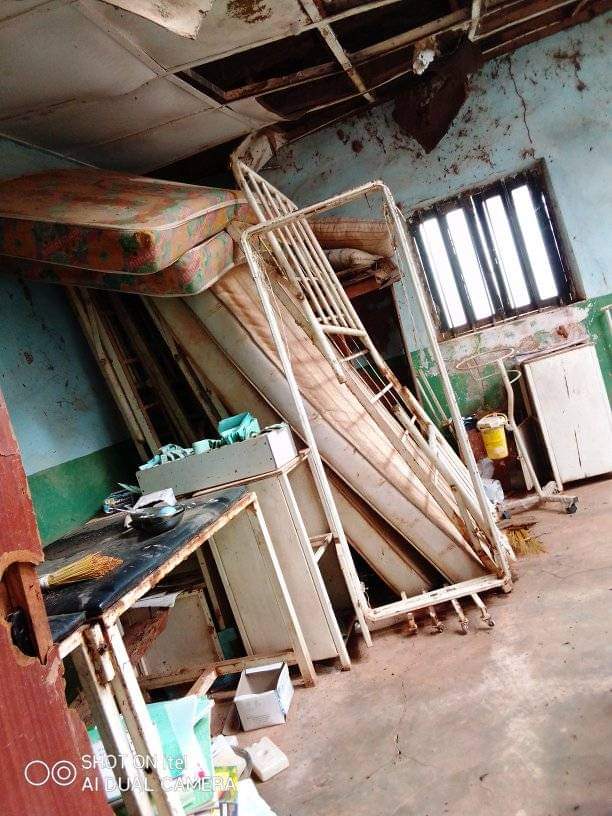
Two years into the administration of Buni, not a single milestone was made in the education sector. The State Basic Education Board could not recruit trackers, teachers’ promotions stalled, teachers’ salaries were mutilated, and the hardworking principal of secondary schools was bullied by the business that leads the ministry of education. The sad news continues, and the peak was the video of Fika Government Secondary School that rattled the government. One could ask, what exactly is the problem? Is Buni the problem, or is his team at the peak of insubordination?

One of the most dramatic events that put the Yobe education sector in the spot was the case of the Buni Foreign Scholarship Scheme (BFSS), a scheme managed by a few of Buni’s trusted men. BFSS is characterised by poor stipend payment, poor academic quality, etc. Today, the BFSS is still a problem that will continue to make the Buni government unpopular and give the opposition a chance to punch the APC hard.

The local scholarship allowance is also an area where there is a hitched to pin network of students and their families to dispense protest votes against Buni and give the upper hand to opposition parties like the New Nigeria People’s Party (NNPP). It was only last week when NNPP moved to consolidate its gains by inviting Stand Up and Be Involved (SUBI) to adopt its party and contest all elections. Should this partnership work as planned, the APC will likely experience the most effective and fierce opposition in its history in Yobe State. 

The local scholarship allowance payment has been epileptic, inconsistent, and marred by a lack of competence in leadership. One can quickly note that this administration has provided the most inexperienced and inefficient leadership of the board in the history of Yobe. No one knows if the Yobe State Scholarships Board (YSSB) has adequate access to its budgetary allocations. If, in any case, it has access to funds, who can defend Buni or his proxy at the head of the YSSB for the lack of payment of local scholarship allowances? An act that even the military administration did well in Yobe! 

One might wonder if paying for local scholarships was related to the massive fund-raising effort for the 2023 elections. It is terrific, and only in APC’s Yobe State one can find people heading a government parastatal that failed to perform in contesting elections. Does this mean that Buni is impressed with the performance of the scandal-marred YSSB? 

Buni needs to know that there is significant dissatisfaction with his administration and team. Everything that the government does seems suspicious such as the maiden Education Appeal Fund, where billions of Naira were accumulated. Whether Buni knew or knew not, there is speculation on the ground that the education fund was a cover to grasp financial muscles to fight for the 2023 elections. Whether true or political, this sentiment makes up the opposition, and the chances to pin the people against the APC are high. It has always been easy to blackmail a government that cares less about its spending, budget performance, and revenue base. 

It is, however, clear that whatever sterling personal qualities a governor may have, of which Buni has many, the chances of failure can be significant. The popular opinion is that Buni is highly unlikely to succeed with his existing team. Buni must change gears and relate to reality on the ground and begin to listen to others rather than his yes-men. Those who tell him that he is always right even when he is wrong—for no one can always be right. We are calling for Buni to search for a new effective team should the 2023 election tide blow in his favour. Whereas the YSSB Chairman has a dual and conflicting constituency that rests with the constituents to decide. Ultimately, the YSSB has failed the children of the poor. 

Kasim Isa Muhammad wrote from Potiskum, Yobe State via kasimimuhd1999@gmail.com.