Opinion

Open Letter to Hon. Aminu Sulaiman Goro: A call to return to your roots and serve the good people of Bagwai

By Bagwai LGA Concerned Forum

Dear Hon. Comrade Aminu Sulaiman Goro,

We write to you with great respect and admiration for your outstanding service to the good people of Fagge Federal Constituency over the past 12 years. Your tenure as a member of the House of Representatives has been nothing short of transformative, marked by unparalleled achievements in job creation, infrastructure development, education, and empowerment for women and youth. Your accessibility, humility, and dedication to grassroots politics have set a benchmark for leadership in Kano State and beyond.


While we celebrate your remarkable legacy in Fagge, we, the Concerned Forum of Bagwai Local Government, humbly call upon you to return to your roots—Rimin Dako, your ancestral town and one of the 10 wards that constitute Bagwai Local Government—to extend your transformative leadership to your place of origin. Bagwai has long suffered from poor governance, inadequate representation, and the mismanagement of its abundant human and natural resources by selfish and incapacitated leaders. Our people yearn for a leader of your calibre—one who is proven to be compassionate, and capable of turning challenges into opportunities.


Your return to Bagwai would not only bridge the gap of quality representation but also allow you to replicate and expand upon the successes you achieved in Fagge. Imagine the impact of your empowerment programs, educational initiatives, and infrastructure projects in a community that has been neglected for far too long. Bagwai is ripe for development, and your wealth of experience, influence, and unwavering commitment to service can ignite the change we desperately need.


Honourable Sir, we urge you to share your leadership with Bagwai, where your journey began in Rimin Dako. By answering this call, you will not only uplift your homeland but also cement your legacy as a true statesman who served his people at every level.


The time is now. Bagwai awaits you with open arms and high hopes. Come home, Hon. Goro, and let us build a brighter future together.

Signed:

Habibu Dan’ana
For: Bagwai LGA Concerned Forum
Kano State

The need for female-only gymnastics and sports centres for Muslim women

By Ibrahim Suleiman Ibrahim 


It is part of my dreams to one day establish a female-only sports & gymnastics centre that would be managed and run by females, where taking pictures and videos during training sessions would be strictly prohibited.

This is to disprove the ill-conceived notion promoted by mischief makers that northern Nigerian women, particularly the Muslim ones, are deprived of the freedom to engage in sports and fitness activities. 

I’m honestly sick and tired of all the backlash Islam and Muslims are receiving, portraying us as people who do not give women freedom, as though the so-called freedom some other women are enjoying has earned them the needed value and respect from society. 

Unfortunately, these critics don’t consider the position of Islam about free-mixing between opposite sexes, and also the kind of outfit that is morally due for a woman to be seen in by men who are not her ‘Mahrams'(Muslims will understand this).  

It is worthy of note that what makes us religious people is the fact that we are neither freethinkers nor atheists. We have codes of conduct and laws enshrined in our religious scriptures, which we are obligated to abide by.

I don’t like how even some Muslims consider it absurd and barbaric that Muslim ladies are discouraged from participating in some of these secular-oriented sporting activities where women are mandated to appear in skimpy dresses, and intermingle with men indiscriminately. 

At the slightest provocation, they make references to Arabian countries where secularism has almost eaten up the religious aura there.

I understand that situations might sometimes warrant us to compromise and adopt some secular practices (Darooraat), but giving full acceptance to those practices, despite their contradiction with our religious laws, while considering our religious laws as barbaric and extreme, is quite unbecoming of a Muslim. 

Meanwhile, I implore religious organisations to begin investing in some of these necessary but non-Shariah-compliant things, such that we can have a halal version, and save ourselves this noise about us not depriving women of their rights. 

It’s about time we began to think outside the box and come up with solutions to some of these problems. 

Sports and gymnastics are necessary, and establishing a shari’ah-compliant atmosphere isn’t a bad thing. 

Ibrahim Suleiman Ibrahim wrote via suleimibrahim00@gmail.com.

Jonathan’s PDP comeback: A Political revival or vote-splitting sabotage? 

By Salisu Uba KofarWambai 

The latest buzz in Nigeria’s political arena is nothing short of explosive: former President Dr. Goodluck Jonathan is reportedly set to return and contest under the platform of the Peoples Democratic Party (PDP). The revelation has sent shockwaves across the nation and beyond. But beneath the headlines, a critical question lingers — what is the real motive behind this sudden political twist?

Before the emergence of the African Democratic Congress (ADC) as a viable coalition platform for the opposition, Nigerians had grown increasingly frustrated with what they saw as a weakened opposition front. The PDP, once a vibrant counterforce, had been reduced to what critics call a “toothless bulldog,” accused of being manipulated by President Bola Tinubu through Nyesom Wike, a PDP member who openly works in favour of the ruling party and now holds a position in Tinubu’s government.

Wike’s influence, according to party insiders, has been anything but peaceful. His repeated interventions and internal disputes have reportedly destabilised the PDP, a strategy many believe cost the party dearly in the 2023 general elections. With the backing of the current administration, Wike has consistently won key legal battles, tightening his grip on the PDP’s power structure.

Recognising the deepening crisis, several PDP heavyweights, including the party’s last presidential candidate, Atiku Abubakar, abandoned the PDP ship, aligning under the ADC banner to form a credible opposition. This development was warmly received by many Nigerians disillusioned by the ruling APC’s economic policies, from the sharp devaluation of the naira to the painful removal of fuel subsidies, policies they say have deepened poverty nationwide.

Alarmed by the growing acceptance of the ADC among struggling Nigerians, the APC-led government appears to be dusting off an old playbook. Just as they allegedly did with the Kwankwasiyya movement in 2023, they now seem ready to field a high-profile figure to split the opposition vote. This time, the role is reportedly being handed to none other than Jonathan — a move seen by many as orchestrated to weaken the ADC’s momentum.

For political observers, the pattern is clear: divide the opposition, consolidate power, and keep the electorate distracted, all while avoiding a united front that could unseat the government in 2027. What stings for some Nigerians is the idea of Jonathan, once the principal, now accepting political direction from his former protégé.

Whether Jonathan’s alleged return is a personal decision or part of a calculated strategy by the ruling party remains to be seen. But one thing is sure: the stage is set for a high-stakes political drama, and Nigerians will be watching closely to see how and where this political gunshot will be fired.

Dr. Bala Maijama’a Wunti and the world of kindness

By Usman Abdullahi Koli, ANIPR

There are people whose presence on earth answers questions, silences chaos, and reassures broken spirits that goodness has not lost its place in the journey of humanity. When you meet such a soul, you don’t need persuasion or praise to understand them. Their essence speaks gently but powerfully. Their actions speak more than introductions. And their humility becomes the loudest testimony. Dr. Bala Maijama’a Wunti is one such rare man.

He is not defined by his position. He is defined by his posture toward people, toward purpose, and toward the possibilities that are in building others. He carries influence with a gentleness that disarms pride. He wields intellect with a clarity that speaks in results, not rhetoric. His kindness does not seek the spotlight, yet it lights up lives. In Dr. Wunti, leadership is not a claim; it is an effect. You don’t need to be told he leads; you feel it by what surrounds him: hope, truth, trust.

Dr. Wunti is a thinker. But not one who sits in silence while people suffer. He listens, he observes, and he acts. His success in the energy sector is known by experts across continents, but even more admirable is how he has remained deeply connected to the people beneath the statistics—those whose lives don’t appear in data sheets but whose realities matter the most. He balances global intellect with local empathy, and he does so effortlessly.

Every act of his kindness is not random. It is intentional. It is driven by a deep understanding of pain and a personal conviction that no one should be left behind when it is possible to lift. Many men do charity. Few men carry kindness as a responsibility. Fewer still see it as an identity. For Dr. Wunti, it is not about doing good to impress. It is about being good enough to make a difference that leaves no noise but creates echoes of gratitude.

What sets him apart is not only what he does but how he does it. He makes room for others without shrinking himself. He uplifts without needing to be worshipped. He speaks with such calm confidence that even disagreement becomes a space of learning. There is discipline in his humility, and there is wisdom in his silence. He doesn’t interrupt with his greatness; he simply lets it shine in how he walks into a room, how he listens to the ordinary, and how he never forgets those without titles.

Dr. Bala Maijama’a Wunti is a builder of people, not just systems. He is a man who understands that progress is not only about projects but also about peace. He knows that development is not truly development if it does not carry the human soul along. That is why his style is not loud. It is thoughtful. That is why his touch remains long after he has moved on. People do not only remember what he did; they remember how he made them feel—seen, respected, and valued.

It is no surprise that across regions, communities, institutions, and families, his name is spoken not with awe but with affection. And there is his secret—he earns respect by restoring dignity. He doesn’t walk in front to be praised. He walks beside, so no one is left behind. He does not pretend to know it all, but what he knows, he applies with uncommon honesty.

There is something deeply graceful about a man who does not chase validation yet earns admiration by simply being himself. In a time when too many seek recognition before action, Dr. Wunti has quietly made his life a gift to others. His kindness is not weakness. It is strength in its purest form. A strength that builds rather than breaks. A strength that gives, even when no one is looking.

This world, with all its weight, still finds light in people like Dr. Bala Maijama’a Wunti. He reminds us that being accomplished is good, but being compassionate is better. That having knowledge is necessary, but using it to serve others is noble. That being known is nice, but being remembered for goodness is divine.

As one reflects on his journey, it becomes clear that such a man deserves not just recognition but appreciation, not just applause but prayers. He doesn’t wear his impact as decoration. He lets others wear it as hope. And in doing so, he has built something bigger than status. He has built trust.

May the road ahead for Dr. Wunti remain wide, purposeful, and peaceful. May his type multiply in a world that desperately needs the fragrance of men whose hearts still beat for others. And may his story inspire many more to lead not by command but by compassion.

Because in this world of fleeting moments and forgotten promises, one truth remains: kindness will never go out of relevance. And for that, the name Bala Maijama’a Wunti will always echo where sincerity is treasured.

Usman Abdullahi Koli wrote via mernoukoli@gmail.com.

Tribute to my father – Alhaji Musa Muhammad Ringim

By Kabir Musa Ringim

15/08/2025

My father, Alhaji Musa Muhammad, was an orphan who lost his father at a very young age. He was nicknamed Musa Lare in reference to his mother, Lare. His father, Mallam Mamman Aminu, a staff member of the Nigerian Railway Corporation and a native of Daura in present-day Katsina State, was transferred to Ringim to work at the corporation’s train station. There, he met Lare, a Fulani widow, and they married in the early 1940s.

Their first child, a very handsome boy, was named Musa. Sadly, destiny decreed that Mallam Mamman would not live long enough to have another child or witness his son’s growth and achievements.

Alhaji Musa Muhammad was born in 1945 in Ringim. After completing mandatory Qur’anic school, he was enrolled at the age of seven in Ringim Elementary School (now Katutu Pilot Special Primary School) in 1952, finishing in 1955. In 1956, he proceeded to City Senior Primary School, Kofar Nasarawa, Kano (now Government Girls Secondary School, Shekara, Kano), and graduated in 1958. In 1959, he entered Kano Provincial Secondary School (now Rumfa College, Kano) with school number 230.

His first job came in 1963 when the University of Ibadan, in collaboration with the Federal Ministry of Agriculture and Natural Resources, offered him a one-year temporary position. He conducted a market study on the quality, quantity, and price of selected farm produce – millet, sorghum, and beans – at Kurmi and Sabon Gari markets in Kano. The results were sent monthly to the Nigerian Stored Products Research Institute (NSPRI) Kano for onward transmission to the University of Ibadan. During this period, as a federal government worker, the Emir of Kano, Sir Muhammad Sanusi I, provided him with accommodation at the palace.

In 1964, Alhaji Musa Muhammad joined the Forestry Division of the Federal Ministry of Agriculture as the pioneer Government Forest Guard. He attended the Government Forest Guard Course at the Regional School of Forestry, Jos, after which he was posted to Zaria. In 1966, he was transferred to Kaduna Parks and Gardens as Officer in Charge of nurseries.

When states were created in 1967, he was deployed to his home state, Kano. Following directives from CP Audu Bako, the then Military Governor, he was posted to Kuda Gangara in Kazaure Emirate to establish Bagaruwa plantations for producing pods used in the state’s tanning factories. These plantations were established at Kuda Gangara Forest Reserve along Achilafiya – Karkarna Road.

In 1968, he applied for a change of cadre from Forester to Forest Assistant in training. His application was approved, and he was sent to the Federal School of Forestry, Ibadan, for a six-month Forest Assistant Course, running from May 1970 to October 1971. He completed the course with a Second-Class Certificate and was posted to Kano North Central Administrative Area, headquartered at Dambatta, as Area Forest Officer in charge.

In January 1973, he was selected for a one-year Diploma Course at the Federal School of Forestry, Ibadan. He graduated with a First-Class Diploma, becoming the first Northerner to win a prize in silviculture (the cultivation and management of trees). Due to his outstanding performance, he was posted to Hadejia Administrative Area as Forest Officer in charge. There, he established three new forest nurseries in Hadejia, Diginsa, and Kafin Hausa, upgraded the Birniwa nursery, and created shelterbelts in Diginsa and Birniwa, along with numerous roadside plantations.

In 1975, at the age of 30, while working in Hadejia, he met my mother, who was then fifteen years old. They married that same year and remained together for fifty years until his death.

In 1976, he was transferred to Kano, attached to the Forest Management Division (West), and placed in charge of the Savannah Investigation Unit, which conducted soil and vegetation surveys, produced soil maps, and interpreted aerial photographs.

In 1977, he was transferred to Kano South West Administrative Area, headquartered at Rano, as Forest Officer in charge. In 1978, following the local government reforms, he applied for the position of Head of the Local Government Agriculture Department, in line with a Ministry of Agriculture circular inviting qualified diploma holders to apply. He was appointed and posted to Ringim Local Government as the pioneer Head of Agriculture.

In 1980, he was transferred to Tudun Wada Local Government. While there, he expanded his qualifications by enrolling with the British Institute of Engineering Technology, Aldermaston Court, Berkshire, England, to study Tropical Agriculture, Agricultural Engineering, and Animal Husbandry in the Tropics via correspondence. He completed these courses in three years.

In 1983, he returned to Ringim Local Government, and in 1984, he was transferred to Gezawa Local Government as Head of Agriculture. In 1987, he was moved to Dutse Local Government. That same year, the Kano State Government decided to professionalise the Inspectorate Division of the Ministry for Local Government. Heads of Departments in Agriculture, Works, Health, and Social Welfare were selected on merit through interviews. He was appointed Assistant Chief Local Government Inspector, joining three colleagues.

This role gave him opportunities to attend various courses, including:

1. Project Management Implementation and Control at the Agricultural and Rural Management Training Institute, Ilorin.

2. Rural Development Project Formulation and Management at Ahmadu Bello University, Zaria.

3. Leadership and Management at the Nigerian Institute of Management.

4. Various workshops, seminars, and committee assignments within and outside Nigeria.

Following the creation of Jigawa State in 1991, he was deployed as Assistant Chief Local Government Inspector. With civil service reforms, his post became Assistant Director of Agriculture Inspection. In 1992, he was transferred to the State Council of Chiefs as Council Secretary. He was promoted to Deputy Director, then substantive Director in 1997, a position he held until his retirement on 31 August 2001.

Twenty-four years after retirement, on 3rd July 2025, he passed away peacefully at home in Ringim without any known illness, leaving behind my mother and 19 children. Among his sons are two classroom teachers, four lecturers, and a consultant neurosurgeon.

My late father was a man of strong faith, selflessness, and patriotism. When asked how all his children found good jobs, he replied that it was Allah who provides and that he had prayed for his children’s success. He detested corruption, avoided politics, and never sought personal favours. He refused cash gifts even from his children and was meticulous about keeping records and time, locking his house himself every day at 8 p.m.

He was the healthiest person I have ever known. I never for once saw him bedridden or visiting a hospital. Even at 80, he could drive, walk upright, and retained his senses of smell, hearing, and sight. He ate in moderation – only twice a day – favouring healthy, traditional foods such as fura, zogale, bread, tsire, and tea, with oranges, mangoes, and bananas as his preferred fruits.

While in service, he also farmed, growing millet, sorghum, beans, tomatoes, and other crops for home consumption. After retirement, he devoted his time to prayer and religious duties, declining all job offers. Though considered an elder statesman in Ringim, he kept few friends and preferred to stay indoors, coming out after late morning prayers until Zuhr to interact with neighbours.

His enduring message was: “Be resolute, fear your Creator, and surmount every difficulty to achieve your objective. It is not the beginning that matters but the end.”

May Allah (SWT) forgive his shortcomings, accept his good deeds, and grant him Jannatul Firdaus. Ameen.

Between sugarcoated lies and harsh truth: Buhari’s tragic legacy

By Abdullahi Muhammad Yalwa

As Nigerians lay their former president, Muhammad Buhari, to rest, a lively yet insightful debate has ignited on social media. Buhari’s death on the evening of Sunday, 13 July, has sparked a wave of polarised reactions across Nigeria and beyond. These responses, though all too familiar to ignore, are nonetheless difficult to tolerate either.

Ruling one of the most ethnically heterogeneous populations, the name BUHARI means different things to different people. For some, his death marks the end of a revered statesman’s journey, a disciplined military man turned democrat who embodied integrity and sacrifice. As such, religious apologists and loyalists have rushed to sanctify his legacy, cloaking his tenure in a veneer of divine purpose and moral uprightness. Yet, beneath the watershed emotions, lies a more sobering narrative, an impersonal truth which is hard to accept as it’s bitter to swallow.

For history and to serve as a springboard of truth, Buhari’s legacy is one that history will not so easily forgive nor forget. It’s a force that will be reckoned with in Nigeria’s history. A turmoil journey that lumbered from one crisis to another and finally ended in an overwhelming sense of failure. The truth, though uncomfortable, is therefore that Buhari’s legacy is a tale of squandered goodwill, unfulfilled promises, and a nation left more fractured than he found it.

In 2015, when the Saviour proclaimed his campaign, which would finally mark his ascension to power, Buhari, in a boisterous voice, chanted the “CHANGE” mantra, and citizens across the nation’s divides chanted CHANGE, and so the sound echoed. Hailed as a man of discipline, Buhari, in his usual austere demeanour and military pedigree, promised a break from the corruption and mismanagement that had plagued previous administrations. Equally, he promised to tackle insecurity, root out corruption, and stabilise a faltering economy. We saw in him a Messianic figure who would finally weed Nigeria of its bad seeds and breed a new garden for the poor. Sadly, however, the euphoria that greeted his election was a sad, fragile foundation of selective memory.

Buhari’s economic legacy is perhaps the most damning indictment of his tenure. Although he inherited an economy already strained by falling oil prices, his policies exacerbated the crisis, plunging Nigeria into two recessions within five years. By 2023, inflation had soared from 9% to over 22%, unemployment surged from 10.4% to 33.4%, and the naira lost 70% of its value against the dollar. Nigeria, once Africa’s largest economy, became the world’s poverty capital, with 133 million citizens living in abject poverty by the end of his tenure.

His economic interventions, such as the 2019 border closure to boost local production, backfired spectacularly, spiking food prices and straining relations with neighbouring countries. The naira redesign policies, implemented in 1984 and again in 2022, caused widespread hardship, with long queues and economic disruption for ordinary Nigerians. These measures, while framed as anti-corruption tools, were poorly executed and lacked strategic foresight. The ballooning national debt, reaching $150 billion by 2023, forced Nigeria to allocate 96% of its revenue to debt servicing, a fiscal albatross that continues to choke the economy.

Though it might be argued that Buhari inherited a comatose economy from Jonathan, riddled with corruption scandals like the $2 billion arms deal misappropriation, he promised to come and make a change, not to make excuses. Equally, his infrastructure projects, such as the Enugu-Port Harcourt Expressway and the Nigeria Air initiative, might be cited as evidence of progress. Yet, these achievements pale in comparison to the scale of economic devastation. The reality is that Buhari’s economic policies were not just misguided- they were catastrophic, leaving Nigerians poorer and more desperate than ever.

On the side of security, Buhari’s campaign promise to defeat Boko Haram and restore security was a cornerstone of his 2015 victory. Though there may be some early gains against Boko Haram, including the reclamation of territories, which briefly bolstered Buhari’s credentials, these victories were fleeting. By the end of his presidency, Nigeria was grappling with an unprecedented wave of insecurity, with over 63,000 deaths recorded from violent incidents between 2015 and 2023—an average of 22 deaths per day.

The rise of banditry, kidnappings, and farmer-herder clashes compounded the Boko Haram threat. The #EndSARS protests of 2020, sparked by police brutality, exposed his administration’s heavy-handed approach to dissent. Buhari’s silence during these crises, a hallmark of his leadership style, only deepened public distrust.

Buhari’s anti-corruption crusade was perhaps his most touted promise, yet it remains his most glaring failure. Though some positive outcomes were recorded, Buhari’s administration’s selective prosecution of opponents, such as Dasuki’s, raised questions about its sincerity. High-profile cases, such as the trial of former Central Bank Governor Godwin Emefiele, who’s one of the key figures during Buhari’s administration, continue to grab headlines, but systemic corruption persists. When the then Kano Governor Umar Ganduje was caught on video stuffing dollars into his robe, Buhari dismissed the evidence as doctored, undermining his anti-corruption credentials. The Economic and Financial Crimes Commission (EFCC), which he helped lay the groundwork for, became a tool for political vendettas rather than a beacon of reform. Many prominent figures were either pardoned or overlooked due to their political leanings or personal interests. As such, on anti-corruption, Buhari’s promises were a hoax.

Overall, Buhari’s cold, distant, arrogant air — that rigid, dry, unbothered, “I’m above you” type of character — which pervaded his leadership, remains deeply painful in the minds of his subjects. The fact that he spoke to his citizens during their tough times as if he was doing them a favour by acknowledging their existence is a poor record to reckon with as part of Buhari’s terrible legacy as a leader. There should be warmth and humility in public relations.

In the end, history is the most invisible phenomenon. As President Buhari is laid to rest, religious and regional loyalists should not seek to sanctify his legacy, framing him as a patriot who served Nigeria with unwavering dedication. Such eulogies, while expected, gloss over the harsh realities of his tenure. Equally, claiming that Buhari’s policies were sabotaged by external forces or inherited challenges ignores his role in exacerbating Nigeria’s woes. Instead, the uncomfortable truth is that Buhari’s legacy is one of missed opportunities and disappointment. He entered office with unprecedented goodwill, yet left Nigeria more divided, poorer, and insecure. His rigid, authoritarian style stifled dissent and eroded judicial independence, as seen in the prolonged detention of figures like Sambo Dasuki despite court orders. His failure to communicate effectively, evidenced by his silence during crises like #EndSARS and the ASUU strike of 2022, alienated a generation of young Nigerians.

History will remember Buhari not as the saviour Nigeria hoped for, but as a leader who squandered a historic mandate. His presidency teaches a bitter lesson: discipline without vision, and integrity without competence, cannot redeem a nation. As Nigerians mourn his passing, we must also confront the cost of his failures-a fractured nation, a struggling economy, and a generation of youth disillusioned with governance, standing on the brink of a precipice.

Abdullahi Muhammad Yalwa hails from Azare. He’s a graduate of Law from the University of Maiduguri, looking forward to serving his Country.

Diphtheria and the challenge to health educators out there

By Anna Gabriel Yarima

I write to and call and throw a challenge at all graduated health educators and the potential ones concerning the deadly diphtheria disease that annually claims the huge number of lives of infected Nigerians, which, according to reports, is more than 1,376 deaths being recorded in the high-burden states infected with the cases: Kano, Yobe, Katsina, Bauchi, Borno, and Kaduna states. And, from around 2022 to 2023, WHO reported that over 600 deaths were recorded with a case fatality ratio of 13% among confirmed cases in the past.

Instead of the cases significantly dropping annually, on 14th January 2024, according to the WHO African Region Health Emergency Situation Report, “A cumulative total of 27,991 suspected cases of diphtheria resulting in 828 fatalities have been reported across Nigeria, Guinea, Niger, Mauritania, and South Africa. Nigeria is the most severely affected, accounting for 80.1% of cases and 72% of deaths.” Even though the cases in Nigeria are underreported.

The deadly diphtheria that is caused by exotoxin-producing Corynebacterium diphtheriae is spread between people mainly by direct contact or through the air via viral respiratory droplets. The disease can affect all age groups; however, unimmunized children are particularly at risk.

Therefore, avenues for an awareness have to be created by the health educators in our communities so as to make parents ’fully informed of the signs and symptoms of the disease as well as the dangers of being infected and how easily uninfected children could be infected. Though vaccine-preventable it is!

The government at all levels has to be very cautious in attacking the deadly diphtheria that consumes lives annually. I therefore suggest the federal government collaborate with primary health care centres across the nation so as to have unimmunised children who are at risk immunised.

I hope the Coordinating Minister of Health and Social Welfare will put more effort into making sure that the number of cases and deaths that are recorded annually are reduced or totally diminished.

Anna Gabriel Yarima writes from the Department of Mass Communication, University of Maiduguri.

National Emergency: Is the solution to the flood crisis 

By Sale Rusulana Yanguruza 

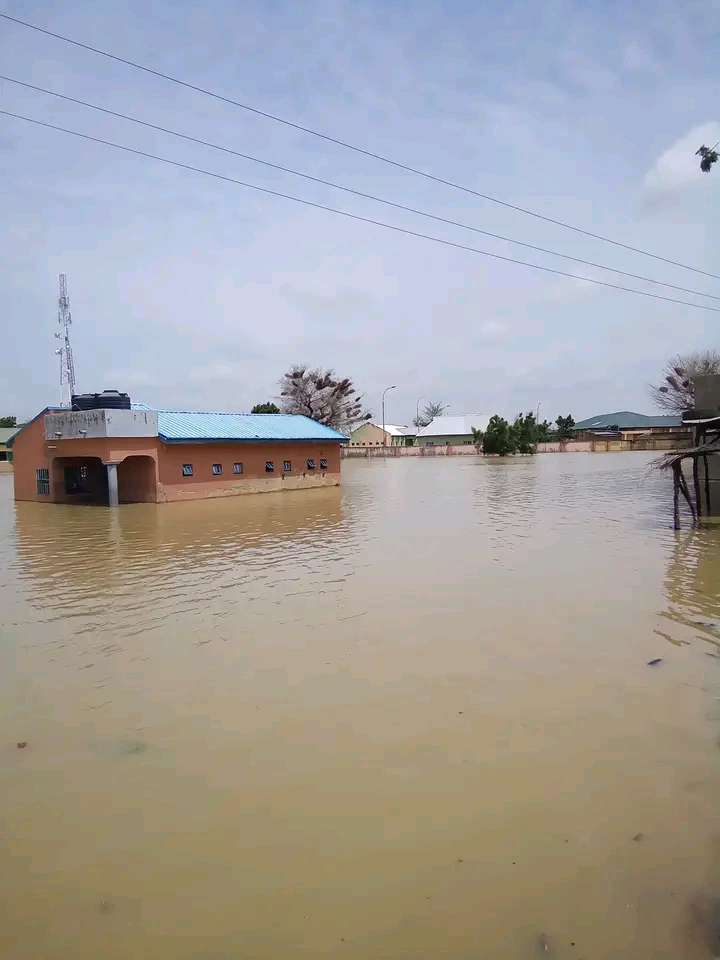
Thousands of lives, homes, government properties, and businesses in Nigeria and Africa are lost or submerged due to ongoing floods. The crucial questions are: what measures can end this crisis? Will we continue to watch houses and people suffer? What has the government done so far, and has it been effective? If not, citizens, residents, and the government must re-strategise their flood response plans to address the issue permanently.

The government needs to give special attention to addressing these flood-related matters, especially since the country has been facing this disaster since the beginning of the rainy season. The 2025 Annual Flood Outlook (AFO) indicates that 1,249 communities in 176 local government areas across 30 states and the Federal Capital Territory (FCT) fall within high flood risk areas.

The statement added that High-flood-risk states are Abia, Adamawa, Akwa Ibom, Anambra, Bauchi, Bayelsa, Benue, Borno, Cross-River, Delta, Ebonyi, Edo, Gombe, Imo, Jigawa, Kebbi, Kogi, Kwara, Lagos, Nasarawa, Niger, Ogun, Ondo, Osun, Oyo, Rivers, Sokoto, Taraba, Yobe, Zamfara and the FCT.

Unfortunately, some of the aforementioned areas have started experiencing floods this year; for instance, Oyo State, Kano State, Edo State, and Borno State. According to the State Emergency Management Agency’s assessment, after the flood hit some communities in two local governments in Borno State, comprising Chibok and Damboa, the Acting Manager, Ali Abdullahi Isa, of the Borno State Emergency Management Agency (BOSEMA), stated, as I quoted him.

 “As directed by His Excellency, the Executive Governor of Borno State, Prof. Babagana Umara Zulum, we have carried out an on-the-spot assessment of all the areas affected by the flash flood in the two local governments. A total of 1,103 houses in Gumsuri, Wovi, and Garjang in Damboa LGA have been severely affected, while 106 houses in Mboa, Whuntaku, and Yarchida villages of Chibok Local Government were also affected”.

Even though floods this year have become a global concern, with incidents reported in the USA, including Texas, where about 51 lives were lost, and some are still missing. The government in Nigeria must take precautions and measures to tackle them.

However, we all had the most painful and unforgettable experiences of the disaster in Nigeria, specifically the Maiduguri flood and Makwa flood, which have taught us lessons that the government, citizens, and stakeholders must learn from to avoid and prevent further occurrences. We must use these bad memories to avert the recurrence of such disasters, which claimed over 300 and 200 lives and affected many souls.

It’s for these reasons that I’m calling on the federal government to declare a total national emergency on floods. This will enable the government to respond effectively to the crisis. Resources should be allocated for this disaster, allowing the government to support those displaced as a result of the flood. 

Undoubtedly, declaring a national emergency on flood would allow the government to focus on fixing the bridges and dams that have broken or collapsed in the past, which are capable of causing water to wash over communities and lead to flash floods across the country.

Furthermore, the number of victims affected by the flood is increasing, with no specific measures in place to mitigate the situation permanently; hence, declaring a state of emergency is necessary to address these flood-related issues. 

According to the United Nations Office for the Coordination of Humanitarian Affairs (OCHA), over 1,000 people were killed and 740,000 displaced by floods affecting 5 million in Africa, as reported last year. 

While declaring a national emergency, a high-powered committee needs to be inaugurated by the federal government in collaboration with the National Emergency Management Agency (NEMA) and State Emergency Management Agencies in all 36 states to discuss ways to address the issue extensively. The committee should comprise the Nigerian Meteorological Agency (NiMet), NiMet traditional rulers, community leaders, and government officials to deliberate on the problem permanently.

Additionally, the committee’s responsibilities should include providing a comprehensive list of all dams and bridges in the country that may cause flooding and reporting it to the federal government. After submitting the report, the government should expedite repairs to these structures within a short period to prevent further escalation of floods in the country.

If   global concerns like the coronavirus and the Ebola virus can be addressed within a short period, then flood concerns can also be tackled to protect citizens. While I’m fully aware that it’s not easy to address due to a lack of preparedness and in some states, houses have been built in waterways, the government shouldn’t fold its hands. Actions are necessary, and the government should ensure that no houses or markets are built in waterways going forward.

Sale Rusulana Yanguruza 

The powerless power of the Nigerian journalist

By Zekeri Idakwo Laruba 

‎In every thriving democracy, journalists are the soul of public accountability, the guardians of truth, and the voice of the voiceless. In Nigeria, the people won independence without a single bullet being fired. 

‎But decades later, the same pens have become symbols of struggle, silence, and survival. The Nigerian journalist today is overworked, underpaid, and largely forgotten.

‎From the courage of Dele Giwa to the frontline sacrifices made during military regimes, Nigerian journalists have risked, and even lost, their lives in service to the nation. But rather than being celebrated, many of them now live in poverty, working without insurance, health care, decent pay, or professional protection.

‎The profession that once produced national heroes is now filled with invisible men and women, reporters who go out daily with no transport allowance, editors who cannot afford basic medication, and photojournalists who cover events on empty stomachs. 

‎At some press events, journalists are reduced to scrambling for food or transport stipends. The humiliation is not just individual; it is institutional. In 2020, the nation witnessed the public verbal assault of Eyo Charles, a Daily Trust journalist, by a former minister, Femi Fani-Kayode. 

‎His only crime? Asking a legitimate question. That moment, broadcast across the country, exposed the vulnerability of journalists and how little value some political elites attach to press freedom. Many media professionals now survive on meagre and inconsistent pay. 

‎In some private media organisations, reporters work for months without a salary and still carry personal costs to cover assignments. Few private media organisations provide welfare and accommodation for their staff, despite struggling to maintain steady revenue streams. Government-owned outlets, while slightly better, still offer limited welfare support in the face of inflation and economic downturns.

‎The Nigeria Union of Journalists (NUJ), Nigerian Guild of Editors (NGE), and other professional bodies have become mainly toothless. While they occasionally issue press statements in moments of outrage, their long-term effectiveness remains questionable. 

‎Advocacy is weak, reforms are slow, and protection is minimal. Journalists are left to fend for themselves in a system that no longer honours them. What is even more tragic is that many journalists report every day on injustice and neglect, yet rarely report their own. 

‎The irony is cruel. And so is the silence. Yet, the survival of Nigeria’s democracy depends on the survival of journalism. If journalists are weak, the truth is endangered. If they are compromised, the nation drifts into ignorance. 

‎It is not enough to speak about press freedom; we must act to protect the people behind the stories. To restore dignity and professionalism in the Nigerian media space, urgent reforms must be pursued. First, the Federal Government, in collaboration with media owners and unions, must establish a National Media Welfare Fund. 

‎This fund should provide emergency support, health insurance, and affordable housing for journalists. It will serve as a safety net for media workers in distress. Second, there must be legislative protection through the passage of a Journalist Protection and Welfare Bill, which will address workplace rights, ethical standards, job security, and compensation for risks undertaken in the line of duty.

‎Third, an independent Press Freedom and Redress Commission should be established to investigate harassment, unlawful detention, and abuse of journalists. This commission will serve as a watchdog against both state and private offenders.

‎Fourth, support for independent media startups and community-based journalism should be expanded. Through grants, training, and infrastructure, we can nurture new media platforms that prioritise public interest over politics or profit.

‎Lastly, the NUJ and NGE must reform themselves. They must earn back the trust of their members by becoming more transparent, democratic, and responsive. The time for docile leadership in journalism is over.

‎Of course, journalists must also hold themselves accountable. Ethical journalism is not optional. They must resist the temptation of brown envelopes, fact-check relentlessly, and report with clarity, compassion, and courage. The profession must regain its honour by defending the truth, not selling it.

‎The pen that once won our independence still holds the power to shape our future. But only if it is wielded with integrity, and supported with justice. Until we build a media system where journalists can live with dignity, we remain a country that praises democracy while neglecting those who protect it. 

‎A free press without empowered journalists is an illusion. And Nigeria deserves better.

‎‎Zekeri Idakwo Laruba is the Assistant Editor of PRNigeria and Economic Confidential. He can be reached via idakwozekeri93@gmail.com.

The other side of Japa syndrome: Over 140 dreams drowned in Yemen’s waters

By Gambo Zilkifilu Mohammed

The turquoise waters off Yemen’s coast, often a beacon of hope for thousands fleeing despair, have once again become a graveyard. In a chilling echo of tragedies past, more than 140 African migrants are feared dead after their overcrowded boat capsized late Saturday night on one of the world’s most perilous journeys, the so-called “Eastern Route” to survival.

Imagine the desperation that drives you onto a fragile vessel, crammed shoulder to shoulder with strangers, knowing the journey could end beneath the waves. For at least 74 souls, that nightmare became reality. 

They are missing, vanished into the vastness of the sea. The cruel waves have already surrendered 68 bodies to the shores of Abyan province in southern Yemen, a grim testament to the disaster. Only 12 shattered survivors bear witness to the final, terrifying moments.

These weren’t just numbers

They were individuals, mostly young Ethiopians, carrying the crushing weight of poverty, conflict, or climate-driven devastation back home. 

They clung to the fragile dream of menial work in the glittering Gulf states—a chance to feed families, build a future, survive. Yemen, itself ravaged by a decade of brutal civil war, famine, and disease, was never their destination, merely a deadly transit point on a path paved with broken promises.

“Many of the bodies have been found scattered along various parts of the coastline,” authorities in Abyan posted somberly on Facebook, sharing images that revealed a haunting truth: most had no life vests.

 They were utterly defenceless against the indifferent sea. Abdusattor Esoev, head of the UN’s International Organisation for Migration (IOM) in Yemen, pointed the finger squarely at the ruthless calculus of human smuggling: “The underlying cause… is due to smugglers filling boats over capacity and not providing enough life vests on board.” Profit over people, yet again.

This latest catastrophe is not an isolated horror. It’s part of a relentless, bloody pattern. Just four months ago, in March, at least 188 migrants drowned in similar circumstances between Yemen and Djibouti. The Eastern Route consumes lives with terrifying regularity.

Why do they keep coming?

 Because the alternative, staying in communities gripped by violence, starved by drought, or hollowed out by poverty,  feels like a slower death. They gamble everything for a sliver of hope. Yet, reaching Yemen offers no sanctuary. The country, fractured by war between the Houthis and the internationally recognised government, is a lethal labyrinth. Migrants face not only the sea’s fury but also airstrikes, exploitation, trafficking, and detention. Remember April? When US-made bombs obliterated a migrant detention centre in Saada, killing at least 60 souls who had already survived the crossing?

Many who do survive the voyage find themselves trapped in Yemen’s nightmare borders closed, opportunities vanished, preyed upon by smugglers demanding ransom, and subjected to abuse. The dream of the Gulf becomes a cruel mirage, replaced by a daily struggle for survival in a land consumed by its own suffering. 

The bodies washing ashore near Abyan are more than a statistic; they are a searing indictment. They represent the crushing weight of global inequality, the failure to protect the most vulnerable, and the deadly consequences of conflicts and climate crises they did not create. Each recovered body leaves a family across the Red Sea shrouded in agonising uncertainty, waiting for news that may never come. The waves took their lives, but the world’s indifference drowns their hopes.

 How many more mothers must mourn before this deadly exodus is met not with apathy, but with action?