Opinion

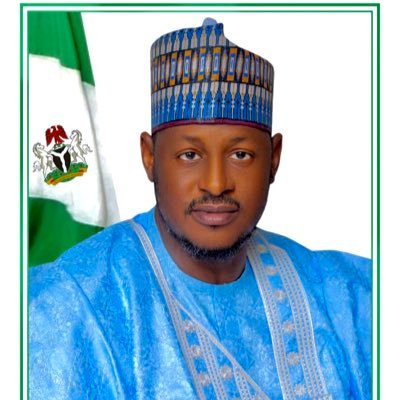
Governor Nasir Idris’ mixed approach to governance

By Zayyad I. Muhammad 

Kebbi State is no stranger to complex and sophisticated politics. To govern this dynamic state requires more than charisma; it demands deep sociopolitical mastery and a pragmatic grasp of socioeconomic realities. Governor Comrade Dr. Nasir Idris, Kauran Gwandu, has emerged as a leader who embodies both politics and development, weaving them into a single, effective strategy that is rapidly reshaping Kebbi’s political landscape and developmental trajectory.

In a state once defined by fragmented interests and rivalries, Governor Nasir Idris has achieved what many thought impossible: unity. Today, all Kebbi senators, legislators, and major political stakeholders are firmly in the All Progressives Congress (APC). Former governors who once stood on different political lines now speak with one voice. Elections that once tested the party’s strength are now won seamlessly, reflecting a politics of representation, inclusiveness, and acceptability.

This new sense of belonging has left no major stakeholder uninvolved. As one political observer put it: “In Kebbi today, everyone that matters has a seat at the table of decision-making that transforms the lives of the common man.”

That is why analysts argue that the once-ambitious former Minister of Justice and Attorney General of the Federation, Abubakar Malami, may have lost political relevance, with 2027 looking like a closed road for him.

However, politics is only one aspect of Governor Nasir Idris’ multifaceted approach. On the other hand, there is a clear, tangible commitment to socioeconomic transformation that cuts across all 21 local government areas of Kebbi, both rural and urban.

The results in just 20 months are staggering. In education: 1,954 schools have either been built or renovated, with 336 new schools constructed and 1,618 renovated. Teachers now earn wages aligned with national benchmarks, with the state implementing the ₦70,000 minimum wage categories.

On infrastructure, the administration has embarked on massive projects, including the dualization of the Birnin Kebbi–Ambursa Road, the construction of the Birnin Kebbi Ultra-Modern Motor Park, the rehabilitation of Birnin Kebbi city roads and Yauri township roads, the Koko-Mahuta-Dabai Road linking seven LGAs in Kebbi South, bridge repairs on Bunza–Dakingari Road, and culverts along Birnin Kebbi–Makera Road.

Healthcare delivery has seen the renovation of Argungu General Hospital, the rehabilitation of health centres, and the expansion of medical facilities across the state. In public institutions, the government has overseen the construction of the State Ultra-Modern Secretariat in Gwadangaji, the remodelling and furnishing of the Government House, and the expansion of the Pilgrims Welfare Agency. Other key projects include the construction of a fuel dump at Sir Ahmadu Bello International Airport and the dualization of Argungu’s Old Bypass Road.

Governor Nasir Idris has also prioritised building strategic international partnerships. By engaging with donor agencies and development partners, Kebbi is not only attracting new funding but also becoming an integral part of global development conversations.

The “Nasir Idris formula” is clear: politics without rancour, governance without neglect, and development without bias. His administration has combined inclusiveness in politics with an aggressive rollout of life-changing projects, creating a blend of stability and growth.

In Kebbi today, the once-elusive dream of a government that unites political forces while delivering practical, people-centred development is now a reality. With this trajectory, Governor Nasir Idris has not just set the pace for his state; he is redefining what effective governance looks like in Northern Nigeria.

Zayyad I. Muhammad writes from Abuja via zaymohd@yahoo.com.

Tribute to my father

By Sulaiman Maijama’a

My elder brother’s call – Bello, requesting that I show up at our family house on Sunday morning, August 10th, 2025 – is the most difficult phone call I have ever answered in my life. Immediately, I overheard crying in chorus from the background; I knew what it meant and told my wife that the inevitable we have all been waiting for is here: Baba is no more.

Our father, Alhaji Maijama’a Iliyasu, first fell sick on August 5th, 2023, but later recovered and was taken to go about his business by us (his children). His illness resurfaced on November 24th, 2024; he was bedridden for some weeks at ATBUTH, later discharged and has remained home since then. Seeing his body was not recuperating, yet he was discharged from the hospital, we understood the doctors’ body language and got to a point where we believed that it was terminal. Consequently, whenever I received a phone call from any of my siblings, I picked up with a nervous disposition, fearing what they had to tell me.

On the fateful day, I went home. I found the dead body of our dear father surrounded by my brothers and sisters, uttering “Inna Lillahi Wa Inna Ilaihi Raji’un,” submitting to the will of Allah and crying profusely. I felt that my imagination of how it feels when one loses a father failed me, as I never thought the magnitude of the pain and sense of despair it creates is to that extent. The feeling defies expression. But the crowd of sympathisers trooping to the house and visitors making speeches of eulogy and testimonies of the person our father was were what consoled us the most.

Testimonies of people on earth about the good reputation of a deceased can be a means of his entry into Jannah, as reported in an authentic Hadith, where our beloved Prophet says, “…the believers are the witnesses of Allah on the earth…” That is why it is Islamically encouraged to amplify the virtues of a dead person, but judgment belongs to the Merciful.

An old man who came to sympathise with us stated and emphasised our father’s respect for his parents and elders. The man said he was a living witness that when our father was in active business in Central Market before he relocated his mother to our house, he used to go and check on her three times every single day: in the morning before he went to the market, in the afternoon after Zuhr prayer, and in the evening when he closed. I’m not surprised because my mother always tells me that, in the years he had lived with his mother Innah, his goodness for her could fill the earth.

I personally did not grow up seeing his mother, but I mistook his elder sister for his mother because of the respect he had for her. Even his granddaughters, named after his mother, and his daughters-in-law bearing the name were called “Innah” or “Mamana” and enjoyed special treatment from him.

His closest childhood friend, Alhaji Sule Sarkin Kasuwa, told us that one day in the 1980s, Innah directed our father to go to Kaduna and apprehend a relative who ran away and refused to return home. There was no intelligence report of the man’s whereabouts, no telephone to call, and the man was of no fixed location. However, Baba, out of obedience to his late mother, requested Alhaji Sule to escort him to Kaduna, and they searched all over but could not find him. Our father became deeply concerned that his mother would not be comfortable, but Alhaji Sule assured him that God knows he had complied.

I grew up seeing my father as a very disciplined man with a strict daily schedule. After the dawn prayer, he recited his Warsh copy of the Glorious Qur’an until around 8 a.m., took breakfast, and went shopping in Central Market. Returned home around 6 p.m., went to Bauchi Central Mosque to pray Magrib and waited for Isha, returned home, ate dinner, and listened to the radio before he slept. His philosophy on the education of his children is “Qur’an first.” All of his eighteen children were never enrolled in a Western school until we learned to read the Qur’an alphabetically and possessed reasonable proficiency in reciting the Qur’an when we were around seven years old. I can still see in my mind’s eye the day I was enrolled in primary school in 2004, when I was 8 years old, meeting Malama Safiya and Mrs. Roda as my first primary female teachers.

By Allah, I cannot remember a day that passed without him reciting his Warsh copy of the Qur’an. I never saw him sitting by the roadside, talking ill of others. As strict as his schedule was, he ensured that his children followed suit, never allowing us to enjoy leisure time since childhood. We would be woken up at dawn, sent to “Makarantar Allo“, and returned around 7 a.m. We would then be sent to primary school, returned in the afternoon, and sent to Ismiyya until around Magrib. By the time we finished primary school, we would be sent to learn different skills, and that is why we realised the realities of life early and were relieved of many responsibilities.

Our father exemplified a firm belief in the power of the Qur’an and Dua. Whenever he or any of his children had something profound to pursue, he would sit on his mat, spread out in a slight angle in his room, and spend hours reciting and praying for us. Any act of goodness we did, he prayed for us, all the goodness of this world and the hereafter, until you got tired of answering “ameen”. Until he fell sick, when any of his daughters was about to deliver in her matrimonial home, he would personally inscribe Qur’an verses and send them to wash and consume the water. Regardless of our age, if he gave any of us a certain Qur’an verse or dua as a “lakani” and then asked us to recite it back the next time, and we failed, we would be scolded accordingly. I still have small papers containing his inscriptions.

Now that the crowd of sympathisers has dispersed, my recollection of his prayerful and caring nature sparks a sense of nostalgia in my subconscious mind. I remember that whenever I was late at work, Baba would call to ask why, and whenever I was on the road at night, he would call several times to check on my safety and would never retire to bed until I was home. We will forever miss this. Standing on truthfulness and imposing strict rules on his family were some of the qualities Allah blessed him with. In the house, none of us could dare tell lies on phone calls in his presence, gossip, or insult. If you talked ill of others, he would ask, “Can you say the same if the other person were here?” His family setting was highly regimented and fully localised.

Our father departed this world without owing anybody a Kobo on earth. To us, it is no surprise because we know his philosophy of living within one’s means and never taking credit, no matter how little. When he fell sick, he sent someone to the market to buy him something. When I told the man of his illness, he said, “Allah sarki, baban nan da ba ya cin bashi.” No matter how close to him you were or how many years he spent buying from you, he would never agree to take credit for a single penny. A certain government official once approached him with a form for a loan scheme the government had designed to disburse funds to support businesses. Still, Baba rejected it, saying he preferred to live and die well without a burden. When the news reached us, we tried our best to convince him, telling him, “Irin bashin gwamnati ne da su ke yafewa,” but he insisted on his stance.

Indeed, Allah fulfilled his wish: he lived well, built a solid foundation of discipline for his family, mentored his children to understand life early, stood for righteousness, and, in fervent service to his Creator, eschewed taking any burden of his fellow human beings. Baba passed away peacefully, leaving us full of nostalgia. May Allah be merciful to our beloved father, forgive his shortcomings, shower illumination into his grave, accept his good deeds, and admit him into Jannatul-Firdaus. I’m grateful to all the people who prayed for him, visited us, sent a text message, or called to sympathise with us. I acknowledge and thank you gratefully, once again.

Sulaiman Maijama’a

Manager, Admin & Commercials

Eagle Radio Bauchi.

MAKIA: Route to the Saudi sword

Mohammad Qaddam Sidq Isa (Daddy) 

The recent revelation that three Nigerians, recently detained by Saudi authorities on allegations of drug trafficking, had been framed by an international drug trafficking syndicate operating at Malam Aminu Kano International Airport (MAKIA) further confirms the persistence of such nefarious activities, bringing to mind a similar scandal in 2019 that nearly cost an innocent woman her life in the Kingdom. 

The syndicate’s modus operandi begins by targeting unsuspecting travellers at MAKIA who appear to have little or no experience in international air travel protocols. 

Exploiting the fact that such travellers rarely turn up at the airport check-in counter with enough luggage to take up their full luggage allowance, if they are even aware of it, the syndicate members covertly tag and check in drug-containing luggage under the travellers’ names.

On arrival in Jeddah or Madinah, the syndicate’s Saudi-based Nigerian accomplices monitor the luggage processing. If the bags make it through undetected, they somehow manage to claim them, sometimes with, and other times without, the traveller’s knowledge or involvement.

However, if the bags are flagged, the accomplices vanish, leaving the unsuspecting travellers to be apprehended and subjected to the Kingdom’s strict judicial system, where drug trafficking can carry the ultimate punishment: public beheading.

Despite Nigerian authorities’ assurances since the 2019 scandal that all structural and operational loopholes exploited by the syndicate had been addressed, the latest incident demonstrates that these measures were insufficient. It also underscores the growing notoriety of the otherwise reputable MAKIA as a hub for international drug trafficking syndicates specialising in framing unsuspecting travellers. 

If organised crime of this sophistication can occur at the relatively less corruption-prone MAKIA, one can only imagine what might be happening at Murtala Muhammed International Airport in Lagos or Nnamdi Azikiwe International Airport in Abuja. 

Only Allah knows how many innocent people, framed in this way and too unlucky for their ordeals to be publicised or their innocence to be proven, ended up publicly beheaded in Saudi Arabia. 

Although the Nigerian government has assured that it will leave no stone unturned to secure the exoneration of these innocent Nigerians currently facing drug trafficking charges in Saudi Arabia, it should not take the situation for granted. 

Meanwhile, it should also take decisive action to address this menace at MAKIA and other airports across the country. After all, the few individuals apprehended may represent only a fraction of the culprits, with many others likely still out there.

Mohammad Qaddam Sidq Isa (Daddy) wrote via mohammadsidq@gmail.com.

When daughters sell sex and uncles buy it: Nigeria’s unspoken scandal

By Abba Murtala

In Northern Nigeria today—from Kano to Katsina, Kaduna to Abuja, Gombe to Adamawa and beyond—prostitution is being redefined, repackaged, and repurposed in ways our society is yet to grasp or confront fully. Once seen as an explicit, stigmatised trade practised by women living in brothels or in the fringes of urban society, prostitution has now assumed a form that is more discreet, deceptive, and dangerously normalised.

The new face of prostitution no longer resides in dingy motels or poorly lit street corners. She may very well be your neighbour’s daughter or your daughter, your cousin, your niece, or even your girlfriend (wives, too, have been reported). She lives at home, speaks decently, dresses modestly in public, attends school or has a small job, and blends perfectly into her conservative community. Yet, she is actively engaged in transactional sex.

This new wave of commercial sex work is cloaked in deception. Unlike the “traditional” prostitutes who often migrated far from their family homes to avoid shame and suspicion, these girls remain within the comfort of their homes. The family remains unsuspecting; society remains blind. They are not seen as sex workers, and they don’t identify as such. But the reality is, they sell their bodies to men—usually for money, phones, rent, trips, and more.

Who Are the Clients?

They are not their peers. Young men, even those with questionable morals, typically frown at paying for sex, especially with women their own age, especially since there is the looming risk of exposure. The real clients, therefore, are middle-aged and elderly men—the “uncles.” These men, often above 50, use their financial power to exploit vulnerable young girls. Many are married, influential, and sometimes respected members of the community. They book hotels, arrange flights, and fund the lavish lifestyles of these girls, all in exchange for sexual gratification.

They are the shameless engines driving this trade, creating demand and sustaining the illusion. They are the reason a girl from a struggling family can suddenly afford the latest iPhone, expensive clothes, designer handbags, and weekend trips to Lagos, Abuja or Dubai.

How Does It Happen?

It starts with a desire—often triggered by poverty, peer pressure, or social media fantasies. The girl feels a pressing need for money, attention, and a lifestyle far beyond her family’s means. She may resist menial jobs or honest work, not because she is lazy, but because those options won’t fetch her the quick cash she believes she deserves.

Then comes the network. A friend introduces her to someone. A “pimp”—male or female—slides into her DM. The network is simple but effective—a few conversations, a meeting, a test run. Then the money starts flowing. Once she gains footing, she establishes a base of loyal clients—uncles who can be called upon for any service, at any time, for the right price.

Her life becomes a web of deception. School hours, “friend visits,” or supposed job responsibilities become covers for interstate flights, secret hotel bookings, and clandestine transactions. The richest among them reportedly offer services like anal sex, which are in high demand by some of these predators.

Who Are These Girls?

They are typically from low-income or struggling homes. They reject being categorised as “poor” in public, and they will go to great lengths to appear middle-class or affluent. Many of their families are unaware. In some extreme cases, parents even give silent consent, as long as the money keeps flowing home.

Their greatest assets? Physical beauty, curvy figures, and the naivety that predators exploit. These girls have no business with brothels or street corners. They have gone digital. They operate through WhatsApp groups, TikTok algorithms, and private Facebook pages. With just a few clicks, they are matched with high-paying clients—sometimes in entirely different states.

Why Poverty Is Not an Excuse

Many will point fingers at poverty. But we must be careful not to romanticise or rationalise prostitution as a legitimate response to hardship. Poverty is real, yes—but so is integrity. There are girls in the same communities who, despite hunger and hardship, have chosen honest paths. They work as waitresses, hairdressers, salesgirls, and tutors. They manage small businesses, survive on tight budgets, and still hold their heads high.

Prostitution, especially in this form, is not a product of poverty alone—it is often a product of greed, laziness, entitlement, and a corrupt value system. The growing belief that one must “look rich” or “live big” regardless of how the money is made is at the core of this moral collapse.

Religious warnings are being ignored. Even when confronted, some girls say, “Allah will forgive.” But repentance requires remorse and a firm commitment to change—not a continuous indulgence in sin while hiding behind religious phrases.

The Role of Social Media

Social media is a major culprit. The platforms intended to connect and educate have become virtual marketplaces for the flesh trade. TikTok glorifies vanity, consumerism, and “soft life” narratives. WhatsApp becomes the digital brothel where clients and sex workers finalise deals. Facebook hosts secret groups where sex work is promoted in coded language.

The constant bombardment of luxury lifestyles, body flaunting, and materialism fosters insecurity and desperation among impressionable girls. The result? An endless race to fake perfection—even if it means trading dignity for money.

The Damaging Effects

 • On Families: Many families remain oblivious, and by the time they discover the truth, the damage is irreversible. Reputations are destroyed. Trust is lost.

 • On Society: The normalisation of secret prostitution threatens the very foundation of our cultural and moral values. When immorality becomes invisible, it becomes unstoppable.

 • On Marriages: This trend contributes to rising distrust in relationships and marriages. Husbands are becoming suspicious, wives are growing insecure, and divorce rates are climbing.

 • On Public Health: Increased sexual activity with multiple partners, often without protection, raises the risk of STDs, including HIV/AIDS. Yet, this danger is seldom discussed.

 • On Religion: The erosion of fear of Allah and the disregard for Islamic teachings show how deep this problem runs.

Critical Questions We Must Ask

 • How did we get here?

 • Who failed our girls—parents, clerics, or the government?

 • Why is society silent?

 • What kind of men are sleeping with girls young enough to be their granddaughters?

 • Will we allow another generation to grow up in a society that calls evil “smartness” and shamelessness “hustle”?

Final Warning

This is not a rant. It is a wake-up call. What we are witnessing is not just immorality—it is moral suicide. If we continue to ignore this, we risk raising a generation that believes fornication is business, pimps are mentors, and prostitution is hustle.

Let the uncles be warned: your lust is destroying the daughters of the land. Let the girls know: no amount of iPhones or Dubai trips will cleanse the burden of shame you’re carrying. And let the parents rise: your silence is no longer innocent—it is complicity.

May Allah guide us all, amin.

Abba Murtala, FCH DK, wrote from Gombe via abbamurtala8@gmail.com.

NEMA and the battle for Nigeria’s food security

By Abdulhamid Abdullahi Aliyu

The fight against hunger in Nigeria has entered a critical phase. With rising food prices, climate-induced disasters, and conflicts crippling agricultural production, food security is no longer a distant policy concern but an everyday reality for millions of households. What was once viewed as a seasonal challenge has now become a national emergency, demanding a shift from reactive relief to proactive preparedness.

At the forefront of this shift is the National Emergency Management Agency (NEMA), which is redefining its role beyond post-disaster interventions. Through the newly unveiled Food and Nutrition Security Crisis Preparedness Plan (FNSCPP), NEMA is laying the groundwork for a coordinated, data-driven framework designed to detect and respond to food security threats before they spiral into full-blown crises.

For NEMA’s Director-General, Mrs. Zubaida Umar, the stakes could not be higher. “Nigeria is at a critical juncture in its food security landscape,” she observed during a recent consultative session. “We must transition from reactive to anticipatory response models. This collaboration presents a pathway toward a more structured, timely, and impactful system of intervention.”

The new preparedness plan signals a significant departure from the traditional cycle of emergency relief. It recognises that food insecurity is not an isolated problem but a complex challenge worsened by flooding, drought, armed conflicts, and economic shocks. Seasonal floods, for example, continue to devastate farmlands in states like Anambra, Benue, and Niger, erasing months of hard work and leaving rural communities vulnerable to hunger.

The FNSCPP seeks to address this challenge by integrating early warning systems with national emergency operations, setting up clear crisis escalation protocols, and ensuring that federal, state, and community-level agencies respond in unison. This aligns with NEMA’s broader strategy, which has included launching the 2025 National Preparedness and Response Campaign (NPRC) and conducting large-scale flood simulation exercises in high-risk zones such as the South East.

Experts agree that timely action is the difference between a manageable disruption and a nationwide crisis. Dr. Ritgak Tilley-Gyado, Senior Health Specialist at the World Bank and one of the key technical leads behind the FNSCPP, highlighted this during a consultative visit to NEMA’s headquarters. “This is more than just an emergency response plan,” she explained. “It is a long-term preparedness blueprint. Once indicators are triggered, every institution must understand its role and act without delay.”

The stakes are particularly high for vulnerable populations, where food crises often translate into chronic malnutrition, displacement, and loss of livelihoods. Nigeria’s recent qualification for crisis response financing underlines the urgency of establishing a clear and unified response framework. Without it, resources risk being delayed, duplicated, or mismanaged — leaving those most affected to bear the brunt of avoidable suffering.

To counter this, NEMA is also championing community-level sensitisation, ensuring that disaster preparedness is not merely a top-down directive but a collective effort. By engaging local leaders, grassroots organisations, and youth groups, the agency aims to bridge the gap between policy design and on-the-ground realities.

Yet, significant challenges remain. Adequate funding, political will, and inter-agency coordination will determine whether this bold plan succeeds or falters. Beyond the federal effort, state and local governments must embrace their roles in creating food-resilient communities. Environmentalist Mayokun Iyaomolere captured this sentiment aptly when he remarked, “Preparedness is not just about government plans. Communities must also take ownership of the process, particularly in areas where local action can prevent disasters from escalating.”

As Nigeria faces a future marked by unpredictable weather patterns and growing food demands, the real question is not whether crises will occur but how effectively the country can respond. With the FNSCPP, anchored by NEMA’s leadership and supported by multi-sector partnerships, Nigeria has an opportunity to shift from a culture of reaction to one of anticipation and prevention.

The blueprint has been laid out. What comes next is the test of execution, coordination, and the political courage to ensure that no Nigerian is left to go hungry simply because the warning signs were ignored.

Abdulhamid Abdullahi Aliyu writes on disaster management, humanitarian response, and national development.

My daughter Rahma, cerebral palsy, and death

By Abubakar Suleiman

“I am sorry, the brain of your child has been insulted.” Those were the words of a friend who is also a medical doctor after reviewing the EEG result of my late daughter, Rahma, three years ago. He continued, “Abubakar, you have a case in your hands, Allah Ya baka ikon cin jarabawa.”

The phrase “brain being insulted” was unfamiliar to me then. I had to start browsing to be sure that the words weren’t what I feared. Alas, it turned out to be what I thought.

Being a twin, Rahma came into the world weak after her twin sister, Rayhana. And she was put in an incubator to resuscitate her. Before the EEG investigation, Rahma had jaundice that was detected when she was just seven days old.

Upon arrival at the pediatric clinic, after her vitals were taken and a series of tests conducted, she was hospitalised. Phototherapy and an exchange blood transfusion were carried out. And that marked the beginning of a pilgrimage, ranging from one consultant paediatrician to another neurologist, then a physiotherapist throughout her 3 years, 2 months and 1 week of existence.

“Hypertonia.” The word a doctor muttered after we were discharged from the hospital drove me to the internet. Slowly, I became an overnight ‘neurologist’ so much so that whenever we find ourselves in the hospital, the doctors were so surprised by how well I understood some medical concepts. Knowing that hypertonia is a form of cerebral palsy sent chills down my spine. What could have led to this? Loss of oxygen during birth? The jaundice that led to the exchange blood transfusion? Abi na all join? إلى الله المشتكى 

Cerebral palsy rendered Rahma almost helpless. She could not sit, talk, walk or fall asleep with ease all her life. She doesn’t eat any kind of food. Feeding her required tact. Nutritionists’ aid was sought. Her neck control was only partial. We could only try to improve her quality of life with therapeutic interventions and the support of a caregiver. 

While her twin sister, Rayhana, was energetic and quickly enrolled in school, Rahma was mostly on controlled drugs to help her sleep. From phenobarbital, clonazepam, phenytoin, diazepam, to all sorts of medications depending on her weight and other medical variables, as noticed by the doctor. Zamzam water and ruqya weren’t exempted.

Her smile and laughter were expensive. But whenever it appeared, it melted hearts. She shared many features of my late Dad. She is hairy and, in many ways, more uniquely beautiful than her siblings. Her ill health exposed me to the limitations of modern medicine, the high level of professionalism of some doctors and nurses, and, of course, the unruly and unprofessional attitude of others. It also made me renegotiate many priorities in life.

Sicknesses like cerebral palsy drain one psychologically and financially. It pushes one to the boundaries of imaan. In the mix of all these were suggestions, positive and negative. I heard whispers that my ‘Izala’ is becoming too much since I am not willing to try some traditional concoctions or so-called Islamic medicine (whatever that means). Again, I am also not given to superstitions. But alhamdulillah for a strong wife who never wavered in giving her best for Rahma and her siblings. Her imaan was unshaken. It was exhausting, but her resolve was steel-like.

To helplessly watch your child in pain or a medical crisis hits differently. It requires imaan, admonition and strong mental stamina. Whenever Rahma convulsed or cried out due to exhilarating pains, aside from Hasbunallahu wa ni’imal wakeel, all I could tell her was: 

‎اصبري يا رحمة فإن موعدك الجنة إن شاء الله. 

“Be patient, Rahma, your final abode is paradise, InshaAllah.” Even though she doesn’t hear me, I find solace in uttering those words.

My family and friends did everything they could to make things easy for me. Not to mention that the emotional, moral,and even financial support from them would amount to being economical with the situation. I was showered with love and admonition during Rahma’s trial and after her death. 

Death. When your time is not up, you will not die. Rahma was hospitalised countless times, so I no longer informed relatives, friends or family. It became a routine. Her medical conditions were sometimes complicated and severe, so I often prepared myself for the announcement of her death when receiving some phone calls. But she bounced back. However, when it was time to depart the world, she bade us farewell peacefully in her sleep. It was indeed a bumpy ride and a heavy trail. Alhamdulillaah.

I am optimistic that Rahma has found peace inshaAllah. I pray Allah grants her Jannatul Firdaus. May Allah comfort all parents with children having special needs.

Between Senator Sumaila and Senator Kwankwaso

By Kamal  Alkasim

When Kawu Sumaila decamped from NNPP to APC, it showed that the issue isn’t about party loyalty but about choosing the best leader. Blind loyalty can hinder good governance in Nigerian politics. What matters most is effective representation, not party allegiance. Let’s prioritise good leadership over partisan loyalty and choose the best candidate for the benefit of Kano South.

When choosing between Rabiu Musa Kwankwaso, a prominent figure in Kano politics known for influencing political dynamics, and Kawu Sumaila, the decision leans towards Kawu due to his genuine service to the people of Kano South. Regardless of the political party Kawu affiliates with—whether APC, PDP, or ADC—his actions demonstrate a commitment to his constituents. 

People recognise Kawu’s efforts and intentions, making party affiliations secondary to his impact. Let’s prioritise choosing the best candidate based on their service and dedication, rather than party loyalty.”

Kwankwaso’s impact will be remembered. Let’s choose leaders based on merit, not loyalty to individuals. In politics, those who deliver tangible benefits to the people should be preferred over those who seek dominance. 

After 16 years of Kabiru Gaya’s tenure, which saw the Kano senatorial district abandoned for personal interests, it’s time for a change. Kawu Sumaila has emerged as a rescuer for our region, and let’s give him the support he deserves.

Let’s choose a leader who creates jobs, empowers youth, provides scholarships, and advocates for our interests in the Nigerian Senate. Prioritise your senatorial district’s needs and be vigilant. A leader who brings in multi-million dollar projects, generates employment opportunities for youth, and develops feeder roads in our communities deserves our support. 

Both Kwankwaso and Kawu Sumaila have legacies that will be remembered, but let’s focus on the one who delivers tangible benefits to our region.

Kamal Alkasim wrote via kamalalkasim17@gmail.com.

Why firewood remains in Nigerian kitchens 

By Khadija Hamisu Daninna 

Across Nigeria, kitchens are changing. Gas cylinders stand neatly in urban homes, while charcoal bags fill market stalls. Yet, despite these alternatives, firewood still burns in countless households. Its smoky flames carry taste, memory, and tradition that neither gas nor charcoal can fully replace. For some families, it is also the more affordable choice.

Zainab, a 31-year-old resident of Daura, has never known another way of cooking. “I have never cooked with gas before. All my life, I have been using firewood. I don’t even know how food tastes on gas, but I prefer my firewood. Maybe it is because I grew up with it. I use charcoal sometimes, but firewood is easier for me. Firewood is what I know.”

For Mariam, a 39-year-old housewife, firewood is tied to her husband’s nostalgia. “My husband always says the fried eggs his mother made tasted better on firewood. So I fry eggs on firewood, just to remind him of his childhood.”

Hajara, a 26-year-old food vendor, said firewood gives food a flavour no other fuel can provide. “When I cook jollof rice for parties, I always use firewood. It brings out a special flavour. Gas and charcoal cannot give you that same smoky taste. My customers expect it.”

But even warnings from doctors cannot keep some people away. Amina, a 37-year-old married woman, recalled: “There was a time I was sick, and the doctor told me to avoid smoky areas because of my eyes. But how can I stop? Firewood is what I grew up with. It is not just about cooking. It is about sitting together as a family, sharing stories, and working around the fire. That memory cannot be replaced.”

Cost is another factor. Mallam Usman, a 42-year-old man, explained: “I use both charcoal and firewood. The least charcoal I can buy is ₦200, while firewood is more expensive, up to ₦500. But I prefer firewood. My wife is already used to it. Sometimes I buy charcoal to ease the work, but mostly we use firewood because that is what we have always been using.”

Abdulmumin, a firewood seller in Rumfar Shehu who is over 40, said many people still depend on his trade. “People still come to buy firewood every day. Even though the price is high, food vendors, households, and event caterers still buy it. Firewood is something people cannot abandon. We have been using it since the time of our grandparents, and it still holds memories.”

But experts warn that firewood comes at a cost. According to a 2024 report from the National Bureau of Statistics published in Punch newspaper, 67.8 per cent of Nigerian households still cook with firewood. In Bauchi State, the figure is as high as 91 per cent. Doctors interviewed by Punch Healthwise have cautioned that prolonged exposure to smoke can lead to lung disease, eye problems, and respiratory infections. They noted that women and children, who spend long hours near smoky kitchens, are especially at risk. One pulmonologist, Dr. Abiona Odeyemi of Osun State University Teaching Hospital, explained that smoke from firewood damages the lungs over time, leading to serious health conditions.

Experts have also raised concerns about the environmental impact. Firewood use contributes to deforestation, worsens climate change, and adds to indoor air pollution.

Still, the flames continue to glow. For some, firewood carries memory and tradition. For others, it remains the more affordable choice. And for many, it is simply the way they were raised. Gas may be quicker and charcoal less smoky, but in countless Nigerian homes, firewood still burns, not just as fuel, but as a link between the past and the present.

Khadija Hamisu Daninna wrote via khadijahamisu2003@gmail.com.

Tribute to Malam Mu’azu Muhammad Yusif

By Ibrahim Lawal Ahmed

On September 9th, 2023, friends, colleagues and students of Malam Mu’azu Muhammad Yusif, more popularly called M.M. Yusif, gathered to honour and celebrate his long academic service at the Centre for Information Technology and Development (CITAD), Kano, by remembering the old days and reflecting on the transformation the academia has been going through in Nigeria. Malam M.M. Yusif recently retired from the Department of Political Science, Bayero University, Kano, and the occasion was a kind of send-off party.

It was indeed a robust discussion that involved personalities such as Mal. Ibrahim Mu’azzam, Dr. Y.Z. Ya’u, Dr. Nasir Fagge, Prof. Ibrahim Bello-Kano (IBK), among others. As expected, the debate spiralled from eulogising the celebrant to discussion on the character of students and teachers in the universities in Nigeria, the current system of running the university, the struggles of and in the Academic Staff Union of Universities (ASUU), and the neoliberal world order and its effects in Nigeria, particularly on the universities. 

In short, the discussion is a dialectical cross-examination of factors within the university and how their interrelationship is influencing the university education in Nigeria; the relationship between the university and the society (town and gown relationship); and the relationship between the university and the state. The relationship between the university and the state is at the centre of the ASUU issue.

University has been the life of Malam, and as one of the longest-serving chairmen of ASUU, BUK Chapter, ASUU is a union very close to Malam. Therefore, I can imagine his feelings as he witnesses and reflects on the last two battles between ASUU and the government (2020 and 2022) that almost destroyed the public universities in Nigeria. The fundamental issue of ASUU-FGN conflict, in my view, is not the non-payment of allowances but the reductionist approach to governance by the government, which entails decreasing concern for the institutions that provide welfare to the people and total neglect of the idea of ‘public good.’ The result is the systematic collapse of the social contract (and compact) and rising political cleavages, a pre-bendel form of primitive accumulation and rentierism (or sycophancy) which results in the concentration of wealth in the hands of a few. 

Consequently, as the rich get richer and the poor get poorer in Nigeria, commodity fetishism becomes the defining feature of the social relations in Nigeria. In other words, money is now the moral compass in Nigeria. The needs and wants of the average Nigerian are reduced to his stomach – you have to eat for you to think, for when you speak to a hungry man, he answers you with his stomach – as such, ASUU is faced with an enormous challenge of mobilising the society to back its course on its battles with the state. 

Moreover, people are tired of the classical tactics of strikes always taken by ASUU, which, in the last two years, have hurt the university education system more than they have salvaged it. Thus, one key takeaway from the gathering is that ASUU needs to reinvent itself. While remaining steadfast to its goals that are of public interest, it has to change tactics.

Similarly, government at all levels has to pay more attention to the educational sector. To improve education, efforts should focus more on qualitative development rather than the current quantitative development, which prioritises establishing tertiary institutions in remote areas primarily due to trivial political reasons. This is not right. Situating schools and tertiary institutions has to take comprehensive cognisance of the environment. The questions such as how the town will support the gown at its embryonic stage and how the gown will support the city at maturity have to be asked. Answering these kinds of questions requires a comprehensive analysis of the infrastructure (both hard and soft), human and physical factors in the environment where the school or tertiary institution is to be situated. The late Sir Ahmadu Bello set a notable example in establishing Ahmadu Bello University in Zaria. He could have stayed in Sokoto or Maiduguri. However, considering several factors, Zaria is strategically better suited to host the university. Such was a good leader who has vision that transcends personal and primordial interest.

Indeed, the issue of education in Nigeria cannot be left to the government alone. It is a social issue; therefore, it requires an All-of-Society-Approach – from parents, to community leaders, traditional rulers, commercial and industrial enterprises, all have to be involved, especially regarding financing the education. The policy of student loans will not work because the socioeconomic condition of Nigeria is not prosperous enough to favour such a policy. In fact, in some advanced countries, the policy is problematic and an obstacle to social mobility, thereby facing harsh criticisms. The students need grants, not loans. And the wealthy Nigerians have to be philanthropic towards our educational institutions, especially the tertiary institutions. There is no more rewarding investment than investment in education,though it takes time to ripen. There is no better way to empower the youth in Nigeria than through education. The proper education enhances the ability of citizens to think. And unless one can think and understand the complexity of the present world, one can not address one’s personal problems, let alone those of society.

The courses taught by Malam M.M. Yusif aim to help students understand this complex world by interrogating the institutions that hold it up. To teach such courses requires a special personality. Therefore, as his recent student, the gathering was an opportunity for me to know more about my teacher. I listened attentively as his friends and colleagues kept mentioning his academic contribution to social issues that include gender studies, labour studies, and military studies, among many. But one standing quality and lasting legacy of Malam is mentorship. Malam put a lot of his energy into guiding his students. 

He utilised his resources to acquire high-quality materials and provide practical work for his students. He is a teacher who loves questioning and never penalises you for your inability to answer a question. For him, the most important thing is for the students to attempt to answer the question brilliantly. He always has time for his students. 

One day, I visited his office to discuss some concepts I didn’t understand. After explaining the concepts to him, I complained, “Sir, I am confused.” He responded, “Do not worry, Ibrahim. This means you are learning.” It was on that day that I learnt that learning is full of confusion. If you are finding learning easy, then you are probably not learning anything new.

It will take time to fill the gap that Malam M.M. Yusif is leaving in the academia, particularly in the Department of Political Science at Bayero University. I am glad and proud that he has had an accomplished academic career. We, his students, cherish the memory and are thankful for the way he has taught and mentored us. May it please Allah that Malam has a peaceful and happy retired life.

Beyond “scandals”: Subtle war against Kwankwasiyya administration?

By Nuraddeen Nasir

In recent weeks, Kano State’s political atmosphere has been unsettled by a series of corruption allegations targeting senior government officials. From the resignation of the former Commissioner of Transportation, Honourable Ibrahim Namadi Dala, over a bail scandal to the latest accusations linking another top official to the diversion of public funds, the narrative has been one of scandal after scandal, amplified across select media platforms.

While accountability remains a cornerstone of good governance, it is important to ask a deeper question: Are these allegations isolated incidents, or do they point to a calculated effort to discredit the present administration?

A closer look reveals a pattern. Each controversy is picked up, amplified, and sensationalized in ways that extend beyond normal journalistic inquiry. The timing and intensity suggest more than coincidence; it hints at a broader political strategy designed to erode public trust in the governor’s leadership.

By targeting appointees one after another, the opposition may be seeking to create a perception that the administration is engulfed in corruption, regardless of the facts.

The real danger lies not only in the allegations themselves, but in how the administration reacts to them. Governor ABBA KABIR YUSUF has earned a reputation for his swift responses to public concerns. While such responsiveness is commendable, it can also be exploited. Reactionary decisions, especially dismissals or quick condemnations, may serve short-term public applause but risk long-term instability. They can embolden political opponents, who thrive on portraying the government as fragile and divided.

What is needed now is a balance: firm commitment to accountability, but guided by due process rather than media pressure. Investigations into any such incidents must be thorough, transparent, and credible, not dictated by headlines or political intrigue. At the same time, the administration must recognize that governance is not only about policies, but also about narratives. A robust communication strategy is essential, one that highlights achievements, places allegations in context, and exposes the political motives behind orchestrated attacks.

Kano State stands at a critical juncture. The battle is not merely about individual scandals; it is about the credibility of an administration that came to power on the promise of people-centered governance. If unchecked, the systematic discrediting of its officials could weaken the governor’s mandate and distract from his developmental agenda.

The lesson is clear: while corruption must never be condoned, neither should conspiracy be ignored. Seeing the bigger picture is essential. This is more than a string of scandals; it may well be a subtle political war aimed at shaping perceptions ahead of 2027.

Nuraddeen Nasir is a Doctoral candidate from Bayero University, Kano
MD, Data in-use Nigeria LTD