News

Nigeria to commence construction of Africa’s first underground tunnel in Lagos

By Abdullahi Mukhtar Algasgaini

The Federal Government has announced that work will soon begin on an ambitious project to construct what it describes as Africa’s first underground tunnel, connecting Victoria Island to Badagry in Lagos State.

The announcement was made by the Surveyor General of the Federation (SGOF), Surv. Abuduganiyu Adebomehin, during a visit from the Federal Capital Territory (FCT) chapter of the Nigerian Institution of Surveyors (NIS) in Abuja.

Adebomehin revealed that the project was discussed during a recent coastal tour with the Minister of Works, Engr. David Umahi.

He stated that the tunnel would represent a major milestone for infrastructure development in Nigeria and across the continent.

In a related development, the Surveyor General defended the recent move to place the Office of the Surveyor General of the Federation (OSGOF) under the direct supervision of the Presidency.

He advised those considering legal action against the decision to “perish the thought,” stating that challenging the move equates to “fighting presidential orders.”

He explained that President Bola Tinubu had shown keen interest in a national mapping project, noting that the last comprehensive survey of Nigeria was done in the 1970s.

Adebomehin believes the new administrative structure will improve funding and efficiency for the office.

The visiting surveyors from the NIS expressed support for the move, stating it would bring positive development to the surveying profession in Nigeria.

Netanyahu vows to block Palestinian state project, describes it as ‘national suicide’

By Abdullahi Mukhtar Algasgaini

In a fiery speech at the United Nations General Assembly, Israeli Prime Minister Benjamin Netanyahu pledged to prevent the establishment of a Palestinian state, accusing Western nations of rewarding terrorism and pushing Israel toward “national suicide.”

Addressing the assembly on Friday, Netanyahu sharply criticized recent decisions by Britain, France, and other powers to recognize a state of Palestine.

“Israel will not allow you to shove a terrorist state down our throats,” he declared, arguing that such moves send a message that “murdering Jews pays off.”

The speech came amid ongoing efforts by US President Donald Trump to secure a ceasefire in Gaza.

Trump, following Netanyahu’s address, stated, “I think we have a deal.” However, Netanyahu vowed to continue Israel’s military campaign against Hamas, promising to “finish the job.”

Netanyahu’s appearance at the UN was marked by controversy. Facing an International Criminal Court arrest warrant for alleged war crimes, he took an unusual route to New York.

As he spoke, several delegations walked out, and protesters gathered nearby calling for his arrest.

The Israeli leader aggressively defended his country’s actions in Gaza, challenging genocide allegations and stating that civilians were urged to flee.

The conflict, triggered by Hamas’s October 7, 2023, attack that killed 1,219 people in Israel, has resulted in over 65,549 Palestinian deaths, according to the Hamas-run health ministry.

Netanyahu also claimed parts of his speech were broadcast via loudspeakers in Gaza, aimed at both Hamas leaders and the remaining Israeli hostages, assuring them, “We have not forgotten you.”

Dangote Refinery halts petrol sales in naira, sparks price hike fears

By Abdullahi Mukhtar Algasgaini

The Dangote Petroleum Refinery has suspended the sale of petrol in the local currency, effective Sunday, September 28, 2025.

The move has raised immediate concerns about potential fuel price increases and added pressure on the foreign exchange market.

In a Friday evening email to customers, the refinery attributed the decision to having exceeded its “Naira-Crude allocations,” making it unsustainable to continue domestic currency sales.

The notice, signed by the Group Commercial Operations, instructed customers with ongoing naira transactions to formally request refunds.

This is the second such suspension in six months, following a similar move in March 2025 that led to a significant spike in pump prices. Analysts warn of a repeat scenario.

“The latest move could again trigger volatility in the downstream sector, with fears of a potential hike in petrol prices if transactions are shifted predominantly to dollars,” warned Jeremiah Olatide, CEO of Petroleumprice.ng, suggesting prices could soar above N900 per litre.

The announcement coincides with a major labour dispute at the refinery.

The Petroleum and Natural Gas Senior Staff Association of Nigeria (PENGASSAN) has accused the company of anti-labour practices after it terminated the employment of over 800 Nigerian workers.

The dual crises of naira sales suspension and industrial unrest threaten to undermine the stability of Nigeria’s fuel market, casting a shadow over the government’s reform agenda.

NERDC dismisses false claims, clarifies new basic, secondary curricula

By Uzair Adam

The Nigerian Educational Research and Development Council (NERDC) has clarified details of the newly revised Basic Education Curriculum (BEC) and Senior Secondary Education Curriculum (SSEC), dismissing claims circulating on social media as “false, distorted, and misleading.”

In a statement signed by its Executive Secretary, Prof. Salisu Shehu, and made available to The Daily Reality, the Council explained that the reforms were approved by the Federal Ministry of Education (FME) and provide a clear framework for subject offerings and strategies for effective implementation.

Prof. Shehu noted that the revision was part of the National Education Sector Renewal Initiatives (NESRI) and in line with global best practices.

He stressed that the reforms were designed to meet Nigeria’s peculiar educational needs while reflecting evidence-based approaches.

“Curriculum is fundamental to the delivery of learning, acquisition of knowledge and competencies, and the attainment of national development,” he said.

He added that the new curricula were the outcome of extensive consultations with critical stakeholders and underwent rigorous technical processes.

According to him, the revised content incorporates 21st-century skills such as digital literacy, robotics, and artificial intelligence, alongside citizenship and sports education.

He explained that these additions were aimed at preparing students for future challenges while ensuring the production of a competent and productive workforce.

On concerns raised about religion and civic education, NERDC clarified that there was no derogatory or divisive content in the new curricula.

Prof. Shehu explained that learners at the senior secondary level would continue to study either Christian Religious Studies (CRS) or Islamic Studies (IS) in line with their faith.

He stated, “There is no composite subject called Religion and National Values (RNV). That curriculum was disarticulated over a decade ago.”

He further pointed out that subject offerings at all levels had been streamlined to avoid curriculum overload and to ensure learner-centred teaching.

For instance, pupils in Primary 1–3 will take between nine and ten subjects, while senior secondary students will be required to study five compulsory core subjects along with electives in science, humanities, or business.

The Council also introduced trade subjects such as solar photovoltaic installation, livestock farming, fashion design, and computer hardware repairs to improve employability and strengthen the link between education and industry.

In addition, Prof. Shehu revealed that provisions were made for inclusivity, particularly for learners with special needs.

He said subjects such as Braille reading and writing, independent living skills, and orientation and mobility had been developed for visually impaired learners to complement adapted mainstream subjects.

The Executive Secretary confirmed that implementation of the new curricula had already commenced at the beginning of each three-year learning cycle, including Primary 1, Primary 4, JSS 1 and SSS 1.

He added that the full curriculum could be accessed on the Council’s website, http://www.nerdc.gov.ng, while further nationwide sensitisation, teacher training, and engagements with publishers were underway.

Prof. Shehu concluded by appealing to Nigerians to disregard unverified lists of subjects or purported schemes of work being circulated online.

“We profoundly appreciate stakeholders for their responsiveness and positive disposition toward correct information,” he said.

He also urged Nigerians to “ignore any sensational or unauthentic claims regarding the revised curricula” and instead rely on official sources for accurate details.

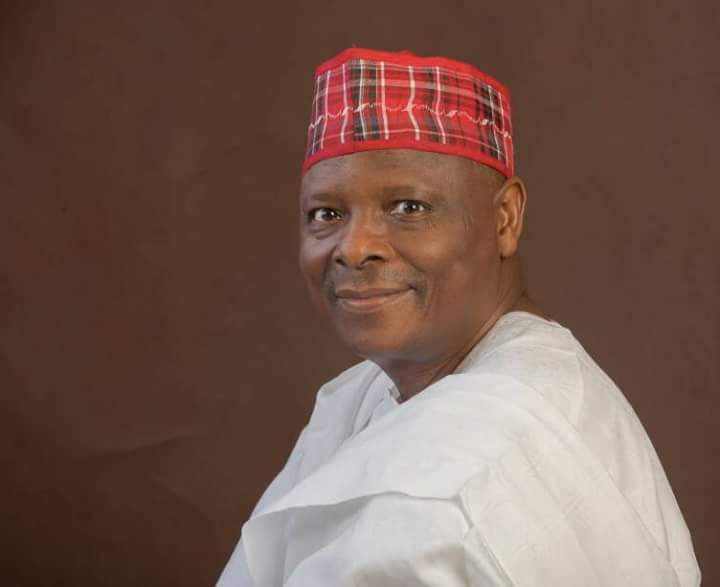
Kwankwaso denies defection rumours to APC

By Anwar Usman

Former presidential candidate and the national leader of the New Nigeria People’s Party (NNPP), Senator Rabiu Kwankwaso, has firmly denied claims that he submitted a letter of intent to join the ruling All Progressives Congress.

He made this statement in response to reports of his imminent defection to the APC.

This comes amidst rising political chatter early Friday morning, suggesting that the former Defence Minister had made formal overtures to the APC and had already begun talks with the party’s National Chairman behind closed doors.

In a statement personally signed and released through his media team on Friday, Kwankwaso refuted the claims, describing them as “online statements” lacking credibility or foundation.

The statement in part reads “we have been alerted to some online statements suggesting that we have submitted a letter of intent to join a political party in the country”.

“We would like to clarify that we have not made any such submission to any party. The public is therefore advised to stay informed of any further information regarding our matter through the established official channels”.

The speculation has triggered fresh speculation within political circles, especially as the 2027 general elections begin to cast long shadows across the country’s volatile political landscape.

Earlier on Friday, reports from political sources within the APC said that Senator Kwankwaso had allegedly sent a “discreet” letter to the party’s national secretariat indicating interest in joining the party.

The reports also hinted at ongoing discussions between Kwankwaso and the APC National Chairman, sparking a flurry of reactions across social media platforms and party caucuses.

With 2027 elections coming closer and the APC reportedly eyeing a broader northern consolidation, insiders believe both sides may be keeping lines of communication open — even if no formal letter has yet changed hands.

For now, Kwankwaso maintains that no move has been made — but in Nigerian politics, silence and denial are often the calm before a calculated storm.

VLF demands release of activists, probe of Bauchi senator

By Sabiu Abdullahi

The Visionary Leaders Foundation (VLF) has called for the immediate release of two Nigerians arrested over online posts about allegations against Senator Shehu Buba Umar of Bauchi South.

In a statement signed by its Executive Director, Abdulbasit Muhammad, the group said the arrests “illustrate a pattern of shrinking civic space, criminalisation of free expression, and intimidation of citizens who dare to engage in public debate online.”

It explained that Mr. Daure David was detained by the Bauchi State CID after translating into Hausa a Sahara Reporters headline on the senator, while TikTok creator Mr. Ishaq Abubakar Major was arrested in Abuja by the FCID for a video commentary.

According to the foundation, “He is currently held without any clear evidence of wrongdoing other than exercising his voice on a public platform.”

The group stressed that freedom of expression is guaranteed by the Nigerian Constitution and international conventions, warning that attempts to silence citizens online amount to a violation of civic rights.

It further demanded an “independent, and impartial investigation” into the allegations against Senator Umar, saying that only transparency can restore public trust.

The foundation listed six demands, including the release of the detainees, protection of digital rights, and passage of the Digital Rights and Freedom Bill.

“The arrests of Mr. Daure and Mr. Ishaq Major send a chilling message that free expression, particularly in digital spaces, is under siege. This trend must be reversed,” the statement concluded.

APC plots Kano comeback for Tinubu in 2027

By Abdullahi Mukhtar Algasgaini

Ahead of the 2027 general elections, top figures of the All Progressives Congress (APC) in Kano State have declared their intention to reclaim the state from the New Nigeria Peoples Party (NNPP) and secure the re-election of President Bola Tinubu.

The pledge was made on Thursday in Abuja following a strategic meeting of party stakeholders.

The meeting was led by former APC national chairman Abdullahi Ganduje, Deputy Senate President Barau Jibrin, and House of Representatives member Abubakar Bichi.

Addressing journalists, Dr. Ganduje, a former governor of Kano, stated that the meeting was held to assess the party’s progress and affirm its unwavering support for President Tinubu.

He expressed confidence in the APC’s growing strength in the state, despite its loss in the 2023 polls.

“We have resolved that we will continue to work very hard to ensure that we succeed in the next gubernatorial election in Kano State,” Ganduje said.

He added that part of their strategy includes mobilizing supporters for the ongoing voter registration exercise.

Echoing this sentiment, Senator Barau Jibrin cited President Tinubu’s “giant strides” and developmental projects in Kano and the wider northern region as the reason for their solid backing.

He pledged that stakeholders would intensify efforts to publicize the administration’s achievements.

Similarly, Hon. Abubakar Bichi dismissed claims that Tinubu lacks support in the north, labeling such insinuations as “cheap politics.”

He affirmed that the APC in Kano is united and determined to deliver victory for the party in the 2027 elections.

Katsina govt sacks 3,488 workers over alleged fraud

By Uzair Adam

The Katsina State Government has terminated the employment of 3,488 staff from 34 Local Government Councils and Local Education Authorities following a biometric screening exercise that uncovered extensive fraud.

Governor Dikko Radda, who received the screening report on Wednesday, said the exercise covered 50,172 staff members, verifying 46,380, while the remainder were found with fake credentials, ghost postings, absenteeism, or refusal to participate.

The report was formally presented at a State Executive Council meeting attended by top government officials and members of the Biometric Screening Committee.

The initiative has produced the state’s first-ever unified digital database of all Local Government Council (LGC) and Local Education Authority (LEA) staff, with projected monthly savings of N453.3 million if recommendations are fully implemented.

The 10-member committee identified falsified birth certificates, underage employment, illegal promotions, and instances where staff positions were sublet to others.

Additionally, N4.6 million was recovered from officers drawing double salaries or collecting pay while on leave.

Committee chairman Abdullahi A. Gagare revealed that the exercise also exposed the Education Secretary of Zango LEA for allegedly colluding with others to insert 24 ghost workers, describing the case as a “serious breach of trust.”

Governor Radda said, “We have been in the system for a long time, and we know these issues exist. Many warned me that the Committee’s work could damage my political standing, but I was determined to reform the system and do what is right for Katsina.”

He directed that the committee’s findings be converted into a White Paper for full implementation. Radda noted that local governments currently have about half a billion naira in savings, which could increase to N5.7 billion if the recommendations are applied.

“Despite high revenue allocations, many local governments in Katsina still struggle to pay salaries. Councils such as Kafur, Malumfashi, and Daura carry heavy wage bills, mostly due to staff who are not genuine,” he explained.

The governor emphasised that reducing this burden would free up resources to support grassroots development.

“This reform is aimed at saving the state from the grip of a few, ensuring more funds reach the people in our local governments,” Radda added.

The screening exercise was carried out by a 10-member committee, including four retired Permanent Secretaries and six Directors, supported by 16 co-opted members and security personnel.

Ex-AIG, four retired police officers to face court over alleged age falsification

By Uzair Adam

The Inspector-General of Police, Kayode Egbetokun, has filed charges against five retired senior officers of the Nigeria Police Force (NPF) for allegedly falsifying their ages to unlawfully extend their years of service.

The case, brought before the Federal Capital Territory (FCT) High Court, has been assigned to Justice Yusuf Halilu, who has fixed September 25 for the arraignment of the defendants.

The 14-count charge names Idowu Owohunwa, a retired assistant inspector-general of police; Benneth Igwe and Ukachi Opara, both retired commissioners of police; Obo Ukam Obo, a retired deputy commissioner of police; and Simon Lough, a retired assistant commissioner of police, while also referencing “others at large.”

According to the police, Owohunwa allegedly falsified his date of birth in Abuja in December 2024, claiming July 20, 1970, instead of his actual birth date. Igwe is accused of altering his records to reflect October 7, 1968, when investigators found he was born four years earlier, with his enlistment record showing contradictory entry dates of 1988 and 1996.

Lough allegedly changed his birth date from May 14, 1967, to May 14, 1969, in July 2022 to remain in service.Police say these acts violate public service rules and are punishable under sections 97, 161, 366, and 158 of the Penal Code.

The accused officers, however, denied any wrongdoing, calling the allegations malicious and politically motivated.

They said the case arose from a petition by the Integrity Youth Alliance, a civil society group led by Kelvin Adegbenga, which accused them of manipulating service records.

Following the petition, the IGP issued them queries for serious misconduct on January 7, 2025.

In response, Owohunwa admitted a clerical error in his APER form listed 1970 instead of 1967 as his birth year, insisting his official appointment date remained August 15, 1996.

Igwe and Lough also denied the allegations, claiming the petitioners had confused their career records with the Administrative Staff College of Nigeria (ASCON) scheme, which allows certain officers’ records to be updated.

Kidnapping ransoms drain N2.2trn from Nigeria in one year—Report

By Uzair Adam

Nigeria lost an estimated N2.2 trillion to ransom payments between May 2023 and April 2024 — an amount higher than the country’s 2024 defence budget — according to the 8th Nigeria SDG 16 Shadow Report released by the Civil Society Legislative Advocacy Centre (CISLAC) and Transparency International (TI) Nigeria.

The report, titled “Leaving No One Behind: Anti-Corruption, Right to Information, and Justice for All,” was unveiled during a side event at the United Nations General Assembly in New York on Tuesday.

At the launch, CISLAC’s Executive Director and Head of TI Nigeria, Comrade Auwal Ibrahim Musa (Rafsanjani), warned that the country is “trapped in a dangerous cycle of corruption, weak institutions, and worsening insecurity,” which could derail its chances of meeting the 2030 Sustainable Development Goals.

He described kidnapping for ransom as fully “commercialised,” revealing that more than 2.23 million incidents were recorded within the one-year period, with payments amounting to N2.2 trillion — about US $1.4 billion.

Rafsanjani noted that this figure surpasses Nigeria’s entire 2024 defence allocation, stressing that insecurity has been effectively “privatised” at the cost of national stability.

He also linked governance failures to political impunity, pointing out that many leaders routinely ignore constitutional requirements to declare their assets before the Code of Conduct Bureau.

According to him, such disregard erodes public trust and undermines anti-corruption efforts, while some politicians divert taxpayers’ money to luxury properties in Nigeria and abroad, fueling illicit financial flows.

The report further raised alarm over opaque asset recovery processes, allegations against judicial figures, irregularities in the electoral commission, and weak vetting of political appointees — warning that democratic institutions are increasingly viewed as compromised.

Examples cited include the arrest of Katsina whistleblower Mubarak Bello after he exposed police payroll fraud, and a UK Tribunal ruling against Chief Mike Ozekhome and his son in a case involving a property transfer linked to General Jeremiah Useni.

It also referenced allegations of luxury property purchases in the United States linked to Nigeria’s FCT Minister, Nyesom Wike.

On fiscal transparency, the report highlighted Nigeria’s poor scores in the 2024 Open Budget Survey (31/100) and Freedom of Information Act compliance (11.4%), while noting that the Open Treasury Portal has become inactive.

It also identified procurement fraud, vote-buying, campaign finance violations, and repression of civic space as persisting threats.

Rafsanjani described the report as both “a mirror and a roadmap,” stressing that Nigeria risks missing the 2030 goals not because of weak laws but due to a lack of political will.

He called for stronger institutions, an open civic space, and true respect for the rule of law to ensure that “no one is left behind.”